


If you have ever wondered why strong ball strikers can hit the ball so far without looking like they are swinging hard, the answer usually comes down to efficiency. An effortless swing is not a slow swing or a soft swing. It is a swing that uses leverage, body-arm coordination, and pressure into the ground so speed shows up at the right time.
For most golfers, trying harder does not create more distance. It usually creates rushed tempo, poor contact, and a late hand flip through impact. If you want more power with less strain, you need better mechanics, not more effort.
This guide breaks down the three keys to an effortless swing and shows you how to train them step by step.
Table of Contents
- Step 1: Understand what an effortless swing really means
- Step 2: Build leverage for effortless power
- Step 3: Keep connection between your chest and your hands
- Step 4: Add the “X factor” of pressure and coil
- Step 5: Test your effortless swing from the halfway-back position
- Step 6: Learn how release changes with irons and driver
- Step 7: Avoid the mistakes that ruin an effortless swing
- Step 8: Use a simple practice plan to groove effortless power
- Step 9: Use a quick checklist before every practice session
- Step 10: Make the three keys work together
- FAQ: Effortless swing fundamentals
- Final takeaway
Step 1: Understand what an effortless swing really means
An effortless swing is built on efficient sequencing. The club, hands, torso, and lower body work together so the clubhead speeds up naturally through impact. When that happens, you can produce:
- More distance
- More solid contact
- Better low-point control
- Straighter shots
- Less need for last-second timing
The opposite is what many golfers do by instinct. They pull the club back with the hands, disconnect the arms from the body, lose pressure into the trail side, then try to save the shot with a fast hand action near the ball. That pattern feels effortful but often produces weak or inconsistent shots.
The goal is to create a swing that stores energy early, keeps it organized, and releases it through rotation.
Step 2: Build leverage for effortless power
The first key to an effortless swing is leverage. In simple terms, this is the angle between your lead arm and the club as the wrists set. That angle stores energy and gives you something to release later.
Without leverage, there is very little stored speed in the swing. With leverage, the club can react more like a whip through impact.
What leverage looks like
As the club moves back, your wrists should set so the club forms an angle with the lead arm by the time your hands reach about pocket height. This is often called the set position or halfway-back position.
At that point, you should feel like the club is loaded rather than dragged back low and long with no wrist structure.

Why leverage matters in an effortless swing
Creating wrist set early does two important things:
- It stores speed before the downswing starts
- It reduces the need to manipulate the club later
When the club is properly set, you can turn your body and keep that angle intact long enough to deliver the club with forward shaft lean and solid compression.
Common leverage mistake
A lot of golfers either:
- Take the club away with no wrist set at all
- Set the club independently with the hands while the body stays still
Neither pattern is ideal. The first lacks stored energy. The second adds too much timing and often throws off the swing path.
Simple feel for better leverage
Work on reaching a compact halfway-back position where:
- Your hands are around pocket height
- Your wrists are set
- The club feels loaded
- Your body has turned enough to support the motion
If you can arrive there consistently, you have created a position of strength.
Step 3: Keep connection between your chest and your hands
The second key to an effortless swing is connection. This does not mean squeezing your arms tightly against your torso. It means preserving the relationship between the center of your body and your hands as the club moves back and through.
A useful image is to imagine a line from the center of your chest pointing toward your hands. During the backswing, that relationship should stay organized rather than breaking apart early.
Why connection creates power
When your hands move with your body turn, you can rotate through the ball aggressively. When your hands run off on their own, your body often has to slow down so the club can catch up.
That slowdown is one of the biggest reasons amateur golfers lose both speed and consistency.

Signs you lost connection
You may be disconnected if:
- Your hands move back while your chest stays facing the ball
- Your arms wrap too far across your chest early
- Your trail arm works behind you too quickly
- Your body stalls in the downswing and your hands flip through impact
These moves can still produce occasional good shots, but they usually require a lot of timing.
What good connection feels like
In a connected backswing:
- Your chest and hands move away together
- Your lead arm stays more in front of your torso
- Your turn supports the club movement
- Your downswing can be driven by rotation instead of hand rescue
This is where an effortless swing starts to look athletic and repeatable.
Step 4: Add the “X factor” of pressure and coil
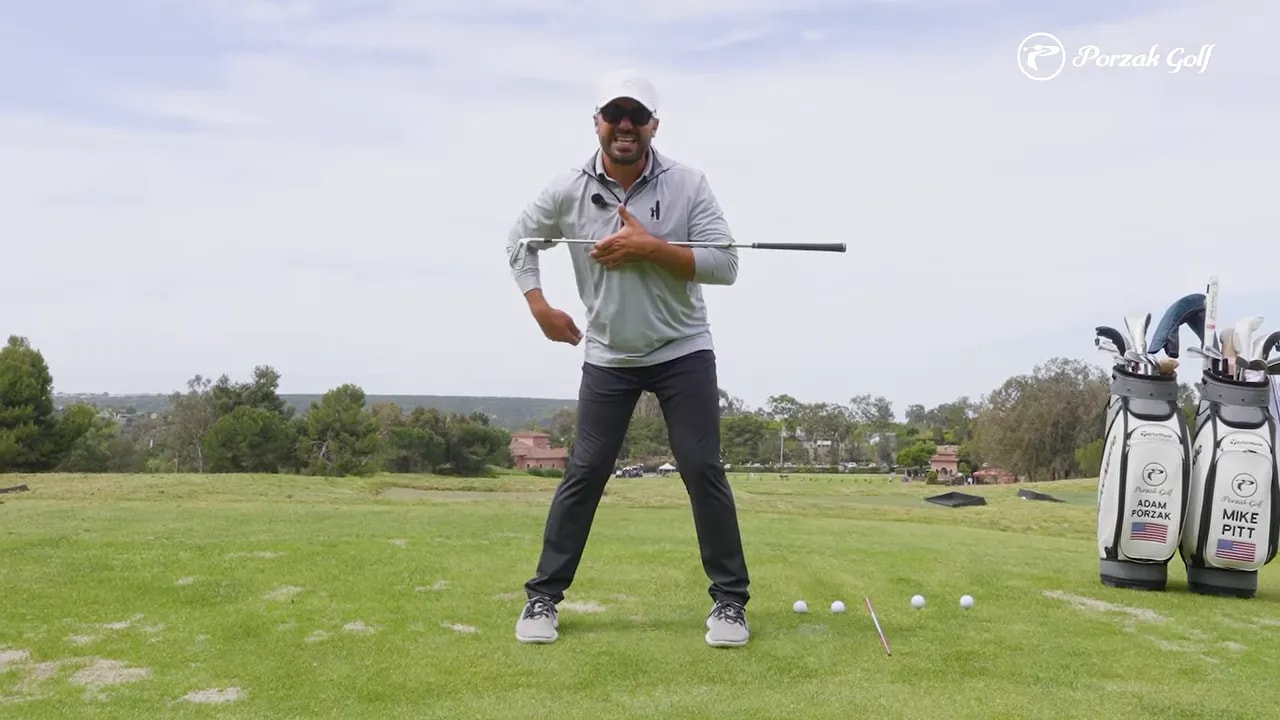
The third key to an effortless swing is the hardest one to see, but it is often the difference between a swing that looks pretty and a swing that has real pop. That key is coiling into a brace so you build pressure into the trail side during the backswing.
This is not just turning. It is turning into structure.
What the X factor means here
As you set up, your body needs enough organization to let the upper body coil while the lower body supports that motion. A small shift into the lead side at setup can help create a stable base and a secondary spine tilt. From there, the backswing turn can load into the inside of the trail leg.
When that happens, pressure builds. That pressure gives you something to push from in transition and through impact.
What to feel in the trail side
During the backswing, you want to feel:
- Pressure building into the inside of the trail leg
- The trail knee staying flexed enough to support the turn
- Your upper body coiling over that brace
You do not want to feel the trail knee straightening early or the body swaying away from the target with no resistance.
Why this makes the swing feel easier
When you load correctly into the trail side, you can push off the ground and rotate through the shot with much less forced effort from the arms. The swing gains speed from pressure, sequencing, and release rather than muscular strain.
That is why efficient players often look smooth even when the ball comes off fast.
Step 5: Test your effortless swing from the halfway-back position
One of the best ways to check whether you actually have leverage, connection, and pressure is to hit shots from the halfway-back position. This is a practical drill because it removes excess motion and tells you whether your swing structure is doing the work.
How to do the halfway-back drill
- Set up normally to the ball.
- Move the club back until your hands are about pocket high.
- At that point, make sure your wrists are set.
- Confirm that your chest and hands still feel connected.
- Feel pressure into the inside of your trail leg.
- From there, rotate through and hit the shot.

What this drill teaches
This drill can teach you several things at once:
- How to arrive at a loaded set position
- How to rotate instead of throw the club
- How to compress the ball with less backswing
- How centered, efficient motion creates speed
If you can strike the ball solidly and with surprising distance from halfway back, your mechanics are getting more efficient.
What a poor result usually means
If the ball comes out weak or inconsistent, one of three things is likely missing:
- No leverage, so there is no stored speed
- No connection, so the body cannot rotate cleanly
- No trail-side pressure, so there is nothing to push from
Step 6: Learn how release changes with irons and driver
The same three keys apply to every club, but the release can feel slightly different depending on club length and ball position.
Effortless swing with irons
With irons, many golfers benefit from feeling that the handle keeps moving while the body opens through impact. Because the ball is on the ground and the club is shorter, the clubface can square up while the body continues rotating.
This often helps produce:
- Better compression
- Forward shaft lean
- A downward strike
Effortless swing with driver
With driver, the club is longer and the ball is teed up. For some players, the release needs to feel a touch earlier or freer so the clubhead can fully pass and strike the ball through the equator on a more ascending action.
The important part is not forcing the difference. Keep the same core ideas:
- Create leverage
- Stay connected
- Load pressure into the trail side
- Rotate through the shot

The exact release sensation may differ slightly, but the efficient foundations stay the same.
Step 7: Avoid the mistakes that ruin an effortless swing
Many golfers try to create power in ways that actually reduce it. If you want a true effortless swing, watch out for these common errors.
Trying to hit hard from the top
Starting the downswing with a violent arm throw usually destroys wrist angles and sequencing. Speed should build into impact, not be spent early.
Dragging the club back with no wrist set
This often feels wide and smooth, but it can leave you with very little stored leverage. A proper set gives the club something to release.
Moving the arms without turning the chest
This disconnects the swing and makes timing much harder. Your body and hands need to move together.
Swaying instead of coiling
Shifting too far away from the target without building pressure into the trail side makes it hard to rotate through the shot. You want load, not drift.
Straightening the trail leg too early
If the trail leg loses its supportive flex too soon, it becomes difficult to build the brace needed for an athletic push and rotation.
Flipping the hands to square the face
Hand flip is often a compensation for poor connection or stalled body rotation. A better swing uses turn and release together so the face squares more naturally.
Step 8: Use a simple practice plan to groove effortless power
If you want these changes to show up on the course, train them in a simple order. Do not try to blend everything at full speed right away.
Practice routine for an effortless swing
- Rehearse the set position
Make slow backswings to pocket height and confirm wrist set. - Check connection
Feel your chest and hands working together in the takeaway and into halfway back. - Load the trail side
Make backswings where you feel pressure build into the inside of the trail leg. - Hit half-backswing shots
Use a short or mid iron and focus on solid contact and rotation. - Gradually lengthen the swing
Only add length when the structure stays intact. - Test with driver
Keep the same pressure and connection, but allow the longer club to release naturally.
A few focused reps with this plan are usually more productive than mindlessly hitting full shots.
Step 9: Use a quick checklist before every practice session
Before hitting balls, run through this effortless swing checklist:
- Have I created an early, athletic wrist set?
- Are my chest and hands moving together?
- Do I feel pressure into the inside of my trail leg?
- Can I hit a solid shot from halfway back?
- Am I rotating through impact instead of flipping?
If you can answer yes to most of those questions, you are building the right kind of speed.
Step 10: Make the three keys work together
The three keys to an effortless swing are powerful on their own, but they work best as a package:
- Leverage stores speed
- Connection keeps the motion organized
- Pressure and coil give you a base to push and rotate from
Miss one of them and you will often need compensation. Blend all three and the swing starts to feel simpler, faster, and more repeatable.
That is the real secret behind effortless power in golf. It is not about swinging softer. It is about delivering the club more efficiently.
FAQ: Effortless swing fundamentals
What is the most important part of an effortless golf swing?
The most important part is efficiency. In practical terms, that means creating leverage, maintaining connection between the body and hands, and loading pressure into the trail side so you can rotate through impact.
Can an effortless swing still produce more distance?
Yes. An effortless swing often produces more distance because speed is created in a more organized way. Better mechanics usually lead to more centered contact and more useful clubhead speed.
How do I know if I have enough leverage in the backswing?
Check your halfway-back position. If your hands are around pocket height and your wrists are set so the club forms a clear angle with the lead arm, you are likely creating useful leverage.
Why do I feel like I have to flip my hands at impact?
This often happens when the swing gets disconnected or the body stops rotating. The hands then try to square the face on their own. Better connection and rotation usually reduce that urge.
Is the halfway-back drill good for beginners?
Yes. It is helpful for beginners and experienced players because it trains structure, contact, and rotation without requiring a full backswing. It is one of the easiest ways to feel an effortless swing.
Should the effortless swing feel the same with irons and driver?
The overall motion should feel similar, but the release may feel slightly different. Irons often feel more handle-driven through the strike, while driver may feel a bit freer due to the longer shaft and teed ball.
Final takeaway
If you want an effortless swing, stop chasing power with brute force. Build a swing that stores energy early, keeps the hands connected to the body, and loads pressure into the trail side. Then train it with the halfway-back drill until solid contact and speed start to show up naturally.
An effortless swing is really an efficient swing. When leverage, connection, and pressure work together, power stops looking forced and starts becoming repeatable.
0 Comments