
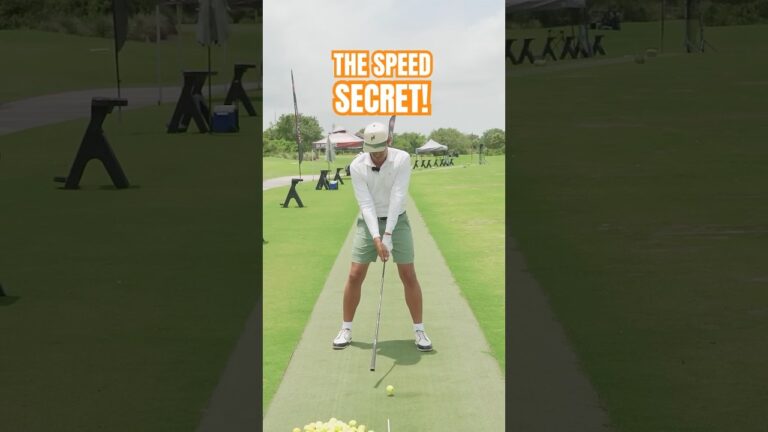

If you want more driver distance, your first instinct might be to turn your hips harder, spin faster, and throw your whole body at the ball. That feels powerful, but it often does the opposite of what you want.
The better move is surprisingly simple. You need to help the club move faster than your body. That is where the whoosh drill becomes one of the most useful tools in golf. It teaches you how to create clubhead speed from your arms and hands instead of trying to force speed with nonstop body rotation.
For many golfers, this is the missing piece in learning how to hit driver farther. You do not need a violent swing. You need a swing where the body supports speed and the club is allowed to overtake.
Table of Contents
- Step 1: Understand why more body turn does not always create more driver distance
- Step 2: Use the whoosh drill to feel real clubhead speed
- Step 3: Stop trying to move your body and club in the same direction at the same time
- Step 4: Learn the tour pro pattern of slowing down one part to speed up another
- Step 5: Make the whoosh happen out in front of you
- Step 6: Add arm and hand speed without overcomplicating your body motion
- Step 7: Rehearse the feel with a normal driver swing
- Step 8: Avoid the most common whoosh drill mistakes
- Step 9: Use this driver distance drill if you are not naturally flexible or explosive
- Step 10: Build a simple practice routine around the whoosh drill
- Step 11: Remember what the whoosh drill is really teaching
- FAQ: Whoosh drill and driver distance
Step 1: Understand why more body turn does not always create more driver distance
A common mistake in the golf swing is moving everything at the same rate. The chest turns, the hips turn, the arms move with the torso, and the club never really gets a burst of speed.
That pattern feels athletic, but it robs you of one of the biggest sources of power in the swing. If your body and club travel together the whole way through, the club does not get the chance to sling past you.
Think of it this way. If the handle, arms, torso, and hips all race together through impact, the clubhead never gets a proper release. You may be working hard, but the club is not getting the payoff.
That is why many amateurs can swing with plenty of effort and still not gain much distance. They are using energy, but not directing it into true clubhead speed.
When you are trying to improve driver distance, the goal is not endless rotation. The goal is sequencing. Some parts need to slow down enough for other parts to speed up.
Step 2: Use the whoosh drill to feel real clubhead speed
The whoosh drill is simple. Flip your driver upside down so you hold the clubhead end and swing the grip end through the air. The lighter end creates a loud swishing sound when it moves fast.
This instantly gives you feedback. You can hear where the speed happens.
If you swing the upside down club by just turning hard with your body, the sound tends to be weak or mistimed. The club barely makes much noise because the body is dragging everything through together.
If you let the arms and hands accelerate properly, the whoosh becomes sharper and louder. That is the feel you want. You are not trying to make a pretty practice move. You are trying to create speed in the right place.
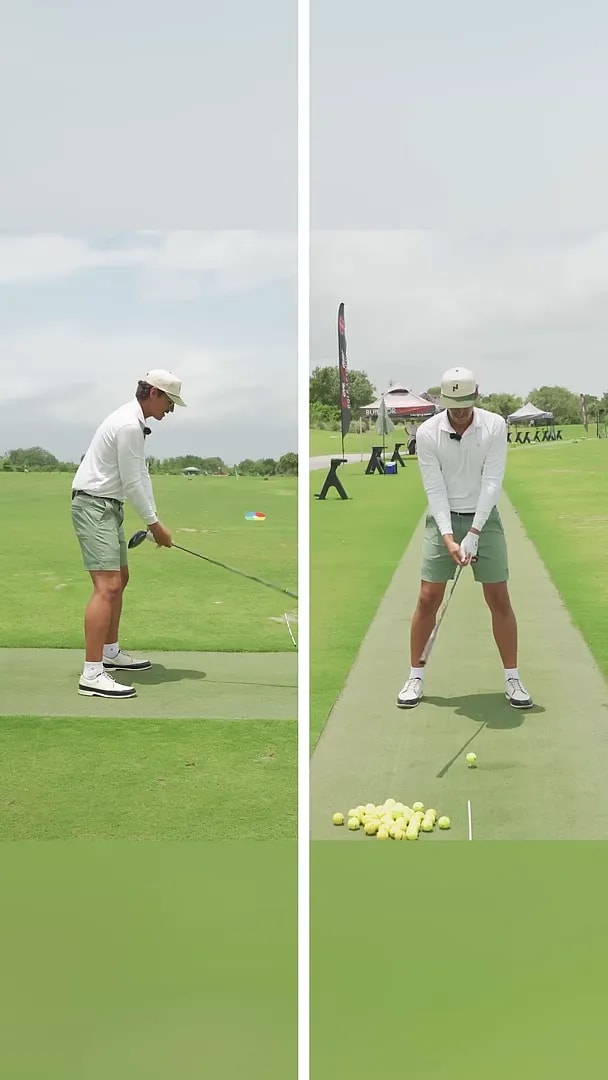
This drill is especially helpful because it removes the guesswork. You do not have to wonder whether the club is moving faster. You can hear it.
That is why the whoosh drill is such a great answer for golfers searching for how to hit driver farther. It teaches the sensation of speed instead of just talking about it.
Step 3: Stop trying to move your body and club in the same direction at the same time
One of the key lessons from this drill is that you cannot keep moving everything together forever and expect the club to accelerate.
If you go back, unwind, and continue rotating without any sense of slowing or bracing, the club tends to stay with you instead of passing you. That is the golfing version of all gas and no brakes.
In a fast swing, some segment has to stop or slow enough for the next segment to speed up. That is how efficient speed works.
It is similar to throwing a punch. You would not just rotate your whole body continuously and hope your fist finds power. At some point, the body stabilizes enough for the arm to fire. The same idea applies in the golf swing.
Your body starts things. It helps create pressure, motion, and direction. But if it never settles down, your arms and club never get their chance to accelerate.
This is one of the most important concepts for building better clubhead speed. Rotation matters, but constant rotation is not the same as speed creation.
Step 4: Learn the tour pro pattern of slowing down one part to speed up another
Skilled players often look fast because the club is moving incredibly quickly, not because every part of their body is spinning out of control.
In fact, elite swings frequently show the lead side bracing and the hips beginning to slow or even appear to close slightly as the club launches through the strike zone. That is not a flaw. It is part of how the club gets released.
The club needs something to sling against. If your lead side keeps flying open without control, the handle can outrun the clubhead and you lose speed where it matters most.

This point often surprises golfers because it sounds backward. Slowing part of the motion can actually increase speed. But in an athletic chain, that is exactly how power works.
For driver distance, the best swings are not just fast. They are organized. The body creates the environment, then the arms and club deliver the burst.
Step 5: Make the whoosh happen out in front of you
The whoosh drill becomes much more useful when you pay attention to where the sound occurs.
You do not want the loudest swish too early in the downswing. You also do not want a dull, late sound after the club would have already passed the ball. The speed should build into the hitting area and extend out in front.
That encourages a better release pattern and helps you sense the club overtaking properly.
A helpful checkpoint is this: when you make practice swings with the upside down club, the strongest whoosh should happen around where the ball would be or slightly beyond it. If the sound is behind you, the sequence is off. If there is barely any sound, you are likely using too much body and not enough arm and hand speed.
This is where a lot of golfers discover the difference between effort and speed. You can swing hard and still make very little whoosh. You can also make a shorter, more efficient motion and create a much stronger sound.
Step 6: Add arm and hand speed without overcomplicating your body motion
One of the best parts of the whoosh drill is that it does not require perfect mechanics everywhere else to help you improve.
You do not need to build a model swing before you can train speed. What you do need is a better sense of how the arms and hands should move through the hitting zone.
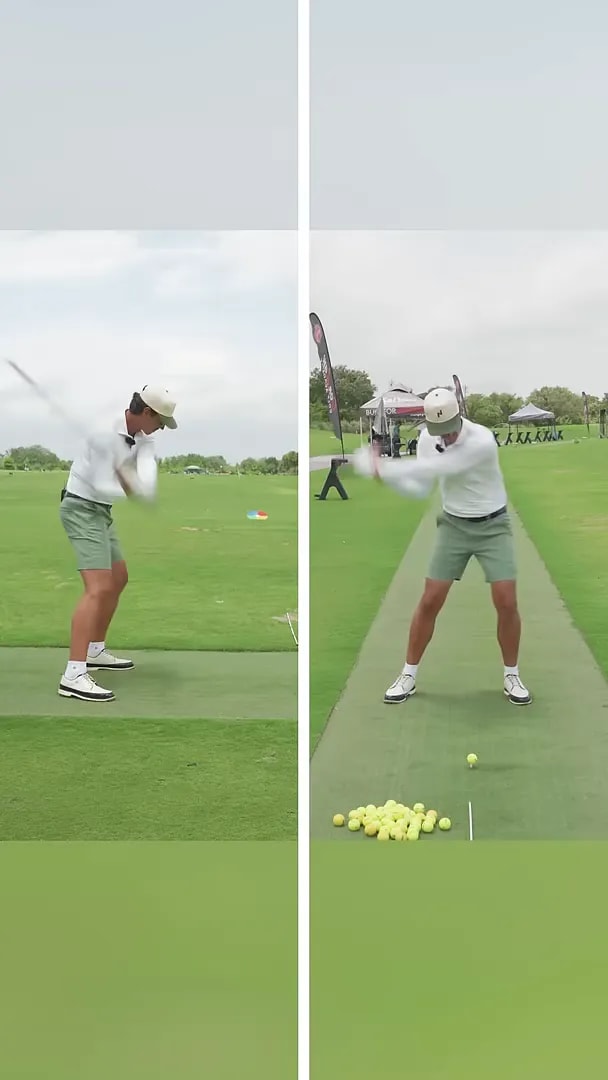
That means feeling the club travel fast because of what your arms and hands are doing, not because you are simply spinning faster.
For many golfers, especially those who have been taught to stay connected at all costs, this feels unusual at first. They are used to moving the torso and arms as one piece. The whoosh drill teaches the opposite priority at the right time in the swing. It teaches freedom and acceleration.
That does not mean your swing becomes all arms. It means your body supports the swing while your arms and hands supply the speed burst through impact.
If you are trying to learn how to hit driver farther, this distinction matters. You are not choosing between body and arms. You are learning when each one should lead.
Step 7: Rehearse the feel with a normal driver swing
Once you hear a proper whoosh with the club flipped over, go back to a regular driver and make a few slow to medium practice swings.
Your goal is to recreate the same general sensation:
- The body starts the downswing instead of hanging back.
- The lead side provides a stable place to post up.
- The torso does not keep ripping open forever.
- The arms and hands accelerate through the strike area.
- The clubhead feels like it passes with speed rather than being dragged.
Do not rush from drill work straight into full speed drives. Blend it in stages. Start with a few upside down swings, then a few waist high practice swings, then a few normal swings with a ball.
This progression helps you keep the feel instead of losing it the moment you try to hit one hard.

Step 8: Avoid the most common whoosh drill mistakes
The whoosh drill is simple, but golfers still misuse it. Here are the most common errors.
Trying to create speed only with hip spin
This is the big one. If you aggressively spin your hips and chest without letting the arms and hands release, the whoosh will be weak. That is the exact pattern the drill is meant to fix.
Making the whoosh too early
If the loudest swish happens well before the ball position, you are dumping speed too soon. Keep training the sound to happen at the strike area or just after it.
Staying too rigid
Some golfers try to keep everything so connected that the club never gets freedom. The motion should still be organized, but not stiff.
Overswinging out of control
You do not need to swing wildly to make the drill work. Good sequencing usually creates a louder whoosh with less strain.
Ignoring transfer to a real driver
The drill matters only if it improves your normal swing. After a few reps, return to a standard club and test the feeling.
Step 9: Use this driver distance drill if you are not naturally flexible or explosive
This lesson can be especially useful if you feel like your age, flexibility, or strength limits your distance.
Golfers often assume that longer drives belong only to young, explosive players with huge body rotation. But efficient speed is not only about athleticism. It is about sequencing and release.
That is why arm and hand speed can offer such a high return. If you learn to stop dragging the club with your body and start allowing the clubhead to accelerate, you may pick up distance without feeling like you are swinging any harder.
For senior golfers in particular, this can be a game changer. Trying to force more turn and more spin can be tiring and inconsistent. Learning a better speed pattern is usually a smarter path.
That does not just help distance. It can also improve timing, contact, and overall efficiency with the driver.
Step 10: Build a simple practice routine around the whoosh drill
If you want this to stick, use a short practice sequence instead of random reps.
- Flip the driver upside down and make 5 swings, listening for a loud whoosh near the hitting area.
- Pause and note whether the sound happened too early, too late, or right on time.
- Make 3 normal practice swings with the correct feel of arm and hand speed.
- Hit 3 drivers at about 70 percent effort.
- Repeat the cycle once or twice.
This keeps the focus on motion quality rather than just banging balls.
If the sound weakens during the drill, that is useful feedback. It usually means your body has started dominating again. Reset and find the better sequence before hitting more shots.
A few smart reps with purpose will usually do more for driver distance than a large bucket with the wrong pattern.
Step 11: Remember what the whoosh drill is really teaching
At its core, this drill teaches one central truth about speed in the golf swing. The club has to be allowed to outpace the body.
Your body is important, but it is not supposed to drag the club through impact forever. The swing becomes powerful when the sequence creates a handoff. The body helps create motion, the lead side organizes it, and the arms and hands deliver the speed.
That is why this simple exercise can make an amateur motion look much more like a tour pro pattern. Not because it copies style, but because it trains the underlying mechanics of speed.
If you have been trying everything to learn how to hit driver farther, this may be the easiest place to start. Flip the club over, make the whoosh happen in the right spot, and let the sound teach you what real clubhead speed feels like.
FAQ: Whoosh drill and driver distance
What is the whoosh drill in golf?
The whoosh drill is a speed training exercise where you flip the club upside down and swing it so the grip end cuts through the air. The swishing sound tells you whether you are creating speed in the right place.
How does the whoosh drill help driver distance?
It teaches you to create more speed from your arms and hands instead of trying to force speed only with body rotation. That can help the clubhead accelerate better through impact, which is essential for more driver distance.
Where should the whoosh happen in the swing?
The strongest sound should occur around the ball position or slightly past it. If it happens too early, you are releasing speed too soon. If it barely happens at all, you are likely dragging the club with your body.
Should you rotate your hips hard to hit driver farther?
Good rotation matters, but nonstop hip spin is not the goal. Efficient swings use the body to start the motion, then allow the arms and club to accelerate. Too much continuous rotation can actually reduce clubhead speed.
Is this driver distance drill good for senior golfers?
Yes. Golfers who do not want to rely on maximum flexibility or strength can benefit a lot from learning better arm and hand speed. The whoosh drill is a simple way to train that pattern.
0 Comments