
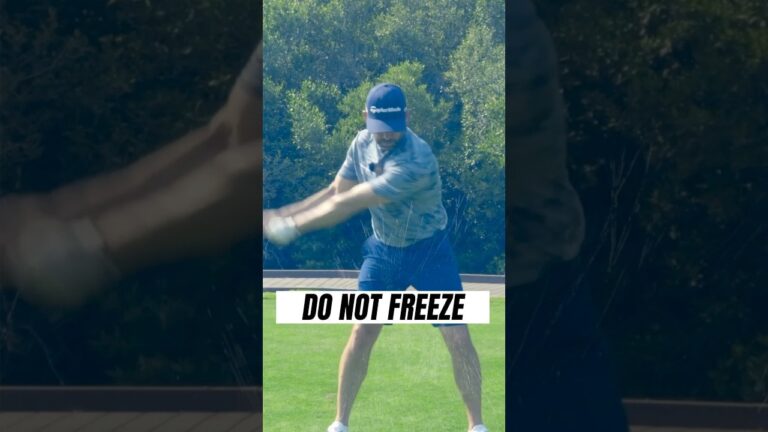

Many golfers have heard the same backswing advice for years: take the club away low and slow. It sounds controlled, but for golf it can create a chain reaction that costs you both distance and accuracy. If your start back is too passive, your pressure shift often arrives too late. That late move can force compensations through the downswing and leave you searching for speed instead of producing it naturally.
If you want better golf drives, the key is not simply moving the clubhead gently away from the ball. You need an early, athletic move that gets pressure into your trail side while the club starts back. Done correctly, this improves sequencing, helps you stay centered, and gives you a more powerful platform to deliver the club.
Table of Contents
- Step 1: Understand why low and slow can hurt your golf swing
- Step 2: Learn the difference between pressure and weight in golf
- Step 3: Start the club with your core, not just your hands
- Step 4: Get pressure into the trail side early
- Step 5: Avoid the slide that ruins golf sequencing
- Step 6: Use a simple golf feel at address
- Step 7: Build better golf sequencing from the ground up
- Step 8: Practice the move slowly without becoming passive
- Step 9: Transfer this golf move to the driver first
- Step 10: Keep your golf swing simple under pressure
- Common mistakes when applying this golf tip
- Why this small golf change can add both speed and control
- FAQ
Step 1: Understand why low and slow can hurt your golf swing
The problem with the classic low and slow move is not that smooth tempo is bad. Smooth tempo can be excellent for golf. The issue is when low and slow makes the takeaway too inactive.
When the club moves back without an early body response, your pressure tends to stay stuck in the middle or on the lead side for too long. Then, because your body still needs to load into the trail side at some point, that motion happens later in the backswing. In golf, late moves often create rushed transitions.
That can lead to:
- Loss of clubhead speed
- Poor sequencing from the ground up
- Excessive sliding instead of rotating
- Inconsistent contact
- More timing-based shots off the tee
For golf drivers especially, this matters. Distance does not come from just swinging harder with your arms. It comes from creating the right motion in the right order. If the setup into the backswing is off, the downswing often becomes a rescue mission.

Step 2: Learn the difference between pressure and weight in golf
This is one of the most important ideas in the lesson. In golf, pressure and weight are not exactly the same thing.
When golfers hear that they should move to the trail side, many of them drift. Their upper body sways away from the target, and their mass shifts too much. That is not the goal.
Pressure is more about how you push into the ground. Weight drift is when your body slides laterally and loses structure.
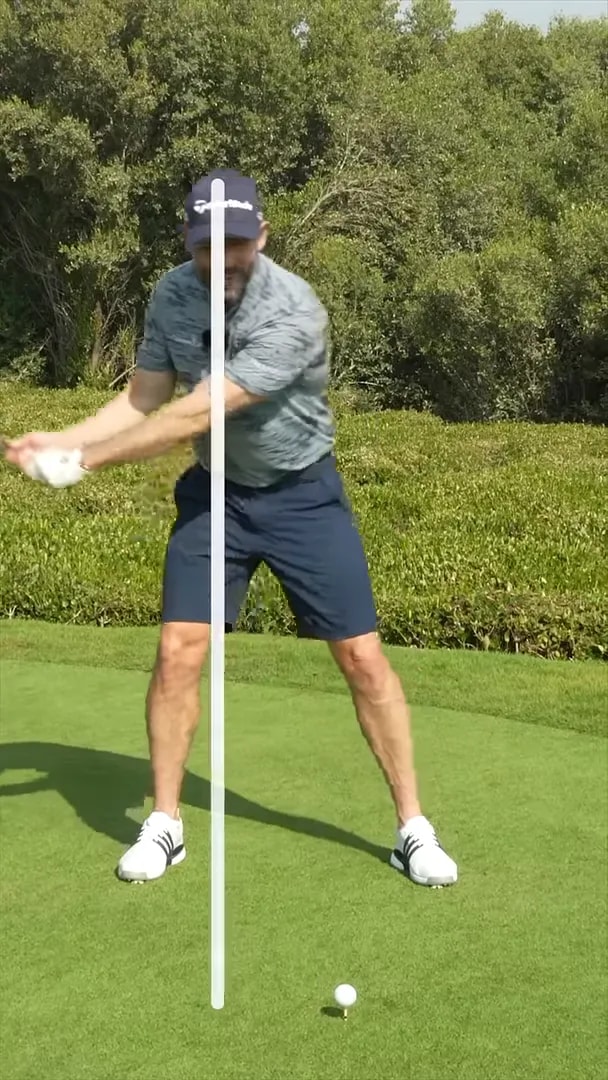
The better feel is this: as the club starts back, you create a subtle sense of pressing down into the trail foot. It is more like loading the ground than falling onto the right side.
That distinction is huge for golf because it gives you stability and energy at the same time. You can load the trail side without swaying off the ball.
A good checkpoint is that your trail leg supports you, but your head and chest do not lurch dramatically away from the target. You are loading, not leaning.
Step 3: Start the club with your core, not just your hands
If you want this move to work in golf, the clubhead should not be snatched back by the hands alone. The takeaway needs to be connected to your torso.
Think of your core moving the club away. That creates a more unified start to the swing. Your arms, chest, and pressure shift begin working together rather than as separate pieces.
Why does this help?
- Your takeaway becomes more connected
- Your trail side loads earlier
- Your backswing gains structure
- Your transition has a better chance to unfold in sequence
In golf, disconnected takeaways often lead to compensations later. If the hands move first and the body reacts later, everything can get out of sync. Starting the club with your core helps you organize the motion from the beginning.

Step 4: Get pressure into the trail side early
The central fix is simple: create pressure into the trail side early in the backswing.
That early load gives your golf swing a better order of motion. Instead of trying to find the trail side late, you establish it right away. Once that happens, your body is in a better position to transition back toward the target without frantic adjustments.
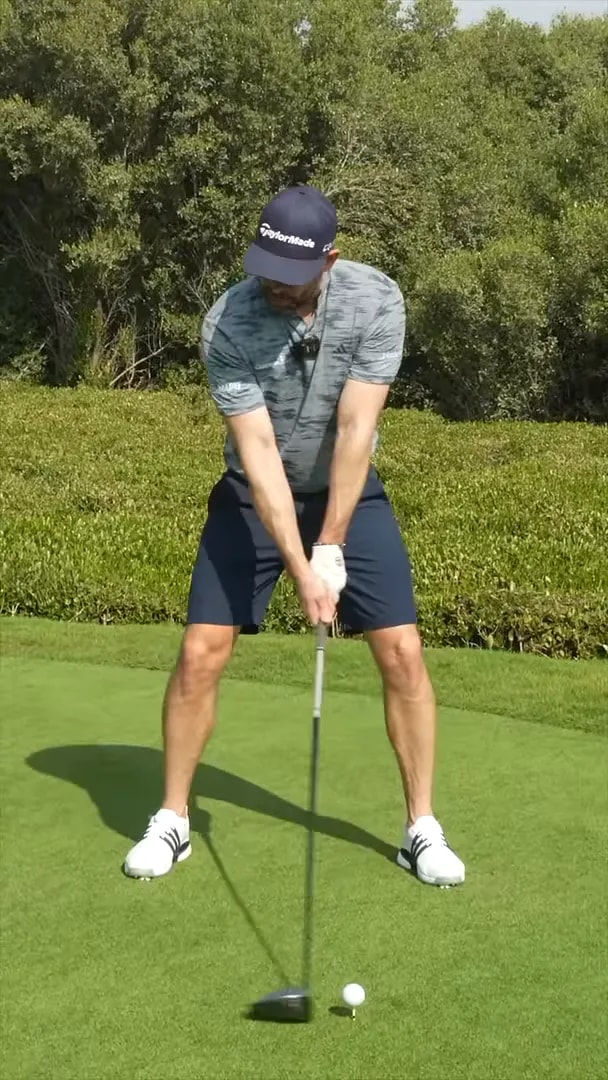
A useful feel is that as the club moves away from the ball, you are almost stepping down into the trail foot. It is a subtle downward pressure, not a visible stomp. This can wake up the lower body and help you feel more athletic at the start.
That early trail-side pressure does several things in golf:
- Creates a stable base for the backswing
- Improves rhythm without becoming passive
- Prepares the body to change direction efficiently
- Reduces the need for a late slide off the ball
If your golf swing often feels like you are searching for power midway back, this is the missing link. Power usually improves when the loading pattern improves.
Step 5: Avoid the slide that ruins golf sequencing
One of the common problems caused by a delayed pressure shift is a large slide. When golfers do not get into the trail side early, they often try to move there later by shifting too much. That move can throw off the center of the swing.
In golf, sliding is different from loading. A slide tends to move the body excessively across the ball. A proper load creates pressure and support without losing balance.
Why is the slide so damaging?
- It changes the low point pattern
- It makes the downswing more difficult to time
- It can force a reverse move back toward the target
- It reduces efficient rotation
With the driver, that often means inconsistent strike location and reduced speed. Even when the ball stays in play, it may come out with less energy because the body had to recover instead of unwind.
A better golf motion feels athletic and organized. You load into the trail side early, stay centered enough to rotate, then shift and turn through the ball with better order.
Step 6: Use a simple golf feel at address
You do not need a long list of technical swing thoughts. A single feel can often clean up the start of the golf swing.
Try this sequence:
- Set up normally with your driver.
- Before starting back, feel balanced between both feet.
- As the club begins moving away, feel your core turning the club.
- At the same time, sense pressure moving down into the trail foot.
- Keep the move athletic, not slow and lifeless.
The important part is the timing. The pressure shift should happen early, not halfway back. You are training the body to organize the backswing from the first move.
For many golfers, this instantly changes the quality of the takeaway. The start feels more dynamic, the backswing feels more supported, and the top of the swing feels easier to reach without forcing it.
Step 7: Build better golf sequencing from the ground up
Sequencing is one of the biggest separators between efficient golf swings and inconsistent ones. When the body moves in the right order, you do not need to manufacture speed late.
Early trail-side pressure helps set that order. The feet interact with the ground, the body loads, the club responds, and then the downswing can begin from a much better platform.
Think of sequencing in golf like a chain of events:
- The takeaway starts with the core
- Pressure moves into the trail side early
- The backswing completes with more balance and structure
- The transition can move back toward the lead side without panic
- The club delivers with more speed and control
When golfers skip the early loading piece, the rest of the chain often gets scrambled. That is why this small change can have such a big effect on your driving.
Step 8: Practice the move slowly without becoming passive
There is an important difference between rehearsing slowly and moving passively. For golf practice, slow rehearsals are useful when they are intentional and organized. They are not useful when they train a weak, disconnected start.
During practice swings, rehearse the first foot or two of the takeaway and focus on these priorities:
- The club starts back with the torso
- The trail foot accepts pressure early
- The upper body does not drift excessively
- The move feels athletic and alive
You can even pause after the early takeaway and ask yourself two questions:
- Do I feel pressure in the trail foot?
- Did I create that pressure without swaying?
If the answer is yes, you are training a much better golf pattern.
Step 9: Transfer this golf move to the driver first
This concept is especially useful with the driver because golfers often chase speed there and accidentally become too arm-dominant. The driver rewards good sequencing and punishes poor organization.
Start by using this move on the tee, where the ball is static and you have more time to set up. Focus on making your first move back more athletic and better loaded.
When done well, you may notice:
- A stronger strike
- More centered contact
- Less feeling of having to lunge in transition
- Better speed without extra effort
That is the goal in golf. You are not trying to swing harder. You are trying to swing in a way that allows speed to appear more naturally.
Step 10: Keep your golf swing simple under pressure
On the course, technical thoughts need to stay simple. If you stand over the ball thinking about ten different body parts, you will likely lose freedom and rhythm.
A golfer-friendly cue for this lesson is:
- Core starts the club, trail foot gets pressure early.
That single reminder captures the heart of the move. It encourages connection, loading, and better sequence without filling your mind with mechanical clutter.
If your current golf swing starts with a soft, dragging takeaway, replacing it with this more athletic pattern can be a major upgrade. Small changes at the start often create big improvements by impact.
Common mistakes when applying this golf tip
As you work on this idea, watch for a few traps.
Turning pressure into a sway
If you move your whole body too far to the trail side, you have gone beyond the goal. Pressure should increase under the trail foot without a large body drift.
Using only the hands to start back
If the club moves but the torso stays passive, the motion is still disconnected. In golf, the body and club should begin together.
Trying to stomp the ground
The trail-side pressure feel is subtle. It is a grounded, athletic push, not a dramatic move.
Confusing smooth with slow
You can be smooth and still be athletic. Golf swings that produce speed usually have early intent, even when the tempo looks calm.
Why this small golf change can add both speed and control
It may seem surprising that a tiny change in the takeaway can influence your full swing so much. But golf is a chain reaction. The opening move affects the backswing, the transition, and the strike.
When you start back with better core control and earlier trail-side pressure, you give your swing a stronger foundation. That often leads to:
- More efficient energy transfer
- Better timing in the downswing
- Improved face and path control
- Greater confidence with the driver
For golfers who feel stuck between accuracy and distance, this is encouraging. Better golf mechanics do not always require a total rebuild. Sometimes the answer is improving the first move away from the ball.
FAQ
Is low and slow always bad in golf?
No. Smooth tempo is good for golf. The problem comes when low and slow makes the takeaway too passive, delaying pressure into the trail side and hurting sequencing.
What should I feel in the takeaway for better golf drives?
Feel your core begin moving the club while pressure goes into the trail foot early. The sensation is more like pressing into the ground than sliding away from the target.
How is pressure different from weight shift in golf?
Pressure is how you interact with the ground through your feet. Weight shift often describes your body mass moving. Good golf swings can create trail-side pressure without excessive body sway.
Will this golf tip help with both distance and accuracy?
It can help both because better sequencing tends to improve speed and consistency. An early, organized load gives you a more stable base and reduces the need for recovery moves later in the swing.
Should I use this move only with the driver?
The idea can apply throughout golf, but it is especially helpful with the driver because poor sequencing there often leads to noticeable distance loss and directional misses.
If your golf swing has been built around a dragging, low and slow start, it may be time to rethink it. A better takeaway is not about rushing. It is about being athletic from the start, loading pressure into the trail side early, and allowing the rest of the swing to unfold in better sequence. For many golfers, that one adjustment can be the difference between a weak, searching drive and a powerful, balanced one.
0 Comments