
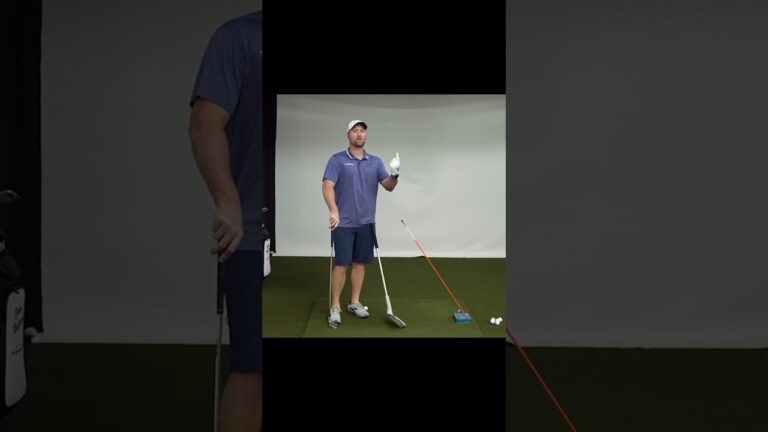

Standing up through impact is one of the most frustrating faults in golf. It can make solid contact feel unpredictable, cause thin shots and topped shots, and leave you struggling most on tight lies. The good news is that you can use a simple body-awareness drill to improve your golf posture, create room for your hands, and strike your irons with more compression.
This guide explains the shirt-button drill, why it works, how to practice it safely, and how to combine it with forward shaft lean for more reliable golf ball striking.
Table of Contents
- Step 1: Identify whether you are standing up in your golf downswing
- Step 2: Understand why posture loss makes golf contact harder
- Step 3: Use your shirt buttons as a simple golf posture checkpoint
- Step 4: Send your hips back instead of toward the golf ball
- Step 5: Add forward shaft lean so the club does not dig
- Step 6: Practice the drill without a ball first
- Step 7: Progress to short golf shots and then full irons
- Step 8: Avoid the most common golf drill mistakes
- Step 9: Measure whether the golf drill is working
- Step 10: Turn the drill into a repeatable golf swing cue
- Frequently Asked Questions About Staying in Posture in Golf
- Key takeaway
Step 1: Identify whether you are standing up in your golf downswing
Before changing your swing, make sure this is actually the issue. In golf, standing up through impact usually means that your hips move toward the ball during the downswing and your spine angle becomes more upright.
From a face-on or down-the-line view, this move often makes your chest rise away from the ball. Your hands then have less room to deliver the club naturally, so the clubhead may arrive too high, too far from the turf, or with inconsistent contact.
Common signs include:
- Thin or topped iron shots, especially when you try to hit down on the ball.
- Inconsistent contact from tight lies, even if you can strike the ball reasonably well from fluffy grass.
- Difficulty getting your hands ahead of the clubhead at impact.
- High, weak shots caused by adding loft at impact.
- Heel or toe contact that changes from swing to swing.
Do not assume every thin shot comes from standing up. Poor ball position, an early release, poor low-point control, and setup errors can also create thin contact. But if your hips visibly move toward the ball while your chest rises, posture loss is a likely contributor.
Step 2: Understand why posture loss makes golf contact harder
Your iron is designed to return to the ground on a particular lie angle and swing plane. When your body maintains its posture, the sole of the club has a better chance of interacting with the turf correctly. The club can reach the ball with the face and sole in a more usable position.
When you stand up, the handle often rises and the club can become too upright. The toe may sit lower relative to the heel, making it harder to strike the center of the face and produce a square, shallow divot.
This is why tight lies reveal the issue so clearly. A ball sitting up slightly gives you more margin for error. A ball resting close to the turf demands that your low point, posture, and club delivery match much more precisely.
In practical terms, better posture through impact helps you:
- Keep the club close enough to the ground to reach the ball consistently.
- Make room for your hands to move forward.
- Reduce unwanted added loft.
- Improve your chance of taking a clean, square divot after the ball.
Step 3: Use your shirt buttons as a simple golf posture checkpoint
The central feel of this golf drill is easy to remember: as you start down, feel as though the buttons on your shirt move closer to the golf ball, not farther away from it.
This does not mean collapsing your upper body onto the ball, lunging forward, or lowering your head dramatically. It is a feel designed to counter the common tendency to rise out of posture.
Imagine a laser pointing out from the center of your chest. Through impact, feel as if that laser aims more toward the ground and toward the ball area. This encourages your chest to remain over the shot while your body rotates.
How the shirt-button feel should work
At address, your shirt buttons are naturally in front of your body and above the ball. During the downswing, maintain enough forward bend that your chest feels as if it is covering the ball. As your body opens through impact, keep the sensation that your shirt buttons travel over the ball and then continue forward with your rotation.
This is a feel, not a literal instruction. You should still rotate through the shot. You are not trying to freeze over the ball or keep your chest pointing down forever.
Step 4: Send your hips back instead of toward the golf ball
The shirt-button drill works best when you pair it with the correct hip action. As the downswing begins, feel your rear end move back behind you rather than drifting toward the ball.
If you practice indoors, a wall behind your hips can provide useful feedback. Set up with your rear end near the wall. As you begin down, feel that your hips remain back toward the wall while your chest stays inclined toward the ball.
This combination creates space:
- Your hips stay back.
- Your chest can stay lower and more over the ball.
- Your arms and hands have room to work down in front of you.
- Your club can approach the ball without becoming excessively upright.
Keep one important distinction in mind: staying in posture is not the same as sliding toward the target. You want your chest to remain inclined, but you do not want your nose and upper body to lunge far ahead of the ball. Think of maintaining your inclination while rotating, not moving your entire upper body forward.
Step 5: Add forward shaft lean so the club does not dig
Many golfers try the posture move, get their body lower, then immediately hit heavy shots. This usually happens because they remain down in posture but release the club too early.
To prevent that result, match the improved body position with some forward shaft lean. At impact with an iron, your hands should be ahead of the clubhead. That forward handle position helps the club glide through the turf rather than crashing deeply into it.
For this golf drill, use a modest amount of forward shaft lean. Do not force an extreme position with a long iron. The goal is simply to avoid flipping the clubhead past your hands before contact.
A simple impact checklist
- Hips: Back from the ball rather than moving toward it.
- Chest: Still inclined over the ball area.
- Head: Stable enough that you have not lunged well ahead of the ball.
- Hands: Slightly ahead of the clubhead.
- Club: Moving through the turf, not being thrown into the ground.
This relationship between posture and shaft lean is essential in golf. Staying down without forward hands can encourage a fat shot. Forward hands without maintained posture can leave the club too high or too far away. Practice both pieces together.
Step 6: Practice the drill without a ball first
Start with slow rehearsal swings. A no-ball rehearsal makes it easier to learn the movement without reacting to the result of a shot.
- Take your normal iron setup.
- Make a short backswing, roughly waist high to chest high.
- Begin down slowly and feel your rear end move back.
- Feel your shirt buttons move down and over the ball area.
- Move your hands slightly ahead of the clubhead.
- Rotate through to a balanced finish.
Pause briefly near impact. Check whether you feel tall and extended or inclined and covered. If you feel as though you cannot reach the ball, you have likely stood up. If you feel extremely cramped, check that you are not sliding your chest too far forward.
Step 7: Progress to short golf shots and then full irons
Once the rehearsal feels more natural, hit short shots with a wedge or short iron. Use a controlled swing length and focus on contact rather than distance. This helps you connect the new posture sensation to the club moving through the turf.
Use this progression:
- Five slow rehearsals: No ball, pause near impact.
- Five half swings: Prioritize clean ball-first contact.
- Five three-quarter swings: Keep the same shirt-button and hip-back feel.
- Five normal swings: Only increase speed if contact remains solid.
For each shot, use one clear cue: “Hips back, buttons over the ball, hands forward.” Too many technical thoughts can make a golf swing tense and less athletic.
After several solid shots, test yourself from a tighter lie. If your contact improves when the ball sits low, that is useful confirmation that your posture and club delivery are becoming more functional.
Step 8: Avoid the most common golf drill mistakes
Trying to force your chest directly down
Your chest should remain inclined, but excessive bending can create poor balance and make rotation difficult. The goal is to maintain posture through impact, not to bury your upper body toward the ground.
Sliding your upper body forward
Covering the ball is different from lunging ahead of it. If your head and chest race toward the target, you can create a new set of contact and face-control problems. Keep your body centered enough to rotate freely.
Keeping your hips too still
Moving your hips back does not mean locking them in place. Your hips should still rotate open through impact. The correction is about avoiding movement toward the ball, not eliminating rotation.
Flipping the club from a lower posture
If you stay down but throw the clubhead early, the club may dig into the turf. Rehearse your hands leading the clubhead through impact.
Chasing a perfect professional position
Every golfer has different mobility, proportions, and swing tendencies. Use the drill to improve contact and control, not to force your body into an exaggerated shape. A useful golf training feel should produce better strikes while allowing you to stay balanced.
Step 9: Measure whether the golf drill is working
You do not need launch-monitor numbers to judge progress. Use simple on-course and range feedback:
- Are you hitting fewer thin and topped irons?
- Do tight lies feel less intimidating?
- Are your divots beginning after the ball rather than behind it?
- Does impact feel more solid without requiring extra effort?
- Can you finish in balance after maintaining posture?
Video from down the line can also help. Compare your address posture with your impact position. Look for whether your hips move toward the ball and whether your chest rises sharply. Small improvements in this area can make a meaningful difference in golf contact.
Step 10: Turn the drill into a repeatable golf swing cue
The best drills eventually become simple playing cues. Rather than trying to consciously control every body part on the course, reduce this instruction to one athletic thought:
“Stay in posture and cover the ball as I rotate.”
Use the full drill during practice, then take only that short cue to the course. If you begin topping shots or losing contact, return to the three-part checkpoint: hips back, shirt buttons toward the ball, hands ahead through impact.
Frequently Asked Questions About Staying in Posture in Golf
Why do I stand up in my golf swing?
Standing up often happens when your hips move toward the ball during the downswing, causing your spine angle to straighten. This can reduce the space available for your hands and club to reach the ball correctly.
Will staying down in golf make me hit fat shots?
It can if you stay down while flipping or casting the club. Pair improved posture with hands slightly ahead of the clubhead at impact so the club can move through the turf instead of digging excessively.
Should my head stay perfectly still during the golf swing?
No. The aim is not to freeze your head. Instead, avoid a large rise away from the ball or a major slide ahead of it. Allow natural movement while maintaining your overall posture and balance.
Can this golf drill help with thin iron shots?
Yes. If your thin shots come from standing up and losing posture, keeping your hips back and chest inclined can help the club return lower and more consistently to the ball.
Key takeaway
To stop standing up in your golf downswing, use your shirt buttons as a simple reference point. Feel them move closer to the ball as your hips stay back and your body rotates through impact. Then support that posture with hands slightly forward. Practice the movement slowly before adding speed, and let cleaner contact, improved divots, and more confidence from tight lies guide your progress.
0 Comments