
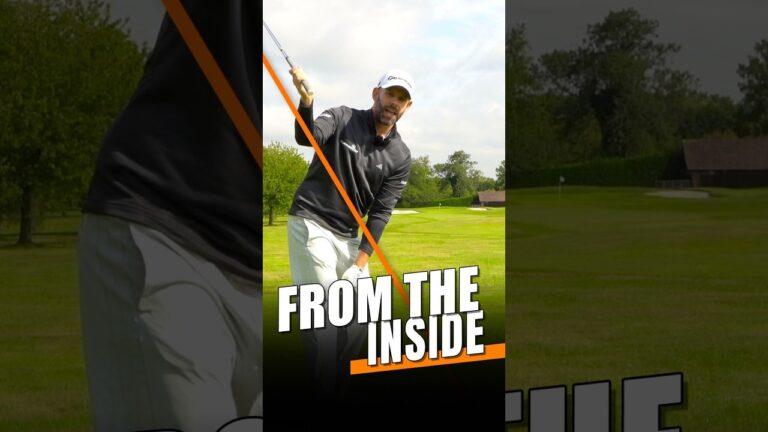

Better golf often comes down to one simple impact rule. Your swing has to bottom out on the target side of the ball. If the low point stays behind the ball, solid contact becomes inconsistent. If the low point moves forward, your golf strike gets cleaner, the ball comes off the face better, and turf contact starts happening after the ball instead of before it.
This short but powerful golf concept can change the way you practice. It is not about adding a long list of swing thoughts. It is about learning how your body shifts the swing circle forward and downward so you can strike the ball first and then the ground.
Table of Contents
- Step 1: Understand why low point control changes your golf contact
- Step 2: Learn what actually moves the golf swing circle forward
- Step 3: Use the forward and down golf drill without hitting a shot first
- Step 4: See how the drill changes golf impact
- Step 5: Rehearse the golf movement in slow motion
- Step 6: Add the golf ball and focus on turf after impact
- Step 7: Measure your golf strike pattern if you have feedback tools
- Step 8: Avoid the common golf mistakes that ruin this drill
- Step 9: Blend this golf move into your full swing
- Step 10: Use this golf concept during practice and on the course
- Step 11: Understand why this feels like a game changer in golf
- Frequently Asked Questions
Step 1: Understand why low point control changes your golf contact
In iron play, you do not want the club to reach its very bottom at the ball or behind it. For solid golf contact, the club should be descending as it meets the ball, then continue into the turf afterward.
That only happens when the bottom of the swing arc is positioned ahead of the ball, closer to the target. This is a major difference between poor strikes and crisp ones. Fat shots usually show a low point that is too far back. Thin shots often happen when you try to avoid the ground altogether. Great ball striking usually lives in the middle, where the arc is shifted forward enough to compress the ball and still clip the turf after impact.
Think of your swing as a circle. If that circle stays centered too far away from the target, the bottom of the arc stays back. If the circle shifts forward and slightly down, the club can move into the ball with the proper strike pattern.
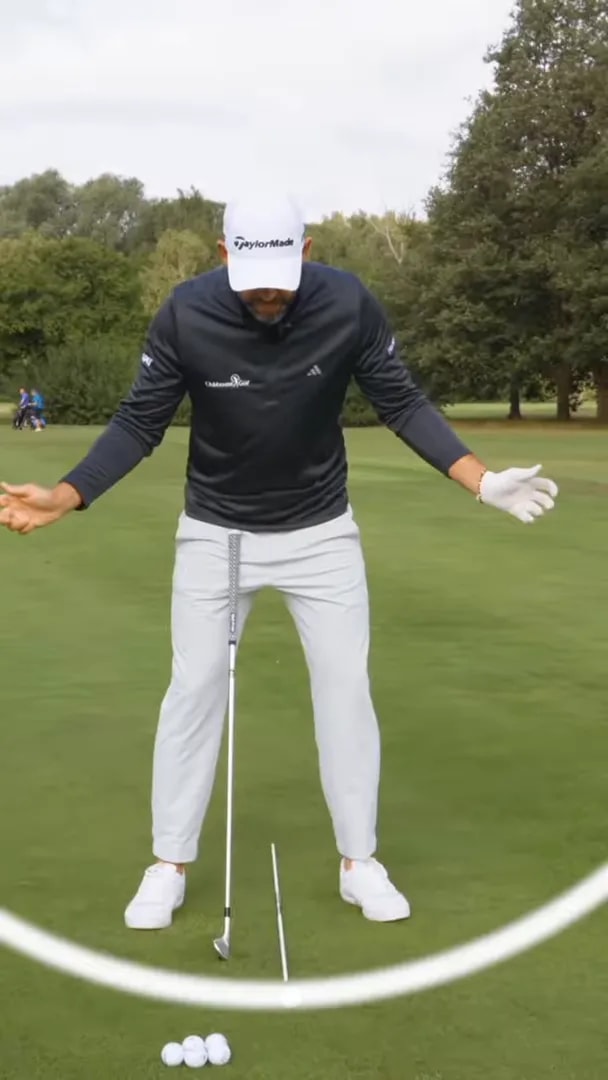
This one idea matters in nearly every full swing golf shot with an iron or wedge. It helps with:
- More consistent ball first contact
- Better compression
- Cleaner divots
- Improved distance control
- More reliable strike under pressure
Step 2: Learn what actually moves the golf swing circle forward
If you want the low point ahead of the ball, you need to understand what changes the position of the swing circle. The key move is a motion of the body that goes forward and down in the downswing.
That matters because your body is not just rotating in place. For better golf impact, the center of the motion needs to move closer to the target and slightly closer to the ground. When that happens, the swing arc shifts in the same direction.
In simple terms:
- Move forward and the bottom of the arc moves forward
- Move down and the bottom of the arc moves down
- Do both together and you create the conditions for solid contact
This is why many golfers struggle when they stay too centered, hang back, or try to scoop the ball into the air. Those moves tend to keep the low point behind the ball. The club may still reach the ball, but the strike quality becomes unreliable.
Step 3: Use the forward and down golf drill without hitting a shot first
The best way to feel this is through a very simple drill. Start without worrying about speed. You are trying to build awareness first.
Set up to a ball as you normally would with an iron. Then rehearse the downswing motion by feeling your body move slightly toward the target and slightly toward the ground. You are not trying to lunge. You are trying to shift with control.
As you make that rehearsal, notice what should happen:
- Your pressure moves more into the lead side
- Your body gets a little closer to the target
- Your body also lowers slightly
- The club’s bottoming out point shifts ahead of the ball
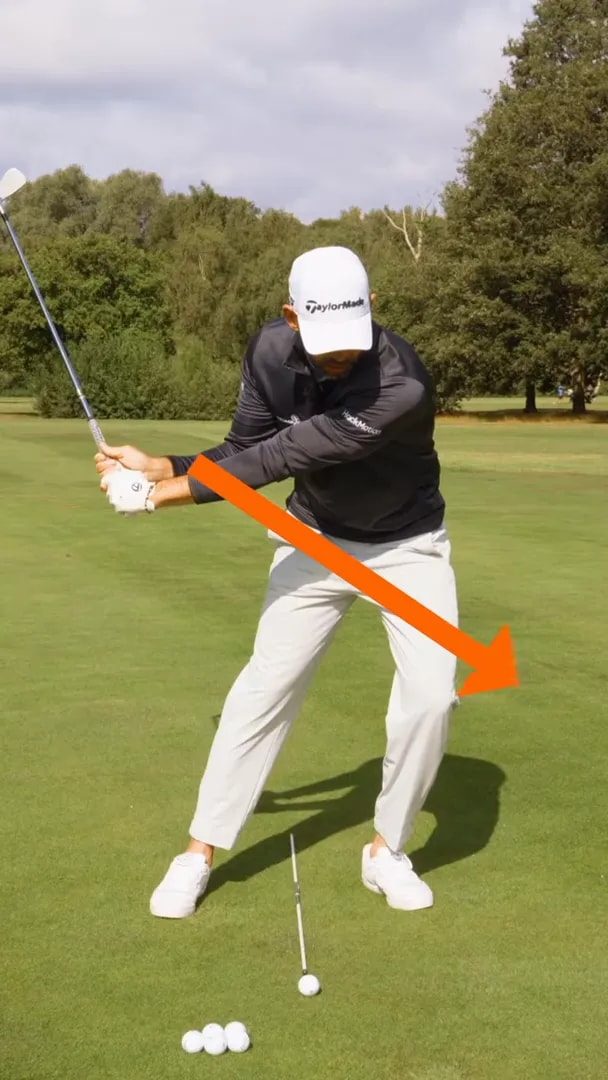
This is the central feel of the drill. Forward and down. Not backward. Not up. Not hanging on the trail side. The motion is small, but its effect on your golf strike is huge.
A helpful way to practice is to pause halfway into the downswing and check whether your body has started moving into that lead side. If it has not, your low point will likely stay too far back.
Step 4: See how the drill changes golf impact
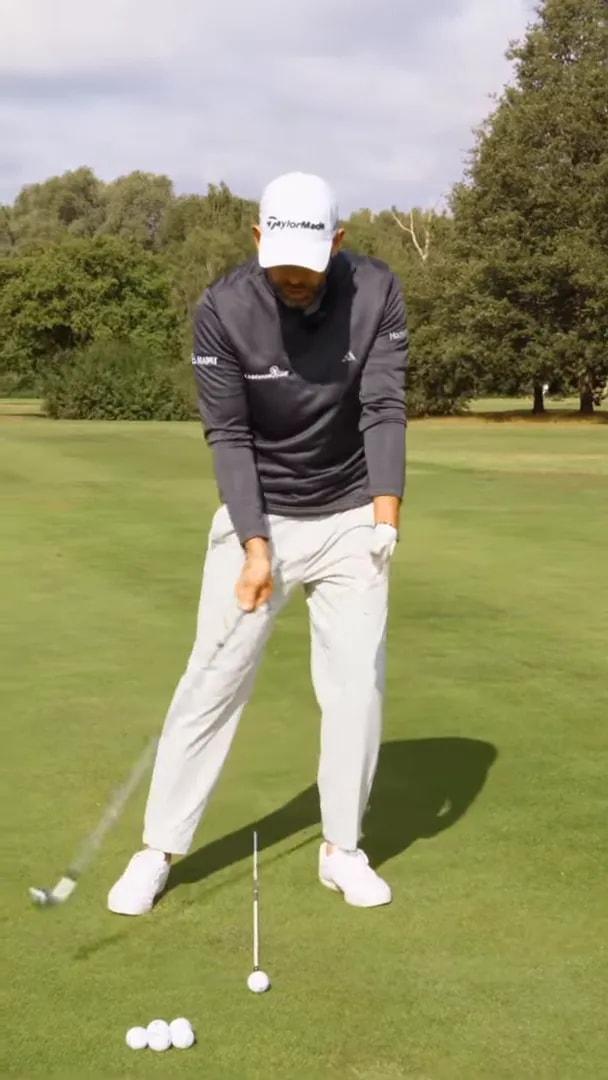
Once your body moves forward and down, the geometry of impact improves immediately. The club now has a better chance of contacting the ball before it reaches the turf.
That means:
- The ball is struck first
- The club continues downward after impact
- The turf gets brushed or taken after the strike
- The strike feels heavier on the ball and lighter in the ground
This is one of the clearest signs of efficient golf impact. You are no longer trying to help the ball up. The loft on the club does that job. Your task is to deliver the club so that the low point is ahead of the ball.
For many golfers, this alone improves the sound of contact. The strike becomes sharper and more compressed rather than thin, glancing, or heavy.
Step 5: Rehearse the golf movement in slow motion
Before you hit shots with this idea, build the movement in slow rehearsals. The purpose is to make the body motion familiar enough that you do not force it at speed.
Try this sequence:
- Take your normal setup with an iron.
- Make a backswing to about waist height or slightly higher.
- Pause briefly.
- From there, feel your body shift forward and down into the lead side.
- Bring the club into an impact position where the handle is ahead and your weight is more on the lead foot.
- Repeat several times before hitting a ball.
At first, the move may feel exaggerated. That is normal. Many golfers are so used to staying back that a proper move forward feels too much even when it is actually correct.
The important point is control. This is not a slide with no rotation. It is also not a dip with no shift. It is a blended motion where your body moves toward the target and slightly downward as the downswing begins.
Step 6: Add the golf ball and focus on turf after impact
Once the rehearsal starts to feel natural, begin hitting short shots. Keep the swing length modest. A half swing or three quarter swing is enough to train the strike pattern.
Your goal is simple: make contact with the ball first and then let the club continue into the ground on the target side.
One useful checkpoint is the divot. With an iron, the divot should start after the ball, not before it. If you keep taking turf behind the ball, the low point is still too far back.
As you practice, focus on these sensations:
- Pressure moving into the lead foot
- Chest and sternum moving slightly forward
- The body lowering a touch in transition
- The club striking down through the ball
Avoid trying to lift the ball. In golf, that instinct is one of the biggest causes of poor iron contact. Trust the clubface loft and deliver the strike properly.
Step 7: Measure your golf strike pattern if you have feedback tools
If you have access to launch data or a swing measurement device, this drill can become even more useful. One useful number for iron play is angle of attack. A descending strike often shows up as a negative attack angle, which means the club is moving downward at impact.
That kind of feedback can confirm whether your movement is doing what you think it is doing. If your body motion improves and your strike becomes more downward and more centered, you are on the right track.
Even without technology, ball flight and turf interaction tell the story. Better golf contact usually produces a more solid feel, a more penetrating launch, and a cleaner patch of turf after the ball.
Step 8: Avoid the common golf mistakes that ruin this drill
A good drill only works if you avoid turning it into something else. Here are the most common mistakes golfers make when trying to shift low point forward.
Sliding without rotation
If you shove your whole body laterally without continuing to turn, the motion can get stuck. You want a forward move, but it still needs to blend into the rotational motion of the swing.
Dipping too much
Moving down does not mean collapsing. The lowering is subtle. If you excessively drop your upper body, you can create other contact problems.
Trying to force a divot
The divot is a result, not the objective. Your main task in golf is to move the low point ahead of the ball. If you do that well, the turf contact should take care of itself.
Keeping pressure on the trail side
This is one of the biggest strike killers. If you stay back, your body center remains too far from the target, and the club bottoms out too early.
Adding speed too soon
Start with rehearsals and shorter swings. Build the movement first. Speed without control usually brings old habits back.
Step 9: Blend this golf move into your full swing
After you can hit short shots cleanly, begin lengthening the swing. Keep the same intention. You still want the body to move forward and down in transition so the swing circle shifts to the target side.
As the motion blends into a fuller swing, pay attention to these markers:
- Your lead side accepts pressure early in the downswing
- Your chest keeps moving through the strike
- The handle leads the clubhead into impact
- The turf contact remains after the ball
When this pattern shows up consistently, your golf swing becomes much more predictable. You do not need perfect timing to strike the ball well. The geometry of the swing starts working in your favor.
Step 10: Use this golf concept during practice and on the course
To make this change stick, add it to your regular practice routine. A few minutes of structured rehearsal can make a big difference.
A simple practice plan might look like this:
- Make 5 slow rehearsals of the forward and down move.
- Hit 5 short iron shots at half speed.
- Check whether the turf contact is happening after the ball.
- Hit 5 more shots with a slightly longer swing.
- Repeat the rehearsal if contact starts to drift.
On the course, keep the thought simple. You do not need a technical checklist. One compact cue is enough: low point ahead. For many golf players, that thought helps organize the whole strike.
If your iron contact breaks down during a round, return to the same basic feel. Get pressure into the lead side, move forward and down, and let the club strike ball first.
Step 11: Understand why this feels like a game changer in golf
Some swing tips are small refinements. This one affects the foundation of impact. That is why it can feel like a breakthrough.
When you improve low point control, several things often improve at once:
- Strike quality
- Distance consistency
- Trajectory control
- Confidence with irons
- Ability to compress the ball
In golf, those are not minor gains. They shape scoring. Clean iron contact creates more predictable approaches, better distance gaps, and fewer wasted shots from poor strikes.
The beauty of this idea is its simplicity. Move the body so the swing circle shifts forward and down. Do that well, and the club can meet the ball the way it should.
Frequently Asked Questions
Why is low point so important in golf?
Low point determines where the club reaches the bottom of the swing arc. In solid iron golf shots, that point should be ahead of the ball so the club strikes the ball first and the turf after.
What does forward and down mean in the golf swing?
It refers to the body moving slightly toward the target and slightly toward the ground in the downswing. That motion shifts the swing circle forward and helps place the low point ahead of the ball.
Will this golf drill help stop fat shots?
Yes, it can help because fat shots usually come from a low point that is behind the ball. Training the body to move forward and down can help you contact the ball before the ground.
Should this feel like a big weight shift in golf?
It should feel noticeable, but not wild. Many golfers need more lead side pressure than they realize, but the motion still needs balance and rotation. It is a controlled shift, not a lunge.
Can you use this golf idea with wedges and short irons?
Yes. In fact, wedges and short irons are excellent clubs for learning it. Shorter swings make it easier to feel the body moving correctly and to check whether the turf contact is happening after the ball.
0 Comments