
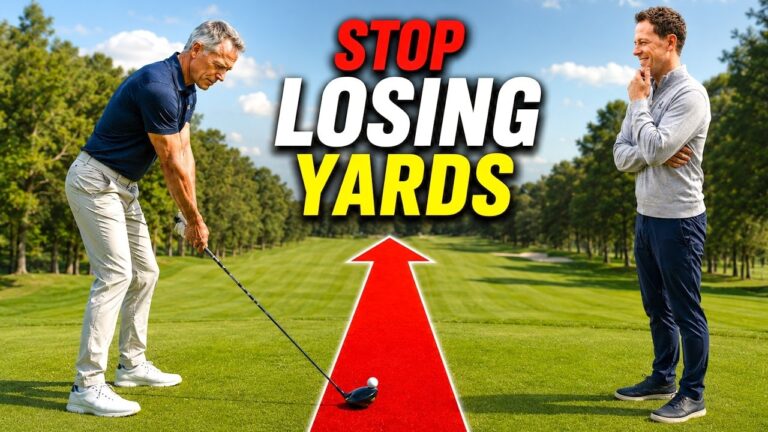

You can try to hit driver longer by swinging harder, gripping tighter, and forcing extra effort through the ball. For most golfers, that only creates worse contact, poorer direction, and very little extra distance.
The real reason you do not hit driver as far as you could is usually not strength. It is the way you are trying to create power.
If you want an effortless driver swing, the key is learning to feel the momentum of the clubhead and letting your body support that motion naturally. That sounds simple, but it is also a bit counterintuitive. The lighter the club feels, the more tempted you are to control it with your hands and arms. That is exactly where many distance problems begin.
This step by step guide breaks down a practical way to hit driver longer, stop fighting the club, and create more speed with less strain.
Table of Contents
- Step 1: Understand why trying harder often makes you shorter
- Step 2: Learn the sledgehammer feeling for an effortless driver swing
- Step 3: Use the trail hand drill to make the clubhead feel heavier
- Step 4: Let the club fall instead of directing it from the top
- Step 5: Use the tee peg drill to direct the force correctly
- Step 6: Move from one hand to two hands without losing the feeling
- Step 7: Start with soft swings to find effortless driver distance
- Step 8: Swing faster, not slower, to feel the clubhead
- Step 9: Apply the same pendulum idea throughout your bag
- Step 10: Build this into your practice routine
- FAQ: Effortless driver swing and more distance
Step 1: Understand why trying harder often makes you shorter
One of the biggest myths in golf is that more distance comes from more effort. In reality, many golfers lose distance because they try to manufacture power with tension.
When you chase extra yards this way, a few things usually happen:
- Your strike quality drops
- Your swing path becomes less reliable
- Your face control gets worse
- Your speed feels high, but the ball does not travel much farther
That is why the shortest hitter in the group is not always the least athletic golfer. Quite often, it is the golfer who is fighting the motion of the club instead of using it.
An effortless driver swing does not mean a lazy swing with no speed. It means speed that comes from momentum, sequence, and release rather than brute force.
Step 2: Learn the sledgehammer feeling for an effortless driver swing
To understand how to hit driver longer, it helps to compare the driver to something much heavier.
Imagine swinging a sledgehammer or any object with most of its weight at one end. Your body instinctively reacts in a smart way. You do not hold yourself rigid and try to steer it with your hands. You create a lever, you let the heavy end swing, and your body naturally supports the motion.
As the weight moves back, your body responds. As it starts down, gravity and momentum help it fall and flow. You counterbalance that movement without having to consciously micromanage every position.
That is the feeling you want in the golf swing.
The problem is that a driver clubhead feels light. Because it feels light, you tend to overcontrol it. You snatch it away, direct it from the top, and try to hit at the ball. That removes the natural flow you would have with a heavier object.
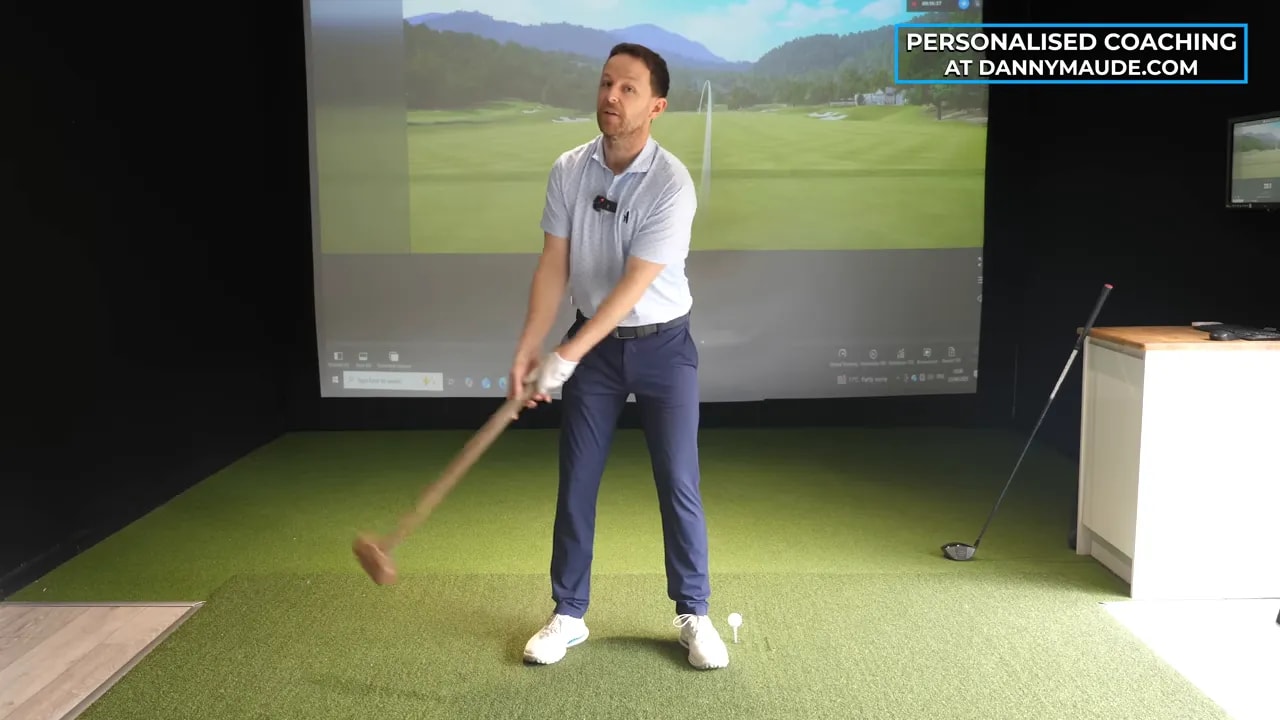
If you can recreate the same sense of swing, support, and release that you feel with a heavy object, you can build a much more powerful and repeatable driver motion.
Step 3: Use the trail hand drill to make the clubhead feel heavier
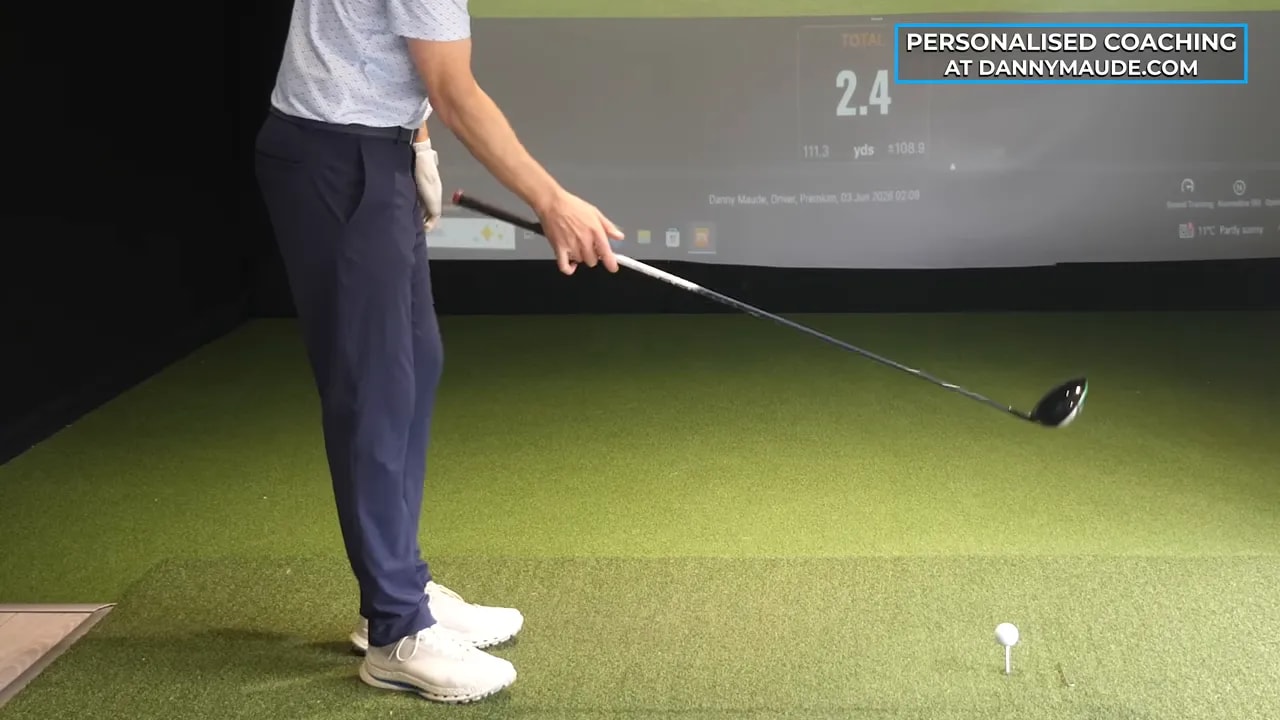
Since a driver is so light, you need a way to feel the clubhead better. A very effective drill is to swing the club with just your trail hand.
Here is the setup:
- Hold the club down the shaft in the fingers of your trail hand.
- Let the arm hang more naturally by your side instead of reaching out stiffly.
- Swing the club back and forth like a pendulum.
- Allow the clubhead to move the motion, while your body supports it.
The key point is this: do not fling the arm around independently. The club is the lever. Your body responds to the club, just as it would with the sledgehammer.
At first, this often feels loose or even slightly out of control. That is normal. Many golfers are so used to steering the club that a free swinging motion feels unfamiliar.
Stay with it.
As you continue the drill, let your body pivot a little to the right and left as the club swings. Then feel the lever swap over at the top. From there, allow the club to fall and swing through again.
This is where distance starts to change. Instead of dragging the club down with effort, you let the clubhead gather momentum and release.
Step 4: Let the club fall instead of directing it from the top
A major distance killer is trying to control the downswing too early.
Many golfers reach the top and then immediately try to steer the club into position. They think this gives them power and control. Usually it does the opposite. It makes the swing tight, steep, and effortful.
In an effortless driver swing, the club changes direction more naturally. The clubhead falls, momentum builds, and your body organizes itself around that motion.
This is also why trying to hold lag can be so damaging for many golfers. Lag is not something you should freeze or preserve by force. The angles in the downswing are more often a byproduct of how the club is supported and released.
If you are trying to store angles for too long, you often delay the release, reduce speed at the wrong time, and arrive at impact with a face and path that are much harder to control.
A better thought is to let the club swing and release naturally.
There is also an important face sensation to go with this. Rather than feeling as if you are de lofting the driver and smashing down on it, feel as if you are preserving or even adding loft through the strike. That promotes a freer release and a better launch pattern.
Step 5: Use the tee peg drill to direct the force correctly
Free speed is great, but you still need direction. This is where many golfers get stuck. They either let the club swing and lose control, or they control it so much that they lose all the speed.
The solution is to direct the force correctly.
A simple way to feel this is with a tee peg drill. Imagine a tee peg attached to the club, pointing in the direction the force is being applied as the club approaches the ball.
Your goal is to feel that tee peg aiming at the golf ball from the correct angle.
If the force points too far out to the right, the club can approach too much from the inside. Then you may block shots right or flip the hands and hit hooks.
If the force points too far inward toward the middle of your stance, the club gets too steep. That often leads to an over the top move, low pulls, and big slices.
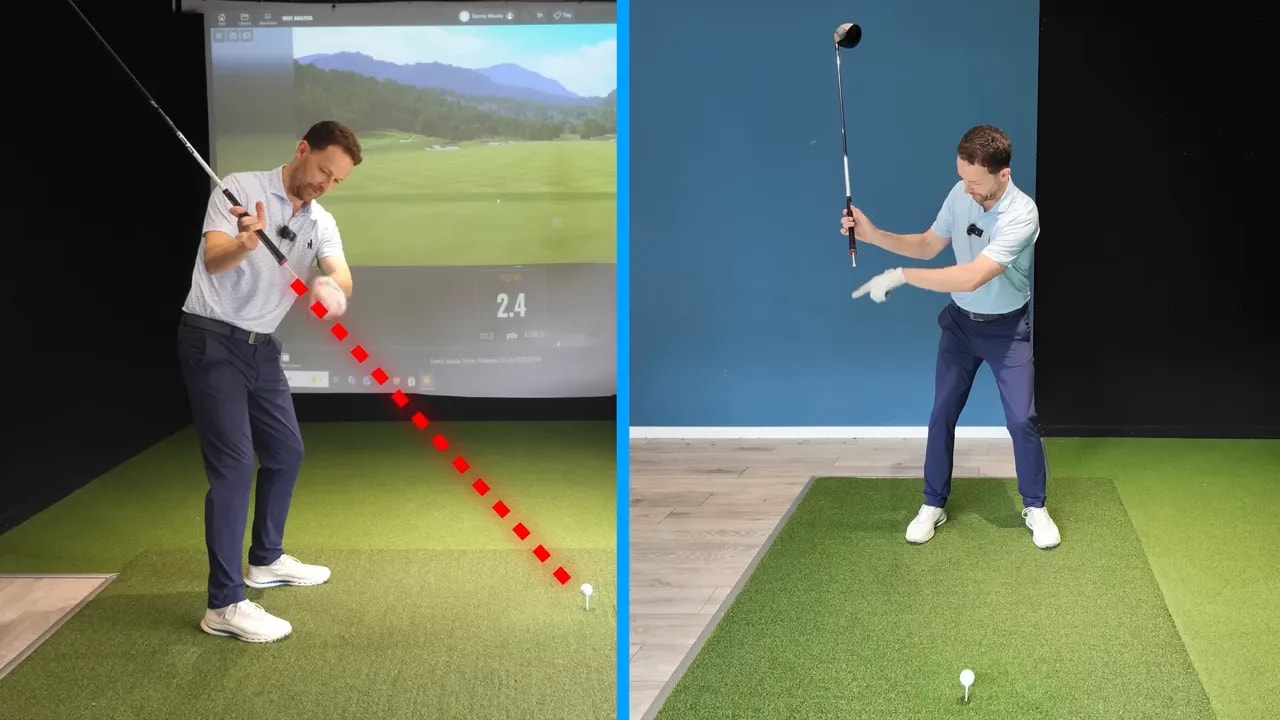
To practice it:
- Make your one handed back and forth motion.
- Pause and sense where the force would point coming down.
- Match it so it aims at the ball rather than too far left or right.
- Then let the club swing through freely.
This is one of the best ways to stop coming over the top without filling your head with technical clutter. You are not trying to place the club in a perfect position. You are learning to send its momentum toward the ball from a useful angle.
Step 6: Move from one hand to two hands without losing the feeling
Once the trail hand drill starts to make sense, the next step is bringing your lead hand back onto the club without killing the motion.
This transition is where many golfers revert to old habits. The moment both hands go on, they start hitting at the ball again.
Instead, keep the same core sensations:
- The clubhead has weight
- Your body supports the swinging lever
- The club falls and releases
- The force is directed toward the ball from the right angle
- You feel loft being preserved rather than stripped away
Think of the second hand as support, not as a command center. The club should still feel as if it wants to swing.
If you can preserve that one handed freedom with two hands on the club, your driver swing begins to look and feel very different. It becomes less forced, more athletic, and much easier to repeat under pressure.
Step 7: Start with soft swings to find effortless driver distance
Here is the funny part. When you first try this, you may need to feel like you are barely trying at all.
That is because your old idea of power may be built around effort. If you go straight into full speed, there is a good chance you will return to hitting at the ball.
Start with tiny targets. You might even feel like you are only trying to send the ball 100 yards. The point is not to max out. The point is to let the clubhead swing, fall, and release with very little tension.
Golfers are often surprised by how far the ball goes with this kind of motion. That surprise is useful. It teaches you that distance is available without feeling as if you are swinging out of your shoes.
The golfer-friendly lesson here is simple: if you want to hit driver longer, stop trying to prove how hard you can swing and start learning how freely you can swing.
Step 8: Swing faster, not slower, to feel the clubhead
This may be the most counterintuitive idea of all.
When golfers lose control, the instinct is to slow everything down and guide the club more carefully. That sounds sensible, but it often removes the exact sensation you need.
The quicker the club swings, the more momentum the clubhead has. The more momentum it has, the heavier it feels. The heavier it feels, the easier it is for your body to respond to it naturally.
That does not mean rushing from the top or lashing at the ball. It means allowing enough motion and speed for the clubhead to become perceptible.
If you go too slow, the head feels almost weightless. Then you lose awareness of where it is, and your swing becomes all hands and arms again.
So once the drill starts to click, do not be afraid to let it move. In many cases, speed helps you feel the clubhead better and makes the effortless driver swing easier, not harder.
Step 9: Apply the same pendulum idea throughout your bag
This concept is not limited to the driver. It can help with every club.
The same basic principle applies with irons, fairway woods, and even putting. Golf is full of swinging motions, and the club works best when it behaves more like a pendulum and less like something you are trying to drag into place.
That does not mean every club is swung identically. It means the underlying feel is similar. You want momentum, support, and release rather than manipulation.
If you tend to steer putts, guide irons, or force your driver, this is a useful unifying idea for your whole game.
Step 10: Build this into your practice routine
If you want lasting gains in driver distance and control, practice this in order.
- Start with a heavy object such as a sledgehammer or weighted item to feel how your body naturally supports momentum.
- Move to the one handed trail hand drill so the driver starts to feel heavier and more alive.
- Feel the lever swap and the club fall instead of directing it from the top.
- Use the tee peg drill to make sure the force is aimed at the ball from the right angle.
- Add the second hand while keeping the same free swinging sensation.
- Hit soft shots first and let distance show up naturally.
- Then increase speed enough to feel the clubhead clearly.
If you do this patiently, you can gain distance without rebuilding your whole swing. In some cases, the change is dramatic simply because the club is finally allowed to do what it was designed to do.
FAQ: Effortless driver swing and more distance
Why do I lose accuracy when I try to hit driver longer?
You usually lose accuracy because you add tension and start forcing the club. That changes your strike, face control, and swing path. An effortless driver swing improves distance by improving motion, not by adding strain.
How does the sledgehammer drill help me hit driver longer?
The sledgehammer drill teaches you how a weighted object naturally creates momentum. Your body instinctively supports the swing instead of trying to steer it. That same feeling can help you create more clubhead speed and a freer release with the driver.
What is the biggest mistake golfers make when trying to create more driver distance?
The biggest mistake is trying to create power through effort alone. Swinging harder with more tension usually makes the motion less efficient. The better route is to feel the clubhead, let it swing, and direct its force correctly.
Can this help stop an over the top driver swing?
Yes. The tee peg drill is especially helpful for this. It teaches you to sense where the force of the club is aimed on the way down. When that direction is improved, you are less likely to cut across the ball and more likely to deliver the club on a better path.
Should I try to hold lag for more power?
For many golfers, trying to hold lag creates tension and delays the natural release. A better approach is to let the club swing and release in response to momentum and body support. That often produces more speed and better contact.
Does this approach work for senior golfers or beginners?
Yes. Because the method is based on momentum rather than strength, it can help golfers of many ages and ability levels. If you want to hit driver longer without feeling as if you need a tour level body, this is a very practical approach.
If you have been wondering why you don’t hit driver as far as you could, the answer may be much simpler than you think. You probably do not need more effort. You need a better relationship with the clubhead.
Feel the weight. Let the lever swing. Direct the force. Then let the club release.
That is where effortless driver distance starts.
0 Comments