

If your golf shots feel inconsistent, sound weak, or get worse from tight lies, one move may be causing several problems at once. Many golfers stand up through impact, lose posture, throw the club early, and struggle to rotate through the ball. Those faults often show up together, not separately.
The good news is that the same golf fix can clean up all four. When you keep your posture, move your hips back instead of toward the ball, and deliver the club with forward shaft lean, contact becomes much more solid. This applies across your golf bag, from shorter iron shots to the driver.
This step by step guide explains how to identify the issue, why it hurts your golf strike, and how to train a better impact pattern with a simple feedback drill.
Table of Contents
- Step 1: Understand the one golf move that causes multiple swing faults
- Step 2: Recognize the golf ball-flight and contact signs
- Step 3: Learn why standing up ruins golf compression
- Step 4: Use a simple golf feedback station to train better posture
- Step 5: Feel your hips go back, not forward, in the golf downswing
- Step 6: Keep your head centered and avoid sliding in golf
- Step 7: Add forward shaft lean to stop flipping in golf
- Step 8: Practice this golf drill in the right order
- Step 9: Apply the same golf concept to different clubs
- Step 10: Avoid the most common golf mistakes with this drill
- Step 11: Use a quick golf self-check after every practice session
- Step 12: Know when this golf fix is the right one for you
- FAQ
- Final takeaway for better golf contact
Step 1: Understand the one golf move that causes multiple swing faults
The central problem is losing posture in the downswing. In practical terms, that means your body rises up, your hips move closer to the ball, and your arms get pushed outward instead of staying connected to your body.
Once that happens, several common golf faults can appear at the same time:
- Standing up through impact
- Early release or flipping
- Steep delivery into the ball
- Poor hip rotation through the strike
That is why one correction can improve a lot of your golf swing at once. If your body keeps its angles and your hips clear properly, the club can approach from a better angle and release farther in front of the ball.
Step 2: Recognize the golf ball-flight and contact signs
You do not need a launch monitor to spot this issue in your golf swing. The strike pattern usually gives it away.
Here are the most common signs:
- You hit thin shots, especially with irons.
- You struggle badly from tight lies but do better from fluffy lies.
- Your contact feels weak even when the shot seems centered.
- Your divots are inconsistent.
- Your club feels like it digs too much or skips into the ball.
- Your hips stall and your hands flip at impact.
Tight lies are especially revealing in golf. When the ball sits down close to the turf, there is very little room for timing mistakes. If you stand up and raise the handle path, the club tends to get too vertical and the strike quality drops fast.
Step 3: Learn why standing up ruins golf compression
When you come down too steep in golf, your body often reacts by standing up to make room for the club. That compensation may help you avoid smashing the club into the ground too early, but it creates a chain reaction.
As you rise out of posture:
- Your hands get pushed farther away from your body.
- The clubshaft becomes more upright through impact.
- The toe of the club tends to sit lower than the heel.
- The bottom of the swing becomes harder to control.
In golf, that more vertical delivery often leads to thin contact or contact low on the face. On a cleaner, tighter lie, that problem becomes more obvious because the turf does not hide the error.
By contrast, when you stay in posture and deliver the club on a shallower, more efficient plane, the sole can interact with the ground more evenly and the strike tends to sound and feel much better.
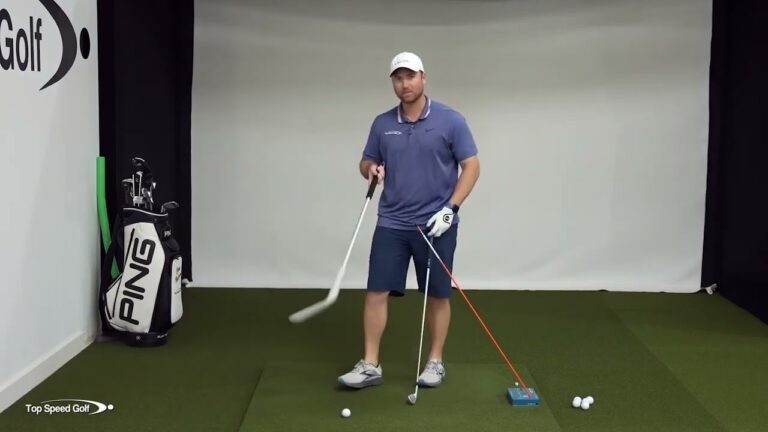
Step 4: Use a simple golf feedback station to train better posture
One of the fastest ways to improve this in golf is to create an obstacle that gives instant feedback if your arms and body move the wrong way.
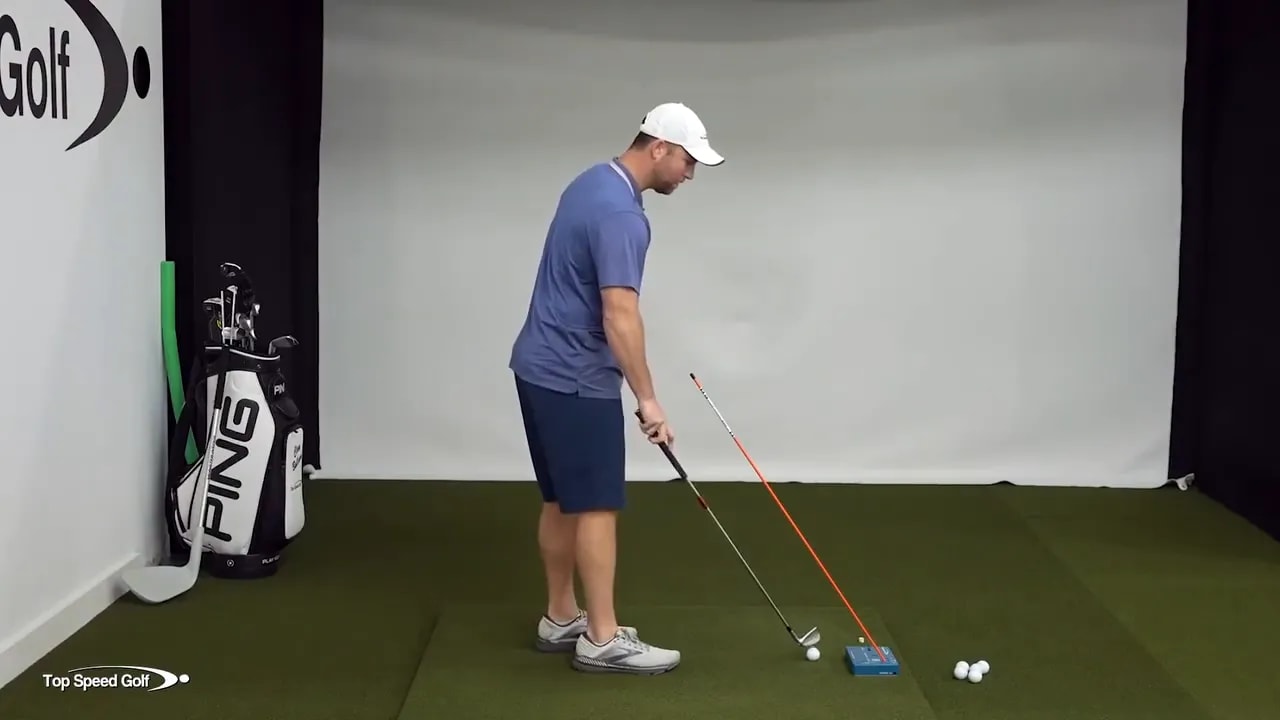
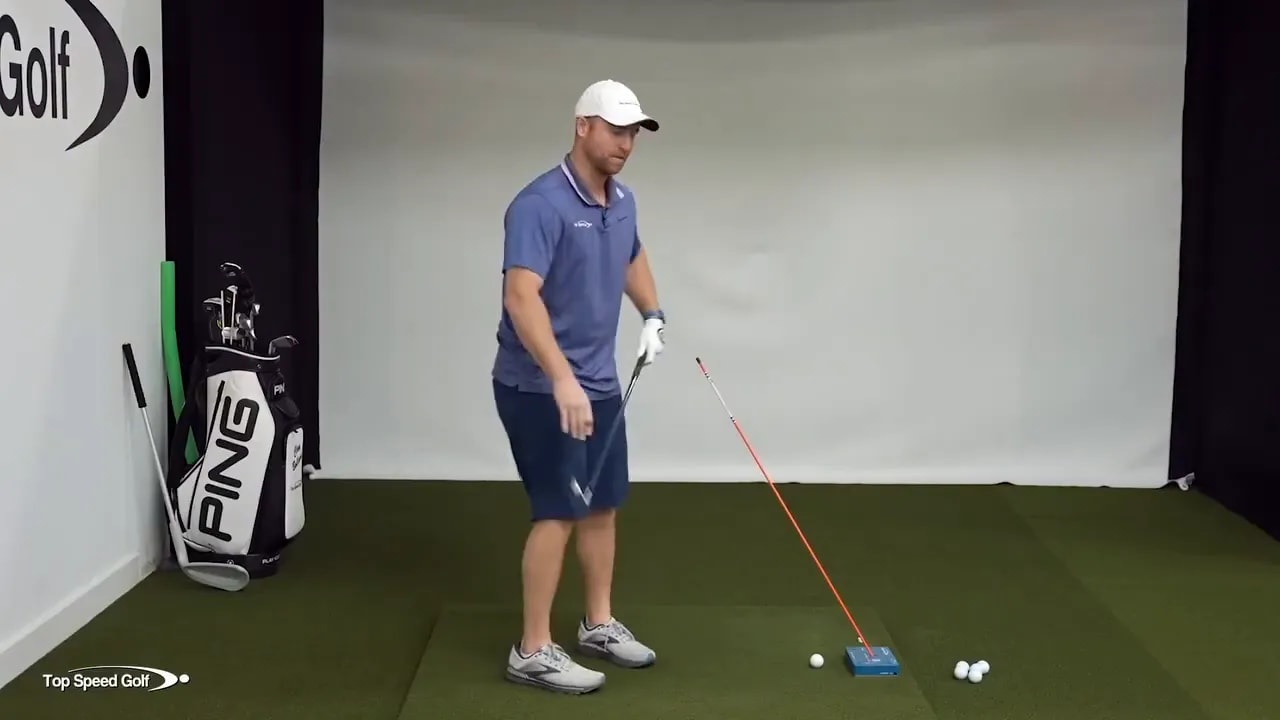
You can set up a practice station using a training block and an alignment stick. The purpose is not to force a perfect swing. It is to tell you immediately when you stand up or send your arms outward.
Set it up like this:
- Place a training block on the ground.
- Insert an alignment stick so it angles upward beside the ball.
- Place the ball on the front side of the block.
- Keep the ball at least one clubhead width inside the stick so the clubhead itself is not the issue.
- Make sure the exposed end of the stick is blunt and safe.
If you lose posture in your golf downswing, your arms will run into the stick. If you keep your shape and rotate correctly, you can miss the stick and strike the ball solidly.
Step 5: Feel your hips go back, not forward, in the golf downswing
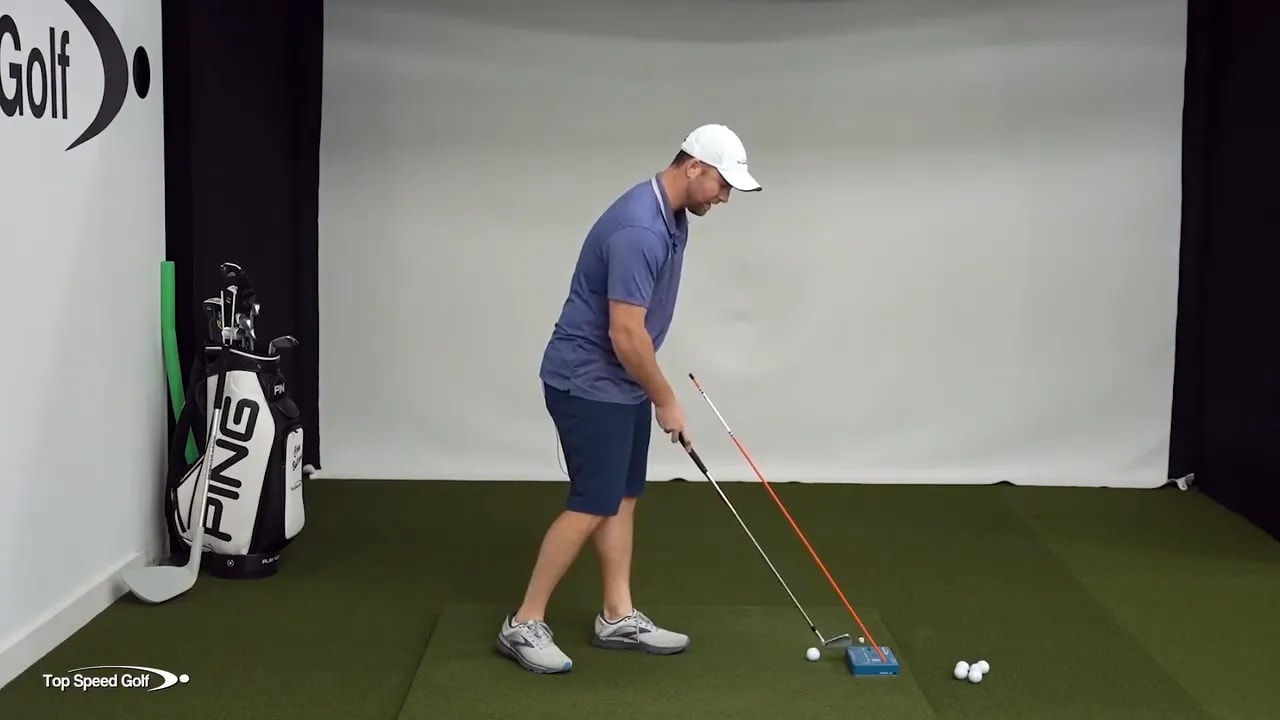
This is the heart of the fix. In better golf impact mechanics, your hips work back and open instead of moving closer to the ball.
A useful feel is this:
- Your hips move back as if they are going toward a wall behind you.
- Your chest stays inclined toward the ball.
- Your arms work down and in, closer to your body.
- Your hands feel as if they travel near your thighs.
This helps you maintain space for the club without standing up. It also encourages the kind of body rotation that many golfers lose when they flip at impact.
If you have spent years playing golf with a steep, lifting motion, this may feel unusually low or close to the ground at first. That feeling is common. The drill is there to show you that the lower, more connected motion is actually the better one.
Step 6: Keep your head centered and avoid sliding in golf
Another part of this pattern is controlling lateral motion. Many golfers do not just stand up in the downswing. They also slide too far toward the target.
That slide can make solid golf contact even harder because it changes where the club bottoms out and pushes your body out of position.
A better feel is:
- Keep your nose from drifting too far past the ball.
- Let your chest move lower while your upper body stays more centered.
- Rotate through the ball instead of lunging across it.
You are not trying to freeze your head in place. You are trying to stop the kind of forward slide that forces your body to stand up and your hands to rescue the strike.
Step 7: Add forward shaft lean to stop flipping in golf
Many golfers can stay down better for a swing or two, but then they hit heavy shots because they still throw the clubhead early. That is why the second half of the fix is so important.
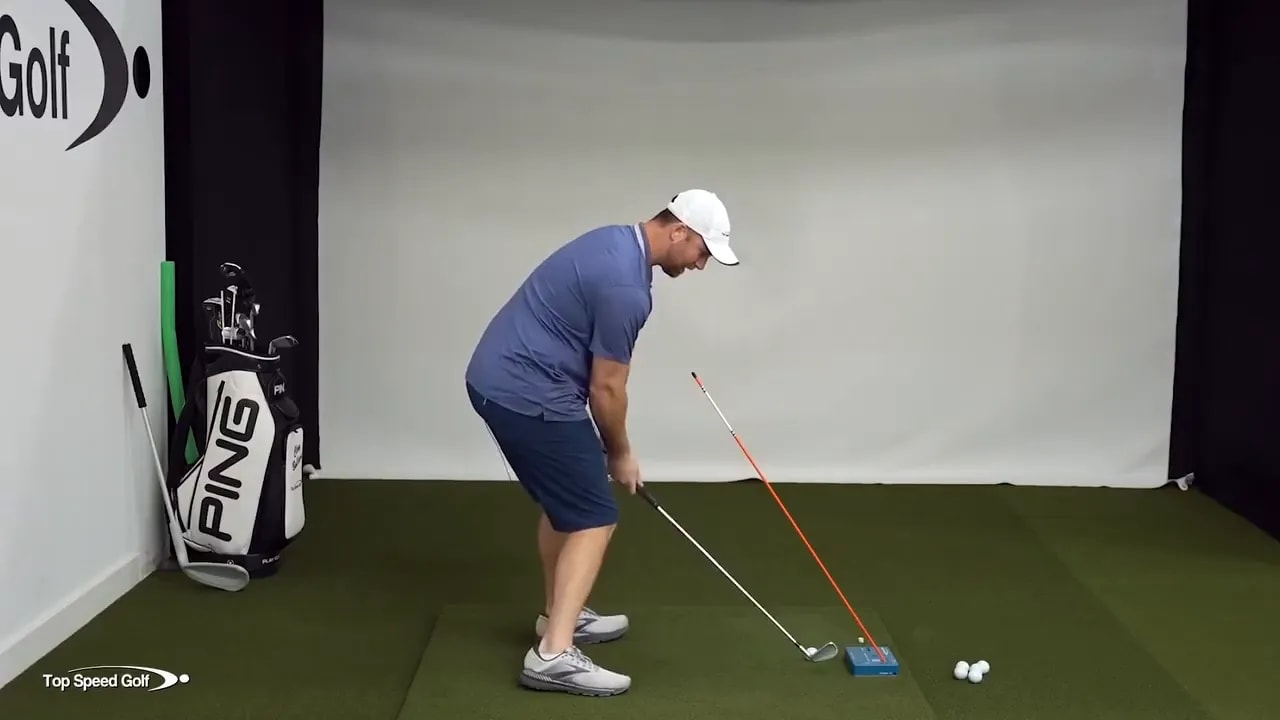
To compress the ball in golf, you need the hands leading the clubhead through impact. With irons, that means some forward shaft lean. Not an exaggerated amount, but enough that the club can strike ball then turf instead of bottoming out too early.
Here is the simple concept:
- If you stay in posture and cast the club, the club will dig.
- If you stay in posture and rotate with shaft lean, the club can glide through the turf.
This is what ties the whole golf fix together. Staying in posture without improving the release can create a new problem. Staying in posture while rotating and keeping the hands ahead produces the strike most golfers are looking for.
Step 8: Practice this golf drill in the right order
Do not jump straight to full speed. The best way to improve this golf motion is to build it in layers.
Start with slow rehearsals
Make a few slow-motion downswings without a ball. Feel your hips move back, your arms stay closer in, and your chest keep its inclination.
Add the obstacle feedback
Swing slowly enough that you can miss the stick on purpose. If your arms hit the stick, reset and make the motion smaller.
Hit short shots first
Begin with soft golf shots. A smooth half swing makes it easier to feel posture, rotation, and shaft lean together.
Build toward full swings
Once contact improves, gradually increase speed. The goal is to keep the same delivery pattern as the motion gets longer and faster.
This progression works well because it trains movement quality before power. In golf, trying to fix impact at full speed usually brings back the old compensation.
Step 9: Apply the same golf concept to different clubs
This correction is not limited to one club. The same basic golf pattern can help with wedges, mid irons, and even longer clubs.
The key ideas remain the same:
- Keep your posture through the strike.
- Open your hips instead of thrusting them toward the ball.
- Let the club release farther in front.
- Avoid flipping to save the strike.
The exact amount of shaft lean and ball position changes from club to club, but the underlying body motion is consistent. That is one reason this is such a useful golf fix. It addresses movement patterns, not just a single isolated shot.
Step 10: Avoid the most common golf mistakes with this drill
Even a good drill can create confusion if you use the wrong feel. Watch for these mistakes in your golf practice.
Trying to stay down without rotating
If you only think about lowering your body, you may stick the club in the ground. Rotation and shaft lean must work with posture.
Keeping the arms too far away
The goal is not to reach for the ball. Your hands and arms should feel more connected to your body on the way down.
Sliding instead of turning
If your weight shift becomes a lunge, you may still lose your angles. In golf, a centered turn is usually more helpful than a big slide.
Practicing too fast
Speed hides mistakes. Train the motion slowly enough that the feedback from the stick is clear.
Using an unsafe setup
Always make sure the end of the alignment stick is blunt or protected. The drill should give feedback, not create risk.
Step 11: Use a quick golf self-check after every practice session
If you are trying to make this change stick, use a simple checklist after each bucket of golf balls:
- Did you avoid hitting the stick with your arms?
- Did your hips feel as if they moved back and opened?
- Did your hands stay more in front through impact?
- Did the club strike the turf more cleanly?
- Did tight-lie contact improve?
- Did the ball sound more solid?
If you can answer yes to most of those, your golf impact pattern is likely moving in the right direction.
Step 12: Know when this golf fix is the right one for you
This is a strong match for your golf swing if you:
- Hit thin irons often
- Struggle from firm or tight turf
- Feel your body rising through impact
- Flip the club instead of compressing the ball
- Have trouble getting your hips open at impact
If those patterns describe your game, working on posture retention, hip depth, and forward shaft lean can improve both contact and consistency.
FAQ
Why do I hit golf shots thin from tight lies but better from fluffy lies?
That usually means your golf swing is losing posture and delivering the club too vertically. A fluffy lie raises the ball and gives you more margin for error. A tight lie exposes early standing up and poor low-point control.
Can one golf fix really improve standing up, flipping, and poor rotation?
Yes, because those problems often come from the same movement pattern. When you keep your posture, move your hips back, and let the hands lead, your golf swing has less need to flip or stall.
Is this golf problem just a club lie-angle issue?
Not usually. Club fitting matters, but if your body rises and the shaft gets too upright during the swing, small equipment changes will not fully solve the issue. In many golf swings, the movement pattern is the larger problem.
What should my hands feel like in this golf drill?
Your hands should feel closer to your body on the way down, then more in front of the clubhead through impact. That helps your golf swing avoid casting and supports cleaner turf contact.
Will this golf drill help with every club?
The core movement can help with nearly every club in your golf bag. The exact setup and amount of shaft lean may vary, but maintaining posture and rotating well are useful across many shots.
Final takeaway for better golf contact
If your golf swing feels like a collection of separate problems, there is a good chance they start from one breakdown in the downswing. Standing up out of posture tends to force compensations that hurt compression, face contact, and consistency.
Focus on three connected pieces:
- Keep your posture
- Move your hips back and open
- Deliver the hands forward instead of flipping
Practice the feedback drill slowly, then build toward full swings. For many golfers, that one change can clean up several impact faults and make solid golf contact feel much more repeatable.
0 Comments