


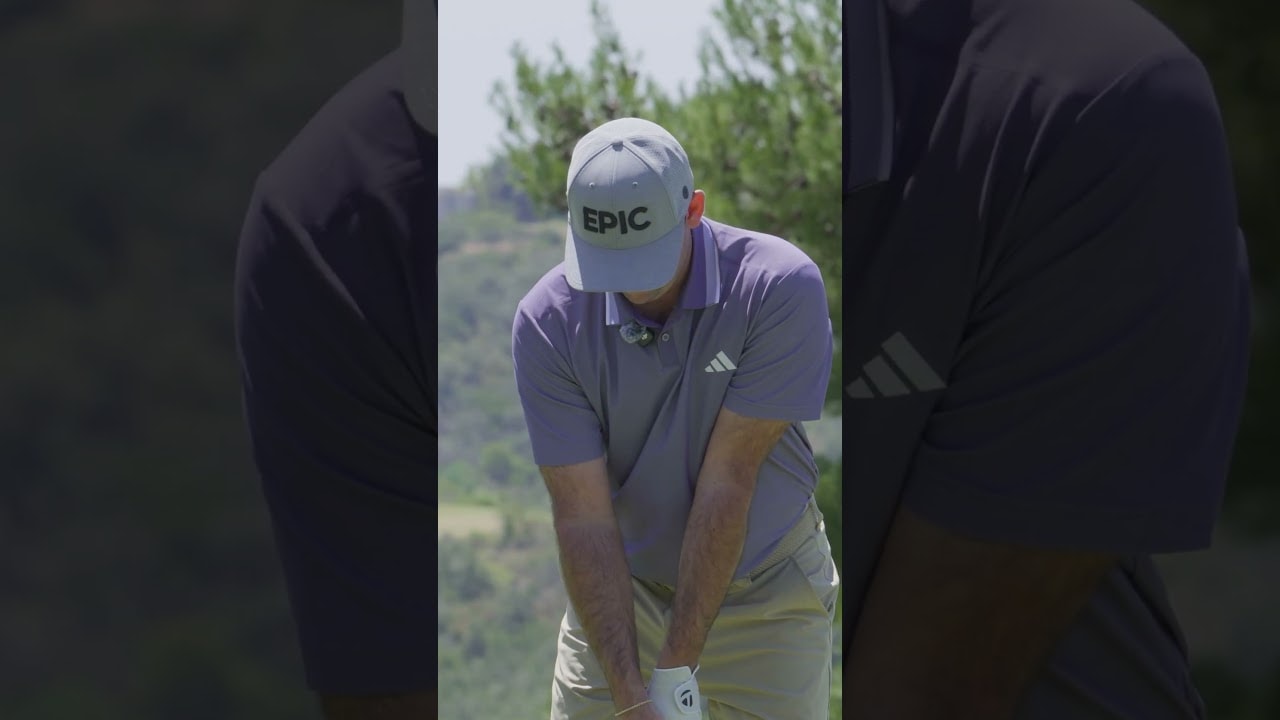
If you want a more reliable ball flight in the wind, better contact under pressure, and a swing that feels tighter and more connected, the 3-quarter knockdown is one of the best shots to learn. It is especially useful when full swings start to feel loose or when you need to keep the ball on a lower, more controlled trajectory.
The 3-quarter knockdown is not just a specialty shot for bad weather. It can also be a go-to stock swing when you need accuracy over maximum distance. By shortening the swing and improving connection, you can reduce timing issues and make your strike pattern more predictable.
This guide explains how to hit a 3-quarter knockdown step by step, why it works, and what common mistakes to avoid.
Step 1: Understand what a 3-quarter knockdown is
A 3-quarter knockdown is a controlled golf shot played with a shorter-than-full swing to produce a lower, more penetrating flight. The goal is not simply to hit the ball low. The goal is to create a swing that feels compact, connected, and stable through impact.
Compared with a full swing, a 3-quarter knockdown usually features:
- A shorter backswing
- A shorter finish
- Less effort
- More body and handle control through the strike
- A flight that stays more “on a string” instead of ballooning
This shot is useful when:
- You are playing into a breeze
- Wind is exaggerating your curve or strike pattern
- Your full swing feels slightly off
- You want to tighten up your ball striking
- You need a more dependable stock shot with the irons
Step 2: Know why the 3-quarter knockdown helps your ball striking
One of the biggest advantages of the 3-quarter knockdown is that it tends to simplify the motion. When the swing gets too long or disconnected, many players start throwing the clubhead at the ball. That often creates timing issues, inconsistent face control, and poor contact.
With a shorter, connected motion, you are more likely to:
- Keep your hands and body working together
- Avoid excessive clubhead throw
- Control the low point more consistently
- Manage start line and curvature better
- Produce a stronger flight in windy conditions
This is why many golfers use this shot as a reset. If your normal swing feels a little scattered, a 3-quarter knockdown can tighten everything up.
Step 3: Set up for a controlled 3-quarter knockdown
You do not need a completely different setup, but your address position should support control rather than speed.
Focus on these basics:
- Balance first: Settle into an athletic stance where you feel centered and stable.
- Stay organized: Avoid tension, but do not get too loose in the arms and hands.
- Club selection matters: Often, golfers use a little more club and make a smoother swing rather than forcing a lower shot with too much effort.
- Intent matters: Think controlled, not hard. A knockdown works best when you remove excess effort.
The setup should make you feel ready to hit a compact shot, not a max-speed full swing.
Step 4: Make the backswing shorter and more connected
The heart of the 3-quarter knockdown is the shorter motion. A good checkpoint is that the swing does not keep traveling just for the sake of creating speed. Instead, it stays compact and connected.
Connection here means your hands, arms, and body stay working together. The club should not race behind you or wrap around you too quickly. When that happens, the downswing often becomes a rescue move with hand manipulation.
On the way back, focus on:
- A controlled turn
- Arms staying connected to the motion of your torso
- No rushed lift or overrun at the top
- A swing length that feels about three-quarters, not full
If you tend to overswing, this shorter backswing alone can improve your strike quality.
Simple feel for the backswing
Think of the club, hands, and chest traveling together. You want the motion to look and feel organized, not long and loose.
Step 5: Swing the handle, not just the clubhead
A key idea in a solid 3-quarter knockdown is that you are not trying to flip or throw the clubhead at the ball. Instead, the motion is driven more by the movement of the handle and the center of your body staying connected.
This helps in two big ways:
- It keeps the swing from becoming handsy through impact
- It improves face and strike control
When golfers lose connection, they often try to save the shot by adding last-second hand action. That can produce thin shots, hooks, blocks, or inconsistent trajectory. A better pattern is to keep the motion unified so the club can arrive more predictably.
For many players, this one thought helps: move the handle through with your body, instead of throwing the head past your hands.
Step 6: Keep the hands and body connected through impact
The strike is where the 3-quarter knockdown earns its value. Through impact, you want the hands and the center of your body to remain synced up. That does not mean stiff or frozen. It means coordinated.
Good signs of connection through impact include:
- The club is not passing your body too early
- Your arms are not separating wildly from your torso
- The follow-through stays compact
- The shot starts on line with a penetrating flight
Poor signs include:
- A sudden throw of the clubhead at the ball
- A flippy release
- A wraparound finish that appears too fast
- A ball flight that floats, curves too much, or loses control in the wind
If you want this shot to work, think of impact as an extension of the connected motion you created in the backswing.
Step 7: Use the 3-quarter knockdown when the wind picks up
The 3-quarter knockdown is especially effective in places where wind is a major factor. Breeze into your face or wind climbing uphill can exaggerate every small mistake. Shots that normally look fine can start drifting, climbing, or curving more than expected.
A knockdown helps because the lower, more controlled flight is less vulnerable to that exaggeration. It also gives you a clearer read on your strike quality. If your swing path or face control gets loose, windy conditions tend to expose it quickly.
Use this shot when you want to:
- Take excess height off the ball
- Reduce the effect of a headwind
- Hit a straighter, more boring flight
- Rely on structure and connection instead of timing
Even in calm weather, practicing knockdowns can sharpen your overall ball striking.
Step 8: Practice the 3-quarter knockdown with a simple progression
If you are learning the 3-quarter knockdown, do not jump straight into full-speed range sessions. Build the motion in stages.
Drill 1: Half swing to compact finish
Hit short shots with a half backswing and a short finish. Your goal is to feel the body and hands moving together. Do not worry about distance at first.
Drill 2: Three-quarter length, same rhythm
Gradually lengthen the swing to three-quarters without adding hit impulse. The shot should still feel smooth and organized.
Drill 3: Hold your finish
After each shot, hold your finish and check whether it stayed compact and balanced. If the club wrapped around too quickly, you likely added too much clubhead throw.
Drill 4: Wind window practice
Pick a visual height window and try to keep every shot under it. This trains trajectory control instead of random contact.
Drill 5: Stock-yardage mapping
Learn what your three-quarter distances are with a few irons. A knockdown becomes much more useful once you know how far it carries with your normal tempo.
Step 9: Avoid the most common 3-quarter knockdown mistakes
Many golfers misunderstand this shot. They try to force the ball low instead of building a connected motion. Here are the mistakes that usually cause trouble.
Mistake 1: Swinging too hard
A knockdown is a control shot. If you go after it aggressively, you often add spin, height, and timing issues.
Mistake 2: Chopping down on it
Trying to hit sharply down can lead to poor contact. A better approach is a compact, connected swing with controlled flight.
Mistake 3: Throwing the clubhead
This is one of the biggest problems. Once the clubhead gets thrown at the ball, the motion becomes manipulative and difficult to repeat.
Mistake 4: Letting the club wrap around too early
If the club races around your body, it is often a sign that the motion lost structure and connection.
Mistake 5: Trying to hit every knockdown extremely low
Not every 3-quarter knockdown needs to be a punch shot. The real goal is a more controlled, penetrating trajectory.
Step 10: Build the 3-quarter knockdown into your on-course strategy
Once you trust the 3-quarter knockdown, it can become more than an emergency swing. It can be part of your normal decision-making.
Use it when:
- You value accuracy more than distance
- The wind is affecting full shots
- Your timing feels off that day
- You want to remove one side of the course from play
- You need a dependable iron swing under pressure
Many golfers play better when they choose a controlled shot shape and trajectory more often, rather than trying to hit perfect full swings every time.
If your ball striking gets sloppy, this shot can be a reliable reset because it encourages structure, connection, and a more disciplined release pattern.
Step 11: Use this 3-quarter knockdown checklist before every shot
When you are standing over the ball, keep your process simple.
- Pick the trajectory: lower and controlled
- Choose enough club: avoid forcing speed
- Commit to a shorter swing: three-quarters, not full
- Stay connected: hands, arms, and body moving together
- Swing the handle through: do not throw the clubhead
- Finish compact: balanced and under control
This kind of checklist helps you avoid technical overload and turn the 3-quarter knockdown into a repeatable pattern.
Step 12: Know what success looks like
A good 3-quarter knockdown usually has a few clear characteristics:
- The ball launches on a controlled, moderate window
- The flight looks stable and penetrating
- The strike sounds compressed
- The shot holds its line well
- Your finish is shorter and more connected than a full swing
If the shot feels easy and the flight looks disciplined, you are probably doing it correctly.
FAQ: 3-quarter knockdown golf shot
Is a 3-quarter knockdown only for windy conditions?
No. Wind is one of the best times to use it, but it is also useful anytime you want a tighter, more controlled swing. Many golfers use it as a stock accuracy shot or as a reset when their full swing feels off.
How is a 3-quarter knockdown different from a punch shot?
A punch shot is usually much lower and more extreme. A 3-quarter knockdown is still a full-bodied swing, just shorter and more controlled. The goal is a penetrating trajectory, not necessarily the lowest flight possible.
Should you use more club for a 3-quarter knockdown?
Often, yes. Many golfers choose a little more club and make a smoother three-quarter swing rather than trying to force distance with speed. That usually improves trajectory and strike control.
Why does the 3-quarter knockdown improve contact?
Because it reduces excess motion and encourages better connection. A shorter swing makes it easier to keep your hands, arms, and body working together, which reduces the need for last-second clubhead manipulation.
What does “connected” mean in the golf swing?
Connection means your arms, hands, and torso stay coordinated during the swing. In a connected motion, the club does not get overly independent, and you do not have to throw the clubhead at the ball to recover.
Can higher-handicap golfers learn the 3-quarter knockdown?
Yes. In fact, many recreational golfers benefit from it because it simplifies the swing. A controlled three-quarter motion is often easier to repeat than a full-effort swing.
Final takeaway
The 3-quarter knockdown is one of the most practical shots you can add to your game. It helps you flight the ball down, handle wind better, and improve strike quality by promoting a shorter, more connected motion.
If you remember only three things, remember these:
- Make the swing shorter
- Keep the motion connected
- Do not throw the clubhead at the ball
Master those basics, and the 3-quarter knockdown can become a dependable scoring shot instead of just a rescue option.
0 Comments