


Matching elite golf driver numbers is far harder than most players realize. It is not just about swinging faster or trying to hit the ball higher. It is about blending launch, spin, carry, apex, strike location, loft, shaft profile, and head design into one usable shot pattern.
That is what makes this challenge so interesting. With only 10 swings each, the goal was to fit one player closer to Nelly Korda’s driver data and another closer to Rory McIlroy’s, using the new TaylorMade Qi4D driver and a deliberately poor starting setup. The result is a great lesson in golf fitting, because it shows how small equipment changes can move ball flight quickly, but also how player delivery still controls everything.
If you want to understand how a proper golf driver fitting works in the real world, this is a useful case study. The challenge format may be fun, but the fitting ideas are practical and highly relevant to your own golf game.
Table of Contents
- Step 1: Start with the target golf numbers, not with the club
- Step 2: Use loft and head design first to move launch and spin in golf
- Step 3: In golf fitting, the shaft is about delivery, not magic distance
- Step 4: Fine-tune golf ball flight with tee height, loft sleeve, and weight position
- Step 5: Chasing Rory’s golf numbers shows the difference between good fitting and elite speed
- Step 6: In golf, strike pattern often matters more than one perfect swing
- Step 7: Use the final swings to settle on the best golf fit, not endless changes
- Step 8: Apply these golf fitting lessons to your own driver setup
- Step 9: Understand what this golf challenge really proves
- FAQ
Step 1: Start with the target golf numbers, not with the club
The smartest part of this challenge was that the fitting started with a clear destination. Instead of swapping heads and shafts at random, the benchmark was fixed from the beginning.
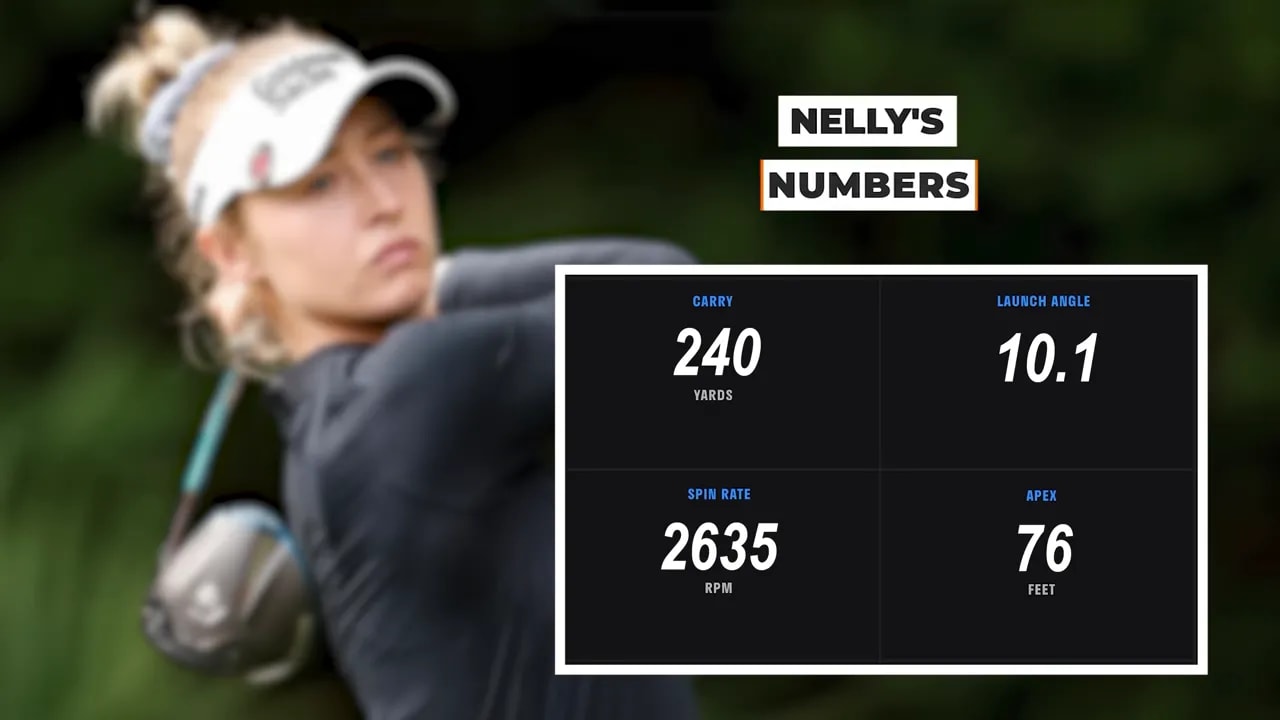
For Nelly Korda, the target numbers were:
- Carry: 240 yards
- Apex: 76
- Launch: 10.1 degrees
- Spin: 2635 rpm
For Rory McIlroy, the key numbers discussed were:
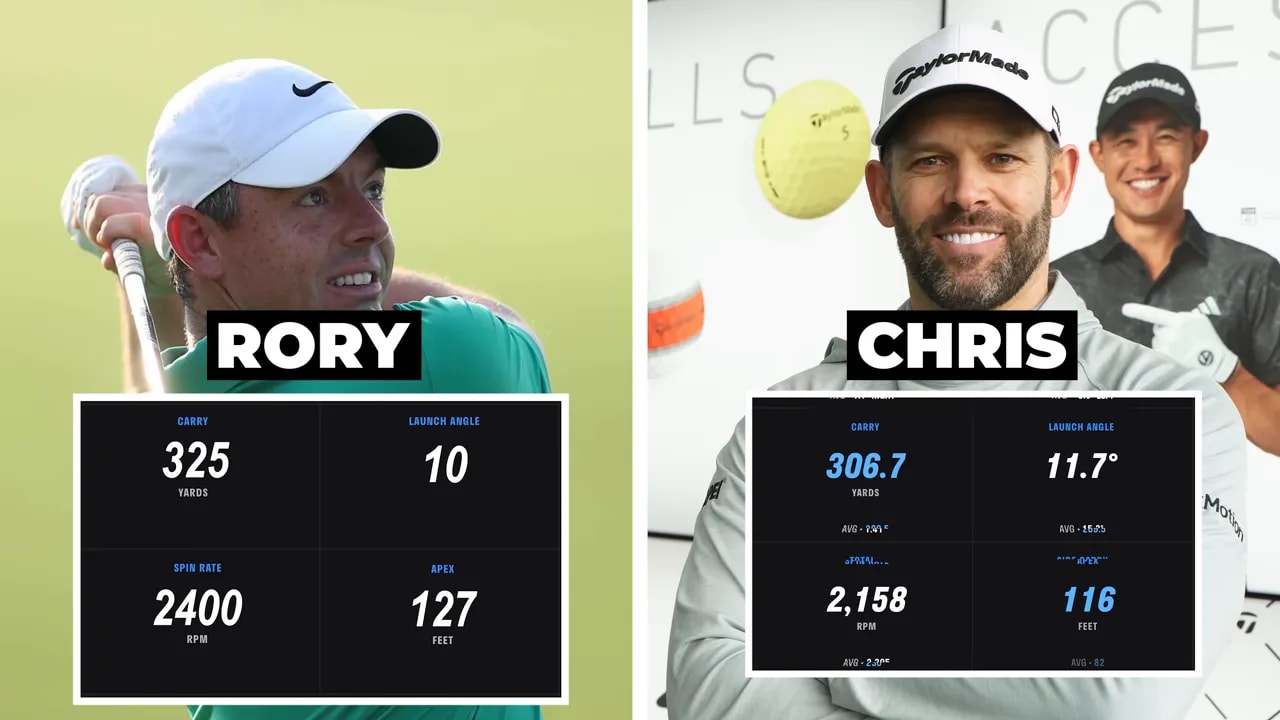
- Carry: 325 yards
- Apex: 136
Other Rory numbers such as launch and spin were also being chased throughout the session, even though the carry gap was always likely to be the hardest part.
This is an important golf fitting principle. You do not fit a driver by guessing what “looks right.” You fit it by deciding what ball flight and performance window you are trying to produce.
For most amateur golf players, this is where fittings often go wrong. Many golfers choose a driver because of loft stamped on the head, a shaft label, or a tour player association. A fitter starts somewhere else entirely:
- What is your current ball flight?
- What numbers need to change?
- Which adjustment is most likely to create that change?
Step 2: Use loft and head design first to move launch and spin in golf
The first fitting challenge was getting Eloise closer to Nelly Korda’s driver data. The opening numbers were not bad, but they were still off in important ways. Spin was relatively close early on, but launch and apex needed work.
The first adjustment was the loft sleeve. Starting in an 8-degree Qi4D LS head, the loft was increased from 6 degrees up to 8 degrees. That change immediately made sense because the target launch was modest, but the original setup had been intentionally made unsuitable.
From there, the fitter moved from the LS head into the standard head. Why? Because the ball was launching and peaking too high in one configuration, and the challenge was not just to create a good drive, but to create Nelly-like numbers.
This is a subtle but useful golf lesson. A shot can look solid and still be the wrong shot if the data does not match the goal.
As the fitting progressed, one pattern became clear:
- The launch needed to come down from the mid-teens
- The spin needed to stay near the mid-2000s
- The apex needed to rise into a narrower target window
That led to another crucial move: switching into the Max head. The reasoning was simple. More launch and more spin were needed without totally disrupting the strike pattern.
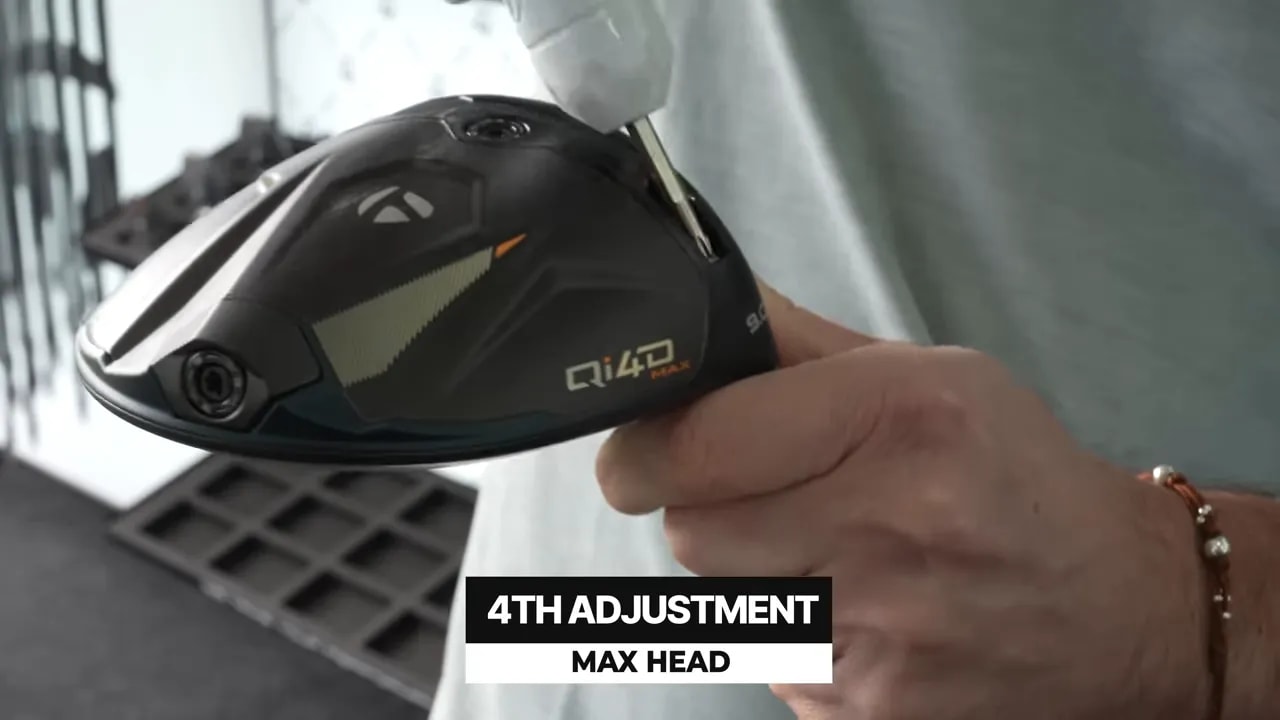
The Max head quickly produced a stronger result. Spin got very close to the target, around 2500 to 2600 rpm, and the apex also improved. At that point, the fit was getting much more specific. Instead of broad changes, the next tweaks were aimed at fine-tuning.
For your own golf fitting, this is often the right order of operations:
- Choose the right head category first
- Use loft to move launch and spin
- Then use weights and shaft feel to refine impact and delivery
Step 3: In golf fitting, the shaft is about delivery, not magic distance
One of the better fitting moments came when help was used to identify a shaft problem. The original shaft was described as low-rotation with a very stiff lower section. In practical terms, that meant the player was not getting enough help from the bottom of the shaft to deliver the club in a way that added the right launch and spin.
The recommendation was to move into a lighter, softer option, a REAX 50S. The hope was not that the shaft would magically transform the shot on its own. The goal was to improve how the clubhead arrived at impact.
That distinction matters in golf. Shafts do not perform in isolation. They influence:
- How the head feels during the swing
- How the player times the release
- Where impact tends to occur on the face
- Whether dynamic loft and closure rate become easier to control
After the shaft change, launch moved closer to the target, but apex was still slightly low and spin still needed refinement. That is exactly how a real fitting often unfolds. One change solves one problem while exposing the next one.
If you are serious about better golf driver performance, this is why chasing a “tour shaft” can be misleading. A shaft should help you repeat impact, not impress you with a label.
Step 4: Fine-tune golf ball flight with tee height, loft sleeve, and weight position
Once the Nelly challenge got close, the final changes became extremely precise. Tee height was lowered to influence launch. Then the loft sleeve was nudged from 9 degrees to 9.75 degrees.
That adjustment was designed to do two things:
- Increase effective loft slightly
- Close the face angle a touch
This produced one of the best outcomes of the session. Launch moved to 10.9, very close to Nelly’s 10.1. The apex reached 74, almost exactly on top of the 76 target. Spin was slightly low, but the overall package was extremely close.
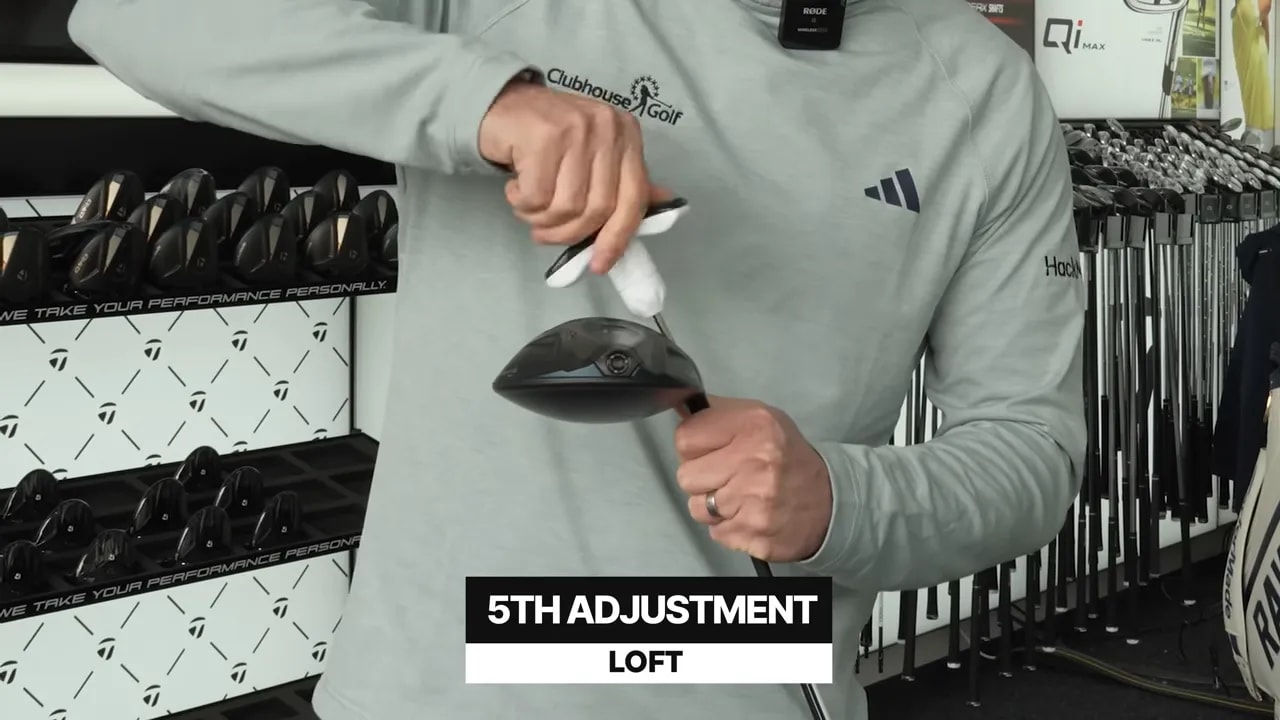
The last available tweak was moving the sole weight, following the earlier backup recommendation. The final shot produced a launch of 10.8 with decent spin, although apex stayed a little low.
The key fitting takeaway is that golf ball flight responds to multiple overlapping inputs:
- Loft sleeve changes launch, spin, and face angle
- Weight placement changes spin tendencies, forgiveness, and flight bias
- Tee height changes strike location and launch window
- Strike location can override almost everything else
That last point came up repeatedly. Several shots were judged partly on whether impact was high on the face, low, or toward the heel or toe. In driver fitting, strike quality is often the hidden reason one shot launches perfectly and the next does not.
Step 5: Chasing Rory’s golf numbers shows the difference between good fitting and elite speed
The second half of the challenge flipped the roles. This time, the task was to get closer to Rory McIlroy’s numbers in 10 swings.
Right away, the biggest obstacle was obvious. Carry was miles short. The starting number was 278 yards against a target of 325. That 47-yard difference says a lot about tour-level golf speed. You can improve launch conditions through fitting, but a fitting alone cannot manufacture Rory’s ball speed.
That is why the smart approach was to ignore carry initially and focus on the numbers that were more realistically adjustable:
- Launch
- Spin
- Apex
The first instinct was to lower launch, so the head was changed to the LS version. That made sense because Rory’s flight characteristics demand a powerful but controlled launch window, not a floaty, high-spin shape.
Some early swings did not provide clean feedback because of poor strikes, including one where the ground was contacted first. This is another honest golf fitting reality. Bad strikes muddy the data. If impact quality is not stable, equipment decisions become harder to trust.
Still, one thing became clear. The loft needed to come down. Guidance was to reduce loft from the existing 12.5-degree setup, potentially as low as 8.5 degrees depending on how the flight responded.
That lower-loft move helped. One of the better swings produced a launch and spin combination that looked much more appropriate, even though carry still could not approach Rory territory.
Step 6: In golf, strike pattern often matters more than one perfect swing
As the Rory fitting continued, several good examples showed why fitters care so much about strike pattern. A shot hit high on the face inflated launch. A heel strike changed carry in a way that made the data less representative. A toe strike lowered spin.
This is not random. Driver face impact strongly influences gear effect, which changes both spin and curvature. In practical golf terms:
- High-face strikes often launch higher with less spin
- Low-face strikes tend to spin more
- Toe strikes can reduce spin and influence draw bias
- Heel strikes often add spin and influence fade bias
Because the strike pattern was inconsistent, the fitter made a smart decision and changed the weight position in the sole, then later asked for help on the shaft.
The feedback was revealing: the shaft was the issue because the strike pattern was “all over that face.” The recommendation was a shaft with a more active tip section to help the ball come more out of the middle more often.
That is a very practical golf lesson. Sometimes the best shaft is not the one that produces the single best ball, but the one that produces the best center-face contact most often.
Step 7: Use the final swings to settle on the best golf fit, not endless changes
After the shaft adjustment in the Rory challenge, the launch improved noticeably. Spin was a little high on one attempt and apex a bit low, but the overall direction was good enough to stick with.
The final swing turned out to be the strongest one. The launch was excellent, spin was strong, apex was respectable, and carry finished roughly 20 yards short of Rory’s benchmark. In context, that was an impressive result.
The real fitting lesson here is not whether the exact tour number was matched. It is understanding when to stop chasing perfection.
In golf fitting, endless changes can create confusion. Once the numbers move into a better window and the strike quality improves, the best option is often to commit rather than keep searching for a theoretical perfect setup.
A good fitter is not only someone who knows what to change. It is someone who knows when enough has been achieved.
Step 8: Apply these golf fitting lessons to your own driver setup
You do not need Rory McIlroy’s speed or Nelly Korda’s precision to learn from this challenge. The same core fitting ideas apply to everyday golf.
If your driver is not performing, work through these questions in order:
- What numbers are hurting you most?
Is launch too high? Is spin too low? Is apex too flat? Is carry inconsistent? - Is the head style right for your delivery?
A low-spin head is not always better. Some players need more stability and more spin to optimize distance. - Is loft helping or hurting?
Many golfers use less loft than they need. Loft can improve carry, strike efficiency, and consistency. - Is the shaft helping center contact?
Feel matters because timing matters. A shaft that improves impact location is often a big win. - Are your misses coming from strike pattern rather than swing intent?
A different tee height, weight setting, or shaft profile may tighten strike location.
If you want a simple summary, remember this: better golf driver performance comes from matching the club to your delivery, not forcing your delivery to suit the club.
Step 9: Understand what this golf challenge really proves
This challenge proves two things at once.
First, modern golf equipment is highly adjustable. In just a few swings, launch and spin can move dramatically when loft, head model, shaft profile, and weights are used intelligently.
Second, tour numbers are not just a product of equipment. They are created by elite delivery. You can move closer to the right flight window through fitting, but you cannot separate the numbers from the player producing them.
That is why the most successful moments in this session came when the fitting worked with the player’s tendencies rather than against them. The best changes improved strike, narrowed launch, and brought spin into a useful range. Those are the exact outcomes that matter for lower-scoring golf.
FAQ
Can a golf fitting really change launch and spin in only a few swings?
Yes. Loft sleeve changes, head swaps, weight movement, and shaft changes can all alter launch and spin quickly. The challenge showed that meaningful changes can happen within just a handful of swings when the fitter is targeting the right numbers.
Why was it harder to match Rory McIlroy’s golf numbers than Nelly Korda’s?
The biggest reason was carry distance. Rory’s 325-yard carry depends on exceptional speed, not just optimized equipment. Launch and spin can be adjusted through fitting, but tour-level ball speed cannot be created by the club alone.
What is more important in golf driver fitting, the head or the shaft?
Both matter, but they influence performance in different ways. The head and loft setting often make the biggest changes to launch, spin, and forgiveness. The shaft often helps with timing, feel, and strike location. The best fit usually comes from getting both right together.
Does lower spin always mean better golf driver performance?
No. Too little spin can make shots fall out of the air, reduce control, and create inconsistent carry. The goal in golf is not the lowest spin possible. It is the right spin for your speed, launch, and strike pattern.
Why does strike location matter so much in golf driver data?
Impact location changes launch, spin, and curvature through gear effect. A high-face strike often launches higher with less spin, while low-face strikes usually spin more. Toe and heel strikes also affect spin and direction. That is why fitters pay so much attention to face contact.
What should you focus on first if your golf driver is underperforming?
Start with the ball flight problem you are trying to solve. If launch is too high, spin too low, or contact too inconsistent, those issues should guide the fitting. Choosing a driver based on marketing or tour usage is far less effective than fitting the club to your own delivery.
For any golfer, this kind of challenge is a useful reminder that good golf fitting is part science and part pattern recognition. You look at the numbers, but you also read the strike, the shape, and the player response. When those pieces line up, even 10 swings can get you surprisingly close to world-class driver windows.
0 Comments