
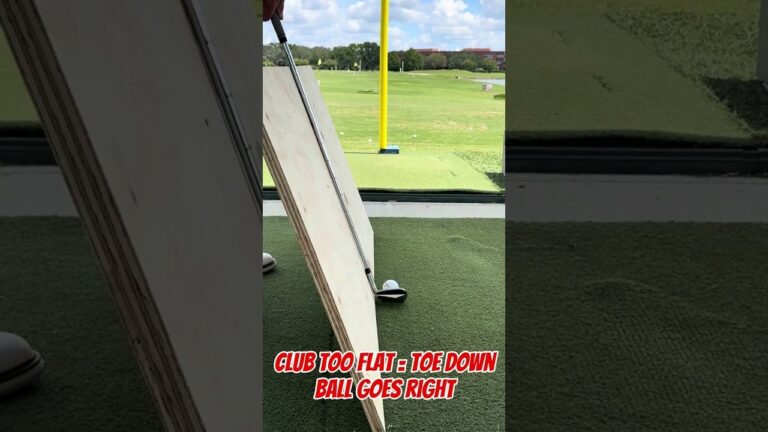

Golf club lie angle affects how the sole of the club meets the ground at impact. If the lie angle is too upright or too flat for your setup and motion, the clubface can point left or right of your intended target even when the swing feels solid. For many golf players, understanding lie angle is one of the simplest ways to improve start direction and consistency.
This guide explains what lie angle means in golf, how it influences ball flight, how to check it, and how training aids can help you build a better delivery pattern. If you have ever wondered why good contact still produces pulls, pushes, or inconsistent turf interaction, lie angle is a smart place to start.
Table of Contents
- Step 1: Understand what lie angle means in golf
- Step 2: Know why lie angle matters for ball flight and direction
- Step 3: Separate club fitting lie angle from swing-delivered lie angle
- Step 4: Learn the signs that your golf lie angle may be off
- Step 5: Check your lie angle in a simple, practical way
- Step 6: Use swing plane training to improve effective lie angle in golf
- Step 7: Avoid common golf mistakes when working on lie angle
- Step 8: Build a simple golf practice plan for lie angle awareness
- Step 9: Decide when to seek a golf fitting or professional help
- Step 10: Use this quick checklist before changing your golf clubs
- Key takeaway on lie angle in golf
- Frequently asked questions
Step 1: Understand what lie angle means in golf
In golf, lie angle is the angle formed between the shaft and the sole of the club when the club is set in its proper playing position.
That angle matters because the club is designed to sit on the turf in a certain way. At impact, the goal is not just to hit the ball with speed. You also want the clubhead to arrive in a position that allows the face and sole to work as intended.
Here is the simple version:
- Too upright means the toe sits up and the heel tends to interact more with the ground.
- Too flat means the heel sits up and the toe tends to interact more with the ground.
- Matched correctly means the club can return to the ball and turf more neutrally.
Lie angle is discussed most often with irons, wedges, and training for swing plane. It is especially important in golf because even a small error in impact delivery can change where the ball starts.
Step 2: Know why lie angle matters for ball flight and direction
Many golf players focus on clubface and swing path, which are both important. But lie angle also affects directional control.
When the clubhead strikes the turf or approaches impact with the toe or heel raised too much, the face orientation can effectively shift. That can make the ball start offline.
Common patterns include:
- Upright lie tendencies can encourage shots that start more left for a right-handed golf player.
- Flat lie tendencies can encourage shots that start more right for a right-handed golf player.
- Poor sole interaction can hurt contact quality and distance control.
This is why lie angle is not only a club fitting topic. It is also a movement and delivery topic in golf. Your clubs may be built correctly, but if your motion delivers them in a way that changes the effective lie, the result can still be inconsistent.
Step 3: Separate club fitting lie angle from swing-delivered lie angle
One of the most common golf misconceptions is thinking lie angle is only about bending clubs more upright or flat. In reality, there are two related issues:
- Static or fitted lie angle, which refers to how the club is built.
- Dynamic lie angle, which refers to how the club arrives at impact during your swing.
You need both to work together.
If your irons are not fit well, you may fight directional misses even with a good motion. But if your swing changes the delivery dramatically, club fitting alone may not solve the problem.
For example, a golf player may stand the shaft up through impact or drop it too far under the ideal delivery. In that case, the effective lie changes, and the turf interaction changes with it.
That is why golf instruction sometimes pairs lie angle work with swing plane training. Better plane and better delivery can help your impact match the club’s design.
Step 4: Learn the signs that your golf lie angle may be off
You do not need advanced launch tools to notice possible lie angle issues in golf. Start with ball flight and turf clues.
Ball flight clues
- Shots consistently starting left or right without an obvious face-control problem
- Good-feeling swings that still miss the target in the same direction
- Irons that seem harder to aim than woods or hybrids
Turf interaction clues
- Heel digging first
- Toe digging first
- Divots pointing one way while the shot starts another way
- Uneven wear marks on the sole over time
Setup and motion clues
- Your hands sit unusually high or low at address
- You frequently manipulate the club to make it sit flush
- Your golf swing changes shape from club to club in a way that alters delivery
These clues do not prove the exact problem, but they help you identify whether lie angle should be investigated.
Step 5: Check your lie angle in a simple, practical way
For most golf players, the goal is not to guess. It is to test. You want to see whether your current club delivery and club build are producing a reasonable lie angle at impact.
Use this basic process:
- Hit shots with a mid iron. A 7 iron is a common place to start in golf because it gives a useful middle-of-the-set picture.
- Pay attention to start direction. Look at where the ball begins, not only where it curves.
- Check turf interaction. Divots can reveal whether the toe or heel is arriving low.
- Compare several swings. One shot does not tell the full story.
- Review setup height. Hand position at address can influence delivery and make the club play more upright or flat.
If you have access to a trained fitter or golf coach, a proper lie angle assessment can save time. The key is to separate what the club needs from what your motion needs.
Step 6: Use swing plane training to improve effective lie angle in golf
Lie angle and swing plane are closely related in golf. If the club is delivered on a more appropriate plane, the sole often returns to the ground more efficiently.
This is where training aids can be useful. Some golf tools are designed to help you feel a repeatable plane without improvised setups. Instead of trying to create a makeshift angled surface, a dedicated training aid can provide a built-in reference for the movement pattern you are trying to develop.
That matters because many golfers struggle with feel versus real. What feels on plane may still deliver the club too upright or too flat. A physical reference can help you train more consistent hand path, shaft pitch, and club delivery.
When using any golf training aid for lie angle or plane work, keep the goal simple:
- Train a repeatable delivery
- Reduce excessive toe-up or heel-up impact patterns
- Match your movement more closely to your club design
Step 7: Avoid common golf mistakes when working on lie angle
Lie angle can be helpful, but it is easy to misread. Avoid these common mistakes in golf improvement.
Mistake 1: Blaming every miss on lie angle
Not every left or right miss comes from lie angle. Face angle, path, strike location, and setup all matter. Lie angle is one piece of the puzzle.
Mistake 2: Making club changes before checking your swing
If your movement changes from day to day, bending clubs may not solve the true issue. In golf, the best results usually come from evaluating both equipment and motion.
Mistake 3: Judging lie angle from one swing
One shot can mislead you. Look for patterns over multiple swings and multiple sessions.
Mistake 4: Ignoring the short irons and wedges
Golf players often test only one club, but lie angle can feel different throughout the set. Wedges especially can reveal turf interaction issues.
Mistake 5: Using a training aid without a clear purpose
A training tool should reinforce a specific movement. If you do not know whether you are too upright or too flat in delivery, the aid may become random practice.
Step 8: Build a simple golf practice plan for lie angle awareness
You do not need a complicated routine. A short, focused golf practice session can help you improve how the club returns to the turf.
Warm-up
- Make slow rehearsal swings with a mid iron
- Notice whether the club wants to sit toe-up or heel-up at address
- Keep posture and hand height consistent
Delivery practice
- Use a plane reference or training aid if available
- Make half-speed swings first
- Focus on returning the sole more evenly through impact
Ball-striking check
- Hit 5 to 10 shots with the same club
- Track start direction
- Observe divots and turf contact
Transfer to the course
- Test the same feel with another iron
- Avoid making mechanical changes on every shot
- Stay focused on one simple cue
This kind of golf practice helps you learn whether better delivery improves your directional pattern before you make equipment changes.
Step 9: Decide when to seek a golf fitting or professional help
Some lie angle problems can be improved with better movement. Others require equipment changes. Consider a golf fitting or expert evaluation if:
- Your iron misses show a clear left or right pattern over time
- Your contact feels solid but your start lines stay inconsistent
- Your divots regularly show toe-first or heel-first contact
- You have changed posture, swing shape, or hand position recently
- You bought clubs without being fit and have always struggled with the set
A good golf assessment looks at both your clubs and your impact delivery. That is especially important because dynamic lie can change with speed, posture, shaft behavior, and release pattern.
Step 10: Use this quick checklist before changing your golf clubs
Before adjusting club lie angles, run through this checklist:
- Check your setup. Are your hands too high or too low?
- Check your pattern. Is the miss consistent over time?
- Check turf interaction. Is the heel or toe striking first?
- Check your swing plane. Are you delivering the club too upright or too flat?
- Check more than one iron. Does the issue repeat through the set?
- Check with a fitter if possible. Avoid guessing when a direct test is available.
This process keeps your golf decisions practical instead of reactive.
Key takeaway on lie angle in golf
Lie angle is a core part of golf ball striking because it influences both direction and turf interaction. The most useful way to think about it is this: the club must be built appropriately, and you must deliver it appropriately.
If your shots start offline, your divots look uneven, or your irons feel less reliable than they should, lie angle deserves attention. Start by checking impact patterns, then evaluate whether the issue comes from club fit, swing delivery, or both. If needed, use a swing plane training aid to improve consistency and create a more repeatable golf motion.
Frequently asked questions
What is lie angle in golf?
Lie angle in golf is the angle between the shaft and the sole of the club when the club is in its intended playing position. It affects how the clubhead meets the ground and can influence shot direction.
How does lie angle affect golf shots?
If the lie angle is too upright or too flat, the club can deliver the face in a way that starts the ball offline. It can also create poor turf interaction, which reduces consistency.
Is lie angle only important for irons?
Lie angle is most commonly discussed with irons and wedges because turf interaction matters more with those clubs. It can still be relevant elsewhere in golf, but it is usually most noticeable in the iron set.
Can swing plane change effective lie angle in golf?
Yes. Even if a club is built correctly, your golf swing can deliver it too upright or too flat. That changes the effective lie angle at impact and may affect direction and contact.
Should you adjust clubs or fix your swing first?
In golf, the best approach is usually to evaluate both. If your swing delivery is inconsistent, club changes alone may not fix the issue. If your motion is sound but the clubs are mismatched, fitting changes may help a lot.
Can a golf training aid help with lie angle?
A training aid can help if it improves your swing plane and club delivery. The main benefit is creating a more repeatable motion so the club returns to impact with better sole orientation.
0 Comments