
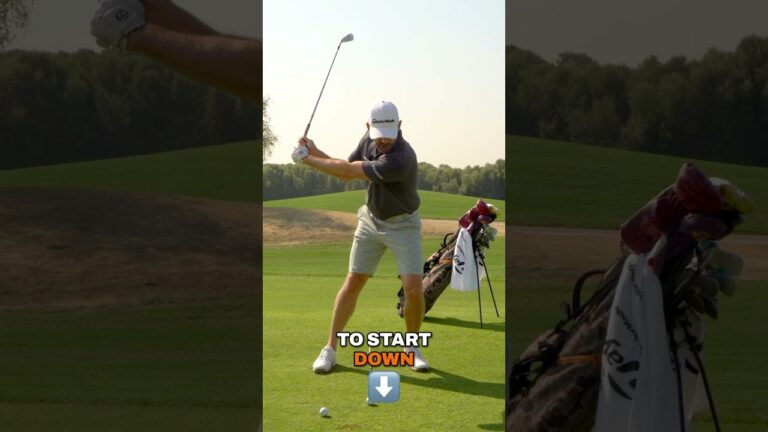

If you want better golf contact, a cleaner strike, and a more reliable start to the downswing, a tiny movement can make a big difference. One of the simplest golf swing feels is to think of your lead foot briefly lifting, then falling back into the ground as you transition from backswing to downswing.
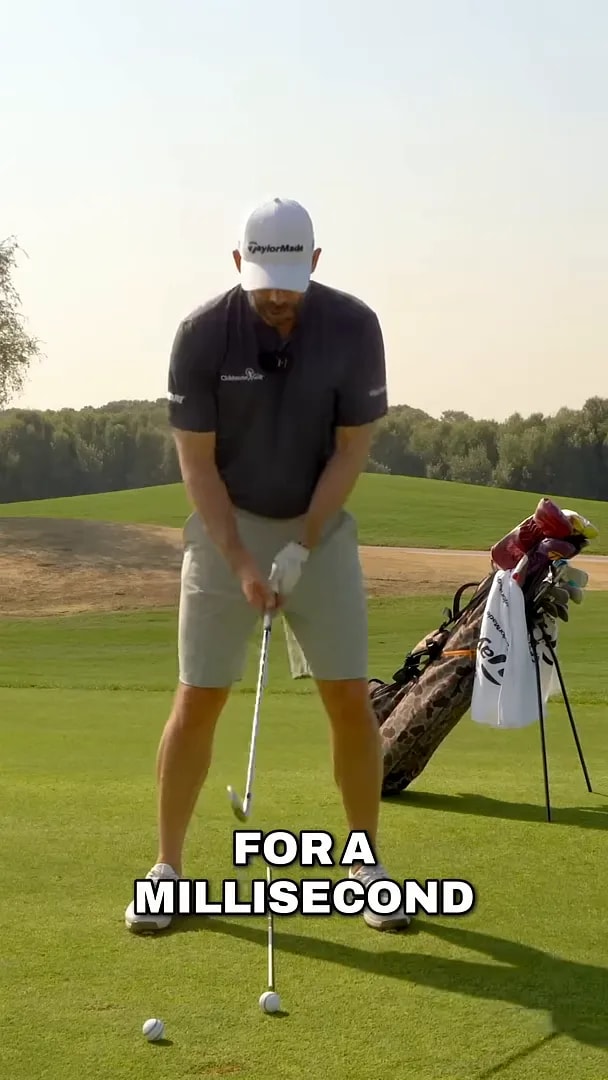
This is not a big step, and it is not a dramatic foot lift. It is a millisecond movement that helps you begin the downswing in a more athletic, balanced way. Done correctly, it can improve how the club approaches the ball, move your low point forward, and help you deliver better shaft lean through impact.
For many golf players, the challenge is not making a backswing. It is starting down in the right sequence. If your downswing begins with the wrong motion, the club can get thrown out, the low point can shift too far back, and solid golf shots become much harder to produce. This simple feel gives you a practical way to organize that motion.
Table of Contents
- Step 1: Understand why the start of the downswing matters in golf
- Step 2: Use the lead foot as a trigger for your golf transition
- Step 3: Keep the movement tiny so your golf balance stays intact
- Step 4: Feel how lift and fall improves club delivery in golf
- Step 5: Connect the move to low point control in golf
- Step 6: Use the move to encourage shaft lean and face control in golf
- Step 7: Practice the golf drill in slow motion first
- Step 8: Know what this golf feel should produce
- Step 9: Avoid turning a simple golf cue into a complicated swing thought
- Step 10: Blend the drill into your golf game
- FAQ
- Final thought on this golf swing feel
Step 1: Understand why the start of the downswing matters in golf
The transition is one of the most important moments in the golf swing. It happens quickly, but it controls a lot of what follows. The way you start down influences:
- Where the club travels on the way to the ball
- Whether the clubface stays under control
- Where the swing low point occurs
- How well you compress the ball
- Whether you strike the ground after the ball instead of before it
If you begin the downswing by spinning too early with your upper body or by throwing your arms and club outward, the club can become poorly positioned. From there, solid golf impact gets difficult. You may hit behind the ball, lose shaft lean, or struggle with weak and inconsistent contact.
The goal is to start down in a way that shifts pressure, organizes the body, and gives the club a better path into impact. That is where the lift and fall feel becomes useful.
Step 2: Use the lead foot as a trigger for your golf transition
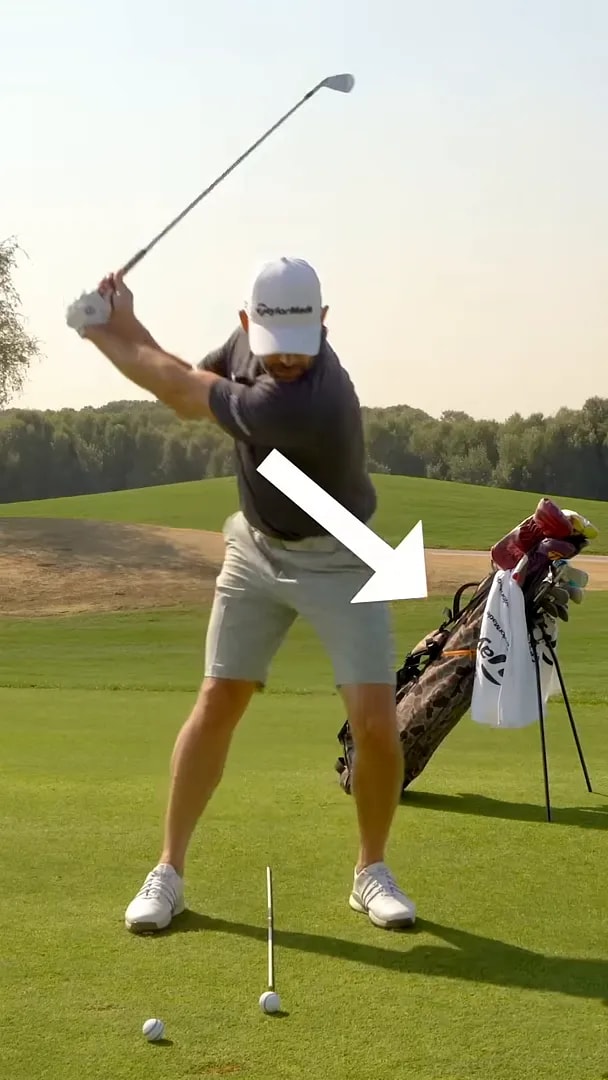
The key feel is simple. As you reach the top of your backswing, think about lifting your left foot very slightly if you are a right-handed golfer. If you are left-handed, it would be your right foot.
The important word here is slightly. This is not a full foot raise or a visible step. The movement is so brief that it is measured in milliseconds. It is just enough to create a small reset and then allow the foot to fall back into the ground.
That brief lift does two things in your golf swing:
- It prevents you from getting stuck or static at the top
- It helps initiate the downswing from the ground up
The “fall” part is just as important as the lift. When the foot falls back down, you gain a grounded, stable way to begin rotating and delivering the club. Instead of forcing the downswing with your hands or shoulders, you create a more natural chain of motion.
This is why the move can feel powerful even though it is tiny. You are not adding effort. You are improving sequence.
Step 3: Keep the movement tiny so your golf balance stays intact
One of the biggest mistakes with this drill is making the foot lift too large. If you actually pick the foot up and hold it there, your balance will disappear quickly. You may even feel like you could topple over.
That is a clear sign that the feel has become too exaggerated.
For this to help your golf swing, the lift must be almost instant. Think of it as a twitch, not a step. The foot barely leaves the ground, if at all. In many cases, the better image is simply that pressure comes off the foot for a split second before returning.
A good checkpoint is this: you should still feel centered and athletic. The movement should encourage dynamic balance, not disrupt it.
If you are working on this at home or on the range, build the feel gradually:
- Make a slow backswing
- At the top, gently reduce pressure in the lead foot
- Let the foot settle back down immediately
- Then rotate through to a full finish
Once that feels comfortable, begin blending it into normal speed golf swings.

Step 4: Feel how lift and fall improves club delivery in golf
This small transition move can create a noticeably better start to the downswing. When the sequence improves, the club tends to shallow and approach the ball from a stronger position.
Why does that matter in golf?
Because if the club is delivered more effectively, you can turn through impact and allow the clubhead to reach the ground in the correct place. Instead of bottoming out too early, the swing low point can move forward.
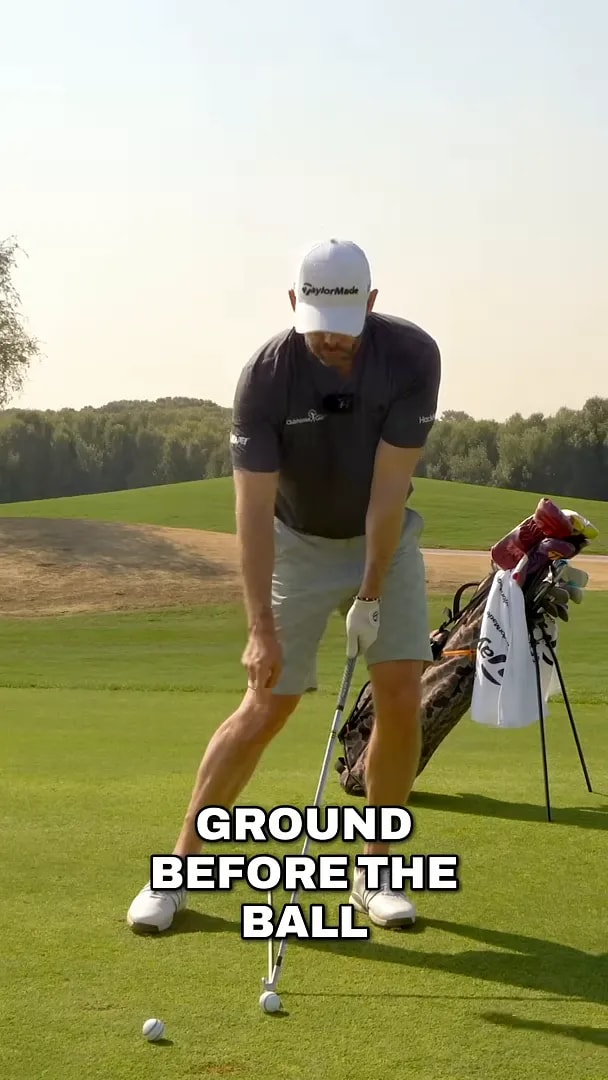
That is a huge factor in quality iron play. In solid golf ball striking, you want the club to contact the ball first and then the turf. If your low point is too far back, the club hits the ground before the ball and you lose strike quality immediately.
The lift and fall feel helps prevent that by encouraging a better transition. Rather than throwing the club down steeply or early, you organize the body so the club can arrive with more control and better structure.
That improved structure often includes:
- A more forward low point
- Better control of the clubface
- More shaft lean approaching impact
- Crisper turf interaction
These are all pieces of better golf contact, and they begin with how you start down.
Step 5: Connect the move to low point control in golf
Low point control is one of the clearest practical benefits of this feel. Many golf players focus on what the hands, arms, or club should do near impact, but impact often reflects what happened much earlier. If the transition is poor, the low point usually is too.
When your lead foot briefly lifts and then falls, it helps move pressure in a way that supports a forward strike. That creates a better opportunity to turn and deliver the handle ahead of the clubhead.
If you think about the alternative, the problem becomes clear. If you simply turn from a poor top-of-swing position, the club may be set to strike the ground too early. In other words, your low point can end up under or behind the ball rather than in front of it.
In golf, that usually leads to one of these misses:
- Fat shots
- Thin shots caused by reacting to a fat shot pattern
- Weak contact with little compression
- Inconsistent face control through impact
A better start down solves several of those issues at once. This is why a small foot feel can have an outsized effect on strike quality.
Step 6: Use the move to encourage shaft lean and face control in golf
Two terms often associated with solid golf impact are shaft lean and clubface control. This transition feel helps both.
When your body starts down more efficiently, the handle can lead the clubhead into impact. That forward-leaning shaft is often seen in stronger iron strikes. It helps deloft the club appropriately and compress the ball more effectively.
At the same time, the clubface tends to be more manageable when the club is not being thrown from the top. A rushed or disconnected transition often forces last-second hand action to square the face. That makes timing unpredictable.
In contrast, a well-sequenced downswing gives the face a more stable environment. You are not relying on rescue moves late in the swing. You are building a motion that allows the face to stay more naturally under control.
For your golf game, that can mean:
- More consistent start lines
- Improved compression with irons
- Less flipping through impact
- More confidence over the ball
Again, none of this requires a big action. The value is in the timing and direction of the motion, not its size.
Step 7: Practice the golf drill in slow motion first
Because the move is subtle, it is best learned slowly. If you go straight to full speed, it is easy to overdo the lift or miss the feel entirely.
Use this simple practice sequence:
- Set up to the ball in your normal golf posture.
- Make a backswing to the top.
- At transition, feel the lead foot lift for a split second.
- Allow the foot to fall back into the ground immediately.
- From there, rotate through and swing to a balanced finish.
Start without hitting balls if needed. Rehearsal swings are useful because they let you focus on balance and sequencing without worrying about contact.
As the feel improves, move to half shots. Then build toward fuller swings. The goal is to make the motion part of your natural golf rhythm, not a forced add-on.
A few helpful reminders while practicing:
- Do not hold the foot in the air
- Do not slide excessively off the ball
- Do not force the move with tension
- Do keep your finish balanced
If your balance disappears, the movement is too big. If you feel no difference in transition, it may be too small or too late.
Step 8: Know what this golf feel should produce
Good golf swing feels are useful because they create better outcomes, not because they look dramatic. When this drill is working, you should notice several practical changes.
Better strike pattern
Your contact should begin to feel crisper, especially with irons. The club should interact with the turf after the ball more often.
Improved transition rhythm
The start down should feel less rushed from the upper body. The swing can feel more athletic and connected.
More forward pressure through impact
You may sense that your body is supporting the strike more effectively instead of hanging back.
Cleaner club delivery
The club can arrive in a way that promotes shaft lean and face stability rather than a last-second flip.
These are strong signs that the drill is helping your golf swing move in the right direction.
Step 9: Avoid turning a simple golf cue into a complicated swing thought
One reason this feel is valuable is that it is easy to remember. Many golf swing fixes fail on the course because they are too technical. A short cue such as “lift and fall” can be much easier to use under pressure.
Still, simplicity only helps if you keep it simple.
Do not overload the cue with too many extra thoughts. You do not need to analyze every body segment during the swing. Instead, trust the movement pattern:
- Backswing finishes
- Lead foot lifts briefly
- Lead foot falls into the ground
- Body rotates through
- Club strikes ball, then turf
That chain can create a better motion without demanding a long list of mechanical instructions. In golf, feels that are concise and repeatable are often the most useful.
Step 10: Blend the drill into your golf game
Once the movement starts to feel natural, begin testing it in different practice settings. Use it with short irons first, where strike quality is easiest to judge. Then try mid-irons and other full-swing clubs.
Pay attention to contact and turf interaction. You are looking for signs that your golf low point is moving forward and that your downswing is beginning more efficiently.
You do not need to use the feel forever in an exaggerated way. Often, drills like this are most effective when they are first learned clearly and then gradually softened into a subtle trigger.
Over time, the exaggerated rehearsal may become nothing more than a thought of pressure shifting and settling. That is normal. The purpose is to train a better golf movement, not to preserve the most obvious version of the drill forever.
FAQ
Should your lead foot actually come off the ground in this golf drill?
Only very slightly, if at all. The feel is more important than the size of the motion. For many golfers, it may simply feel like pressure briefly comes off the lead foot before returning.
Can this golf move help with fat iron shots?
Yes. The drill is designed to help improve the start of the downswing, which can move the low point forward. That makes it easier to strike the ball before the turf.
What happens if you lift the foot too much in the golf swing?
You will likely lose balance and timing. The movement should last only a split second. If it becomes a full step or a held lift, it is too large.
Is this golf drill about power or contact?
The main benefit is contact and sequencing. Better sequence can also support speed, but the key purpose here is to improve how the club starts down and arrives at impact.
Will this golf feel help create more shaft lean?
It can. A better transition often helps the handle lead more naturally into impact, which supports forward shaft lean and a stronger strike.
Should you use this golf cue on the course?
Once you have practiced it enough, yes. It can be an effective simple cue because “lift and fall” is easy to remember and can promote a better transition without too much technical thinking.
Final thought on this golf swing feel
Good golf often improves through small changes that organize the swing more effectively. The brief lead-foot lift and fall is one of those changes. It is simple, subtle, and practical.
If you struggle with the start of the downswing, inconsistent iron contact, or low point issues, this feel is worth exploring. The motion only lasts a moment, but it can help set up everything that follows. Better sequence can lead to a better club path into impact, more forward low point, improved shaft lean, and cleaner golf strikes.
Think small. Think balanced. Think lift and fall.
0 Comments