
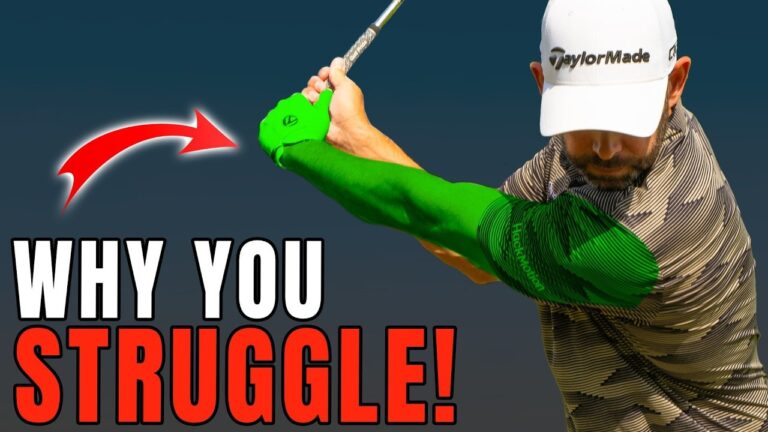

If your golf iron shots feel weak, launch inconsistently, and miss greens on both sides, the problem is often not your effort. It is your delivery. Poor iron compression in golf usually comes from two connected issues: an out-to-in club path and a low point that sits in the wrong place.
When the club works too much across the ball, you tend to lose control of direction and strike. To make contact, you often instinctively hang back. That creates weak compression, inconsistent turf contact, and the frustrating feeling that the ball never really comes off the face properly.
The good news is that better golf iron compression is not about adding force. It is about improving sequence. First, you need to neutralize the path. Then you need to move pressure forward so the low point gets ahead of the ball. Put those two pieces together, and your golf iron shots can become straighter, more solid, and noticeably more powerful.
Table of Contents
- Step 1: Understand why your golf irons are not compressing
- Step 2: Learn the golf backswing pieces that create path options
- Step 3: Fix your golf club path by changing the order in transition
- Step 4: Use the simple barrier drill to improve your golf path
- Step 5: Recognize why better golf path can first create heavy contact
- Step 6: Move pressure forward to control low point in golf
- Step 7: Blend path and pressure for true golf iron compression
- Step 8: Use these golf practice checkpoints to train the move
- Step 9: Know what ball flight changes to expect in your golf game
- Step 10: Avoid the most common golf mistakes with this drill
- Step 11: Build this golf move into your routine
- Step 12: Turn better golf iron compression into better scoring
- FAQ
Step 1: Understand why your golf irons are not compressing
Before changing your swing, it helps to understand what compression actually needs. In simple terms, solid golf iron compression happens when the clubface, club path, and low point all work together. The club approaches the ball from a functional direction, the bottom of the swing arc is in front of the ball, and the strike is ball-then-turf.
Many golfers do the opposite.
A common pattern is an out-to-in downswing. The club cuts across the ball, and the body often reacts by backing up to avoid hitting the ground too early. That backup move pushes pressure away from the lead side, makes the strike shallow in the wrong way, and reduces the chance of compressing the ball.
This usually leads to several familiar misses:
- Thin iron shots
- Heavy contact
- Weak feel off the face
- Loss of distance
- Pushes, pulls, and glancing fades
If that sounds familiar, your golf swing may not need a complete rebuild. You may simply need a better order of movements in transition and downswing.
Step 2: Learn the golf backswing pieces that create path options
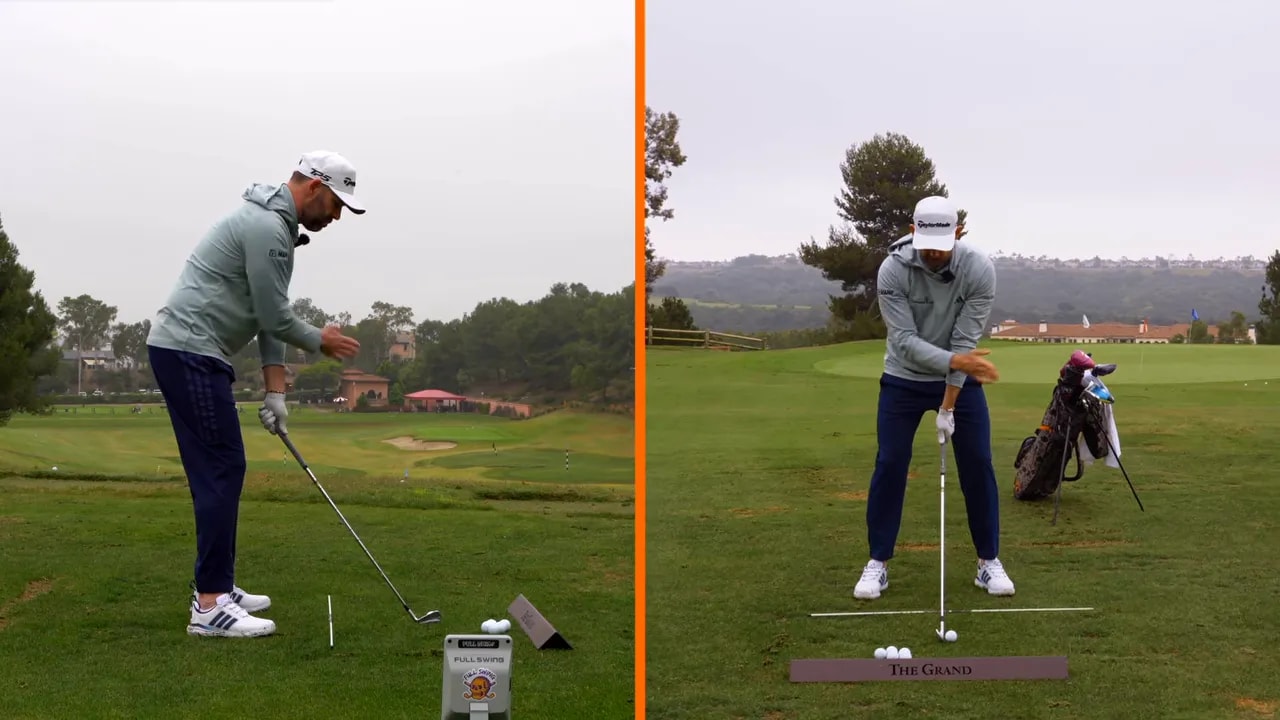
One of the most useful ideas in this lesson is that the backswing contains two basic elements:
- Your arms lift
- Your body turns
You can feel this by making a simple rehearsal. From setup, lift your hands up toward your trail shoulder without turning your body. It looks unusual, but it highlights the arm lift component. Then add body turn, and the motion starts to resemble a normal golf backswing.
That matters because the downswing uses the same ingredients in reverse. To return to impact, your arms must lower and your body must rotate. But the order of those movements changes the path dramatically.
If you turn your body first and your arms follow, the club is likely to move out and across the ball. That is the classic over-the-top pattern in golf.
If your arms lower first and your body rotation follows, the club can approach more from the inside or on a far more neutral path.
This is a crucial point. The difference is not always the movement itself. Often, it is the sequence and rate of the movement.
That is why two golf swings can look similar at the top and produce totally different shots coming down.
Step 3: Fix your golf club path by changing the order in transition
If you struggle with poor golf iron compression, start by improving path. A neutral path gives the club a far better chance to strike the ball with more energy transfer and better directional control.
The first key feeling is this:
- From the top, let the arms lower first
- Then rotate through
That sounds simple, but it is a major change for golfers who normally spin the body open from the top. When the chest and hips fire too early, the arms get thrown outward, the club steepens, and the path shifts left.
Instead, feel the club and arms shallow down before you fully unwind.
This gives you a much better chance of delivering the club on a neutral or slightly inside path, which immediately helps your golf ball flight. Shots often start flying straighter. In many cases, they also feel more solid because the club is no longer glancing across the ball.
Step 4: Use the simple barrier drill to improve your golf path
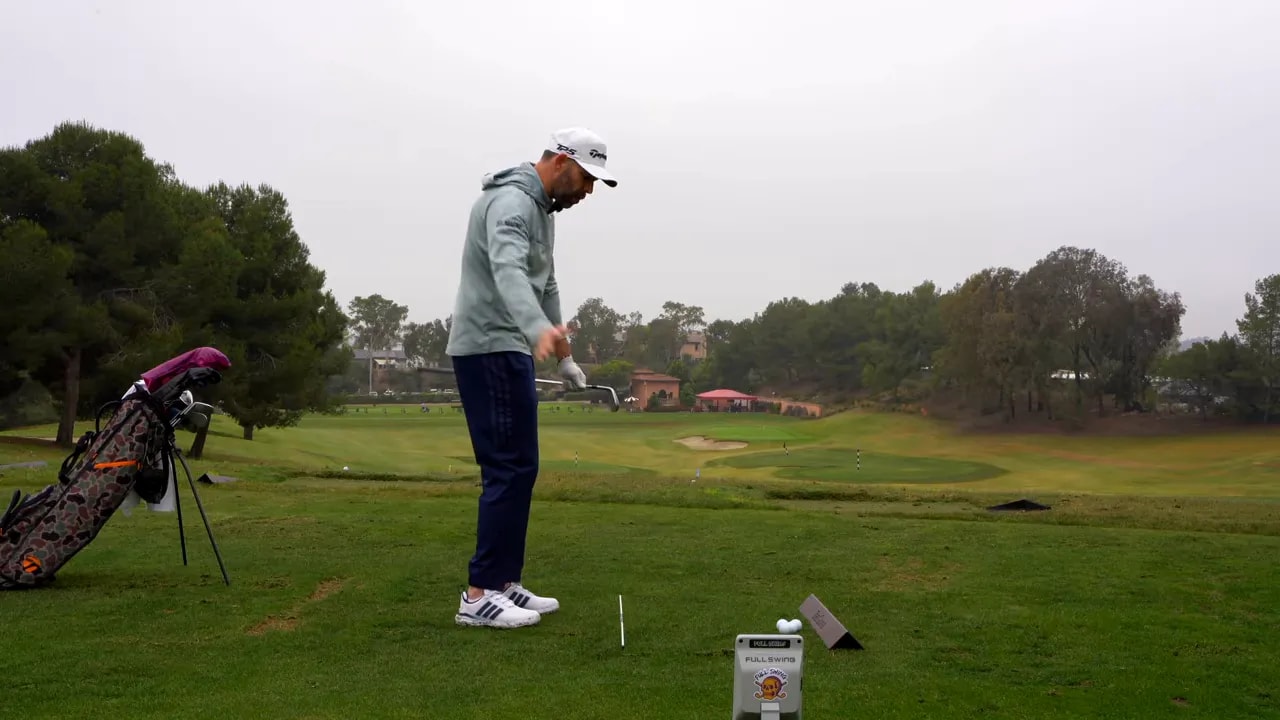
To train this movement, place an object just outside the golf ball. A towel, headcover, or similar soft item works well. The purpose is to create a visual and physical reference for the path.
If your downswing comes too far from the outside, the club will want to crash into that barrier before impact.
This is one of the most practical golf drills for players who struggle with over-the-top iron swings.
How to set it up
- Take a mid-iron, such as a 7-iron
- Place a soft object just outside the ball
- Set up normally
- Make a regular backswing
From there, focus on your trail elbow.
At address, your trail elbow sits relatively close to your trail-side pocket. At the top of the backswing, that distance becomes much larger. The goal in transition is to reduce that space again.
Feel your trail elbow move back down toward your pocket before you rotate hard through the shot.
That one move helps the club work down instead of out. Once the arm is back in front of your body, you can turn through and let the club collect the ball from a much better approach angle.
What to feel in the drill
- Backswing as normal
- Trail elbow lowers and reconnects
- Body stays more closed for a moment
- Then rotate through to the finish
If you do it well, the club should avoid the barrier and approach the ball more from the inside or on a neutral line.
This alone can transform your golf ball flight. You should begin to see shots that are:
- Straighter
- Less glancing
- More powerful
- More predictable
Step 5: Recognize why better golf path can first create heavy contact
This is where many golfers get confused.
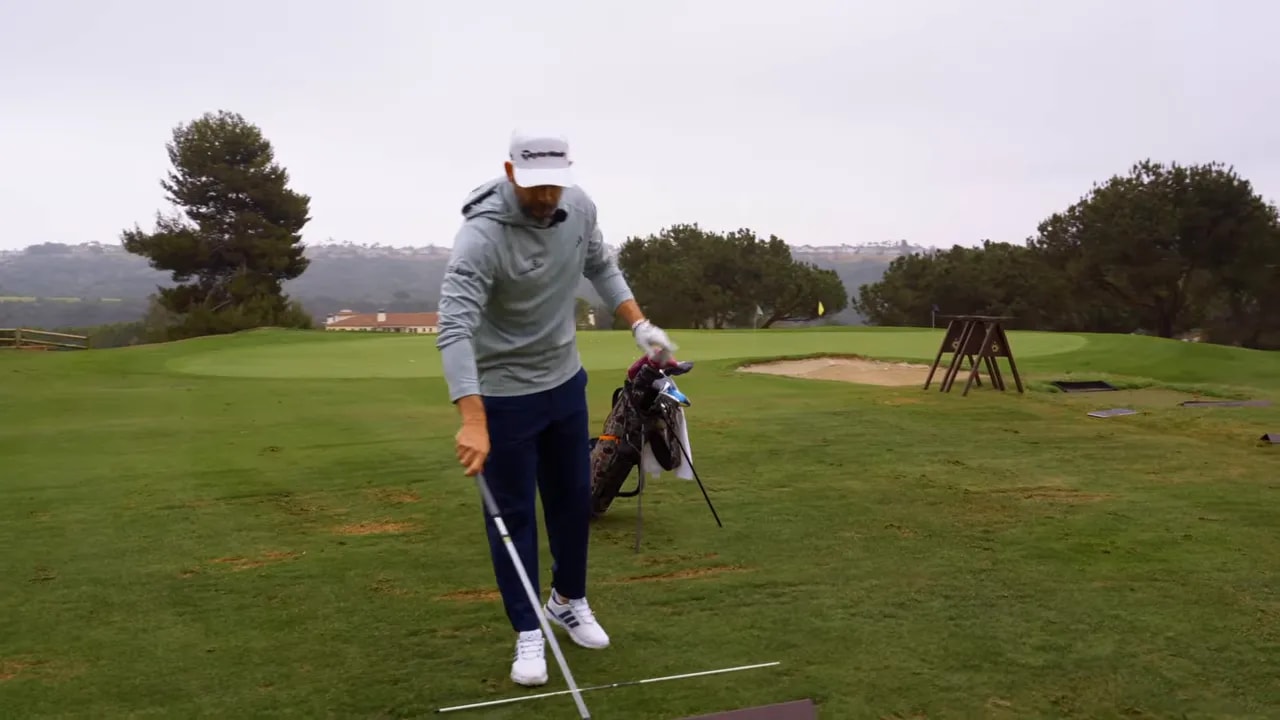
You improve the path, the ball flight gets better, but suddenly you hit one heavy. That does not always mean the drill is wrong. In fact, it can be a sign that the next piece of the puzzle is now required.
When you swing out-to-in, your low point often happens later. To make contact, you may back up and shift your low point forward just enough to find the ball. It is a compensation.
But when the club starts approaching more from the inside, the low point can move too far behind the ball if your pressure stays back. That is why the first good path changes in golf can produce a fat shot.
The path improved, but the body did not move forward enough to support it.
This leads to the second half of better golf iron compression: lateral shift.
Step 6: Move pressure forward to control low point in golf
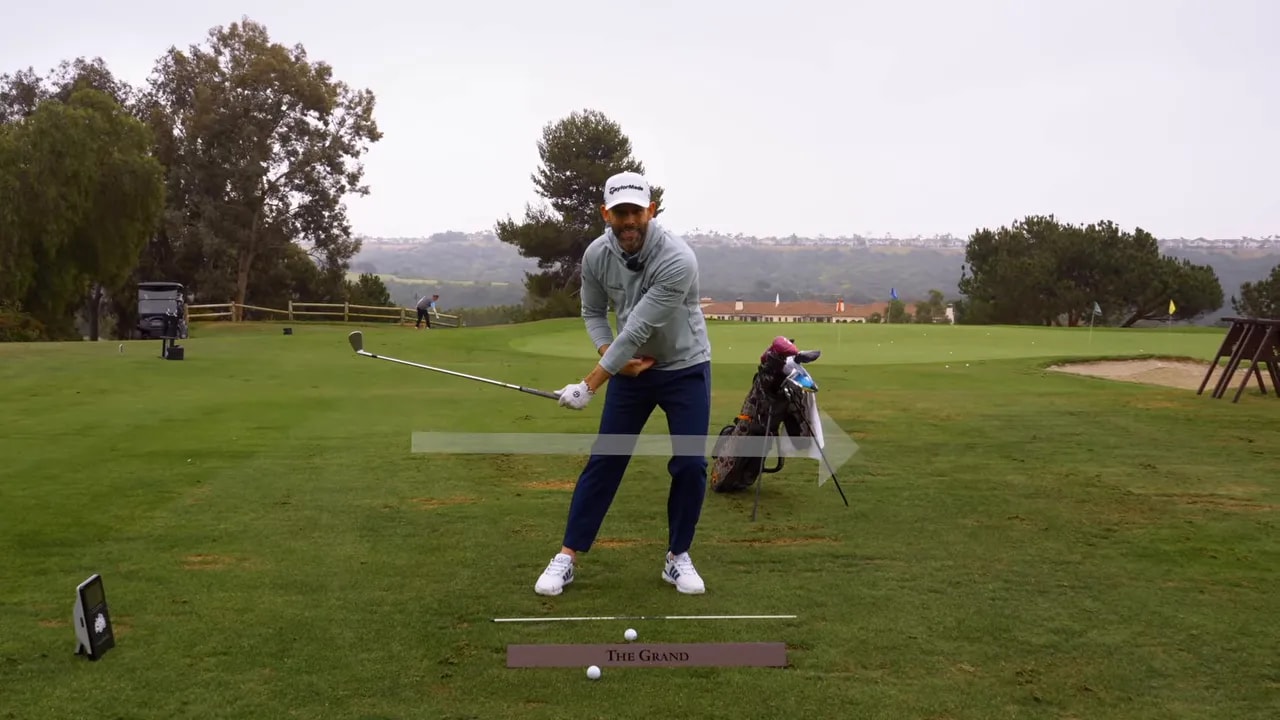
Once your golf club path is more neutral, you need to pair it with forward movement. This is what helps you strike the ball first, then the turf, with the handle leaning ahead and the clubface delivering real compression.
The key image is your belt buckle moving toward the target.
From the top of the swing:
- Stay fairly centered
- Lower the trail elbow as rehearsed
- At the same time, shift your belt buckle toward your lead heel
You do not need a huge slide. You simply need enough lateral movement so your pressure gets more onto the lead side. That places your sternum, pelvis, and low point in a much better position for a compressed golf iron strike.
This is what many players are missing. They try to create compression by hitting harder or holding the angle longer. But without the lead-side shift, the low point stays back and the strike suffers.
Forward pressure is what allows a good path to become a good strike.
Step 7: Blend path and pressure for true golf iron compression
Now you can combine both moves into one rehearsal and one full swing.
The full sequence
- Make your normal backswing
- Let the trail elbow lower and reconnect in transition
- Shift your belt buckle toward the lead heel
- Then rotate through to the finish
This is the point where your golf iron strike should begin to feel completely different.
When the club comes from a better path and your pressure is forward, several things improve at once:
- The clubface and path work together more efficiently
- The low point moves ahead of the ball
- You strike ball then turf
- Energy transfer improves
- The ball launches with a stronger, more penetrating flight
That is why compressed golf iron shots often look slightly lower, sound crisper, and feel heavier through impact in a good way. The strike is no longer a slap across the ball. It is a proper collision.
Step 8: Use these golf practice checkpoints to train the move
If you want this to transfer to the course, keep your practice simple. Do not rush straight into full-speed golf swings.
Checkpoint 1: Transition order
- At the top, feel arms lower before the chest unwinds
- If the body spins first, reset and exaggerate the opposite feel
Checkpoint 2: Trail elbow relationship
- Notice the distance between your trail elbow and trail pocket at address
- Recreate that relationship earlier in the downswing
Checkpoint 3: Forward pressure
- Feel your belt buckle move closer to the lead heel before full release
- This helps move the bottom of the arc ahead of the ball
Checkpoint 4: Turf contact
- Good golf iron compression usually means turf is contacted after the ball
- If the ground contact is behind the ball, add more lead-side pressure
These are simple checks, but together they build a much more functional golf impact.
Step 9: Know what ball flight changes to expect in your golf game
As these changes settle in, the first sign of progress is often not distance. It is direction and strike quality.
You may notice:
- Less curve left to right
- Straighter starts
- More centered contact
- A lower, stronger flight
- More consistent carry with your irons
Distance tends to improve because the strike gets more efficient. When the path is cleaner and the face is not wasting energy across the ball, the shot simply comes off the club better.
That is an important distinction in golf. Better compression does not come from trying to trap the ball aggressively. It comes from delivering the club more efficiently.
Step 10: Avoid the most common golf mistakes with this drill
These drills are powerful, but only if you avoid a few easy errors.
Spinning open too early
If your chest opens hard from the top, the club will still tend to move out over the ball. Keep rehearsing the feeling that the arms lower first.
Dropping the arms without moving forward
This can create a better path but a heavy strike. Pair the shallowing move with lead-side pressure.
Sliding without rotation
You still need to turn through. The shift sets up the strike, and the rotation delivers speed and release.
Using a hard object too close to the ball
If you use a barrier drill, choose something soft like a towel or headcover. The goal is feedback, not damage to your club.
Step 11: Build this golf move into your routine
To make the change stick, use a short practice progression.
- Make slow rehearsals with no ball
- Add the outside barrier and hit half shots
- Pause at the top, lower the trail elbow, shift forward, then swing through
- Gradually increase speed while keeping the same sequence
If you are struggling on the course, go back to one simple swing thought:
Elbow down, pressure forward, then turn.
That cue captures the entire pattern in a golfer-friendly way.
Step 12: Turn better golf iron compression into better scoring
Clean iron compression in golf is not just about aesthetics. It affects scoring. Straighter shots mean more greens hit. Better strike means more reliable distance control. A forward low point means less fear of thin and heavy misses.
If your irons have felt unpredictable for a long time, this is a smart place to start. Improve the path first. Then move pressure forward. That combination gives you the best chance to create the kind of golf strike most players are looking for but rarely feel.
For many golfers, the breakthrough is not dramatic to the eye. It is dramatic in the contact. The ball flight becomes stronger. The turf interaction becomes cleaner. The club finally feels as if it is working through the shot rather than glancing across it.
FAQ
Why can’t I compress my golf irons consistently?
The most common reasons are an out-to-in club path and pressure staying too far back. In golf, those two issues make it difficult to control low point and strike the ball with forward shaft lean.
What is the first thing to fix for better golf iron compression?
Start with club path. If the club is cutting across the ball, compression will usually be weak. A more neutral golf path gives you a far better chance to deliver solid contact and straighter shots.
Why do I hit heavy shots when I try to swing more from the inside in golf?
Because the improved path often moves the low point behind the ball if your pressure does not shift forward. The fix is to pair the inside approach with a lateral move toward the lead side.
What should my trail elbow do in the golf downswing?
It should lower and reconnect closer to your trail-side pocket before you fully rotate. That helps the golf club work down on a better path instead of moving out over the ball.
How do I know if my golf iron compression is improving?
Look for straighter ball flights, a stronger launch, more consistent distance, and turf contact after the ball. Better golf iron compression usually feels crisper and more solid immediately.
What is a simple golf swing thought for this move?
A useful thought is: elbow down, pressure forward, then turn. That summarizes the sequence needed for better golf path and compression.
Better golf iron play does not start with trying harder at impact. It starts with organizing the downswing in the right order. Get the club working from a better path, move pressure toward the target, and the compression you want becomes much easier to produce.
0 Comments