


If you want a more repeatable golf swing, you need a simple path you can return to every time. One of the clearest ways to build that consistency is to learn a few key positions in the takeaway and backswing, then rehearse them until they feel automatic.
The focus keyphrase for this topic is never stray from this path golf swing. In practical terms, that means keeping your club and body moving through a reliable sequence instead of making compensations later in the swing.
This guide explains how to use that path as a step by step swing blueprint. You will learn what the first checkpoint means, how the club should move into the set position, and why a good rehearsal can help you keep your motion neutral and repeatable.
Table of Contents
- Step 1: Understand what “never stray from this path” means in the golf swing
- Step 2: Build checkpoint one correctly
- Step 3: Make sure the clubface matches your spine angle
- Step 4: Keep the club on plane during the takeaway
- Step 5: Move from checkpoint one into the set position
- Step 6: Turn to the top instead of adding unnecessary manipulations
- Step 7: Understand why this path creates a neutral impact pattern
- Step 8: Use rehearsal to keep the swing consistent over time
- Step 9: Fix the most common mistakes when you stray from this path
- Step 10: Practice the “never stray from this path” golf swing with a simple drill routine
- Step 11: Know who this swing concept helps most
- Step 12: Use this takeaway as your long-term swing anchor
- FAQ
- Key takeaway
Step 1: Understand what “never stray from this path” means in the golf swing
In this context, the path is not just the clubhead traveling somewhere behind you. It is a series of connected positions that help you keep the clubface organized and the club on plane early in the swing.
A reliable pattern starts with:
- A controlled takeaway
- A square clubface early in the backswing
- A club that stays on plane
- A smooth move into the set position
- A turn to the top instead of extra hand manipulation
When these pieces match up, you give yourself a better chance to return the club to impact without having to rescue the swing at the last second.
This is why the phrase never stray from this path golf swing matters. It points to a repeatable process, not a random collection of swing thoughts.
Step 2: Build checkpoint one correctly
The first major position is often called checkpoint one. This happens when the club reaches about parallel to the ground during the takeaway.
At that moment, two ideas matter most:
- The club should be traveling along the line established by your feet
- The clubface should match your spine angle
When the clubface matches your spine angle at this stage, it is a useful sign that the face is square rather than excessively open or shut. When the shaft is also aligned properly relative to your setup line, the club is in a neutral place to continue the backswing.
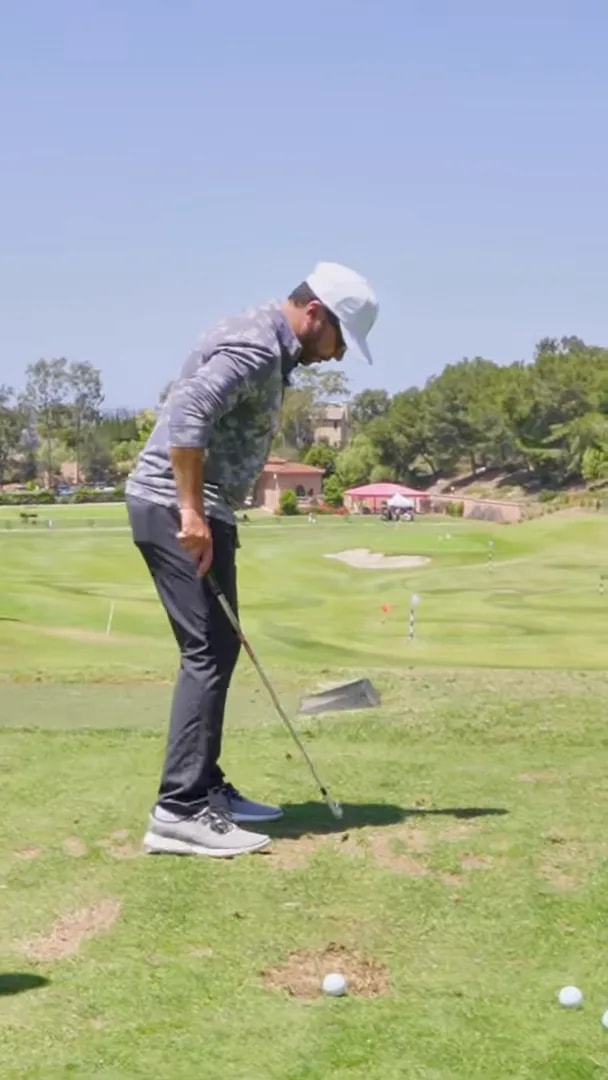
This early checkpoint is important because many swing errors start before the club even reaches waist height. If the face is twisted open, you may need to flip the hands later. If it is too shut, you may have to stall and hold off the release. If the club gets too far inside or outside early, the rest of the swing often turns into compensation.
That is why checking this first position can simplify everything that comes after.
What checkpoint one should feel like
- The club moves away in one piece, not snatched back by the hands
- Your body stays organized instead of swaying
- The face feels stable, not rolling open or slamming shut
- The shaft feels like it is tracing a clean route, not lifting abruptly
Step 3: Make sure the clubface matches your spine angle
This is one of the most useful simple checks in the backswing. If the clubface angle roughly matches your spine angle when the shaft is parallel to the ground, you are often in a strong neutral position.
Why does this matter so much?
Because clubface control drives ball flight. A face that is out of position early can affect your entire swing shape. Many golfers spend too much time fixing symptoms at impact without checking whether the clubface got out of place in the first few feet of the takeaway.
A square face at this point tends to support:
- Cleaner rotation through the swing
- Less need for hand timing
- More centered contact
- More predictable starting direction
If you are trying to follow the never stray from this path golf swing idea, this is one of the best places to start.
Common mistake
Many golfers confuse “square” with “perfectly vertical” or “toe straight up” in every case. That is not the point here. The more useful concept is matching the clubface to your posture and spine angle, not forcing a one-size-fits-all look.
Step 4: Keep the club on plane during the takeaway
Being on plane early does not mean your swing must look identical to someone else’s. It means the club is moving in a way that fits your setup and allows you to continue turning without rerouting.
If the club is on plane at checkpoint one, your next move becomes much easier. You can keep moving into the set position and then turn to the top, rather than making a series of recoveries.
Signs the club may be getting off plane too early include:
- The clubhead disappears behind your hands quickly
- The shaft gets steep immediately
- Your wrists overwork before your body turns
- You feel the need to “fix” the club halfway back

A good backswing often looks simpler because the early path is clean. That is the real value of keeping the club on plane. It reduces the need for complexity later.
Step 5: Move from checkpoint one into the set position
Once you reach checkpoint one, the next task is to keep that structure moving into the set position. This is where many golfers either lift the club too abruptly or drag it too far behind them.
A more neutral pattern is to let the club work up along the trail arm as you continue the backswing. At the same time, the butt end of the club points toward the ball or slightly inside it.
This matters because it helps connect the arm structure, wrist set, and shaft direction. Instead of a disconnected lift or a flat sweep, you get a backswing that can continue upward with a body turn.
Simple set position checklist
- The club works upward in balance with your turn
- The shaft does not get trapped too far behind you
- The hands do not over-lift away from the body
- The butt of the club points near the ball line or just inside it
If you are trying to groove the never stray from this path golf swing, this transition is crucial. It connects the takeaway to the top of the swing without adding extra moving parts.
Step 6: Turn to the top instead of adding unnecessary manipulations
Once the club is organized in the set position, the next move is not to search for more hand action. The next move is to turn.
This is a useful idea for golfers who overcomplicate the backswing. If your takeaway and set are sound, you often do not need to “place” the club at the top with extra effort. You can simply complete your rotation.
That creates a cleaner relationship between the arms, body, and club. It also supports a more neutral downswing because you are not starting from a position that already needs correction.
In simple terms:
- Good early structure makes the top of the swing easier
- Good rotation is more reliable than late hand adjustments
- A neutral top position usually comes from a better route, not a last second fix
Step 7: Understand why this path creates a neutral impact pattern
The reason this concept matters is impact. If the clubface is square early and the shaft is on plane, your body can rotate through the ball with less compensation.
That is what a neutral pattern is really about. You are not forcing impact with a sudden hand throw or a stall. You are arriving there because the club has traveled on a sound path from the start.
A neutral motion can help you:
- Reduce timing-dependent swings
- Strike the ball more consistently
- Improve face control
- Create a simpler swing thought under pressure
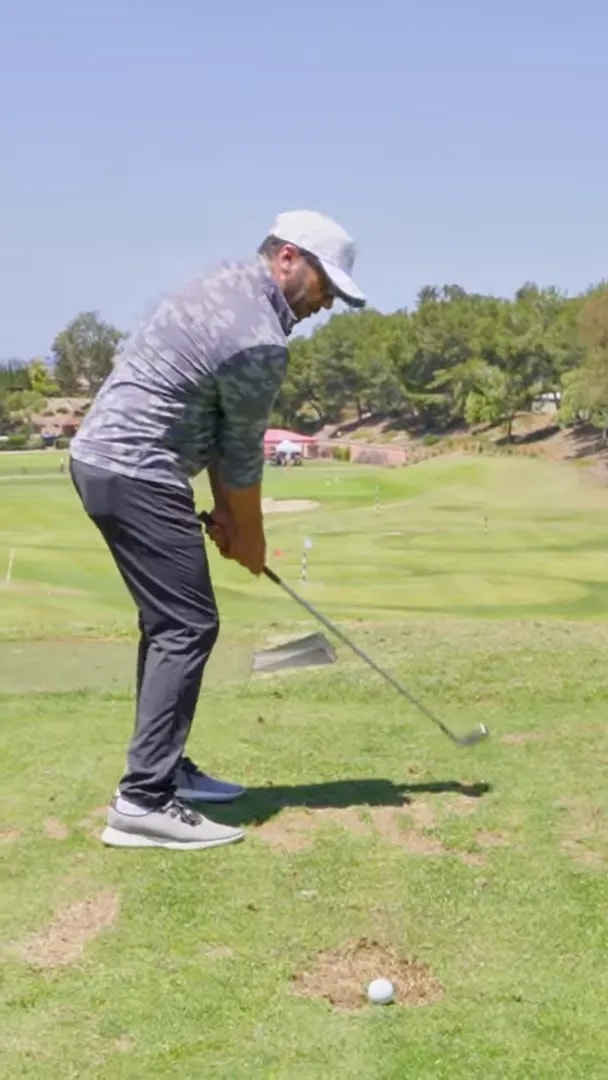
For many players, this is the missing link. They work on impact positions without realizing that better impact is often built much earlier in the backswing.
Step 8: Use rehearsal to keep the swing consistent over time
One of the most practical ideas in this approach is the value of a great rehearsal. Rehearsal is how you keep the motion consistent over the years rather than losing it from one practice session to the next.
A good rehearsal is not just a casual waggle. It is a deliberate preview of the positions you want:
- Checkpoint one
- Square face matching spine angle
- Club on plane
- Smooth move into the set position
- Turn to the top
If you can rehearse these pieces cleanly, you have a better chance of reproducing them at speed.
How to rehearse this path
- Address the ball normally.
- Take the club back to parallel.
- Check that the face matches your spine angle.
- Continue into the set position with the club moving up the trail arm.
- Let the butt of the club point toward the ball or slightly inside it.
- Reset and repeat two or three times before a full swing.

This kind of repetition builds awareness without flooding your mind with too many swing thoughts.
Step 9: Fix the most common mistakes when you stray from this path
If your swing feels inconsistent, there is a good chance you are drifting away from one of the key checkpoints. Here are the most common breakdowns and what they usually cause.
Rolling the clubface open early
This often leads to slices, weak contact, or a need to flip the club shut later.
Shutting the face too much in the takeaway
This can create pulls, hooks, or a feeling that you have to hold the face off through impact.
Dragging the club too far inside
This commonly forces a reroute in transition and can make contact inconsistent.
Lifting the hands too steeply
This can send the shaft off plane and make the downswing feel over the top.
Skipping rehearsal
Without a consistent rehearsal, your swing can slowly drift from the neutral pattern you are trying to build.
If you want to stay committed to the never stray from this path golf swing, start by identifying which of these errors appears first. Fixing the first mistake usually helps the later pieces improve as well.
Step 10: Practice the “never stray from this path” golf swing with a simple drill routine
You do not need a complicated training plan to work on this. A short, focused routine can be enough.
Drill 1: Pause at checkpoint one
Make slow backswings and stop when the club is parallel to the ground. Check the face and shaft position. Repeat until the motion looks and feels consistent.
Drill 2: Checkpoint one to set position
Swing to the first checkpoint, then continue slowly into the set position. This helps you feel the club working up correctly instead of getting stuck or lifted.
Drill 3: Rehearsal before every ball
Before hitting each shot on the range, make one or two rehearsals of the path you want. Then step in and swing with one clear thought.
Drill 4: Half swings with rotation
Hit soft shots while focusing on a square early face and body rotation through impact. This can help you connect the backswing structure to a neutral strike.
A practice block like this can be very effective:
- 10 slow checkpoint one rehearsals
- 10 checkpoint one to set position rehearsals
- 10 half shots
- 10 full shots with the same pre-shot rehearsal
Step 11: Know who this swing concept helps most
This approach can help a wide range of golfers, but it is especially useful if you:
- Struggle with inconsistent contact
- Fight face control issues
- Feel your swing changes from week to week
- Get lost in too many backswing thoughts
- Want a simpler, repeatable swing model
It is particularly valuable because it gives you clear references. Instead of chasing random feelings, you can return to visible positions that support a better overall motion.
Step 12: Use this takeaway as your long-term swing anchor
Many golfers improve briefly, then lose their swing because they abandon the core pattern that made them consistent. The solution is to keep one dependable anchor.
For this model, that anchor is the route from takeaway to set position. If that path stays reliable, your swing has a much better chance of holding up under pressure and over time.
The best long-term takeaway is often the simplest one:
- Reach checkpoint one in balance
- Keep the face square to your posture
- Stay on plane
- Move into the set position cleanly
- Turn to the top
That is the heart of the never stray from this path golf swing idea.
FAQ
What is checkpoint one in the golf swing?
Checkpoint one is the position where the club is roughly parallel to the ground in the takeaway. At this point, the club should be traveling along your setup line and the clubface should match your spine angle.
Why should the clubface match the spine angle?
Matching the clubface to your spine angle is a simple way to check whether the face is square early in the backswing. A square early face helps reduce compensations later in the swing.
What does it mean for the club to be on plane?
It means the shaft is moving in a direction that fits your setup and allows the swing to continue naturally. An on-plane takeaway makes it easier to reach the top without rerouting the club.
What is the set position in the backswing?
The set position is the stage after the takeaway where the club begins working upward along the trail arm. In a neutral pattern, the butt end of the club points toward the ball or slightly inside it.
How does rehearsal help a golf swing stay consistent?
Rehearsal gives you a repeatable preview of the positions you want. It helps you maintain the same clubface, plane, and set position pattern over time instead of drifting into compensations.
Can this help if I slice the ball?
It can help if your slice starts with an open clubface or a poor takeaway. A better checkpoint one and a cleaner set position may reduce the need for late corrections that leave the face open at impact.
Key takeaway
If you want a more reliable swing, do not search for dozens of positions. Start with one path and keep returning to it. A square clubface at checkpoint one, a club that stays on plane, a clean move into the set position, and a simple turn to the top can create a more neutral impact pattern.
That is how you never stray from this path golf swing. Keep the route simple, rehearse it often, and use it as the foundation for long-term consistency.
0 Comments