

Golf gets much easier off the tee when your body moves correctly. If you rotate well but never shift pressure and weight in the right direction, you can lose both power and consistency. A solid driver swing in golf needs a move into your trail side going back and a move into your lead side coming down.
This guide explains how to build that move step by step. You will learn how proper weight shift works in golf, how to check it without guessing, what common errors look like, and how to train it before you hit drivers.
Table of Contents
- Step 1: Understand what weight shift means in golf
- Step 2: Set up in golf posture before you practice the shift
- Step 3: Use the drop test to check your backswing weight shift in golf
- Step 4: Avoid swaying too far to the trail side in your golf backswing
- Step 5: Avoid a reverse pivot in your golf swing
- Step 6: Rehearse the correct golf shift with a simple no-ball drill
- Step 7: Match your golf turn to your flexibility
- Step 8: Add the right spine tilt for better golf delivery
- Step 9: Use alignment aids when practicing golf weight shift
- Step 10: Hit golf drivers with one clear weight shift focus
- Step 11: Fix the most common golf weight shift mistakes
- Step 12: Build a simple golf practice routine you can repeat
- FAQ
- Final takeaway for better golf drives
Step 1: Understand what weight shift means in golf
In golf, weight shift is not a big slide from side to side. It is a balanced movement of pressure and mass that works with your turn.
On the backswing, you move into your trail side. On the downswing, you move into your lead side. This helps you create speed, strike the ball more solidly, and return the club more consistently.
For a right handed golfer, that means:
- Backswing: pressure moves into the right side
- Downswing and finish: pressure moves into the left side
- Through swing: the trail foot pivots and the lead side supports the finish
A lot of golf instruction focuses heavily on turning. Turn matters, but golf power usually comes from the combination of rotation plus correct weight shift.
Step 2: Set up in golf posture before you practice the shift
Before you train movement, start with posture that gives you room to move correctly.
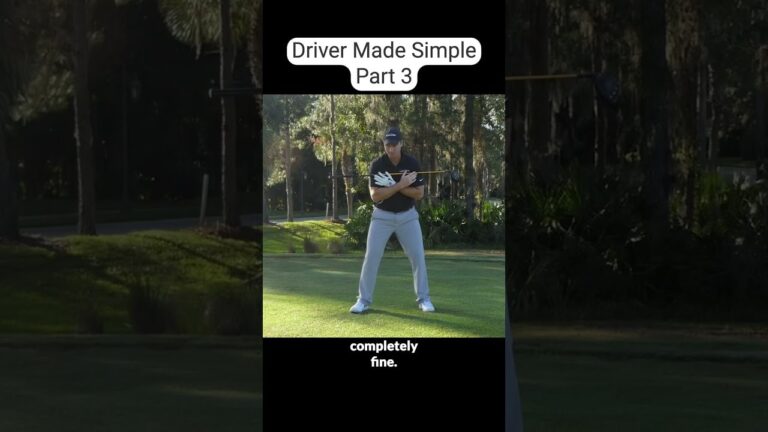
Hinge forward from the hips and keep the club across your shoulders for this drill. The club should point slightly outside where the golf ball would be. That simple checkpoint helps you feel your spine angle and keeps the drill connected to your normal golf setup.
Your goal is to stay in posture as you turn. If you stand up too much, the movement becomes harder to repeat. If you tilt the wrong way, the club path and low point can suffer.
Use this quick golf setup checklist:
- Stand roughly shoulder width apart
- Hinge forward naturally
- Place the club across your shoulders
- Keep your balance centered and athletic
- Prepare to rotate, not sway
Step 3: Use the drop test to check your backswing weight shift in golf
One of the best golf checkpoints for weight shift is the club drop test.
Make your backswing turn and pause at the top. From there, imagine the club dropping straight down. If your motion is organized well, that club should fall near the inside of your lead leg or lead foot.
That tells you your backswing pressure shift and turn are in a good place for the transition.

For many golf players, this is the missing piece. They may feel loaded on the trail side, but their body has actually moved too far or tilted incorrectly. The drop test gives you a simple reality check.
What you want to see in golf:
- The club would fall near the inside of the lead foot
- Your body stays in posture
- Your turn is centered enough to recover from
- Your head and eyes have not drifted excessively
Step 4: Avoid swaying too far to the trail side in your golf backswing
One of the biggest golf mistakes with weight shift is confusing it with a big lateral sway.
If you move too far to the trail side in the backswing, the club would drop outside your foot instead of near the inside of the lead foot. That is a sign that your body has drifted too much.
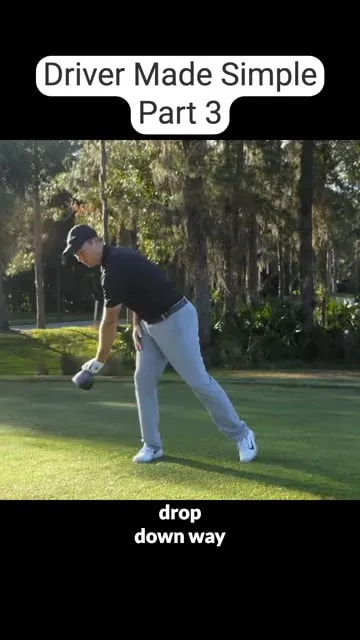
Why this hurts your golf swing:
- Your low point becomes harder to control
- Your eyes move too far off the ball
- You must recover with extra motion on the downswing
- Timing gets harder under pressure
Golf swings that rely on a big sway may occasionally work, but they are usually inconsistent. You do not need a huge move off the ball to create speed.
Better golf feel: turn into your trail side while staying more centered than you think.
Step 5: Avoid a reverse pivot in your golf swing
The opposite error is the reverse pivot. In golf, this happens when your upper body and pressure move the wrong way in the backswing.
If you make that move and then do the drop test, the club would fall too far toward the lead foot too early. From there, you usually need to fall back the other way in the downswing just to reach the ball.
That creates two major golf problems:
- Inconsistency because your body is constantly trying to recover
- Power loss because the sequence is fighting itself
If your driver in golf feels weak, glancing, or hard to square, reverse pivot can be part of the issue.
Good golf movement loads into the trail side going back, then shifts into the lead side coming down. Reverse pivot flips that order and makes clean strikes much harder.
Step 6: Rehearse the correct golf shift with a simple no-ball drill
Once you understand the checkpoint, rehearse it without hitting a ball first. This is one of the easiest ways to build a better golf driver motion.
Use a club across your shoulders and make slow reps:
- Set your golf posture
- Rotate into the backswing
- Feel the club over the instep of your trail foot at the top
- Rotate through
- Finish with the club over the instep of your lead foot

That finish matters in golf. If your weight never gets fully onto the lead side, you often leave the clubface open and the ball can leak right.
As you rotate through:
- Your trail toe can swivel off the ground
- Your body keeps turning
- You stay in posture
- Your finish looks balanced
Do four or five slow reps before hitting balls. In golf, small rehearsal sets like this can clean up movement quickly.
Step 7: Match your golf turn to your flexibility
You do not need to force the same amount of turn as someone more flexible. In golf, mobility varies from player to player, and trying to over-rotate can create compensation.
The better goal is to turn as far as you comfortably can while keeping the club orientation and posture organized.
If you are more mobile, you may be able to turn a little farther. If you are tighter, a shorter turn is fine as long as the motion stays balanced.
Use this golf rule:
- Go as far as your range of motion allows
- Do not force extra turn by swaying or standing up
That approach builds a golf swing you can repeat instead of a swing that looks big but breaks down under speed.
Step 8: Add the right spine tilt for better golf delivery
Weight shift in golf works even better when your spine tilt supports the club path.
If your body is straight up and down, or worse, leaning toward the target, it becomes much harder to deliver the club from the inside. A slight tilt away from the target gives you more room to approach the ball efficiently.
A simple golf checkpoint is to imagine the butt end of the club touching your chin and the lower end pointing toward your belt area. From there, add a slight tilt away from the target.
This does not need to be dramatic. It is just enough to help the club work under the intended plane instead of cutting across it.
Why this matters in golf:
- It supports an inside approach
- It helps you stay behind the driver
- It blends naturally with lead side pressure in the downswing
- It can make a draw pattern easier to produce
Step 9: Use alignment aids when practicing golf weight shift
Alignment tools can make golf practice much clearer. If your feet are set parallel to a reference line, you can focus on the motion without guessing where you are aimed.
For driver practice in golf, a simple station can include:
- An alignment reference for your feet
- A visual target line
- A few rehearsal turns before every shot

Then hit a short set of shots, such as five to ten drives, focusing on straight or gently drawing golf shots.
The point is not to hit dozens of balls mindlessly. The point is to connect the rehearsal to a real golf shot while the feel is still fresh.
Step 10: Hit golf drivers with one clear weight shift focus
When you go from drill to ball, keep the thought simple. Too many swing keys can ruin golf practice.
Choose one of these:
- Load right, shift left
- Turn back, post up lead side
- Trail instep to lead instep
- Rotate through and let the trail foot release
That is enough. In golf, your body often responds better to one athletic cue than to five technical commands.
If you strike one solid drive that starts near the center and curves slightly, that is usually a good sign that the sequence is improving.
Step 11: Fix the most common golf weight shift mistakes
Golf mistake 1: Big sway off the ball
If you feel loaded but your body has drifted far to the trail side, you are probably swaying rather than shifting efficiently.
Fix: make slower turns and use the drop test. The club should not fall outside the foot.
Golf mistake 2: Reverse pivot
If your pressure moves toward the target during the backswing, your downswing must recover in the wrong direction.
Fix: feel pressure move into the trail instep on the way back.
Golf mistake 3: No finish on the lead side
If your trail foot stays flat and trapped, your golf swing may never fully transfer pressure left.
Fix: allow the trail toe to pivot and release through the shot.
Golf mistake 4: Standing too upright
Losing posture can make the path and strike less predictable.
Fix: keep your forward hinge and stay in posture while turning.
Golf mistake 5: Forcing too much turn
Trying to copy a bigger turn than your body allows can create sway, loss of balance, or poor sequencing.
Fix: match your golf turn to your own flexibility.
Step 12: Build a simple golf practice routine you can repeat
If you want this change to hold up on the course, use a short repeatable routine.
Try this golf driver session:
- 5 reps with a club across your shoulders
- 5 reps of the drop test at the top
- 5 rehearsal swings focusing on trail instep to lead instep
- 5 to 10 drives with one clear cue
That is enough to create focused golf practice without overcomplicating things.
If the ball starts straighter and your finish feels more balanced, you are likely moving in the right direction.
FAQ
How should weight shift feel in golf?
It should feel like pressure moves into your trail side during the backswing and then into your lead side during the downswing and finish. In golf, it should blend with rotation, not become a big slide.
How do you know if your golf backswing weight shift is correct?
A useful check is to pause at the top and imagine the club dropping straight down. In solid golf mechanics, it should fall near the inside of the lead leg or lead foot, not far outside the trail foot.
Does weight shift help increase power in golf?
Yes. Golf power improves when you combine rotation with a proper shift from trail side to lead side. Poor weight shift often costs speed and makes centered contact harder.
What is the difference between a golf sway and a golf weight shift?
A sway is too much lateral movement away from the ball. A good golf weight shift is more controlled and works with your turn, allowing you to move back to the lead side without a major recovery.
Why do golf shots go right when weight shift is poor?
If you never shift properly onto the lead side, the club can stay too far behind you or the face can remain open. In golf, that often leads to pushes, blocks, or weak fades to the right.
Final takeaway for better golf drives
If your driver in golf feels all arms, weak, or inconsistent, do not just work on turning harder. Make sure your weight shift is organized.
Load into the trail side without swaying. Check the top with the drop test. Shift into the lead side as you rotate through. Let the trail foot release. Keep your posture and a slight tilt away from the target.
That combination can make your golf swing more powerful, more repeatable, and much easier to trust on the tee.
0 Comments