


More distance in golf does not always come from trying harder. If your driver feels heavy, rushed, or wild when you attempt to swing faster, your focus may be on the wrong end of the club. A better concept can help you create speed with a more efficient release, a squarer clubface, and far less effort.
One golfer, Dave, had struggled to drive the ball beyond 200 yards. He already made a solid backswing, turned well, and set his wrists effectively. His problem appeared when he tried to force the clubhead toward the ball from the top of the swing. By changing his intention, improving his grip position, and allowing a freer backswing, he added roughly 30 to 35 yards while maintaining his accuracy.
This step by step golf guide explains the same approach, including a simple drill that helps you feel how speed should be released through impact.
Table of Contents
- Step 1: Stop Trying to Throw the Golf Clubhead at the Ball
- Step 2: Use the Golf Handle to Create a Better Release
- Step 3: Perform the Two-Finger Golf Speed Drill
- Step 4: Check That You Are Not Casting the Golf Club
- Step 5: Put the Golf Club in Your Hands Correctly
- Step 6: Give Your Golf Swing More Time by Reducing Tension
- Step 7: Build the New Golf Driver Motion Into Practice
- FAQ: Golf Driver Speed and the Two-Finger Drill
Step 1: Stop Trying to Throw the Golf Clubhead at the Ball
It is logical to think that a faster clubhead produces more distance. In golf, greater clubhead speed at impact can indeed send the ball farther. The issue is not the goal of speed. The issue is how you try to create it.
Many golfers focus entirely on the clubhead during the downswing. From the top, they try to fire the head of the driver toward the ball as aggressively as possible. This commonly creates a cast, meaning the wrists release too early and the clubhead is thrown out before the hands have moved efficiently into impact.
When you cast the club, energy is released too soon. The clubhead moves early, the handle works backward, and your hands can be pulled away from the ball. The result is often a swing that feels powerful but does not produce the speed, strike, or control you expect.
Instead of trying to accelerate the clubhead directly, shift your attention to the grip end of the golf club. Your intention should be to move the handle in a useful direction, allowing the clubhead to accelerate naturally later in the downswing.
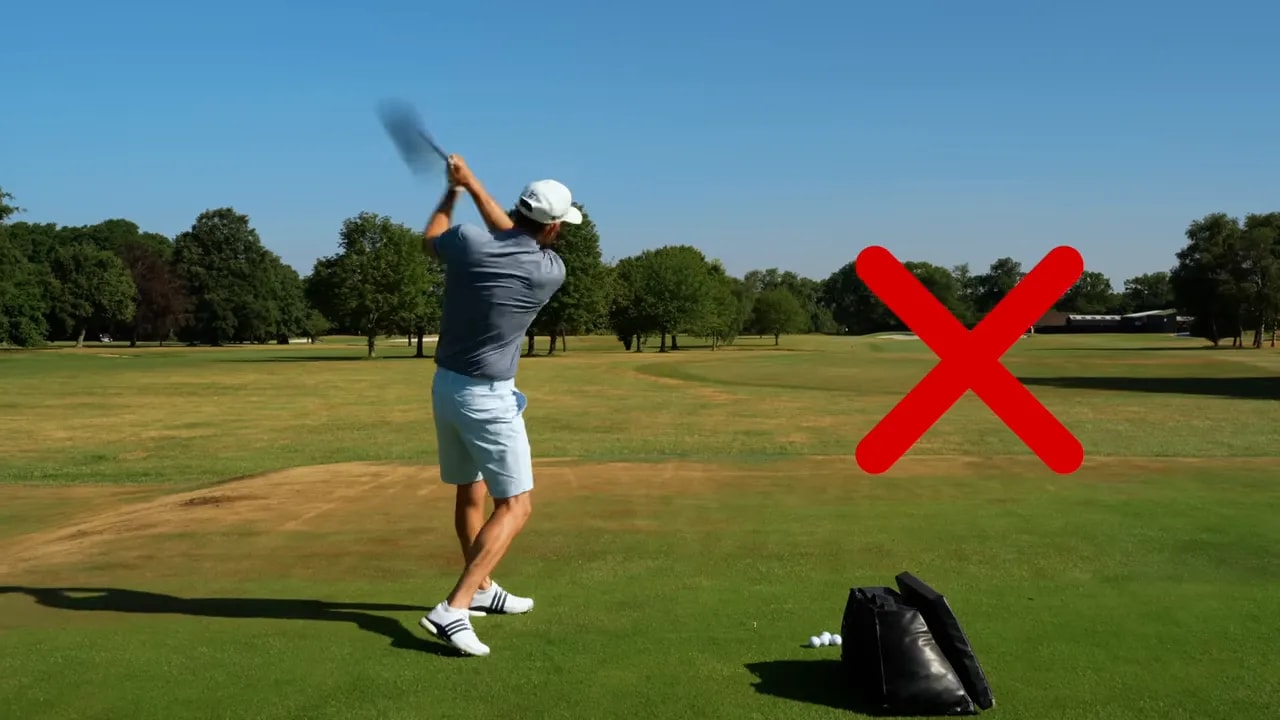
This is an important distinction. You are not trying to hold the clubhead back artificially or freeze your wrists. You are simply avoiding the instinct to throw the clubhead immediately from the top. The clubhead should be released through impact, not forced there prematurely.
Step 2: Use the Golf Handle to Create a Better Release
The key golf concept is simple: move the grip lower in the early downswing, then direct the grip back toward your lead hip. For a right handed golfer, that means the left hip. This handle motion helps preserve the stored energy in the club until it can be released closer to impact.
Think of the club as a system rather than as a clubhead you need to hit with. When the grip works down and then toward the lead hip, the clubhead can be “kicked out” toward the ball. That release can feel surprisingly fast even though you are not consciously trying to fling the clubhead.
This approach changes the source of your speed. Rather than adding more hand and wrist effort, you use the shape and direction of the handle movement to encourage a more efficient delivery.
What the movement should feel like
- From the top, allow the grip to move lower than where it started.
- Then feel the grip working back toward your lead hip.
- Let the clubhead respond and release through the hitting area.
- Allow the ball to get in the way of the motion rather than trying to hit at it.
The feeling can be very different from a hard, aggressive hit. It may feel more like the clubhead is gaining speed on its own. That does not mean you are passive. It means your effort is directed toward a movement that allows the club to work more effectively.
Step 3: Perform the Two-Finger Golf Speed Drill
This drill is designed to make the correct release easier to feel. Because you hold the club with minimal control, it becomes much harder to throw the clubhead excessively with your hands.
You can use an impact bag if you have one, but it is not essential. Start without a ball. The goal is to learn the movement before adding the challenge of contact.
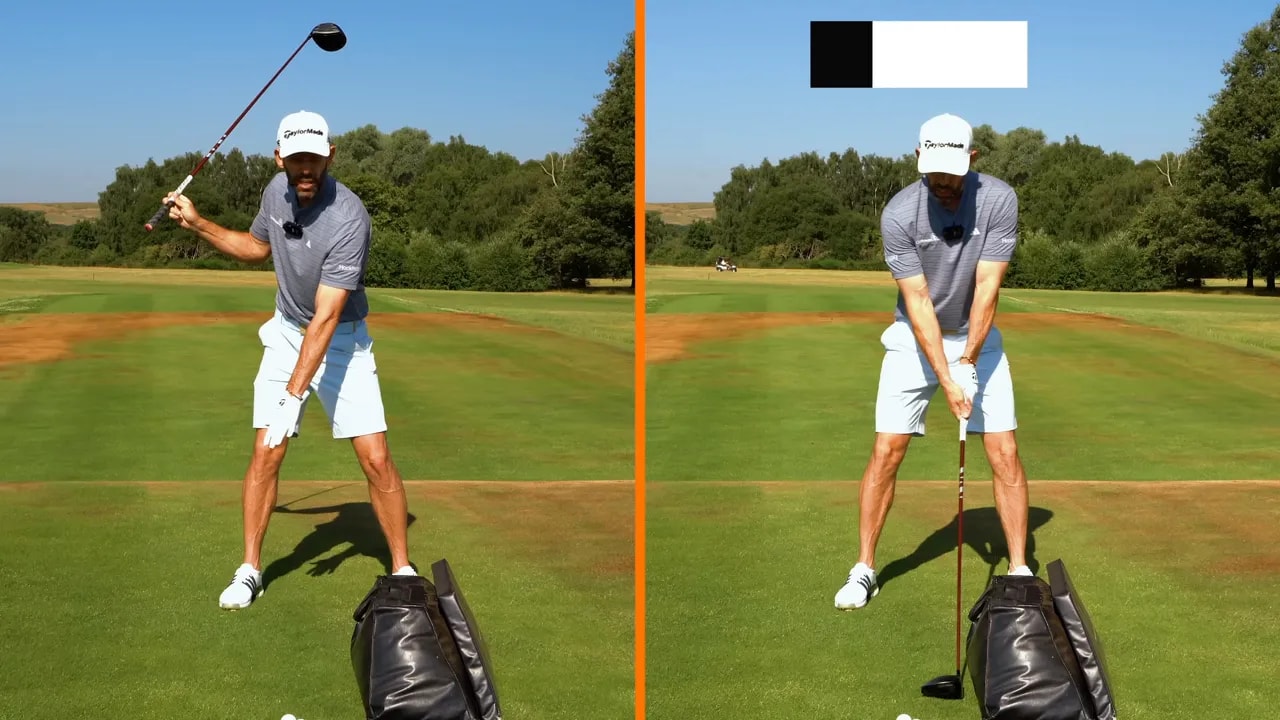
How to do the drill
- Take your normal golf stance with a driver or another long club.
- Hold the club using only your index finger and thumb on each hand.
- Make a controlled backswing with your wrists set.
- Start down by moving the grip lower toward the ground.
- Once the grip is lower, point or pull it toward your lead hip.
- Allow the clubhead to release naturally through the impact area.
Use slow, smooth motions at first. With only the thumb and index finger supporting the club, you will have very little ability to force the clubhead. That is exactly why the drill is useful. It encourages you to move the handle while allowing the clubhead to react.
You may notice that the clubhead creates speed despite the light hold. This is the sensation you are after. The release is happening because of the motion of the club and handle, not because you are trying to manufacture speed with a violent hand action.
Once you can repeat the movement without a ball, place a ball in the way and make a gentle strike. Do not attempt a full-speed driver shot. Focus on the sequence: grip lower, grip toward lead hip, clubhead released through impact.
Why this golf drill can improve direction as well as distance
A cast often makes the face difficult to control because the club is being released too early. When you deliver the club with the handle moving correctly, the clubface can square more naturally through impact. That can help you preserve accuracy while gaining speed.
For Dave, this mattered as much as the added distance. He was not simply hitting the ball farther. He was also finding that his driver remained as straight as it had been before, even with a meaningful increase in yardage.
Step 4: Check That You Are Not Casting the Golf Club
Casting is not always obvious from feel alone. A swing may feel fast while the clubhead is actually being released well before impact. The two-finger drill offers a practical test because it makes casting difficult to sustain.
When the handle works down and then toward the lead hip, the wrists can stay in a more productive position during the downswing. When you revert to the thought of “throw the clubhead as fast as possible,” early release can return quickly.
A wrist-motion sensor was used to illustrate this difference. During the drill, the motion registered in range, with no meaningful casting detected. When the focus switched back to accelerating the clubhead from the top, the measurement identified casting in the middle of the downswing.
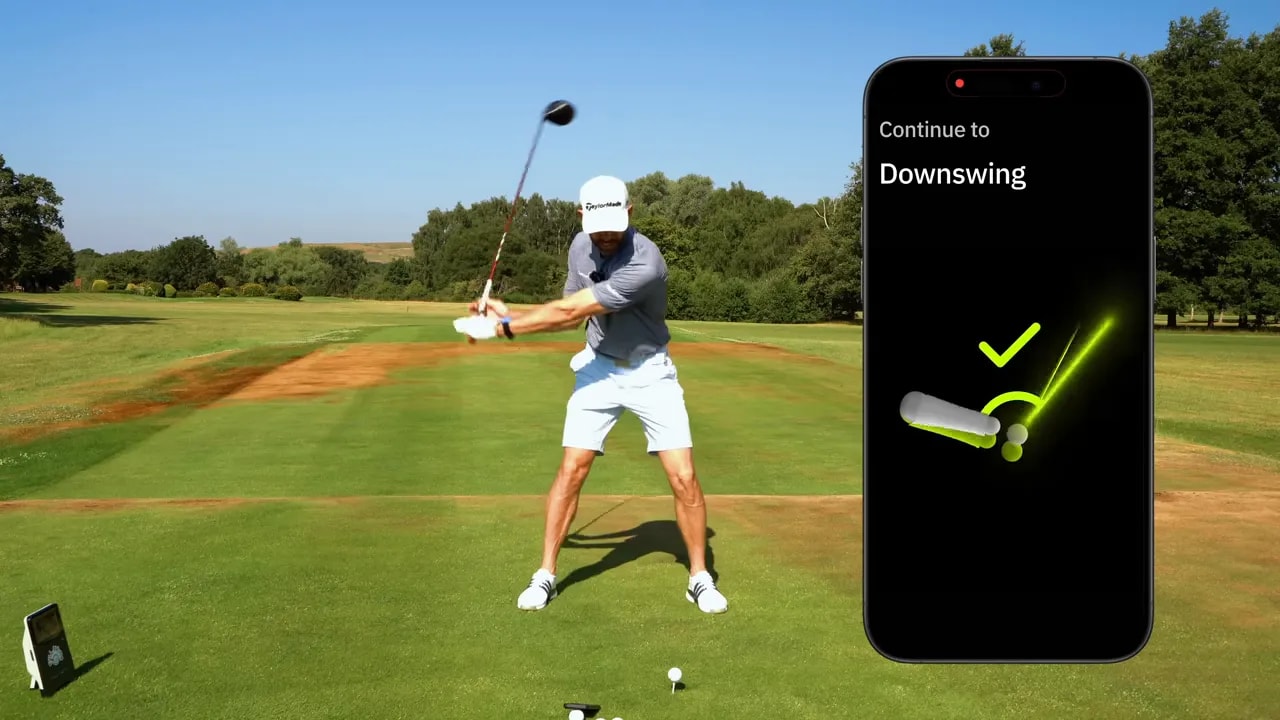
You do not need technology to use the drill. Still, the feedback reinforces a valuable golf lesson: your swing thought matters. A small change in focus, from clubhead to handle, can create a dramatically different movement pattern.
Use these simple checkpoints during practice:
- Effort: The swing should not feel like you are forcing the clubhead down at the ball.
- Handle direction: Feel the grip moving down, then toward the lead hip.
- Contact: Start with light strikes and increase speed only when the strike feels organized.
- Ball flight: Note whether your driver remains straight or becomes easier to control.
Step 5: Put the Golf Club in Your Hands Correctly
The drill can reveal a better release, but your grip placement still sets an important limit on how much speed you can produce. The club should sit through the fingers of your lead hand, running from around the middle of the index finger toward the base of the little finger.
The pad of your lead hand should sit on top of the handle. This gives you a stronger connection to the club and supports the movement needed to transfer energy efficiently.
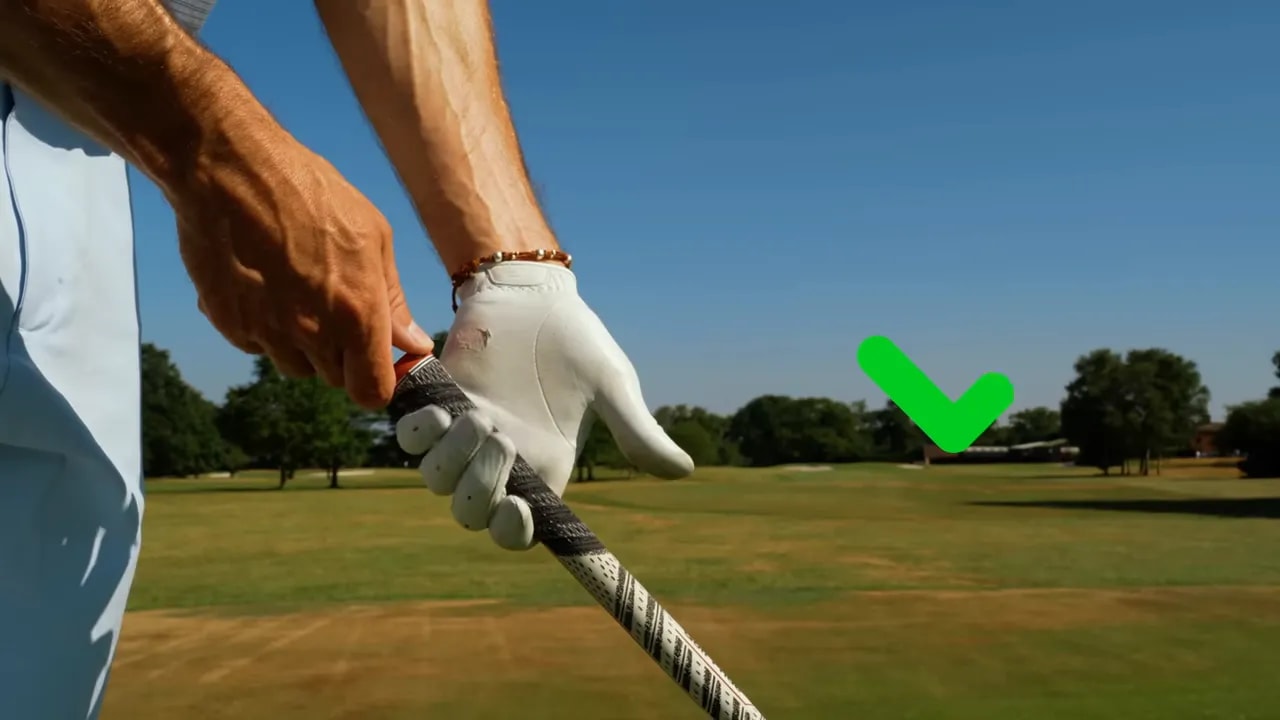
A grip that sits too high in the palm can restrict what you can do. Even if you understand the handle movement, poor placement can reduce your ability to create speed. You do not need to grip the club tightly, but you do need it positioned correctly.
Lead-hand golf grip checklist
- Place the handle through the fingers rather than deep in the palm.
- Run the grip from the middle of the index finger toward the base of the little finger.
- Set the heel pad of the lead hand over the handle.
- Avoid allowing the handle to sit too high under the palm.
Check this at setup before you begin the drill. A functional grip gives your hands a better chance to move the handle as intended without adding tension or unnecessary manipulation.
Step 6: Give Your Golf Swing More Time by Reducing Tension
The final piece is your backswing. You need enough time and space for the hands and club to build speed. A very restricted backswing can shorten the distance the hands travel, leaving less time for the club to accelerate before impact.
Dave had tried to build resistance in his body, treating the backswing like a tightly coiled spring. While he set his wrists well, he did not have much hip turn, knee turn, or upper-body turn. The result was a short backswing that limited the time available to build speed.
The solution was not to force the club farther back. It was to unrestrict the body turn. When you reduce excess tension and allow a fuller turn, your hands can travel farther around you. That increased travel can provide more time for the club to gain speed.
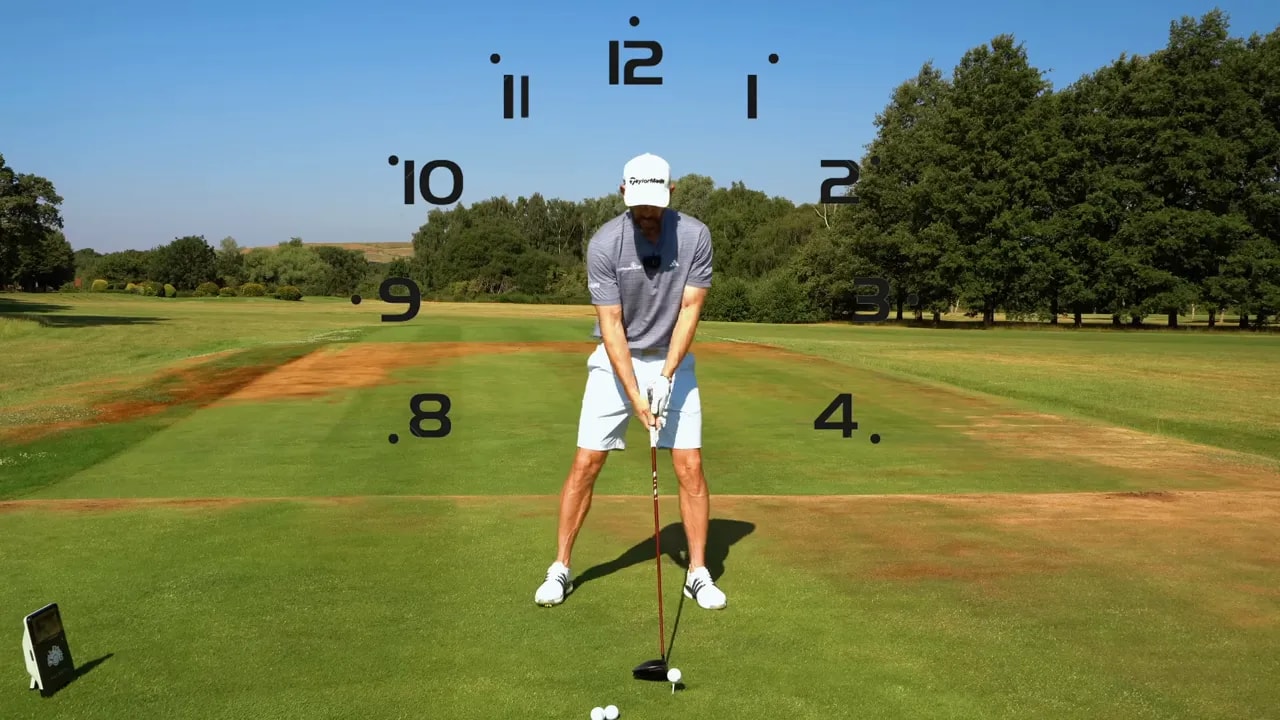
A useful image is a clock face. If your hands only travel to around nine or ten o’clock, a freer turn may help them travel closer to eleven o’clock. The objective is not a forced, overlong swing. It is a relaxed turn that gives your golf swing the room it needs.
How to add a freer turn
- Make a backswing with the intention of feeling no tension in your body.
- Allow your hips, knees, and upper body to turn naturally.
- Do not deliberately stretch the arms to make the club travel farther.
- Feel your hands travel farther around because your body is less restricted.
- Pair the freer backswing with the handle-focused downswing drill.
More turn is only useful when it remains balanced and repeatable. The best feeling is not “swing farther.” It is “turn without restriction.” That distinction can help you gain speed without losing rhythm.
Step 7: Build the New Golf Driver Motion Into Practice
Do not take the two-finger drill straight to maximum-speed driver swings. Build it gradually so your normal grip and full swing retain the same intention.
Use this simple practice progression:
- Rehearse without a ball: Make several slow two-finger swings, feeling the grip move down and toward the lead hip.
- Make soft strikes: Add a ball and hit controlled shots, allowing the clubhead to release through impact.
- Return to your normal grip: Keep the same handle-focused intention with both hands on the club.
- Add speed gradually: Increase speed only when contact and direction remain dependable.
- Finish with freer turns: Make relaxed backswing rehearsals so your hands have enough travel to create speed.
The important change is conceptual. You are not trying to overpower the driver with your hands. You are organizing the movement so the clubhead can accelerate at the right time. For many golfers, this produces a more effortless feeling and a more efficient driver swing.
FAQ: Golf Driver Speed and the Two-Finger Drill
Can this golf drill help if I slice my driver?
The drill is primarily intended to reduce casting and improve how the club releases through impact. A better handle movement can help the clubface square more naturally, which may improve direction. A slice can have several causes, however, so treat this as a release drill rather than a complete fix for every ball-flight issue.
Should I hit full-speed golf shots using only my thumb and index finger?
No. Use the two-finger hold slowly and with control. Its purpose is to teach the feeling of moving the grip correctly with minimal clubhead manipulation. Start without a ball, then make gentle strikes before returning to your normal grip.
Do I need an impact bag for this golf drill?
No. An impact bag can help remove the pressure of hitting a ball while you rehearse the movement, but it is optional. You can practice the motion in the air and then add a ball at low speed.
How can I tell whether I am casting the golf club?
A common sign is the feeling that you are throwing the clubhead hard from the top while gaining little speed or control. The two-finger drill is a useful practical test because it makes that early throw much more difficult. A wrist-motion sensor can provide additional measurement, but it is not required.
Should I deliberately make a much longer golf backswing?
Do not force length. Instead, reduce unnecessary body tension and allow a more natural turn of the hips, knees, and upper body. Your hands may travel farther as a result, giving the club more time to accelerate without sacrificing balance.
0 Comments