


Focus keyphrase: hybrid and long iron drill
If your hybrids and long irons feel unreliable from the fairway, the problem may not be your age, flexibility, or swing speed. More often, the issue is where your body moves during the swing.
That is good news, because body movement is something you can improve quickly with the right feel. This hybrid and long iron drill is built to help you strike the ball first, avoid heavy contact, launch the ball higher, and pick up effortless distance without putting extra stress on your back.
For many golfers, these clubs become difficult because the swing starts drifting too far away from the target in the backswing, then never gets fully back to the lead side in time. The result is exactly what you feel on the course: fat shots, thin shots, low bullets, and not enough carry to reach long par 4s or par 5s in regulation.
The fix is a simple setup and motion pattern called the wrench drill. It gives you a clear way to stay more forward, turn more freely, and deliver the club with better contact and more energy.
Table of Contents
- Step 1: Understand why hybrids and long irons are so difficult
- Step 2: Learn the ball-first goal of the hybrid and long iron drill
- Step 3: Set up the hybrid and long iron drill correctly
- Step 4: Pivot around your lead side instead of swaying off the ball
- Step 5: Expect the drill to feel strange at first
- Step 6: Use the hybrid and long iron drill to turn more freely
- Step 7: Create more power by letting the club trail your body
- Step 8: Apply the same hybrid and long iron drill to long irons
- Step 9: Practice the drill in stages
- Step 10: Gradually blend the drill back into your normal swing
- Step 11: Use the key on-course feel for better fairway shots
- Step 12: Understand why more distance can lower scores
- FAQ
Step 1: Understand why hybrids and long irons are so difficult
Before you change anything, it helps to know what these clubs ask you to do.
When you hit a hybrid or long iron from the turf, you need to contact the ball before the ground. That sounds basic, but it becomes tricky when your swing bottom keeps moving around. If your body sways too much off the ball during the backswing, the club can land behind the ball one swing and too far ahead the next.
That inconsistency is the real killer.
You do not need a perfect tour-level move. You just need a repeatable low point. If you can return the club to the same area more often, your strikes become cleaner, the ball launches better, and distance starts showing up without forcing it.
Many golfers assume poor hybrid shots come from a lack of speed. In reality, the bigger issue is often poor location of pressure and poor pivot. If your lower body is hanging back at impact, solid contact becomes much harder.
Step 2: Learn the ball-first goal of the hybrid and long iron drill
The purpose of this hybrid and long iron drill is simple: help your lower body lead so the club can bottom out in the right place.
With a hybrid, the ball position should generally be just ahead of center. With a long iron, somewhere around middle to slightly forward of middle works well. From there, your job is to arrive at impact with your lead side supporting the motion rather than falling back onto your trail side.
When your lower body gets forward, a few things happen:
- You are more likely to strike the ball before the turf.
- You can rotate more freely through the shot.
- The club can trail your body for longer, which helps create speed naturally.
- The strike becomes more reliable shot after shot.
This is why the drill matters so much for fairway shots. Off a tee, you can get away with more errors. Off the grass, the ground tells the truth immediately.
Step 3: Set up the hybrid and long iron drill correctly
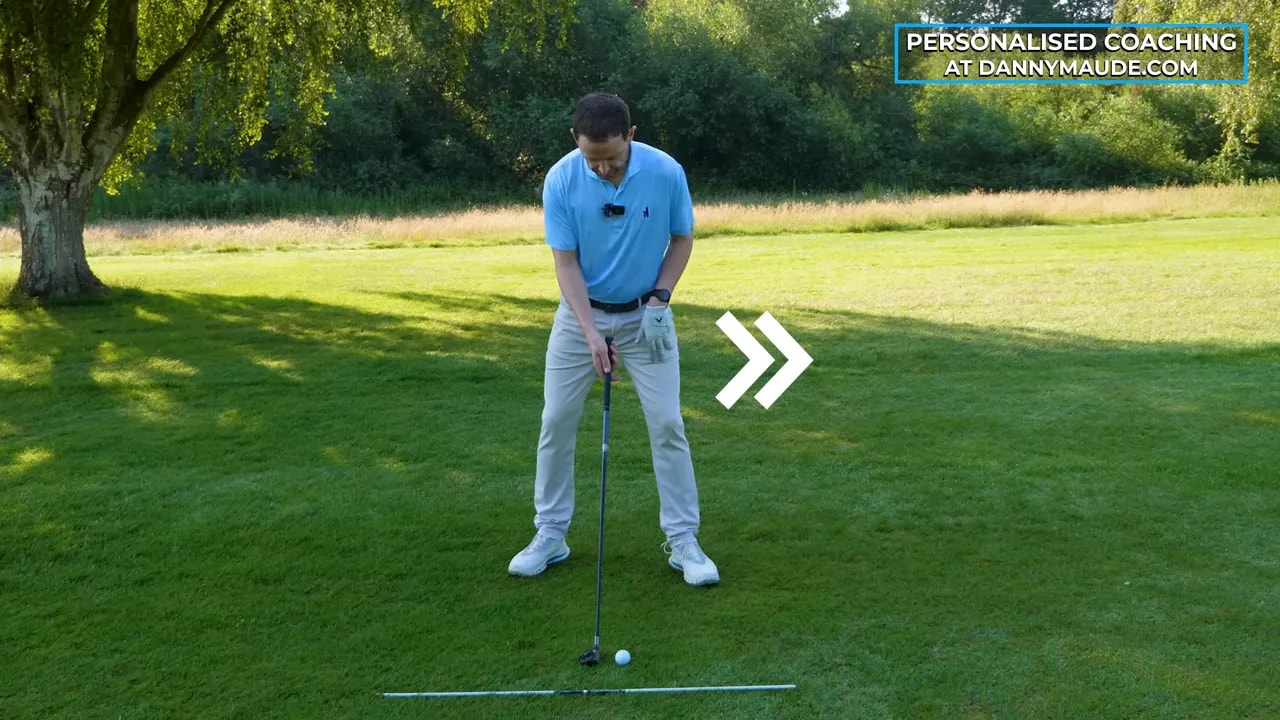
This is the key setup for the wrench drill.
- Take your normal hybrid or long iron stance.
- Place the ball around middle to slightly forward of center.
- Shift about 60 to 70 percent of your pressure onto your lead foot.
- Pull your trail foot back slightly.
- Feel as if your swing will pivot around your lead side.
That forward pressure is not random. It gives your hips a head start. Since the lower body needs to be more forward by impact, presetting that condition makes it easier to return there.
The trail foot is important too. Pulling it back does two jobs. First, it helps support the lead side so you can stay organized through the swing. Second, it sets up a natural source of motion and rotation instead of a big side-to-side sway.
Think of it this way: you are not trying to lock yourself in place. You are creating a structure that encourages the correct motion.
Step 4: Pivot around your lead side instead of swaying off the ball
This is the feel that makes the drill work.
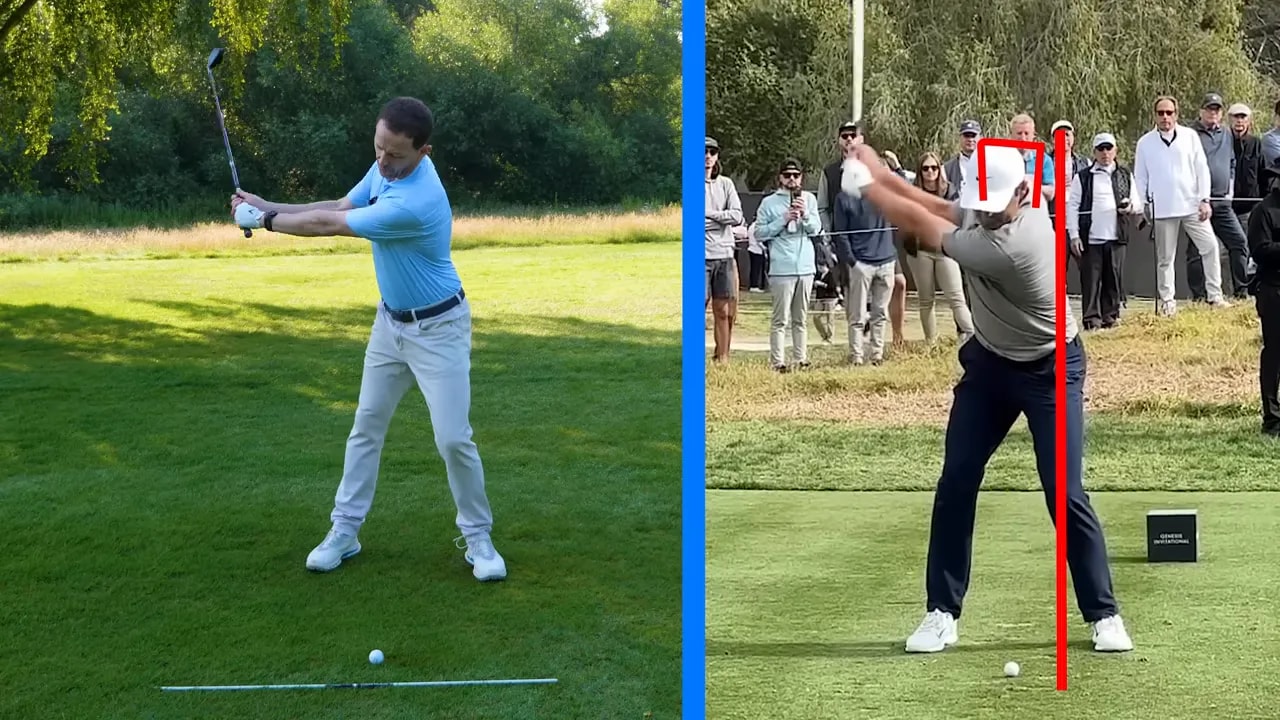
Instead of shifting your body away from the target and then trying to recover in time, feel as though your swing turns around your lead leg. The lead side becomes the anchor point.
That does not mean your body never moves at all. Good players can have some movement off the ball. The difference is that they are back to the lead side in time for impact. Many club golfers never fully return there, so the strike suffers.
The wrench drill exaggerates the correct sensation. It helps you feel what it is like to stay more forward through the motion.
This matters because hybrids and long irons punish excessive sway. If the body drifts too far to the trail side, your low point shifts back. Then you catch too much turf, add loft in the wrong way, lose compression, and often leave the face unstable through impact.
Step 5: Expect the drill to feel strange at first
One of the most useful points in this lesson is that the drill may feel restrictive in the beginning. That is normal.
For a lot of golfers, “freedom” in the swing has come to mean sliding side to side. So when you remove that sway and replace it with a more centered, forward pivot, it can feel tighter or less natural.
But that feeling is misleading.
Excessive sway often feels loose, yet it actually makes the swing harder to time. Staying more forward may feel unfamiliar, but it creates a much more dependable strike pattern.
If you try this drill and it feels awkward, do not abandon it too quickly. Strange does not mean wrong. Often it means you are replacing an old habit with a better one.
Step 6: Use the hybrid and long iron drill to turn more freely
Here is where this drill becomes especially golfer-friendly.
Many senior golfers are told they cannot make a longer swing because of flexibility. But the lesson here is that better pivot can help you create a longer arc without straining your back.
When your pressure stays more on the trail side, your hip turn can actually become limited. It is harder to keep rotating. That shorter, stalled turn often leads to a rushed downswing and early release.
When your pressure is more on the lead side and your body is organized around that pivot point, the turn can continue more naturally. That gives you a longer motion and stores more potential energy.
So the drill is not just about contact. It can also help you create effortless yards.
Step 7: Create more power by letting the club trail your body
One of the best hidden benefits of this hybrid and long iron drill is what it does to the club in transition.
Power is not only about making a longer backswing. It is also about sequence. Better players allow the club to stay behind their hands and body for longer on the way down. That stored angle then releases naturally through impact.
If you hang back, the club tends to throw early. The release happens too soon. That can rob you of strike quality and distance.
When you stay more forward and keep the body pivot leading, the club has a chance to trail for longer. Many golfers refer to this as lag, but the important part is not trying to hold lag artificially. It is creating the body motion that allows it to happen.
That is why the drill can feel so powerful without feeling violent. Better sequencing gives you speed for free.
Step 8: Apply the same hybrid and long iron drill to long irons
The good news is that you do not need a separate method for long irons.
The same principles apply:
- Ball position around the middle to slightly forward.
- Pressure 60 to 70 percent on the lead side.
- Trail foot pulled back slightly.
- Pivot around the lead side.
- Strike ball first, then turf.
If long irons have felt especially difficult, this drill can simplify the task. It gives you a predictable motion pattern and improves your chances of delivering the club with forward intent instead of hanging back and scooping.
That can make those long approach shots far less intimidating.
Step 9: Practice the drill in stages
To get the most from the hybrid and long iron drill, practice it progressively.
Start with slow rehearsals
Make small swings with your setup in place. Feel the pressure staying on the lead side and the body turning around that point.
Move to half shots
Hit soft shots where your only goal is clean contact. Pay attention to whether the ball is struck before the turf.
Build to fuller swings
Once the strike improves, lengthen the swing while keeping the same forward pivot feel.
Notice your turf interaction
Good shots should start to feel more compressed, with the club brushing the ground after the ball instead of crashing into the turf behind it.
This kind of practice teaches your body the motion rather than asking you to think through a dozen swing positions.
Step 10: Gradually blend the drill back into your normal swing
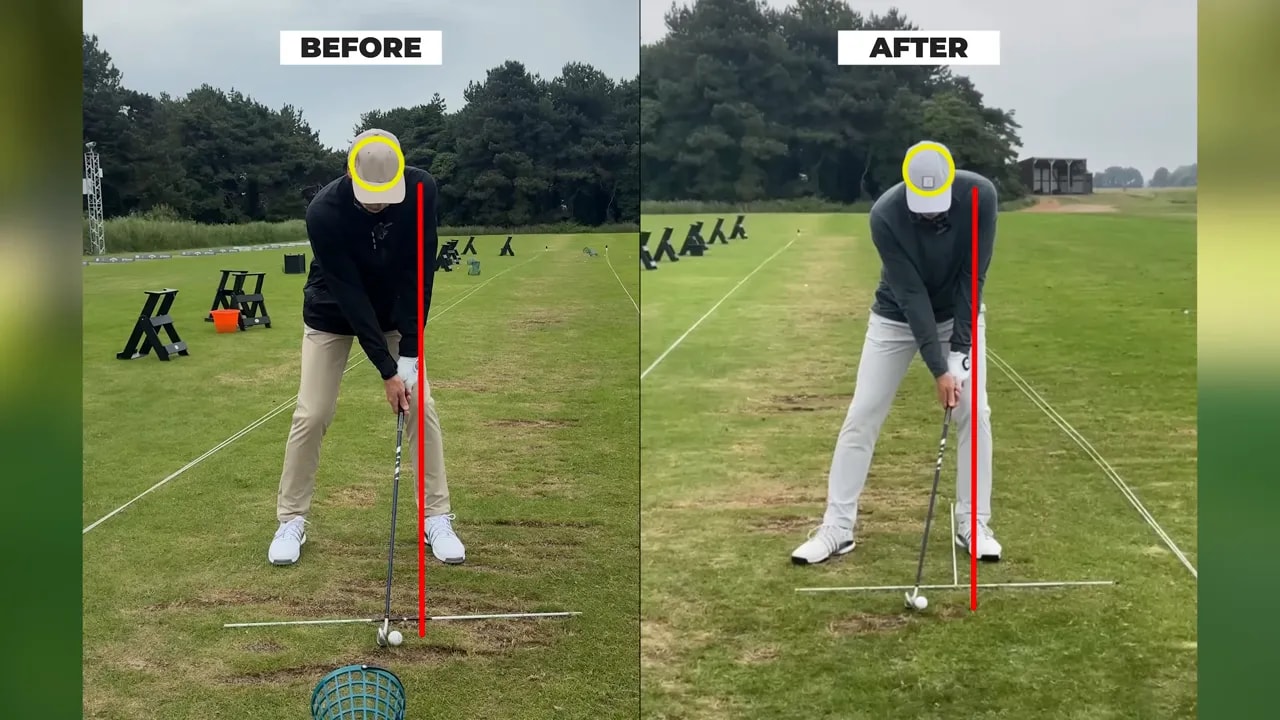
The wrench drill is a training tool, not necessarily your permanent full-swing address position.
Once you start feeling better contact and a more forward pivot, you can slowly move your stance back toward normal. The goal is to keep the sensation even as the setup becomes less exaggerated.
This is an important point. You do not have to stay frozen in drill mode forever. The drill teaches you what correct pressure and pivot should feel like. Once your body learns that pattern, you can transfer it into your regular swing.
Some golfers may choose to keep a slightly altered setup because it works so well. Others will return almost fully to normal. Either approach is fine as long as the impact conditions improve.
The test is simple:
- Are you striking the ball more cleanly?
- Are fat shots becoming less common?
- Is the launch improving?
- Are you picking up carry without extra effort?
If the answer is yes, the drill is doing its job.
Step 11: Use the key on-course feel for better fairway shots
When you take this onto the course, keep the thought simple.
Feel as if you are staying more forward and pivoting around your lead side.
That single feel can help you avoid the common mistake of falling back during the strike. It also encourages the club to trail properly and release naturally.
You do not need a long checklist over the ball. For most golfers, one solid sensation beats five technical thoughts.
If you are standing over a hybrid into a long par 4 or trying to advance a long iron from the fairway, remind yourself of the purpose:
- Lead side supports the swing.
- Body keeps moving forward through impact.
- Ball first, turf second.
That is a much clearer roadmap than trying to swing harder.
Step 12: Understand why more distance can lower scores
There is a practical reason this matters beyond technique.
When you hit the ball farther with control, golf becomes easier. Longer shots in the fairway can mean shorter approaches. Better hybrid and long iron performance can help you reach more greens, especially on longer holes where distance gaps start to show.
And when those extra yards come from better contact and better sequence instead of brute force, they are more sustainable.
That is why this hybrid and long iron drill is so useful. It does not ask you to swing out of your shoes. It gives you a smarter way to move.
FAQ
Does this hybrid and long iron drill work for senior golfers?
Yes. It is especially helpful for senior golfers because it focuses on better pivot, cleaner contact, and effortless distance instead of asking for a harder swing. The forward setup can also help you create a longer motion without aggravating your back.
How much weight should be on the lead foot in this hybrid and long iron drill?
A good starting point is about 60 to 70 percent on the lead foot. That preset helps your hips lead and makes it easier to return the club to the correct strike point.
Where should the ball be positioned for hybrids and long irons?
For a hybrid, place the ball just ahead of center. For a long iron, keep it around the middle to slightly forward of middle. The exact spot can vary a little, but the goal remains the same: strike the ball before the turf.
Why does the drill feel restrictive at first?
Because many golfers are used to a side-to-side sway and mistake that for freedom. This drill reduces that sway and replaces it with a more stable pivot, which can feel unfamiliar before it starts feeling powerful.
Should you keep using the drill setup forever?
Not necessarily. The drill is designed to teach the correct sensation. Once you learn how to stay more forward and pivot better, you can gradually return toward your normal stance while keeping the improved movement pattern.
Can this drill help stop fat shots with hybrids?
Yes. Fat shots often come from hanging back and bottoming out behind the ball. This hybrid and long iron drill helps move your low point forward so you are more likely to catch the ball first and the ground after.
If hybrids and long irons have felt like a weak spot in your game, this is a smart place to start. A better fairway strike does not always come from more speed. Often, it comes from better movement.
Use this hybrid and long iron drill to preset forward pressure, turn around your lead side, and let the club trail naturally. Cleaner contact, higher launch, and extra carry often follow.
For many golfers, that is the difference between just advancing the ball and actually attacking the hole.
0 Comments