
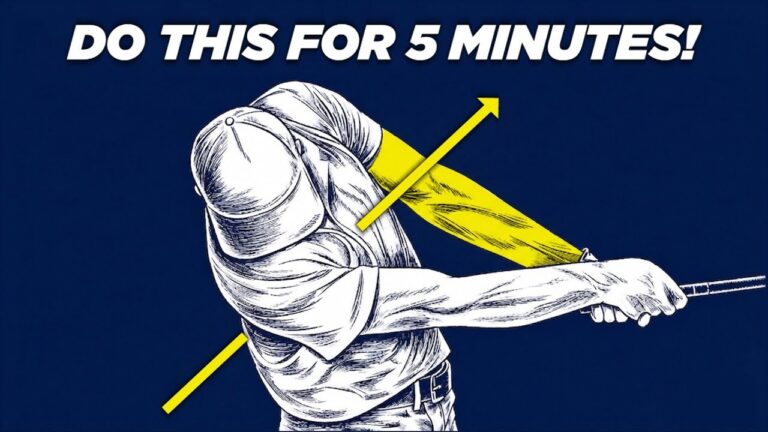

If you want better golf ball striking without filling your head with complicated swing thoughts, there is one move worth understanding first. It is not a late hand action. It is not a dramatic arm drop. And it is not a sequence of tiny positions you try to force in 0.2 seconds.
The move is simpler than that. From the top of the swing, your right side needs to get smaller as you start down. That lowering of the trail side helps your body tilt correctly, frees up your chest, improves rotation, and gives you a more powerful path through impact.
For many golfers, this is the missing piece that makes contact cleaner and more repeatable. It also matches what elite ball strikers do. When your body turns with the right tilt, golf becomes easier because the club can approach the ball from a more athletic and reliable position.
Table of Contents
- Step 1: Understand the hidden move in the golf downswing
- Step 2: Use head tilt to improve golf turn and body motion
- Step 3: Stop overcomplicating your golf swing
- Step 4: Learn what powerful golf impact really looks like
- Step 5: Notice the trail arm position great golf ball strikers share
- Step 6: Use the easiest feel drill to train this golf move
- Step 7: Match your golf swing to proven movement patterns
- Step 8: Apply the move on the golf course with one simple cue
- Step 9: Know the common golf mistakes this move can fix
- Step 10: Build your golf practice around feel, motion, and repetition
- FAQ
Step 1: Understand the hidden move in the golf downswing
The central idea is this: when you reach the top of your backswing, your trail side should not stay tall and rigid as you start down. Instead, the right side should lower. You can think of it as the right side shortening.
That move creates the body tilt strong ball strikers have through impact. It also helps your chest keep moving instead of stalling. The result is a swing that feels freer, more connected, and more powerful through the ball.
Why does this matter so much in golf? Because impact is heavily influenced by how your body is organized on the way down. If your trail side stays too high, your chest can get stuck, your rotation can slow down, and your low point control can suffer. That often leads to heavy shots, thin strikes, blocks, or flips.
When the right side lowers correctly:
- Your body tilt improves
- Your torso can open more naturally
- Your arms and club have room to move
- You can deliver speed without forcing it
- Your strike tends to become more centered and consistent
Step 2: Use head tilt to improve golf turn and body motion
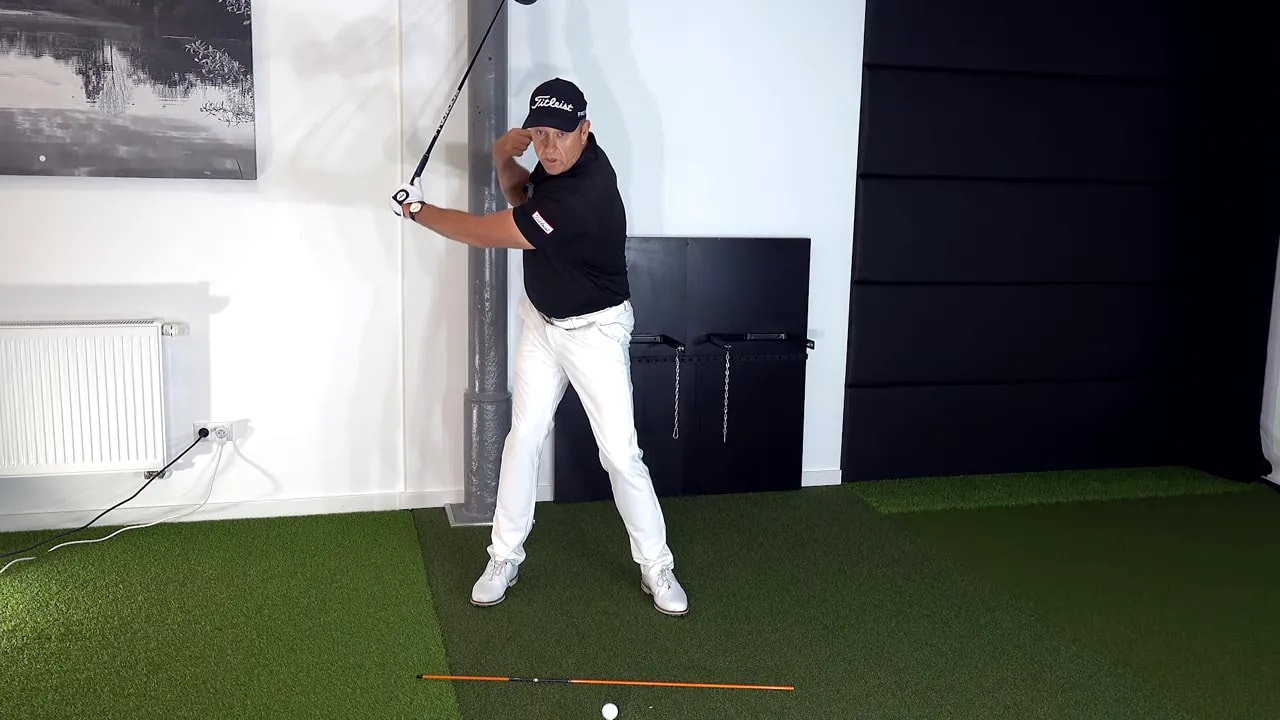
One of the easiest ways to feel this move is through the head and eyes. As you begin the downswing, allow a slight tilt so the right side lowers and your right eye feels as if it is working a little closer toward the golf ball.
This is not a lunge. It is not a dive. It is a subtle tilting action that helps the body organize itself.
A useful image is that, as you start down, you are almost looking at the ball a little more from the side of your right eye. That tilt helps the chest turn and keeps the upper body from staying too level.
Another cue is to let your nose point just slightly in front of the golf ball during the early downswing. You are still focused on the ball, but that nose alignment encourages the right side to lower and the torso to move correctly.
This matters because turning and tilting work together in a good golf swing. When you tilt properly, it becomes easier to turn hard through the shot. That is one reason great ball strikers look powerful without looking forced.
Simple feels you can use
- From the top, feel the right side lower
- Let the right eye feel slightly closer to the ball
- Allow the nose to point a touch ahead of the ball
- Keep turning as that tilt develops
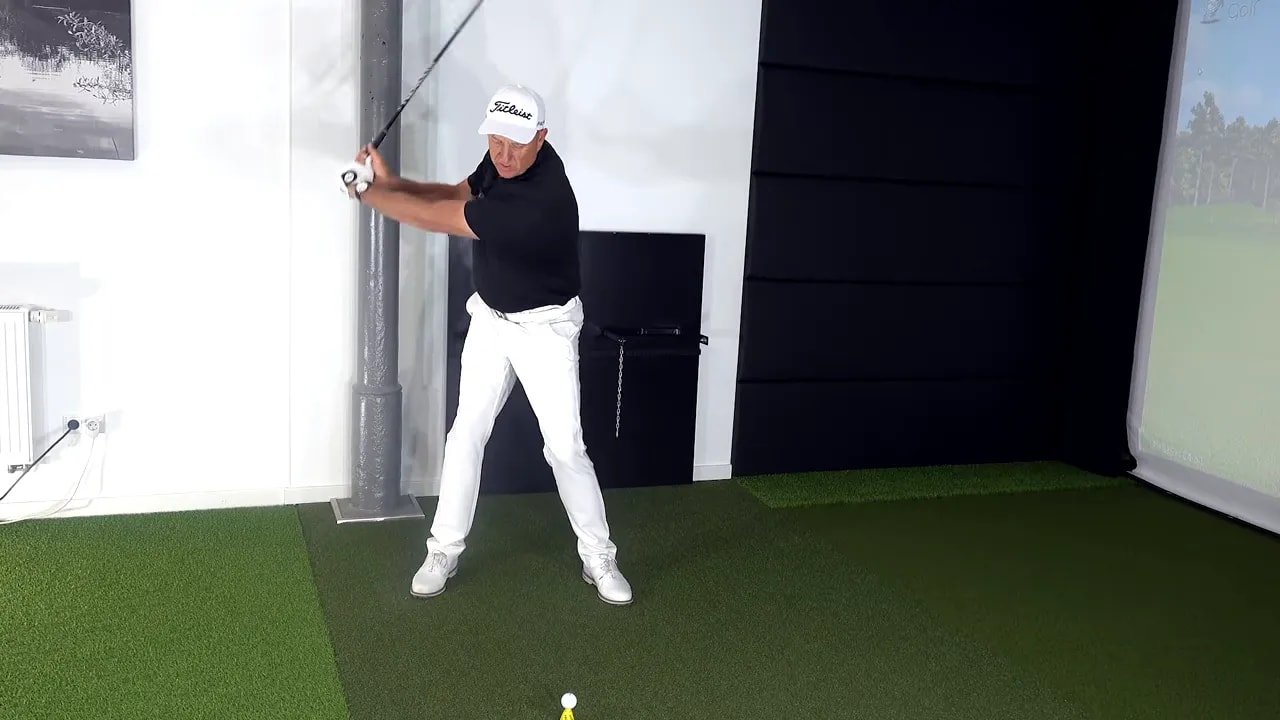
Step 3: Stop overcomplicating your golf swing
Many golfers struggle because they try to perform too many separate actions in too little time. A common example is trying to consciously drop the arms into a precise spot, then turn later, then add another move near impact. That may sound technical, but on the course it often creates hesitation.
In real golf, especially under pressure, too much internal instruction is hard to use. If there is trouble left, wind in your face, or a demanding shot ahead, your swing thought needs to be simple enough to trust.
This is where the trail-side-lowering move becomes so useful. Instead of managing multiple parts, you can focus on one athletic concept that triggers several good things at once:
- The right side lowers
- The body tilts correctly
- The chest frees up
- The torso keeps turning
- The club can move through impact with less manipulation
That is a much more playable way to think. Good golf is often built on clear intentions, not crowded thoughts.
Step 4: Learn what powerful golf impact really looks like
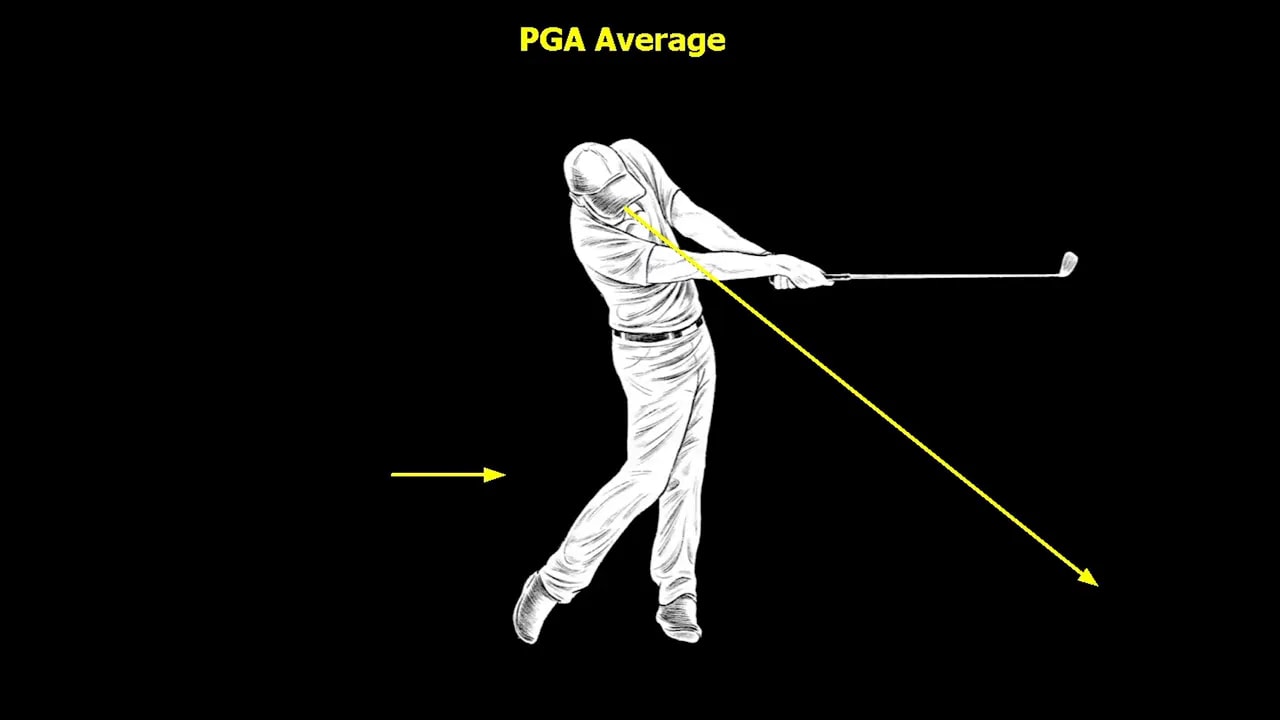
One of the key themes here is that strong impact does not come from hanging back with the chest trailing behind. It comes from the body opening up while maintaining the right tilt.
At impact, elite players tend to show:
- A high lead shoulder
- A trail leg driving toward the target side
- The neck and head turning with tilt
- The torso opening instead of stalling
That motion allows you to move through the ball confidently. It is not just about looking stylish. It is about creating the alignments that let you strike the ball hard and cleanly.
When your upper body stays too far behind, the club often has to recover late. When your torso opens correctly, your motion becomes more stable and repeatable. For golf players who fight inconsistent contact, this is a major difference.
There is also an important mental side to this. A fearful swing tends to stop moving. A committed swing keeps moving. If you are facing a difficult shot, the better intention is to turn through it with freedom. That does not guarantee perfection, but it gives you a far better chance than steering the club with tension.
Step 5: Notice the trail arm position great golf ball strikers share
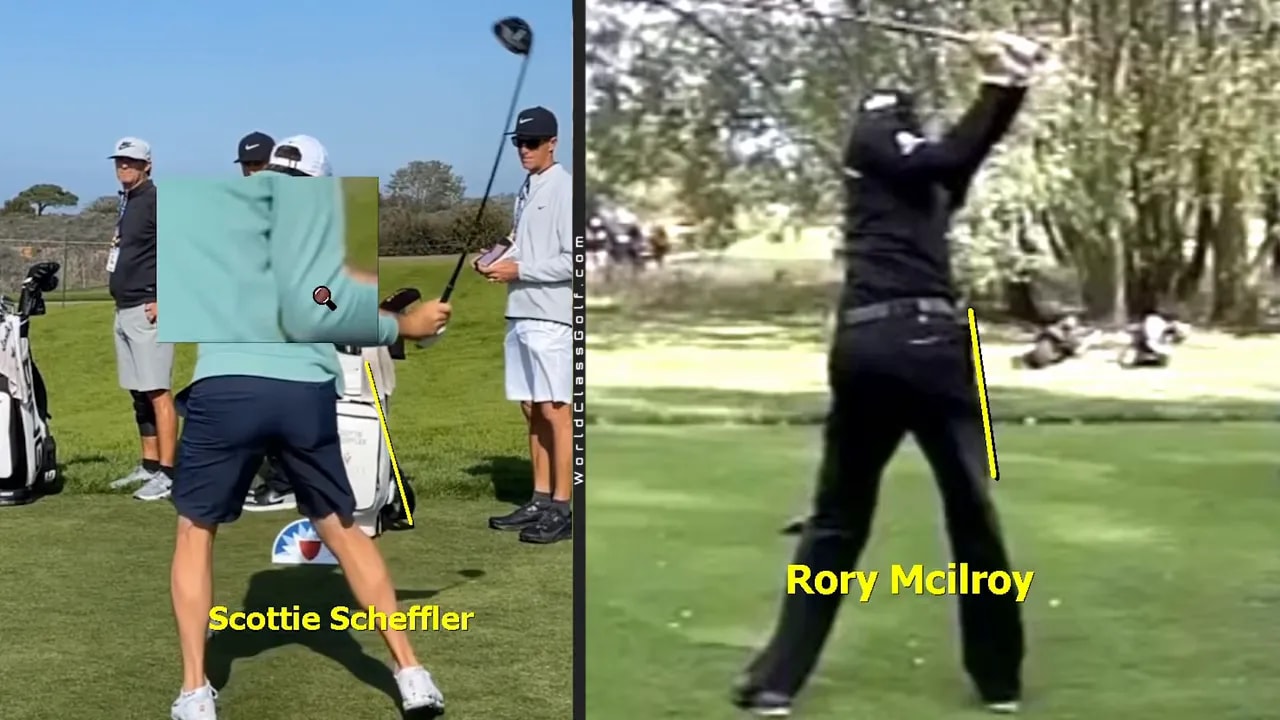
Another detail connected to this move is the position of the trail arm during the downswing. Great ball strikers often have the trail arm more closed and connected than amateurs expect. The tricep works closer to the side of the body instead of flying out and away.
This connected look is important because it stores speed and supports a more efficient delivery. If the trail arm gets too disconnected, the club can get out of position and timing becomes much harder.
The body motion and arm motion are linked. As you shift and lower the right side correctly, the trail arm can work back into a stronger delivery position. That is why this move can create a chain reaction through your whole golf swing.
Rather than thinking only about your hands, notice how body tilt, torso opening, and trail arm connection all support each other.
Step 6: Use the easiest feel drill to train this golf move
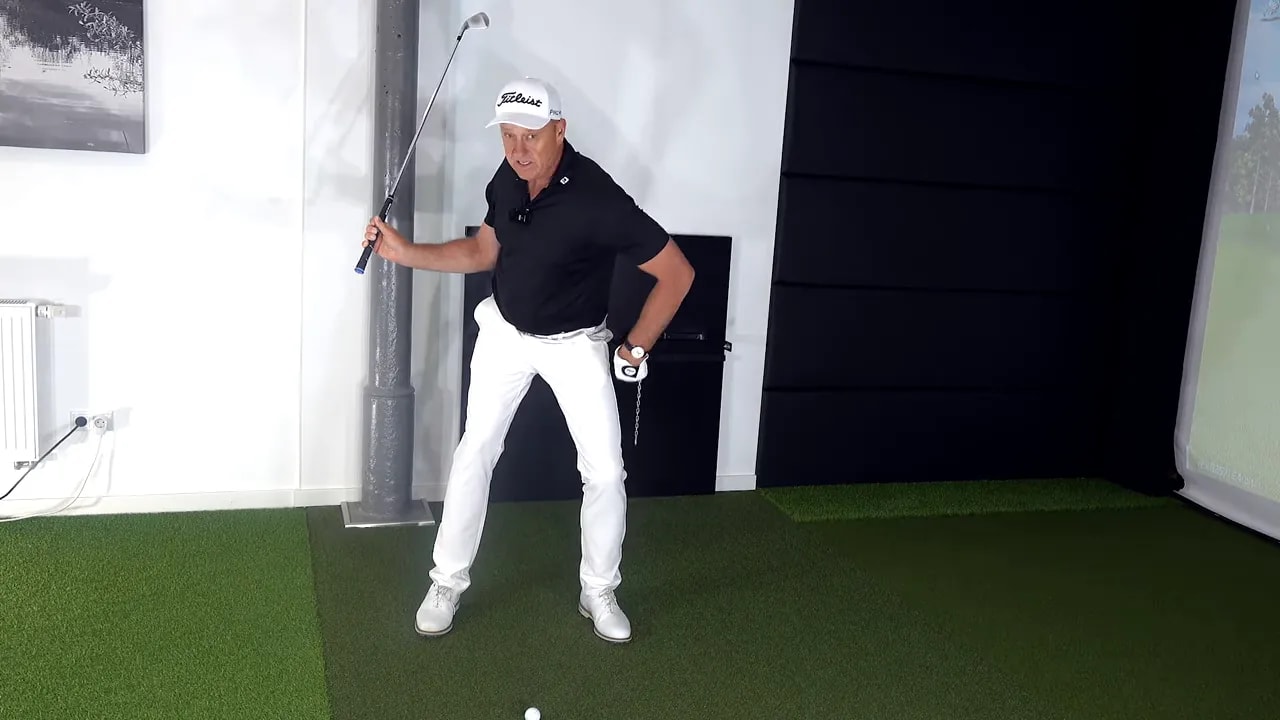
One of the most practical drills is a static position drill followed by an immediate swing. The goal is not just to understand the move intellectually. You want to feel it in your body.
How to do the drill
- Make a backswing and turn until your lead shoulder feels past the ball.
- Shift slightly toward the target.
- Bring your trail arm back into your side so it feels connected.
- Notice how the right side feels shorter and more compressed.
- Hold that feeling for a moment.
- Then step back, make a normal swing quickly, and reproduce the same sensation.
A simple checkpoint is that the trail arm should feel so connected that you could not easily slip your fingers between the upper arm and your side. That gives you a clear physical reference.
The purpose of doing the swing soon after the rehearsal is to preserve the body feel. If you wait too long, the sensation fades and your old pattern often returns.
This kind of training can be especially useful in golf because feel is often easier to repeat than a detailed mechanical checklist.
Step 7: Match your golf swing to proven movement patterns
A major point behind this lesson is evidence-based instruction. Instead of guessing what your swing should do, you compare it to common movement patterns found in top players.
The closer you get to proven averages, the better your chances of improving contact and consistency. That does not mean every golfer should look identical. It means there are reliable patterns in elite golf swings, and those patterns are worth learning from.
Examples highlighted include players such as Tommy Fleetwood, Scottie Scheffler, Rory McIlroy, Adam Scott, Jason Day, and Ben Hogan. Their swings differ in style, but they share important impact and downswing tendencies:
- They turn with tilt
- The trail side lowers in transition
- The torso opens through impact
- The trail arm works into a connected delivery position
- The trail leg drives through powerfully
One measurement referenced for Rory McIlroy showed hips significantly open at impact and the torso open as well. That supports the broader message: do not leave your chest dragging behind. Good golf swings open up through the strike.
Step 8: Apply the move on the golf course with one simple cue
Range drills matter, but the real test is taking a move onto the course. The best cue is usually the simplest one.
Try this process:
- Set up to the shot normally.
- Make one short rehearsal from the top.
- Feel the right side lower and the nose point slightly ahead of the ball.
- Then swing with the intention of turning through freely.
That is enough. You do not need a long list of internal commands.
If pressure rises, return to the athletic intention: face the shot and move through it. A committed golf swing with proper tilt gives you a better chance than a defensive swing that stalls and flips.
What this should feel like
- More freedom through impact
- Less need to rescue the shot with your hands
- Stronger compression
- Better rotation
- More confidence on full shots and smaller pitch-style swings
Step 9: Know the common golf mistakes this move can fix
If this downswing idea clicks, it can help with several common problems:
- Heavy shots because the body tilt and low point improve
- Thin strikes because you stay organized through impact
- Blocked shots because the chest and torso keep moving
- Weak contact because you can turn through with more force
- Overthinking because one move replaces several complicated thoughts
That said, this is not meant as a magic trick in the literal sense. In golf, every improvement still requires practice and feedback. But if your body has been missing this tilt-and-turn pattern, the change can feel immediate because it organizes so much at once.
Step 10: Build your golf practice around feel, motion, and repetition
To make this move stick, keep your practice simple and consistent.
A useful practice structure
- Start with slow rehearsals from the top.
- Feel the right side lower and the trail arm connect.
- Make short swings at reduced speed.
- Progress to fuller swings while preserving the same tilt and turn.
- Use one on-course cue only, such as “right side lower” or “nose slightly forward.”
The key is not speed at first. The key is learning the motion well enough that it begins to show up naturally. Once it does, your golf swing can become both more powerful and more repeatable.
FAQ
What is the main golf move being taught here?
The main move is allowing the trail side, or right side for a right-handed golfer, to lower from the top of the swing. That helps create proper body tilt, frees the chest, and supports better rotation through impact.
Why does lowering the right side help golf ball striking?
It improves the way your body is organized in transition and into impact. When the right side lowers, your torso can open more naturally, your arms have more room, and the club can approach the ball with less compensation.
Should I think about dropping my arms first in the golf downswing?
The instruction here argues against overcomplicating the downswing with too many separate moves. A simpler cue such as lowering the right side can trigger better overall motion without the stress of sequencing multiple thoughts.
What is an easy golf swing feel for this move?
A helpful feel is that your right eye moves slightly closer to the ball and your nose points a little ahead of the ball as you start down. This can encourage the right tilt and turn.
Does this golf move apply only to full swings?
No. The same general tilt pattern was also connected to smaller chip and pitch-style motions. The principle of freeing up the chest and moving through the shot can help in shorter swings as well.
How can I practice this golf move at home or on the range?
Use a static rehearsal drill. Move to the top, shift slightly, connect the trail arm to your side, feel the right side shorten, then make a swing soon after the rehearsal. That helps carry the sensation into the actual motion.
What golf players show this pattern well?
Examples referenced include Tommy Fleetwood, Scottie Scheffler, Rory McIlroy, Adam Scott, Jason Day, and Ben Hogan. They show strong turn with tilt, torso opening, and effective trail-side motion through impact.
If you have been chasing better golf contact by thinking only about your hands or club path, this move offers a better starting point. Lower the right side, let the body tilt correctly, and keep turning through the ball. For many golfers, that single change can unlock the freedom, strike, and confidence they have been missing.
0 Comments