
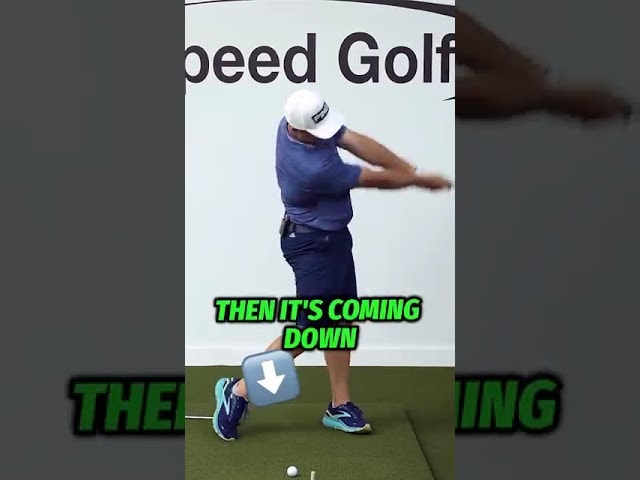

If you want better golf swing mechanics, learning your turn in slow motion can help you feel the sequence more clearly. A good golf turn is not just about rotating. It is about turning with control, letting the movement come down in order, extending through the motion, and avoiding an early drop in the trail foot. When those pieces work together, your golf swing becomes more balanced, repeatable, and athletic.
This guide explains how to improve your golf turn step by step. It focuses on the essentials that matter most: a good turn, proper transition, extension through the strike, and keeping the trail foot from dropping too early.
Table of Contents
- Step 1: Understand What a Good Golf Turn Actually Is
- Step 2: Build the Feeling of a Good Turn Before You Add Speed
- Step 3: Learn How the Golf Swing Comes Down From the Turn
- Step 4: Extend Through the Golf Swing Instead of Collapsing
- Step 5: Keep the Trail Foot From Dropping Too Early in Golf
- Step 6: Use a Slow Motion Golf Drill to Train Sequence
- Step 7: Check These Common Golf Turn Mistakes
- Step 8: Add the Golf Turn Feel to Real Shots
- Step 9: Use a Simple Golf Turn Checklist During Practice
- Step 10: Know When Your Golf Turn Is Improving
- Step 11: Practice This Golf Move at Home
- Step 12: Make the Golf Turn More Natural Over Time
- FAQ About the Golf Turn
- Key Takeaway
Step 1: Understand What a Good Golf Turn Actually Is
A solid golf turn is a coordinated body motion, not a quick spin. In a functional golf swing, your body turns back with balance, then changes direction smoothly so the motion can move down and through the ball.
The key idea is simple:
Turn first so your body is organized.
Transition cleanly so the downswing starts in sequence.
Extend through impact instead of collapsing.
Avoid dropping the trail foot too early, which can interrupt rotation and extension.
Many golf swing problems happen because players rush from the top, lose posture, or let the lower body react too early. Slow motion work helps you spot those errors and build better movement patterns.
Step 2: Build the Feeling of a Good Turn Before You Add Speed
If your goal is better golf, start by rehearsing the turn slowly. Speed often hides mechanical mistakes. Slow motion removes that mask.
When you rehearse your golf turn, focus on these checkpoints:
Your turn should feel balanced, not rushed.
Your body should stay organized from the backswing into the change of direction.
You should feel the motion move from turning to coming down, rather than jumping all at once.
A useful way to practice is to make ultra slow rehearsal swings without a ball. Pause briefly at the top, then feel the swing start down in order. This improves body awareness and can make your full-speed golf swing more natural.
Why slow motion helps your golf swing
It improves sequencing.
It highlights balance issues.
It makes extension easier to feel.
It helps you notice whether your trail foot is reacting too soon.
Step 3: Learn How the Golf Swing Comes Down From the Turn
One of the most important parts of a powerful golf swing is the transition from the turn into the downswing. The motion should not look disconnected. After a good turn, the swing needs to come down in a way that still supports posture, rotation, and extension.
In practical terms, this means you do not want to unwind so abruptly that everything gets thrown out of sync. Instead, your golf motion should feel like it changes direction and then moves down with structure.
Look for these signs of a better transition:
You stay centered enough to keep balance.
Your chest and hips do not stall immediately.
Your body has room to extend through the strike.
Your trail foot remains supportive instead of collapsing early.
This transition is where many golf players lose their turn. They make a decent backswing, but on the way down they either spin out, stand up, or let the feet change too early.
Step 4: Extend Through the Golf Swing Instead of Collapsing
Extension is one of the easiest concepts to understand and one of the hardest to feel in the golf swing. If you do not extend through the motion, your turn can look good early but break down through impact.
To extend through the golf swing means your body continues moving through the shot with structure. You are not folding up or stopping rotation as you approach impact. You are turning and moving through in a way that creates space and supports a more complete finish.
Signs you may not be extending well:
Your body looks cramped through impact.
Your chest stops rotating.
Your trail side drops too quickly.
Your finish feels short or unstable.
Good extension in golf often feels like you are moving through the shot rather than down into it. That difference matters. Going down without extending can trap the body and force compensations.
Simple extension drill for golf turn training
Make three slow rehearsal swings where you:
Turn to the top in balance.
Start the motion down under control.
Feel your body extend through the imaginary strike.
Finish tall and balanced.
This drill is basic, but it gives you a clear feel for how the golf turn should continue through the shot instead of stopping halfway.
Step 5: Keep the Trail Foot From Dropping Too Early in Golf
One of the biggest details in this move is preventing the right foot, or trail foot for a right-handed player, from dropping too early. In the golf swing, an early trail-foot drop can change how your body rotates and extends.
When that foot reacts too soon, a few things can happen:
You lose pressure too early.
Your turn can stall.
Your body may stop extending through the shot.
Your finish may look weak or unstable.
This does not mean the trail foot stays frozen. It means the foot should support the motion until the rest of the golf swing has moved into a better position. Timing is the key.
What “dropping early” usually feels like
In many golf swings, the trail heel or trail side feels like it gives way before the body has fully moved through. Instead of creating a strong, connected release, the lower body loses its supportive role too soon.
If that sounds familiar, rehearse the motion slowly and pay attention to when the trail foot changes. You want the sequence to stay connected from turn to transition to extension.
Step 6: Use a Slow Motion Golf Drill to Train Sequence
A slow motion drill is one of the best ways to improve your golf turn without overthinking. The goal is not to hit shots at first. The goal is to feel the order of movement.
Slow motion golf turn drill
Set up in your normal posture.
Make a controlled backswing and feel a complete turn.
Pause briefly at the top.
Start down slowly and sense the motion coming down in sequence.
Extend through the hitting area.
Keep the trail foot from dropping too early.
Hold your finish for two seconds.
Do 5 to 10 repetitions before hitting balls. Then hit short shots while trying to keep the same rhythm. In golf, the body often learns movement patterns more effectively through controlled repetition than through force.
Step 7: Check These Common Golf Turn Mistakes
Even motivated golf players can miss the point of slow motion practice if they focus on the wrong things. The following mistakes are common.
Mistake 1: Turning fast instead of turning well
Speed does not equal quality. A rushed turn can hide poor balance and weak sequencing.
Mistake 2: Starting down too abruptly
If the transition is jerky, your golf swing can lose structure before impact.
Mistake 3: Forgetting extension
Many players only think about the downswing. But if you do not extend through the shot, the turn will not finish properly.
Mistake 4: Letting the trail foot react too soon
An early drop in the trail foot can interrupt rotation and make the golf swing feel disconnected.
Mistake 5: Practicing too quickly
Slow motion only works if it is actually slow. If your rehearsal swings speed up, you are more likely to return to the same old golf habits.
Step 8: Add the Golf Turn Feel to Real Shots
After rehearsing your motion, start blending it into actual golf shots. Begin with half swings or easy punch shots. This helps you keep the same sequence without the pressure of a full swing.
A good progression looks like this:
Make 3 slow rehearsal swings.
Hit 1 soft shot at about 50 percent effort.
Repeat while focusing on turn, transition, and extension.
Gradually build toward fuller golf swings.
If your ball striking gets worse as you add speed, go back to slow motion. That usually means your body is losing the sequence you just trained.
Step 9: Use a Simple Golf Turn Checklist During Practice
When working on your golf swing, too many swing thoughts can make practice confusing. A short checklist is more effective.
Golf turn checklist
Good turn: Did you rotate in balance?
Controlled transition: Did the motion come down in order?
Extension: Did you move through the shot instead of collapsing?
Trail foot timing: Did the right foot stay supportive long enough?
Finish: Could you hold your finish with balance?
This checklist keeps your golf practice focused on functional movement rather than isolated positions.
Step 10: Know When Your Golf Turn Is Improving
You do not need launch monitor data to know whether this is helping your golf swing. A few simple signs usually show progress.
Your rehearsal swings feel smoother.
Your finish is easier to hold.
Your body feels less rushed in transition.
You sense more extension through the strike.
Your trail foot timing feels more natural.
These are strong indicators that your golf turn is becoming more efficient.
Step 11: Practice This Golf Move at Home
You can improve this part of your golf swing without going to the range. In fact, slow motion body rehearsals are often easier at home because you can focus completely on movement.
At-home golf turn routine
Make 10 slow turns in front of a mirror.
Pause at the top for one second each time.
Move down slowly and feel extension through the finish.
Watch that the trail foot does not drop too early.
Repeat for 2 or 3 short sets.
This kind of low-stress golf practice can make it easier to carry the motion onto the course or range later.
Step 12: Make the Golf Turn More Natural Over Time
The goal is not to rehearse in slow motion forever. The goal is to use slow motion to build a better golf pattern, then let that pattern show up at regular speed.
That takes repetition. If you work on this only once, the change may not stick. But if you practice the turn, the transition, the extension, and the trail-foot timing consistently, your golf swing can become more connected.
Keep it simple:
Rehearse slowly.
Hit easy shots.
Build speed gradually.
Return to the drill whenever your sequencing slips.
FAQ About the Golf Turn
How do you practice a golf turn in slow motion?
Make rehearsal swings at a very reduced speed, focusing on a balanced turn, a smooth move down, extension through the hitting area, and proper trail-foot timing. Slow motion practice helps you feel the sequence more clearly in your golf swing.
Why is my right foot dropping too early in the golf swing?
In many golf swings, the trail foot drops early because the body rushes the transition or loses structure on the way down. When that happens, the lower body may stop supporting rotation and extension. Slower rehearsals can help improve the timing.
What does extension mean in golf?
Extension in golf refers to moving through the shot with structure instead of collapsing or stopping rotation. It helps the swing continue through impact and supports a more complete, balanced finish.
Can slow motion drills improve my golf swing?
Yes. Slow motion drills can improve awareness, balance, sequencing, and movement quality in the golf swing. They are especially useful when you are trying to improve your turn and transition.
Should I work on my golf turn without a ball first?
Yes. Practicing without a ball often makes it easier to focus on movement instead of contact. Once the golf turn feels more organized, you can gradually add soft shots and build toward full swings.
Key Takeaway
To improve your golf turn, focus on quality over speed. Make a good turn, let the motion come down in sequence, extend through the swing, and do not let the trail foot drop too early. If you rehearse those pieces in slow motion and then add speed gradually, your golf swing can become more stable, more connected, and easier to repeat.
0 Comments