


Trying to hit driver further does not have to mean making a bigger backswing or swinging harder. For many golfers, especially those managing limited flexibility, past injuries, or simply inconsistent contact, chasing a longer swing can create more problems than distance.
A more reliable route to added driver distance is to give your body a clear destination, improve your launch conditions, and accelerate the club through impact with a short, athletic motion. The central idea is simple: keep the swing compact, stay behind the golf ball, and create speed through a controlled catapult action rather than a forced effort.
Table of Contents
- Step 1: Build a Driver Setup That Helps You Hit Driver Further
- Step 2: Choose a Clear Finish Position Before You Swing
- Step 3: Start With the Short Swing Driver Drill
- Step 4: Stop the Forward Lunge That Costs Driver Distance
- Step 5: Create Speed With a Catapult, Not a Longer Swing
- Step 6: Use Sound to Train Driver Swing Speed
- Step 7: Add an Underarm Throw Feel to Hit Driver Further
- Step 8: Control the Clubface Without Losing the Throwing Action
- Step 9: Progress From Practice Swings to Full Shots
- Step 10: Keep the Main Feel Simple
Step 1: Build a Driver Setup That Helps You Hit Driver Further
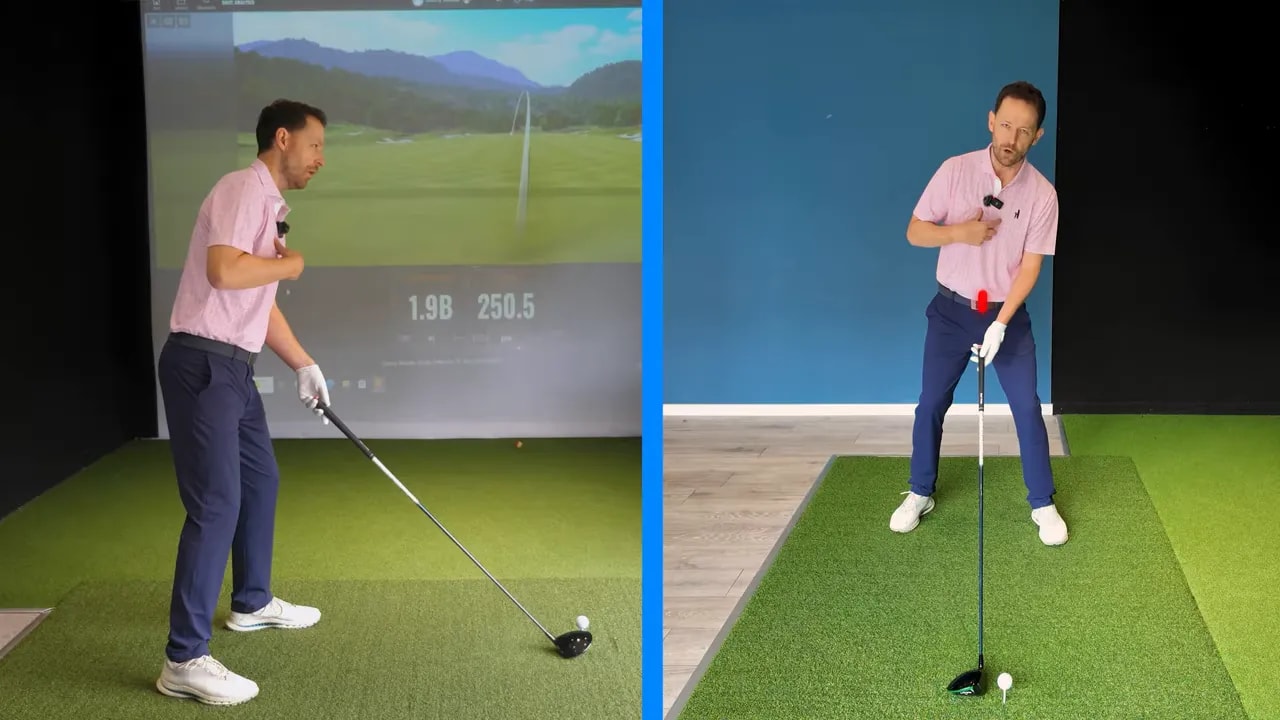
Your setup creates the conditions for the strike. With a driver, you want to catch the ball on a slightly upward or level path, rather than chopping steeply down on it. A descending strike can reduce launch and rob you of the distance available from your driver.
Start by placing the ball opposite your front heel. This forward ball position gives the club time to travel through the bottom of its arc before impact.
Next, move a small amount of pressure toward your front side. This may sound counterintuitive because many golfers have heard that they must load heavily onto the trail side with driver. The key here is that the shift is only slight.
That modest forward pressure naturally tilts your upper body fractionally away from the target. You are not leaning excessively backward. You are simply creating a helpful body angle that allows you to approach the ball from underneath rather than above it.
- Position the ball opposite the front heel.
- Apply a little more pressure into the front foot.
- Allow your upper body to tilt subtly away from the target.
- Keep the feeling athletic and balanced rather than rigid.
This setup gives you a better chance to launch the ball efficiently. It also prepares you to stay behind the ball through impact, a major ingredient in learning how to hit driver further with less apparent effort.
Step 2: Choose a Clear Finish Position Before You Swing
Many golfers focus entirely on what they do at the ball. A more useful approach is to know where you are trying to finish. When your body has a clear destination, it can organize the motion more naturally.
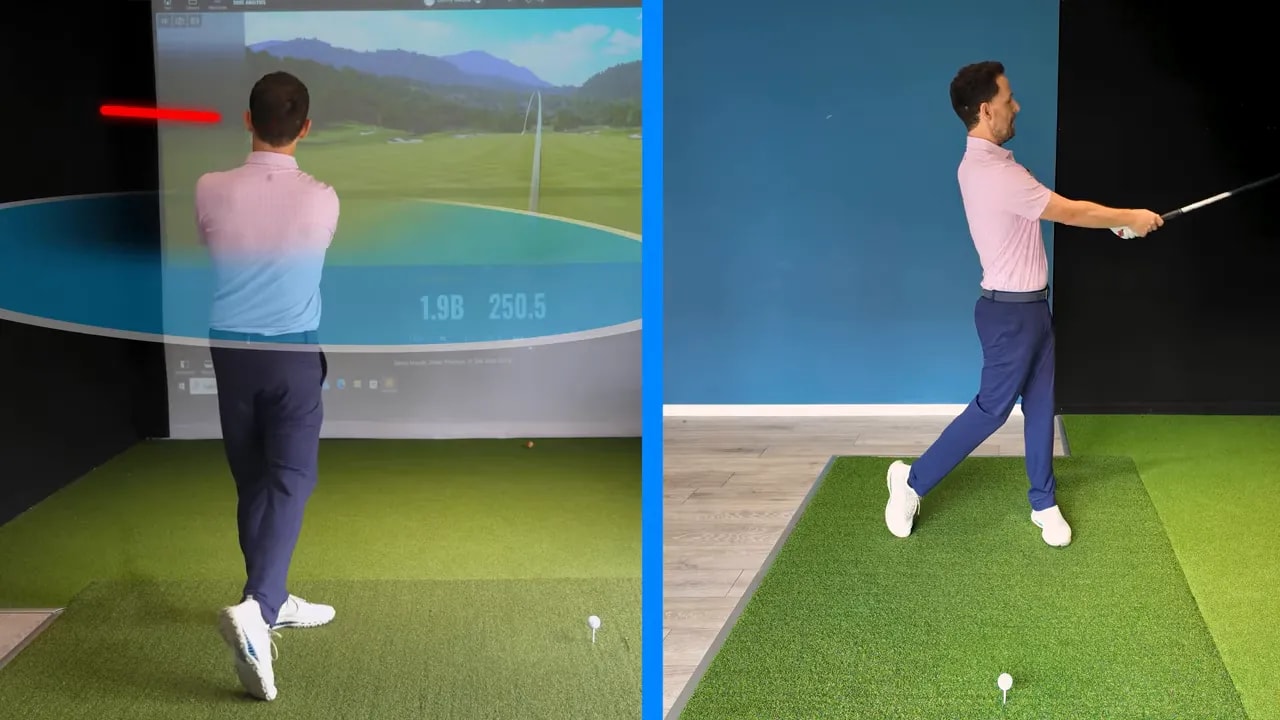
For this driver drill, rehearse a compact finish where your eyes, ears, and shoulders remain on an angle that reflects the inclined plane of the golf swing. Your trail shoulder should stay noticeably lower than your lead shoulder as you move through the hitting area.
This is not a high, upright finish where the trail shoulder jumps toward your ear and the head lunges toward the target. That common pattern often makes the club approach the ball too steeply. With driver, a steep attack can cause weak contact, poor launch, and a loss of speed.
Instead, feel as though your trail shoulder works back, down, and around your body. You want to remain behind the golf ball as the club accelerates through impact.
Use your head and shoulders as feedback
After each rehearsal, assess the finish position. Did your head surge forward? Did your trail shoulder rise too high? Or did you retain your tilt and keep the trail shoulder lower?
This is valuable feedback because it reveals the shape of your movement without asking you to think about several mechanical positions at once. Your only job is to work toward a clear, angled finish.
Step 3: Start With the Short Swing Driver Drill
To hit driver further, begin with a much shorter swing than you think you need. Make practice swings that travel only about halfway back and halfway through. The purpose is not maximum distance at this stage. It is to learn the correct direction and body angles through the strike.
Think of the motion as a long putt. Your backswing is short, controlled, and purposeful. Then you swing through toward your chosen finish position.
This compact drill is particularly useful if you struggle with flexibility or feel that a full turn makes you lose balance. It can also help if your driver swing becomes too long, too loose, or too steep.
- Make a half backswing.
- Move through to the angled finish.
- Keep the trail shoulder low through the ball.
- Stay behind the ball instead of lunging toward the target.
- Repeat until the finish feels stable and recognizable.
Do not expect the movement to feel perfect immediately. Repetition gives you the awareness needed to recognize the difference between a balanced, angled finish and a forward lunge.
Step 4: Stop the Forward Lunge That Costs Driver Distance
A forward lunge is one of the biggest barriers to effortless power. When your head and upper body move aggressively toward the target, your trail shoulder tends to rise. The club then approaches the ball from a high position, encouraging a downward chopping action.
That pattern is particularly damaging with driver because it works against the upward or level strike you want. It can also contribute to sliced shots, as the body races forward and leaves the club struggling to catch up.
Rather than trying to force your body to stay frozen, use your intended finish as the solution. If your finish keeps the trail shoulder lower and your body behind the ball, you give yourself room to accelerate the club correctly.
The goal is not to hang back on your trail foot forever. You still move through the shot. The difference is that you do not throw your upper body toward the ball before the club has a chance to release.
Step 5: Create Speed With a Catapult, Not a Longer Swing
Once you can repeat the short swing with the correct finish, add speed. This is where the feeling changes from a controlled long putt to a compact, athletic strike.
Clubhead speed does not come only from a long backswing. It comes from accelerating the club at the right time. Think of the club being catapulted through the hitting area.
A useful comparison comes from throwing a bowling ball underarm. You do not simply turn your body and drag the ball along. Your arm and hand add speed through the release. The same principle applies to the driver.
Feel your trail shoulder moving back and under, then allow the club to be thrown through from underneath. This is an underarm throwing sensation, not an over-the-top action. The body supports the movement, while the arms and club accelerate through it.
The result should feel like a strike with purpose, not a passive swing. Effortless does not mean lifeless. It means that your effort is directed into the club at the correct moment instead of being wasted on an oversized motion.
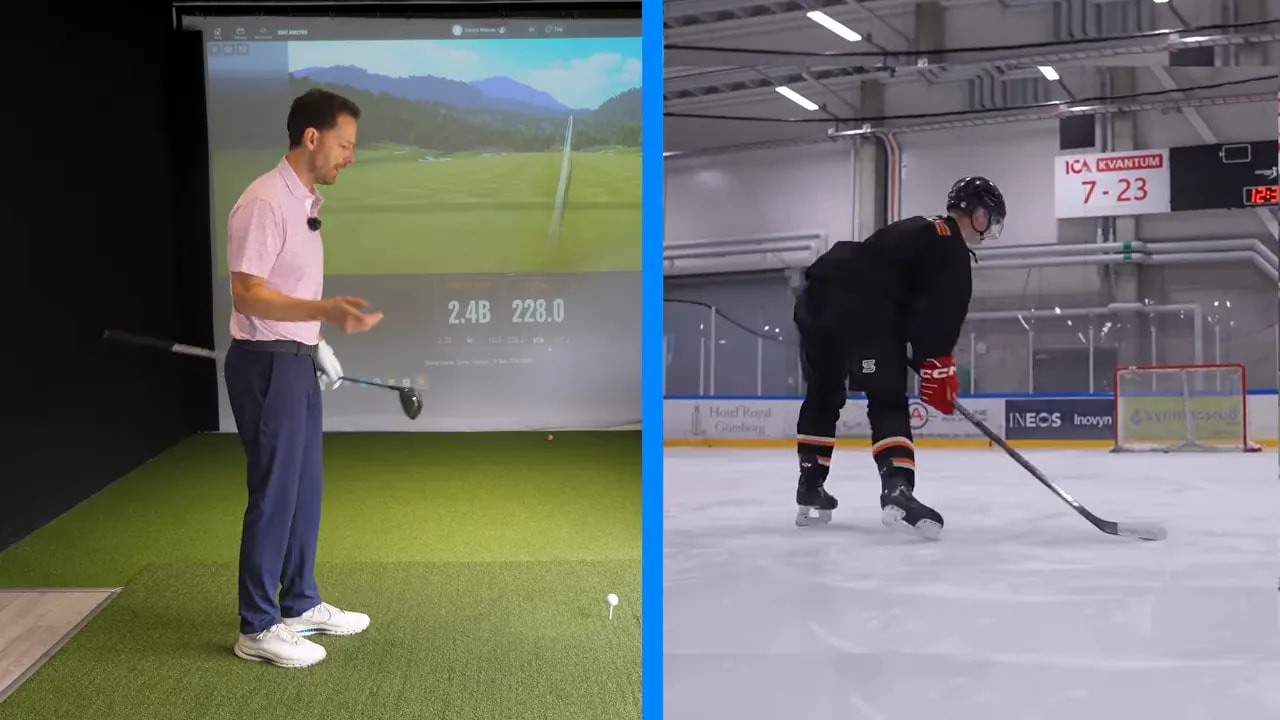
Use the hockey comparison
In a powerful hockey shot, the trail foot and body provide a braced, athletic platform as the stick accelerates through the puck. The golfer’s version is similar. Your body should not keep spinning freely with the club. It needs to provide enough stability for the club to speed up.
Over-rotating with the hips and upper body can rob you of power. If everything moves together at the same pace, there is little opportunity for the club to accelerate past the body. A more effective motion allows the clubhead to whip through while your body naturally braces against that force.
Step 6: Use Sound to Train Driver Swing Speed
A simple sound drill can help you identify whether you are accelerating in the right place. Turn the driver upside down, gripping near the clubhead so the shaft and grip end create an audible whoosh as you swing.
Make sure you have plenty of space and do not let the club touch the ground. Your aim is to hear the loudest part of the whoosh through the impact area, not far behind the ball.
Keep the same compact finish that you practiced earlier. Then make the club accelerate through the imagined ball position. If the sound peaks too early, you may be releasing all your speed before impact. If it peaks through and after the ball, you are learning the catapult sensation.
Do not confuse this with deliberately holding the club off. The arms and body will naturally respond to the acceleration. You do not need to manufacture a stiff or artificial finish. Focus on the sound and let the motion organize itself.
Step 7: Add an Underarm Throw Feel to Hit Driver Further
Now combine the compact swing, angled finish, and acceleration. Rehearse the sensation of an underarm throw through the ball. Your trail shoulder works down and under, while the club is released around your body.
This helps you avoid the classic fault of attacking from above the ball. When you throw underarm, the club has a better chance to approach from a shallower direction. That can improve both launch and strike quality with the driver.
At first, keep your swing short. Make a compact backswing, then feel the club being thrown through toward the finish. As the movement becomes natural, your swing may lengthen slightly on its own. That is fine, but do not chase length prematurely.
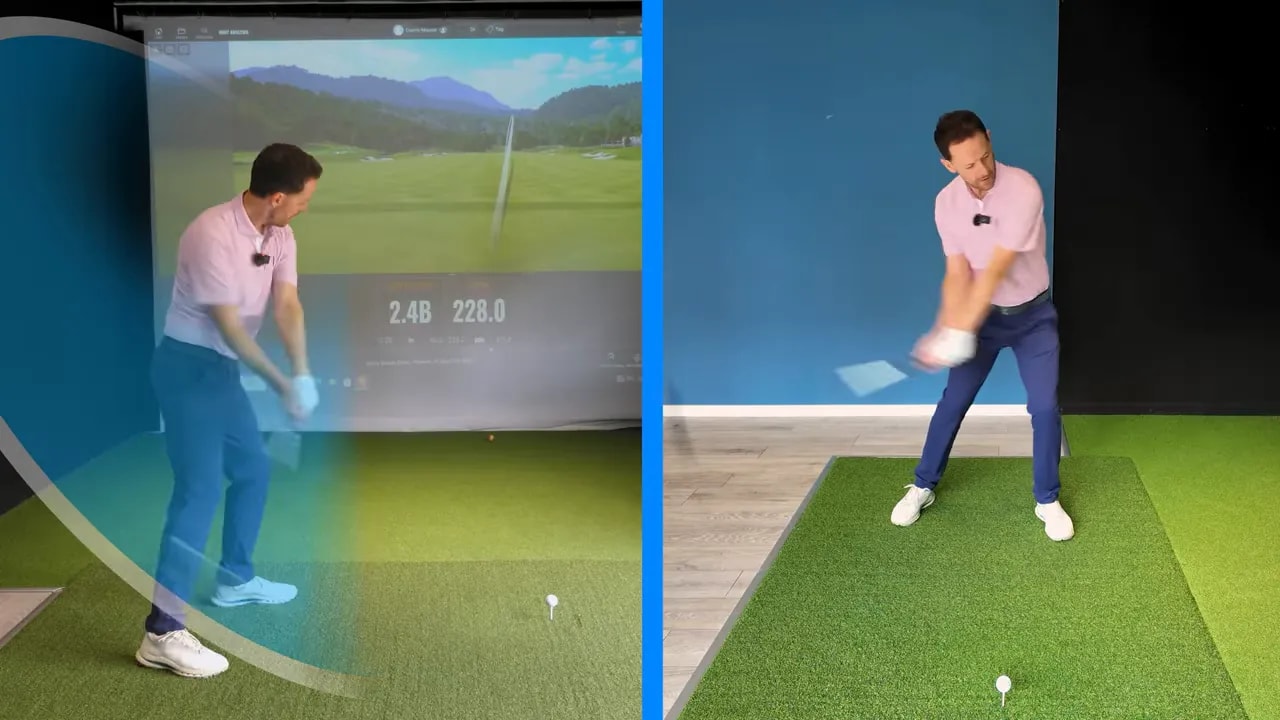
If you have the mobility to make a longer backswing later, the same motion still applies. Your trail shoulder may move higher during the backswing, but the delivery should retain the underarm sensation. The club comes from underneath and around the body, not from above and across the ball.
Step 8: Control the Clubface Without Losing the Throwing Action
As you begin to add speed, pay attention to ball flight. A pushed shot that starts too far right can indicate that you have worked too far from the inside. The answer is not to abandon the underarm feeling or start chopping down.
Instead, allow the clubface to rotate more naturally around your body through the strike. You still want the trail shoulder working low and under, but the club must continue through rather than remain excessively stuck behind you.
The best version of this move combines three qualities:
- Stability: Your body stays behind the ball rather than lunging forward.
- Acceleration: The club speeds up through impact with a catapult feeling.
- Rotation: The clubface releases around your body so the ball can start on a better line.
When these pieces work together, you can produce a strong, straight driver shot without feeling as though you have made a huge swing.
Step 9: Progress From Practice Swings to Full Shots
Use this progression during a driving range session to make the move practical.
- Set the ball opposite your front heel and place a small amount of pressure into the front side.
- Rehearse your angled finish with a low trail shoulder.
- Make five short, ball-free swings that resemble a long putt.
- Make five more rehearsals with an underarm throwing sensation.
- Turn the driver upside down and make several swings, listening for the whoosh through the impact area.
- Hit short-swing shots at moderate speed.
- Only add pace when you can retain your body angle and stay behind the ball.
Measure progress by strike quality, launch, direction, and balance, not just by the length of one shot. A well-struck driver from a compact motion is far more useful than an occasional long drive followed by a slice or poor contact.
Step 10: Keep the Main Feel Simple
The most effective swing thoughts are often the simplest. To hit driver further with this method, remember the sequence:
- Set up for an upward strike.
- Know your angled finish.
- Keep the early swing compact.
- Stay behind the ball.
- Catapult the club through with an underarm throw feeling.
You do not need to force a bigger turn to create more distance. You need a clear destination and a better way to deliver speed. Start small, build trust in the strike, and let a longer motion develop only if it serves your balance and contact.
Frequently Asked Questions About How to Hit Driver Further
Can you hit driver further with a short backswing?
Yes. A short backswing can still produce strong driver distance when you improve strike, launch the ball efficiently, remain behind the ball, and accelerate the club through impact.
Where should the ball be positioned with driver?
Place the ball opposite your front heel. This forward position helps you meet the ball on a slightly upward or level path.
Why do I lose driver distance when I lunge forward?
Lunging forward can raise the trail shoulder and make the club approach from too high and steep a position. That encourages a downward strike, reducing launch and making solid contact more difficult.
What is the catapult feeling in the driver swing?
The catapult feeling is a focused acceleration of the club through impact. It resembles an underarm throw, where the trail shoulder works down and under while the arms and club release with speed.
Should I make my backswing longer to gain driver distance?
Not immediately. First learn to create speed and strike the ball well from a compact motion. A longer backswing can be added later if you can maintain the same underarm delivery, body angle, and balance.
0 Comments