


When you are working hard on your game but your strike, consistency, or distance refuse to improve, the issue is not always effort. Often, it is the movement you are rehearsing. Practice makes permanent, so repeating a motion that throws your body forward through impact can make a golf swing feel more forced, less powerful, and harder to control.
These simple golf swing drills are built around a more productive sequence: allow your body to work upward and around through impact, keep the swing moving on an angle, and let the club release as a result of that motion. Spend two minutes on each drill and you have a practical six-minute routine that can work with irons, hybrids, fairway woods, and more.
Table of Contents
- Step 1: Identify the forward lunge that hurts your golf swing
- Step 2: Use the throwing-water feel for a better golf swing
- Step 3: Build swing angle with the longest chip drill
- Step 4: Blend your body and arms instead of pushing toward the target
- Step 5: Let the club release naturally with a ball in a sock
- Step 6: Combine the 3 simple golf swing drills into a six-minute routine
- Step 7: Use feedback to make your golf swing practice more precise
Step 1: Identify the forward lunge that hurts your golf swing
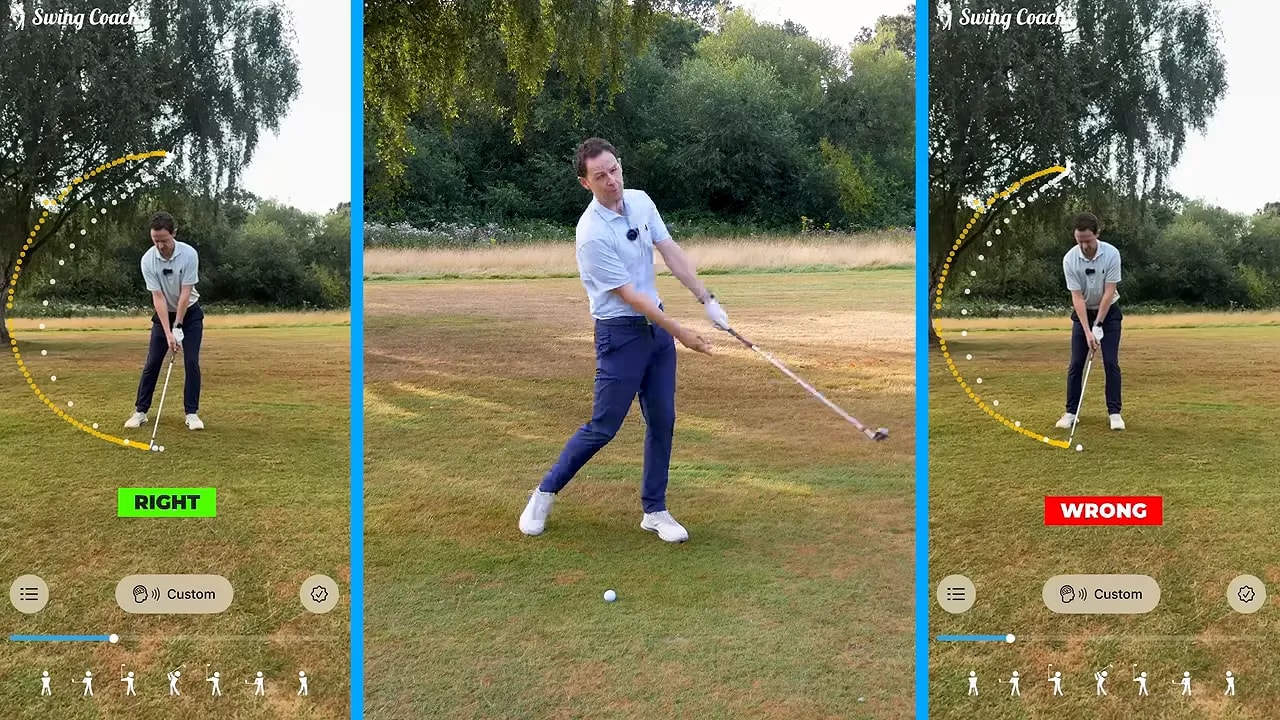
Analysis of 196,000 swings revealed a recurring pattern: golfers commonly drive their whole body forward as they approach the ball. It is an understandable reaction. You have probably heard that, with an iron or fairway wood, you should strike the ball before the turf. Taken too literally, though, that instruction can lead you to push forward and down in an attempt to force the strike.
This is the movement to avoid. As you lunge forward, you can remove loft from the clubface and interrupt the natural acceleration of the club. Instead of the clubhead being slung through the ball, the entire motion becomes a push toward the target. That can make solid contact feel difficult to repeat.
The solution is not to abandon a descending strike. A well-struck iron shot can still contact the ball before the ground. The important change is the action of your body and hands through impact.
- Unhelpful intention: drive the body forward and force the club down.
- Better intention: place your body correctly at address and allow the clubhead to reach the low point while your body continues upward through the strike.
Think of the ball as something you collect rather than something you hit. At the bottom of the swing, the clubhead is the part travelling down while the handle and body are beginning to work up and through. This keeps your head more centred and gives the club room to accelerate.
Step 2: Use the throwing-water feel for a better golf swing
The first of the simple golf swing drills creates the body action you need without overthinking positions. Imagine standing in a swimming pool with your trail hand in the water. Your task is to scoop and throw a wave of water forward, as if you were tossing it toward someone in front of you.
To create a proper wave, you do not slap straight down onto the surface. Your hand, body, and arm work through and upward, sending the water forward. That is the sensation to rehearse through the ball.
How to practise the throwing-water drill
- Set up as if you were addressing a golf ball.
- Take your trail hand off the club if needed so you can focus on the feeling.
- Imagine your trail hand moving through water near the ground.
- Use your whole body to throw the water forward into a wave.
- Finish with your body working up and through, not lunging toward the target.
As you make the movement, notice that the club could still strike down at the ball. The difference is that your body is not driving down with it. The clubhead falls to the low point because of where you are positioned, while your body movement supports a free release through the shot.
Body location matters. If you are too far back, the club will bottom out too early. If you are set up in the right place and work upward through the strike, the club can meet the ball first and continue into the turf naturally.
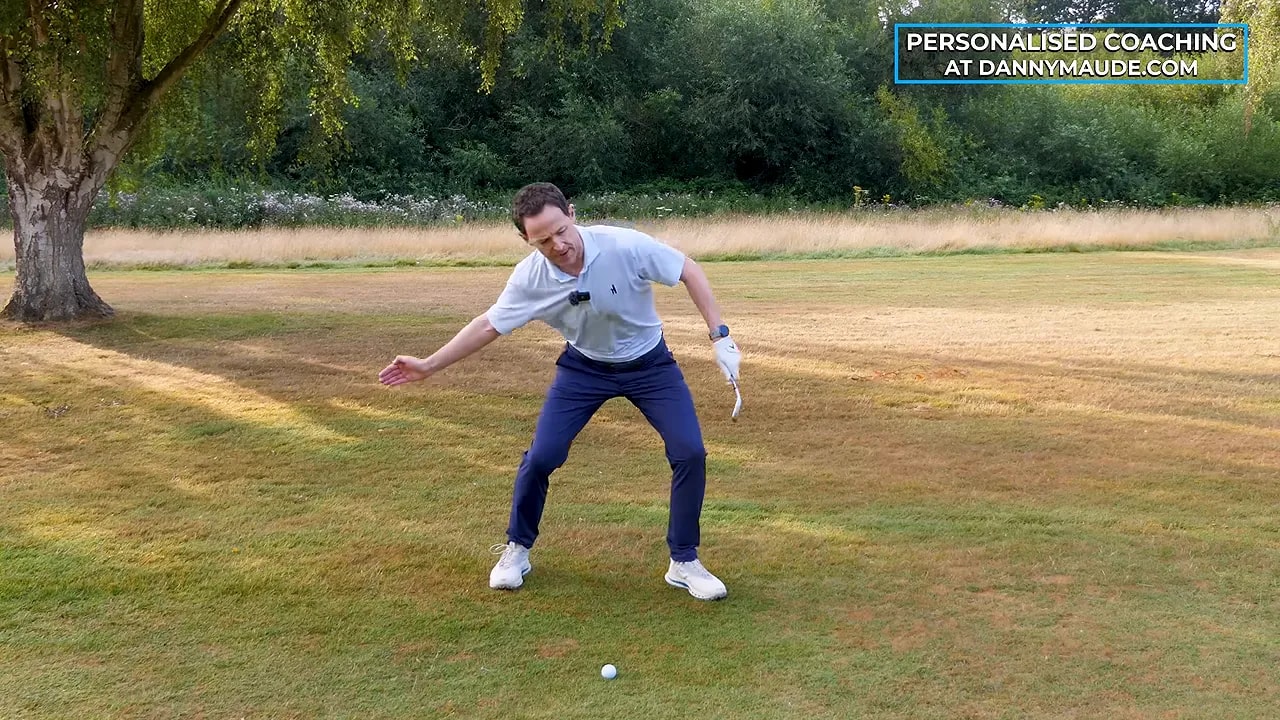
This image is especially useful for golfers who tend to “hit at” the ball. Replace the downward slap with the sensation of creating a wave. It is a simple mental picture, but it changes the direction and rhythm of the motion.
Step 3: Build swing angle with the longest chip drill
The second of these simple golf swing drills connects your arms and body while teaching the correct angle through impact. Golf is played on an inclined plane, not with the arms and shoulders working flat and level across your body.
As you swing through effectively, your lead shoulder and lead arm finish higher while your trail shoulder and trail arm remain lower. This angled relationship helps preserve strike and enables you to catapult the club through the ball under control.
The drill is called the longest chip. It starts with a compact swing but can produce a surprisingly long shot. With practice, this reduced-motion drill can send the ball a considerable distance while helping you feel a more efficient delivery.
How to perform the longest chip drill
- Set up to the ball with approximately 80% of your weight on your lead side.
- Keep your head around the middle of your stance.
- Swing the club back only about halfway.
- Turn through toward the target rather than pushing your whole body forward.
- Finish with your lead arm above your trail arm.
- Feel your trail shoulder stay lower than your lead shoulder through the strike.
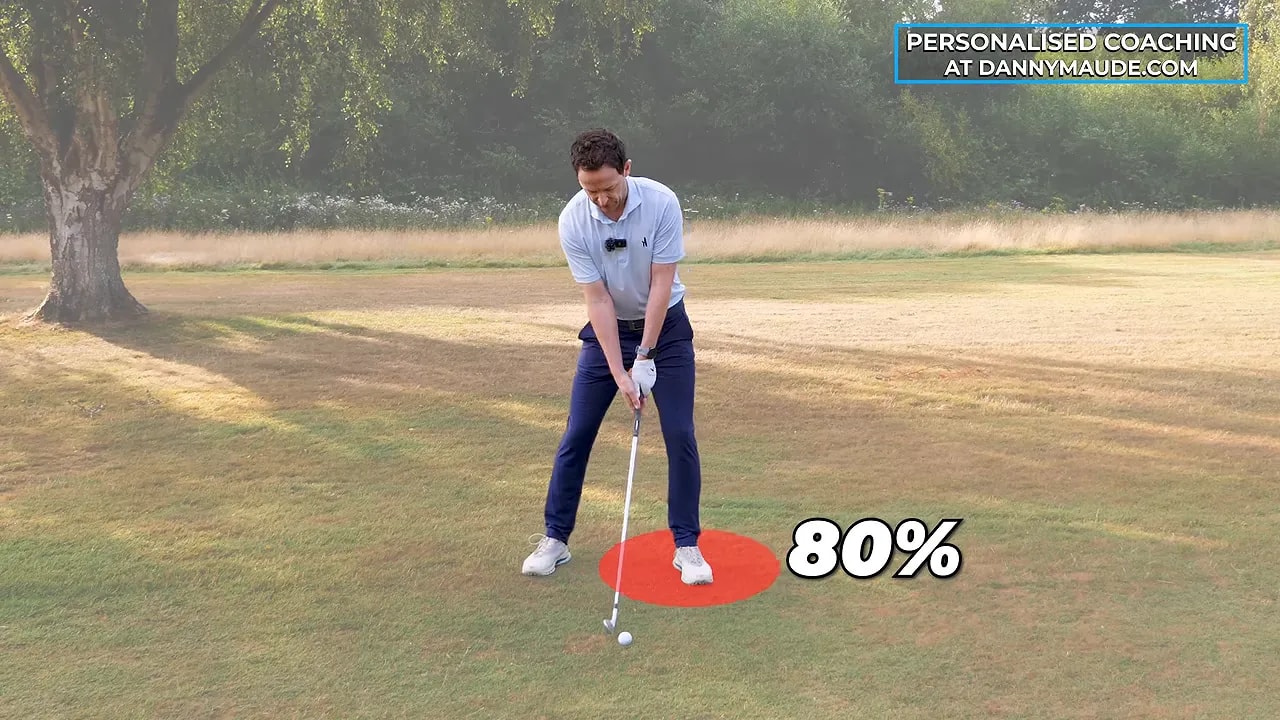
For golfers with plenty of mobility, the hips may move ahead of the chest and head during the finish. If flexibility is limited, a more in-line finish is perfectly acceptable. The key is not a particular pose. It is maintaining the trail shoulder lower than the lead shoulder as you rotate through.
If the shoulder description feels too technical, use another image: imagine pouring water out of your trail-side ear as you swing through. You can also picture skimming a stone across a pond. Both images reinforce the angled, through-the-shot action instead of a downward, forward shove.
The longest chip is valuable because it removes the temptation to hit hard. You make a half backswing, turn through, and allow the club to be catapulted toward the target. The body does not chase the ball. Instead, it creates space for the club to travel through impact.
Step 4: Blend your body and arms instead of pushing toward the target
Your arms and body need to work together. When the body lunges forward, the club often loses its natural path and acceleration. In the improved pattern, your turn carries you through the strike while the clubhead is released from behind you.
From the longest-chip setup, feel the following sequence:
- Your weight begins favouring the lead side.
- Your backswing stays compact and controlled.
- Your body turns through on an angle.
- Your trail shoulder works lower than your lead shoulder.
- Your arms are carried through as the club accelerates.
This can feel as if the body is moving slightly away from the ball through impact rather than falling toward it. That sensation creates room for the club to swing and prevents the excessive forward push that often destroys strike.
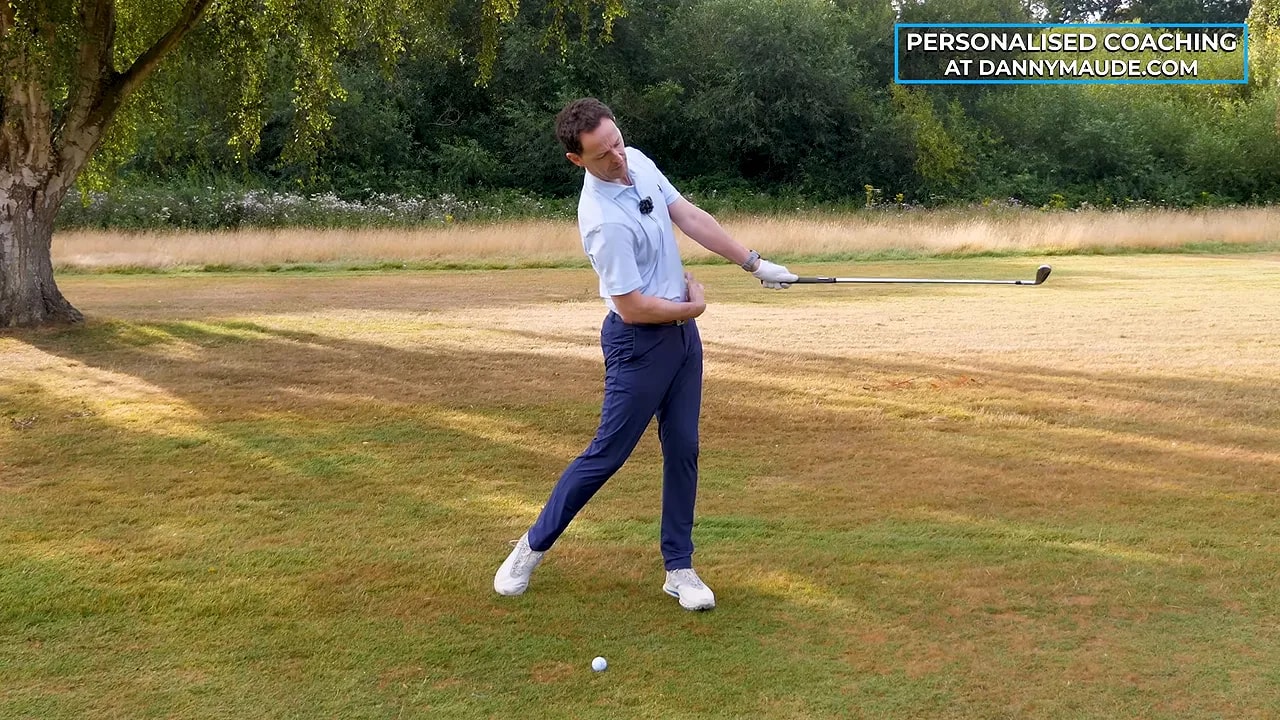
A controlled, angled motion is not a weak motion. It is how you create a freer strike without trying to force the clubhead into the ground. Start slowly and use short swings. Your goal is to recognize the coordinated feel of turning, rising, and allowing the club to travel through.
Step 5: Let the club release naturally with a ball in a sock
The third simple golf swing drill addresses a common question: when should you release the golf club? The most useful answer is that you should not need to consciously force a release. When your body and arms move correctly, the club releases naturally.
A ball in a sock gives you immediate feedback. You can also use a towel. Hold the socked ball or towel as you would hold a club, then make a flowing motion. You are not trying to decide when the object should release. Its movement responds to your body motion.
How to use the ball-in-a-sock drill
- Place a golf ball inside a sock, or use a small towel.
- Take your normal golf posture and hold the sock as though it were a club.
- Make a smooth backswing.
- Recreate the throwing-water action through the imaginary impact area.
- Allow the socked ball to trail behind and then swing through naturally.
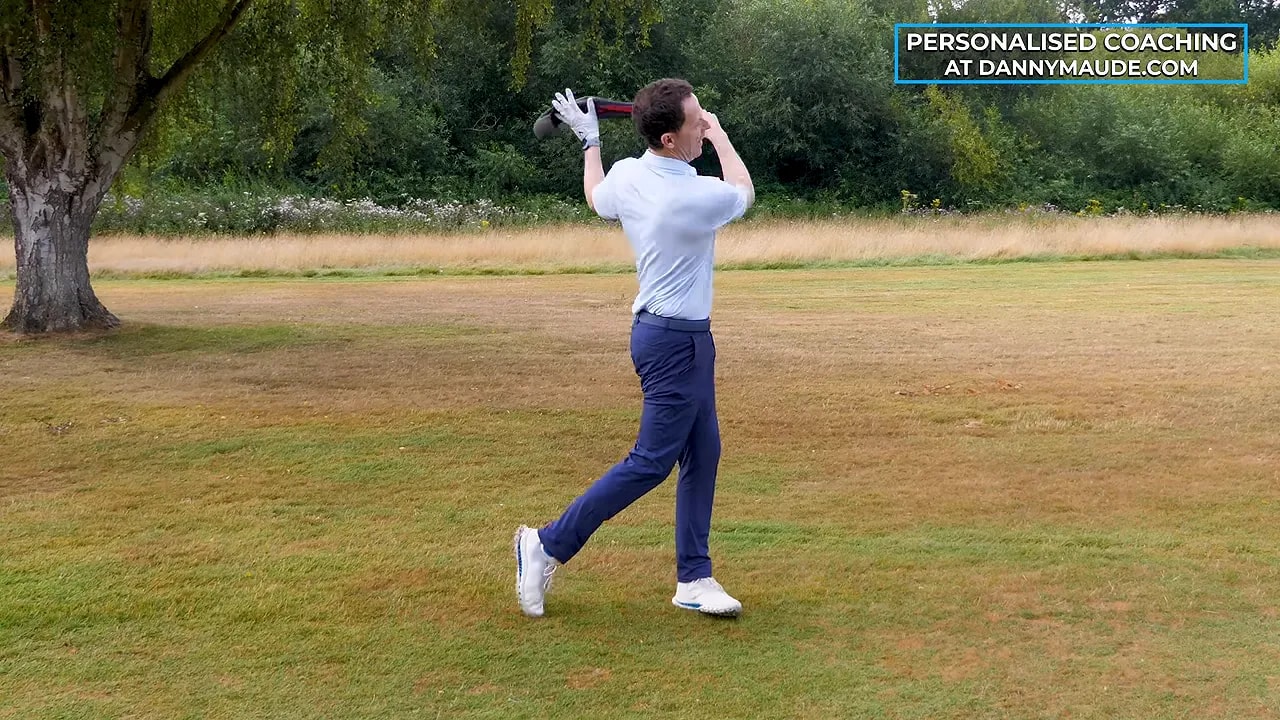
If you attempt to control the release with your hands, the motion can look awkward and restricted. When you move your body correctly, however, the object trails behind and then accelerates forward. The feeling is free, athletic, and rhythmic.
This drill is not about throwing the object away or creating maximum effort. It is about learning that clubhead speed is an outcome of coordinated movement. Your body turns through, your arms follow the motion, and the club is allowed to fire through the ball.
Step 6: Combine the 3 simple golf swing drills into a six-minute routine
You do not need a long, complicated practice session to begin changing this pattern. Commit six minutes a day to the following routine. The short duration makes it easier to practise consistently while keeping your attention on the right sensations.
Your six-minute golf swing practice plan
- Two minutes: Throwing-water feel. Rehearse the feeling of your trail hand and body creating a wave through impact. Focus on working through and upward rather than slapping down.
- Two minutes: Longest chip. Use a compact backswing, 80% lead-side weight, and an angled finish with the lead arm above the trail arm.
- Two minutes: Ball in a sock or towel. Feel the object trail and release as a response to your body movement. Avoid trying to manipulate it with your hands.
Once each drill feels familiar, blend them together. Set up with weight favouring your lead side and your head near the middle of your stance. Make your compact swing. Then picture throwing the water forward, turning on an angle, and catapulting the club into the finish.
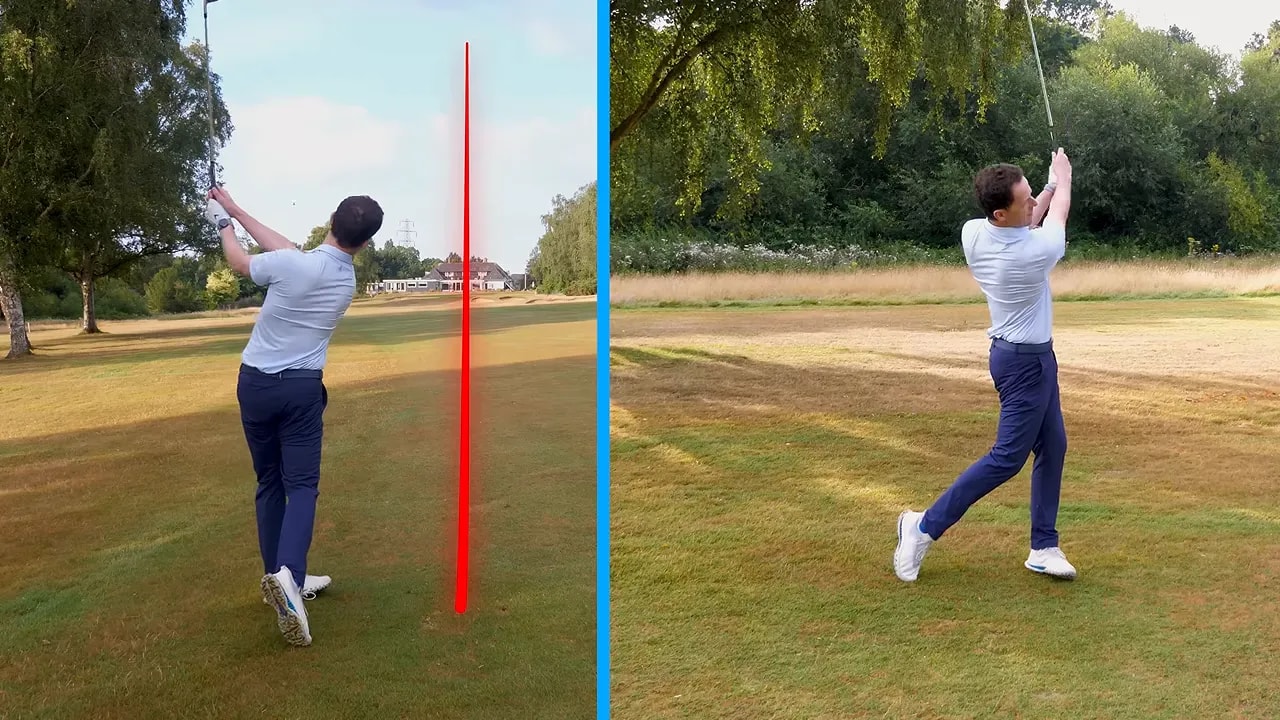
Use these movements first without a ball if that helps you stay focused on the feel. Then introduce shots at an easy pace. The goal is not to manufacture a perfect position immediately. It is to replace the forward lunge with a repeatable, free-flowing motion that improves contact and control over time.
Step 7: Use feedback to make your golf swing practice more precise
Feel and reality do not always match in a golf swing. A movement can feel dramatically different even when the actual change is small. For that reason, feedback can help you determine whether you are reducing the forward push and improving the way your body, arms, and club work together.
The Swing Coach app is designed to analyse your swing and provide feedback after each shot, helping you measure whether your practice is producing the intended change. However you gather feedback, keep your attention on the central priority: do not practise a lunge forward simply because you are trying to strike ball then turf.
Work through the ball with an upward, angled body action. Let the clubhead reach the ball, and let the release happen as a natural result. These three simple golf swing drills give you a clear route toward a more effortless strike.
Frequently Asked Questions About Simple Golf Swing Drills
Can these simple golf swing drills help with irons and fairway woods?
Yes. The drills are intended to improve how your body, arms, and club work together, and the movement pattern applies across the bag, including irons, hybrids, and fairway woods.
Should you still hit the ball before the ground with an iron?
Yes. The club can still strike the ball before the turf. The key is to avoid forcing your body forward and down in an attempt to create that contact.
How much weight should be on the lead side for the longest chip drill?
Begin with roughly 80% of your weight on the lead side. This helps you rehearse the compact, through-the-shot motion used in the drill.
What can you use if you do not have a ball in a sock?
A towel can provide a similar feel. The purpose is to sense the object trailing and releasing in response to your body motion rather than being controlled by your hands.
How long should you practise these golf swing drills?
Practise each drill for two minutes. That creates a simple six-minute daily routine that focuses on body motion, arm motion, and a natural club release.
0 Comments