
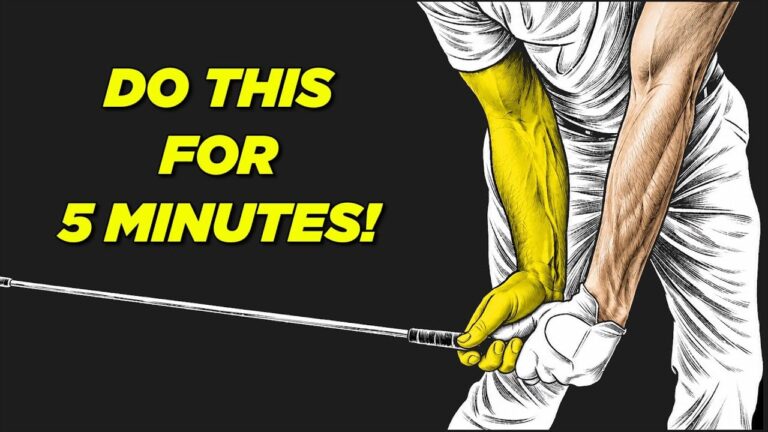

One of the quickest ways to improve your golf ball striking is to change what your wrists and hands do through impact. Many golfers struggle with fat shots, thin shots, weak contact, and a frustrating lack of speed. In a lot of cases, the issue is not your backswing. It is what happens in the through swing.
The key golf concept here is simple. Better players keep and deliver their wrist angles longer, then rotate the hands and club through the strike with far better timing. Most amateur golf swings do the opposite. They lose angles too early, flip the club, and try to square the face at the last second.
If you understand how the lead thumb, wrist angles, shaft lean, and body bend work together, your golf swing can become more powerful and more reliable without feeling forced.
Table of Contents
- Step 1: Understand why this golf wrist motion matters
- Step 2: Use the lead thumb to understand your golf release
- Step 3: Create a deeper delivery position in your golf downswing
- Step 4: Learn the difference between flipping and rotating in golf
- Step 5: Match the release to the shot you want in golf
- Step 6: Add shaft lean the right way in your golf swing
- Step 7: Use the magnet move feel to improve your golf strike
- Step 8: Rehearse the knife and butt end visual for better golf timing
- Step 9: Rotate against your body bend in golf
- Step 10: Blend the movement into your full golf swing
- Golf practice plan for this wrist motion
- FAQ
- Final thoughts on improving your golf wrist motion
Step 1: Understand why this golf wrist motion matters
In golf, the difference between elite ball striking and inconsistent contact often comes down to how the club is delivered into and through the ball. Strong players create a compact, loaded position in the downswing. From there, they rotate the hands and wrists rapidly through impact.
Most golfers are under rotated through the strike. When that happens, the body senses the face may stay open, so the hands throw away the angle too early. That is the classic cast or flip.
This creates several common golf problems:
- Fat contact from releasing the club too early
- Thin contact from poor low point control
- Weak shots because speed leaks out before impact
- Pushes and slices because the face is not rotating efficiently
- Poor compression with irons
The important golf idea is this: the bigger the angle you preserve coming into impact, the faster and more effectively your hands and wrists must rotate through the ball. That rotation is where much of the hidden speed comes from.
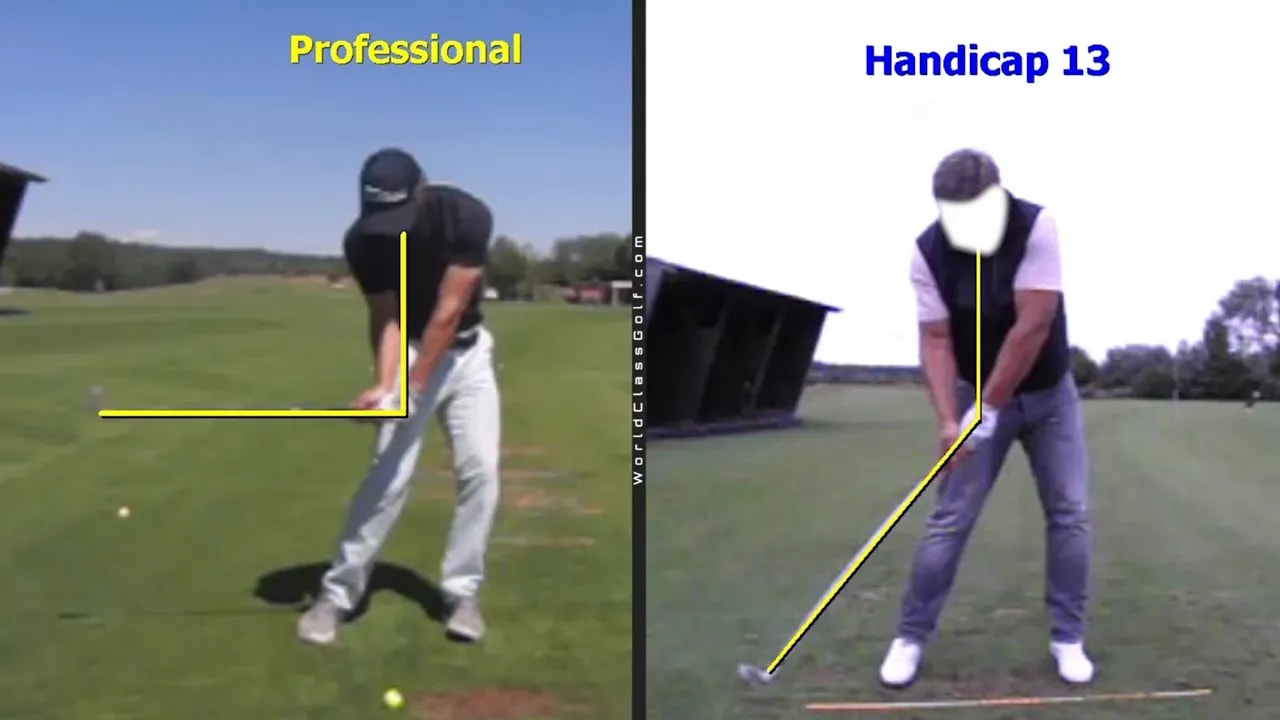
Step 2: Use the lead thumb to understand your golf release
A useful way to feel this in golf is to pay attention to your lead thumb. For a right handed golfer, that is the left thumb.
At address, that thumb is effectively oriented toward the ball. During the swing, it moves away, then must return in a dynamic way through impact. If it stays hanging back too long, the clubface tends to remain open and the shot pattern often turns into pushes or slices.
Better golf players do not leave that thumb behind. They get it moving back into a strong delivery position, then rotating through with speed.
Here is the feel to understand:
- If the lead thumb points more upward in the downswing, you are generally preserving angle
- If the lead thumb points more downward too early, you are usually losing angle
- When the thumb works up properly before release, you can deliver speed and compression
- When the thumb works down too soon, you tend to dump the clubhead early
This is not about staring at your thumb during a golf swing. It is about building a simple feel that helps you sense whether you are storing angle or spending it too soon.
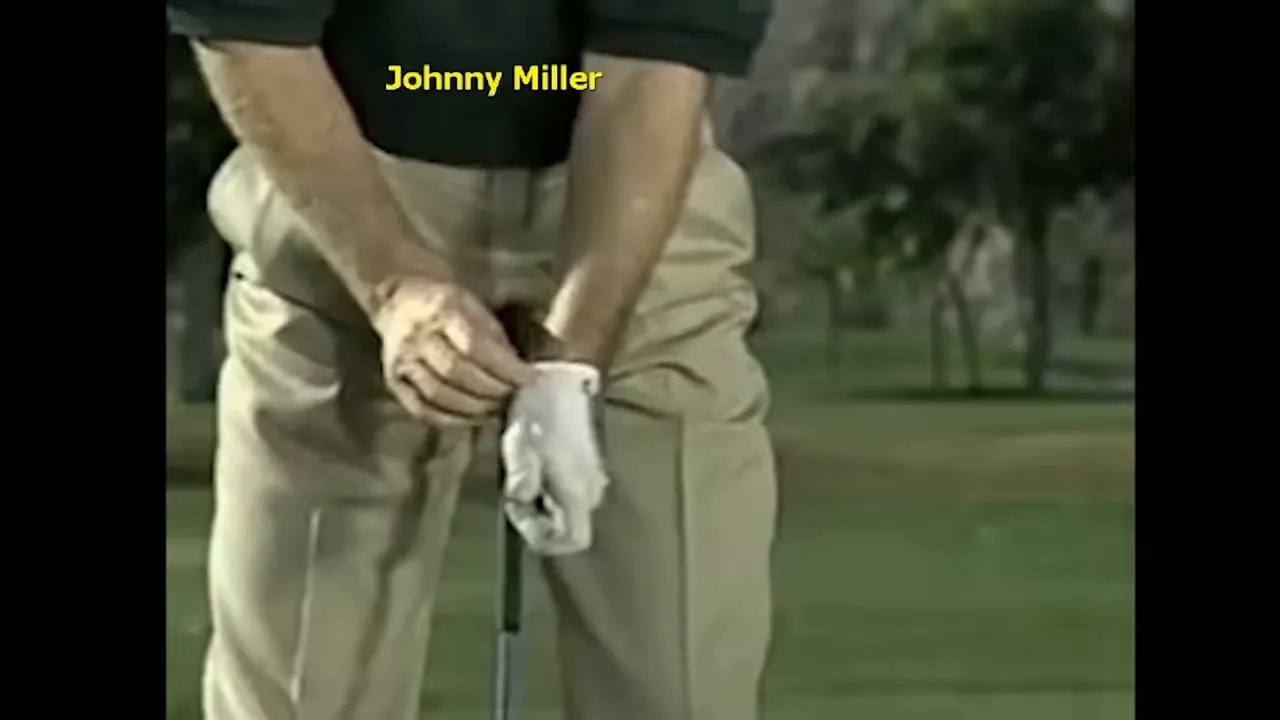
Step 3: Create a deeper delivery position in your golf downswing
Many golfers think they need to throw the clubhead at the ball to hit it solidly. In reality, quality golf impact usually comes from getting the grip and hands deeper in the downswing while keeping the clubhead trailing.
This deeper delivery position gives you room to rotate and release after impact instead of before it. It also helps you control the shaft line and strike the ball with better compression.
The feeling is not one of scooping. It is more like bringing the handle inward and downward while maintaining the loaded angle between lead arm and shaft.
If you struggle with golf contact, rehearse these sensations:
- Start down without throwing the clubhead.
- Feel the lead thumb working more upward than downward.
- Let the grip move deeper while the clubhead stays back.
- Rotate through only after you have preserved that angle.
This single adjustment can clean up a surprising amount of golf inconsistency.
Step 4: Learn the difference between flipping and rotating in golf
Flipping is one of the biggest speed and contact killers in golf. It happens when the wrists unhinge too early and the clubhead passes the hands before the strike is properly organized.
Rotating is different. In a good golf release, the hands and wrists turn through the strike from a loaded position. That gives you crossover speed, face control, and better strike quality.
Think of it this way:
- Flipping throws away the angle before impact
- Rotating keeps the angle longer, then releases with speed
- Flipping often closes the face too soon
- Rotating allows the face to square with far better structure
In golf, many players first feel proper rotation and assume it is wrong because the ball may start drawing more. That often happens because they are finally releasing the club athletically instead of dragging an open face through impact.
A few draws can actually be a good sign. It may mean your golf swing is starting to free up.
Step 5: Match the release to the shot you want in golf
Not every golf shot should feel exactly the same. The through swing can vary slightly depending on whether you are hitting an iron, a driver, a straight shot, or a draw.
Golf release feel for irons
For many iron shots, a useful feel is that the heel of the club stays slightly higher and the release works more under you. This can support a straight shot or a slight fade and help keep the strike compressed.
Golf release feel for draws
If you want to draw the golf ball, you may feel the toe of the club releasing more over the heel. This encourages a little more face rotation through impact.
Golf release feel for driver
With the driver, because you are farther from the ball and the swing arc is larger, the release tends to work more around you. The clubhead rotates more compared with a typical iron release.
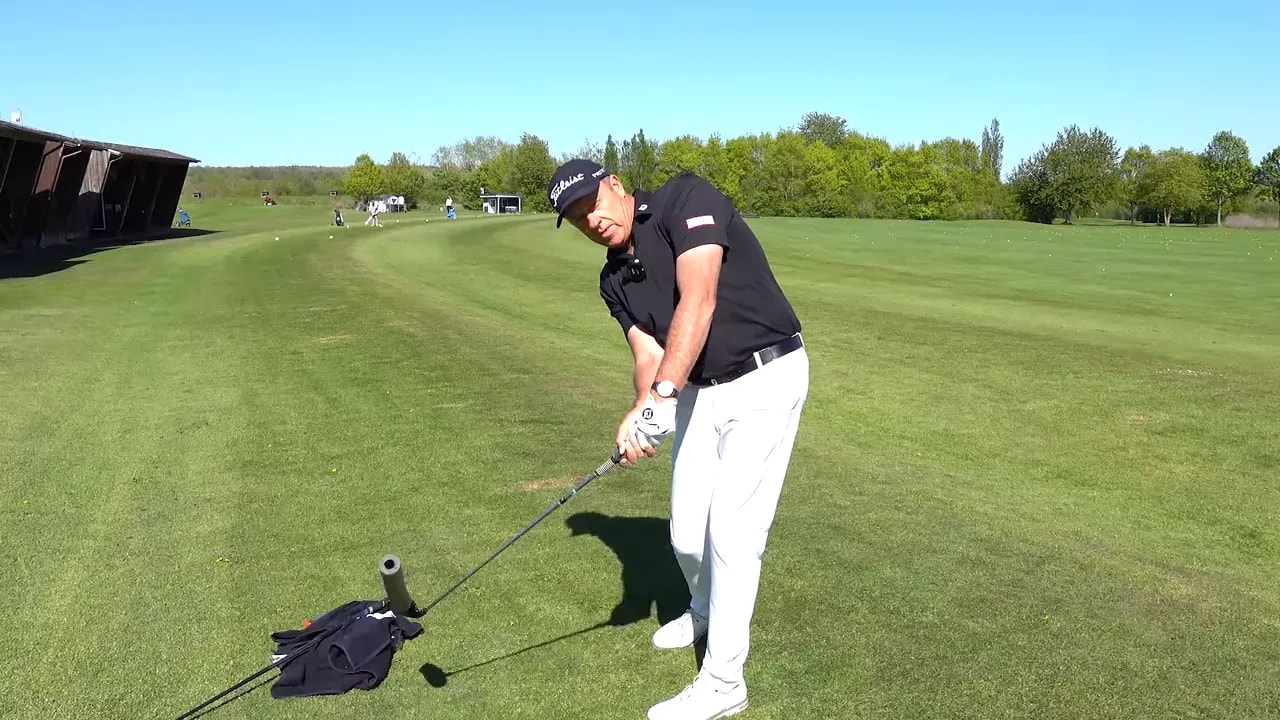
A simple golf training aid for this is a water bottle image. If you imagine water pouring out during the release, you can picture two different motions:
- Under for a straighter iron style release
- Around for a draw feel or a driver style release
This is a feel, not a rigid rule. The point is to give your golf swing a practical image that matches the shot shape you want.
Step 6: Add shaft lean the right way in your golf swing
Shaft lean is often misunderstood in golf. Many players chase it by forcing the hands ahead, but that can create tension and bad sequencing. A better approach is to understand what shaft lean does and how it develops.
More shaft lean generally keeps the clubface more neutral or slightly more open. Less shaft lean tends to let the face close more quickly.
That means if you stop flipping and start rotating properly, your first golf pattern may be a draw. Again, that is not automatically a problem. It may simply mean you are no longer leaving the face wide open.
From there, if the ball starts turning too much left, you can blend in more shaft lean by pulling the handle down and inward rather than dumping the angles.
Useful golf checkpoints include:
- Pull down instead of throw out
- Keep the clubhead back as the handle moves deeper
- Allow your body to shift rather than hang back
- Understand that hanging back tends to close the face too much
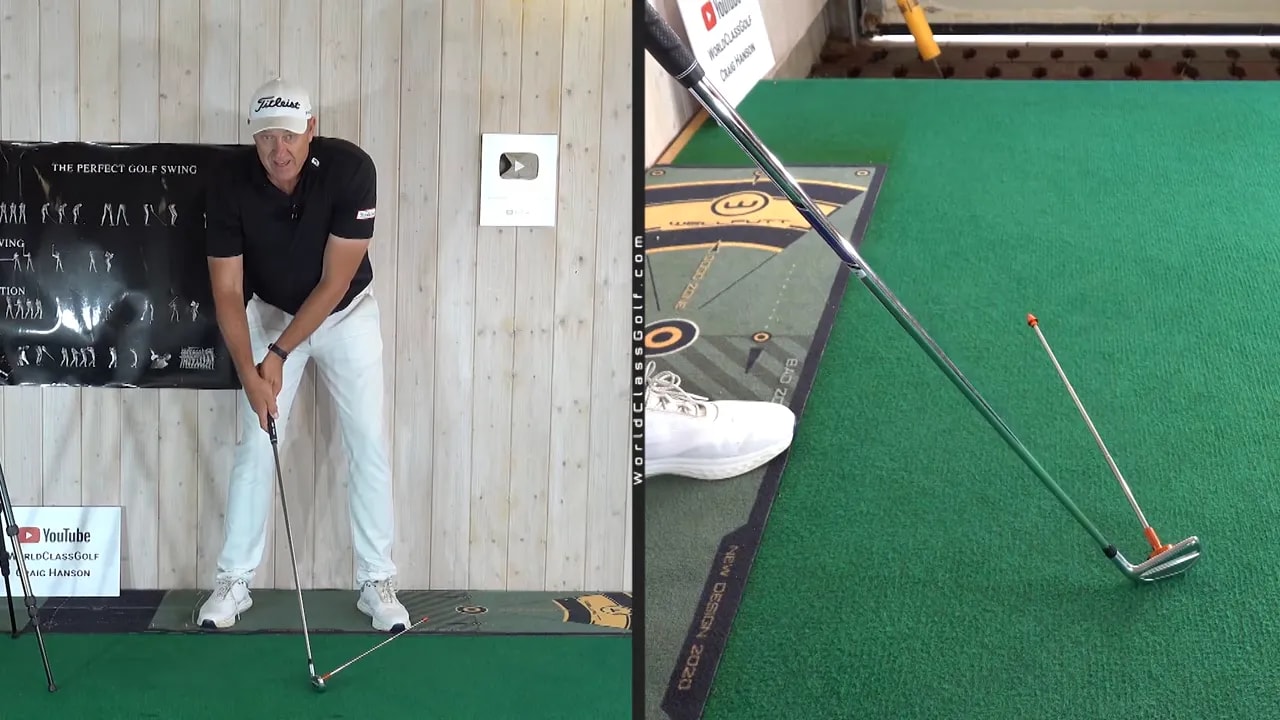
This is one of the most important golf connections in the lesson. If you preserve angles and rotate well, then add the correct amount of shaft lean, you move closer to the delivery patterns seen in elite players.
Step 7: Use the magnet move feel to improve your golf strike
A standout feel in this golf lesson is what is called the magnet move. The idea is that your trail arm and side reconnect instead of separating and straightening too early.
When golfers flip, the trail arm often straightens too soon and the clubhead races past the hands. With the magnet move, you feel the arm and body working together so the handle stays deeper and the release happens later.
You can think of this golf feel as the grip being drawn inward, almost as if it is being pulled by a magnet toward your trail side and torso during the delivery.
That helps you:
- Keep the angles longer
- Avoid early throwaway
- Improve strike location
- Create a freer, later release
It is a simple image, but in golf, simple images often produce the best movement changes.
Step 8: Rehearse the knife and butt end visual for better golf timing
Another strong visual is to imagine the butt end of the club moving toward the back of the ball as the hands work down and in. The lesson even uses an extreme visual with a taped object on the shaft to make the point clear.
The message for your golf swing is not to become aggressive with the club in the wrong way. It is to understand direction and sequence.
If the handle and butt end work properly, you maintain your structure. If you flip, that structure disappears.
Use this golf rehearsal:
- Make a slow downswing.
- Feel the grip moving deep toward your trail thigh.
- Imagine the butt end tracking toward the back of the ball.
- Only then let the clubhead whip through after impact.
This can dramatically improve your golf timing because it teaches you to delay the release until the club is in a stronger delivery position.
Step 9: Rotate against your body bend in golf
Hand action alone is not enough in golf. Your body conditions the release. A major point here is learning to rotate your hands and wrists against the bend of your body rather than standing up and out of the shot.
Many golfers rise through impact with the shoulders and upper body. When that happens, the club gets thrown outward, the angles disappear, and the release becomes more of a rescue move than a powerful motion.
Good golf players keep their bend and rotate against it. A reference used here is roughly a 55 degree bend through the through swing. The exact number matters less than the concept. You need enough side bend and posture retention to let the hands rotate correctly.
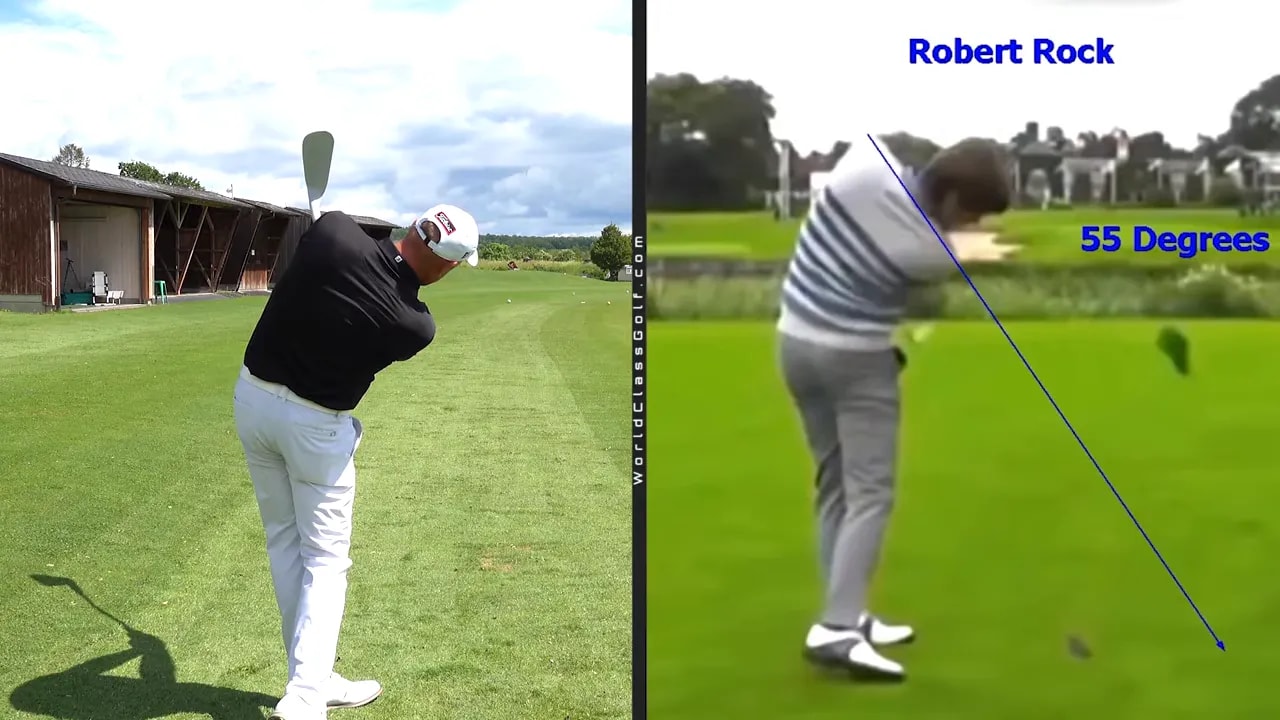
A memorable golf cue is to keep the head from popping up too early. The image used is as if water could drip out of your ear if you tilted the wrong way. That helps you feel the side bend and keep the body organized through impact.
When your posture stays intact, your hands have room to rotate. When you stand up, the whole golf release pattern tends to fall apart.
Step 10: Blend the movement into your full golf swing
At this point, the goal is not to obsess over one wrist position. It is to blend several golf pieces into one motion:
- Preserve the angle in transition
- Feel the lead thumb working up, not down too early
- Get the grip deeper in the downswing
- Reconnect the trail arm and side
- Rotate the hands through from a loaded position
- Maintain body bend through the strike
- Add shaft lean if the ball starts drawing too much
That combination can produce a golf swing that feels both tighter and freer. Tighter in structure, freer in release.
If you are practicing this on the range, start with short swings. Half shots are ideal. You want to build contact first, then speed. As your golf strike improves, you can gradually lengthen the swing and let the release become more athletic.
Golf practice plan for this wrist motion
Use this simple golf routine during your next session:
- Slow motion rehearsals
Make 10 waist high practice swings feeling the lead thumb stay up longer and the handle move deeper. - No ball mini swings
Rehearse the magnet move and keep your body bend through the motion. - Short chip style strikes
Hit 10 shots with a short iron, focusing on crisp contact and no flip. - Half swings
Hit 10 more with a mid iron, allowing the hands to rotate through from a loaded position. - Shape awareness
Notice if your golf ball starts drawing more. If so, do not panic. Add a little more shaft lean and keep moving. - Driver blend
Finish with driver and feel the release working more around you.
FAQ
Why do so many golfers struggle with this golf wrist motion?
Most golfers release the club too early. They lose wrist angles in the downswing, then flip the club to square the face. That makes it hard to create the deeper, later, more athletic release seen in elite golf swings.
Will this golf move stop fat and thin shots?
It can help a lot because it improves low point control and strike structure. By preserving angles longer and releasing later, you give yourself a better chance of contacting the ball first and the turf after.
Is drawing the golf ball a bad sign when practicing this?
Not necessarily. A few draws can mean you are finally rotating the club properly instead of leaving the face open. If the draw becomes too strong, add more shaft lean and avoid hanging back through impact.
Should the golf release feel the same with driver and irons?
No. Iron swings often feel a bit more under, especially for straight shots or slight fades. Driver releases usually feel more around the body because of the wider arc and different ball position.
What is the easiest golf feel to start with?
Start with the feel that your lead thumb stays more up in the downswing while the handle moves deeper. Then rotate the hands through after you have preserved the angle, not before.
Final thoughts on improving your golf wrist motion
If your golf swing feels inconsistent, you do not always need a complete rebuild. Sometimes the fastest improvement comes from changing one part of the through swing that affects everything else.
When you stop throwing away your angles, learn to rotate the hands from a loaded position, and keep your body bend through impact, your golf strike can change quickly. Contact improves. Face control improves. Speed often appears with less effort.
That is the real promise of this golf lesson. Better wrists are not just about style. They are about giving your swing the structure to deliver the club with far more quality.
0 Comments