
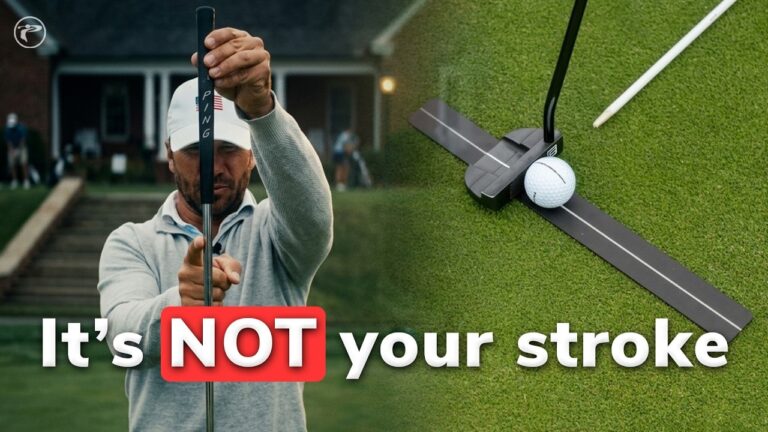

If you keep missing straight putts, the fix is often simpler than you think. In many cases, the issue is not your stroke at all. It is your setup. Small mistakes in ball position, eye line, and shoulder alignment can make a solid stroke send the ball left or right before it ever has a chance.
This guide breaks down a simple, golfer-friendly process to help you stop missing putts and roll more straight putts with better start line, better roll, and less manipulation.
Table of Contents
- Step 1: Check ball position first if you keep missing straight putts
- Step 2: Use a simple setup routine to place the ball correctly every time
- Step 3: Get your lead eye over the ball to improve start line
- Step 4: Square your shoulders because they are the train tracks of the stroke
- Step 5: Learn what your miss says about your setup
- Step 6: Train your stroke on straight lines even when the putt breaks
- Step 7: Build a putting station that gives you instant feedback
- Step 8: Practice speed control while keeping the same stroke intention
- Common mistakes that make straight putts harder than they should be
- Quick checklist to stop missing putts before your next round
- Next step: simplify before you rebuild
- FAQ
Step 1: Check ball position first if you keep missing straight putts
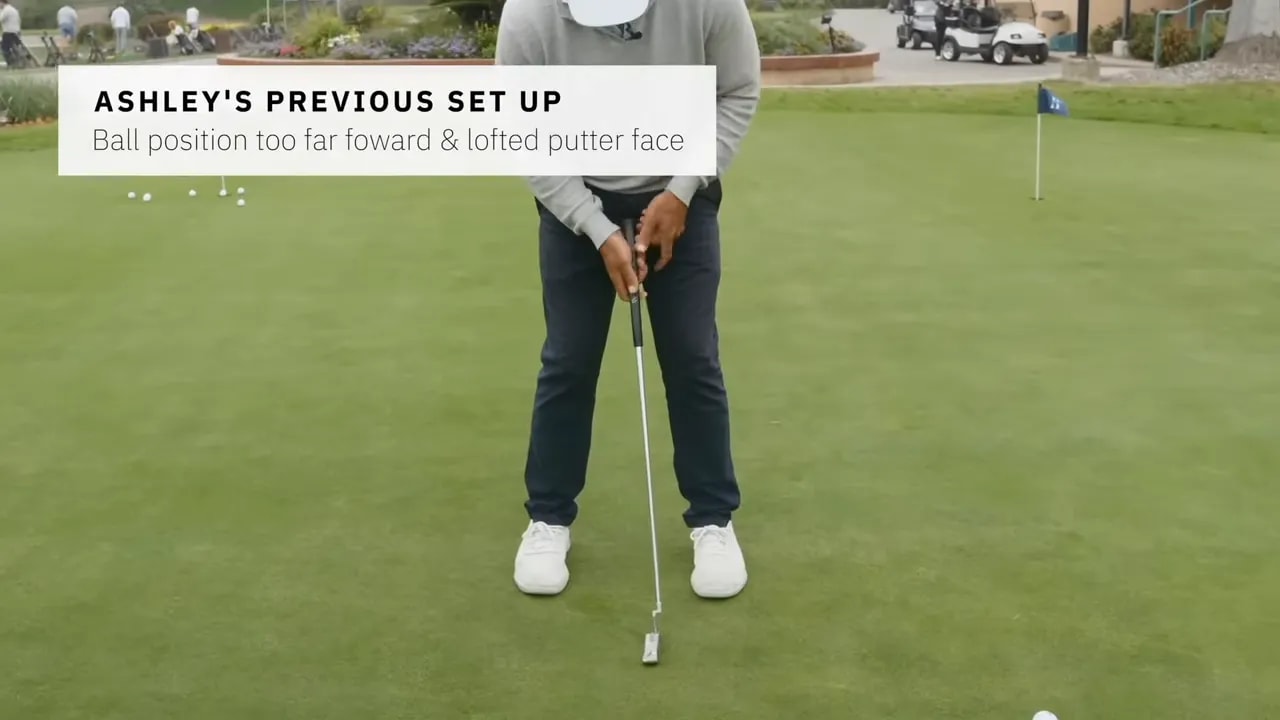
If your straight putts keep starting left, ball position is one of the first things to check. A ball that sits too far forward in your stance can cause the putter to catch the ball after it has already started swinging left on its natural arc. That can lead to pulled putts, even when your stroke feels fine.
If the ball sits too far back, the opposite can happen. The putter may still be moving out to the right, which can produce pushes.
A simple checkpoint is this:
Let the putter hang naturally from the middle of your stance
Use that as your center reference
Set the ball just ahead of center, not way forward
That position helps you avoid hitting down on the putt while still catching the ball as the putter begins to move slightly upward.
For many golfers, this will feel farther back than expected at first. That is normal.
Why this matters for roll
With the ball just ahead of center, you can contact it with a slightly upward strike and a slightly de-lofted face. That combination helps the ball start rolling more cleanly instead of skidding or bouncing.
If your focus keyphrase is stop missing putts, this is the first place to look. Do not rebuild your stroke before you confirm your setup.
Step 2: Use a simple setup routine to place the ball correctly every time
Consistency on the greens starts before the stroke begins. A repeatable setup routine makes it much easier to return the ball to the same position putt after putt.
One effective routine is:
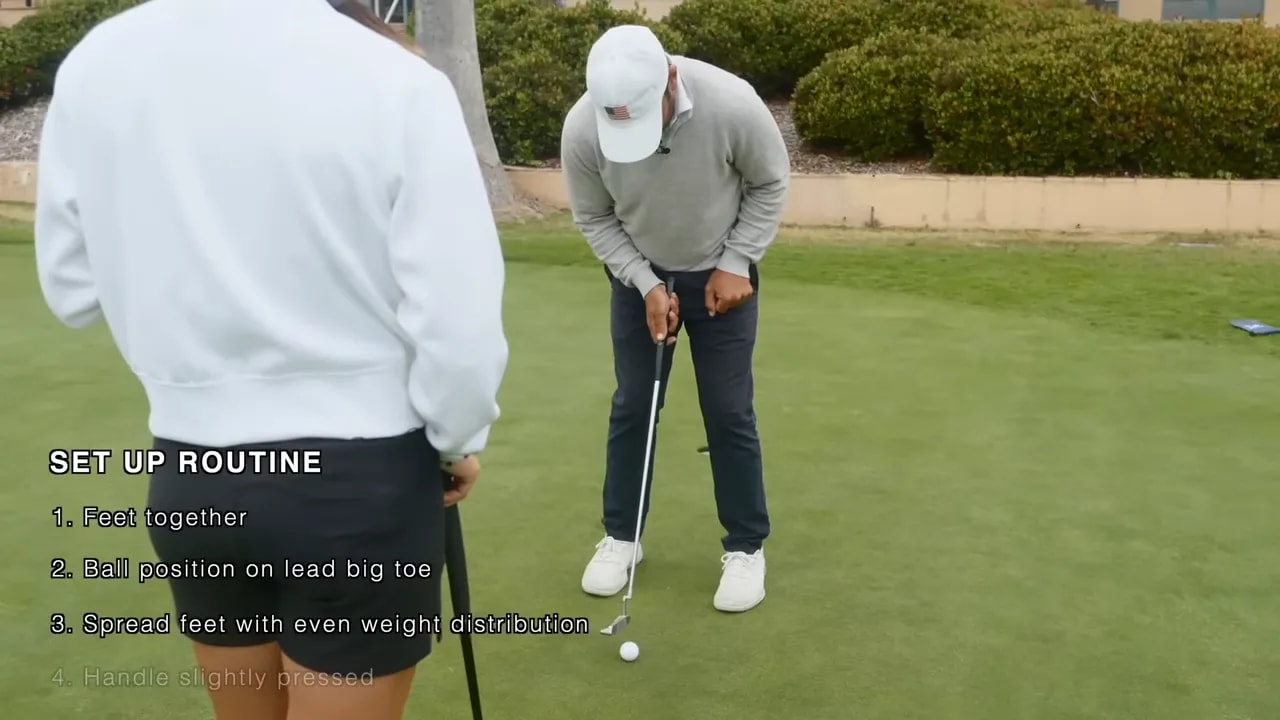
Start with your feet together
Set the ball near your big toe
Build your stance evenly from there
Confirm the ball is just ahead of center
Add a slight forward press with the handle
The forward press should be very small. The goal is not to shove your hands forward. It is simply to reduce loft slightly while keeping the motion athletic and relaxed.
This kind of setup routine can help you stop missing putts because it removes guesswork. Instead of placing the ball by feel each time, you build the same station over and over.
Step 3: Get your lead eye over the ball to improve start line
Another common reason golfers miss straight putts is poor eye position. If your lead eye is not over the ball, your perception of the line can get distorted.
A useful checkpoint is to make sure your lead eye is directly over the golf ball. For a right-handed golfer, that means the left eye. A quick way to check is to hold a club vertically from your eye line and see where it falls relative to the ball.
You want that vertical reference to drop right onto the ball, or right to the inside edge depending on your exact preference and posture.
Good eye position helps you:
See the start line more clearly
Aim the putter face more accurately
Reduce compensation during the stroke
If you struggle to aim short putts, check this before blaming your stroke path.
Step 4: Square your shoulders because they are the train tracks of the stroke
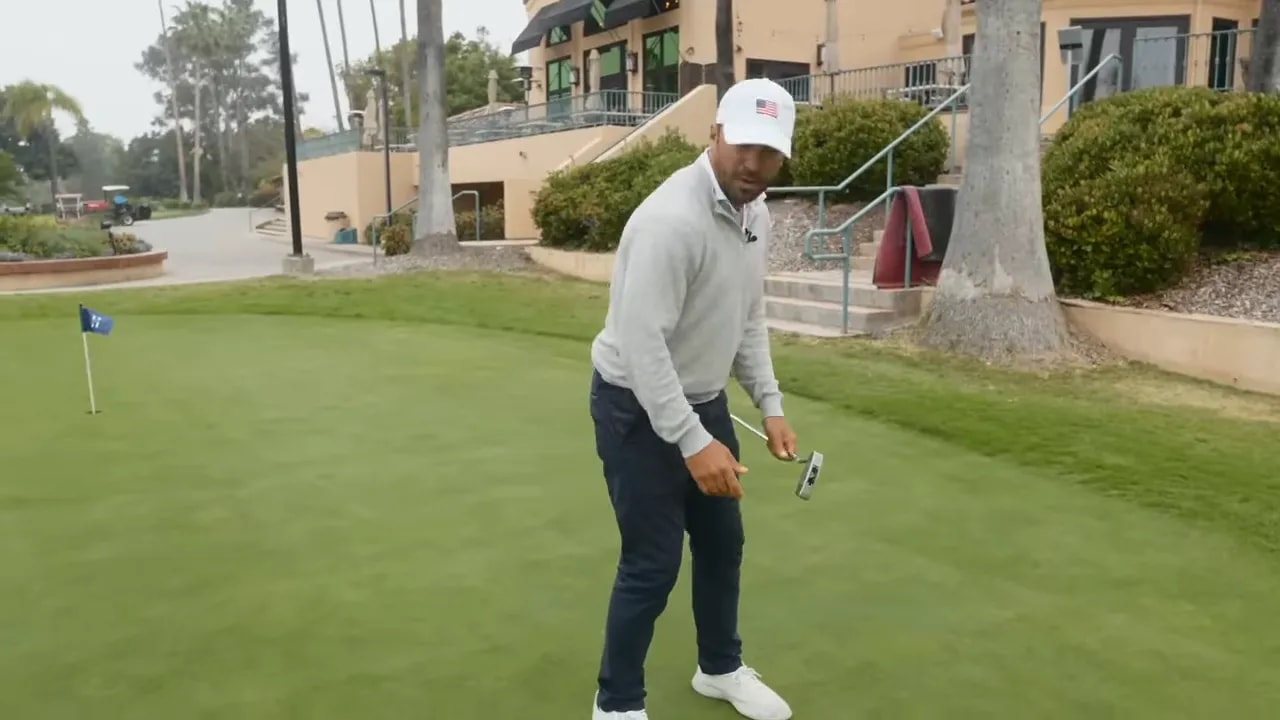
Your feet can be slightly open or slightly different from player to player, but your shoulders need to be square. Shoulder alignment strongly influences the path of the stroke and the direction the face wants to travel through impact.
When the ball gets too far forward, the shoulders often open with it. That creates a setup where the stroke naturally wants to work left.
A simple shoulder check:
Get into your putting posture
Let your arms and palms hang naturally
See if the palms match each other
If they match, your shoulders are likely square. If one side sits noticeably ahead of the other, you may be open or closed.
Why square shoulders help you stop missing putts
Think of your shoulders as the rails that guide the motion. If those rails point left, the stroke has to fight to stay on line. If they are square, the stroke can move more freely without rescue moves from the hands.
This is a big reason golfers feel like they have to “hold on” through impact. Usually the setup created the problem first.
Step 5: Learn what your miss says about your setup
If you want to stop missing putts, start diagnosing the miss pattern instead of guessing.
Here is a simple framework:
Missing left: ball position may be too far forward
Missing right: ball position may be too far back
Pulled start line plus open feeling: check shoulder alignment
Inconsistent aim: check eye line over the ball
This is especially useful on short putts, where there is almost no time to make mid-stroke adjustments. Putting is such a small motion that setup errors show up quickly.
Before you change grip, stroke shape, or tempo, ask:
Where is the ball in my stance?
Are my eyes over the ball?
Are my shoulders square?
Those basics solve a lot of problems.
Step 6: Train your stroke on straight lines even when the putt breaks
Many golfers accidentally change the motion of the stroke when the putt is breaking. On a left to right putt, they tend to push the stroke out toward the target line. On a right to left putt, they often pull it across themselves.
That is a recipe for poor contact and poor roll.
The better approach is to keep making a fundamentally straight start to the stroke while aiming the putter face and start line where the putt needs to begin.
On longer putts with break, your read changes. Your stroke pattern should not become a steering motion just because the putt is curving.
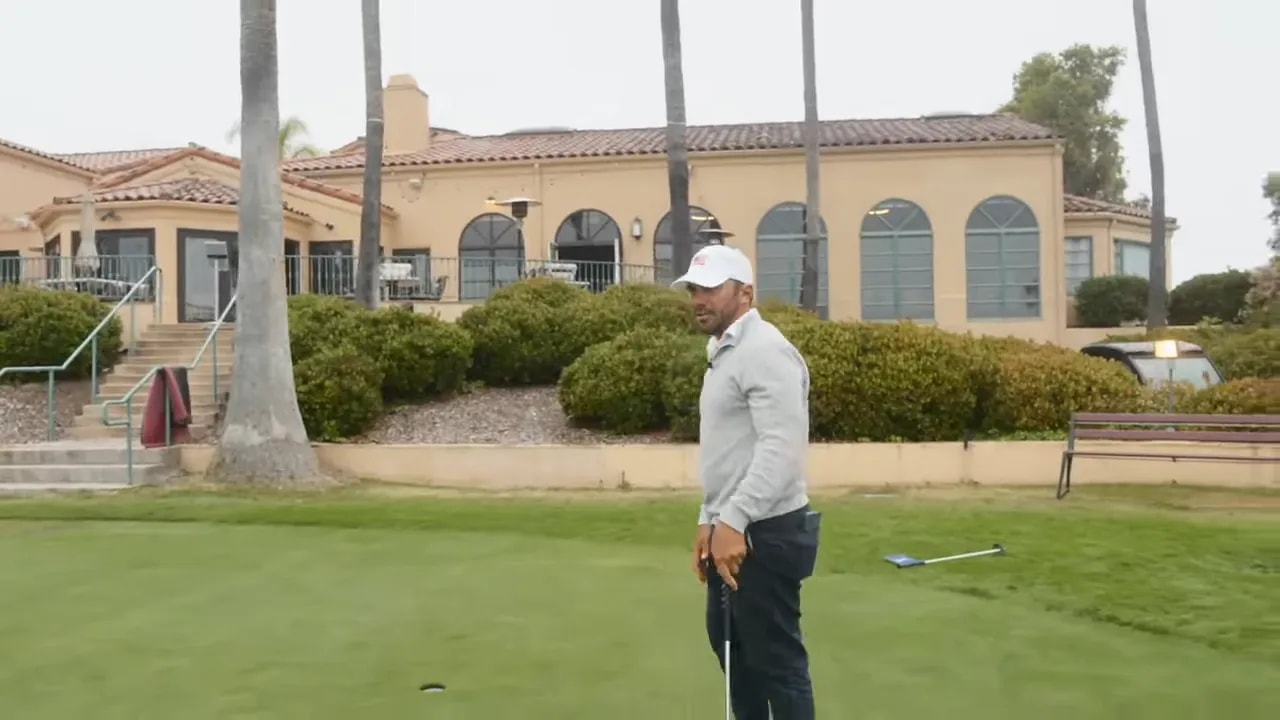
A useful concept for start line
One helpful idea is that the early portion of the backstroke can feel straight before the putter naturally arcs. Likewise, the ball often starts on a straight initial line before the slope takes over.
That is why straight-line training can help so much. It teaches your eyes and stroke to match what a good putt really does.
Step 7: Build a putting station that gives you instant feedback
A compact training station can help you groove setup, start line, and stroke direction all at once.
A practical station includes:
A straight reference line for the putter
A ball position reference set perpendicular to that line
Reps from both right to left and left to right putts
A few straight putts to confirm your start line
The goal is not just to make putts in practice. The goal is to see whether the ball starts where you intended and whether the putter returns squarely without extra hand action.
Good feedback does three things:
Shows you where the ball should sit
Shows you whether the putter starts back correctly
Shows you whether the face returns on the intended line
Step 8: Practice speed control while keeping the same stroke intention
Start line and speed always work together. A well-read putt still needs the right pace. Once your setup is cleaner and your stroke starts online, use that same station work to train distance control.
That means repeating putts where the line and speed both matter. If a putt only drops with one specific pace, that is useful practice because it forces you to match read and roll.
When you practice this way, you are not just trying to hole random putts. You are training:
Repeatable setup
Repeatable start line
Repeatable feel
That combination is what helps you stop missing putts under pressure.
Common mistakes that make straight putts harder than they should be
Ball too far forward. This is a major cause of pulled putts.
Trying to fix the stroke before the setup. Often the stroke is reacting to poor geometry.
Open shoulders. This can send the path and face left.
Poor eye line. You may be aiming wrong even when it feels correct.
Steering breaking putts. The read changes, but your basic stroke intention should stay stable.
Too much forward press. A tiny press is enough. Too much can add tension and alter face position.
Quick checklist to stop missing putts before your next round
Set the ball just ahead of center
Use the same setup routine every time
Get your lead eye over the ball
Square your shoulders
Match your miss pattern to your setup
Practice both breaking putts and straight putts with a reference line
Train pace without changing the basic stroke motion
Next step: simplify before you rebuild
If your stroke already feels decent but the ball keeps starting offline, do not assume you need a major overhaul. Start by cleaning up the basics. Ball position, eye line, and shoulder alignment can make a dramatic difference in how the putter returns to the ball.
For a lot of golfers, the fastest way to stop missing putts is not a fancy move. It is a cleaner station and a more repeatable setup.
FAQ
Why do I keep pulling straight putts?
A common cause is ball position that is too far forward. When the ball is too far up in your stance, the putter may already be swinging left by impact. Open shoulders can also contribute to pulled putts.
Where should the ball be in my stance for putting?
A useful starting point is just ahead of center. That helps you avoid hitting down on the ball while still catching it with a slightly upward motion and cleaner roll.
Should my eyes be directly over the golf ball when putting?
For many golfers, yes. A strong checkpoint is to have your lead eye directly over the ball. That tends to improve aim and start line awareness.
How do I check shoulder alignment in my putting setup?
Take your posture and let your palms hang naturally. If the palms match, your shoulders are likely square. If one side sits noticeably ahead, your shoulders may be open or closed.
Why do I push putts to the right?
One possible reason is that the ball is too far back in your stance. That can catch the putter while it is still moving outward. Always confirm setup before changing the stroke.
How can I practice to stop missing putts?
Build a simple putting station with a line for start direction and a perpendicular reference for ball position. Practice straight putts plus both breaking directions, and focus on repeating setup, start line, and speed.
0 Comments