
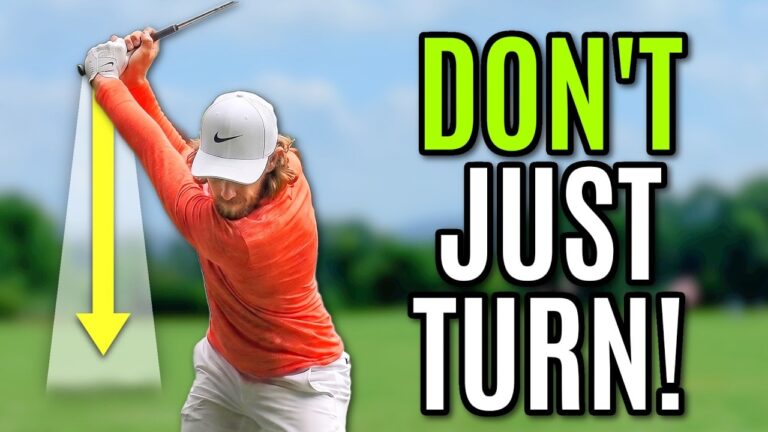

When your driver swing feels rushed, the natural reaction is to try to fix the downswing. You may tell yourself to slow down, start down later, or swing harder through impact. Yet the feeling of rushing often begins much earlier. If your backswing is too short or your body is out of position, you simply do not create enough time and space to organize the motion coming down.
The most reliable route to effortless power to your driver is to lengthen the right segments during the backswing. A longer, better organized backswing gives you more room to sequence your body, arms, and club. Rather than forcing speed, you can build it naturally.
This guide breaks down four connected backswing moves: trail leg extension, spine extension and tilt, trail arm abduction, and trail shoulder retraction. You do not necessarily need all four, but each can help you create a fuller backswing, a calmer transition, and more potential driver distance.
Table of Contents
- Step 1: Understand Why Rushing Costs You Effortless Power to Your Driver
- Step 2: Use Trail Leg Extension to Build Effortless Power to Your Driver
- Step 3: Add Spine Extension and Tilt for More Effortless Power to Your Driver
- Step 4: Move the Trail Arm Around You for Driver Backswing Depth
- Step 5: Retract the Trail Shoulder to Complete the Turn
- Step 6: Practice the Four Moves With a Long, Slow Rhythm
- Step 7: Let the Longer Backswing Improve Your Downswing Sequence
Step 1: Understand Why Rushing Costs You Effortless Power to Your Driver
A rushed downswing is often a symptom, not the root problem. Think about a short putting stroke. If you take the putter back only a few inches but still need to send the ball a long distance, you have to accelerate abruptly through the ball. A chip shot can create the same problem. When the backswing is too short, the forward swing has to do too much too quickly.
Your driver works in a similar way. If your body stays compressed, bent forward, and restricted on the way back, the club never gets far enough from the ball. You arrive at the top without enough depth, turn, or length. From there, your body senses that it has to hurry to create speed.
A longer backswing does not mean making a loose, uncontrolled swing or simply lifting the club higher with your arms. It means gradually stretching and lengthening the body segments that support a more complete turn. This creates literal additional distance for the club to travel before impact. That extra distance is extra time.
The benefit is sequencing. With more time and space, you have a better chance to let the motion unwind rather than having every segment fire at once. That can reduce the urge to throw the club from the top, early extend, or force the strike.
What a short, rushed backswing often looks like
- The trail knee stays overly flexed throughout the takeaway.
- The pelvis remains too bent forward instead of gradually extending.
- Your head drifts noticeably toward the trail side.
- Your chest stays down instead of extending and tilting.
- Your trail arm has little room to move around your body.
- Your trail shoulder does not move back enough to contribute to the turn.
These positions can make your swing feel compact and powerful at first, but they often leave you no room to build speed smoothly. The goal is not to chase a particular amount of turn. The goal is to create a backswing that gives your downswing enough room to unfold.
Step 2: Use Trail Leg Extension to Build Effortless Power to Your Driver
The first place to build a longer backswing is from the ground up. As you move into the takeaway, allow your trail leg to gradually extend. For a right handed golfer, this means the right leg becomes less flexed as the club moves back.
This does not mean locking the knee straight. It also does not mean standing up suddenly. The useful sensation is a gradual lengthening of the trail leg as the backswing develops. That extension helps the trail hip extend and turn, creating a foundation for a fuller body rotation.
When the trail leg remains very bent, the pelvis tends to remain in flexion. Your upper body can then stay folded over the ball, making the swing short and cramped. By allowing some trail-leg extension, you help your hip turn and create more space for the rest of the backswing.
Golfers vary in flexibility and anatomy, so the amount of extension will not look identical for everyone. The key is improvement relative to your own starting pattern. If you tend to keep your trail knee deeply flexed all the way back, even a modest increase in extension can change the length and rhythm of your driver swing.
A simple trail leg feel
Make slow rehearsals without a ball. As the club starts back, feel your trail leg gradually getting longer. Keep your balance and avoid forcing your body toward the target. The leg, hip, and torso should work together, rather than as separate, abrupt actions.
If the extension helps you turn more freely and makes the top of your backswing feel farther from the ball, you are moving in the right direction.
Step 3: Add Spine Extension and Tilt for More Effortless Power to Your Driver
Once the trail leg begins to lengthen, add an extension and tilt of the upper torso. A helpful image is the Fosbury flop in high jump, where the body extends and tilts back over the bar. In the golf backswing, the feel is not a dramatic backward lean. It is a gradual sense of your chest or shirt buttons working more upward as you turn.
This move helps lengthen the torso and allows more rotation. Instead of trying to create turn by forcing your shoulders around, you create conditions that make turn easier. Your chest extends, tilts, and opens the space needed for the arms and shoulders to travel farther back.
For many golfers, the chest-up feeling is especially useful because it counteracts a common pattern: staying bent forward and letting the head slide too far toward the trail side. If you remain in too much forward bend as you turn, the arms can quickly run out of room. The backswing then stops early, and the downswing feels rushed.
Use your head position as a checkpoint
Your head can provide useful feedback while practicing. Set up a reference point by using a mirror, recording your swing, or imagining a circle around your head at address. During the backswing, your head should remain generally centered within that area.
A small amount of movement is normal. However, if your head moves substantially behind the original position, you may need more extension and tilt. If it moves too far toward the target, you may be overdoing the feeling or creating a different pelvis issue.
Blend trail-leg extension and upper-torso extension gradually. Do not make the leg move first and then suddenly arch your back. Both elements should develop together as the club travels back.
Step 4: Move the Trail Arm Around You for Driver Backswing Depth
Your arms contribute significantly to a longer, more functional backswing. For right handed golfers, the trail arm should abduct as it moves back. In simple terms, the upper trail arm moves away from the side of your body and around you.
A useful feel is that your trail bicep moves farther away from your chest as the club goes back. This is not a cue to disconnect wildly or let the arm fly away. It is a way to create room for the arm to travel around your turning torso instead of keeping it pinned tightly against your side.
Trail arm abduction can add depth to your driver backswing without requiring you to force extra shoulder turn. When the arm has room to travel around your body, the club can work farther behind you and farther from the ball at the top. That increases the time and space available in transition.
The trail-arm-only drill
One of the most direct ways to feel this move is to hold the driver in your trail hand only. Start with the club in front of you, then slowly move the trail arm around your body in the backswing direction.
- Hold the driver with your trail hand only.
- Begin with your arm in front of your chest.
- Move the arm away from your body and around you as you turn.
- Allow the trail shoulder to move back naturally.
- Rehearse slowly, focusing on range of motion rather than speed.
This drill isolates the arm and shoulder relationship. It can help you feel how much turn becomes available when the trail arm is allowed to move around your torso rather than being trapped in front of it.
Step 5: Retract the Trail Shoulder to Complete the Turn
The fourth move is trail shoulder retraction. Retraction means the trail shoulder moves back toward your midline. In the backswing, the sensation is often that your trail shoulder is being pulled around behind you.
Trail shoulder retraction and trail arm abduction are closely connected. As the trail arm moves away and around, the shoulder can move back. Together, they add a large contribution to your overall turn and depth.
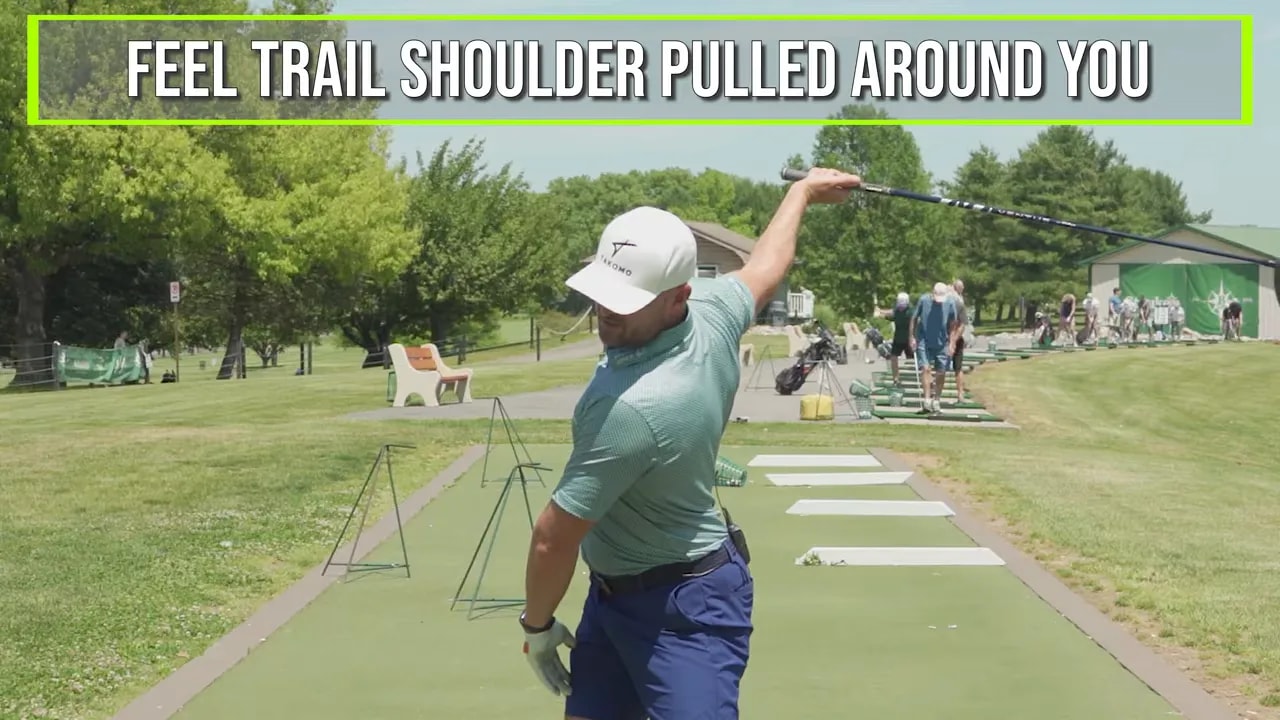
This is important because turn is not created by one body part. You do not need to force your hips or shoulders to rotate independently. A fuller backswing can emerge from several coordinated movements:
- Trail leg extension helps the trail hip extend and turn.
- Spine extension and tilt lengthen the upper torso.
- Trail arm abduction creates room and depth.
- Trail shoulder retraction supports the arm and adds to the turn.
When these pieces work together, your club can reach a farther, more organized top-of-backswing position. The result is not merely a longer swing. It is a swing with more usable time.
Step 6: Practice the Four Moves With a Long, Slow Rhythm
To add effortless power to your driver, avoid rushing your practice swings. Use a long, slow backswing rehearsal, then allow the forward swing to accelerate naturally. The useful rhythm is to stretch the segments on the way back, then swing through without trying to manufacture speed.
A long and slow backswing is not a passive backswing. You are actively creating length through your trail leg, chest, arm, and shoulder. But the motion should be smooth enough that you can feel each element and maintain balance.
A practical rehearsal sequence
- Take your normal driver setup.
- Make two slow practice backswings.
- Feel the trail leg gradually lengthen.
- Feel your chest and shirt buttons work more upward as you turn.
- Allow your trail arm to move around your body.
- Feel the trail shoulder move back with the arm.
- Check that your head remains generally centered.
- Hit the ball while retaining only the one or two feels that matter most.
Do not assume you need to exaggerate every movement in a full-speed swing. Rehearsals can be bigger than the swing itself because they help you break out of your existing pattern. Once you are over the ball, choose a single clear thought, such as “trail leg longer” or “chest up.”
Individual needs vary. One golfer may gain the most from trail-leg extension, while another may primarily need trail-arm depth and shoulder retraction. If one move immediately makes your backswing longer and your transition calmer, prioritize that feeling.
Step 7: Let the Longer Backswing Improve Your Downswing Sequence
The main purpose of these backswing changes is not to make your swing look bigger. It is to make the downswing feel less urgent. As the club, hands, and body travel farther from the ball at the top, you gain time to transfer speed through the sequence.
A useful comparison is cracking a whip. If there is no length behind the motion, every part has to move at the same time. When there is more length and space, the movement can travel from one segment to the next. Your driver swing can then build speed instead of forcing it.
As you work on this, expect a different sensation. A longer backswing may initially feel slow or as though you have too much time. That is often exactly the change you need if your normal pattern is short and rushed. You do not need to rush from the top when you have created enough space during the backswing.
Focus on a balanced, athletic motion. Build length gradually, rehearse patiently, and let the faster part of the swing happen through the ball. That is how you can hit the driver farther with less forced effort.
Frequently Asked Questions About Effortless Power to Your Driver
Should I try to use all four backswing moves at once?
Not necessarily. The four moves describe ways to create more backswing length and space, but your best priority depends on your current pattern. Start with the move that most clearly reduces your tendency to stay short and rushed.
Does trail leg extension mean I should straighten my trail knee?
No. The trail leg should gradually extend during the backswing, not lock straight. The goal is to reduce excessive knee flex and help the trail hip turn.
Why does a longer backswing help me stop rushing the downswing?
A longer backswing creates more physical distance for the club and hands to travel before impact. That gives you more time and space to sequence the downswing instead of trying to create all your speed immediately from the top.
How can I check whether my spine extension and tilt are working?
Use your head position as a reference. During the backswing, your head should remain generally centered rather than sliding far toward the trail side. A mirror or swing video can make this checkpoint easier to assess.
What is the best drill for trail arm abduction?
Hold the driver in your trail hand only and slowly move the arm away from your body and around you in the backswing direction. This helps you feel the trail arm creating depth while the trail shoulder retracts.
0 Comments