


If you want better golf, cleaner contact, and more consistency from both irons and driver, one concept matters more than almost anything else: where your swing bottoms out. Many golfers spend years trying to fix slices, thin shots, heavy strikes, or weak drives without understanding that solid golf contact depends on controlling low point.
This single idea can change the way you think about your golf swing. It gives you a clear purpose with irons, a different purpose with driver, and a much better chance of striking the ball the way skilled players do.
At first, this might sound simple. But in golf, simple does not mean small. Learning how to place the low point of your swing correctly can help you hit down on irons, up on driver, and stop using the same intention for two shots that require very different motion patterns.
Table of Contents
- Step 1: Understand the biggest difference between iron and driver golf swings
- Step 2: Learn why many golf players focus on the wrong thing
- Step 3: For better golf irons, swing to a point ahead of the ball
- Step 4: Use a simple golf drill to train iron low point
- Step 5: Do not use the same golf swing thought with the driver
- Step 6: For better golf drives, move the low point behind the ball
- Step 7: Use head position to help your golf driver strike
- Step 8: Match your golf focus to the club you are using
- Step 9: Take this golf concept from practice to the course
- Step 10: Know the signs your golf low point is improving
- FAQ
- Final thought
Step 1: Understand the biggest difference between iron and driver golf swings
The first step is to understand that irons and driver are not meant to be struck in the same way.
With an iron, you want the club to contact the ball before it reaches the lowest point of the swing. That means the club is still traveling downward when it strikes the ball. The low point is slightly ahead of the ball, on the target side.
With a driver, the opposite is true. You want the club to reach the lowest point before the ball. By the time the club gets to the ball, it should be moving slightly upward. That is how you create the upward strike that helps launch the ball higher with less spin.
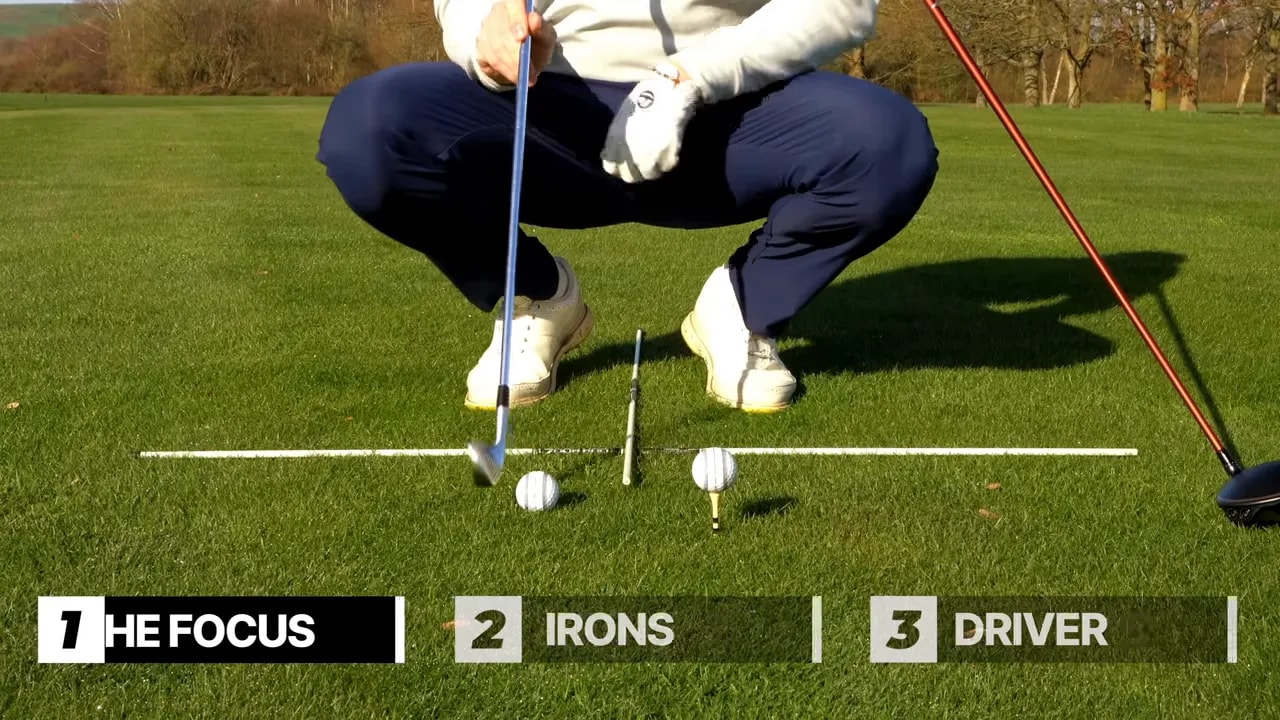
This difference is one of the most important ideas in golf instruction:
Irons: low point after the ball
Driver: low point before the ball
If you use the same swing intention for both clubs, your golf ball striking will always feel inconsistent. You may have one day where the irons are excellent but the driver is unreliable. Then the next round, the driver behaves and the irons disappear. Often, the issue is not effort. It is that your low point and your focus are in the wrong place for the club in your hands.
Step 2: Learn why many golf players focus on the wrong thing
A common problem in golf is that players become completely focused on the ball itself. That sounds reasonable, but it often causes the wrong movement pattern.
When your attention is locked onto the golf ball as the object you are trying to hit, you can start organizing your body so everything lines up at the ball. That tends to produce a more neutral shaft position at impact, less forward shaft lean, and less downward strike with the irons.
In practical terms, that can lead to:
Thin iron shots
Heavy contact
Weak compression
Inconsistent turf contact
For better golf, your focus needs to move away from the ball and toward the place where the club should be heading.
That is the key teaching point: your intention should match the correct low point for the shot you are hitting.
Step 3: For better golf irons, swing to a point ahead of the ball
When you hit an iron well, the club strikes the ball and then continues downward into the turf. That is why good iron players take divots after the ball rather than before it.
So what should your mental focus be?
Instead of swinging at the ball, picture a point a few inches in front of it and slightly below ground level. You cannot literally see the low point because it is underground, but you can visualize where it should be.
For many iron shots, that point is roughly three to four inches ahead of the ball.
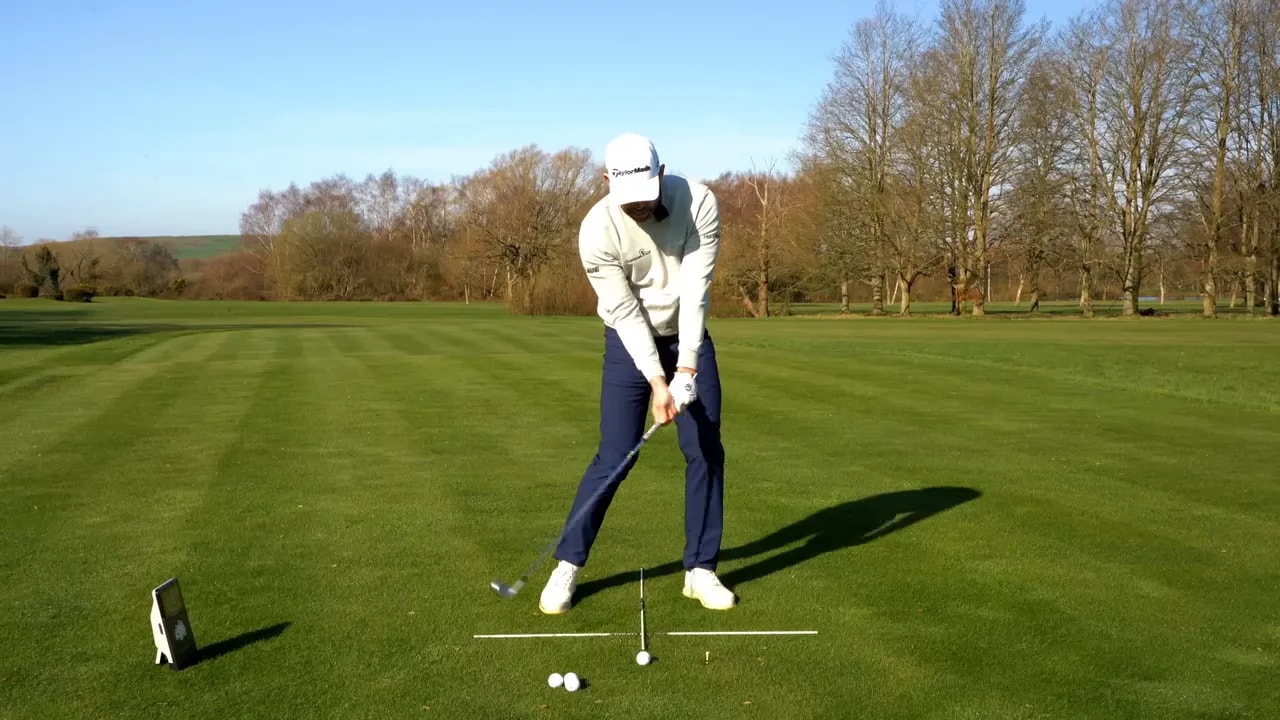
This changes your golf swing intention completely. If you swing toward that forward point, the club is more likely to arrive at the ball with:
Forward shaft lean
Hands ahead of the clubhead
A negative attack angle
Ball-first, turf-second contact
That is the pattern associated with compressed iron shots in golf.
Why this works
A useful way to think about it is this: if you were trying to strike through an object, you would not stop at the front edge of it. Your intent would continue beyond it. The same is true in golf. Great iron strikes happen when the swing keeps moving toward a point after the ball.
If your body and club line up too early, right at the ball, the descending blow tends to disappear. If they line up after the ball, the impact conditions improve.
Step 4: Use a simple golf drill to train iron low point
A practical drill can help you feel this difference without overcomplicating your golf mechanics.
Place a visual marker several inches ahead of the golf ball. A tee works well for this. The tee is not there to be struck like a second ball. It is there to give your brain a forward target for the swing.
Your task is simple: make your swing feel as though it is traveling toward that tee rather than crashing into the ball.
As you do this, you should notice a few things:
Your arms and club straighten later
Your hands are more likely to lead the clubhead into impact
Your divot starts after the ball
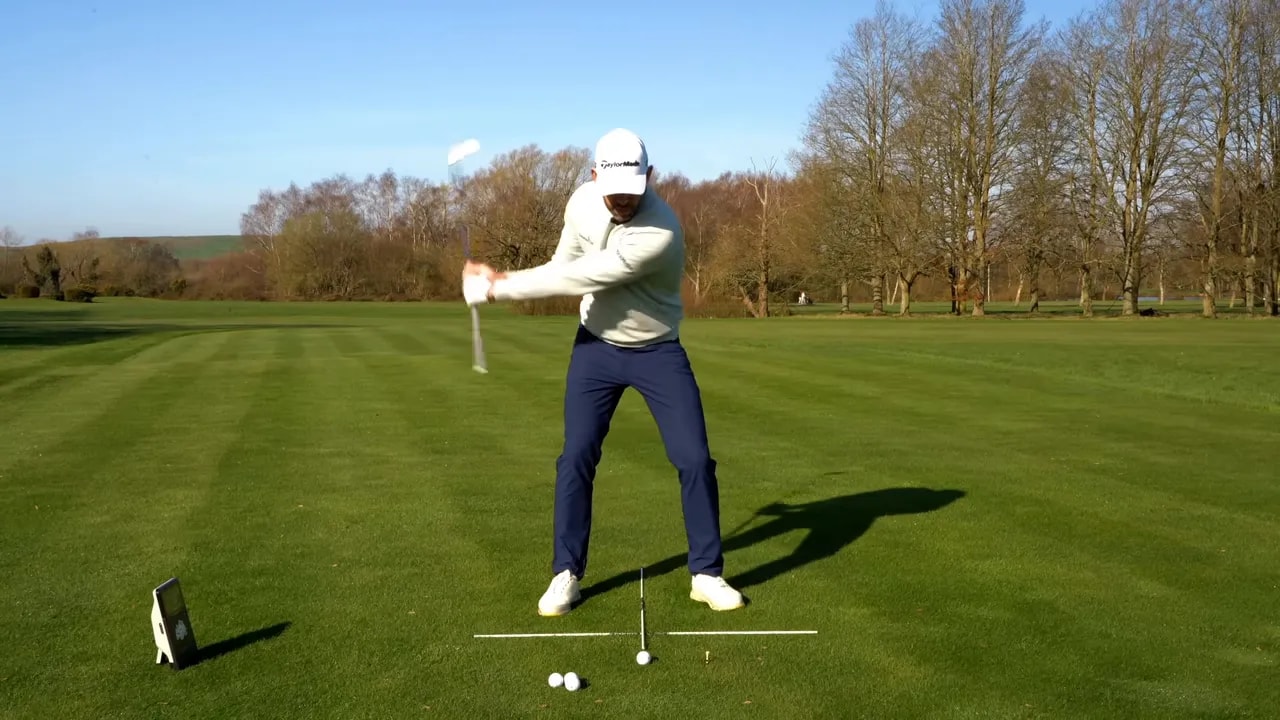
Another rehearsal drill uses the club in a different orientation. Hold the club lower down on the shaft so the grip end extends upward, and rehearse the movement with the grip tracing up the lead side of your body. If your intention is the ball, the club tends to line up too early. If your intention is the point ahead, that straightening and matching up happens later.
That later match-up is exactly what you want for solid iron golf shots.
What a good result looks like
After a well-struck iron shot, the evidence should be in the turf. The divot should begin after the ball, not at the ball and certainly not behind it. That tells you your low point was where it needed to be.
If your iron contact improves when you focus ahead of the ball, that is not luck. It means your golf swing intention is finally supporting the correct strike pattern.
Step 5: Do not use the same golf swing thought with the driver
This is where many golfers get into trouble. They discover a useful iron swing thought and then apply it to the driver.
That usually produces the exact opposite of what a good driver swing needs.
If you try to swing to a point ahead of the ball with the driver, you are likely to create a negative attack angle. In golf, that can lead to:
Low launch
Excess spin
Poor carry distance
Weak or glancing contact
The driver is teed up for a reason. You are not trying to compress it into the turf like an iron. You are trying to catch it after the club has already passed the low point and started moving upward.
So your setup and your focus both need to change.
Step 6: For better golf drives, move the low point behind the ball
With the driver, the low point should sit behind the ball. That allows the club to travel upward into impact.
To support that pattern, start with a setup that matches the shot:
Play the ball farther forward in your stance
Use a wider stance
Feel slightly more behind the ball at address
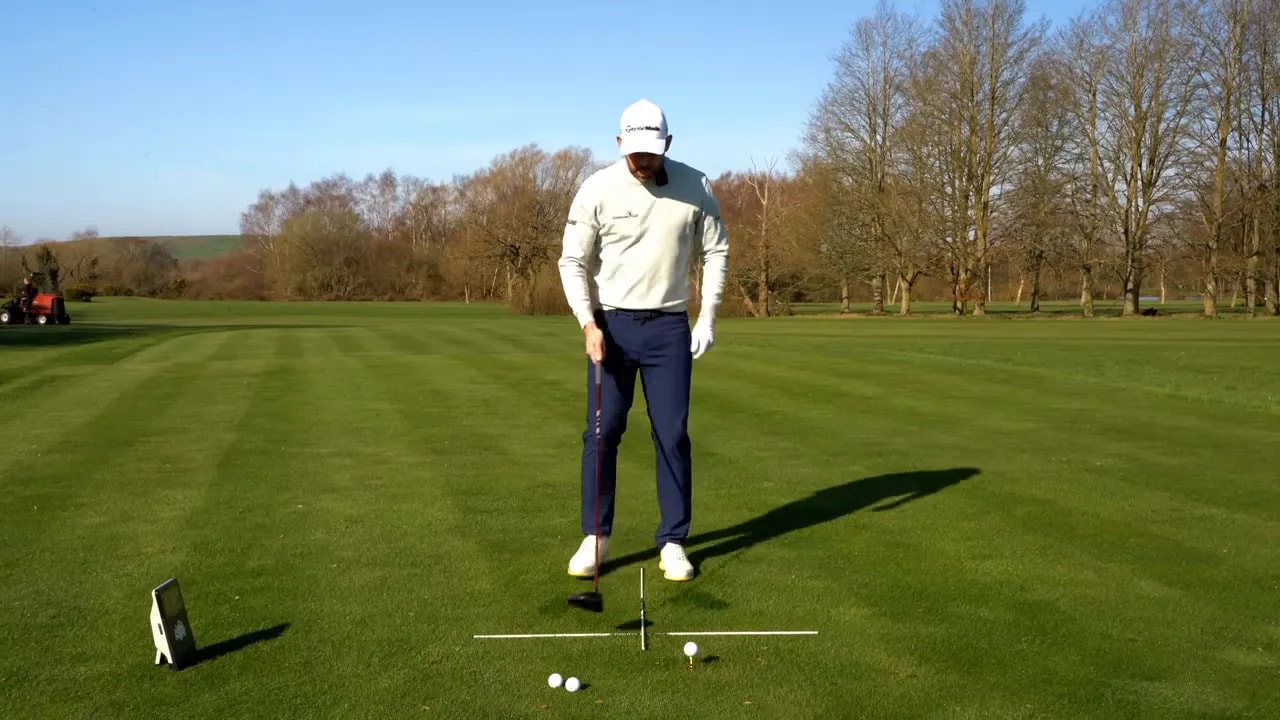
These setup changes help, but they are only part of the picture. The more powerful adjustment is changing your intention.
Instead of focusing on the ball itself, place your attention on the ground slightly behind the ball, around the back edge of the driver. You might look at a blade of grass, a small discoloration in the turf, or any tiny spot you can use as a reference point.
That point becomes your low-point anchor for the driver swing.
There is one important detail here. You want the club to bottom out around that area, but you do not want to hit the ground with the driver. The intention is to let the club approach that low point and then rise away from the turf into the ball.
In simple terms, better driver golf comes from swinging so the club works up through impact rather than down into it.
Step 7: Use head position to help your golf driver strike
There is a helpful detail that can make this easier. From setup, add a slight head rotation away from the target. This can make it feel as though you are looking more at that spot on the ground behind the ball through your lead eye.
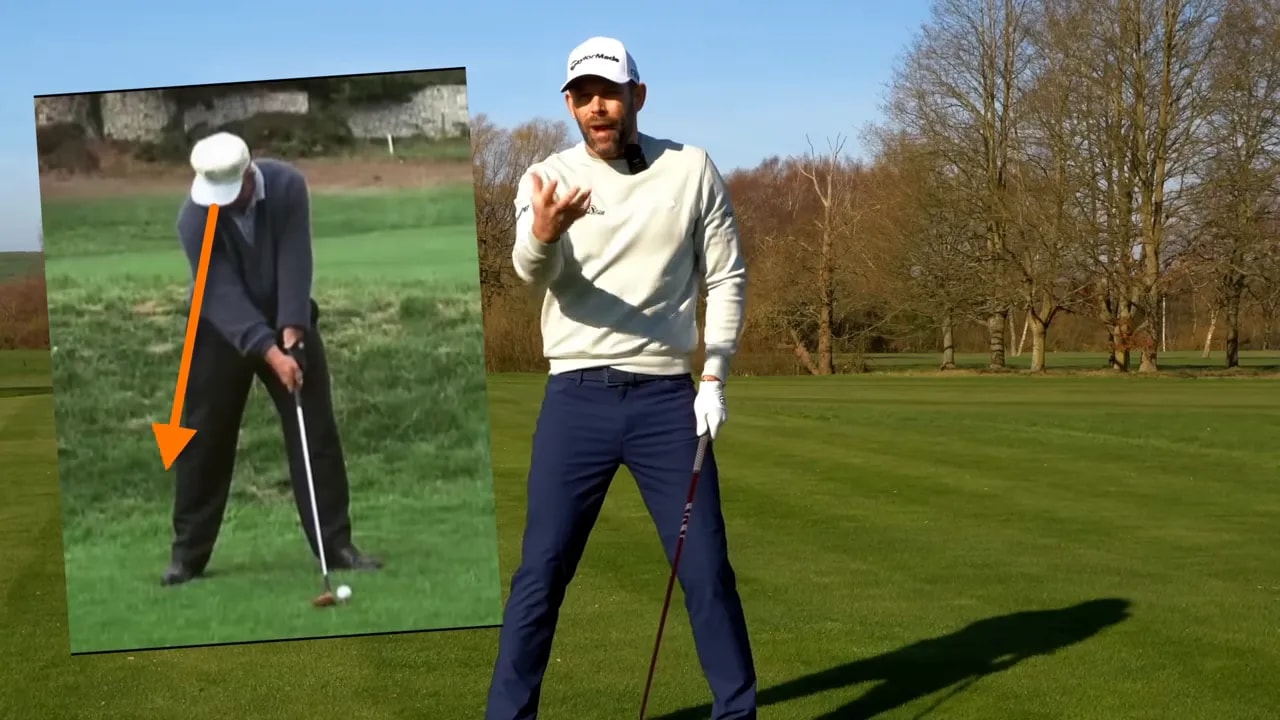
This small adjustment can do two useful things in your golf swing:
It can help you make a fuller turn going back
It can help keep your head back during the downswing
Keeping the head back is especially useful with the driver because it improves the chance that your low point stays behind the ball. When that happens, the club can approach impact from a shallower angle and start moving upward through the strike.
That is the recipe for stronger launch conditions in golf: positive attack angle, better height, and more efficient distance.
Step 8: Match your golf focus to the club you are using
If you only remember one thing, make it this:
With irons, focus ahead of the ball
With driver, focus behind the ball
This is not just a mental trick. It changes how your body organizes the strike.
For irons, a forward focus encourages the hands to lead, the shaft to lean, and the club to contact the ball before the turf.
For driver, a rearward focus encourages your head to stay back, the low point to move behind the ball, and the club to travel upward into impact.
That is why this single concept can improve two very different parts of your golf game at once.
Step 9: Take this golf concept from practice to the course
The best ideas in golf only matter if you can use them when it counts. To transfer this into play, keep the process simple.
For iron shots
Pick your target as normal
Set up to the ball
Visualize a point a few inches ahead of the ball and below the turf
Make your swing feel as though it is traveling to that point
For driver shots
Tee the ball forward in your stance
Widen your base
Focus on a spot on the ground just behind the ball
Allow your head to stay back as you swing through
You do not need five different technical thoughts. In many cases, one clear intention is enough to improve your golf contact immediately.
Step 10: Know the signs your golf low point is improving
As you train this, look for simple clues that your low point control is getting better.
Iron signs
Divot starts after the ball
Contact feels more compressed
Trajectory becomes more consistent
Thin and heavy shots become less frequent
Driver signs
Ball launches higher with less effort
Contact feels more centered and powerful
Distance improves without swinging harder
You stop feeling as though you are chopping down on the ball
These are strong indicators that your golf swing is no longer being driven by a generic “hit the ball” instinct. Instead, it is being guided by the correct low point for each club.
FAQ
What is low point in golf?
Low point is the lowest part of the clubhead’s arc in the golf swing. With irons, low point should be after the ball. With driver, low point should be before the ball.
Why do I hit my irons well one day and my driver well the next?
This often happens because irons and driver need different strike patterns in golf. Irons need a downward strike with the low point ahead of the ball. Driver needs an upward strike with the low point behind the ball. If you use one intention for both, inconsistency is common.
How far ahead of the ball should low point be with irons?
A useful reference is roughly three to four inches ahead of the golf ball. The exact amount can vary, but the key is that the club continues toward a point on the target side rather than stopping at the ball.
Should I focus on the golf ball during my swing?
You still address the ball, but for better golf contact, your intention should not stop there. With irons, think beyond the ball. With driver, think slightly behind it. That shift in focus helps create the correct impact conditions.
Do I want to hit down on the driver in golf?
No. For most driver swings in golf, you want the club moving upward at impact. That means the low point must be behind the ball, not ahead of it.
What is a simple golf drill for better iron contact?
Place a tee a few inches ahead of the ball and make practice swings feeling as though the club is traveling toward that tee. This encourages a forward low point and better ball-first contact.
How can I improve my attack angle with the driver?
Set the ball forward, widen your stance, feel slightly behind the ball, and focus on a spot on the ground just behind it. A slight head rotation away from the target can also help keep your head back and support a more positive attack angle in golf.
Final thought
If you could learn only one concept to improve your golf ball striking, this is a strong candidate. Control where the swing bottoms out, and many other pieces start to organize themselves.
With irons, swing to a point ahead of the ball. With driver, swing from a setup and focus that place the low point behind the ball. That single adjustment can help you strike irons more crisply, launch the driver more efficiently, and bring much more consistency to your golf game.
Better golf often begins when you stop trying to simply hit the ball and start learning where the club should be traveling instead.
0 Comments