
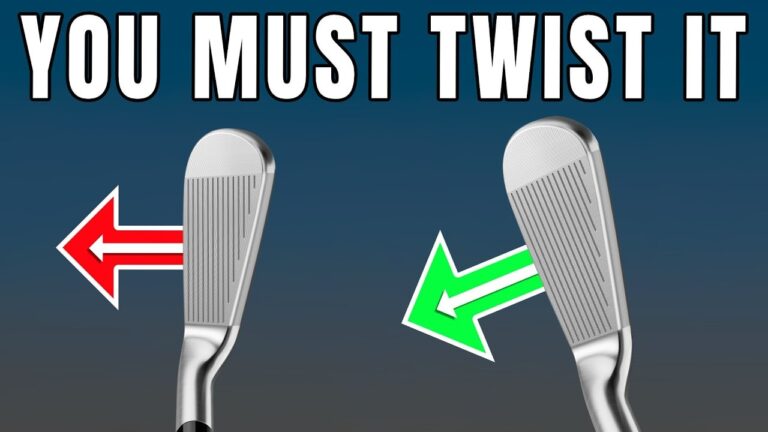

If you want better golf iron strikes, more compression, and that crisp ball-first contact, there is one movement you cannot ignore. Many golfers spend years trying to fix impact without understanding what makes a strong impact possible in the first place. They work on shaft lean, body rotation, and hand position, yet the strike still feels weak, glancing, or inconsistent.
The missing piece is often much simpler than expected: you need to learn how to twist the golf club correctly during the swing. That movement helps control the clubface, and it is one of the main reasons skilled players can get their hands forward at impact without leaving the face wide open.
When you understand this relationship between clubface twist and forward shaft lean, your golf swing starts to make a lot more sense. Compression is no longer a mystery. It becomes the result of two coordinated actions working together.
Table of Contents
- Step 1: Understand the golf move most players never train
- Step 2: Learn how the lead wrist behaves in the takeaway
- Step 3: Use the knuckles drill to feel the correct golf club twist
- Step 4: Recognize the key delivery position in golf
- Step 5: Understand why this golf drill may send the ball left at first
- Step 6: Learn the impact relationship that creates golf compression
- Step 7: Train the compression drill for better golf strikes
- Step 8: Blend the two golf drills into one motion
- Step 9: Use a simple visual cue to take this golf move to the course
- Step 10: Know what this move fixes in your golf swing
- Step 11: Practice this golf move in the right order
- FAQ
- Final thought
Step 1: Understand the golf move most players never train
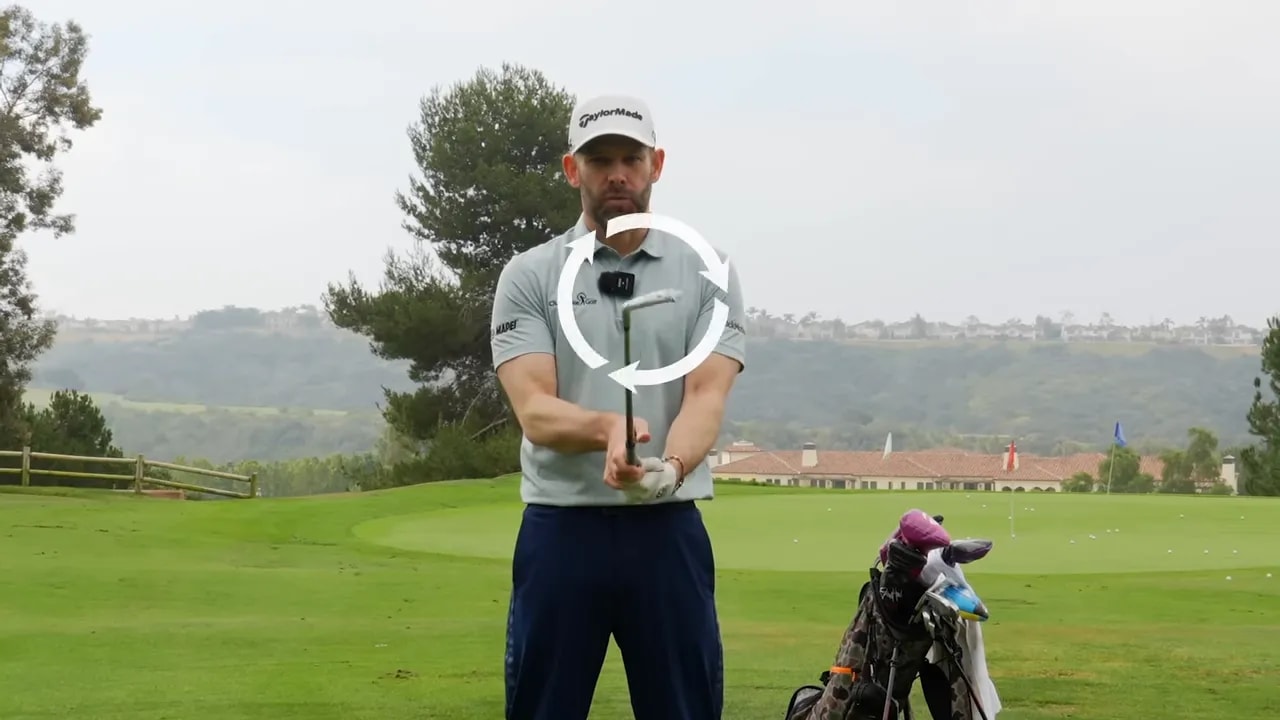
Start with a club in your hands and hold it out in front of you. From there, think about all the ways you can move it.
You can lift it up and down.
You can move it forward and back.
You can swing it around your body.
You can also twist it.
That last one is the important one. Twisting the club means rotating it without necessarily moving the shaft much in space. In practical terms, that changes where the clubface points.
Twist it one way and the face points more toward the ground. Twist it the other way and the face opens more toward the sky. That may seem like a small detail, but in golf it has a huge effect on delivery and strike.
Good players do not just move the club around them. They also rotate it. If you have been trying to improve impact without learning this, you may be trying to create compression with only half the puzzle.
Data from systems like HackMotion shows this clearly. Elite players do not keep the wrist and clubface in one static orientation all the way back. There is a measurable change in the way the club is twisted during the backswing. That change helps set up what happens later in the downswing and at impact.
Step 2: Learn how the lead wrist behaves in the takeaway
To train this correctly, break the backswing into parts.
Begin from your normal golf setup. Move the club back until the grip is just outside your trail thigh. In this early stage, the lead wrist should stay relatively neutral. You are not aggressively bowing or cupping it. You are simply moving the club away while keeping things calm and stable.
This is important because many golfers either manipulate the wrist too early or never change it at all. The goal is neither extreme. The goal is a takeaway that stays neutral first, then gains the correct twist as the backswing continues.
Think of it as a sequence:
Neutral early takeaway
Twist added later in the backswing
Hands forward through impact to match that face position
If you skip the middle part, the last part becomes very difficult in golf.
Step 3: Use the knuckles drill to feel the correct golf club twist
This is the central drill.
Set up normally and make that small takeaway until the grip reaches just outside the trail thigh. Then place your trail hand behind your lead hand so the fingers can pull on the lead-hand knuckles.
From there, complete your backswing while pulling your lead-hand knuckles away from your forearm. That is the key sensation.
When you do this, your lead wrist will flatten or even feel slightly arched. At address, most golfers have some extension or cupping in the lead wrist. This drill changes that. It helps move the wrist toward the flatter or slightly bowed position often seen in strong ball strikers.
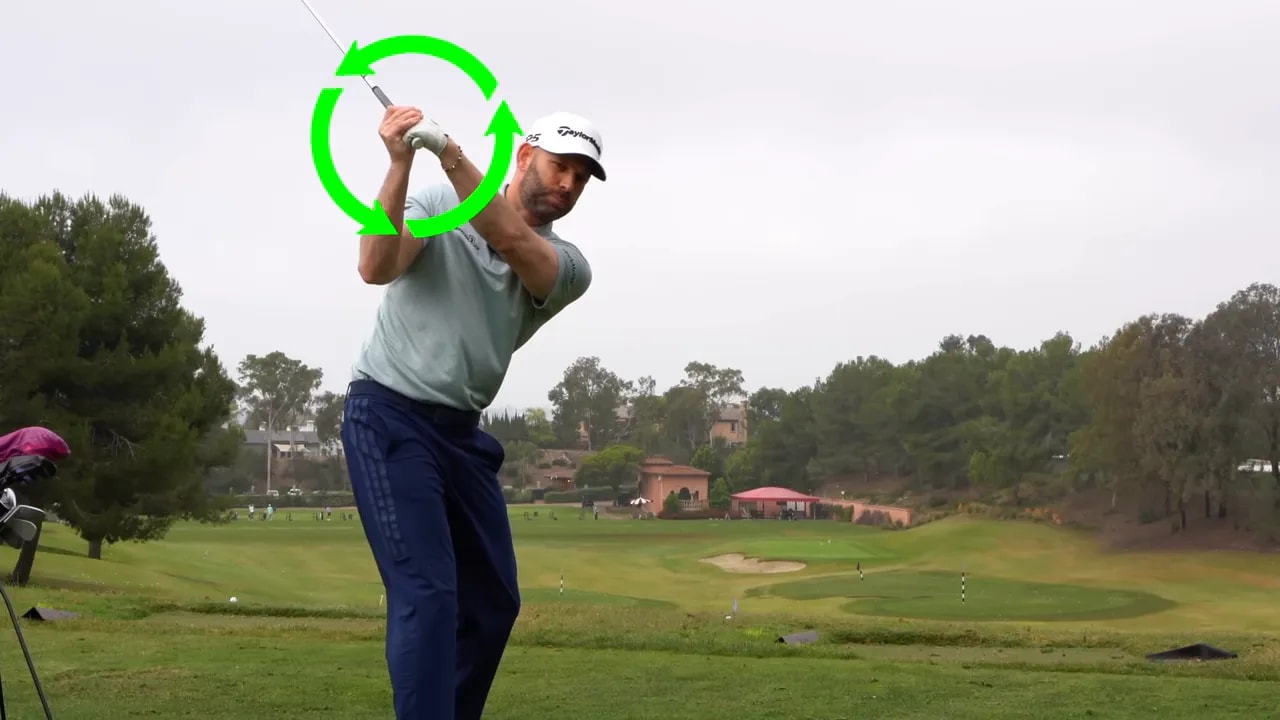
You may need to exaggerate the feel at first. That is normal. Training feels often need to be bigger than the real motion. The purpose of the drill is not to create a perfect full-speed swing immediately. It is to give you a clear sense of what “twisting the club” actually means.
As you do this, notice two things:
The lead wrist looks flatter or slightly arched.
The clubface points more down toward the ground.
That is the twist. In golf terms, you are closing the clubface during the backswing.
Step 4: Recognize the key delivery position in golf
When this movement is done correctly, the club reaches a delivery position where the lead wrist is still slightly arched and the clubface is looking down more than many amateurs expect.
To some golfers, this position can look shut. It can even feel wrong at first. But this is exactly why the move is so often missed. Many players assume a clubface that appears closed in the downswing must be a problem. In reality, it is often what allows skilled players to deliver forward shaft lean and still return the face square.
This is one of the biggest revelations in ball striking. Compression is not just about dragging the handle forward. It is about matching a closing clubface action with forward shaft lean so the club arrives in balance.
If you only focus on getting the hands ahead in your golf swing, the face often stays too open. If you only focus on squaring the face, you may flip the clubhead past your hands and lose compression. Better players blend both.
Step 5: Understand why this golf drill may send the ball left at first
If you hit shots using only the twisting drill, there is a strong chance the ball will start left.
That does not mean the drill is wrong. It means you are seeing exactly what the move does: it closes the clubface.
Take your lead hand on the club and compare two positions:
A more cupped or extended lead wrist makes the face look more open.
A more arched lead wrist points the face more downward, which closes it.
So if you train the twist but do not add the proper impact move, the face is likely to be closed relative to your path. In golf, that often means pulls or shots that start left.
This is actually useful feedback. It confirms that you are changing the clubface orientation. The next step is learning how to pair that with the motion that elite ball strikers use through impact.
Step 6: Learn the impact relationship that creates golf compression
Here is the part that ties everything together.
At address, if the shaft is fairly neutral, the clubface appears square. But when you move the hands forward, the shaft leans toward the target and the face effectively opens.
That is a crucial concept in golf. Hands forward opens the clubface.
Now the earlier twist starts to make sense. If you close the face in the backswing and delivery, then move the hands forward through impact, the shaft lean reopens the face toward square.
This is why tour-level players can have:
Forward shaft lean
De-lofted irons
Strong compression
A square clubface at impact
Without the clubface twist, most golfers cannot get the hands forward successfully. The face stays open, shots leak right, and the strike feels weak. To avoid that, they instinctively flip the clubhead past the hands. That saves the face but ruins compression.
This is why so many golf swings get stuck in a cycle of thin shots, fat shots, and inconsistent contact. The player is trying to square the face at the last second instead of preparing it earlier in the motion.
Step 7: Train the compression drill for better golf strikes
Once you understand the relationship between a closing face and forward shaft lean, you can train it in a very practical way.
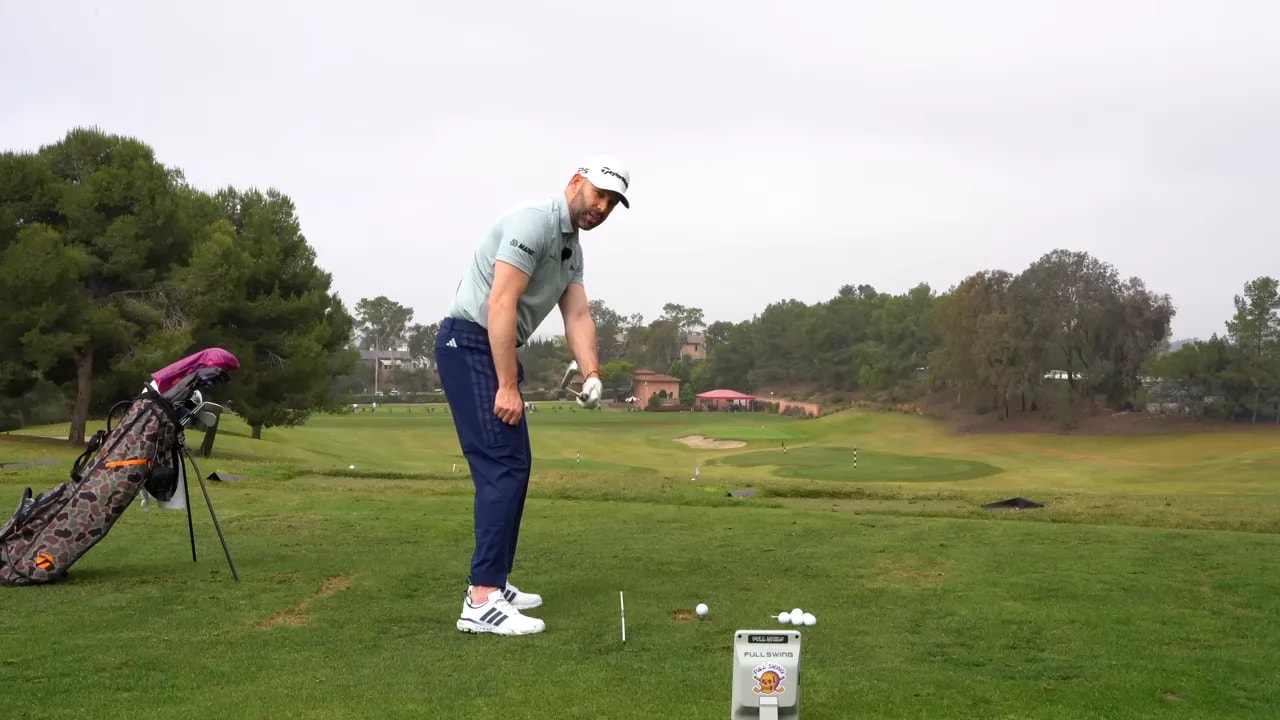
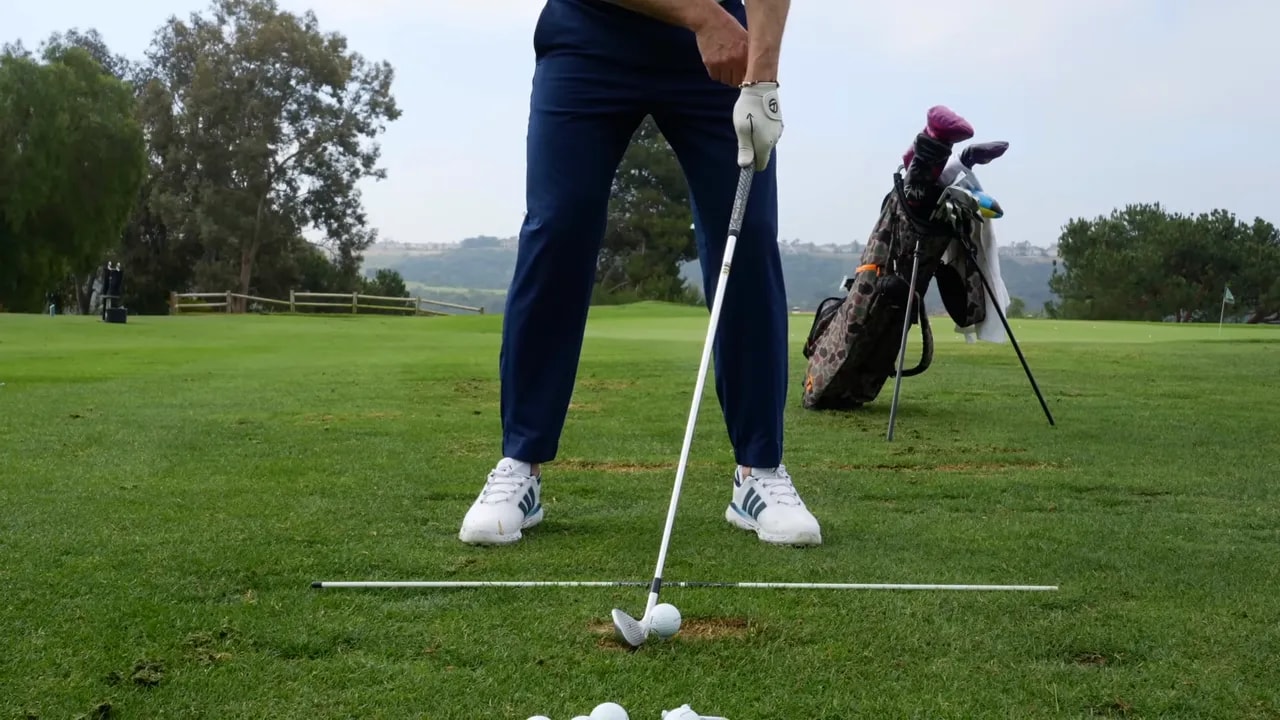
Set up to the ball and deliberately twist the clubface closed at address. In other words, build in the same wrist condition you were trying to create in the swing, but do it before you move.
The face should now point noticeably left of target for a right-handed golfer.
From there, make a small swing and hit a shot about 50 to 60 yards, trying to send it straight. To do that successfully, you will need to rotate your body and move the handle forward through impact.
The goal is simple:
Start with the face closed
Move the hands forward through strike
Let that shaft lean reopen the face toward square
When you do it well, the result is exactly the type of golf strike most players want: a low, punched, compressed shot that feels solid off the face.
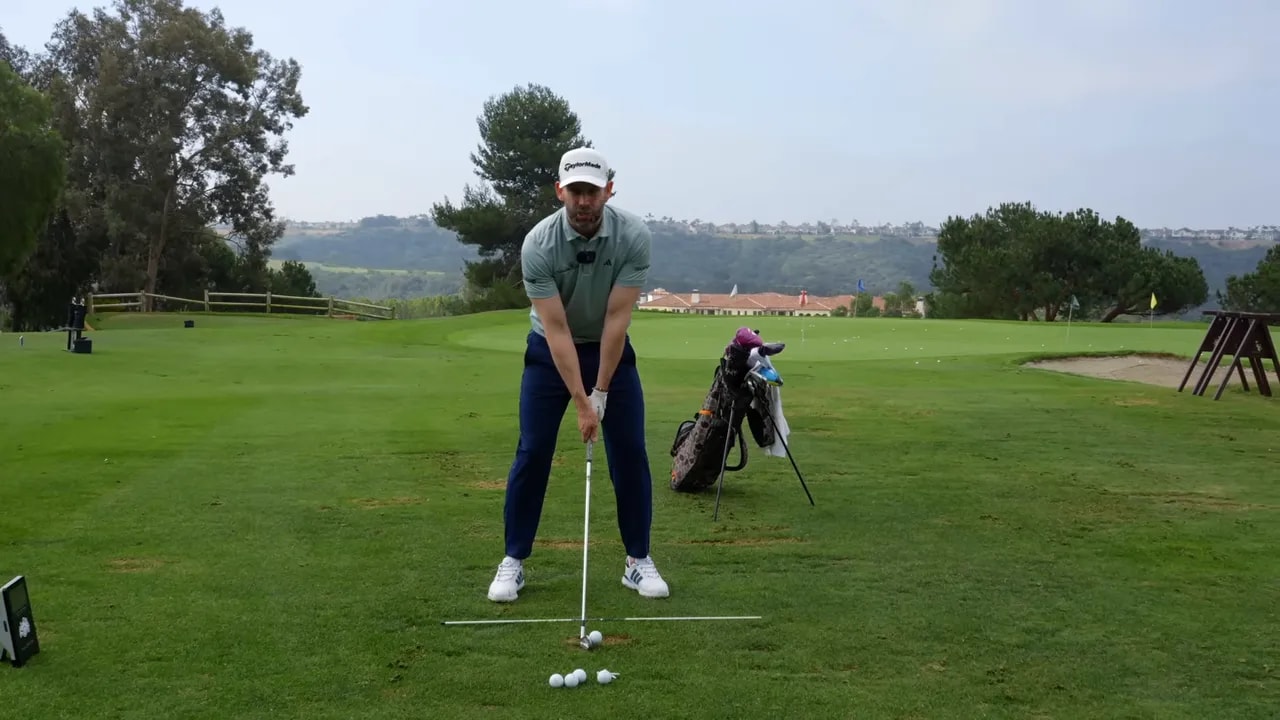
This drill gives you immediate feedback. If you flip, the face stays too closed and the ball goes left. If you rotate and drive the handle forward, the club arrives with a stronger strike pattern.
It is a smart way to train impact because it teaches the face and handle to work together rather than separately.
Step 8: Blend the two golf drills into one motion
After working on both pieces separately, combine them.
Use this progression:
Take the club back with a neutral early takeaway.
Pull the lead-hand knuckles away from the forearm to add the twist.
Move into delivery with the face more closed and the lead wrist flatter.
Rotate through and get the hands forward at impact.
This sequence is what produces the compressed strike. You are no longer trying to rescue impact with a late flip. You are organizing the clubface earlier so that the handle can keep moving.
In golf, that is a major turning point. It changes impact from something you try to force into something your swing naturally supports.
Step 9: Use a simple visual cue to take this golf move to the course
One of the easiest ways to keep this feeling during practice is to place two small reference marks on the glove or on the lead-hand knuckle area. Those marks act as a visual reminder.
As you swing back, your only thought is to pull those dots away from the forearm. That single cue can make the movement much easier to repeat.
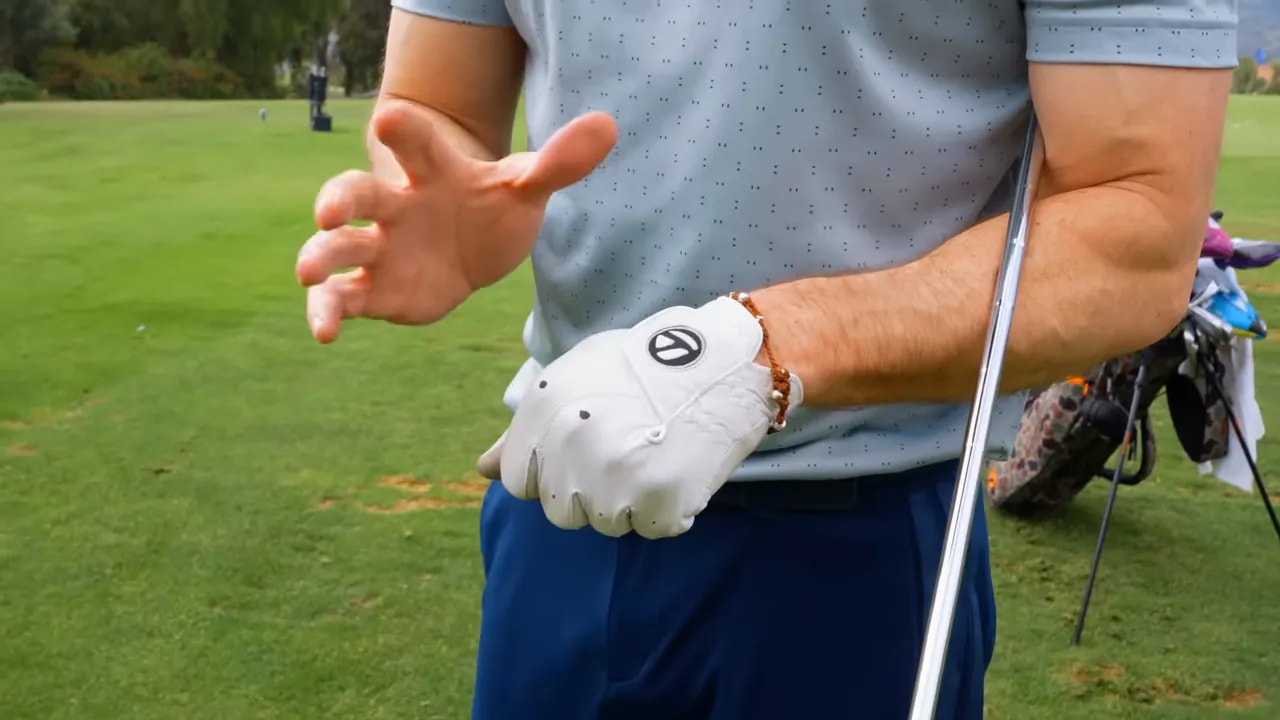
This kind of simple external focus is useful in golf. Technical ideas can quickly become overwhelming, especially when you try to take them from a drill station to full swings. A basic visual can help you keep the right feel without crowding your mind.
If you are practicing on the range, use the dots for shorter swings first. Then gradually lengthen the motion while keeping the same sensation. Once that starts to feel natural, you can bring it onto the course as a single swing cue.
Step 10: Know what this move fixes in your golf swing
This movement is especially helpful if any of these sound familiar:
You struggle to get a crisp strike with irons.
You feel as if you have to flip the club to square the face.
Forward shaft lean sends the ball weakly to the right.
Your contact is often fat or thin.
You want lower, stronger iron flight.
What this move does is give you permission to lean the shaft forward without fear that the face will stay open. That is the big breakthrough.
Many golfers chase the look of compression. Fewer understand the clubface conditions that make it possible. In good golf, impact is not just about where the hands are. It is about where the face is pointing while the hands are there.
Step 11: Practice this golf move in the right order
To make this stick, follow a sensible progression instead of jumping straight into full-speed swings.
Build your golf practice like this
Rehearsal without a ball
Practice the takeaway and knuckles-away motion until the lead wrist starts to look flatter and the face appears more closed.Hit soft shots with the first drill
Expect some shots to go left. That is acceptable early on.Use the preset closed-face drill
Hit 50 to 60 yard shots and train your body to rotate while the handle moves forward.Blend the motions
Add the backswing twist and then the forward shaft lean into one flowing action.Add one simple cue
Use the marked knuckles or glove dots so you can repeat the motion in a golfer-friendly way.
This is a much better learning path than trying to manufacture “lag” or “compression” by force. In golf, efficient impact usually comes from proper clubface organization earlier in the swing.
FAQ
Why does twisting the club help with golf compression?
Twisting the club closes the clubface during the backswing and delivery. That closed face then matches up with forward shaft lean at impact, because shaft lean tends to open the face. When those two actions work together, you can strike the ball with more compression and a squarer face.
Why do my shots go left when I practice this golf move?
That usually means you are successfully closing the clubface but not yet adding enough forward handle movement and body rotation through impact. The drill is doing its job. The next step is pairing that clubface condition with hands forward so the face can return closer to square.
Should the lead wrist be bowed from the very start of the golf takeaway?
No. The early takeaway should stay relatively neutral. The flatter or slightly arched lead wrist is added later as the backswing continues. That sequence helps the motion feel more natural and keeps the takeaway from becoming overly manipulated.
What is the best way to practice this in golf without getting overwhelmed?
Start with slow rehearsals and the knuckles drill. Then hit short shots using the preset closed-face drill. Only after that should you blend the motions into fuller swings. A simple visual marker on the glove or knuckles can also make the feel easier to repeat.
Does this golf move apply only to irons?
The lesson is presented around iron strike and compression, where forward shaft lean is especially important. The core idea of matching clubface rotation with delivery still matters broadly in golf, but the clearest benefit here is with iron contact, strike quality, and flight control.
Final thought
If you have been trying to improve your golf strike by forcing your hands forward, you may have been working on the right idea in the wrong order. Forward shaft lean is important, but it becomes much easier when the clubface has already been organized through the proper twist.
That is why this move matters so much. It gives you the freedom to keep the handle moving, compress the ball, and produce the lower, stronger flight associated with solid iron play.
Learn the twist. Train the knuckles-away feel. Then pair it with hands forward through impact. For many golfers, that is the missing link between a swing that looks reasonable and a strike that finally feels powerful.
0 Comments