
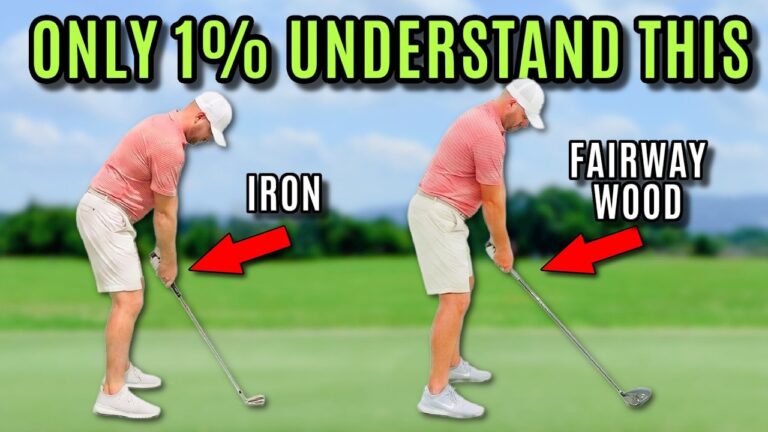

Hitting fairway woods off the ground is one of the most frustrating skills in golf. When you catch one solid, a 3-wood can be a weapon. When you do not, it usually turns into one of two misses: a thin, topped shot that barely gets airborne, or a fat shot that slams into the turf before the ball.
The good news is that both problems often come from one area of the swing. If you can improve what happens through impact, you can clean up contact fast.
The central move is simple: get the clubhead and your arms as far away from your body as possible through the ball while your weight shifts forward. That one concept can help you strike your fairway woods more like a skilled player and less like someone hoping to get lucky.
This guide breaks that down into a step-by-step process you can use on the range or at home.
Table of Contents
- Step 1: Understand why fairway woods off the ground are so difficult
- Step 2: Fix topped and thin shots by creating more extension
- Step 3: Fix fat shots by getting your weight forward
- Step 4: Build a better setup for hitting fairway woods off the ground
- Step 5: Use the half-swing drill to learn the strike pattern
- Step 6: Learn the correct turf interaction for fairway woods off the ground
- Step 7: Progress from short swings to full swings
- Step 8: Try the bag drill at home to train full extension
- Step 9: Add simple ball-flight fixes once contact improves
- Step 10: Use one simple swing thought on the course
- Step 11: Create a practical range routine for hitting fairway woods off the ground
- FAQ: Hitting fairway woods off the ground
- Step 12: Keep the move simple and repeatable
Step 1: Understand why fairway woods off the ground are so difficult
Fairway woods sit in an awkward middle ground between irons and driver. They are longer than irons, have less loft, and are often used from tight lies where there is very little room for error. That means your low point, arm structure, and weight shift all matter.
Many golfers approach a 3-wood with one of two bad patterns:
- They fold the arms and wrists too much through impact, which pulls the clubhead upward and leads to tops and thins.
- They hang back on the trail side, which leaves the hips behind the ball and causes fat contact.
If you have been wondering how to hit fairway woods off the ground more consistently, start by diagnosing which miss shows up most often.
Step 2: Fix topped and thin shots by creating more extension
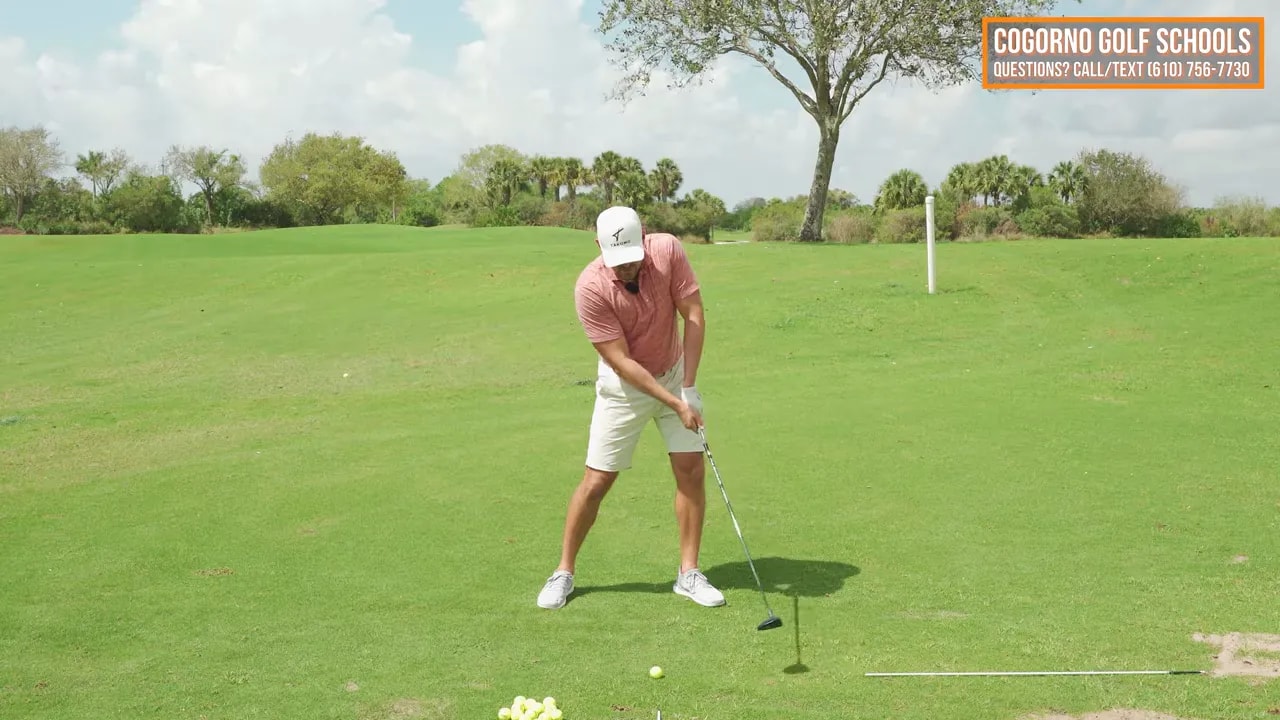
The most common reason golfers top or thin fairway woods is not that they are trying to lift the ball. It is that the clubhead gets too close to the body through impact.
When your arms stay bent and your wrists over-fold, the club rises too early. That changes the bottom of the arc and makes it easier to catch the top half of the ball with the lower grooves or even the leading edge.
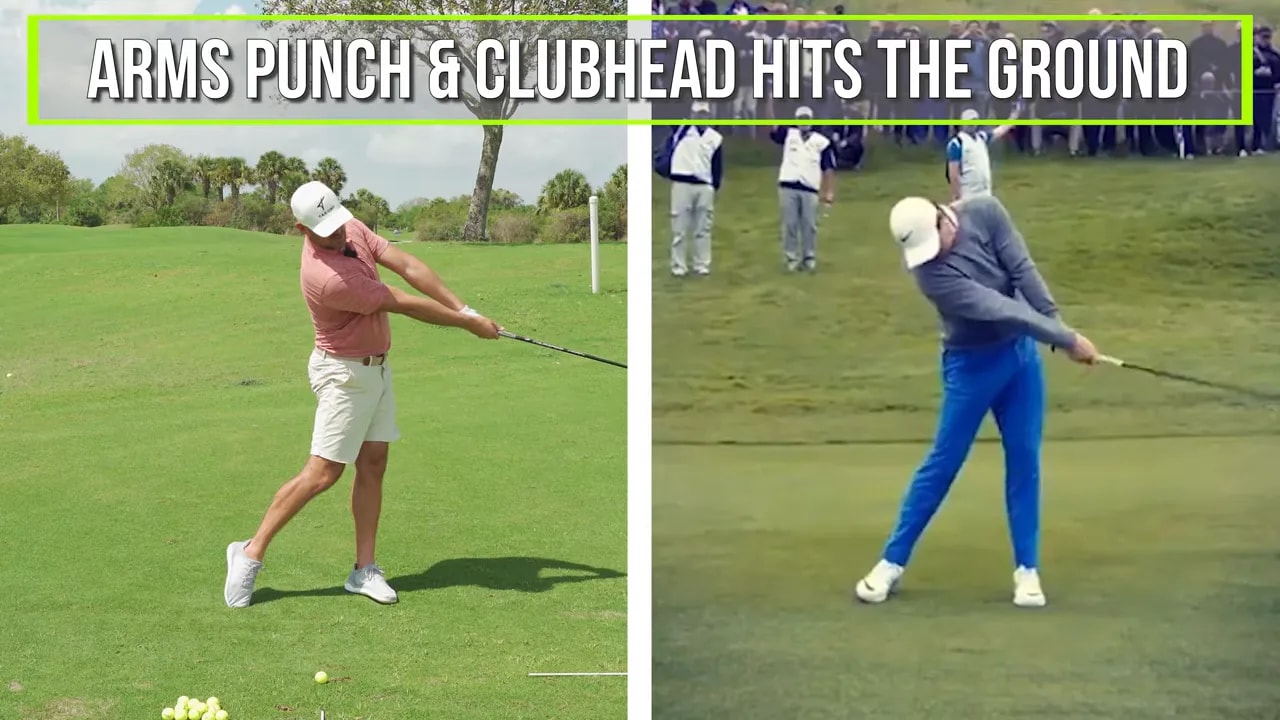
Solid fairway wood players do the opposite. Through impact, their arms are extending and the clubhead is moving away from their body.
Think of it this way:
- Bad thin pattern: bent arms, bent wrists, club pulled inward and upward
- Good strike pattern: arms extending, clubhead reaching outward, body stable
This does not mean your head lunges toward the target. The extension happens in the arms and club, not in a full-body slide. Your head can stay relatively centered while the clubhead reaches out.
If you want a simple feel, imagine you are “punching” the clubhead away from you through the ball. Your trail arm goes from folded to straight, and that helps deliver the club to the turf instead of yanking it up off the ground.
Step 3: Fix fat shots by getting your weight forward
Fat shots with a fairway wood usually come from a different source. In this case, the club bottoms out too early because your hips and weight stay too far back.
If you finish with pressure on the back foot, or your belt buckle stays behind the ball too long, the club is more likely to hit the ground before the ball.
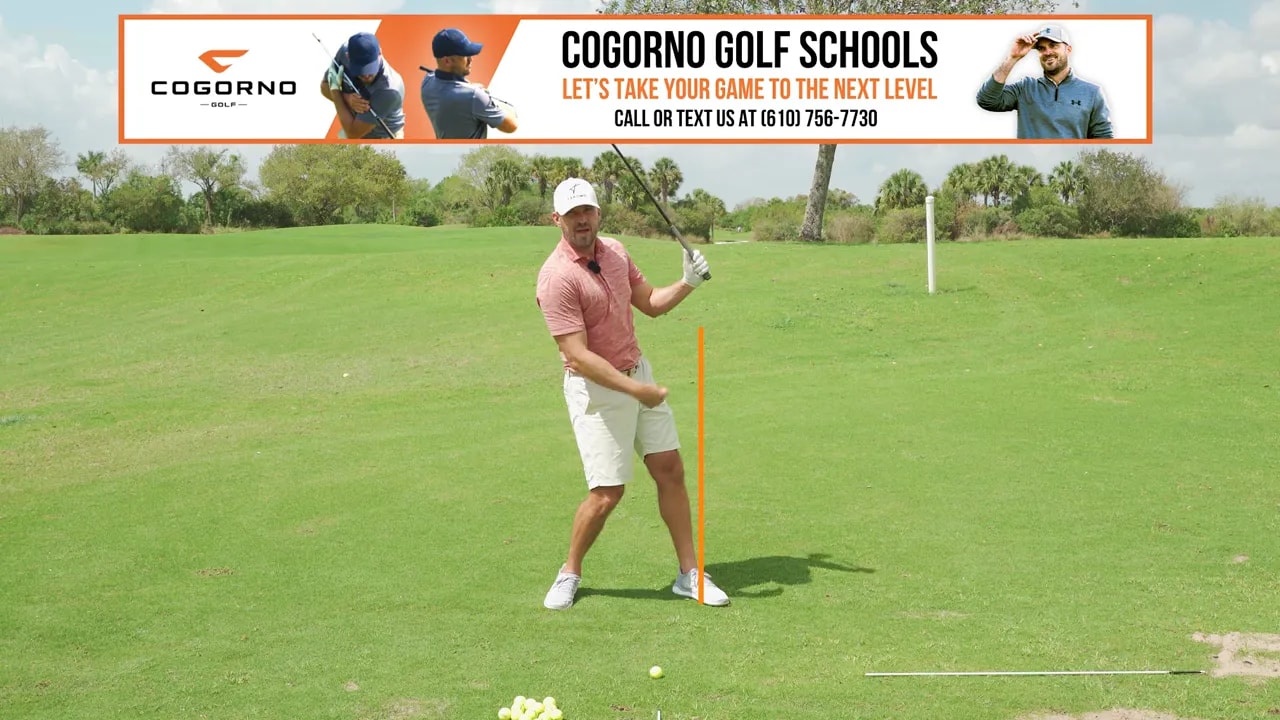
To fix that, you need your lower body moving forward in transition and through impact. A useful checkpoint is this: by the time you are just past impact, your belt buckle should feel more over your lead ankle.
That forward movement helps move the low point ahead of the ball. It is one of the biggest keys in learning how to hit fairway woods off the ground with a slight descending strike instead of a scoop.
Step 4: Build a better setup for hitting fairway woods off the ground
Before you work on drills, make sure your setup gives you a chance.
For a standard 3-wood from the turf, use these checkpoints:
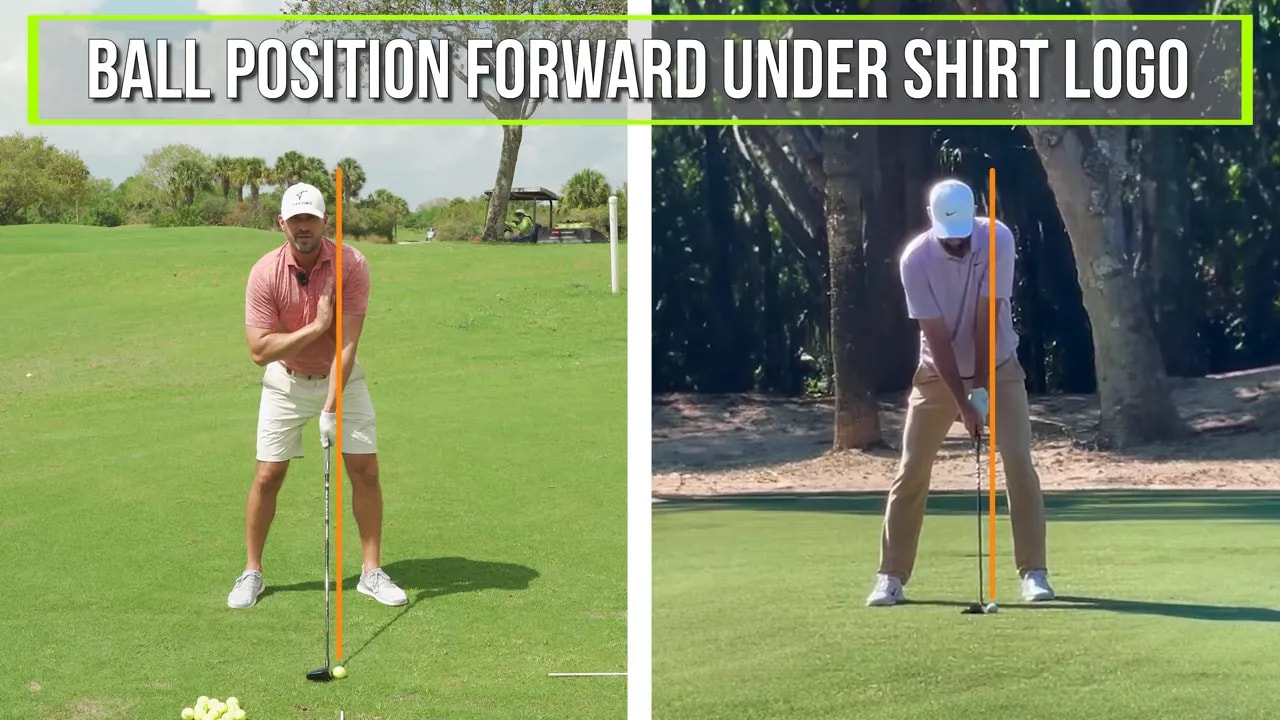
- Ball position: slightly forward, roughly under your shirt logo
- Stance width: a little wider than hips and shoulders
- Shaft position: neutral, with the handle roughly vertical, not heavily leaning forward or backward
- Weight distribution: about 50-50 at address
- Hips and belt buckle: centered between your feet
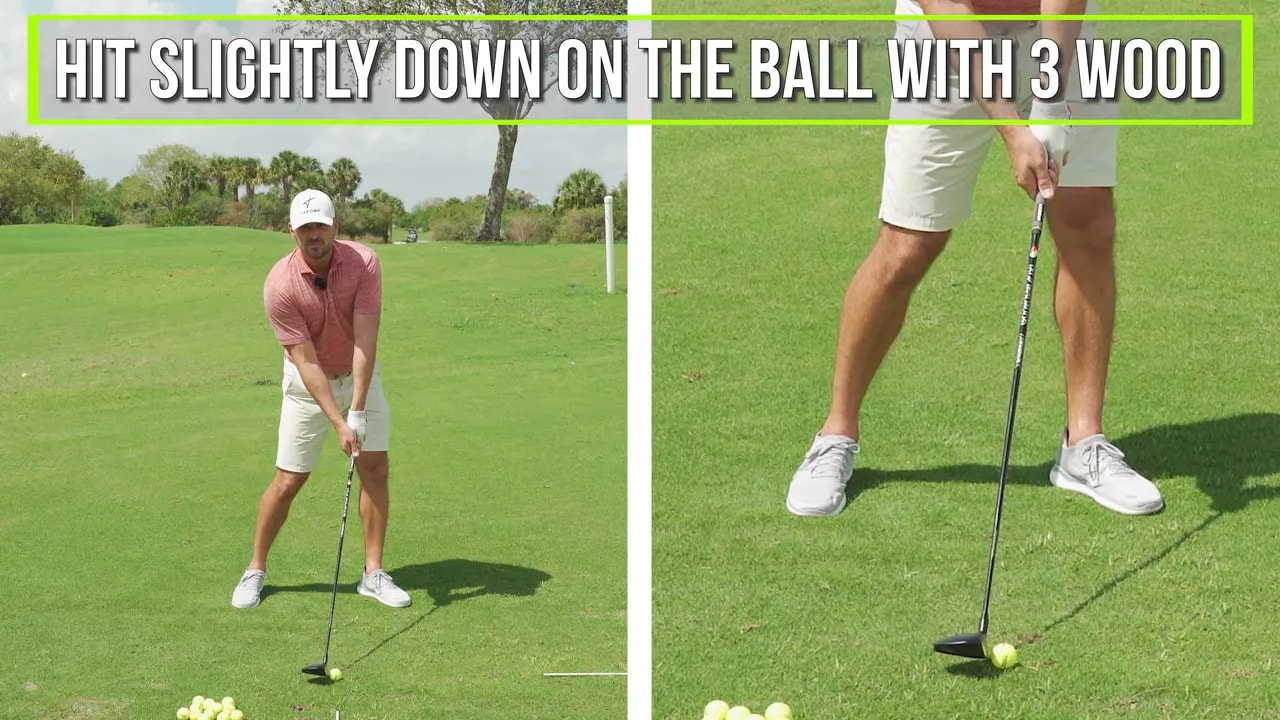
This setup is important because it gives you room to strike slightly down on the ball while still sweeping the club through the turf.
Step 5: Use the half-swing drill to learn the strike pattern
If you are trying to change contact with a full swing right away, you are making the job harder than it needs to be. Start with a small motion.
The first drill begins from a half backswing, roughly hip high.
How to do the drill
- Set up with your normal 3-wood address position.
- Make a short backswing to about hip high.
- Keep your hips centered in the backswing.
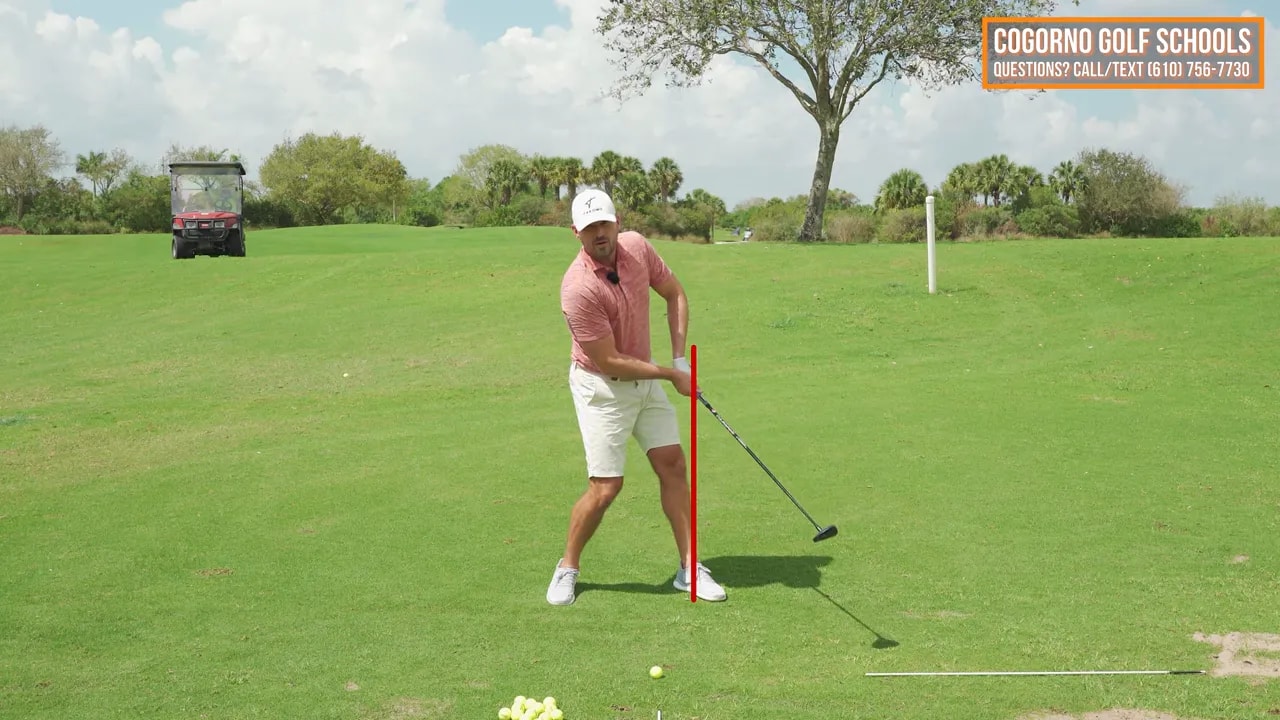
- From there, swing through and intentionally let the clubhead clip the ground.
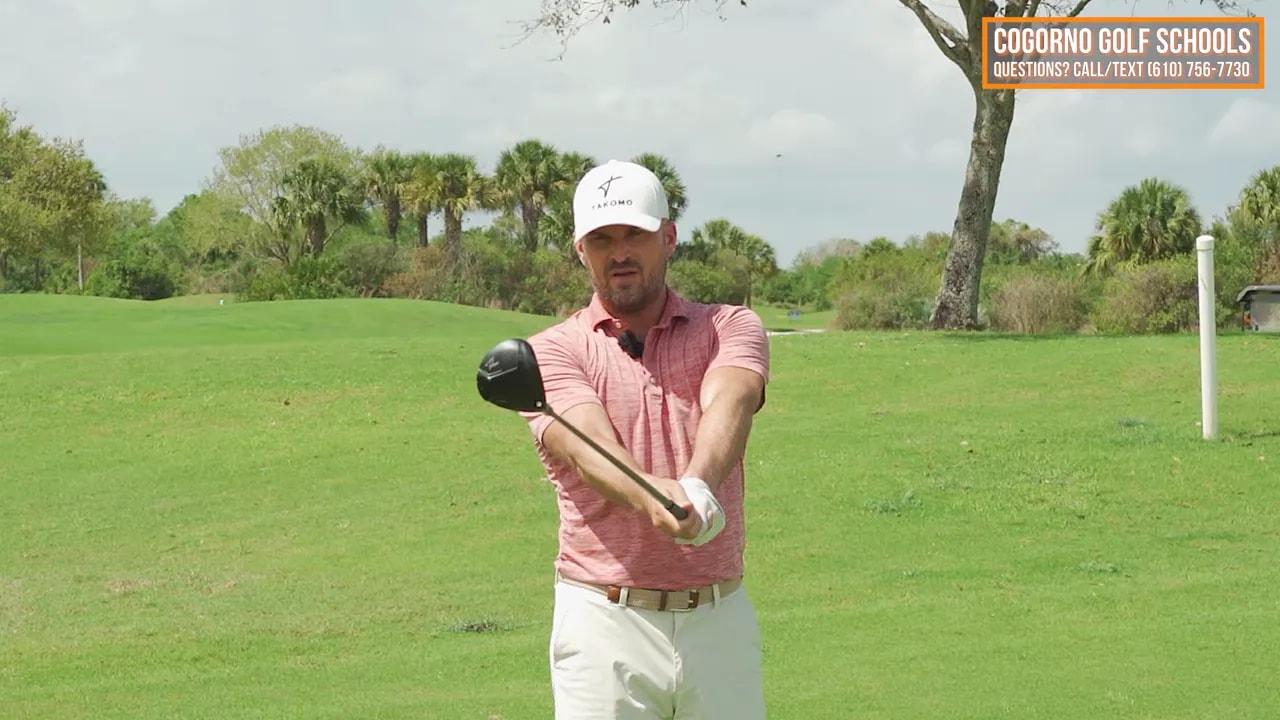
- By the time the club is about 45 degrees past impact, feel your arms fully extended and the clubhead as far away from you as possible.
- At the same time, let your hips push forward so your belt buckle moves over your lead ankle.
The key detail is that this fully extended position does not happen exactly at the ball. It happens just after impact. That is why you should focus on the area past the ball, not on trying to “help” the ball into the air.
Do a few practice swings first. If you can consistently clip the ground and reach that extended position with weight forward, then hit a ball using the same feel.
Step 6: Learn the correct turf interaction for fairway woods off the ground
One reason golfers get confused with fairway woods is that they are often told to “sweep” the ball. That advice is only partly helpful.
A fairway wood is not hit exactly like a driver, and it is not hit exactly like a mid-iron either.
The preferred strike is somewhere in between:
- Driver: level to upward angle of attack
- Iron: more downward angle of attack, often 3 to 5 degrees down
- 3-wood off the turf: slightly downward, around 1 to 2 degrees down
That means you should expect a little turf interaction. Not a deep divot, and not a complete miss of the ground. Think of it as a small brush or baby divot that starts just after the golf ball.
If you never touch the ground, you are probably catching the ball thin. If you are chunking behind it, your low point is too far back.
The extension and weight-forward move solve both problems together:
- Extension helps the clubhead reach the turf
- Weight forward helps the turf contact happen after the ball
Step 7: Progress from short swings to full swings
Once the hip-high drill starts to feel natural, lengthen the motion gradually.
Progression for how to hit fairway woods off the ground
- Hip-high backswing
Focus only on clipping the ground, extending the arms, and shifting weight forward. - Lead-arm-parallel backswing
Take the club back farther, but keep the same through-swing priorities. - Full swing
Maintain the same impact feel, just with more speed.
Do not move on too quickly. If you cannot hit the ground correctly on a half swing, a full swing usually adds more timing problems. The goal is to make the strike pattern automatic before you add speed.
A good checkpoint during practice is simple: if you repeatedly miss the ground entirely, you need more “arms away” and more extension through the strike.
Step 8: Try the bag drill at home to train full extension
If the feel of extension is hard to learn, use an external object. This is where a golf bag drill becomes very useful.
Place an object in front of you, such as:
- a golf bag
- a chair
- a pillow
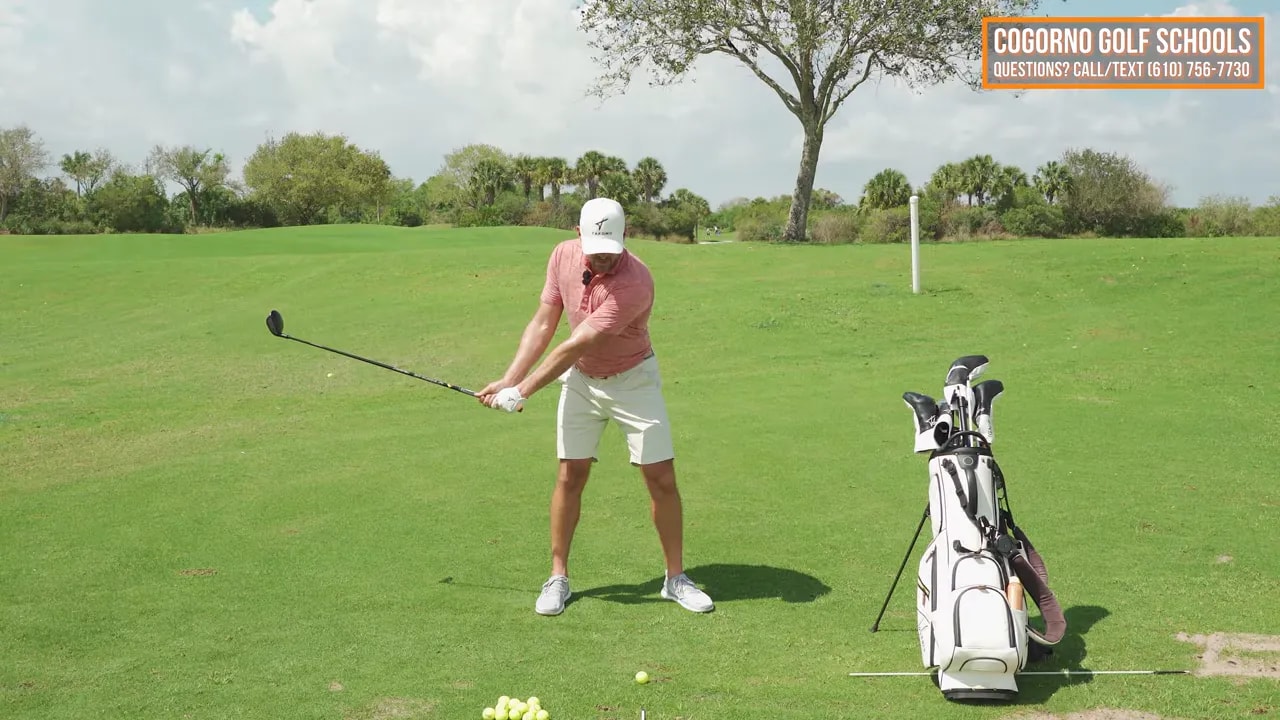
Set it about one club-length in front of your setup position. Then make a slow half swing and rehearse moving the clubhead out so it reaches the object.
The purpose of the drill is not to hit a ball. It is to train the sensation of the clubhead moving outward through arm extension.
Important checkpoints in the bag drill
- Your arms extend to move the clubhead outward
- Your head stays relatively back instead of lunging toward the target
- Your hips move forward over the lead side
This separation matters. The clubhead goes away from you to fix tops and thins. The hips go forward to fix fat shots. Those are related, but they are not the same motion.
Step 9: Add simple ball-flight fixes once contact improves
Once you start striking your fairway woods solidly, direction becomes the next priority. The same base move still applies: arms extended, clubhead away, hips and weight forward. From there, you can make small through-swing adjustments based on your typical ball flight.
If you fade or slice your fairway wood
Add a little face closure through impact and into the follow-through. A useful feel is that the toe of the club moves slightly in front of the heel. That helps reduce an open clubface and soften the rightward curve.
If you hook your fairway wood
Use the opposite feel. Keep the same extension and weight shift, but feel as if you hold the face a touch more open through the follow-through. In feel terms, the toe stays a bit more behind the heel.
If you pull the ball straight left
The path is likely moving too far left through impact. Keep extending, but feel like the clubhead exits a little more to the right through the strike zone.
If you push the ball straight right
The path is likely traveling too far right. Keep the same extension and weight shift, but feel the arms, hands, and club moving a bit more left through the ball.
These are not separate swing overhauls. They are small adjustments built on top of the same contact pattern.
Step 10: Use one simple swing thought on the course
When you are actually playing, too many mechanical thoughts can create tension. That is why the best on-course swing thought is usually the simplest one.
For fairway woods off the ground, a strong option is this:
Focus on the area just past the ball. Feel the clubhead extend out there while your belt buckle moves to the lead side.
That cue helps you avoid two common mistakes at once:
- trying to help the ball up with your hands
- hanging back and bottoming out too early
It also matches what good players do naturally. They strike the ball first, then lightly interact with the turf, all while maintaining width and forward pressure.
Step 11: Create a practical range routine for hitting fairway woods off the ground
If you want this move to stick, practice it in a repeatable order.
Sample practice plan
- 5 slow rehearsals with no ball
Hip-high backswing, then extend the arms and move the belt buckle over the lead ankle. - 5 half-swings brushing the ground
Focus on clipping the turf just after where the ball would be. - 5 half-swings with a ball
Maintain the same contact feel. - 5 longer swings to lead-arm parallel
Only add length if strike quality stays solid. - 5 full swings
Use one clear thought: arms away, weight forward.
If contact starts to slip, go back down a stage. That is often the fastest way to recover your timing.
FAQ: Hitting fairway woods off the ground
Should you hit down on a fairway wood off the turf?
Yes, but only slightly. A fairway wood is usually struck with a small downward angle of attack, about 1 to 2 degrees down. It is not as steep as an iron, and it is not hit upward like a driver.
Why do I keep topping my 3-wood?
The most common reason is that your arms and wrists stay too bent through impact. That pulls the clubhead upward and closer to your body. More extension through the ball usually helps.
Why do I hit fat shots with my fairway wood?
Fat shots often happen when your hips and weight stay back on the trail side. Moving your belt buckle more over your lead ankle through impact helps shift the low point forward.
Where should the ball be positioned for a 3-wood off the ground?
A good starting point is slightly forward in your stance, roughly under your shirt logo. That gives you enough room to strike the ball with a shallow but slightly descending blow.
Should a fairway wood take a divot?
Usually just a very small one, or at least a light brush of the turf, and it should happen just after the ball. A deep divot is not the goal, but no turf contact at all can be a sign of thin strikes.
What is the best drill for learning how to hit fairway woods off the ground?
A half-swing drill works very well. Start from hip high, then swing through with your arms extending away from you while your hips move forward. The bag drill is also useful for learning the feeling of full extension.
Step 12: Keep the move simple and repeatable
If you remember only one thing, remember this: solid fairway woods off the ground come from extension and forward pressure.
When your arms extend and the clubhead reaches away from you, you stop lifting the strike and reduce tops and thins. When your hips and weight move forward, you stop bottoming out early and reduce fat shots.
That is the foundation for learning how to hit fairway woods off the ground with confidence.
Start small. Clip the turf. Extend through the strike. Move pressure to the lead side. Then build up to a full swing.
Do that consistently, and your fairway wood can become a scoring club instead of a problem club.
0 Comments