
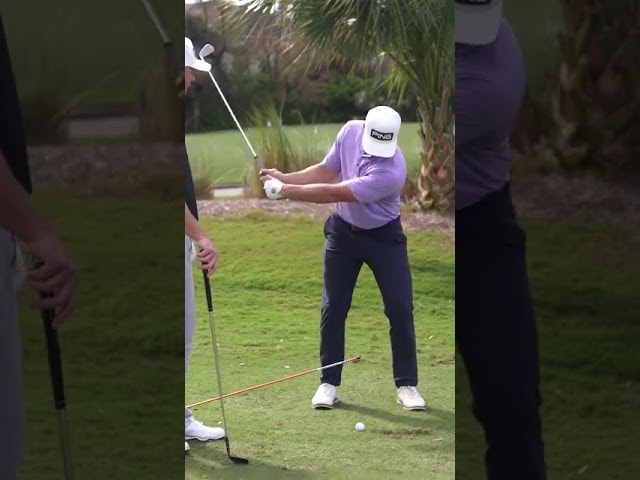

If your golf shots tend to slice, start weak, or feel powerless, your grip and setup may be creating problems before the swing even begins. A few common grip red flags can push your body out of position, point your forearms and shoulders left, and make solid contact much harder than it should be.
This guide explains the key golf grip red flags to look for, why they matter, and how to build a stronger, more functional address position. If you want straighter shots, better contact, and more clubhead speed in your golf swing, these checkpoints are worth fixing first.
Table of Contents
- Step 1: Understand why golf grip red flags matter
- Step 2: Check for a weak lead-hand golf grip
- Step 3: Make sure your trail hand is not folding too far on top
- Step 4: Look at your trail elbow height
- Step 5: Check whether your forearms and shoulders are aimed left
- Step 6: Fix your spine tilt so you are not leaning forward
- Step 7: Use a simple golf setup checklist before every shot
- Step 8: Build a stronger, more functional golf grip
- Step 9: Know the ball-flight patterns these golf grip red flags create
- Step 10: Avoid these common golf grip misconceptions
- Step 11: Use these practical feel cues during golf practice
- Step 12: Know when to recheck your golf grip
- FAQ
- Final takeaway on golf grip red flags
Step 1: Understand why golf grip red flags matter
Your grip does more than control the clubface. In golf, it also affects how your arms hang, where your elbows point, how your shoulders align, and even whether your spine tilts correctly at address.
When the grip is off, the rest of your setup often compensates. That can lead to:
- Slices
- Pulls
- Weak shots
- Loss of clubhead speed
- Poor contact
Many players try to fix these ball-flight issues with swing thoughts, but the real problem can begin in the hands. In golf, a poor setup often forces a poor swing.
Step 2: Check for a weak lead-hand golf grip
One of the biggest golf grip red flags is a grip that is too weak. For a right-handed player, this usually means the lead hand is rotated too far toward the target side on the club. The result is often a face that wants to stay open through impact.
An open face is one of the classic causes of a slice in golf. Even if your path improves, a weak grip can still leave the ball starting left and curving right, or starting straight and peeling offline.
Signs your lead hand may be too weak:
- Your shots curve right too often
- The strike feels glancing instead of solid
- You struggle to square the clubface without flipping your hands
- Your setup feels tense or disconnected
A stronger lead hand often helps put the club in a position where the face can return more naturally to square. In golf, that can make the swing feel simpler and more athletic.
Step 3: Make sure your trail hand is not folding too far on top
Another common golf grip problem happens when the trail hand sits too much on top of the club. This can change how the forearms line up and push the trail elbow into a poor position.
When the trail hand folds too far over the top:
- The arms can become steep and disconnected
- The shoulders and forearms may aim left
- The club can feel harder to deliver from the inside
- You may feel crowded and restricted at address
For many golf players, this creates a chain reaction. Instead of setting up in a balanced, neutral way, the upper body gets twisted into a position that encourages an out-to-in swing path.
If you fight a slice, check the trail hand carefully. A trail hand that is too far on top can quietly sabotage your golf swing before you even take the club back.
Step 4: Look at your trail elbow height
Your grip and your elbow position work together. A major red flag in golf is a trail elbow that sits too high at address. This often happens when the trail hand is placed poorly on the club.
If the trail elbow gets too high:
- Your forearms can point too far left
- Your shoulders can open relative to the target
- Your backswing may become more upright and steep
- Your downswing may cut across the ball
This is one reason some players feel like they have no room to swing. Their body is already organized in a way that makes the club want to move across the target line.
In golf, a better trail elbow position helps the arms sit more naturally and supports a more efficient path into impact.
Step 5: Check whether your forearms and shoulders are aimed left
A subtle but important golf grip red flag is when the grip causes the forearms and shoulders to align too far left. This often goes unnoticed because the player may think only the feet matter for alignment.
But in golf, your upper-body alignments strongly influence how you swing the club. If your shoulders and forearms are already set left at address, you may instinctively swing left as well.
That can lead to:
- Pulled shots
- Slices
- Weak, glancing contact
- A feeling that you must reroute the club mid-swing
A helpful checkpoint is to notice whether your arms look relaxed and matched to your target line. If your grip forces your forearms into an awkward angle, your shoulders may follow.
Good golf setup positions work together. Grip, elbows, forearms, and shoulders should support one another, not fight each other.
Step 6: Fix your spine tilt so you are not leaning forward
Grip problems in golf often show up in posture too. One major red flag is leaning too far forward at address instead of setting your spine slightly away from the target.
For many players, a poor grip creates a setup that pulls the upper body over the ball. That makes it harder to stay behind the shot and deliver the club properly.
A better address position includes some tilt away from the target. Tour players are commonly described as having roughly 19 to 25 degrees of spine tilt away from the target at setup. That range helps support a more powerful strike and a better bottom of the arc.
When you lean forward instead:
- You may get too far ahead of the ball
- The club can cut across impact
- You can lose speed
- The shot may start weakly with poor compression
In golf, posture is not just about looking athletic. It affects your ability to return the club to the ball with speed and control.
Step 7: Use a simple golf setup checklist before every shot
If you want to eliminate grip red flags in golf, use a short pre-shot setup check. This keeps the basics from drifting over time.
Golf grip and setup checklist
- Is your lead hand too weak on the club?
- Is your trail hand sitting too far on top?
- Is your trail elbow riding too high?
- Do your forearms and shoulders look aimed left?
- Are you leaning forward instead of tilting slightly away from the target?
- Do you feel balanced and able to swing freely?
If two or three of these are off, your golf swing may be trying to recover from a bad address position rather than making a clean motion through the ball.
Step 8: Build a stronger, more functional golf grip
The goal is not to create an extreme golf grip. It is to create one that supports better clubface control and a more natural body position.
Here is a practical way to think about it:
- Start with the lead hand. Avoid a position that is too weak and overly target-side.
- Add the trail hand carefully. Do not let it fold too much on top of the grip.
- Let the trail elbow settle naturally. It should not be excessively high.
- Check your upper-body alignment. Your forearms and shoulders should not be preset left.
- Add proper spine tilt. Feel slightly behind the ball rather than stacked over it.
In golf, a stronger grip often helps more than just the clubface. It can improve your entire starting structure.
Step 9: Know the ball-flight patterns these golf grip red flags create
Understanding cause and effect can help you diagnose your own golf swing faster.
Weak grip plus poor upper-body alignment
This often leads to slices, weak fades, and shots that feel powerless.
Trail hand too far on top plus high trail elbow
This can encourage a steep move and a leftward swing direction, which may produce pulls and pull-slices.
Forward lean at address
This can make you feel stuck over the ball, reduce your ability to stay behind it, and cost you speed and solid contact.
If you see these patterns regularly in your golf game, it makes sense to inspect your grip and address before changing your full swing mechanics.
Step 10: Avoid these common golf grip misconceptions
There are a few myths that confuse many golf players.
A stronger grip always means a hook
Not necessarily. A grip that is too weak can leave the face open. Moving toward a stronger position may simply bring the clubface back to a more square and playable delivery.
The grip only affects the hands
In golf, grip changes can affect elbow position, shoulder alignment, and posture. It is a whole-setup issue, not just a hand placement issue.
If your feet are aligned correctly, your setup is fine
Your feet are only one part of alignment. Shoulders and forearms matter a great deal, especially if your grip is creating compensations.
Posture problems are separate from grip problems
Often they are connected. A faulty grip can contribute to a setup where you lean forward and lose proper tilt.
Step 11: Use these practical feel cues during golf practice
If you are trying to change your golf grip, use simple feels instead of too many technical thoughts.
- Feel the hands working together, not fighting each other
- Feel the trail elbow lower and softer, not lifted high
- Feel your chest and forearms more neutral, not aimed left
- Feel your upper body slightly behind the ball, not leaning toward the target
- Feel free to swing past the ball, instead of cutting across it
These feels can help your golf setup become more athletic and repeatable.
Step 12: Know when to recheck your golf grip
Grip issues in golf tend to return gradually. Recheck your setup when:
- Your slice comes back
- Your misses start left and curve farther left or right unpredictably
- Contact starts feeling thin or glancing
- Your swing feels steep or cramped
- You lose distance without a clear reason
Small grip drifts can create big ball-flight changes. That is why strong players revisit setup basics often.
FAQ
What is the most common golf grip red flag for slicers?
A grip that is too weak is one of the most common red flags in golf. It often leaves the clubface too open through impact, which can promote a slice and weak contact.
Can a bad golf grip affect posture?
Yes. In golf, a poor grip can influence elbow position, shoulder alignment, and spine tilt. Some players end up leaning too far forward because their grip puts the upper body in a compromised position.
Why does my trail elbow get too high at address?
This often happens when the trail hand sits too far on top of the club. In golf, that hand position can lift the trail elbow and push the forearms and shoulders into a leftward alignment.
How much spine tilt should you have in golf setup?
A useful reference in golf is about 19 to 25 degrees of spine tilt away from the target at address. That helps you stay behind the ball and supports better speed and strike quality.
Can grip red flags cause both pulls and slices in golf?
Yes. If your grip and setup point your upper body left while the face remains open, your golf shots can start left and curve right. That is a common pull-slice pattern.
Should I change my golf swing or my grip first?
If you have clear grip red flags, start there. In golf, a better grip can improve your setup and make swing changes easier and more effective.
Final takeaway on golf grip red flags
If your golf game is full of slices, pulls, weak shots, or lost speed, inspect your grip before overhauling your swing. A lead hand that is too weak, a trail hand that folds on top, a high trail elbow, leftward upper-body alignment, and forward-leaning posture can all work together to create poor ball flight.
The fix is often simpler than players expect. Build a stronger, more supportive golf grip, let your arms and shoulders settle into a better alignment, and add the right amount of spine tilt away from the target. When your setup improves, your swing usually has a much better chance to improve too.
0 Comments