
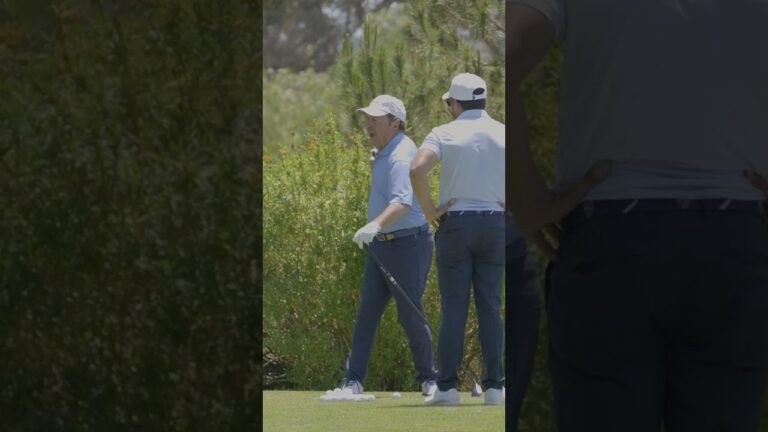

If your backswing feels tight, steep, or more like a lift than a turn, one simple cue can clean up the motion fast: get your right shoulder back behind you. For many golfers, this thought creates a more natural coil than trying to force the left shoulder under the chin.
This golf swing shoulder turn cue can help you rotate better, stay more centered, and improve how you move off your trail side into the downswing. If you have been fighting a chopped backswing, poor turn, or trouble getting through the ball, this is a useful place to start.
Table of Contents
- Step 1: Understand what “get your right shoulder back behind you” means in the golf swing
- Step 2: Know why this golf swing shoulder turn cue works so well
- Step 3: Check whether your current backswing is lift or turn
- Step 4: Use the “right shoulder back behind you” feel in your setup rehearsals
- Step 5: Connect the right shoulder turn to getting off the right side
- Step 6: Compare this cue to “left shoulder under chin”
- Step 7: Practice the golf swing shoulder turn cue with three simple drills
- Step 8: Avoid the most common mistakes with the right shoulder turn
- Step 9: Use this cue for the right type of golfer
- Step 10: Build the cue into your range routine
- Step 11: Know what a better result should feel like
- Step 12: Keep the thought simple on the course
- Takeaway: a simple shoulder turn cue can improve your whole motion
- FAQ
Step 1: Understand what “get your right shoulder back behind you” means in the golf swing
The phrase get your right shoulder back behind you is a backswing feel for right handed golfers. Instead of thinking about lifting the arms or forcing the upper body into a position, you focus on turning the trail shoulder around your body.
That matters because a lot of golfers confuse turning with raising the arms. When that happens, the backswing gets narrow, the chest does not rotate enough, and the club often works too steeply. The move can look like a backswing, but it does not create a true coil.
With the right shoulder moving back behind you, your turn becomes more rotational and less vertical. In practical terms, that often helps you:
Make a fuller shoulder turn
Avoid simply lifting the club
Load into the trail side more effectively
Set up a better move through the ball
For left handed golfers, the same idea applies to the left shoulder moving back behind you.
Step 2: Know why this golf swing shoulder turn cue works so well
The best swing thoughts are often the simplest. Many golfers get stuck when they try to control several body parts at once. A cue like “left shoulder under chin” can work for some players, but for others it becomes too positional.
That is where get your right shoulder back behind you can be more effective. It gives you a directional feel rather than a forced pose.
This golf swing shoulder turn cue tends to help because it encourages:
Rotation instead of lift, which improves the backswing shape
A clearer trail side load, which can help you move off the right side later
A more athletic motion, because you are turning around your spine instead of reaching upward
For golfers who say, “I know I should turn, but I keep lifting,” this cue gives the body a much more usable task.
Step 3: Check whether your current backswing is lift or turn
Before you change anything, make sure you know what problem you are solving. The cue is especially useful if you have one or more of these issues:
Your backswing feels mostly armsy
Your shoulders do not seem to rotate much
Your right side never feels loaded
You struggle to get through impact
Your takeaway and backswing feel disconnected
A simple self check is to make a slow practice backswing without a ball. Ask yourself whether your chest actually turns or whether your arms just rise. If the club goes up but your torso barely rotates, you are likely lifting more than turning.
Another clue is what happens next. When you do not turn well going back, it often becomes harder to shift and rotate through on the way down. That is why backswing structure and through swing motion are so closely linked.
Step 4: Use the “right shoulder back behind you” feel in your setup rehearsals
Do not wait until full speed to test the move. Start with rehearsals.
At address, stand in your normal golf posture and cross your arms over your chest, or hold a club across your shoulders. Then make a slow backswing and focus only on one thing: move your right shoulder back behind you.
As you do this, notice a few checkpoints:
Your chest turns with the shoulder
Your trail side accepts pressure instead of swaying wildly
Your arms do not need to lift early to create backswing length
Your head stays relatively steady while the torso rotates
The goal is not to shove the shoulder as far back as possible. The goal is to create a functional turn that feels deeper and more around you.
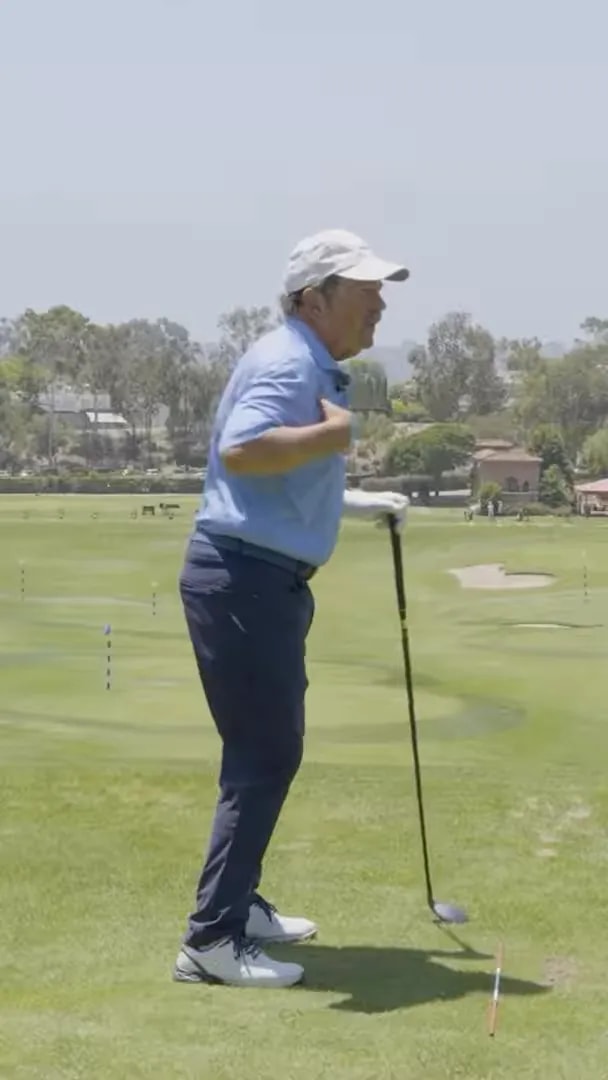
Step 5: Connect the right shoulder turn to getting off the right side
One of the most useful parts of this cue is what it can improve later in the swing. If you make a better turn going back, you usually have a better chance to move through the shot going forward.
Golfers often say they have trouble getting off the right side. That usually means they hang back, stall rotation, or never transfer pressure well into the lead side. In many cases, the downswing issue starts with the backswing.
When your right shoulder gets back behind you properly, you are more likely to:
Create a real coil into the trail side
Avoid getting stuck in a lifted, narrow position
Transition more smoothly toward the target
Rotate through instead of hanging back
That does not mean the cue fixes every transition problem on its own. But it often removes an early backswing error that makes the rest of the swing harder.
Step 6: Compare this cue to “left shoulder under chin”
Many golfers have heard the instruction to get the left shoulder under the chin. That can be helpful, but it does not fit everyone.
For some players, that thought creates too much effort in the wrong direction. They start trying to force the left shoulder downward or inward without actually turning the torso well. The result can be a cramped, artificial backswing.
By contrast, get your right shoulder back behind you often feels easier because it is more about turning than posing.
Here is a simple way to think about the difference:
Left shoulder under chin can feel like chasing a position
Right shoulder back behind you can feel like making a motion
If you have tried traditional shoulder turn thoughts and still feel stuck, this may be the cleaner trigger your swing needs.
Step 7: Practice the golf swing shoulder turn cue with three simple drills
Drill 1: Club across the shoulders drill
Place a club across your shoulders and get into golf posture. Turn slowly and feel the right shoulder work back behind you. Make 10 slow reps.
Purpose: teaches torso rotation without relying on the hands.
Drill 2: Pause at the top drill
Make a half speed backswing, pause, and ask yourself whether your right shoulder turned behind you or whether your arms just lifted. Then reset and repeat.
Purpose: improves awareness of your actual backswing pattern.
Drill 3: Step through swing drill
Hit short shots and feel the right shoulder turn back in the backswing, then step or move pressure into your lead side as you swing through.
Purpose: links the backswing turn to getting off the right side.
You do not need to do these at full speed. In fact, this move usually improves faster when you rehearse it slowly and clearly first.
Step 8: Avoid the most common mistakes with the right shoulder turn
Like any golf cue, this one can be overdone or misunderstood. Keep these mistakes in mind.
Mistake 1: Forcing the shoulder instead of turning the torso
The shoulder should move because your upper body turns, not because you yank it independently. If the move feels strained, you are likely overdoing it.
Mistake 2: Swearing by one feel without checking the result
A feel is only useful if it creates better motion. If your right shoulder feels deeper but you start swaying off the ball, the cue needs refinement.
Mistake 3: Keeping all the pressure stuck on the trail side
The backswing should load the trail side, but you still need to move through the shot. A better turn back should help the transition, not trap you on the right side.
Mistake 4: Turning level with no golf posture
You still need to stay in posture. This is a golf turn, not a standing spin. Keep your address angles while the shoulder works back.
Mistake 5: Expecting instant full speed results
If your old habit is lifting, it may take several sessions before the new turn feels natural. Build it with slow reps, then blend it into normal swings.
Step 9: Use this cue for the right type of golfer
This move is especially helpful if you are a golfer who:
Feels too armsy in the backswing
Struggles to make a proper shoulder turn in golf
Has trouble getting through the ball
Needs a simpler backswing thought
Does better with motion based cues than position based cues
It may be less helpful if your turn is already deep and your real issue is elsewhere, such as grip, face control, or sequencing. In that case, adding more shoulder turn may not solve the problem.
The key is matching the cue to the pattern. If your main issue is lifting instead of turning, get your right shoulder back behind you is a strong fit.
Step 10: Build the cue into your range routine
To make this golf swing shoulder turn cue stick, use a simple progression on the range.
Make 5 rehearsal turns with no ball, focusing on the right shoulder moving behind you.
Hit 5 half swings with the same thought.
Hit 5 normal swings and notice whether the backswing feels less lifted.
Check your finish to see whether you are getting through the shot better.
If the motion is improving, keep the thought. If it starts feeling too mechanical, use the rehearsal to train the body and then swing to the target with less internal chatter.
A good range cue is one you can feel quickly and repeat reliably. This one often checks both boxes.
Step 11: Know what a better result should feel like
When this cue is working, you will usually notice a few positive changes:
Your backswing feels more connected
Your trail shoulder works around instead of up
Your upper body feels more coiled
Your transition into the downswing feels less stuck
Your through swing feels freer and more complete
You may also find that the move is easier to repeat under pressure because it is simpler than chasing a detailed checklist of positions.
Step 12: Keep the thought simple on the course
On the course, avoid turning this into a technical essay in your head. Your only job is to choose a clear feel and trust it.
If this is your main swing key, your pre shot reminder can be as short as:
Right shoulder back
Turn, do not lift
Back, then through
The simpler the thought, the better chance you have of making an athletic swing.
Takeaway: a simple shoulder turn cue can improve your whole motion
If your golf swing tends to lift instead of turn, the cue get your right shoulder back behind you can be a smart fix. It encourages a more natural shoulder turn, helps you load the trail side, and can make it easier to get through the shot.
It is not about forcing a pose. It is about creating a better backswing motion that supports everything that comes next. Start with slow rehearsals, test it in short swings, and keep the feel only if it improves your turn without adding tension.
FAQ
Is “get your right shoulder back behind you” good for all golfers?
No. It is most useful if your backswing problem is lifting instead of turning. If your shoulder turn is already strong, your issue may come from another part of the swing.
Does this golf swing shoulder turn cue help with getting off the right side?
It can help indirectly. A better backswing turn often makes it easier to move through the shot. Many golfers who hang back do not create a good enough turn in the first place.
Is this better than thinking about the left shoulder under the chin?
For some golfers, yes. The right shoulder cue often feels simpler and more motion based. It can be easier to repeat because it encourages turning rather than trying to force a position.
What should I feel in the backswing with this move?
You should feel your trail shoulder working around your body, your chest turning, and your trail side loading without the club being lifted by the arms alone.
Can I use this cue during full swings right away?
You can, but it usually works better if you start with slow practice swings and rehearsals first. Build the motion at low speed, then blend it into full swings.
0 Comments