
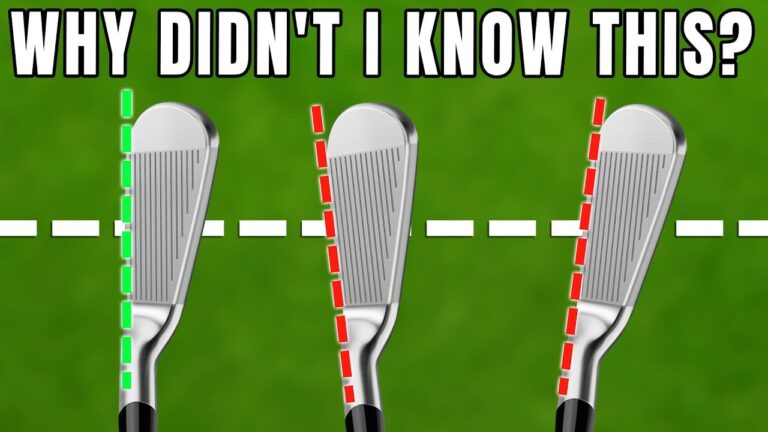

Reliable golf alignment can make a dramatic difference to your strike, start line, and confidence over the ball. You can make a solid swing and still hit a poor shot if your clubface, feet, hips, shoulders, and eyes are not coordinated with the intended target line.
The difficult part is that poor golf alignment often feels correct. You may look toward the flag, feel as though you are aimed perfectly, and only discover the error after the ball starts well left or right. A better routine gives you a way to build alignment consistently, then check it before you commit to the shot.
Table of Contents
- Step 1: Walk Into the Golf Ball From an Open Position
- Step 2: Reset Instead of Shuffling Your Feet
- Step 3: Check Your Whole Body, Not Only Your Toes
- Step 4: Use an Intermediate Target for Better Golf Alignment
- Step 5: Add a Head Swivel to Confirm Your Golf Alignment
- Step 6: Turn the Process Into a Repeatable Pre-Shot Routine
- Frequently Asked Questions About Golf Alignment
Step 1: Walk Into the Golf Ball From an Open Position
A common golf alignment fault begins before you even set the club behind the ball. Many golfers approach from the side with their body already closed to the target. For a right handed golfer, this commonly means the body line aims too far right.
When you begin closed, you are forced to look across your body toward the target. That setup can encourage an over the top swing as your body instinctively tries to redirect the club toward where you want the ball to go.
A more dependable approach is to move from open to square. Start with your body slightly open to the target line, place the clubface behind the ball, then build your stance around it. Remaining open while setting the clubface lets you see the intended line more clearly rather than becoming trapped in a closed posture.
Once the clubface is aimed, allow your toes, knees, hips, forearms, and shoulders to settle into a square, parallel relationship with the target line. The goal is not to point your body directly at the target. Your body lines should run parallel left of the target line for a right handed golfer.
- Stand behind the ball and identify the target line.
- Approach with your body slightly open.
- Set the clubface first.
- Build your body alignment around the clubface.
- Settle into a balanced, comfortable golf posture.
Step 2: Reset Instead of Shuffling Your Feet
It is tempting to shuffle your feet after noticing that your aim feels wrong. This may appear to fix your golf alignment, but it can quietly damage ball position and posture.
For example, you may begin with the ball correctly positioned just forward of center for an iron shot. If you then shuffle your feet to alter the aim, the ball can end up too far back in your stance. Your shoulders may become closed, the club path can change, and contact becomes less predictable.
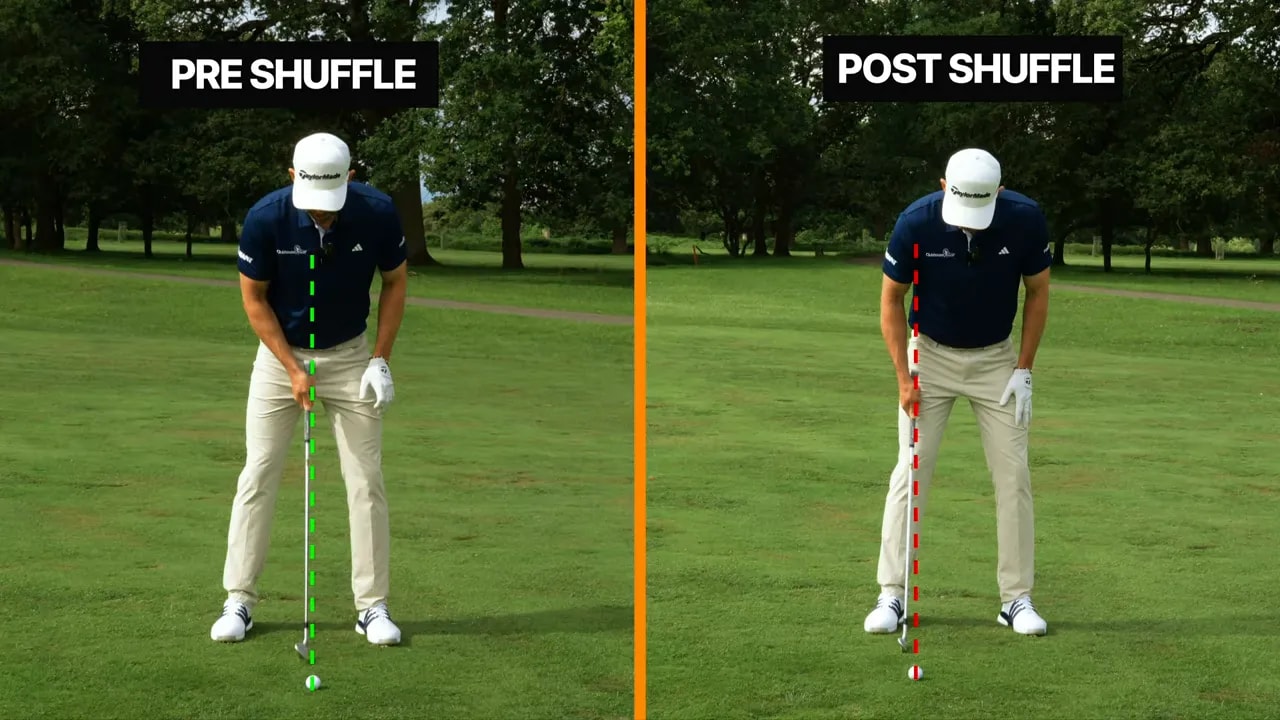
That is why the solution is simple: do not shuffle into a correction. If the setup does not look or feel right, step away completely. Start the routine again from behind the ball and recreate the intended ball position, clubface aim, and body alignment in the right order.
This reset may take a few seconds longer, but it prevents you from trying to save one mistake by adding another. Consistent golf routines are usually more valuable than rushed corrections.
Step 3: Check Your Whole Body, Not Only Your Toes
Placing a club along your toe line can be useful, but it does not tell the whole story. Your feet may be aimed correctly while your shoulders are aimed significantly left or right. Since your upper body has a major influence on how you swing the club, shoulder alignment deserves just as much attention as foot alignment.
This mismatch often happens when you reach for the club incorrectly, particularly when the trail hand reaches too far across. That movement can pull the shoulders out of position even though the lower body still appears well aligned.
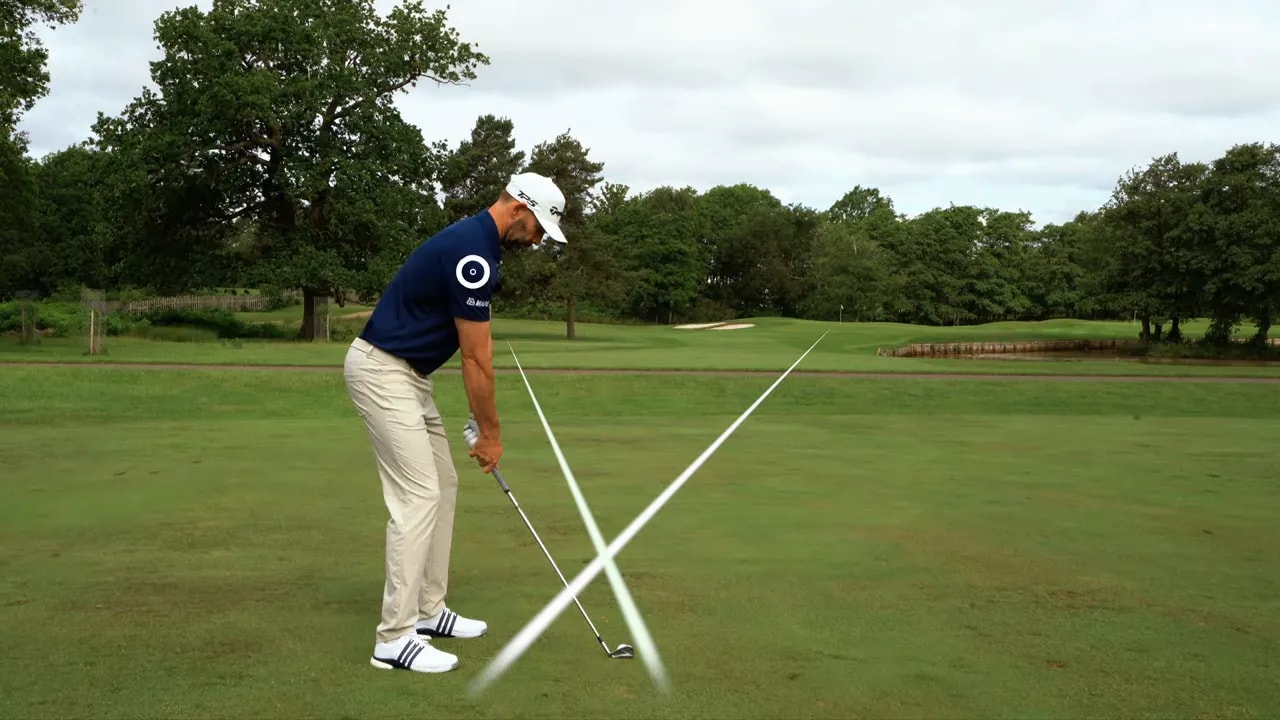
Use a full-body golf alignment checklist before each shot:
- Toes: parallel to the target line.
- Knees: following the same general line as the feet.
- Hips: neither noticeably open nor closed compared with the stance.
- Forearms: naturally matching your setup line.
- Shoulders: parallel to the lower-body alignment rather than pulled left or right.
If your shoulders tend to drift left, make a small awareness movement before starting the swing. The aim is not to become rigid. It is to ensure that your upper and lower body agree on the same intended golf line.
Step 4: Use an Intermediate Target for Better Golf Alignment
A distant target is difficult to aim at precisely. A flag may be 160 yards away, while a tee-shot target can be hundreds of yards away. Trying to aim your clubface directly at that distant point makes the process unnecessarily difficult.
Instead, stand directly behind the ball and picture a line extending from the ball to the target. Then find a small object on that line within a few feet of the ball. This might be a discolored blade of grass, a leaf, a small patch of turf, or another visible mark.
This nearby reference is your intermediate target. It turns a broad, distant target into a precise point that is easy to address.
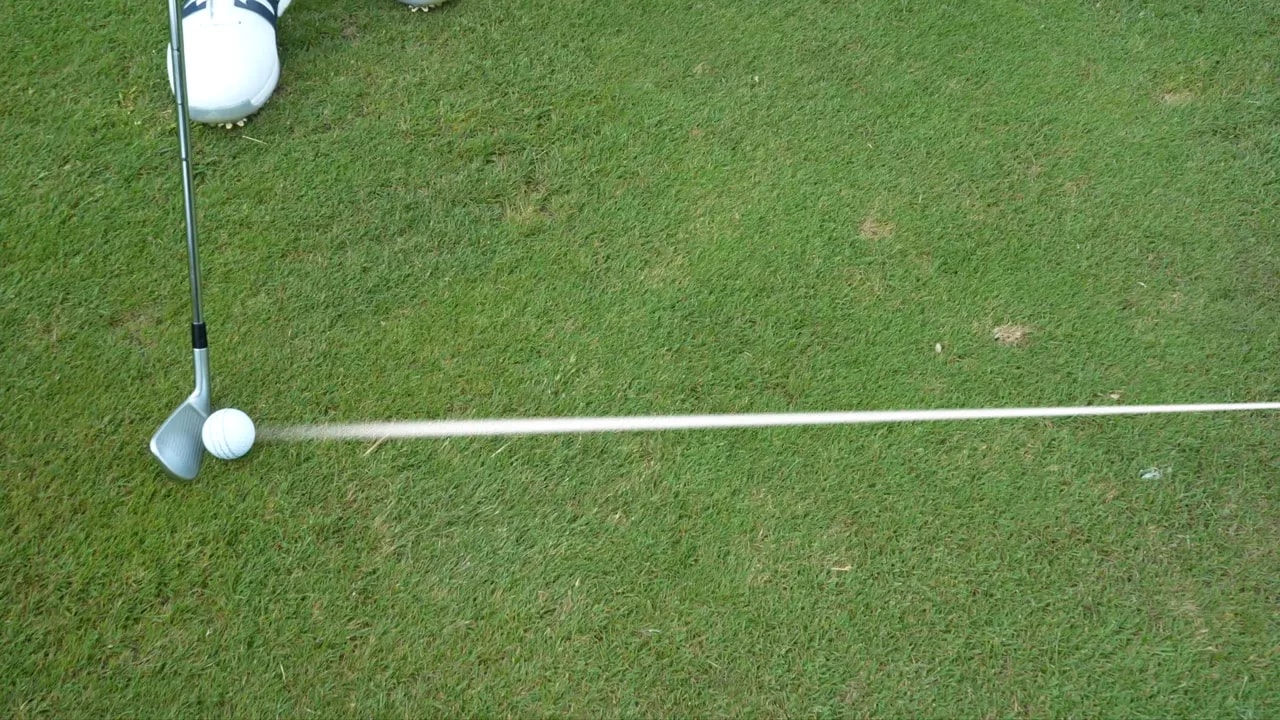
How to build your setup around an intermediate target
- Stand behind the ball and select the final target.
- Visualize the ball to target line on the ground.
- Choose a small mark on that line a short distance in front of the ball.
- Set the leading edge of the clubface square to that nearby target.
- Build your stance around the clubface while staying aware of your parallel body line.
- Confirm the target once more before swinging.
Strong golf players often make subtle head movements between the clubface and an intermediate target. This is a practical way to verify that the clubface remains aimed at the correct point before the swing begins.
Step 5: Add a Head Swivel to Confirm Your Golf Alignment
The most useful final check is a small head swivel at address. It does not automatically fix poor golf alignment. Instead, it reveals when your alignment is wrong early enough for you to reset.
At address, your eyes are generally parallel to your body line. If you simply lift your head and look toward the target, the flag can appear normal even when your body is aimed well left or right. Your vision alone may not expose the error.
Instead of lifting your head, gently rotate or swivel it along your body line. As your eyes follow that line, notice the first point you see ahead of you. If that point is nowhere near your intended target line, your setup is likely misaligned.
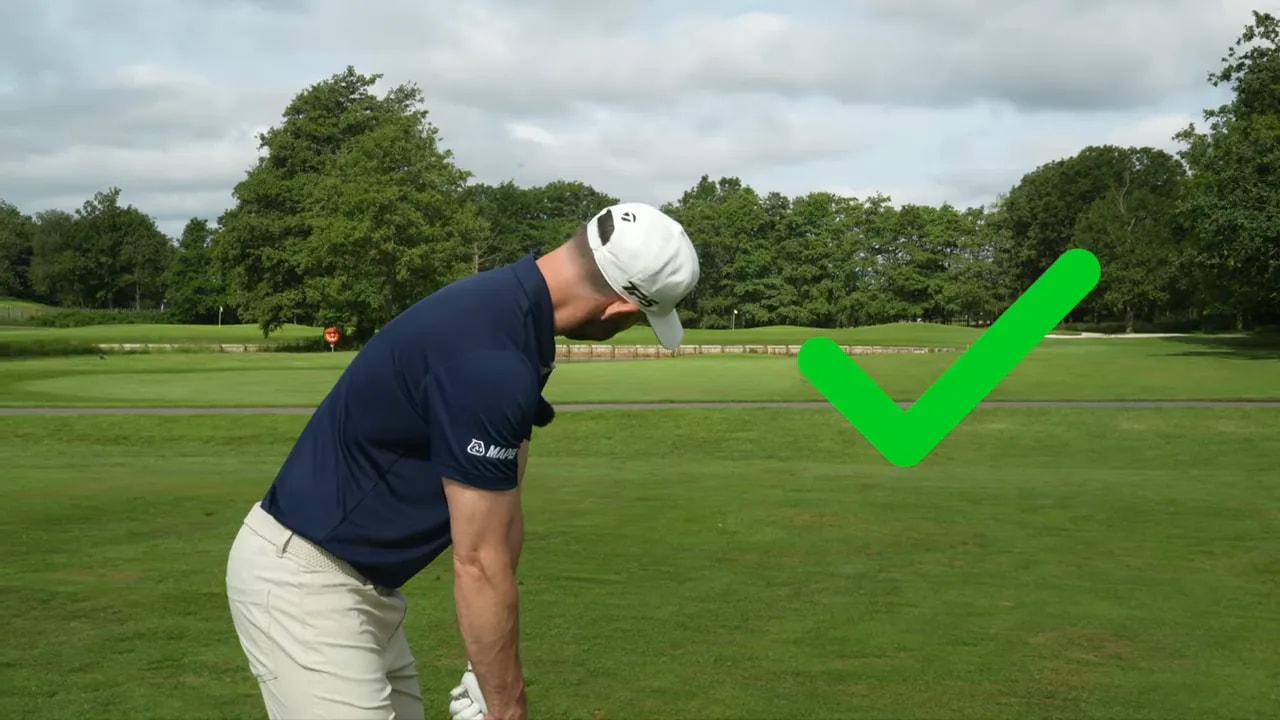
The swivel works as a confirmation tool:
- Set the clubface at your intermediate target.
- Build your stance from open to square.
- Check your feet, hips, and shoulders.
- Swivel your head gently along your body line.
- If the line looks wrong, step back and repeat the routine.
Do not try to manipulate your stance while staying over the ball. A complete reset protects ball position and helps you avoid the shuffle. Over time, this check can help you recognize your personal alignment tendency, whether you tend to aim left, right, open, or closed.
Step 6: Turn the Process Into a Repeatable Pre-Shot Routine
The best golf alignment routine is one you can repeat under pressure. Keep it simple enough to use on the fairway, from the tee, and during any shot where the start line matters.
A practical sequence is:
- Choose the target from behind the ball.
- Picture the ball to target line.
- Select an intermediate target close to the ball.
- Walk in with an open body position.
- Aim the clubface at the intermediate target.
- Build a square, parallel stance around the clubface.
- Check that toes, knees, hips, forearms, and shoulders match.
- Perform the head swivel confirmation.
- Reset fully if anything appears incorrect.
Golf alignment is not about standing perfectly still or chasing mechanical perfection. It is about removing uncertainty before the swing. When you know the clubface and body are set correctly, you can make your normal motion with a clearer intention and a more committed swing.
Frequently Asked Questions About Golf Alignment
Should your feet point directly at the target in golf?
No. For a standard right handed golf setup, your feet should be parallel to the ball to target line, which means they point left of the target. The clubface is the part aimed directly at the intermediate target and final target line.
Why does my golf alignment feel correct when it is not?
Your visual perspective at address can be misleading. Looking up toward the target may make the target appear normal even when your shoulders or feet are aimed offline. An intermediate target and a head swivel provide clearer references.
Should I adjust my feet if I realize my aim is wrong?
It is better to step away and restart the routine. Shuffling your feet can move the ball out of position, alter your shoulder alignment, and create an uncomfortable golf setup.
What is an intermediate target in golf?
An intermediate target is a small object or mark on the ground, usually within a few feet of the ball, that sits on your intended ball to target line. It gives you a precise point for aiming the clubface.
Which part of the body matters most for golf alignment?
Your entire body matters, but do not rely on toe alignment alone. Your shoulders strongly influence the motion of the golf swing, so they should be parallel with the lower body and intended target line.
0 Comments