
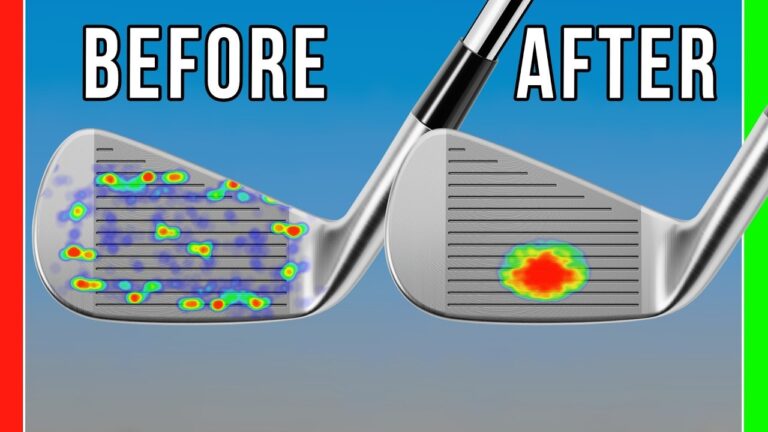

Golf can feel brutally difficult when you cannot find the center of the clubface. You can make a decent swing, feel as if you tried your best, and still get a weak, heavy, thin, or inconsistent strike. For many golfers, that frustration turns into a search for more swing tips, more positions, and more technical thoughts.
This golf lesson offers a smarter path. Instead of chasing endless mechanical changes, the focus is on three practical areas that can improve your golf ball striking fast: setup, pivot, and your awareness of the club’s weight through the swing. The result is a more centered strike, better contact, and shots that feel far more solid.
Table of Contents
- Step 1: Make centered strike your main golf priority
- Step 2: Manage the weight of the golf club earlier in the backswing
- Step 3: Improve your golf pivot so your upper body does not drift forward
- Step 4: Stand farther from the golf ball than you think
- Step 5: Train the golf skill that most players ignore
- Step 6: Use light grip pressure to feel the golf clubhead
- Step 7: Practice the thump-the-mat golf drill
- Step 8: Add the walk-in drill to build golf coordination
- Step 9: Blend the golf feels together into your normal setup
- Step 10: Judge your golf practice by strike quality, not swing aesthetics
- FAQ about this golf ball striking fix
Step 1: Make centered strike your main golf priority
If you are a mid handicap or higher golfer, strike often matters more than perfect shot shape. When you hit the middle of the face more often, several things usually improve at once:
- Trajectory becomes more reliable.
- Distance tends to improve without extra effort.
- Mishits curve less severely.
- Your overall golf game feels easier to manage.
That is an important mindset shift. Many golfers obsess over whether the ball starts slightly left or right, but poor contact is often the bigger problem. In this case, the clubface was not wildly out of control. The real issue was strike quality. Once you understand that, your golf practice becomes much more targeted.
Your first goal is simple: find the center more often. Everything else in this golf lesson supports that goal.

Step 2: Manage the weight of the golf club earlier in the backswing
The first technical fix is about how you organize the club in space. Every golf club has weight and a balance point. If you do not set that weight correctly in the backswing, the clubhead can drift too far outside your hands. When that happens, the club can feel loose, heavy, and difficult to control at the top.
That lack of control often leads to poor golf contact because the club is harder to return consistently to the ball.
The adjustment is to get the weight of the club above your hands sooner in the backswing. When the club is better supported, it feels lighter and easier to sense. That gives you a much better chance of returning the club to the same place at impact.
This is not about making a dramatic or forced movement. It is about improving how the club is carried and balanced during the swing. If you have ever felt as if the club “runs away” from you in the backswing, this is a golf concept worth practicing.
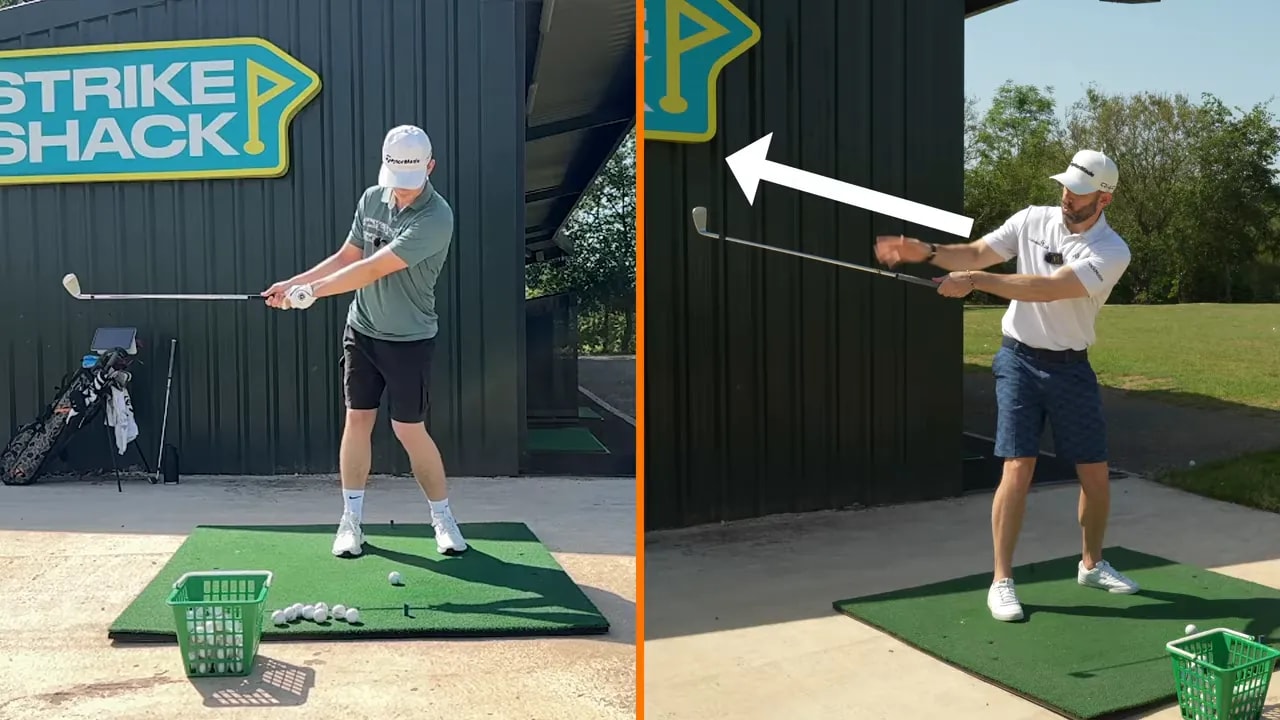
How to rehearse this golf feel
- Hold the club with very light grip pressure.
- Make a short backswing.
- Feel the clubhead move to a position where its weight is supported above your hands.
- Avoid snatching the club away or over controlling it.
If the club feels lighter, that is usually a good sign. In golf, lighter often means better supported, not weaker.
Step 3: Improve your golf pivot so your upper body does not drift forward
The second technical issue is the backswing pivot. A lot of golfers move the lead knee and lead hip too much inward and backward early in the backswing. That movement can push the chain reaction in the wrong direction.
When the lead side works in too aggressively, the upper body often drifts forward toward the golf ball. Some people notice the head moving forward, but the head is only showing the result. The real source is lower down.
In other words, the lower body and upper body start working against each other. That makes solid golf contact much harder.
What the better golf motion looks like
Instead of the lead knee kicking inward as the first move, you want the motion to happen in sequence:
- Your shoulders turn.
- Your hips respond to that turn.
- Your lead knee reacts to the motion above it.
That is a huge distinction. The lead knee is allowed to move in golf, but it should be a reaction, not the trigger.
To help this, a small flare in the lead foot can make the movement easier. Turning the lead foot slightly toward the target can create space for a more functional backswing turn. From there, you can feel a little more resistance in the lead leg, almost as if the knee is less eager to dive inward.
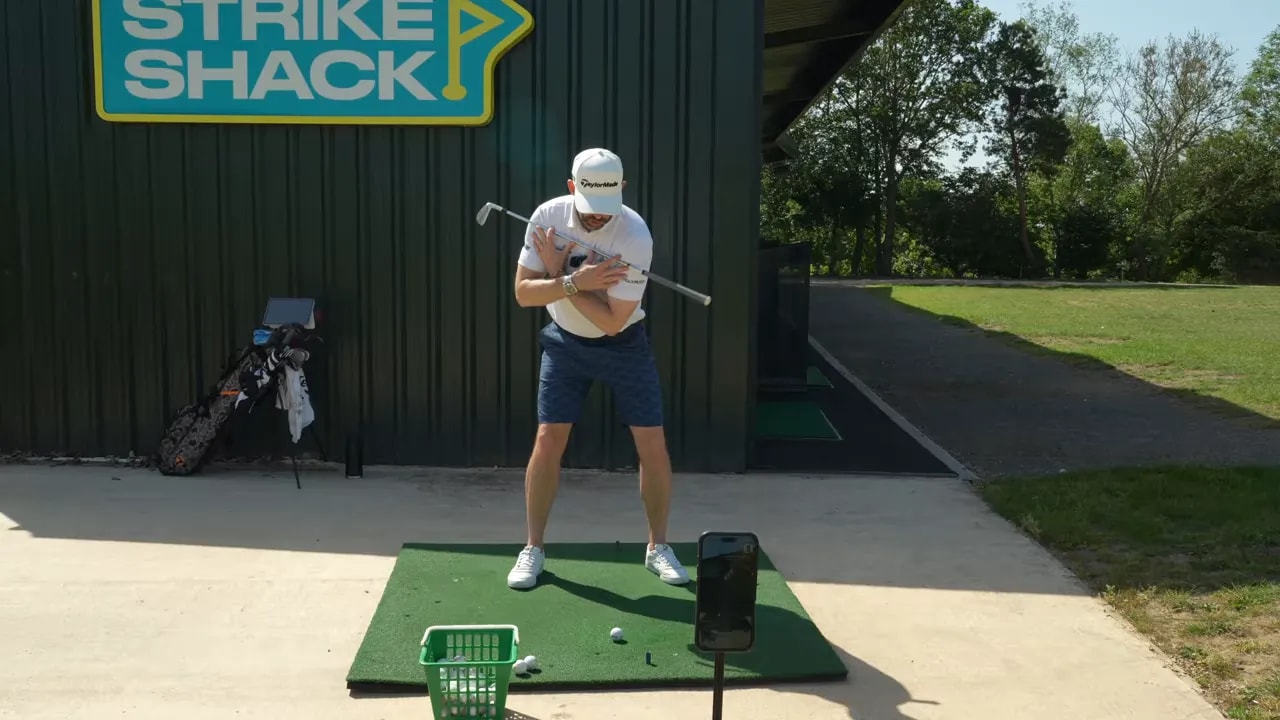
Useful golf checkpoints for your pivot
- Your head should not drift noticeably forward in the backswing.
- Your lead knee should not be the first part that moves aggressively inward.
- Your turn should feel more centered and more resistant.
- Your upper body should stay better organized over the ball.
If this feels harder at first, that is normal. Better golf movement often feels unfamiliar before it feels natural.
Step 4: Stand farther from the golf ball than you think
Another issue was setup distance. Standing too close to the golf ball usually creates two related problems. First, it tends to make you stand too tall. Second, it gives the club less room to swing naturally.
The correction was simple but dramatic: stand farther away.
That new distance felt extreme at first, which is common in golf. Many setup improvements feel exaggerated because your old pattern has become normal. But when you create the right space between you and the ball, the club can move more freely and your body can organize itself better.
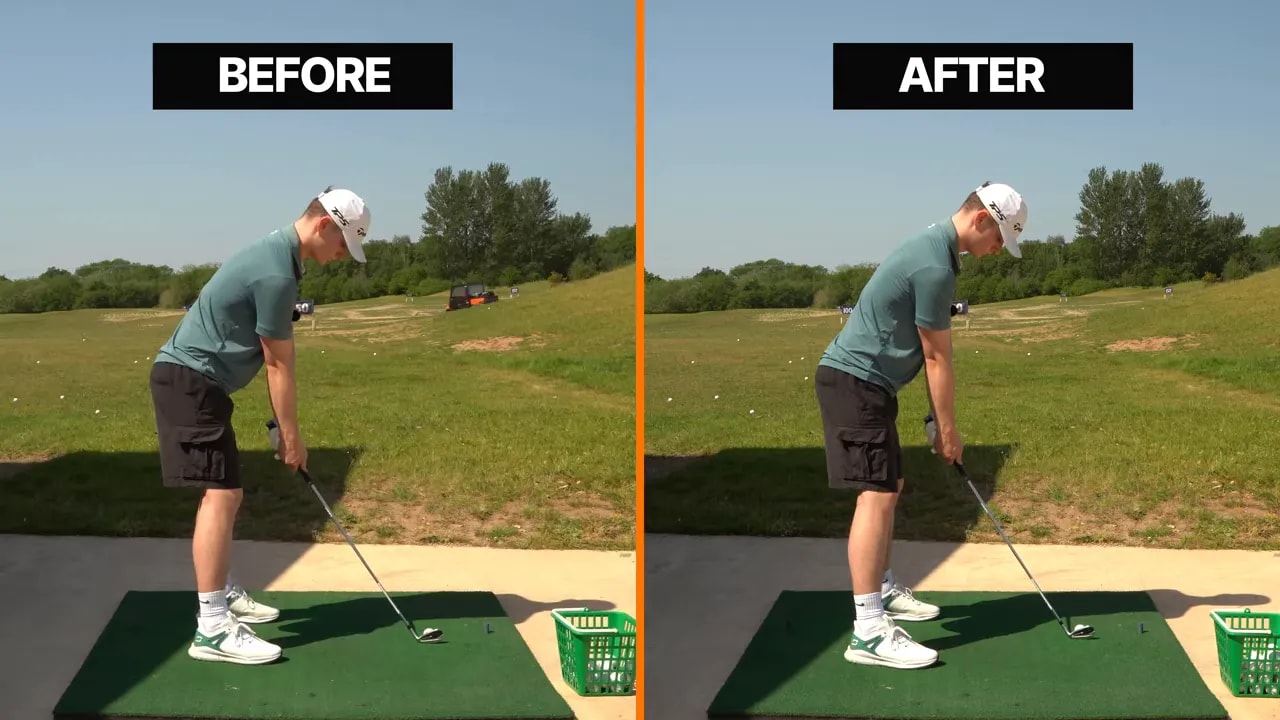
Golf setup signs that you may be too close
- You feel cramped at address.
- Your arms look pinned in close to your body.
- You stand tall instead of athletic.
- You struggle to bottom the club out consistently.
A better golf setup does not fix everything by itself, but it makes every other improvement easier.
Step 5: Train the golf skill that most players ignore
This is the most interesting part of the lesson and the one many golfers have never practiced.
Good golf ball striking is not only about perfect positions. It is also about awareness. Skilled players often have a strong sense of where the club is during the swing and where it will land on the ground. They can feel the weight of the club, match it to the ball, and produce solid contact even when their swings are not textbook perfect.
That is why some golfers with unconventional motions still hit the ball well. They have developed club awareness.
The lesson reframes strike in a very useful way. Instead of only thinking about where the ball meets the face, think about where the club lands. In golf, ground contact and face contact are closely connected, especially with irons.
If you can improve your awareness of where the club is traveling and where it is bottoming out, your golf strike often improves quickly.
Step 6: Use light grip pressure to feel the golf clubhead
A key part of building awareness is reducing tension. When you grip the club too tightly, you lose feel. The club becomes something you try to steer instead of something you can sense.
The drill starts with a very light grip and a short motion. The goal is to feel the weight of the club move above your hands, then let the club land on the mat with a clear, heavy thump.
You are not trying to guide every inch of the swing. You are allowing the club to move while paying close attention to its weight and path.
Golf sensations to notice
- Does the club feel lighter when it is supported correctly?
- Can you sense where the clubhead is during the motion?
- Can you let the club land naturally instead of placing it carefully?
- Can you produce a consistent thump in the same spot?
This kind of golf practice is different from slow-motion posing. It is more athletic and more skill based.
Step 7: Practice the thump-the-mat golf drill
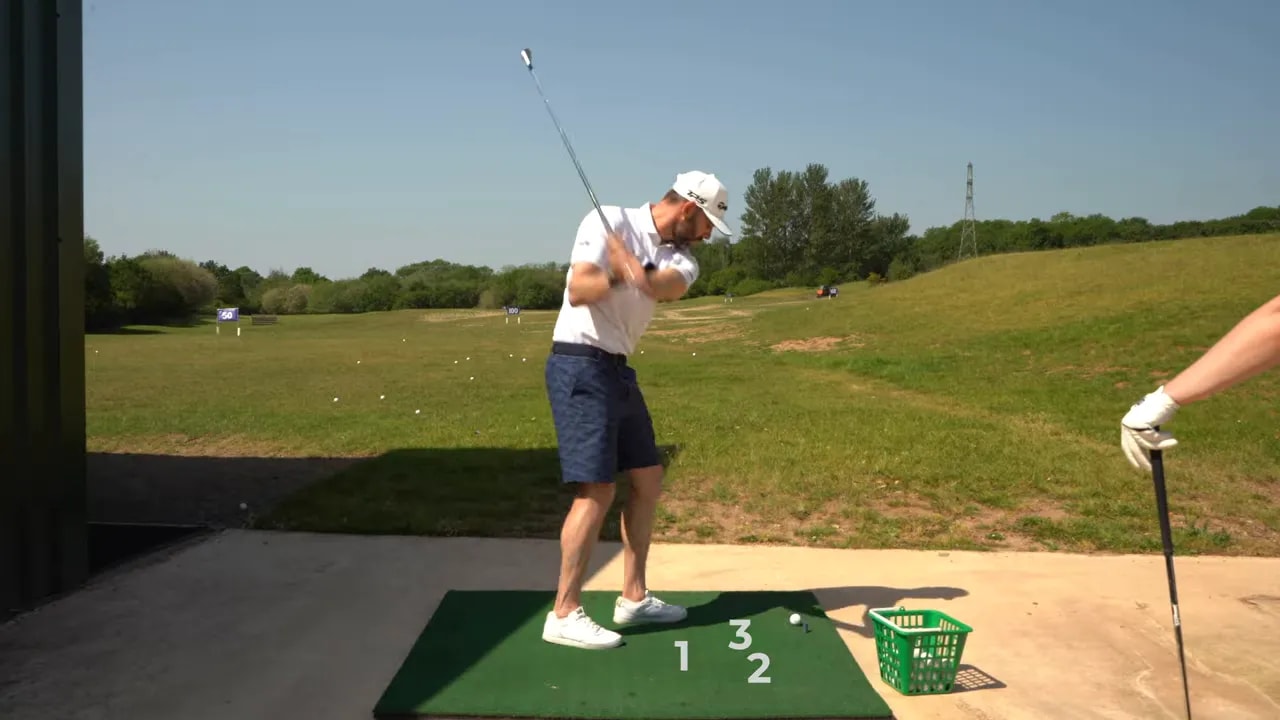
Once the club starts feeling more manageable, the next stage is a short swing drill focused on the mat, not the ball. This is where many golfers begin to improve immediately.
The instruction is simple:
- Make a short swing.
- Feel the clubhead go above your hands.
- Keep grip pressure light.
- Let the club swing through.
- Thump the mat in a consistent spot.
This is a powerful golf drill because it reduces noise. You are not worried about full speed, distance, or perfect shape. You are just building awareness of the strike point.
If you struggle with heavy and thin golf shots, this kind of mat contact drill can be more effective than jumping straight into full swings.
Step 8: Add the walk-in drill to build golf coordination
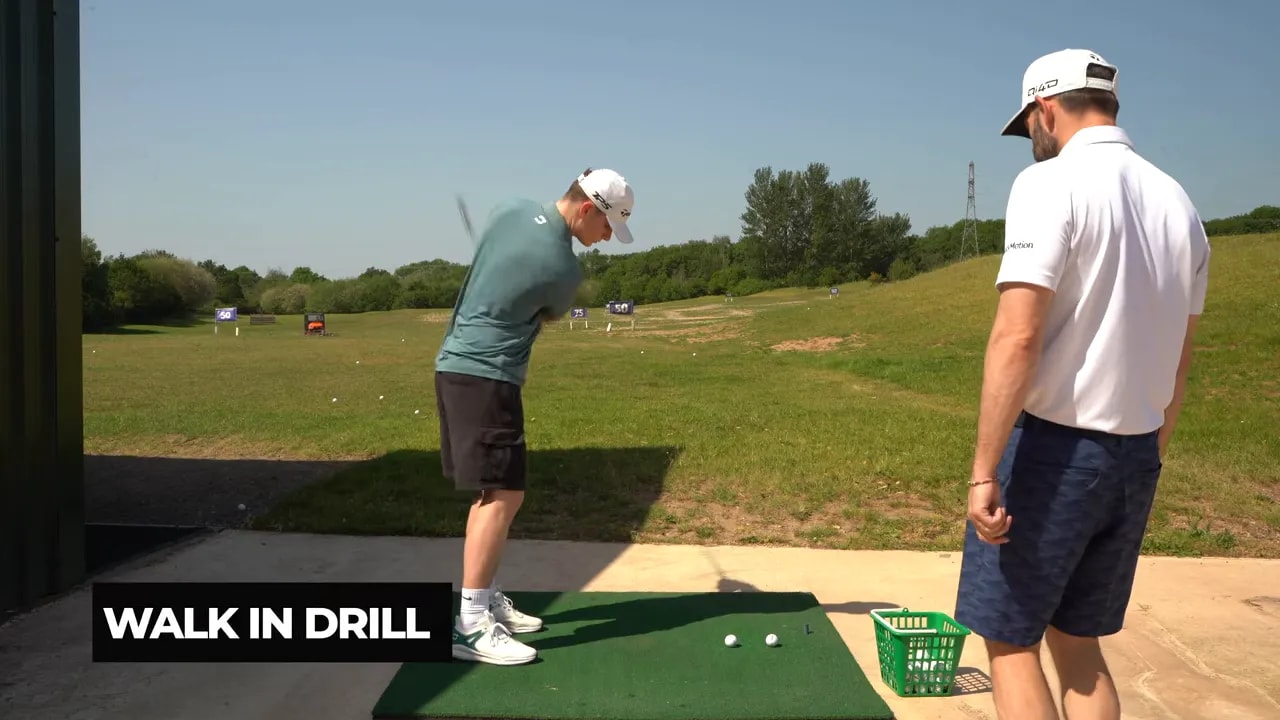
After the initial contact work, the drill becomes more dynamic. Two balls are placed down, and you begin slightly away from the hitting area. From there, you swing the club lightly, feel the weight, and gradually walk in toward the balls until one is in the way.
That is the beauty of the drill. The intention is not to freeze over the ball and overthink golf mechanics. It is to organize the club, sense its weight, and then let your body coordinate the strike naturally.
This changes the task from technical to athletic.
How to do the walk-in golf drill
- Start with your feet close together or slightly back from the ball.
- Use a very light grip.
- Move the club so the weight feels above your hands.
- Let the club land and swing through naturally.
- Walk in gradually until the ball sits in the strike zone.
- Keep the same rhythm and let the club hit through.
The reason this golf drill works is that it develops skill rather than just positions. It helps you connect your eyes, your body, and the weight of the club in a more instinctive way.
When the strike improves, the ball often comes off the face with much more speed and quality, even when the motion does not feel perfect.
Step 9: Blend the golf feels together into your normal setup
Once the strike drill begins to work, the final step is integration. You do not want these improvements to stay trapped inside a drill. You want them to show up in your standard golf setup and swing.
At this stage, combine the pieces:
- Stand a little farther from the ball.
- Adopt the improved posture that comes with that space.
- Use the better pivot so your head stays more centered.
- Feel the club’s weight throughout the swing.
- Return the club to the ground with intention and awareness.
This is where the lesson comes together. The golfer did not just make one change. He combined improved setup, improved pivot, and improved club awareness. That blend produced clearly better golf contact by the end.
Step 10: Judge your golf practice by strike quality, not swing aesthetics
One of the best takeaways from this lesson is how you measure progress. Golfers often evaluate practice by how the swing looks or how comfortable it feels. But better golf does not always feel natural right away.
A stronger measure is this:
- Are you finding the center more often?
- Are you striking the ground in a more predictable place?
- Is the ball flight stronger and more stable?
- Do your misses still travel with useful distance?
If the answer is yes, your golf is moving in the right direction.
Solid contact creates confidence. Confidence then makes it easier to swing with freedom. That is often how lasting golf improvement starts.
FAQ about this golf ball striking fix
Is this golf drill only for irons?
The lesson is built around iron contact, especially the idea of thumping the mat in a consistent spot. That makes it most directly useful for iron golf practice, though the awareness of club weight can help with other clubs too.
Why does standing farther from the golf ball help?
In this golf lesson, standing too close created a cramped, tall setup. Moving farther away gave the body and club more room to organize correctly, which supported better strike and a more natural motion.
Should the lead knee stay completely still in the backswing?
No. The key golf concept is not to freeze the knee. The lead knee can move, but it should react to the turn of the shoulders and hips rather than kick inward as the first move.
What does it mean to get the club weight above your hands in golf?
It means organizing the club early enough in the backswing so the clubhead is better supported instead of feeling as if it is hanging too far outside your hands. In golf terms, that usually makes the club feel lighter and easier to control.
Why use a light grip for this golf practice?
A lighter grip helps you sense the clubhead and its weight more clearly. If you squeeze too tightly in golf, you often lose feel and start steering the club instead of swinging it.
How quickly can this golf fix improve strike?
The lesson showed immediate improvement once the golfer combined better setup, a better pivot, and stronger club awareness. As with any golf change, long term success depends on practice, but the drill can produce quick feedback.
Many golfers search for a hidden mechanical secret, but this golf fix is effective because it combines mechanics with skill. Better setup helps. Better pivot helps. But the real difference comes when you also learn to sense the club and control where it lands.
If your golf contact has been inconsistent, this is worth trying on the range. Focus on center strike, lighten your grip, organize the club’s weight earlier, and rehearse the walk-in drill until the motion starts to feel athletic instead of forced. That combination can change the way you think about golf ball striking for good.
0 Comments