
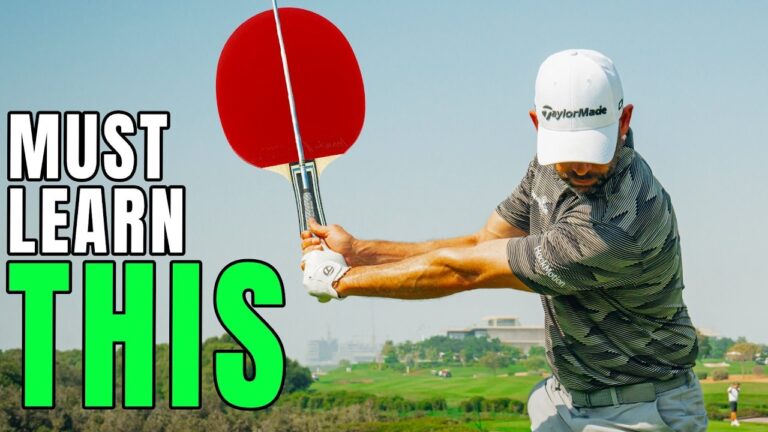

Golf becomes much simpler when you stop asking your irons to do a job they already do on their own. One of the biggest mistakes in golf is trying to help the ball into the air with your hands, your body, or a last second scoop through impact.
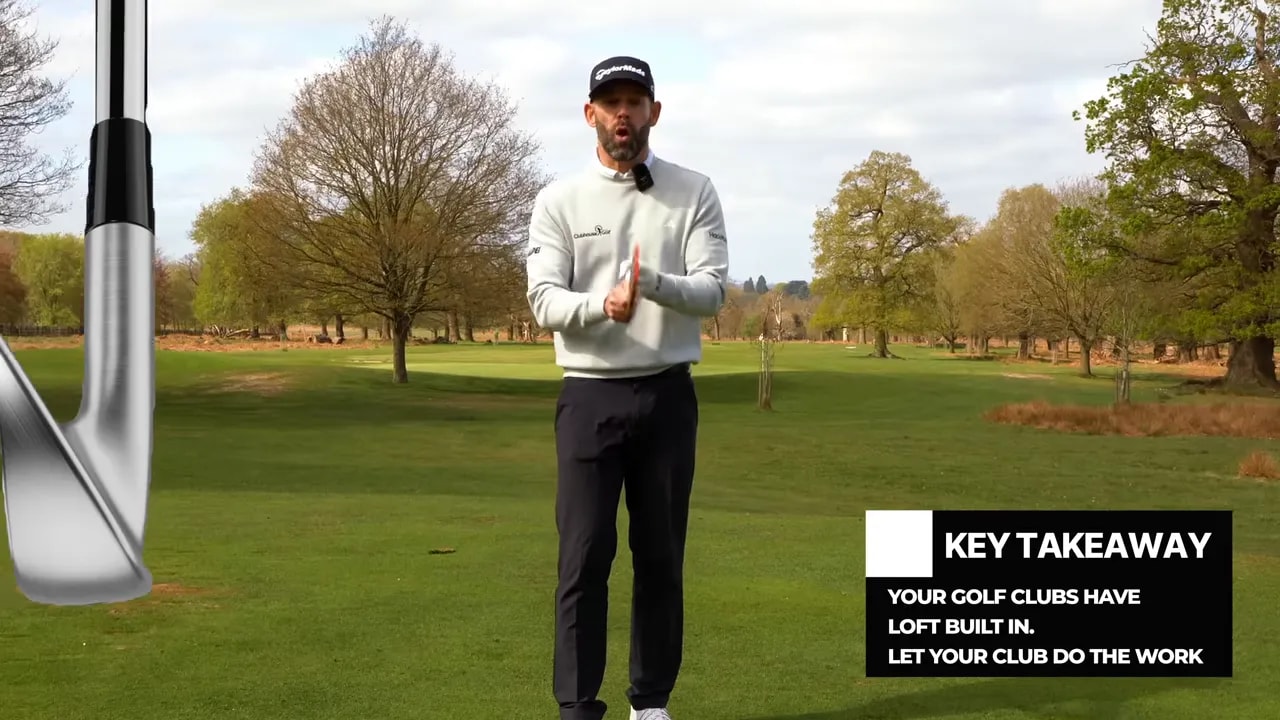
Your irons already have built in loft. That loft is the secret superpower. In golf, your job is not to lift the ball. Your job is to deliver solid strike. When you understand that difference, your golf contact gets cleaner, your turf interaction improves, and your iron shots become far more consistent.
This step by step guide breaks down the concept, the feel, and the drills you can use to build better golf ball striking with your irons.
Table of Contents
- Step 1: Understand the real job of your irons in golf
- Step 2: Use the table tennis comparison to fix your golf concept
- Step 3: Stop trying to help the golf ball up
- Step 4: Learn the trail palm feel that improves golf impact
- Step 5: Rehearse the two opposite golf impact patterns
- Step 6: Do the no club drill for better golf awareness
- Step 7: Hit short golf shots and check where the club enters the turf
- Step 8: Trust that the golf ball will still launch
- Step 9: Avoid the common golf mistake of lunging forward
- Step 10: Scale the golf drill up to full swings
- Step 11: Know the signs that your golf strike is improving
- Step 12: Build this golf idea into every iron practice session
- FAQ
Step 1: Understand the real job of your irons in golf
The core message is simple. The club provides the launch. You provide the strike.
Many golf players instinctively believe they need to help the ball upward. That instinct makes sense because the golf ball starts on the ground and finishes in the air. But with irons, trying to create lift often leads to the exact opposite of good golf impact.
When you lean back, throw the clubhead early, or try to scoop the ball upward, you often create:
- Thin strikes
- Heavy strikes
- Weak contact
- Poor compression
- Inconsistent distance
Good golf with irons starts by trusting the loft on the face. If you strike the ball correctly from the angled face of the club, the ball will launch. You do not need to add that launch yourself.
Step 2: Use the table tennis comparison to fix your golf concept
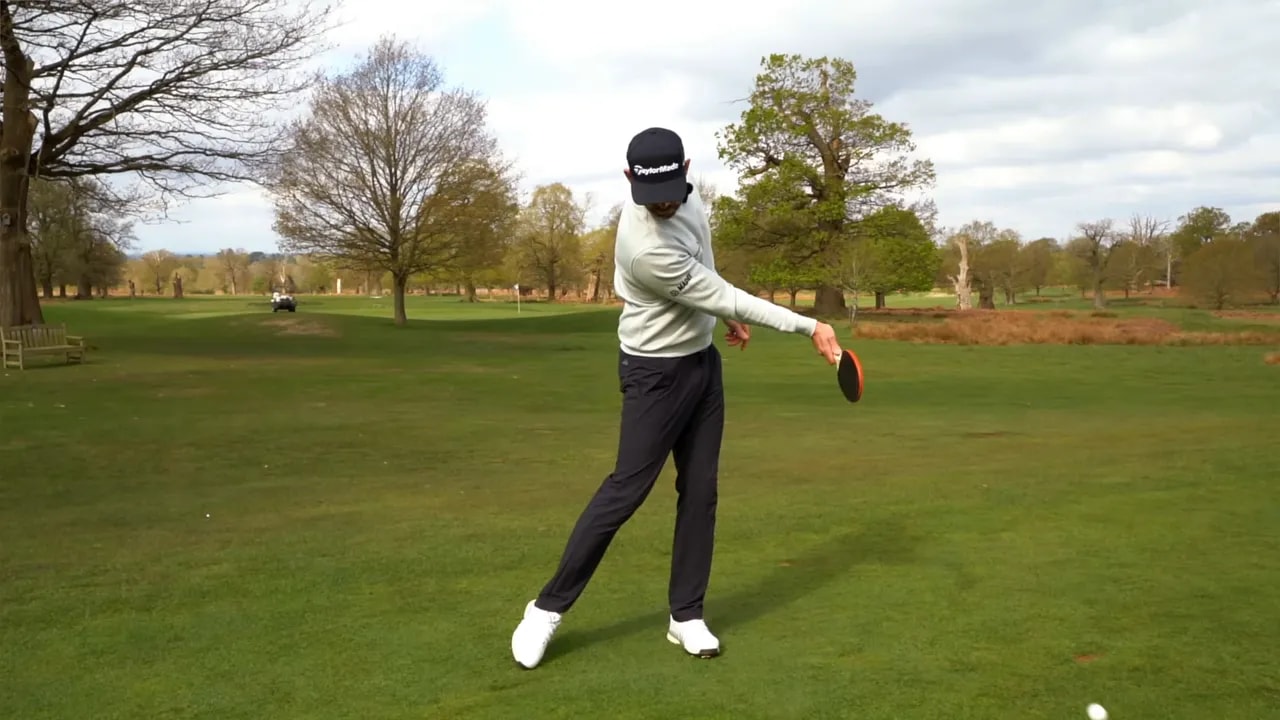
A useful golf lesson comes from a simple table tennis bat. A flat bat has no loft. If you wanted to send a ball upward with it, you would need to create that upward motion yourself. You would likely hang back a little, let the face point up, and move in a way that helps the ball rise.
If you wanted to send that same ball downward, your body and arm would organize very differently. Your pressure would move more forward, your trail elbow would get more in front of you, and the face would point more down.
That is the important golf idea.
A table tennis bat needs you to create the launch because it has no loft. A golf iron already has loft, so your golf swing should not copy the motion you would use to toss a flat faced object upward.
Many golfers use an impact pattern that belongs to a no loft tool, not to a golf club. That mismatch is what causes a lot of poor golf contact.
Step 3: Stop trying to help the golf ball up
If you want better golf iron play, you need to replace one instinct with a better one.
The instinctive move is this:
- Weight stays back
- Trail elbow stays behind the body
- Wrists lose their angles too early
- Clubface feels like it points upward
- Body tries to add lift
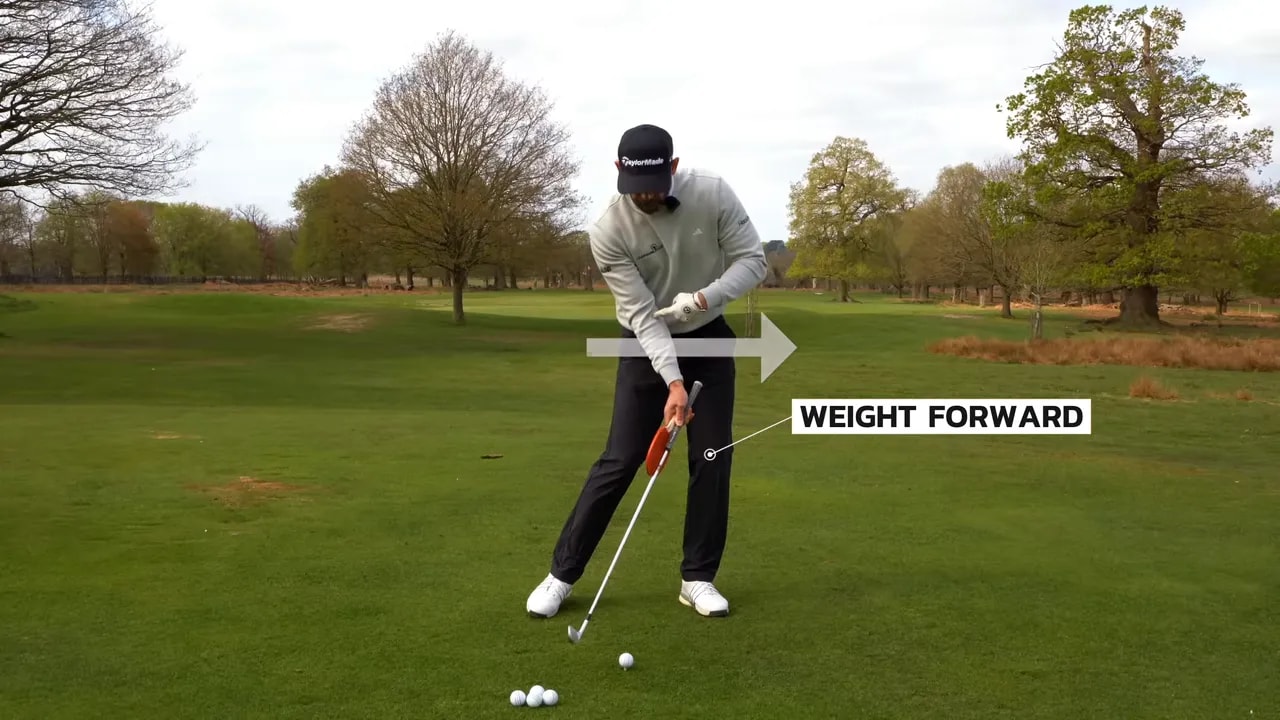
That motion can feel logical in golf, but it usually makes strike worse. Instead, you want an impact pattern where:
- Weight is more forward
- Trail elbow is more in front of the body
- Trail wrist keeps its bend longer
- Shaft leans forward
- The club is delivered with a downward strike
That does not mean smashing the ball steeply into the ground. It means your golf impact should be organized to strike ball first and turf second.
In other words, you are not trying to launch the ball with your body. You are trying to strike it cleanly and let the golf club’s loft launch it for you.
Step 4: Learn the trail palm feel that improves golf impact
One of the best feels in this golf lesson is to pay attention to your trail palm through impact.
Rather than feeling like your trail palm is trying to scoop the ball upward, feel as if your trail palm is directing the ball down into the turf area. This changes your golf motion in a useful way.
That single feel often encourages:
- Better forward pressure
- Less flipping through impact
- More stable wrist angles
- Cleaner strike location
- A more reliable low point in front of the ball
This is a concept based drill, not a force drill. You are not trying to shove your upper body toward the target. You are giving your golf swing a better task, and your body tends to organize around that task.
That matters because movement often follows intention. If your intention is to help the ball up, your golf body motion will usually support that. If your intention is to strike the ball down with the trail palm while trusting the loft, your motion usually improves.
Step 5: Rehearse the two opposite golf impact patterns
Before hitting shots, rehearse both patterns so you can clearly feel the difference.
Golf rehearsal A: The helping up pattern
- Set up to the ball
- Feel your weight stay back
- Let the trail elbow sit farther behind you
- Imagine the face or palm pointing more upward
This is the golf pattern that many players already know too well.
Golf rehearsal B: The striking down pattern
- Set up to the ball
- Feel more pressure move into the lead side
- Let the trail elbow work more in front of your torso
- Keep the trail wrist bent back for longer
- Feel as if the trail palm would send the ball down
The second pattern is the one that tends to produce stronger golf contact with irons.
Step 6: Do the no club drill for better golf awareness
You do not even need a club to start improving this part of your golf motion.
Take your normal golf posture and use your trail hand as the reference. Make slow motion rehearsal swings and notice what your palm would do through impact.
Ask yourself:
- Does my palm feel like it is trying to throw the ball up?
- Or does my palm feel like it is sending the ball down into the turf?
This simple golf awareness drill can be powerful because it strips away mechanics and focuses on intent. Once the concept improves, the body often follows with better motion.
If you want, you can also use a flat object like a paddle as a training aid. It makes the face direction more obvious. When the face points up, you instantly see the helping motion. When the face points down, you clearly feel the stronger golf impact alignments.
Step 7: Hit short golf shots and check where the club enters the turf
Once you have the feel, start with small golf swings. Do not go to full speed right away.
Hit short iron shots with the intention of keeping the trail palm feeling down through impact. Focus on a crisp strike rather than height.
You should begin to notice a few important golf clues:
- The ball still goes into the air
- Contact feels more solid
- The turf interaction happens after the ball
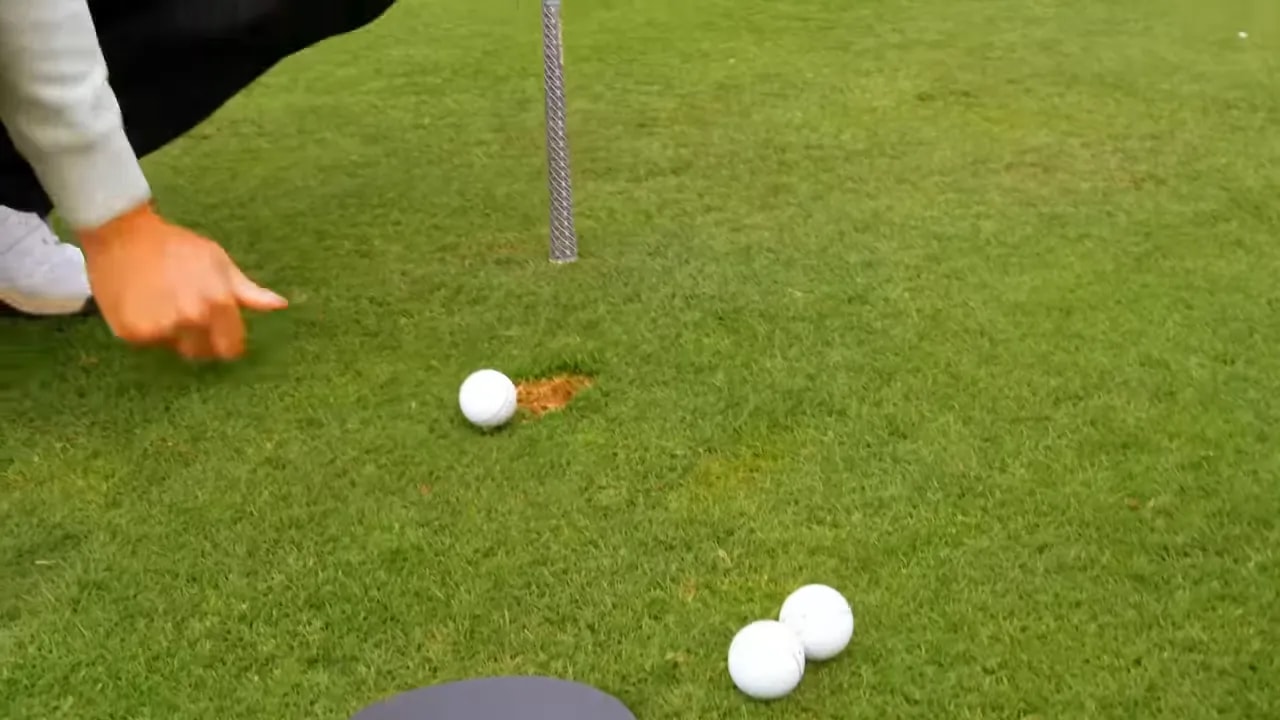
- The divot moves in front of the original ball position
That last point is critical in golf. A proper iron strike is ball first, then turf. If your divot begins after the ball, you are much closer to a tour style impact than if the club bottoms out early.
Step 8: Trust that the golf ball will still launch
One of the biggest mental hurdles in golf is this: when you feel like you are hitting down, you may worry that the ball will stay low or never get airborne.
But if you are using an iron, that fear is misplaced.
The clubface has loft built into it. If your golf strike is clean, the ball will launch. It may not float excessively high on a slower practice swing, but it will still rise. As speed increases, that launch becomes more obvious.
This is why the feeling can seem almost opposite to the result. In golf, the player may feel like they are sending the ball down while the club sends the ball up. Those two actions work together.
That is the secret superpower of your irons. The golf club can produce the flight for you, provided you stop fighting it.
Step 9: Avoid the common golf mistake of lunging forward
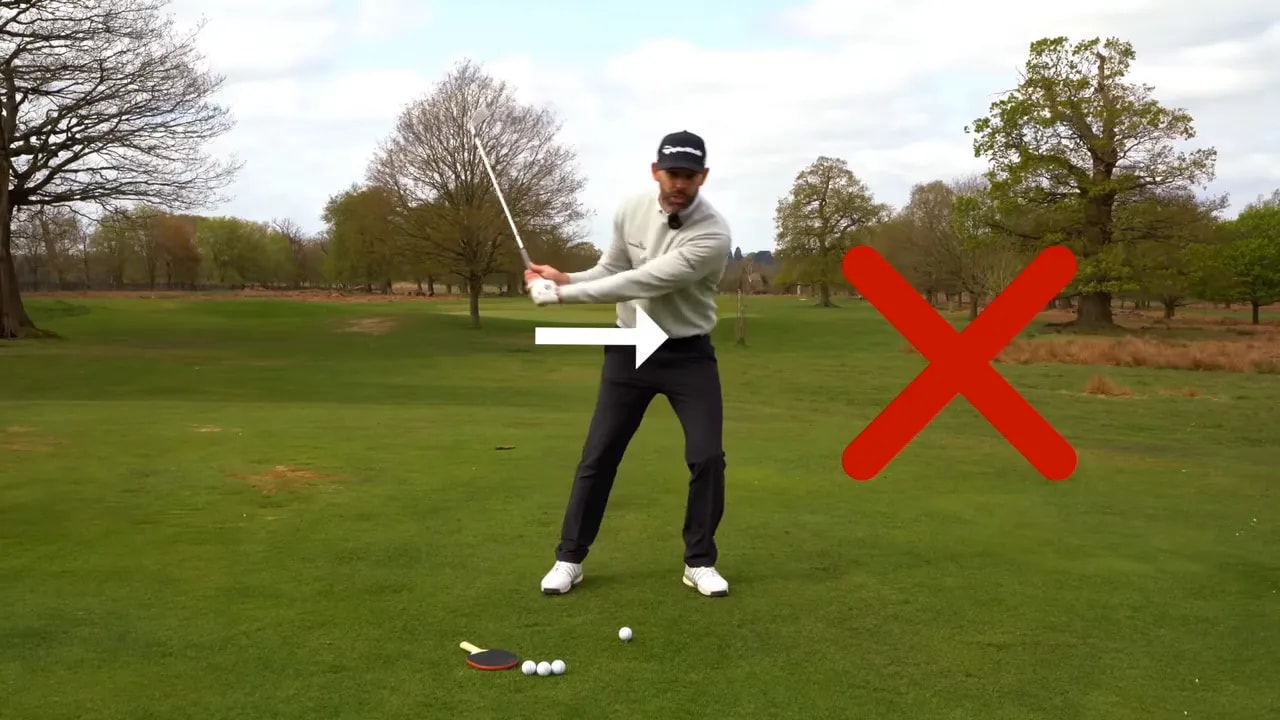
There is an important warning here. Feeling weight forward does not mean throwing your whole upper body toward the target.
Some golf players hear “hit down” and respond by sliding hard, dipping excessively, or driving the shoulders too far forward. That can create a different set of problems.
The better golf approach is to let the trail palm concept create the movement. When the palm feels like it faces down through impact:
- Pressure tends to move forward naturally
- The wrists tend to organize better
- The shaft tends to lean forward more naturally
- The body tends to support the strike without a forced lunge
That is a much more athletic golf move than simply shoving everything left.
Step 10: Scale the golf drill up to full swings
After you can hit crisp little shots, start adding speed. The key in golf is to keep the same impact intention while allowing the swing to flow naturally.
You do not need to hold the club off through the finish. Once you move through impact correctly, the club will release and the finish will happen on its own.
A good progression for golf practice looks like this:
- Slow rehearsals with trail palm awareness
- Short punch style shots
- Three quarter iron swings
- Full swings with the same strike concept
If contact gets worse as speed increases, drop back a step. In golf practice, quality matters more than volume. A few solid shots with the right pattern are more valuable than many fast swings with the old scoop pattern.
Step 11: Know the signs that your golf strike is improving
You will know this golf concept is working when you start seeing these changes:
- The strike sounds sharper
- The ball leaves the face with a more compressed flight
- The turf is contacted after the ball
- Thin and heavy shots happen less often
- Your trajectory becomes more predictable
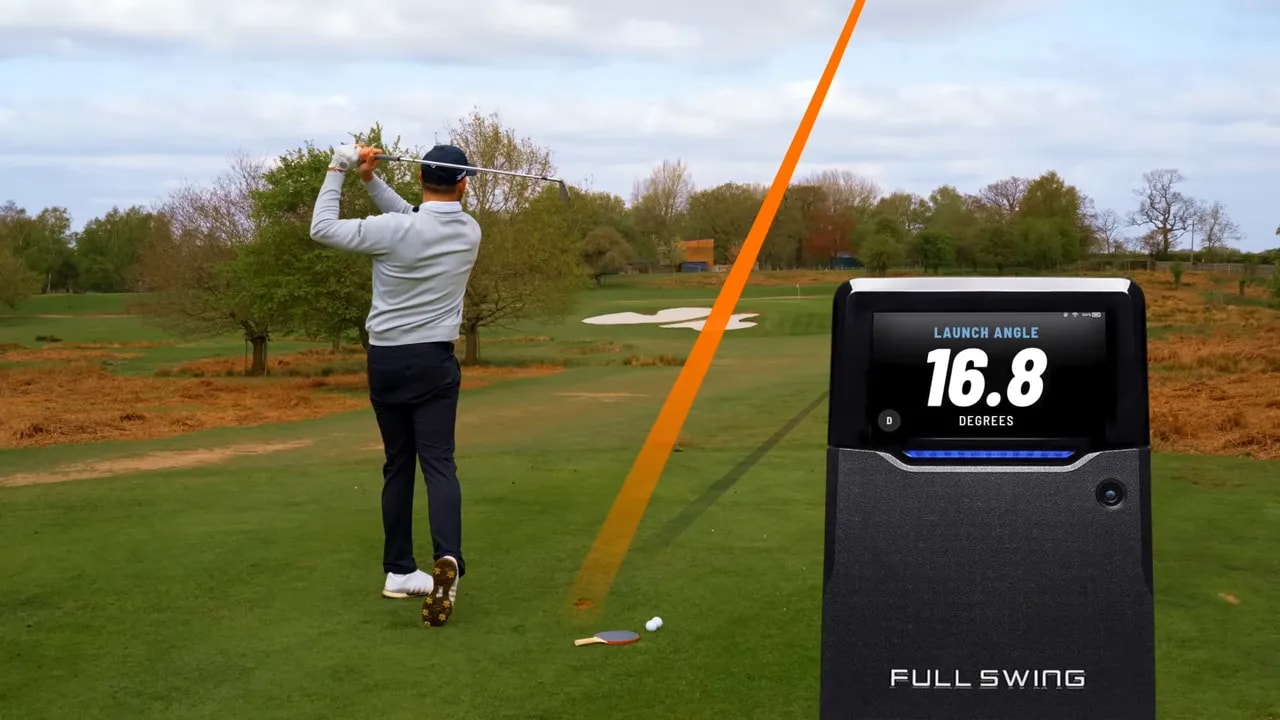
A lower launch in practice does not automatically mean something is wrong. In golf, a slower swing with better strike can still launch lower than a full speed shot while being far more efficient. Focus on contact first.
When you start hitting the center more often and controlling low point better, your golf distance and flight will usually improve as a result.
Step 12: Build this golf idea into every iron practice session
This concept works best when you revisit it regularly. Many golf habits return under pressure, especially the instinct to help the ball upward. A simple pre practice routine can keep you on track.
Try this golf sequence each time you practice irons:
- Make 5 slow no club palm rehearsals
- Make 5 rehearsal swings feeling weight forward
- Hit 5 small shots focusing on ball then turf
- Gradually build into normal golf speed
This takes only a few minutes, but it can completely change how your golf swing organizes through impact.
FAQ
Why do my golf irons work better when I feel like I am hitting down?
Because your golf irons already have loft built in. When you strike down correctly, you improve contact and low point control. The loft then launches the ball upward for you.
Does hitting down in golf mean I should drive my upper body hard toward the target?
No. In golf, that usually creates a poor motion. The better feel is that your trail palm faces down through impact. That tends to move pressure forward and improve strike without a forced lunge.
Will this golf concept make my iron shots too low?
Not if you strike the ball well. In golf, your iron loft controls launch. A slower practice swing may fly a little lower, but the ball should still rise. As you add speed, normal trajectory returns.
What is the easiest golf drill to start with?
Use your trail hand without a club and rehearse impact. Feel as if your palm would send the ball down into the turf area. Then hit small golf shots and check that the turf is struck after the ball.
What should my divot look like in golf with an iron?
A good golf iron divot normally starts after the ball, not before it. That shows you are striking ball first and then turf, which is a strong indicator of solid iron contact.
Golf iron play improves quickly when you stop fighting the design of the club. Your irons are built to get the ball airborne. That is their job. Your golf job is to deliver the strike with forward pressure, better wrist structure, and ball first contact.
Trust the loft. Improve the strike. That single shift can change your golf ball striking more than most mechanical thoughts ever will.
0 Comments