


If you want a more repeatable golf swing, the idea of connection deserves your attention. In simple terms, connection means your arms, hands, clubface, and body turn work together instead of fighting each other. When that happens, you tend to strike the ball more solidly, control the clubface better, and shape shots with less manipulation.
This guide breaks down how to master your swing, create connection using practical checkpoints you can take to the range. The focus is not on chasing a perfect-looking swing. It is on building a motion you can repeat under pressure, in the wind, and with different shot shapes.
For many golfers, the biggest gains come from three areas:
- A consistent setup
- A connected backswing
- A downswing that matches the plane instead of rescuing it
Table of Contents
- Step 1: Start with setup if you want to master your swing and create connection
- Step 2: Learn the first checkpoint of a connected takeaway
- Step 3: Build a connected set position instead of lifting the club
- Step 4: Use the trail arm correctly to master your swing and create connection
- Step 5: Match your downswing to your backswing plane
- Step 6: Hit a three-quarter knockdown shot to train connection
- Step 7: Control the clubface through impact without flipping it
- Step 8: Learn two connected shot shapes, the body draw and the controlled cut
- Step 9: Use wedge flight as your connection test
- Step 10: Avoid the biggest mistakes when trying to master your swing and create connection
- Step 11: Build a simple range routine around connection
- Step 12: Know what progress really looks like
- FAQ
- Final takeaway
Step 1: Start with setup if you want to master your swing and create connection
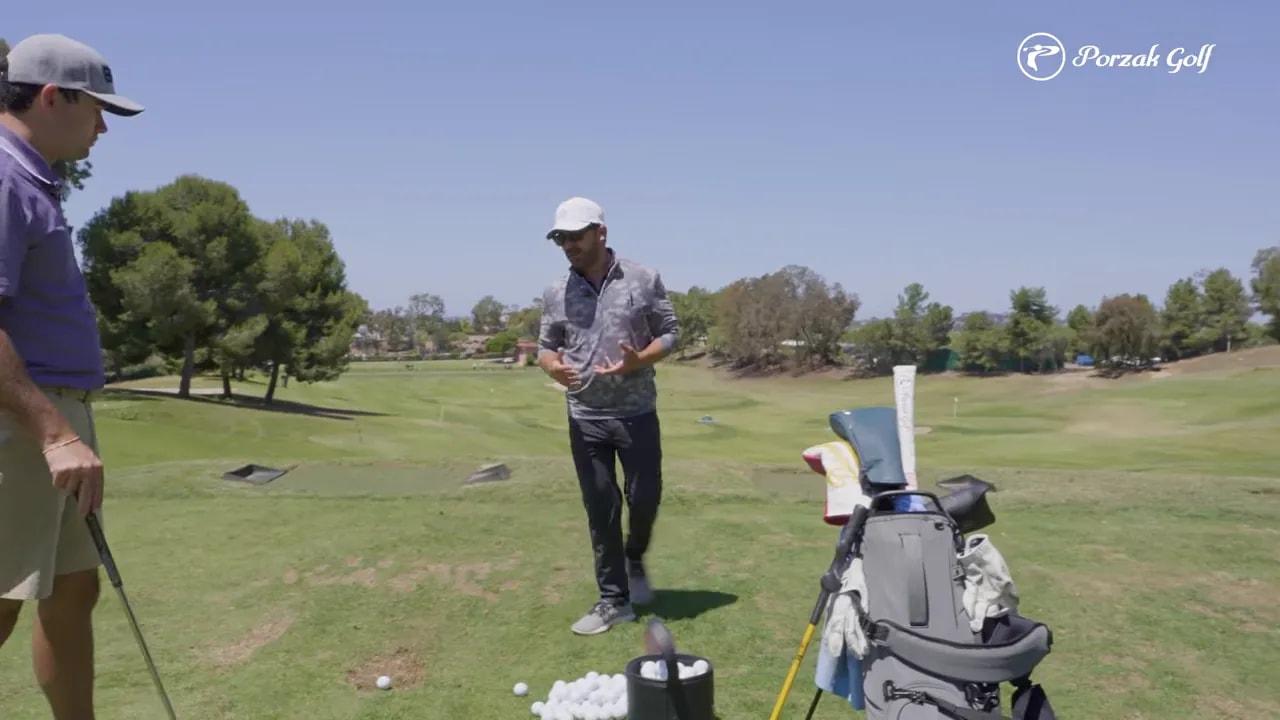
Before you think about takeaway, top of backswing, or release, clean up your address position. Setup is where swing connection begins. If you aim poorly or stand in a way that fights balance, your swing often has to compensate immediately.
A connected swing starts with a setup you can reproduce every time.
What to check at address
- Alignment: Your feet line should match your intended target line.
- Balance: Your hips should feel stacked over your ankles.
- Posture: Your upper body should be tilted naturally from the hips, not slumped or overly upright.
- Shoulder hang: Your shoulders should sit in a balanced position over the balls of your feet, not too far out over your toes.
If your alignment is off, your brain tends to reroute the swing to match where you are aimed. That can send the club too far across the line, too far from the inside, or force a late hand action through impact.
Why setup matters so much
Good players often look consistent because they start in the same place over and over. Their setup gives them a reliable starting map. If your address changes every few swings, the motion that follows also changes.
Use this quick pre-shot checklist:
- Aim the clubface first.
- Set your feet parallel to the target line.
- Feel your weight centered and athletic.
- Check that your posture lets your arms hang naturally.
Step 2: Learn the first checkpoint of a connected takeaway
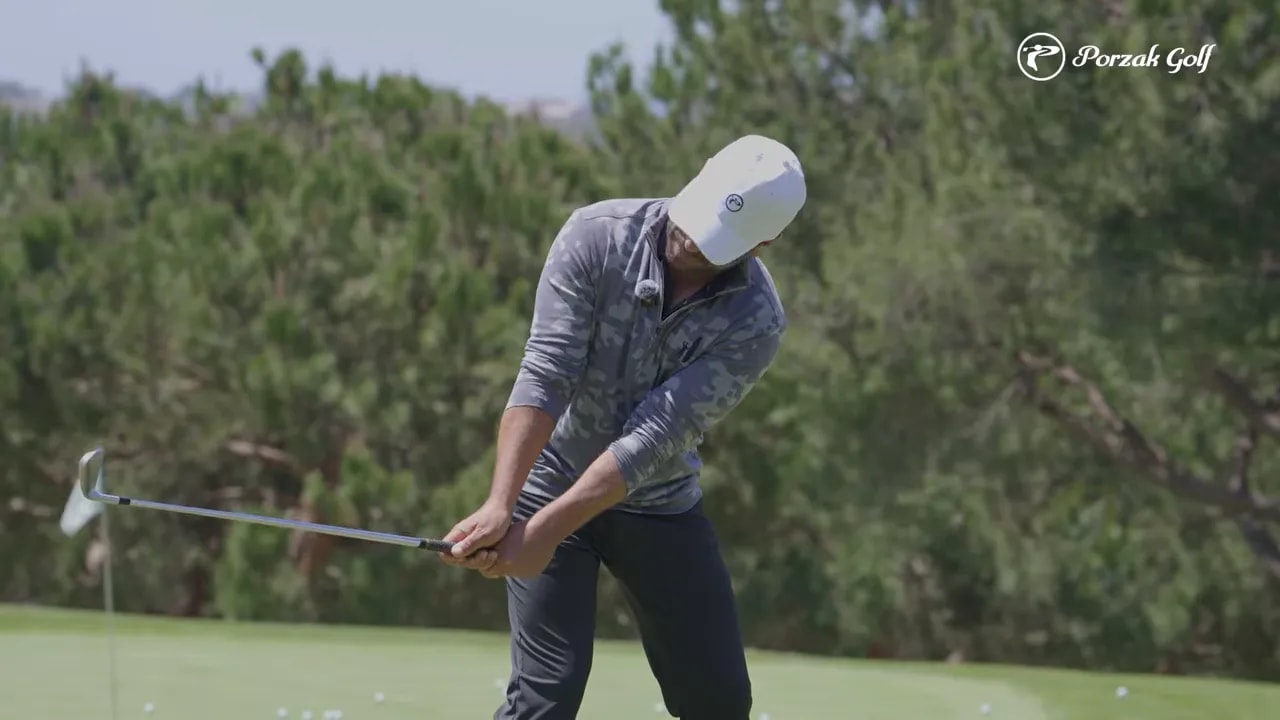
One of the easiest ways to improve swing connection is to build a reliable takeaway. A useful early checkpoint is when the club reaches roughly parallel to the ground.
At that point, two things matter:
- The clubface should be in a neutral, square-looking position relative to your body angles.
- The clubshaft should be on plane rather than pulled too far inside or shoved too far outside.
This first checkpoint matters because it influences everything that follows. If the clubface is too open or too shut early, you often spend the rest of the swing trying to recover. If the club is too far off plane at hip height, getting to the top cleanly becomes harder.
What a connected takeaway feels like
It should feel as if the club, arms, and torso begin moving together. Not rigidly, but together. The club should not race inside with your hands, and the clubhead should not be snatched up independently.
Think of the takeaway as a move that preserves structure, not one that creates speed.
Common takeaway mistakes
- Rolling the face open early
- Dragging the handle too far inside
- Lifting the club with the hands only
- Changing posture as the club starts back
If you fix only this first segment, your swing can start looking and feeling much simpler.
Step 3: Build a connected set position instead of lifting the club
After the takeaway, the next goal is to move into a compact, connected set position. This is where many golfers lose their structure. They either over-lift the arms, let the trail arm disappear behind them, or allow the club to run past neutral at the top.
A better model is to let the club work up the trail arm while keeping the hands and body connected. From there, you turn to the top.
This sequence helps the club stay organized. It also makes the transition easier because you are not trying to reroute a club that has wandered behind you or across the line.
Signs the set position is working
- The club feels supported, not loose
- Your trail arm stays more in front of your body
- The club does not feel like it is pointing excessively right of the target at the top
- Your backswing remains compact and coordinated
This is one of the most underrated parts of learning to master your swing, create connection. Many golfers chase a top-of-backswing look without earning it through the earlier pieces.
Step 4: Use the trail arm correctly to master your swing and create connection
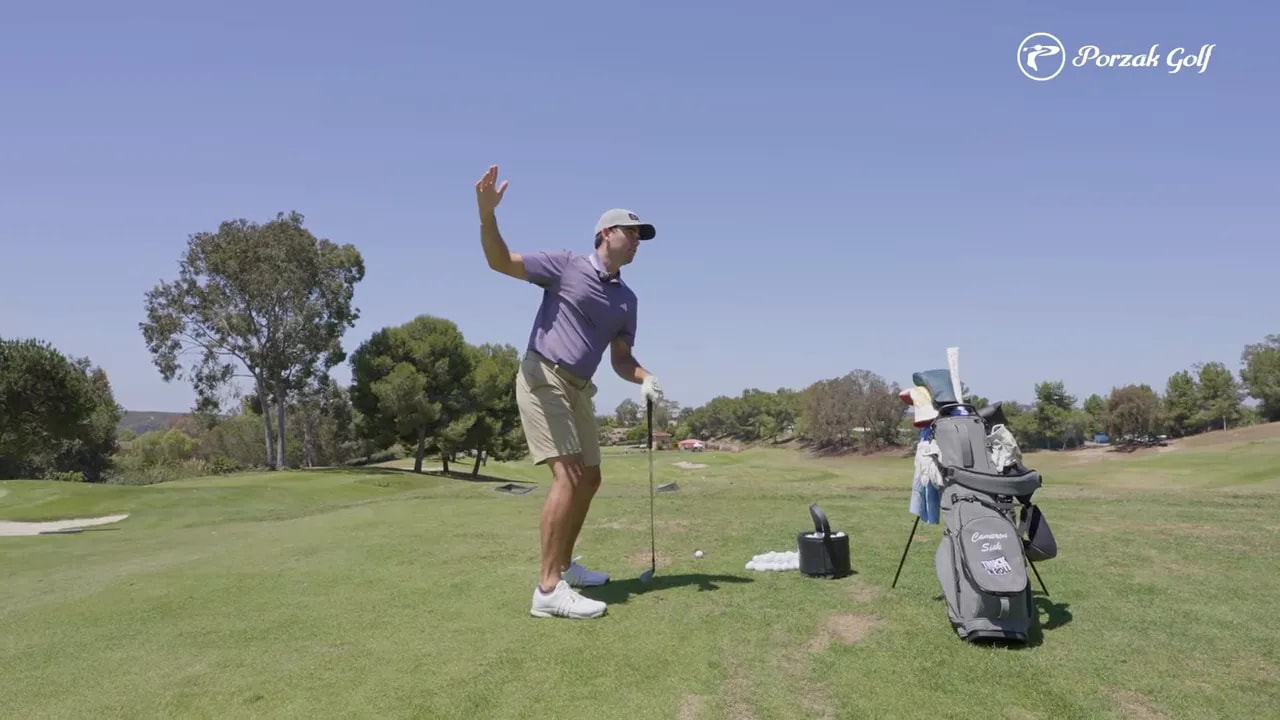
The trail arm has a major influence on club path and top-of-backswing position. If it works too far behind you, the club often gets across the line. If that happens, the downswing becomes complicated.
When the trail arm stays more in front of your body center, the club tends to stay more organized and easier to return on plane.
A simple trail arm concept
Imagine your trail elbow supporting a tray at the top. If the elbow gets behind you and rotates poorly, the tray spills. In golf terms, the club starts pointing too far across the line and your arms lose connection with your torso.
A useful feel is that the inside of the trail arm works more toward the space in front of you rather than spinning behind you.
Why this matters in transition
If the club is across the line and the trail arm is stuck behind you, you often have two bad options:
- Pull down and steepen the club
- Throw the clubhead with the trail hand to save the strike
Neither option is ideal for consistent ball striking. A better top position gives you a much simpler route down.
Step 5: Match your downswing to your backswing plane
A connected golf swing makes the downswing feel less like a rescue mission. If the club is in a solid position at the top, you can bring it down on a similar plane with far less manipulation.
This is one reason efficient ball strikers often look calm through impact. They are not making last-second corrections with their hands.
What a good downswing match looks like
- The lead side can pull the club down naturally
- The arms return in front of the body
- The clubface does not need a dramatic flip to square up
- Impact feels compressed rather than slapped
When golfers lose connection in the backswing, they often compensate by throwing the clubhead early. That can add timing, face rotation, and inconsistency. When connection is maintained, the handle and body can keep moving together through the ball.
Step 6: Hit a three-quarter knockdown shot to train connection
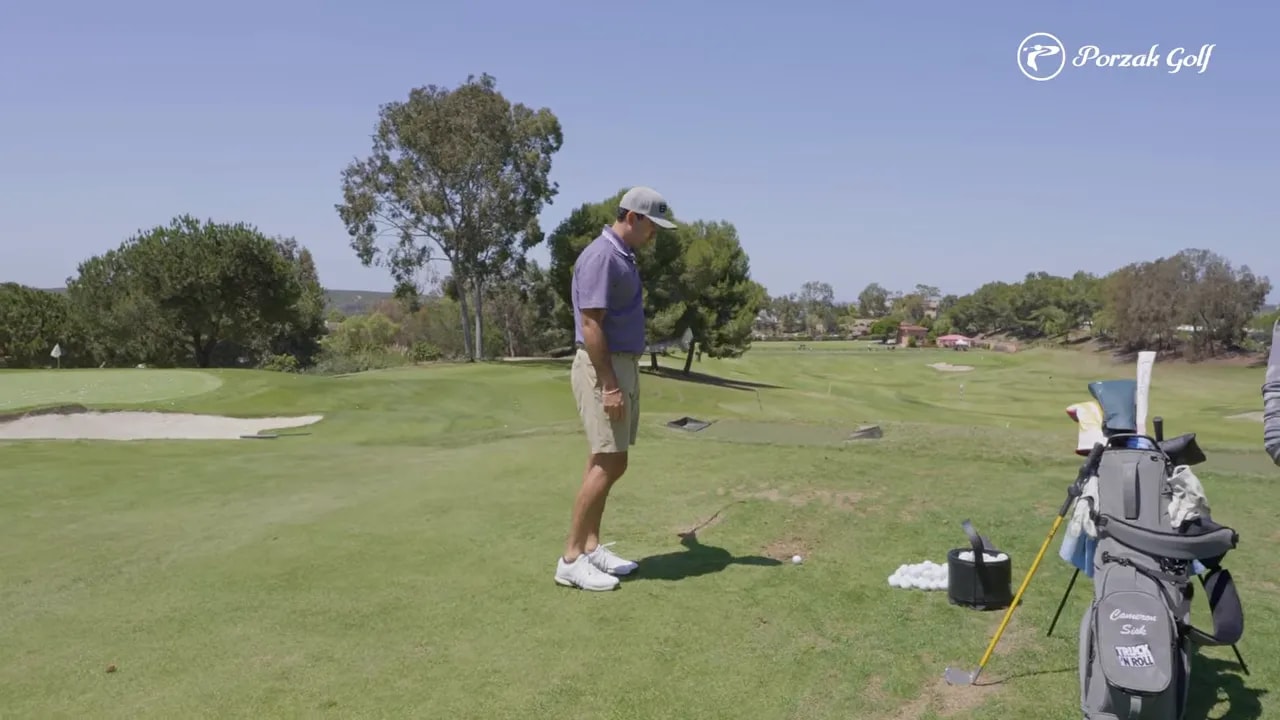
If you want one training shot that improves structure, clubface control, and body-arm sync, the three-quarter knockdown is a strong choice.
This shot tightens everything up. It encourages a more connected motion, a more stable face, and a flight that holds up well in wind. It is also a useful reset whenever your full swing starts getting loose.
Why the knockdown shot helps
- It reduces excessive arm swing
- It encourages body rotation through the shot
- It improves control of low-point and contact
- It exposes face and path issues quickly
A helpful swing thought
One useful feel for this shot is to imagine striking a point just behind the ball while still returning the clubface properly. That can help keep the arms and hands moving in sync with the turn, especially when using a shorter arm swing and a more controlled finish.
The goal is not to chop down on the ball. The goal is to keep everything moving together so the club does not stall or stay open.
How to practice the three-quarter knockdown
- Take a slightly shorter backswing.
- Keep your body turning through the shot.
- Feel your arms and hands return in front of your chest.
- Finish with control, not a full release and wraparound finish.
If the ball starts launching too high, curving too much, or losing strike quality, your connection may be breaking down.
Step 7: Control the clubface through impact without flipping it
One of the clearest signs of a connected swing is stable clubface control through impact. That does not mean the face never rotates. It means you are not wildly rolling it over to square the shot.
Better players can often curve the ball while keeping the follow-through looking relatively quiet and connected.
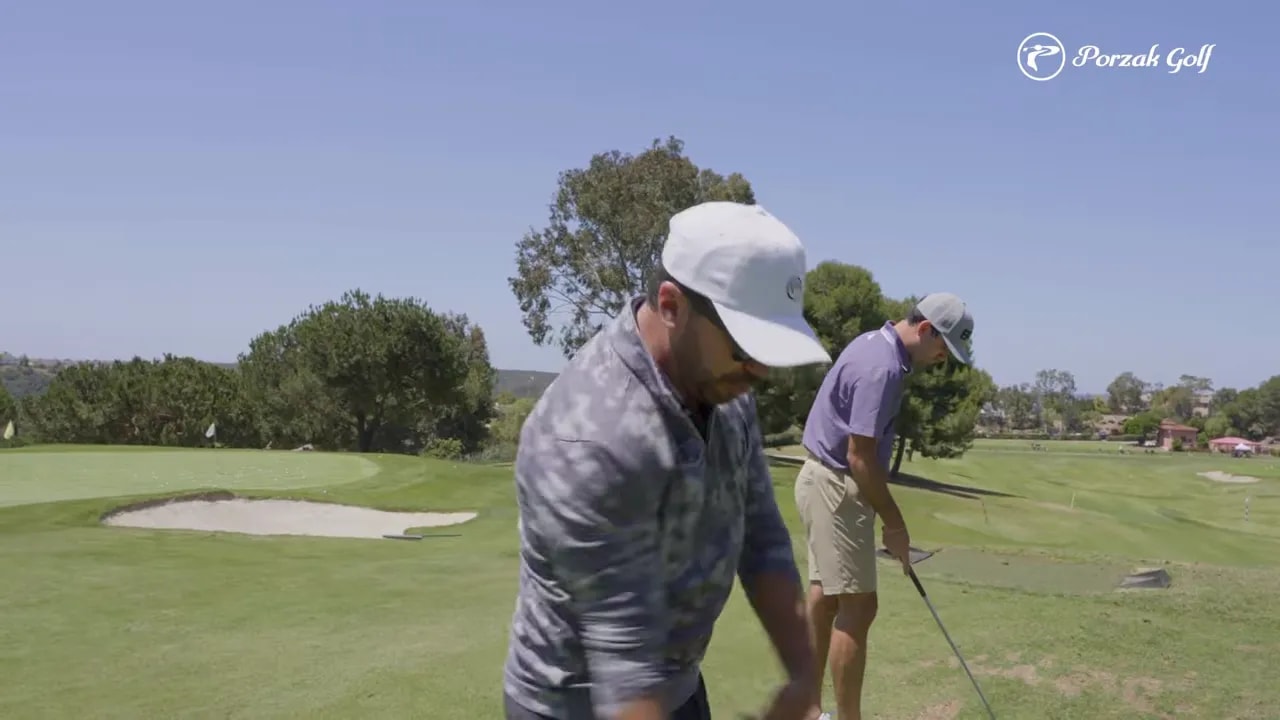
What stable face control looks like
- The club does not whip past your hands early
- Your finish does not look like a panic release
- Your ball flight starts on predictable lines
- You can shape shots without feeling handsy
When connection is lost, the clubhead tends to overtake the body too quickly. That often leads to excessive face rotation, inconsistent start lines, and curve you did not intend.
A connected release feels more like you are swinging the handle and turning through the ball than throwing the clubhead at it.
Step 8: Learn two connected shot shapes, the body draw and the controlled cut
If you can create connection, you can usually shape the ball more reliably. Two useful examples are a draw created with body and arm sync, and a cut created with a slightly more open body pattern.
The connected draw
For a draw, keep your upper body from opening too early in the downswing. Let your arms and hands fall in front of your body center while your lead shoulder stays back a touch longer. This can help deliver a more into-out path without needing a flip.
The result is a draw that turns because of path and face relationship, not because you violently roll the forearms.
The connected cut
For a cut, allow the body to move a bit more assertively open in the downswing. That can shift the path more left and help the club work slightly more on top of the plane.
The key is that it is still controlled. You are not spinning out or chopping across it. You are simply adjusting how the body and arms match up.
Being able to hit both patterns is a good sign that your clubface and body motion are organized.
Step 9: Use wedge flight as your connection test
If you want feedback on whether your swing is getting more connected, pay attention to your wedges. Wedge shots often reveal inefficiencies quickly because they magnify face control, path control, and strike quality.
A well-struck wedge usually comes out lower, tighter, and with predictable flight. A disconnected wedge tends to look floaty, inconsistent, or contact-heavy.
What to look for in wedge practice
- Consistent launch window
- Tight starting line
- Solid contact without heavy manipulation
- Ability to hit a three-quarter stock flight repeatedly
If your wedges are unstable, your full swing probably needs attention too.
Step 10: Avoid the biggest mistakes when trying to master your swing and create connection
Connection is often misunderstood. It does not mean squeezing your arms into your body or making a robotic swing. It means your pieces are coordinated.
Common mistakes
- Forcing your elbows inward: This creates tension rather than connection.
- Ignoring alignment: Poor aim can ruin good mechanics.
- Over-swinging: A longer backswing often pulls the arms away from the body.
- Trying to hold the face off unnaturally: Face control should come from good motion, not stiffness.
- Skipping partial-shot practice: Three-quarter swings often build better habits than full-speed swings.
What connection should feel like instead
- Structured, not stiff
- Compact, not cramped
- Rotational, not handsy
- Repeatable, not forced
Step 11: Build a simple range routine around connection
If you want lasting change, practice these pieces in order rather than all at once.
Connected swing practice plan
- Setup rehearsal: Check alignment, posture, and balance before every ball.
- Takeaway rehearsal: Stop at club parallel and verify face and plane.
- Trail arm rehearsal: Make slow backswings feeling the trail elbow stay more in front.
- Three-quarter knockdowns: Hit 10 to 15 balls with a controlled finish.
- Body draw and controlled cut: Alternate between the two while keeping the same rhythm.
- Wedge test: Finish with a few stock wedges and check launch and contact.
This kind of session gives you both technical work and ball-flight feedback.
Step 12: Know what progress really looks like
You do not need your swing to look perfect on camera to know you are improving. Better connection usually shows up in outcomes first.
Signs your connection is improving
- You start the ball on line more often
- Your bad shots curve less severely
- Knockdown shots feel easy to repeat
- You can shape the ball without changing everything
- Your wedge contact gets tighter
If those things are happening, your swing is likely becoming more organized.
FAQ
What does connection mean in the golf swing?
Connection means your arms, hands, club, and body turn are working together. It helps you avoid a swing where the arms get too independent and force compensations through impact.
How do you practice connection in golf?
Start with setup and alignment, then rehearse a connected takeaway and top-of-backswing position. Three-quarter knockdown shots are one of the best drills because they encourage body-arm sync and stable clubface control.
Why do I lose connection at the top of the backswing?
A common reason is that the trail arm works too far behind the body, causing the club to get across the line. Over-swinging and lifting the arms independently can also break connection.
Can connection help fix inconsistent ball striking?
Yes. Better connection can improve strike consistency because the club returns on a more predictable path with less need for last-second hand action.
What shot is best for testing swing connection?
The three-quarter knockdown is an excellent test. It highlights whether your arms, body, and clubface are staying organized. Wedge shots are also useful because they expose poor sequencing quickly.
How do you hit a draw without flipping the clubface?
Let your arms and hands work down in front of your body while keeping your upper body from opening too early. That can create a path that produces draw shape without needing an aggressive rollover release.
Final takeaway
If your goal is to master your swing, create connection, focus less on adding positions and more on removing disconnection. Start with a repeatable setup. Build a neutral takeaway. Keep the trail arm organized. Practice three-quarter knockdowns. Then learn to shape the ball with body motion rather than hand timing.
That approach can make your swing simpler, your clubface more stable, and your ball flight much more predictable.
0 Comments