


If you struggle to hit driver straight, the problem may not be your swing mechanics as much as your response to a bad shot. That is the trap that catches so many golfers.
You hit a drive that starts right and slices farther right. Instantly, your brain tells you to stop the ball going that way. So you aim left, swing left, or throw your body left through impact. It feels logical. It feels athletic. It also tends to make the slice worse.
The same thing happens with a hook. The ball dives left, so you instinctively try to swing more to the right to stop it. Again, that reaction often deepens the problem instead of solving it.
The key to straighter driving is understanding one relationship: clubface to swing path. Once you understand that, you stop making emotional corrections and start making useful ones. You gain a way to control ball flight, not just with the driver, but with every club in the bag.
Table of Contents
- Step 1: Understand the trap that stops you from hitting driver straight
- Step 2: Learn the face-to-path relationship that controls every shot
- Step 3: Stop trying to fix a slice with the wrong body motion
- Step 4: Use the exaggeration drill to hit driver straight more often
- Step 5: Apply the same principle if you hook the golf ball
- Step 6: Build the feeling gradually until you can hit driver straight
- Step 7: Take this from the range to the golf course with one rule
- Step 8: Remember that even experienced golfers fall into this trap
- Step 9: Use this simple practice routine to hit driver straight with more control
- Step 10: Apply the same face-to-path concept to every club in the bag
- FAQ
- Final thought
Step 1: Understand the trap that stops you from hitting driver straight
The biggest trap in golf is reacting to the ball flight instead of diagnosing what caused it.
When a shot curves offline, most golfers try to fix direction with their body. If the ball slices right, they turn more left. If it hooks left, they swing more right. This instinct is incredibly common because it mirrors how people try to throw or steer almost anything else.
But the golf ball does not curve because your body simply moved in one direction or another. It curves because of the relationship between:
The clubface, where it is pointing at impact
The swing path, the direction the club is traveling through impact
That relationship determines the spin you put on the ball. And that spin determines whether the shot flies straight, slices, or hooks.
If you only react to where the ball finished, you can easily create even more curve on the next swing.
Step 2: Learn the face-to-path relationship that controls every shot
If you want to hit driver straight, you need a simple mental model.
Think of the clubface as your starting reference and the swing path as the route the club takes relative to that face. When the path and face do not match properly, the ball curves.
For a slicer, the common pattern is this:
The clubface is pointing one direction
The swing path travels left of that face
That mismatch creates spin that curves the ball to the right.
For a hook, the opposite happens:
The clubface is pointing one direction
The swing path travels right of that face
That mismatch creates spin that curves the ball to the left.
This is why simply trying to “swing straighter” or “aim more left” often fails. If your adjustment widens the gap between face and path, the curve becomes more severe.
A useful way to think about it is this:
More mismatch equals more curve
Better match equals straighter shots
This idea is not intuitive at first, which is exactly why so many golfers stay stuck in the same pattern for years.

Step 3: Stop trying to fix a slice with the wrong body motion
When your driver slices, your instinct says, “The ball went right, so I need to move everything left.”
That usually means one of several things:
You aim farther left
You swing farther left
You rotate your body harder left through impact
All of these can increase the difference between your clubface and your path. If your face is already open relative to the path, and then you swing even farther left, you often create even more leftward path relative to the face. The result is more slice spin, not less.
This is why golfers often say they are “trying everything” to fix a slice, but the slice keeps getting worse. They are working hard, but in the wrong direction.
The solution is counterintuitive. Instead of making the same correction harder, you need to create the opposite relationship.
Step 4: Use the exaggeration drill to hit driver straight more often
The fastest way to understand the face-to-path relationship is to exaggerate it.
If you slice, you need to feel the opposite of your normal pattern. The goal is not to live in this exaggerated motion forever. The goal is to teach your body what the opposite relationship feels like.
Here is the drill.
For a slice
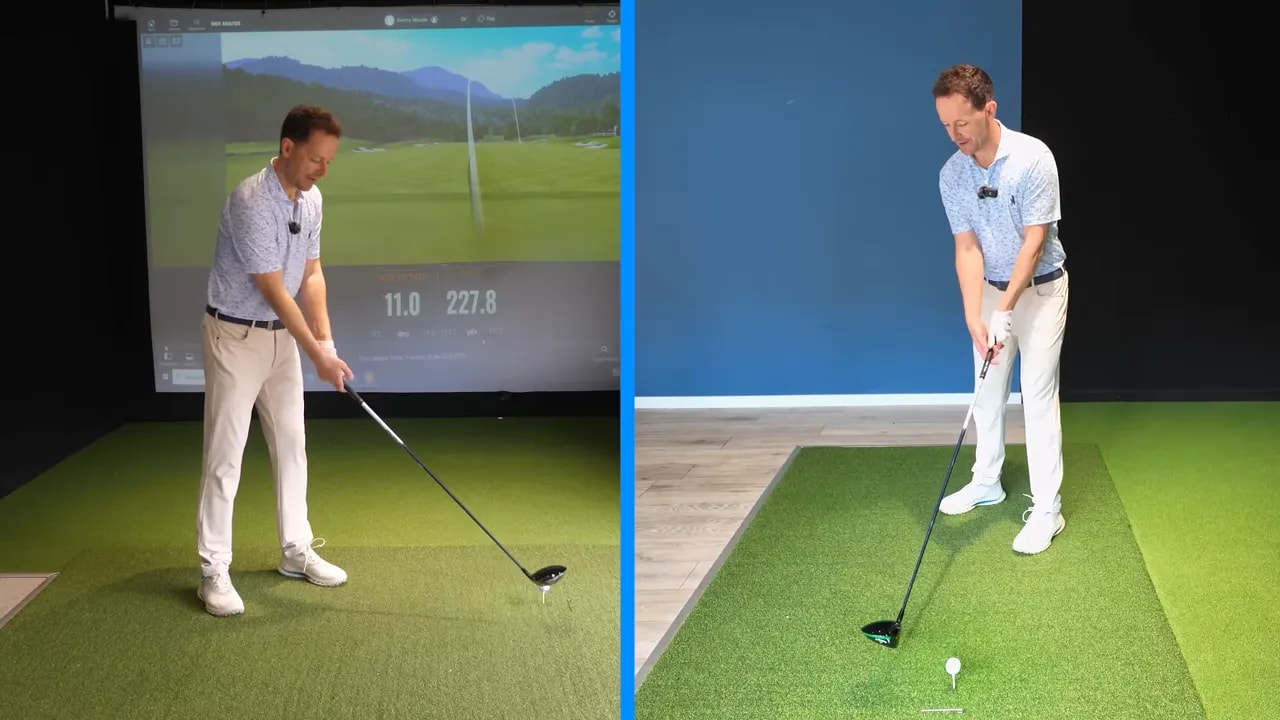
Set the clubface toward the target, then aim your body noticeably to the right of that face. In practical terms, your forearms, shoulders, and overall body alignment feel more rightward while the face still looks at the target.
From there, make your swing while keeping the sense that your body and path are moving more to the right than usual relative to the face.
This changes the relationship dramatically. Instead of a path traveling left of the face, you now create a path that is much more rightward relative to it. From that setup, it becomes extremely difficult to hit the same weak slice.
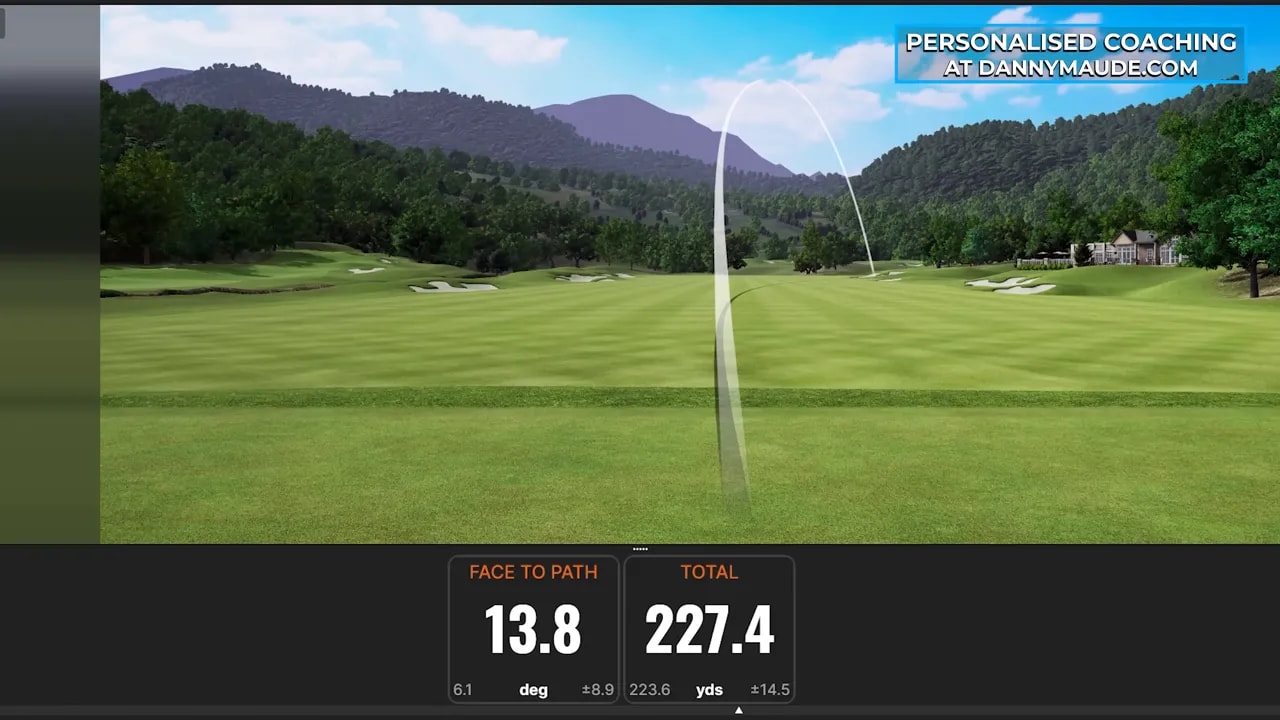
You may even hit a draw or a hook at first. That is fine. In fact, it is useful feedback. It proves that you have changed the relationship.
This is why exaggerated practice is so powerful. If you have spent months or years swinging across the ball, a tiny correction often does not feel different enough. A big exaggeration teaches the pattern faster.
Many golfers find that even a moderate version of this drill is enough to help them hit driver straight almost immediately.
Step 5: Apply the same principle if you hook the golf ball
The hook fix follows the exact same logic, just in reverse.
If your ball hooks left, your normal pattern often has the swing path traveling too far right relative to the clubface. To correct it, you need to feel the opposite relationship.
For a hook
Again, set the clubface toward the target. Then align your body more to the left of that face. As you swing, feel that everything is traveling more left through impact.
This creates the reverse face-to-path relationship. Instead of a path that is too far right of the face, you create one that is left of it. From there, the hook pattern becomes much harder to produce.
If the adjustment is strong enough, you may hit a fade or slice. That is not failure. It is awareness. It means you have changed the geometry of the strike.
Once you can produce both patterns on purpose, you are no longer trapped by either one. You are learning ball flight control.
Step 6: Build the feeling gradually until you can hit driver straight
Exaggeration is for learning. Neutral is for playing.
Once you can create the opposite curve on purpose, the next job is to tone it down. This is where many golfers begin finding their straight shot.
Start by reducing the amount of exaggeration in your setup and motion. Keep the face where you want it, then let your body align less dramatically to the right or left. Over time, the face and path relationship gets closer to neutral.
That is often where straighter drives live.
Think of it as a progression:
Exaggerate to feel the opposite pattern
Repeat until you can create a predictable new curve
Reduce the exaggeration until the ball starts flying straighter
This process works because you are not just hoping for a better shot. You are training awareness of where the face is and where the path is traveling.
That awareness is the real skill.
Step 7: Take this from the range to the golf course with one rule
When you are on the course, the most important instruction is simple:
Respond, don’t react.
A reaction is emotional and immediate. The ball slices right, so you yank your alignment left on the next tee. The ball hooks left, so you start slinging your body right. These reactions happen quickly and feel obvious, but they are often based on the wrong diagnosis.
A response is calm and informed. You see the curve and ask:
What did my face-to-path relationship likely look like?
Do I need to feel more rightward path relative to the face?
Or more leftward path relative to the face?
This pause is a game changer. It stops you from piling instinctive errors on top of the original mistake.
If you slice:
Do not immediately aim farther left
Feel the opposite relationship first
Let the path move more rightward relative to the face
If you hook:
Do not immediately swing more to the right
Feel the opposite relationship first
Let the path move more leftward relative to the face
That one pause between shots can save rounds.
Step 8: Remember that even experienced golfers fall into this trap
This mistake is not just for beginners. It catches everyone.
Even skilled golfers fall into the same instinct under pressure. A player can start hooking the ball and immediately try to stop it by leaning back or slinging the body more to the right. But if that movement sends the path even farther right relative to the face, it creates more of the same miss.
That is why this concept matters so much. It gives you a reset button.
Instead of judging the shot and making a panicked correction, you return to the same principle every time:
Ball flight is controlled by the relationship between face and path.
Once you understand that, bad shots become easier to interpret. You are no longer guessing.
Step 9: Use this simple practice routine to hit driver straight with more control
If you want a practical way to train this, use the following range routine.
Practice routine for slicers
Hit 5 balls with your normal swing and observe the curve.
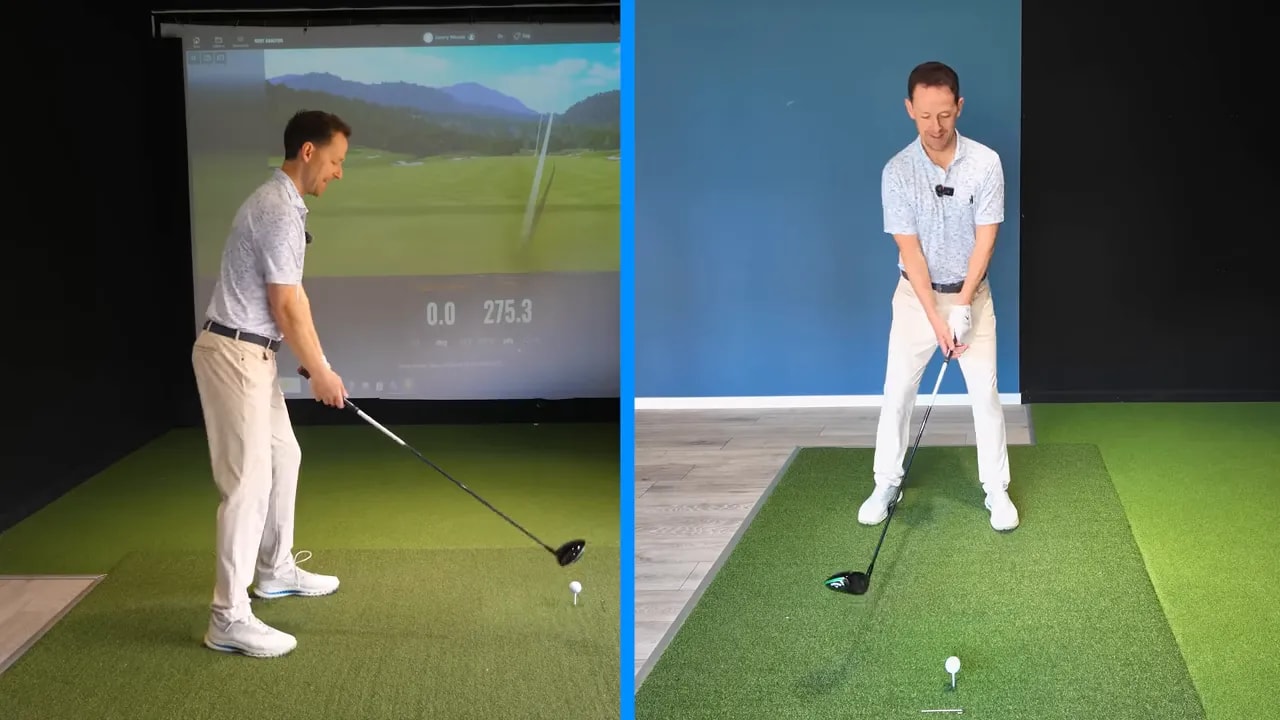
Set the clubface at the target.
Aim your body right of the target in an exaggerated way.
Hit 5 balls trying to feel the path move more rightward than normal.
Notice whether the slice decreases, disappears, or turns into a draw.
Reduce the exaggeration until the flight becomes playable and straight.
Practice routine for hookers
Hit 5 balls with your normal swing and observe the curve.
Set the clubface at the target.
Aim your body left of the target in an exaggerated way.
Hit 5 balls trying to feel the path move more leftward than normal.
Notice whether the hook decreases, disappears, or turns into a fade.
Reduce the exaggeration until the flight becomes playable and straight.
This approach turns random practice into informed practice. You are not just hitting balls. You are learning cause and effect.
Step 10: Apply the same face-to-path concept to every club in the bag
This is not just a driver lesson. The same principle applies to irons, fairway woods, hybrids, and even partial shots.
If the ball is curving, the clubface and path relationship is involved. That means the same pattern recognition can help you fix:
Driver slice
Driver hook
Iron push-fade
Iron pull-draw
General inconsistency in start line and curve
What changes club to club is not the principle. What changes is the amount of exaggeration you may need and the kind of ball flight you are trying to create.
The payoff is bigger than straighter drives. You begin to understand your golf swing in a way that gives you a repeatable method for self-correction.
FAQ
Why can’t I hit driver straight even when I try to aim left?
Aiming left may change where you are pointed, but it does not necessarily improve the relationship between your clubface and swing path. In many cases, it makes your path travel even farther left relative to the face, which adds more slice spin.
What is the main cause of a slice with the driver?
A slice happens when the swing path travels left of the clubface through impact. That mismatch creates spin that curves the ball to the right.
What is the main cause of a hook with the driver?
A hook happens when the swing path travels right of the clubface through impact. That relationship creates spin that curves the ball to the left.
How do I use the exaggeration drill to hit driver straight?
If you slice, keep the clubface toward the target and align your body more to the right. If you hook, keep the clubface toward the target and align your body more to the left. The exaggeration helps you feel the opposite face-to-path relationship. Then you gradually reduce the exaggeration until you find a straight ball flight.
Should I use this only with my driver?
No. The face-to-path relationship controls curve with every club. The same concept can help you understand and fix misses with irons, woods, and hybrids.
What does “respond, don’t react” mean in golf?
It means pausing after a bad shot and diagnosing the face-to-path relationship instead of making an emotional correction based only on where the ball ended up. A response is informed. A reaction is instinctive.
Final thought
If you want to hit driver straight, stop trying to steer the ball with instinct alone. The ball does not care what feels logical in the moment. It responds to the relationship between your clubface and your swing path.
Once you understand that, the game becomes less confusing. A slice is no longer just a frustrating shot to the right. A hook is no longer a mystery to the left. Each one becomes information.
And when you use that information correctly, you finally give yourself something every golfer wants: control.
Straighter drives start with a better diagnosis. Then they become a habit.
0 Comments