
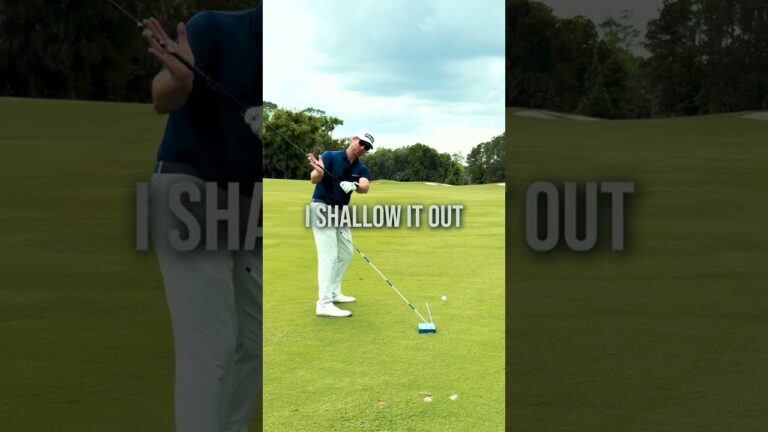

Getting stuck in the golf swing is one of the most frustrating problems for a skilled player. You may shallow the club too late, trap it behind your body, and then see two common golf misses show up. One is the block to the right. The other is the quick hand flip that turns into a snap hook. If that sounds familiar, this golf fix is built for you.
The key idea is simple. In golf, you want the club to shallow early in the downswing, then work back in front of you through impact. That creates a motion that feels a bit like a fade swing from the inside. When you do it well, the golf ball can start flying much straighter, and you stop feeling trapped with the club stuck behind you.
This guide explains how to fix getting stuck in golf step by step, how to practice the move, and what mistakes to avoid.
Table of Contents
- Step 1: Understand what “getting stuck” means in golf
- Step 2: Know the ball flight pattern that proves you are stuck
- Step 3: Build the right golf downswing sequence
- Step 4: Shallow the club early in the golf downswing
- Step 5: Feel the handle work back toward you to get the golf club in front
- Step 6: Use the “fade from the inside” feel in golf
- Step 7: Practice this golf move with a simple station
- Step 8: Hit golf shots with the right feedback
- Step 9: Avoid the most common golf mistakes
- Step 10: Use a simple golf rehearsal before every range session
- Step 11: Know who this golf fix is best for
- Step 12: Turn the feel into a repeatable golf stock shot
- Golf takeaway
- FAQ
Step 1: Understand what “getting stuck” means in golf
In golf, getting stuck usually means the club drops too far behind your body on the downswing. This often happens when the start down is steep, but the club then shallows too late and falls underneath the plane.
When that happens, you generally have to make a compensation:
- Block: the club stays behind you and the ball starts right
- Flip hook: your hands fire late to save the shot and the ball dives left
That is why this golf pattern creates timing issues. You can hit some great shots with it, but under pressure the face and path become harder to control.
Many better golf players can already draw the ball. Their problem is not producing an inside path. Their problem is controlling it when the club gets trapped too far behind them.
Step 2: Know the ball flight pattern that proves you are stuck
If you want to fix a golf swing issue, first identify the pattern it creates. A stuck downswing usually shows up as one of these:
- Pushes or blocks that start right
- Push draws that overcurve
- Snap hooks when you try to save the shot
- Inconsistent contact because your release timing changes from swing to swing
In golf, those misses are tied together. The block happens when you leave the club behind you. The hook happens when you react to that block and throw the hands to square the face.
If you tend to alternate between right misses and hard left misses, this golf concept deserves your attention.
Step 3: Build the right golf downswing sequence
The solution is not to throw the club over the top from the start. The solution in golf is a two-part sequence:
- Shallow the club early
- Then get the club back in front of you
This is an important distinction. If the club is already shallowed from the inside early in the downswing, then letting it work back on top later does not mean you are making an over-the-top golf move. It means you are returning the club to a neutral delivery position.
That is why strong players often prefer the feeling of “covering” the ball. In golf terms, they want the club and trail side moving more on top of the shot through impact, not hanging back with the shaft trapped behind them.
Think of it this way:
- Too steep early: bad
- Shallow early: good
- Stay under forever: bad
- Shallow early, then re-cover the ball: good
Step 4: Shallow the club early in the golf downswing
The first job is to make sure your golf club is not steep as it starts down. You want the shaft to flatten early enough that you are approaching from the inside without needing a late reroute.
For many players, this is the part they already do reasonably well. But it still matters because if you skip this step and simply try to throw the club in front, your golf swing can become steep and glancing.
Focus on this checkpoint:
- At the start of the downswing, the club should feel like it is shallowing from the inside
- The clubhead should not feel like it is being thrown out immediately
- Your transition should create room for the shaft to flatten before impact delivery begins
If you can get the golf club shallow early, you have set up the second move that actually prevents getting stuck.
Step 5: Feel the handle work back toward you to get the golf club in front
Once the club is shallow, the next feel is what solves the stuck pattern. Through the later part of the downswing, feel as if the butt end of the club starts working back up toward you. That motion helps kick the club back in front of your body.
This is the missing piece for many better golf players. They know how to drop the club, but they never recover it. The handle keeps moving too far behind them, and the club gets trapped.
When you make this move correctly in golf:
- The club feels like it comes back in front of your torso
- Your trail side can move more on top of the ball
- You can rotate through the shot without a panic hand flip
- Path and face control improve
A good mental image is closing the club down through the strike area, not by rolling your hands wildly, but by getting the whole delivery more in front of you.
Step 6: Use the “fade from the inside” feel in golf
One of the best golf feels for this move is to sense that you are hitting a fade while still swinging enough from the inside that the ball flies straight.
This sounds contradictory at first, but it is useful. If you are a golfer who gets stuck, your default pattern is often too far under the plane. Trying to feel a fade helps neutralize that.
Here is what that means in practical golf terms:
- Your club is still approaching from the inside
- But your through-swing feels more left and more on top
- The face is not being violently flipped shut
- The ball flight becomes straighter because the path and face are no longer fighting each other
For many players, the right golf swing feel is not “draw it more.” It is “fade it from the inside.” That can be the difference between a controlled stock shot and a swing that depends on perfect timing.
Step 7: Practice this golf move with a simple station
A training aid can help, but the golf concept matters more than the brand. Set up a station that gives you a visual for a shallowed shaft early in the downswing. Then rehearse the club working back in front from there.
Your golf practice station should help you feel two checkpoints:
- Early shallow
- Late cover
During rehearsals:
- Pause at the start of the downswing and confirm the club has flattened
- From there, feel the handle moving back toward you
- Let the clubhead work back in front of your chest
- Rotate through with the sensation that you are covering the golf ball
If you use an alignment stick or downswing guide in your golf training, make sure you are not only rehearsing the drop. You must also rehearse the recovery back in front.
Step 8: Hit golf shots with the right feedback
When you take this to the range, use ball flight as your golf feedback system.
What a good rep looks like
- Start line is close to target
- Curve is small
- Contact feels centered
- You do not feel the need to save the shot with your hands
What it means if the ball fades too much
If your golf ball starts fading too much, you may be overdoing the “kick it in front” feel. In that case, you likely need a bit more early shallow and a bit more inside delivery.
What it means if the ball still blocks right
If your golf ball still blocks, the club is probably not getting back in front enough. You are still too far underneath in the delivery.
What it means if the ball hooks
If you hit hooks, your golf release may still be too handsy, or the club may still be trapped behind you and you are flipping to save it.
This is why straight shots are such a valuable sign. In this pattern, a straight golf ball usually means your inside approach and covering move are balanced correctly.
Step 9: Avoid the most common golf mistakes
Many golfers understand the idea but apply it in the wrong order. Here are the biggest mistakes.
Mistake 1: Trying to get on top too early
If you throw the club out from the top before it has shallowed, your golf swing can become steep and across the ball. That is not the goal.
Mistake 2: Shallowing forever
Some golf players love the feeling of dropping the club behind them because it can create powerful draws. But if the club never gets back in front, you are living on blocks and hooks.
Mistake 3: Flipping the hands instead of covering the ball
The fix is not a late hand action. In golf, this move is more about delivery and body alignment through impact than about a last-second roll of the wrists.
Mistake 4: Judging the swing only by feel
Your golf swing may feel left, steep, or fade-like and still be perfect for your pattern. If the ball is flying straighter and the club no longer feels trapped, that is useful feedback.
Step 10: Use a simple golf rehearsal before every range session
If getting stuck is your pattern, start each golf practice session with slow-motion rehearsals before hitting full shots.
- Make a backswing
- Start down and feel the shaft shallow
- Stop halfway down
- From there, feel the handle work back toward you
- Let the club move in front of your body
- Rotate through with a covered finish
Do 5 to 10 rehearsals, then hit short golf shots with the same feel. Build from half speed to full speed only after the start line and curve improve.
This progression helps because it trains the sequence, not just the end result.
Step 11: Know who this golf fix is best for
This golf concept is especially useful if you:
- Already hit draws easily
- Fight blocks and snap hooks
- Feel the club gets trapped behind you
- Want a more reliable stock shot under pressure
It is less useful if your main golf problem is a steep, slicing move from the top with no shallow at all. In that case, you would need to learn the early shallow first before working on the cover move.
Step 12: Turn the feel into a repeatable golf stock shot
The long-term goal is not to swing with lots of mechanical thoughts. It is to build one dependable golf pattern you can trust.
For many strong players, that pattern is:
- Shallow enough early to approach from the inside
- On top enough through impact to control the face
- Neutral enough to hit the ball straight
You can think of that as a controlled fade intention with an inside golf delivery. Even if the ball does not visibly fade, the feel can stop the club from getting trapped and improve contact consistency.
When this is working, your golf swing no longer depends on split-second hand timing. The club is in a better place earlier, and impact becomes easier to repeat.
Golf takeaway
If you keep getting stuck in golf, do not assume the answer is to drop the club more underneath. For many better players, the better fix is this sequence:
- Shallow the club early
- Then get it back in front of you
- Feel like you are playing a fade from the inside
That blend can remove the block, reduce the snap hook, and help you cover the golf ball with much less timing stress.
FAQ
Why do I get stuck in my golf swing?
You usually get stuck in golf when the club drops too far behind your body in the downswing. That often starts with a steep transition followed by a late drop underneath. The result is a club that approaches from too far behind you, which can cause blocks or hooks.
What does “play fade from the inside” mean in golf?
In golf, it means you keep enough inside delivery to avoid coming over the top, but your through-swing feels more like a fade. That helps the club work back in front of you instead of staying trapped behind you. The ball can still fly straight if the path and face match up well.
Can you shallow the golf club too much?
Yes. In golf, too much shallow without getting the club back in front can leave the shaft under plane for too long. That is when blocks and flip hooks often appear. Early shallow is good, but it must be followed by a covering move through impact.
How do I know if I am overdoing this golf move?
If the ball starts fading too much, you may be getting the club too far in front or too far on top relative to your inside delivery. In that case, keep the same golf concept but add a little more early shallow and a little less aggressive cover feel.
Is this golf tip only for advanced players?
This golf tip is most helpful for players who already draw the ball and tend to get stuck. If you are a slicer who is very steep from the top, your first golf priority is usually learning to shallow the club earlier before using this as your main feel.
What is the stock golf shot this move is trying to create?
The ideal result is a straight golf ball or a very slight fade. The swing feel may seem fade-like, but because the club is still delivered from the inside, the ball often flies very neutral.
0 Comments