
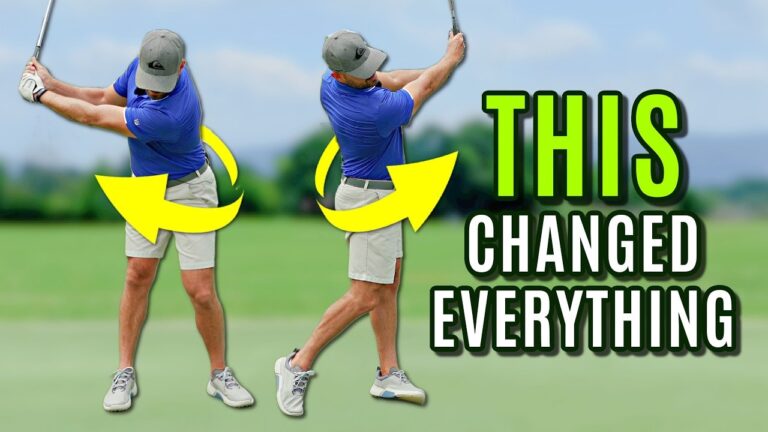

If you want more solid contact, cleaner divots, and straighter ball flight, there is one move in the golf swing that deserves far more attention than it usually gets. It is not a grip tweak. It is not a backswing position. It is not a wrist angle.
It is hips forward in the golf swing.
For many golfers, this is the missing link between inconsistent ball striking and the kind of compressed, reliable contact that makes the game feel simpler. When your hips move properly toward the target during the downswing, two important things improve at once: your low point moves forward, and your club can approach the ball more from the inside. That means fewer fat and thin shots, and fewer pulls and weak fades.
This move is subtle, but it is one of the closest things to a non-negotiable in good ball striking.
Table of Contents
- Step 1: Understand why hips forward in the golf swing matters so much
- Step 2: Recognize the common pattern that ruins contact
- Step 3: Use a simple drill to measure hips forward in the golf swing
- Step 4: Choose the feel that helps you move the hips forward
- Step 5: Add rotation so hips forward in the golf swing does not become a slide
- Step 6: Start the move early in the downswing
- Step 7: Keep your head back while the hips go forward
- Step 8: Build a setup that makes hips forward in the golf swing easier
- Step 9: Keep the hips centered in the backswing
- Step 10: Use at-home rehearsals to train hips forward in the golf swing
- Step 11: Turn the motion into a repeatable ball-striking pattern
- Frequently Asked Questions
- Final thought
Step 1: Understand why hips forward in the golf swing matters so much
The key idea is simple. During the downswing, your hips need to move forward toward the target by roughly 4 to 6 inches. In many strong players, it can be even more than that.
That forward motion is not cosmetic. It has a direct effect on impact.
Benefit one: better low point control. Your low point is where the club bottoms out. With irons, you want that point to be in front of the ball so you can strike the ball first and then the turf. When your hips stay back, the low point tends to stay back too. That is when fat shots and thin shots start showing up.
Benefit two: an inside path. As your hips move forward, your body gains the proper tilt away from the target. That creates room for the club to approach lower and more from the inside. The result is usually straighter shots and better direction control. If your hips hang back, the club is more likely to work steeply from outside the target line, which can lead to pulls and fades.
This is why hips forward in the golf swing can solve multiple problems at once. It improves contact and club path without needing a dozen separate swing thoughts.
Step 2: Recognize the common pattern that ruins contact
A lot of golfers search for answers in the wrong places. They focus on setup details, takeaway positions, shoulder turn, or hand action, while missing the body motion that actually controls impact.
The most common issue is this: the hips stay too far back for too long.
When that happens, a predictable set of misses appears:
- Fat shots
- Thin shots
- Pulls
- Fades
- Steep, out-to-in swings
If that sounds familiar, there is a good chance the problem is not as complicated as it seems. Golfers often list many things they dislike in their swing, but one body movement can be the real root cause. When the hips work forward properly, impact conditions often clean up very quickly.
Elite ball strikers consistently show this pattern. Whether you look at players like Scottie Scheffler, Tommy Fleetwood, Rory McIlroy, Xander Schauffele, or Collin Morikawa, one trait shows up again and again: their hips are notably more forward by the time they move through impact and into the finish.
Step 3: Use a simple drill to measure hips forward in the golf swing
The easiest way to train this is with a visual reference on the ground.
Take a 7-iron or 8-iron and place it on the ground in line with the golf ball. Position it so it represents the ball line in the middle or slightly forward of center in your stance. This gives you a clear marker for where your hips need to get past.
From there, make some swings and check your finish.
Your goal is to finish with your hips clearly forward of that line. Not level with it. Not behind it. Forward of it.
A good checkpoint is that the entire pelvis has shifted past the marker by the time you are in your finish position. If you can consistently get there, you are much more likely to have shifted enough during the downswing to move the low point forward and shallow the path.
This is a useful first checkpoint because it simplifies the move. Instead of trying to think about impact positions in real time, you are training a finish position that all but requires the right shift on the way down.
Step 4: Choose the feel that helps you move the hips forward
There are two effective ways to feel hips forward in the golf swing. Neither is universally right or wrong. The better one is the one that makes the movement happen for you.
Feel option 1: Fall into your lead side
Some golfers respond best to the sensation of increasing pressure into the lead foot during the downswing. If you feel more weight collecting under your lead leg, your hips will often move forward naturally.
This can be a good feel if you struggle to get off your trail side or tend to hang back through impact.
Feel option 2: Push off your trail side
Other golfers do better with the opposite thought. Instead of trying to fall into the lead side, they feel like they are pushing off the inside of the trail foot.
This is especially helpful for players who need something more active and athletic. Pushing from the trail side can create the same forward hip motion without overthinking weight shift.
If one of these feels clicks immediately, use it. If not, test both. The feel is only a tool. The real goal is still the same: your hips must get fully forward.
Step 5: Add rotation so hips forward in the golf swing does not become a slide
There is an important distinction here. Forward is good. Sliding without turning is not.
Your hips should not move toward the target while your belt buckle still faces the ball. Good players combine forward motion and rotation.
By the finish, your pelvis is not only shifted forward, it is also turned so the belt buckle points much more toward the target.
This matters because a pure lateral slide can stall rotation, trap the club, and create balance issues. What you want is a dynamic move where the hips push forward and continue opening.
A simple checkpoint:
- Hips are forward of the ball line
- Belt buckle is turned toward the target
- You are balanced in the finish
If you only shift but do not rotate, the move is incomplete. If you only rotate without getting forward, you will likely still struggle with low point and path. Both pieces need to work together.
Step 6: Start the move early in the downswing
Timing matters.
The forward hip motion should begin right away in the downswing, not after the club is already approaching the ball. This is not a late rescue move. It is part of the entire transition and downswing sequence.
Starting early gives your body enough time to create the proper impact alignments. It helps move pressure forward, shifts the low point ahead of the ball, and gives the club room to approach from the inside.
If you wait too long, the club often gets steep, your body stalls, and impact becomes a compensation. The sooner this movement begins, the more natural and repeatable it becomes.
Step 7: Keep your head back while the hips go forward
This is one of the most important checkpoints in the whole motion.
As your hips move forward, your head should not lunge forward with them. Strong ball strikers keep the upper body relatively back while the lower body moves toward the target.
At the finish and through impact, the order looks like this:
- The hips are the farthest forward
- The chest is behind the hips
- The head stays back over the ball area longer
This creates the tilt that helps the club approach correctly. It is also a big reason why hips forward in the golf swing can improve path and contact at the same time.
If your head drives forward with the hips, you may lose posture, get crowded, and steepen the club. Forward hips and a stable upper center are a far better combination.
Step 8: Build a setup that makes hips forward in the golf swing easier
If you need your hips to travel several inches toward the target in the downswing, it makes little sense to begin with them too far back.
A more efficient setup is to start with your hips roughly centered between your feet, or even slightly forward. Think of your belt buckle being in the middle of your ankles, or just a touch toward the target.
You can even favor the lead side a bit at address. A 50-50 pressure distribution is fine, and a slight lead-side bias can also work. The important part is avoiding a setup that starts with the pelvis noticeably trailing.
This gives you a head start on the motion you need later.
For golfers who sway to the trail side in the backswing, this is especially important. The farther back your hips travel early, the harder it becomes to get them where they need to be by impact.
Step 9: Keep the hips centered in the backswing
Once your setup is improved, the next task is to avoid a big drift away from the target in the backswing.
Good players generally keep the hips fairly centered. They do not shove them well to the trail side. Instead, the trail hip works back and around while the pelvis stays more neutral overall.
That is a useful image to keep in mind:
- Do not sway the hips off the ball
- Feel the trail hip move around behind you
- Stay centered enough to make the forward shift easy
A simple pattern that works well is:
- Set up with the hips slightly forward
- Let the trail hip work around in the backswing
- Drive the hips fully forward and rotated in the downswing
This sequence is not overly complicated. In fact, it often feels simpler than trying to manage several disconnected swing fixes.
Step 10: Use at-home rehearsals to train hips forward in the golf swing
You do not need to hit balls to start improving this move.
One of the best rehearsal methods is to stand with your hands on your hips and place an object in the middle of your stance. Then rehearse pushing your hips entirely forward of that object while turning your belt buckle toward the target.
As you do this, pay attention to your trail foot. To get fully through the shot, the trail foot has to release. The heel can come up, the shoelaces can begin pointing more toward the target, and the trail knee can move forward.
Helpful checkpoints include:
- Trail shoelaces turning toward the target
- Trail kneecap moving forward
- Hips forward of center
- Belt buckle rotated open
- Head staying back relative to the hips
These rehearsals are excellent because they remove the distraction of the golf ball. You can focus on the body motion first, then blend it into your swing later.
Step 11: Turn the motion into a repeatable ball-striking pattern
To make this stick on the course, keep the thought process simple.
A practical sequence can sound like this:
- Setup: hips slightly forward
- Backswing: trail hip works around, no big sway
- Downswing: fall into the lead side or push off the trail side
- Finish: hips fully forward and rotated, head staying back longer
If you are searching for a priority fix, this is a strong place to start. There are many style differences in golf swings, but hips forward in the golf swing is one of the rare fundamentals that shows up across elite players again and again.
That is why it can change ball striking quickly. When your body is organized properly, impact often improves faster than expected.
Frequently Asked Questions
How far should the hips move forward in the downswing?
A useful benchmark is about 4 to 6 inches toward the target. Some better players move even more. The exact number matters less than whether your hips clearly get forward enough to move the low point ahead of the ball and allow the club to approach from the inside.
Will hips forward in the golf swing help fat and thin shots?
Yes. Forward hip motion improves low point control, which is a major factor in striking the ball first and then the ground. When the hips stay back, the low point often stays back too, leading to fat and thin contact.
Can this also help with pulls and fades?
It can. When your hips move forward correctly, your body creates better tilt and more room for the club to approach from the inside. That can reduce the steep, out-to-in path that often produces pulls and fades.
Should I feel pressure into my lead foot or push off my trail foot?
Either feel can work. Some golfers do better feeling pressure collect into the lead side. Others respond better by pushing off the inside of the trail foot. Use the one that helps your hips actually move forward.
Is this just a hip slide?
No. The hips should move forward and rotate open. A pure slide without rotation is incomplete and can create other problems. A good finish has the pelvis forward and the belt buckle turned toward the target.
Where should my head be when my hips move forward?
Your head should stay back relative to your hips. Good ball strikers do not drive the whole upper body forward with the pelvis. The hips move forward while the chest and head remain back longer.
Should my hips start forward at address?
Starting centered is a good baseline, and slightly forward can be helpful. What you want to avoid is setting up with your hips noticeably behind center if you already need them to move several inches toward the target later.
Final thought
If your swing feels crowded, steep, inconsistent, or overly complicated, there is real value in simplifying your focus. Instead of trying to fix everything at once, train one movement that influences impact directly.
Hips forward in the golf swing is one of those rare fundamentals that can improve contact, path, and compression in a very short time. Start with a visual checkpoint, choose the feel that works for you, and rehearse it until the finish position becomes natural.
When your hips get forward enough, a lot of other swing problems begin to clean themselves up.
0 Comments