

Golf gets much easier off the tee when you learn how to square the driver face earlier in the downswing. If you tend to slice, leave the face open, or feel like you have to flip your hands at impact, this golf concept can help you create a more solid strike and a more reliable draw shape.
This guide explains a simple golf move centered on wrist action, clubface control, and setup. The focus is not on adding extra hand manipulation late in the swing. It is about getting the face organized sooner so your golf swing can move through impact with less compensation.
Table of Contents
- Step 1: Understand what “squaring the face” means in golf
- Step 2: Build the motion without a club first
- Step 3: Use the lead wrist to start squaring the golf clubface
- Step 4: Match the trail hand to the lead wrist in your golf swing
- Step 5: Connect early face squaring to forward shaft lean and lag
- Step 6: Rotate through impact instead of flipping in golf
- Step 7: Add the right spine tilt to support better driver golf
- Step 8: Use an alignment stick to train your golf path and setup
- Step 9: Practice this golf move with small rehearsals before full drives
- Step 10: Know the common golf mistakes with face squaring
- Step 11: Use a simple golf checklist before each driver swing
- Step 12: Track the right ball flight changes in your golf practice
- Golf FAQ
- Final takeaway for better golf off the tee
Step 1: Understand what “squaring the face” means in golf
In golf, an open driver face is one of the biggest reasons tee shots curve weakly to the right for a right handed player. Many golfers try to fix that problem too late by rolling the hands through the ball. That usually produces inconsistent contact and timing.
A better golf approach is to start squaring the face from the top of the backswing, before the club reaches the ball. When the face begins to organize earlier, you can:
Reduce slicing spin
Create a stronger, more compressed strike
Improve face control with the driver
Make it easier to hit a draw in golf
Avoid a last second flip through impact
The key golf idea here is early face squaring, not late face rescue.
Step 2: Build the motion without a club first
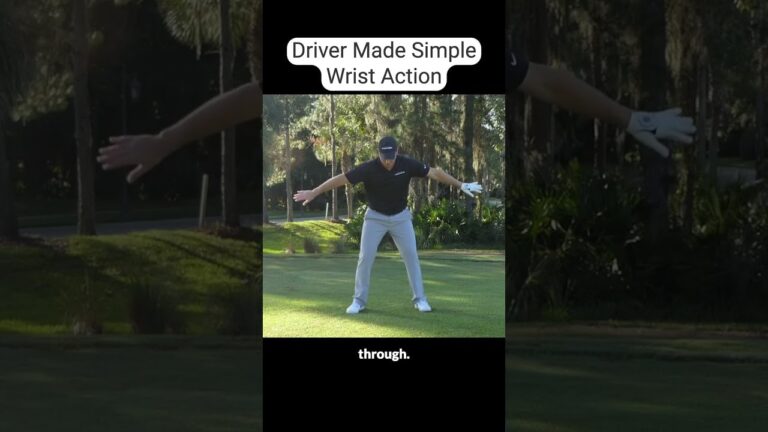
One of the simplest ways to learn this golf move is to rehearse it with your arms only. That makes the motion easier to feel without worrying about the clubhead.
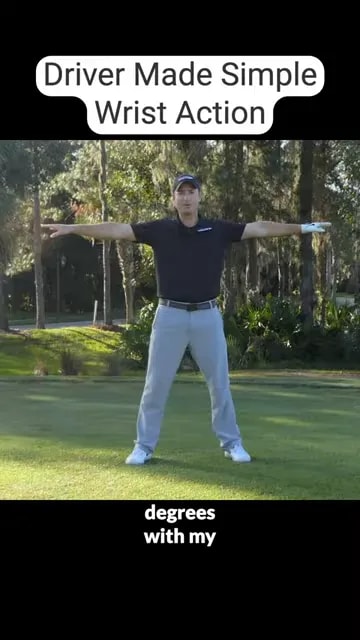
Start by standing in your golf posture and letting your arms extend out roughly in line with your shoulders. Then hinge forward as you would in a normal golf address. From there, turn your body so your shoulders rotate, and let your arms rotate with them.
The goal in this golf rehearsal is to feel your arms and shoulders moving together, not independently. At the top of the motion:
Your lead arm should feel like it points well behind the ball
Your trail arm should feel like it moves well behind you
Your chest and shoulder turn should support the arm position
This gives you a simple structure for the backswing and sets up the face squaring move that follows.
Step 3: Use the lead wrist to start squaring the golf clubface
The main golf feel in this lesson is the action of the lead wrist at the start of the downswing.
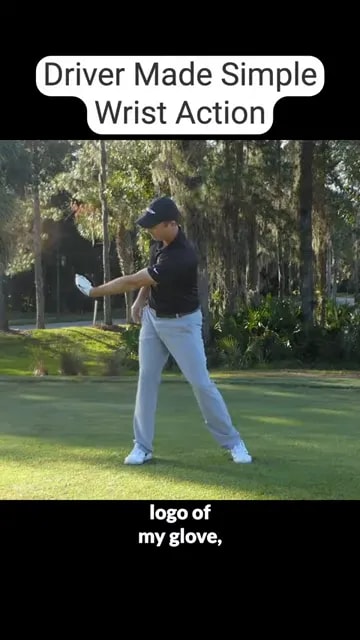
From the top, begin turning the lead hand down so the palm feels more like it faces your chest. If you wear a glove on the lead hand, a useful golf checkpoint is that the glove logo feels like it points more toward the ground.
This lead wrist condition is commonly called flexion. In practical golf terms, it helps close or square the face sooner.
Why this matters in golf:
An open lead wrist often leaves the face open
A flexed lead wrist helps organize the face earlier
Earlier face control reduces the need for a frantic hand roll at impact
If you usually hit a slice in golf, this can feel exaggerated at first. That is normal. Many golfers need a stronger feel than they expect because their old pattern is so open.
Step 4: Match the trail hand to the lead wrist in your golf swing
The trail hand supports the same golf move. As the lead wrist moves into flexion, the trail wrist should feel bent back. The trail palm feels more away from you, while the knuckles feel more back toward you.
Together, these wrist conditions help the golf clubface square earlier instead of staying open deep into the downswing.
A simple golf pairing to remember is this:
Lead hand: palm feels more toward the chest
Trail hand: wrist feels bent back
These are training feels, not rigid positions you need to force. In golf, feels and real positions are rarely identical. Use the feel that helps you deliver a squarer clubface.
Step 5: Connect early face squaring to forward shaft lean and lag
When you square the face earlier in the golf downswing, you also put yourself in a better position to create forward shaft lean and retain lag.
That matters because an open clubface often causes golfers to throw the clubhead early just to reach square by impact. In golf, that throwaway pattern can cost speed, consistency, and center contact.
With the earlier squaring move:
The hands can lead more naturally
The shaft can approach impact in a stronger position
The face can be more stable through the strike
For driver in golf, the shaft does not need to look dramatically pressed forward at impact like a wedge. But this move can still help keep the handle organized while the club releases properly farther out in front.
Step 6: Rotate through impact instead of flipping in golf
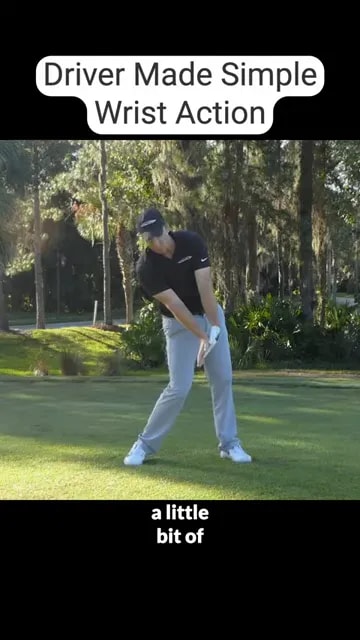
Once the face is squared earlier, you can keep rotating through the shot. That is a huge advantage in golf.
If you wait until the last instant to square the face, you often have to stall the body and throw the hands. That can produce blocks, hooks, thin shots, or weak pop ups. If the face is already in a better position, you can simply keep turning.
In this golf motion, the body rotation and wrist conditions work together:
Turn to the top
Square the face early
Move down to impact
Keep rotating through the finish
This sequence is one reason better golf players often make the driver swing look effortless. They are not making a frantic save at the bottom.
Step 7: Add the right spine tilt to support better driver golf
Clubface control is only part of solid driver golf. Setup matters too. One of the most important pieces is a slight tilt of the spine away from the target at address.
If your upper body stays too vertical, or worse, leans toward the target, it becomes much harder to deliver the driver correctly. In golf, that can make you come over the top, hit down too much, or miss the intended path.
A simple golf checkpoint is this:
Feel the upper body tilted slightly away from the target
Do not overdo it
Create just enough tilt to help the club approach from the proper side
This tilt makes it easier to swing the driver on a useful path and match the face to that path.

Step 8: Use an alignment stick to train your golf path and setup
An alignment stick can make this golf drill more effective. It gives you immediate feedback on both setup and swing direction.
You can use it to check:
Your feet are parallel to the target line
Your setup is organized before each shot
Your swing can work from the inside rather than cutting across the ball
For many golfers, face and path issues happen together. A face that is too open and a path that is too far left create the classic slice. Using a simple stick on the ground helps clean up both parts of the golf picture.

Step 9: Practice this golf move with small rehearsals before full drives
Do not jump straight into full speed golf swings. Start with rehearsals.
Here is a simple golf practice plan:
Make slow arm only rehearsals without a club.
Rehearse the top of the backswing.
From there, turn the lead hand down and feel the trail wrist bend back.
Move into a slow impact position.
Rotate through to a balanced finish.
Hit 5 to 10 drives focused only on a straight ball or gentle draw.
This kind of blocked practice is useful in golf because it gives your body time to connect the new wrist feel with the ball flight.
A good checkpoint is a shot that starts solidly and curves slightly right to left if you are a right handed golfer. That usually means your golf face and path are beginning to work together.
Step 10: Know the common golf mistakes with face squaring
This move is simple, but golfers often overdo or misapply it. Watch out for these common golf errors.
Over-bowing the lead wrist
If you force the lead wrist too much, the face can shut excessively and produce hooks or low pull shots in golf.
Rolling the forearms too early
Early face squaring in golf is not the same as wild forearm roll from the top. The move is more controlled and tied to the wrist conditions.
Leaning the upper body toward the target
Even a good wrist move can fail if your golf setup puts you in a poor delivery position.
Trying to hit a draw without checking alignment
Some golfers aim too far right, then swing farther right, and never really improve their golf clubface control. Use alignment aids whenever possible.
Practicing too fast
Speed hides feel. Slow golf rehearsals help you learn the motion much faster than rapid fire full swings.
Step 11: Use a simple golf checklist before each driver swing
When you take this to the range or course, keep your thoughts minimal. A short golf checklist is usually better than a long list of mechanics.
Try this:
Setup: feet aligned, ball teed, slight spine tilt away from target
Top: complete shoulder turn
Transition: lead hand down, trail wrist bent back
Through swing: keep rotating
If you can repeat those four golf checkpoints, your driver swing is more likely to produce a square face and a stronger strike.
Step 12: Track the right ball flight changes in your golf practice
When this golf move starts working, the first improvement may not be huge distance. It may be better start direction and less curve.
Positive signs include:
Shots starting closer to your intended line
Less weak right curve
A straighter flight or soft draw
Contact that feels more centered and solid
If the ball starts left and dives farther left, your golf face may be getting too closed. If it still floats right, you may need more early squaring feel or better setup tilt.
Golf FAQ
Why does my driver face stay open in golf?
In golf, the driver face often stays open because the lead wrist remains too cupped, the trail wrist loses its bend too soon, or the body and arms never organize the face early enough in transition. Poor setup can also make squaring the face much harder.
Can early face squaring help fix a golf slice?
Yes. In golf, a slice commonly comes from an open face at impact. Learning to square the face earlier can reduce that open condition and make it easier to produce straighter drives or a draw.
What should the lead wrist feel like in the golf downswing?
A useful golf feel is that the lead palm turns more toward the chest and the glove logo points more toward the ground. That helps move the face toward square earlier in the downswing.
Do you want forward shaft lean with a driver in golf?
In golf, driver impact does not usually look as forward pressed as an iron or wedge. But the hands still need to be organized, and the club can still approach with a useful amount of shaft lean before releasing farther in front.
How many balls should I hit when learning this golf move?
Start small. In golf practice, 5 to 10 focused drives after several slow rehearsals is often better than blasting through a large bucket with no feedback.
Final takeaway for better golf off the tee
If you want better driver golf, focus on squaring the face earlier, not saving it at the last moment. Rehearse the backswing, feel the lead hand work down, match it with the trail wrist, keep a slight spine tilt away from the target, and rotate through the shot.
That combination can help you hit straighter drives, reduce slice spin, and build a more dependable golf swing under pressure.
0 Comments