
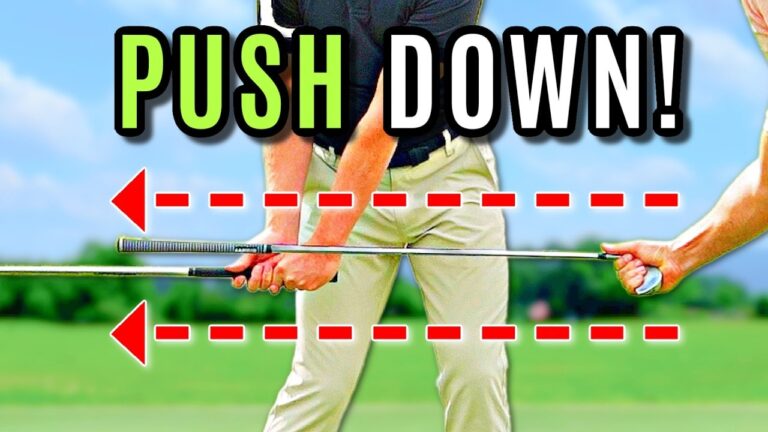

Focus keyphrase: low hands golf swing
If your iron contact feels streaky, the issue may not be your tempo, your grip, or your release. It may start much earlier with where your hands travel in the swing.
A simple low hands golf swing feel can help you stay in posture, keep your lead arm straighter, and return the club with a more reliable delivery. The concept is straightforward. Keep the hands lower while the club works upward during the early takeaway, and keep that same relationship during the early downswing.
The checkpoint is not complicated: hands low, club up.
That one idea can clean up a lot of common ball striking problems, especially if you tend to stand up through the swing or let your arms fold too much.
Table of Contents
- Step 1: Understand why the low hands golf swing matters
- Step 2: Learn the mistake that ruins the low hands golf swing
- Step 3: Use the hands low club up mantra
- Step 4: Check the belt line checkpoint in your low hands golf swing
- Step 5: Add the left shoulder down feel
- Step 6: Allow natural wrist hinge instead of forcing the club low
- Step 7: Keep the arms in, not out
- Step 8: Copy the positions great ball strikers use
- Step 9: Practice the low hands golf swing with simple rehearsals
- Step 10: Choose the feel that gives you the result
- Step 11: Know what success feels like on the course
- Frequently Asked Questions
- Final thought on the low hands golf swing
Step 1: Understand why the low hands golf swing matters
The reason this pattern helps is that it solves two important pieces of solid contact at the same time.
- It helps you stay in posture.
- It helps your lead arm stay straighter.
Good iron players do not constantly move farther from and closer to the ground during the swing. From a down the line view, their posture stays much more stable. When your hands work lower in the takeaway and early downswing, it becomes easier to maintain that original bend from the hips.
The second benefit is arm structure. Lower hands tend to encourage a longer, straighter lead arm. That creates width without forcing it. You are not trying to lock the arm rigid. You are simply avoiding the excessive folding that can narrow the swing and send the club into a poor path.
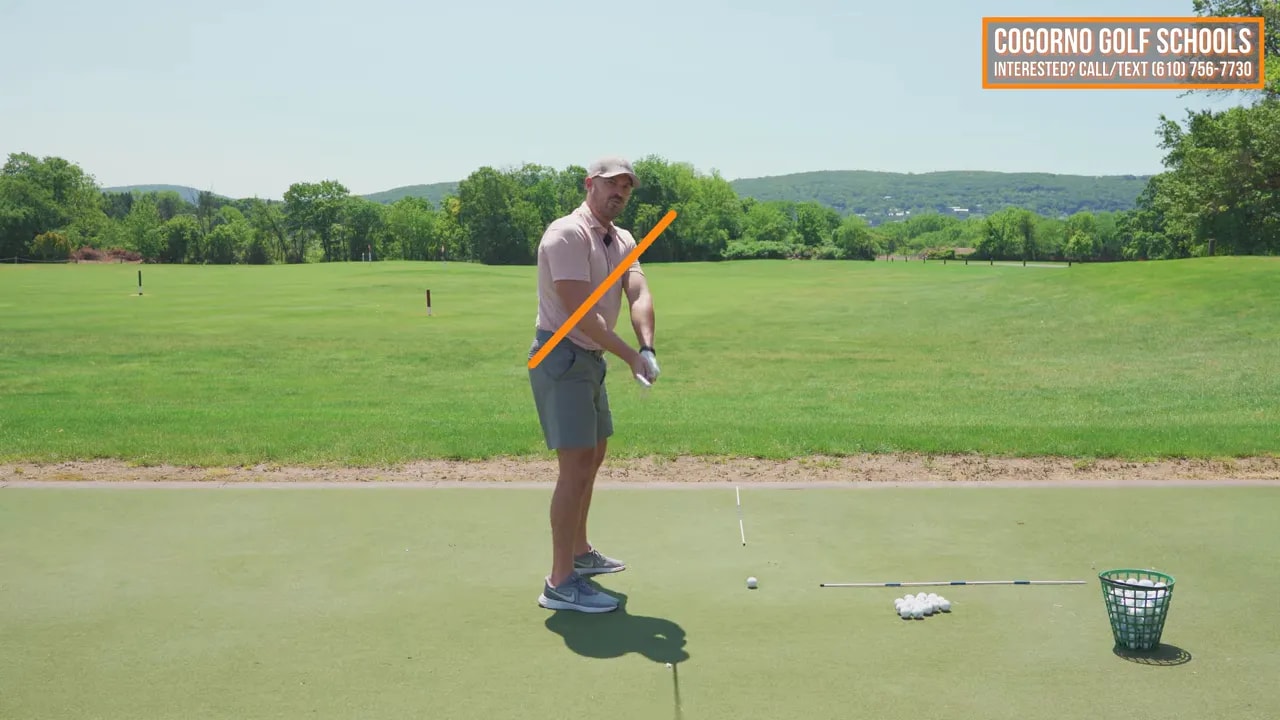
In practical terms, that means your low hands golf swing feel can improve contact without asking you to manage a dozen separate pieces. One feel starts to organize several things at once.
Step 2: Learn the mistake that ruins the low hands golf swing
The opposite pattern is high hands with the club working too low. That usually comes from one of two mistakes.
- You stand up out of posture.
- You bend the arms too much.
When your chest rises and your posture changes, the hands lift. When your elbows fold too early, the hands lift again. In both cases, the club tends to flatten or work too low relative to the hands. That combination makes centered contact harder and often leads to thin shots, heel strikes, or inconsistent turf interaction.
This is why many golfers feel as if they are trying to fix contact with the wrong tool. They work on timing through impact when the real problem started in the first few feet of the takeaway or in the early delivery.
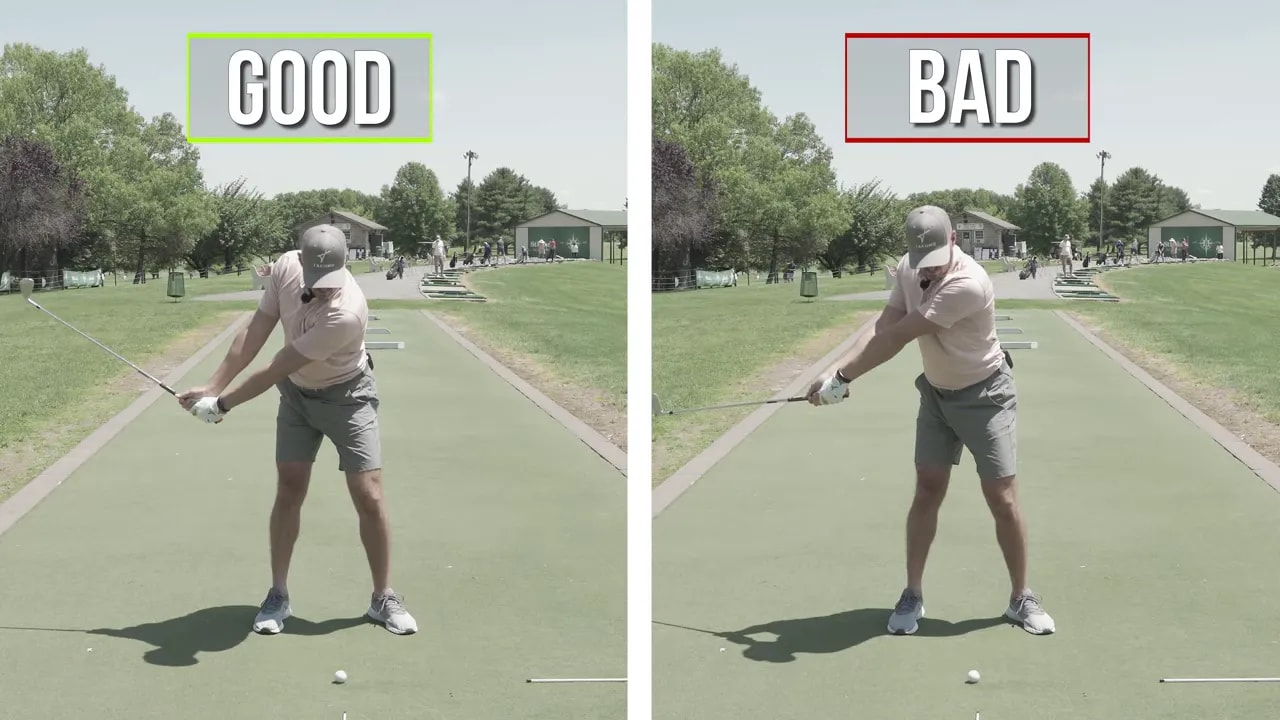
If you have been fighting random iron strikes, this is worth your attention. A low hands golf swing is not about forcing your hands down forever. It is about setting the right relationship early so the club can return to the ball more predictably.
Step 3: Use the hands low club up mantra
The easiest way to organize the motion is with a short phrase:
Hands low, club up.
Use that phrase during the takeaway and again during the downswing. It gives you a clear picture of what should happen.
- The hands stay lower relative to your waistline.
- The clubhead works upward through natural wrist hinge.
This matters because some golfers hear “low hands” and drag the whole club low to the ground. That is not the goal. The hands stay low while the club gains some upward angle. That is the healthy blend.
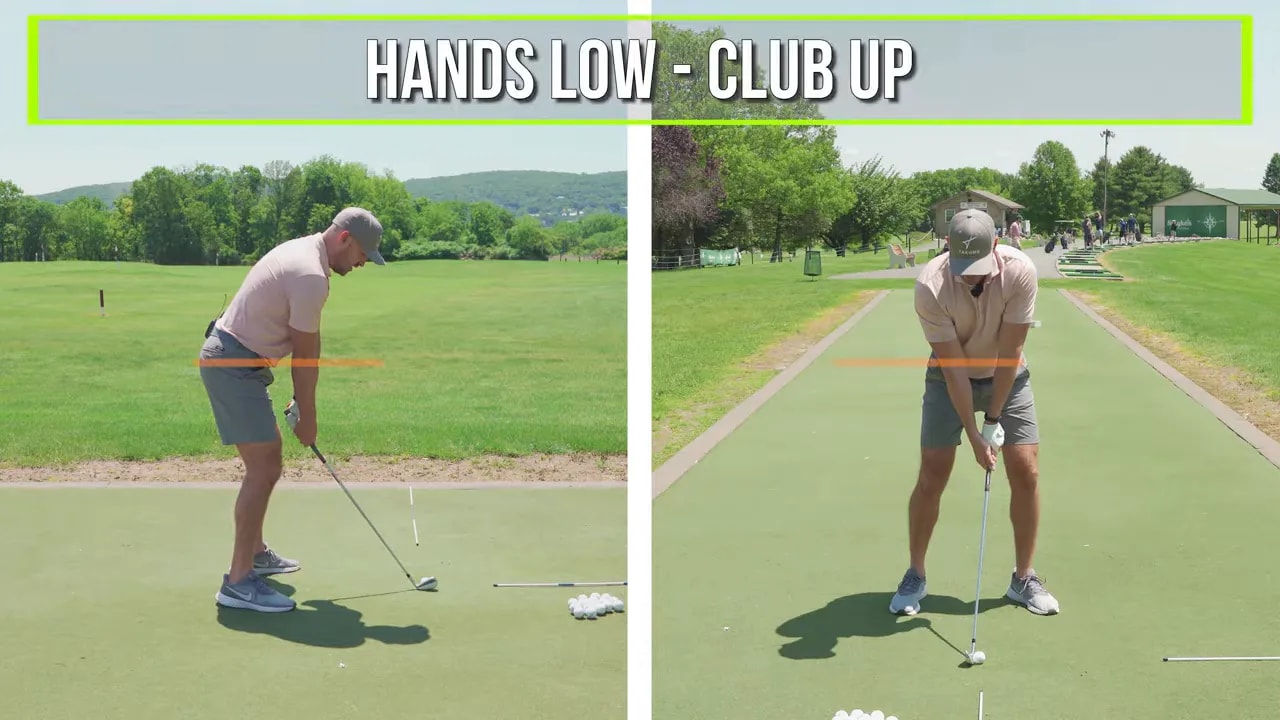
Think of it this way. If the hands rise too quickly, the structure collapses. If the club never works upward, the takeaway becomes too flat and disconnected. The sweet spot is lower hands with gradual hinge.
Step 4: Check the belt line checkpoint in your low hands golf swing
One of the clearest checkpoints in this lesson is the belt line reference.
Imagine a horizontal line drawn across your belt or hip area at address. As the swing begins, your goal is to keep your hands under that line while the clubhead sits just above it by the time the hands reach outside your trail thigh.
This checkpoint gives you something objective instead of relying only on feel. If your hands are already above your waist early in the takeaway, they have likely lifted too much. If your clubhead is far below the line with the hands above it, the pattern is working against you.
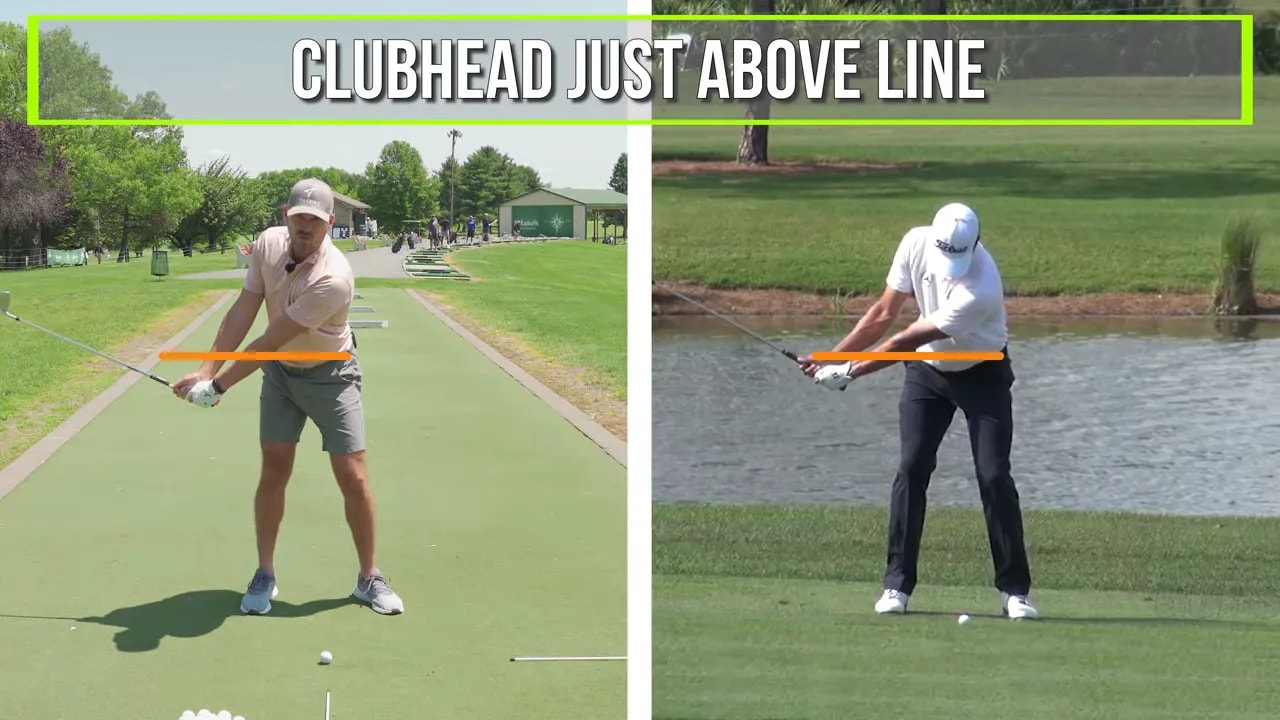
This is also where good models become useful. Elite ball strikers often show the same geometry here. Their hands stay below waist height early, and the club is working upward rather than getting trapped underneath them.
If you want a simple rehearsal, stop your swing when the shaft first moves outside your trail thigh and check three things:
- Are the hands still below the belt line?
- Is the clubhead slightly above the hands?
- Have you maintained posture instead of standing up?
Step 5: Add the left shoulder down feel
There is one more feel that makes the whole motion easier to perform: left shoulder down.
During the early backswing, feel your lead shoulder working down rather than immediately lifting. You are not jamming it toward the ground. You are simply allowing it to stay down as your body turns.
That move supports the low hands golf swing beautifully. It helps keep your chest angles more stable, supports better posture, and makes it easier to keep the hands low while the club hinges upward.
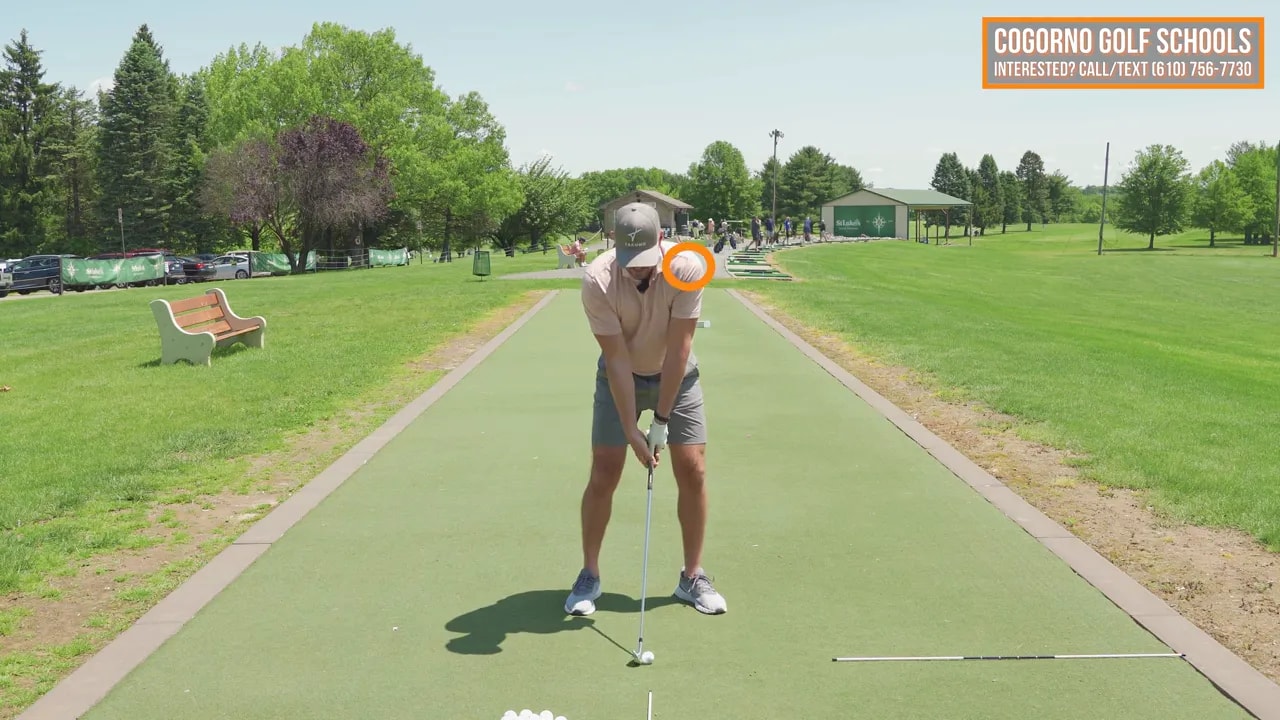
The same feel applies in the early downswing. If the lead shoulder pops up too quickly, the hands tend to work out and up, the club drops too low, and contact gets messy. Keeping the lead shoulder down a bit longer helps preserve the same hands low, club up relationship on the way down.
A useful sequence is:
- Lead shoulder down.
- Hands low.
- Club up.
Use that sequence back and through.
Step 6: Allow natural wrist hinge instead of forcing the club low
This is where many golfers overdo the concept.
Your hands do not stay low all the way to the top of the backswing. The feel only applies to the early portion, roughly until the hands are just below hip high. From there, the swing continues naturally.
You also need some gradual vertical hinge in the wrists. That hinge is what lets the club work up while the hands remain lower. Without it, you can end up dragging the club excessively inside and low.
So the correct blend is:
- Lower hand path early
- Relatively straight lead arm
- Stable posture
- Natural wrist hinge
That blend gives you structure without stiffness.
If you are trying this on the range, make slow rehearsals first. Stop at the checkpoint below hip high and confirm that the clubhead has worked upward some. If it has not, you may be over-focusing on the hands and forgetting the hinge.
Step 7: Keep the arms in, not out
Another helpful detail is arm direction.
When the hands stay low, the arms should also stay more in front of you instead of shooting away from your body. The lead arm should feel fairly straight down early in the backswing. As your body turns away from the target, it may be slightly inward of that straight down feeling. In the downswing, as the body rotates toward the target, it may be slightly outward of it.
That is very different from throwing the arms far out from your torso. When the arms get too far out, the hands rise, the club drops, and the shoulder line tends to lift. That is the pattern you want to avoid.
So if you want one more checkpoint for your low hands golf swing, use this one: low hands and arms in.
Step 8: Copy the positions great ball strikers use
Two useful swing models for this move are Nelly Korda and Adam Scott. Both show a clean relationship between the hands, the club, and the body in the early backswing and early delivery.
What stands out is not just the beauty of the swing. It is the consistency of the geometry.
- The posture remains stable.
- The lead arm stays long.
- The hands are below the waistline at the checkpoint.
- The club works upward through hinge.
- The lead shoulder stays down longer.
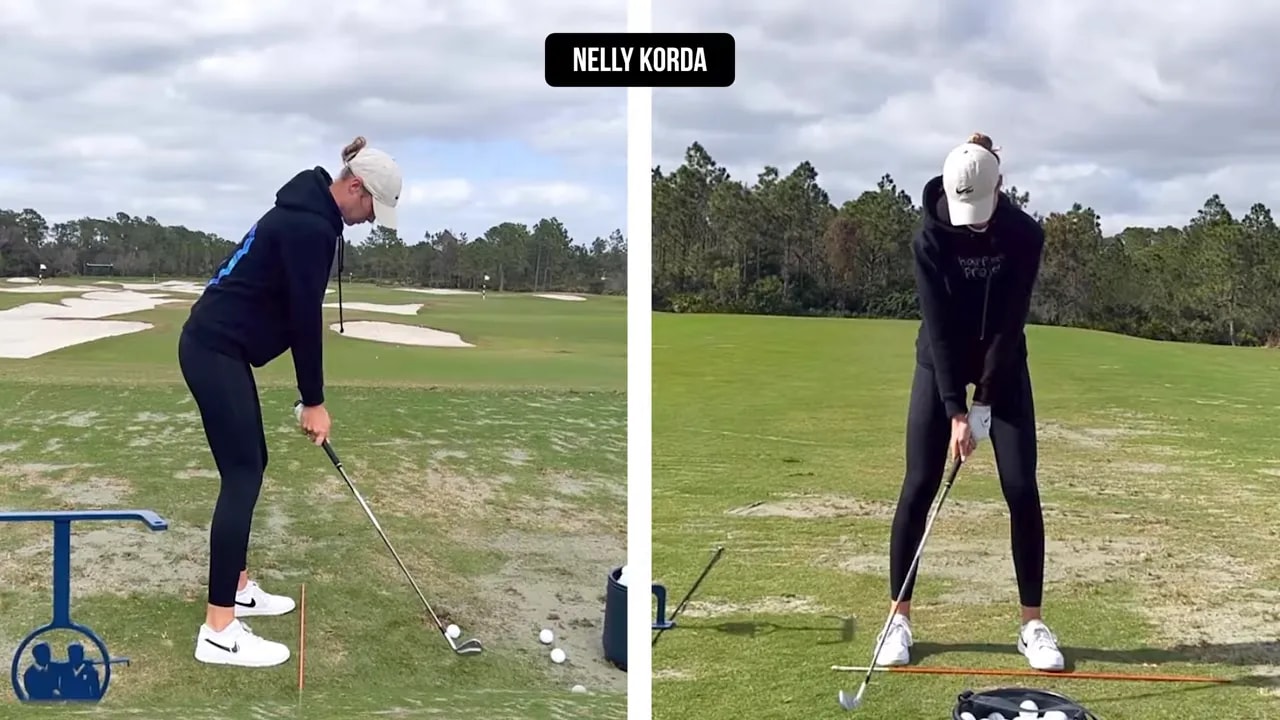
Those are strong examples to copy because they show the move in both directions. The pattern is visible in the takeaway and again in delivery.
If you can mirror that relationship even approximately, your strike quality can improve quickly.
Step 9: Practice the low hands golf swing with simple rehearsals
You do not need a complicated drill package to begin. A few simple rehearsals are enough.
Rehearsal 1: Early takeaway stop
Take your setup and move to the point where your hands are just outside your trail thigh.
- Hands under belt line
- Clubhead slightly above the hands
- Lead shoulder down
- Lead arm relatively straight
Hold that position for two seconds, reset, and repeat.
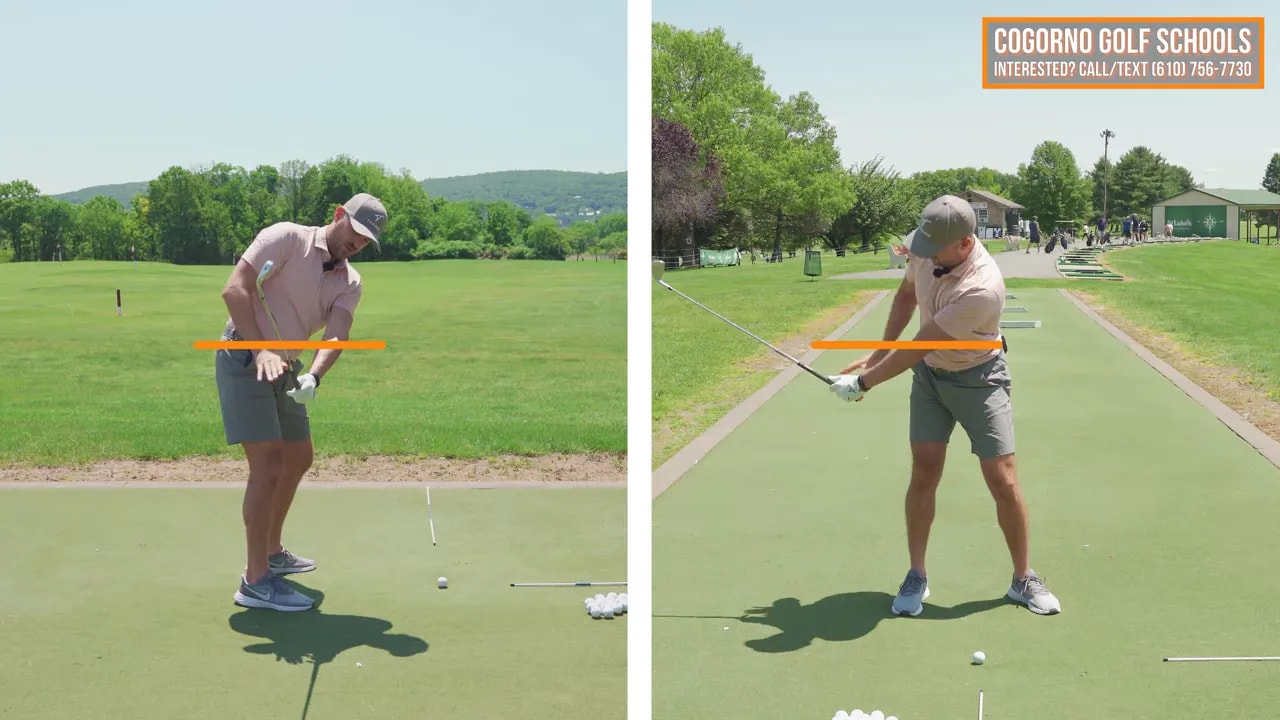
Rehearsal 2: Early downswing stop
Start from a small top of backswing position and slowly move into delivery. Pause again when the hands are around waist high.
- Hands low
- Club still up
- Lead shoulder still down
- Arms not thrown out
Rehearsal 3: Slow motion half swings
Make half swings while repeating the phrase hands low, club up back and through. This helps transfer the feel into motion without rushing.
When you start hitting balls, begin with short irons and controlled speed. The first thing you should notice is cleaner contact. That is the immediate payoff of a better low hands golf swing pattern.
Step 10: Choose the feel that gives you the result
There is an important coaching point here. You do not have to think only about your hands.
If focusing on low hands helps you stay in posture and keep the arm straighter, use that feel. If it works better for you to think directly about staying in posture and keeping the lead arm straighter, that is fine too. Those thoughts can produce the same result.
The advantage of the low hands feel is efficiency. It often gives you both benefits at once.
That is why it can be such a powerful shortcut for golfers who tend to lift, stand up, or collapse the arms.
Step 11: Know what success feels like on the course
When this move improves, your swing usually feels more compact and connected early, then more organized coming into the ball. You may also notice:
- More centered strikes on the face
- Better turf contact with irons
- Less need to rescue the shot through impact
- More predictable start lines
You are not trying to manufacture a perfect looking swing. You are trying to create a reliable delivery. That is what good ball striking really is.
If the club arrives with better structure because your posture held up and your arms stayed longer, the ball tends to tell you right away.
Frequently Asked Questions
What does low hands golf swing actually mean?
It means your hands stay lower relative to your waistline during the early takeaway and early downswing, while the club works upward through natural wrist hinge. It does not mean dragging the entire club low to the ground.
How long should I keep the hands low?
Only through the early part of the backswing and downswing, roughly until the hands are around just below hip high. After that, the swing continues naturally.
Will low hands help me stop standing up in the golf swing?
Yes, that is one of the main benefits. Lower hands tend to help you maintain posture and keep a more stable distance from the ground, which makes contact more consistent.
Should my lead arm be completely locked straight?
No. The lead arm should be relatively straight, not rigid. The goal is to avoid excessive folding, not to create tension.
What swing thought should I use first?
Start with the simplest one: hands low, club up. If you need more help, add lead shoulder down. Those feels together usually create the right pattern.
Which clubs should I practice this with?
Begin with short and mid irons. They make it easier to feel posture, arm structure, and strike quality. Once the motion feels natural, carry it into longer clubs.
Final thought on the low hands golf swing
If you want cleaner iron strikes, this is one of those rare changes that is both simple and powerful. A better low hands golf swing can help you stay in posture, keep your lead arm longer, and bring the club into the ball with much more consistency.
Keep the idea clear:
- Hands low
- Club up
- Lead shoulder down
Use it in the takeaway. Use it again in delivery. Rehearse it slowly, then build speed. For many golfers, that one adjustment can be the missing link to better ball striking.
0 Comments