


If your golf driver feels difficult, forced, or inconsistent, the problem may not be impact itself. Many golfers obsess over the strike, the clubface, or the exact impact picture. But in golf, impact is often the result of what happened earlier. If your backswing puts you in a poor position, the downswing becomes a rescue mission.
A better way to improve your golf driver swing is to simplify the motion before the club ever gets back to the ball. When you understand what your body should do and what your arms should do, the top of the backswing becomes much easier to organize. From there, solid golf shots feel less like hard work and more like a natural sequence.
This golf guide breaks that process into simple steps you can practice at home or on the range.
Table of Contents
- Step 1: Stop trying to fix impact first in your golf swing
- Step 2: Build the correct golf body pivot
- Step 3: Keep your golf posture by adding the right tilt
- Step 4: Practice the golf body move until it feels automatic
- Step 5: Learn what your arms really do in the golf backswing
- Step 6: Combine golf arm lift with body turn
- Step 7: Use a simple golf swing thought at the top
- Step 8: Understand the basic golf downswing match up
- Step 9: Try the alignment stick golf downswing drill
- Step 10: Take this golf motion to the range without overthinking
- Step 11: Focus on the golf pieces that create good impact automatically
- FAQ
Step 1: Stop trying to fix impact first in your golf swing
It is true that impact matters. In golf, it is the moment that decides start line, curve, strike quality, and distance. But trying to force a good impact position without building a good backswing is usually the wrong starting point.
When the club gets to the top in a poor position, you have too much to recover on the way down. That often leads to:
- Slices and weak fades
- Low confidence with the driver
- Timing dependent swings
- Loss of power
- A feeling that the golf swing is too complicated
A simpler golf swing starts by separating the backswing into two parts:
- What your body does
- What your arms do
If you can train those two pieces correctly, a much better top position shows up without trying to manufacture one.
Step 2: Build the correct golf body pivot
The first part of the backswing is your body motion. For this golf drill, an alignment stick is very useful.
Place one stick across your shoulders. Put another stick on the ground so it runs just inside your trail foot, close to the heel. This gives you a simple way to check body turn and direction.
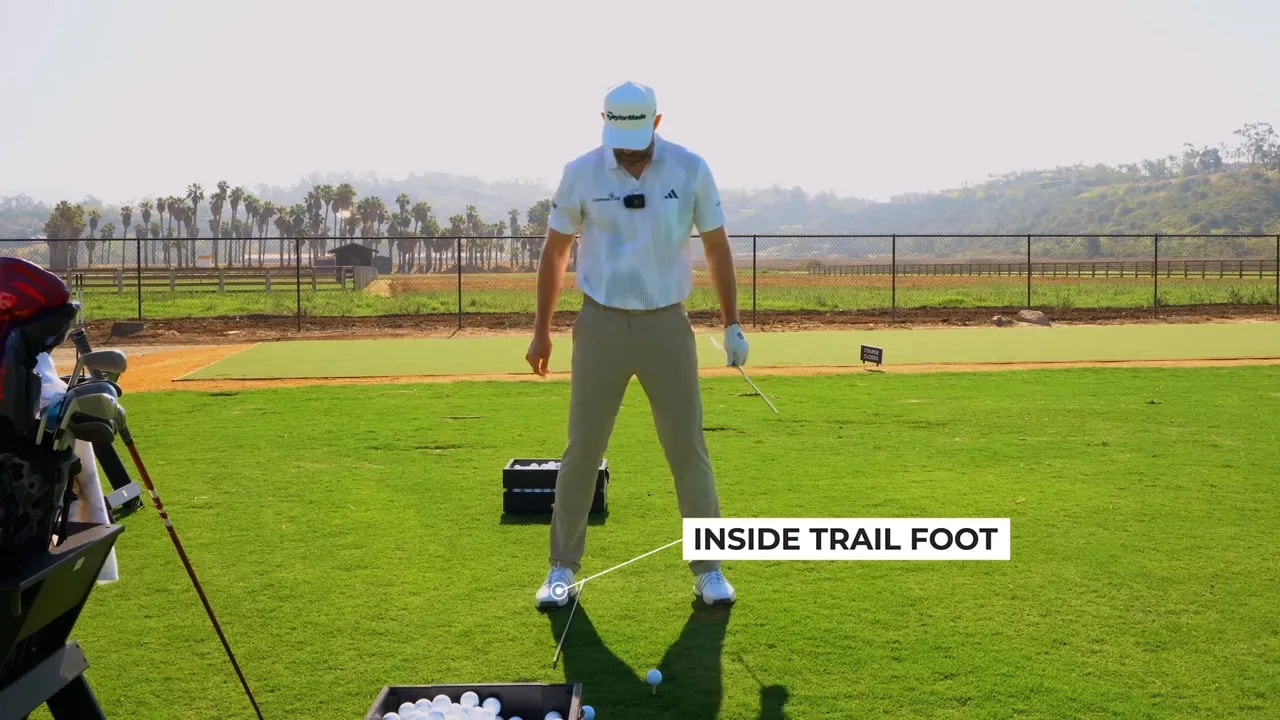
From there, focus on two body pieces:
- Rotation
- Tilt
Golf body turn
As you move into the backswing, rotate your body away from the target. From your own point of view, the stick across your shoulders should appear to line up with the stick on the ground.
This creates a useful golf checkpoint. You are not trying to sway wildly off the ball. You are turning into your trail side while keeping the motion organized.
Your head can move slightly away from the target with the driver. A small shift is acceptable. What you do not want is a big lateral drift that takes your balance outside your trail foot.
The feel to chase is pressure building into the trail leg and foot, not sliding off it.
Golf pressure into the trail side
One of the most important sensations in this golf move is pressure under the trail foot. That is different from simply moving your whole body sideways.
Good golf players load into the trail side. Struggling golfers often slide their hips too far or let pressure spill to the outside of the foot, which makes the downswing much harder to sequence.
Think:
- Pressure moves into the trail leg
- Balance stays centered enough to recover
- Your upper body loads behind the ball
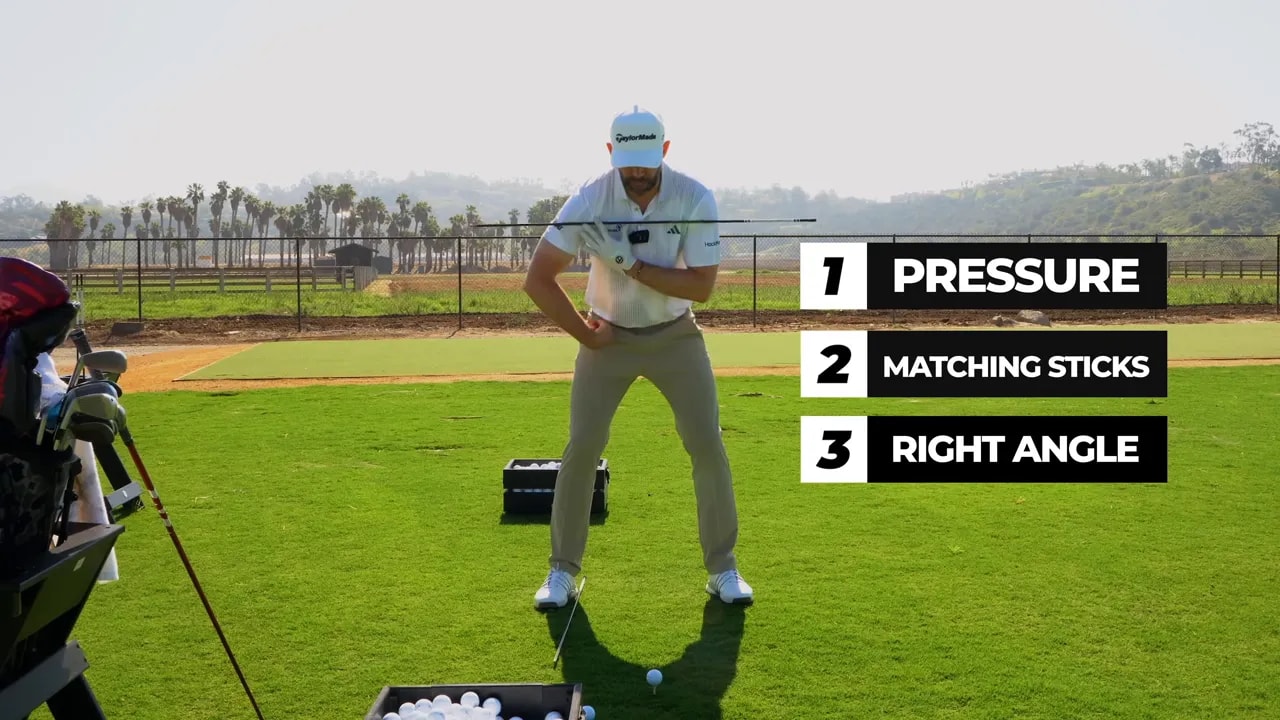
Those three ideas are a strong foundation for better golf driving.
Step 3: Keep your golf posture by adding the right tilt
Rotation alone is not enough. Many golfers turn back and immediately rise out of posture. In golf, that changes your relationship to the ball and forces compensations later.
To stay in posture during the driver backswing, add the correct body tilt.
A useful feel is this:
- Move your trail hip, or trail pocket, back behind your heels
- Let your lead shoulder work down toward the ground
That combination helps maintain your spine angle and the distance between your head and the ball. In golf, that matters because if you stand up too early, the club has to find the ball from a changing geometry. Consistency becomes difficult.
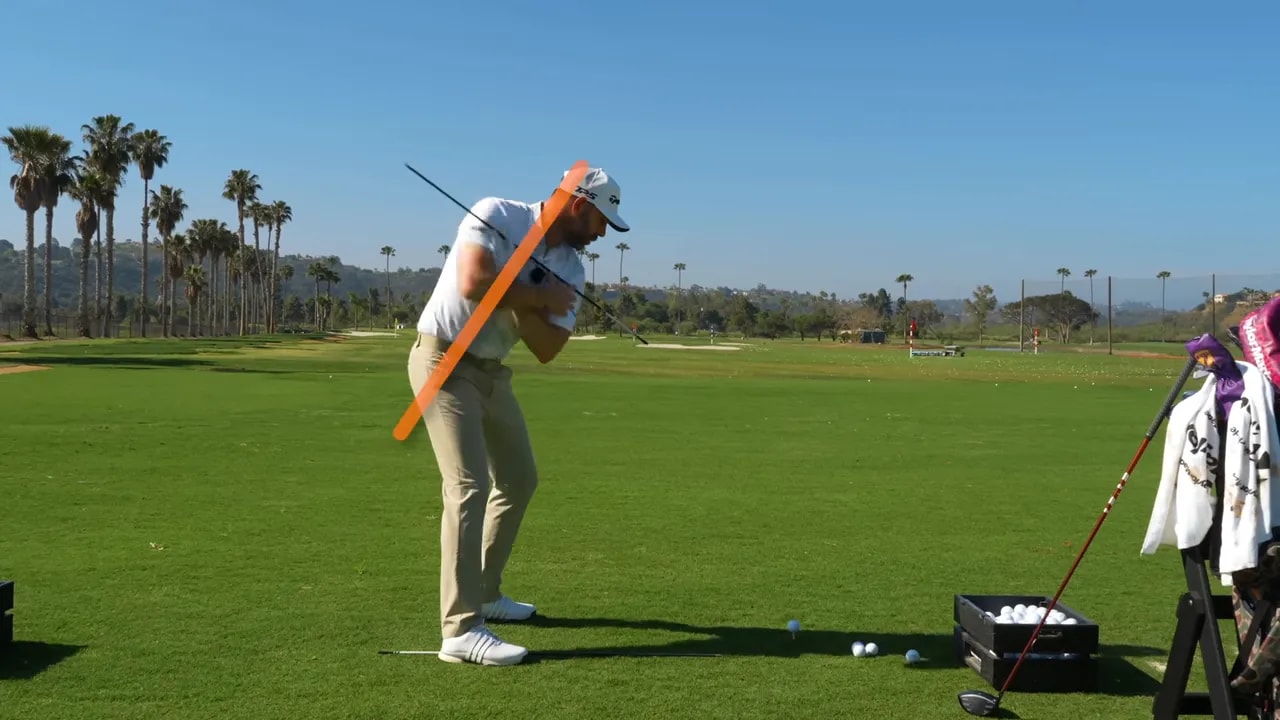
Three body checkpoints summarize this golf move well:
- Pressure into the trail side
- Matching sticks through your turn
- Right angle through pocket back and shoulder down
If you rehearse those often, your golf body motion becomes easier to repeat.
Step 4: Practice the golf body move until it feels automatic
You do not need a ball to improve this part of your golf swing. In fact, this is one of the best pieces to train away from the range.
You can rehearse it:
- At home in front of a mirror
- Using a window reflection
- During short practice breaks
- Without even holding a club
The goal in golf is not just understanding the move once. It is repeating it often enough that your body starts to recognize it without much thought.
If you can rehearse the pivot so well that the positions feel obvious, you give yourself a much better chance of bringing that motion into your actual golf shots.
Step 5: Learn what your arms really do in the golf backswing
Once the body is moving correctly, the next part is the arms. This is where many golfers get confused.
With the driver, the club works on a flatter shape because you stand farther from the ball and the club is longer. Many golfers misread that and try to swing the arms too much around their body. The club gets dragged inside and behind them, and the top position becomes very hard to recover from.
Instead, the arms should lift.
That is the key golf concept.
Rather than feeling as if the hands are pulled around your torso, feel as if they move upward and slightly away, roughly toward a one o’clock direction if the ball is twelve o’clock.
That means:
- The lead arm stays fairly straight
- The trail arm folds naturally
- The hands move up over the trail shoulder area
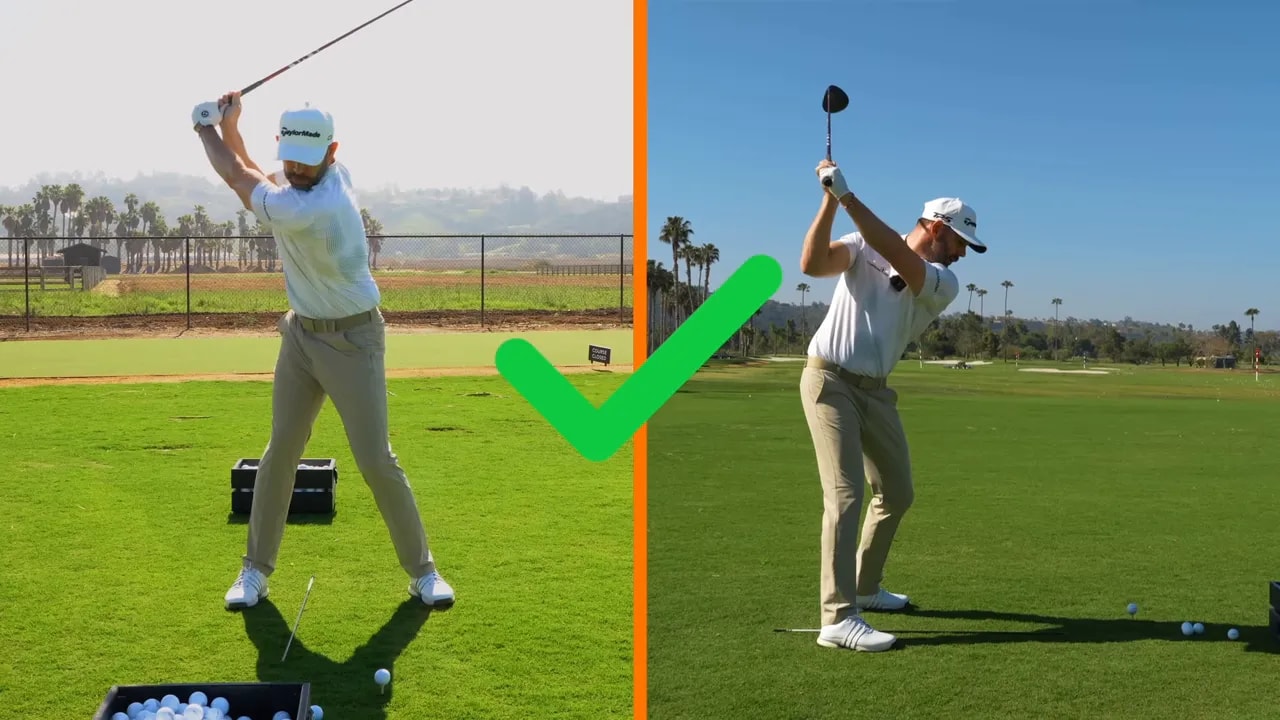
When isolated on its own, this arm motion can feel unusual. But once you pair it with a proper body turn, it creates a far stronger golf backswing position.
Step 6: Combine golf arm lift with body turn
This is where the whole backswing starts to make sense.
The simple formula is:
- Arms lift
- Body turns
When those happen together, the club arrives at the top in a balanced, functional golf position. You are not trying to manipulate the club into place. You are simply matching the right body motion with the right arm motion.
The wrong version is easy to spot. If the arms swing too much around the body, the club gets trapped behind you, the trail arm can become too deep, and the downswing has to reroute dramatically.
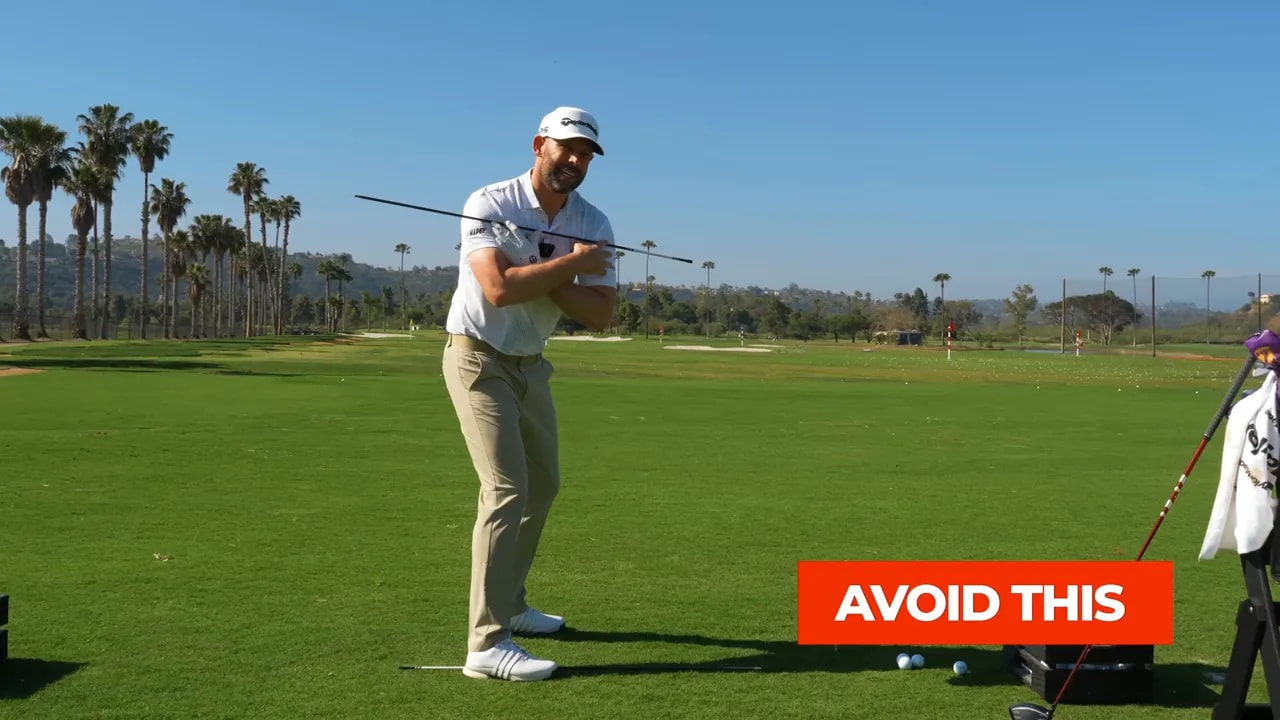
The better rehearsal is simple:
- Set up to the ball
- Lift the arms up and away
- Turn the body into your pivot
This often feels much easier than the old golf swing thought of trying to place everything perfectly.
If your driver has felt hard for a long time, this may be why. Many golfers are trying to do too much with their hands while not giving their body the right structure.
Step 7: Use a simple golf swing thought at the top
You do not need a long list of backswing positions for better golf. A compact thought process is often more effective.
A practical golf cue is:
- Arms up
- Body turn
That thought keeps the arms from wrapping too far behind you and helps the club get into a more useful position. It also improves the chance that your downswing can happen naturally instead of needing a late hand save.
When the top is better, golf becomes simpler. The club can fall into place. The body can rotate through. Contact often feels more effortless.
Step 8: Understand the basic golf downswing match up
Although the main focus here is the backswing, one downswing concept is too important to ignore.
If the backswing is body turn plus arm lift, then the downswing is body turn plus arm drop.
That means the arms need to lower relative to the body as your body unwinds toward the target.
The order matters a great deal in golf.
If your body turns first and the arms stay up, the club tends to move steeply across the ball. That is a classic recipe for slices, glancing blows, and lost distance.
If the arms begin to drop as the body turns, the club can approach from a far better path.
So the golf message is not:
- Turn hard and hope the club catches up
It is:
- Let the arms shallow down while the body rotates through
Step 9: Try the alignment stick golf downswing drill
This is a highly useful golf drill if you struggle with slicing or cutting across the driver.
Place an alignment stick in the ground behind you on a shallow angle, pointing roughly back from the target line. Set it so the club would run into it if you come down too steeply or too far over the top.
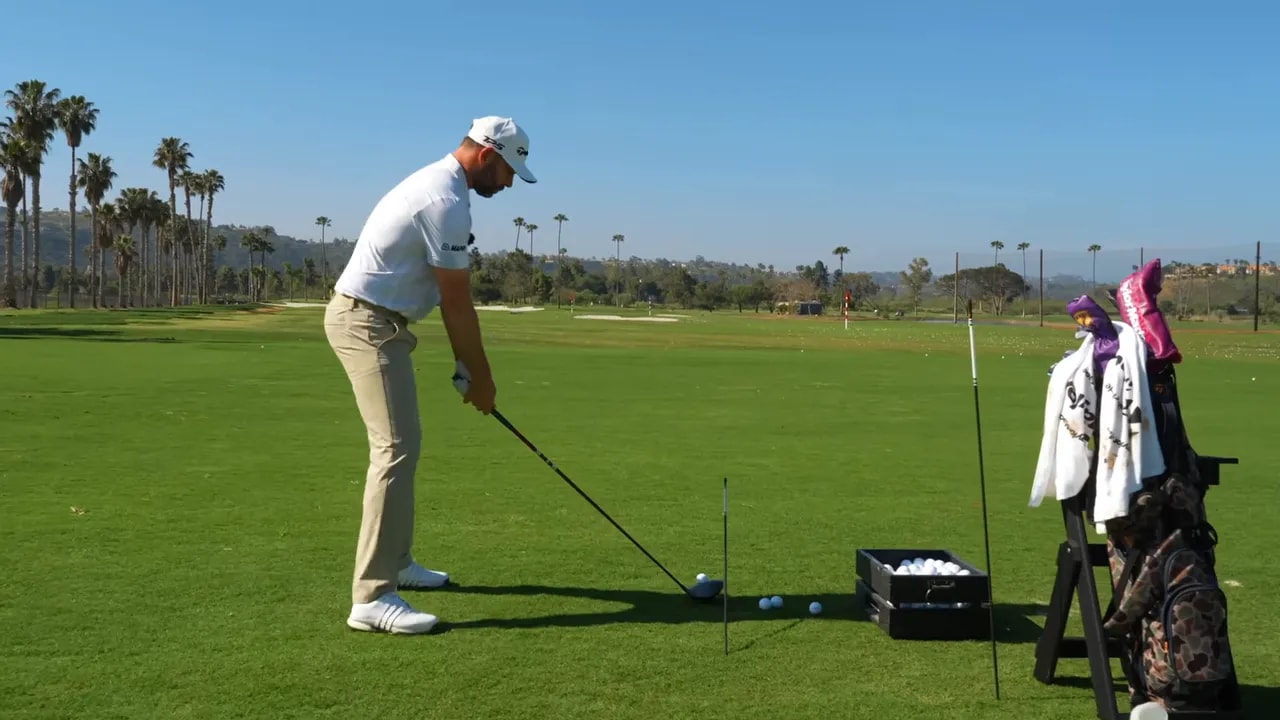
Then rehearse from the top very slowly.
Your goal is to miss the stick by allowing:
- The arms to drop first or early
- The body to keep turning through
- The club to approach from underneath and inside the stick
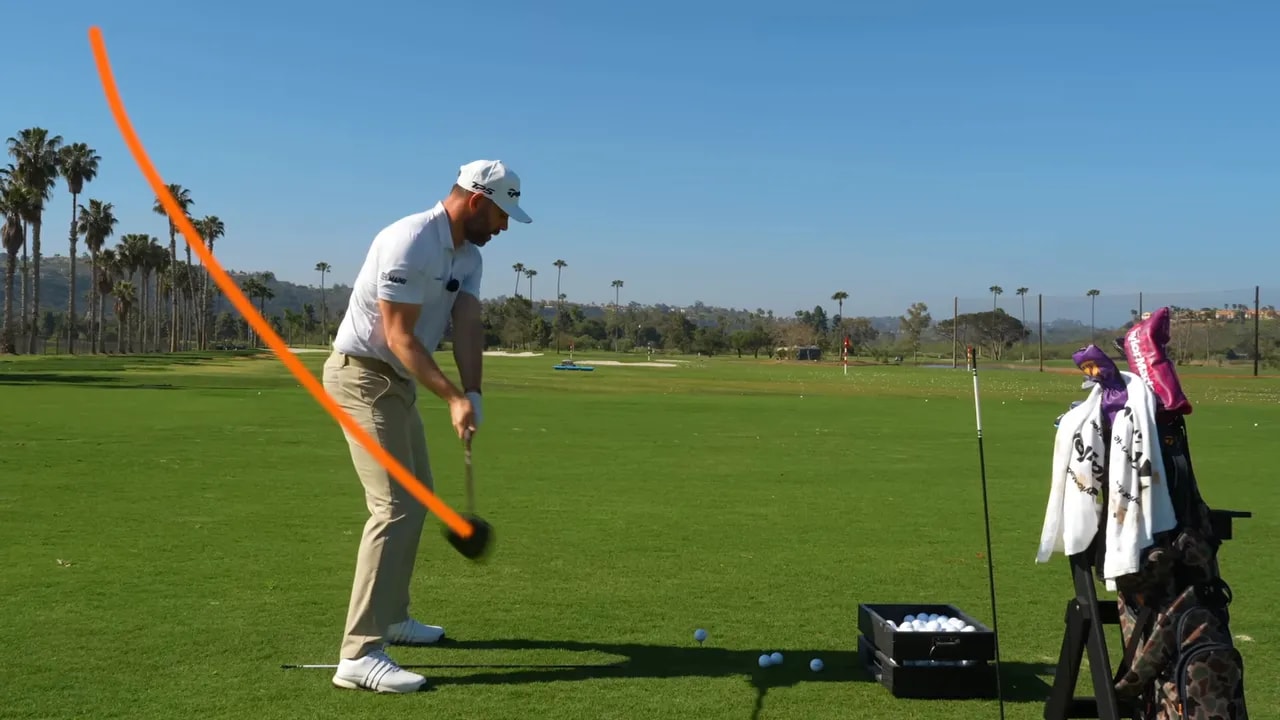
If you do the opposite and spin your body while the arms stay high, you will run into trouble quickly. That gives instant feedback, which is why this golf drill is so effective.
Go slowly at first. This is not a speed exercise. It is a movement pattern exercise.
A useful progression looks like this:
- Make a slow backswing with arms lift and body turn
- Pause at the top
- Feel the arms drop
- Let the body turn through
- Brush through without hitting the stick
Once that starts to feel natural, hit soft golf shots with the same sequence.
Step 10: Take this golf motion to the range without overthinking
When you bring these ideas into your golf practice, avoid turning them into ten separate swing thoughts. Keep it simple.
A clean range checklist could be:
- Backswing: pressure, turn, tilt, arms lift
- Downswing: arms drop while body turns
That is enough.
You do not need to swing full speed right away. In fact, many golfers improve faster by hitting controlled drivers while they learn the sequence. A slower swing with the right structure usually produces better golf than a fast swing built on compensations.
As the top of the backswing improves, several things get easier:
- The clubface is easier to manage
- The path is easier to improve
- Contact becomes easier to repeat
- Speed can be added with less effort
That is the real lesson. Better golf driving is often not about trying harder. It is about organizing the backswing so the rest of the swing has a chance.
Step 11: Focus on the golf pieces that create good impact automatically
The reason this approach works is simple. Good impact in golf is usually a byproduct of good motion before impact.
If your body loads correctly, maintains posture, and turns efficiently, and if your arms lift correctly in the backswing and drop correctly in transition, a lot of impact quality starts to appear on its own.
That is far more reliable than trying to save the shot in the last split second.
For many golfers, the driver feels hard because the swing has been approached backward. Start earlier in the motion. Fix the structure. Then let impact improve as a consequence.
FAQ
Why does the driver feel harder than other golf clubs?
The driver often feels harder in golf because it is longer, flatter, and more sensitive to poor sequencing. If your backswing is disorganized, the driver exaggerates those errors and makes recovery difficult.
What should my arms do in the golf backswing?
Your arms should lift up and away rather than wrapping too much around your body. That arm lift works with the body turn to create a better top position in the golf swing.
How much should my head move in the golf backswing?
With the driver, a small movement away from the target is acceptable in golf. The key is avoiding a large sway that shifts pressure outside the trail foot and makes the downswing harder to recover.
What is the best golf feel for maintaining posture?
A strong feel is moving the trail pocket back while the lead shoulder works down. That helps preserve your body angles and keeps your setup relationship to the ball more consistent.
How do I stop slicing my golf driver with this method?
Start by improving the backswing with better body turn and arm lift. Then train the downswing so the arms drop as the body turns. In golf, that helps the club approach from a better path instead of cutting across the ball.
Can I practice these golf drills without hitting balls?
Yes. These golf drills are ideal for slow rehearsals at home, in front of a mirror, or during short practice breaks. Repetition without a ball can help the movement feel more natural before you take it to the range.
If your golf driver has been a source of frustration, do not begin by chasing a perfect impact picture. Start with a better backswing. Train the body pivot. Add the correct arm lift. Then match that with an arm drop and body turn in the downswing. In golf, simpler structure often leads to straighter, longer, and far more repeatable drives.
0 Comments