
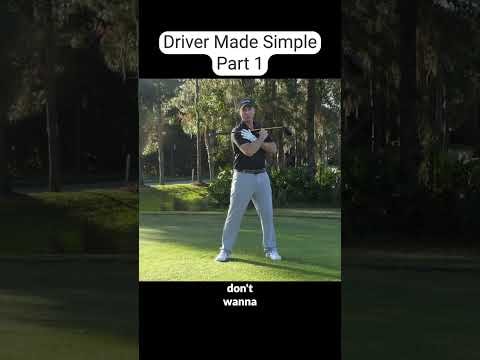

Golf gets much easier when you stop trying to steer the driver with your hands and start building the swing around body rotation. If you struggle with weak drives, inconsistent contact, or shots that curve too much, the issue may be simpler than it seems.
This guide breaks down a straightforward golf drill sequence built around shoulder turn, hip swivel, foot movement, and proper tilt. The goal is to help you create a more athletic driver swing that feels free instead of forced.
Use these steps as a simple at home or range routine. They are especially useful if you want a better foundation for your golf driver swing before adding more technical thoughts.
Table of Contents
- Step 1: Understand why rotation matters in golf
- Step 2: Set up your first golf rotation drill with a club across your shoulders
- Step 3: Train a 90 degree golf shoulder turn back and through
- Step 4: Let your feet move naturally in the golf swing
- Step 5: Rotate past 90 degrees through impact in golf
- Step 6: Add the correct golf spine tilt at address
- Step 7: Use an alignment station to organize your golf setup
- Step 8: Hit 5 to 10 golf drives with one simple swing thought
- Step 9: Avoid the most common golf rotation mistakes
- Step 10: Build a simple golf practice routine around rotation
- Step 11: Know what a good result looks like in golf
- Step 12: Make golf simpler by mastering the foundation first
- Golf FAQ
Step 1: Understand why rotation matters in golf
In golf, solid driving starts with how your body turns. A good driver swing is not just an arm motion. It is a rotation of the shoulders and hips that carries the club back and through.
When your body rotates well, several things improve at once:
You create a fuller backswing without forcing it.
You can move through the ball with more freedom.
Your swing path becomes easier to organize.
You build repeatable movement instead of timing the club with your hands.
This is one of the most important foundations in golf. If your rotation is restricted, everything after that gets harder.
Step 2: Set up your first golf rotation drill with a club across your shoulders
Take a club and place it across the top of your shoulders. Let your fingertips rest near the edges of your shoulders so the club stays stable.
Stand tall at first. This is not an address position yet. You are simply learning the turning motion your golf swing needs.
Your goal in this drill is to feel your upper body rotate back and through without tension. The club across your shoulders gives you instant feedback because it shows how far you are actually turning.
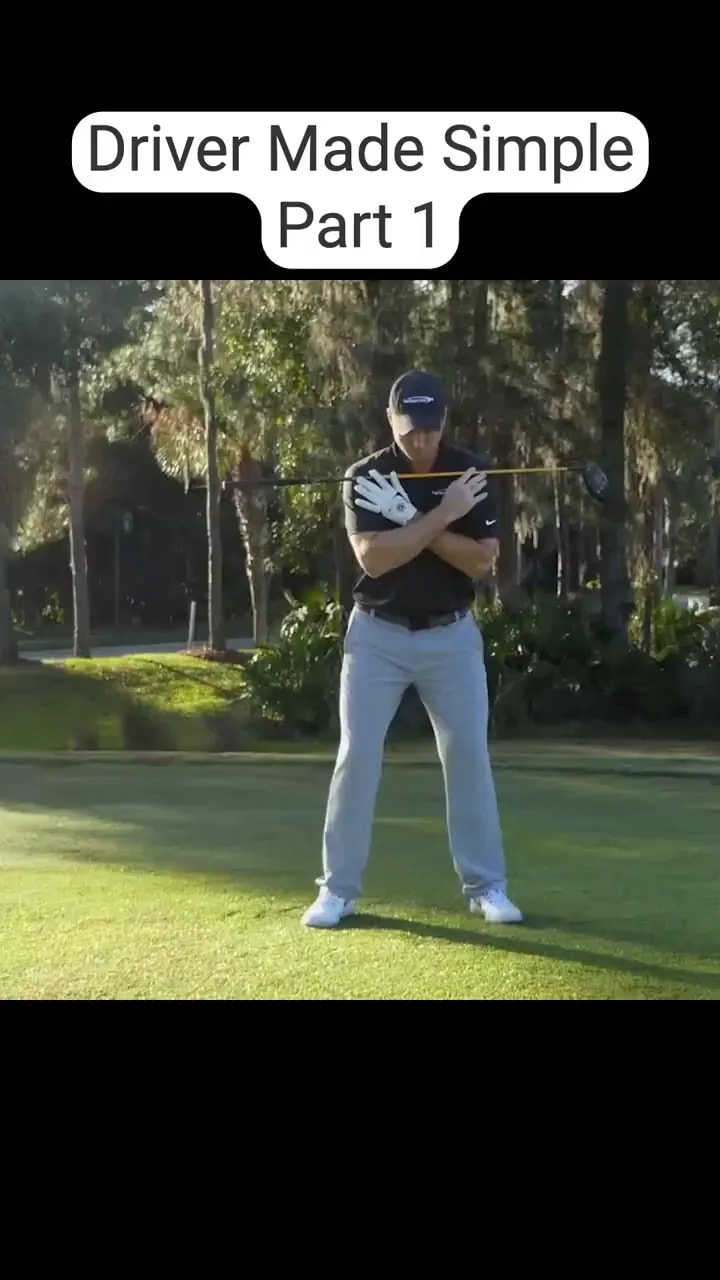
As a basic practice rule, perform about five reps of each movement pattern. That is enough to feel the change without overthinking it.
Step 3: Train a 90 degree golf shoulder turn back and through
From your tall setup, rotate until the club across your shoulders turns about 90 degrees in the backswing. Then rotate through so you reach roughly the same amount on the way forward.
The feeling you want is simple:
Turn your shoulders level with the ground
Rotate freely instead of locking your lower body
Move back and through with rhythm
This teaches an important golf concept. Your driver swing should not feel frozen. It should feel athletic and mobile.
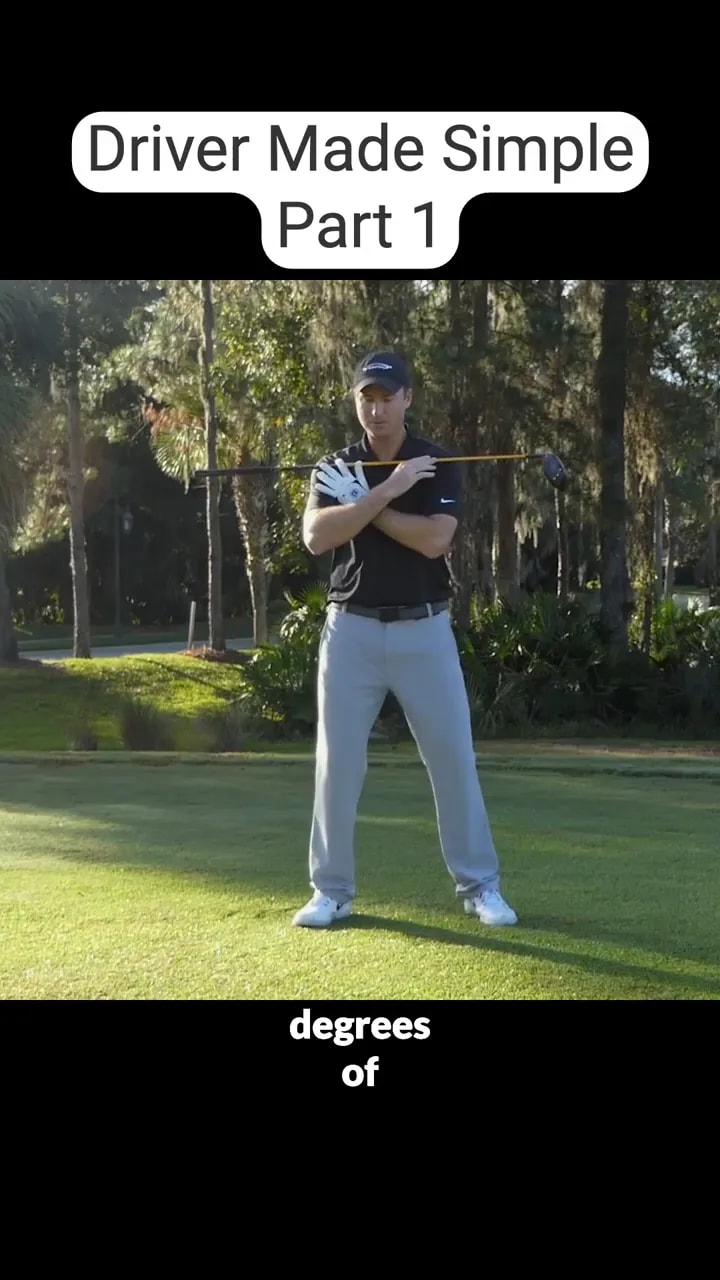
If you cannot reach that turn comfortably, do not force extra motion with your arms. Stay relaxed and let the shoulders and torso do the work.
Step 4: Let your feet move naturally in the golf swing
One of the biggest mistakes in golf is trying to keep both feet glued to the ground. That often creates tension and stops the body from rotating fully.
In this drill, a small amount of foot movement is not only allowed, it is helpful:
In the backswing, your lead foot may lift slightly
In the through swing, your trail foot may lift slightly
This does not mean sliding all over the place. It means allowing natural pressure shift and swivel as your body turns.
If your feet stay overly rigid, your hips tend to stop. When the hips stop, your shoulders get bound up. Then your golf swing becomes steep, handsy, or rushed.
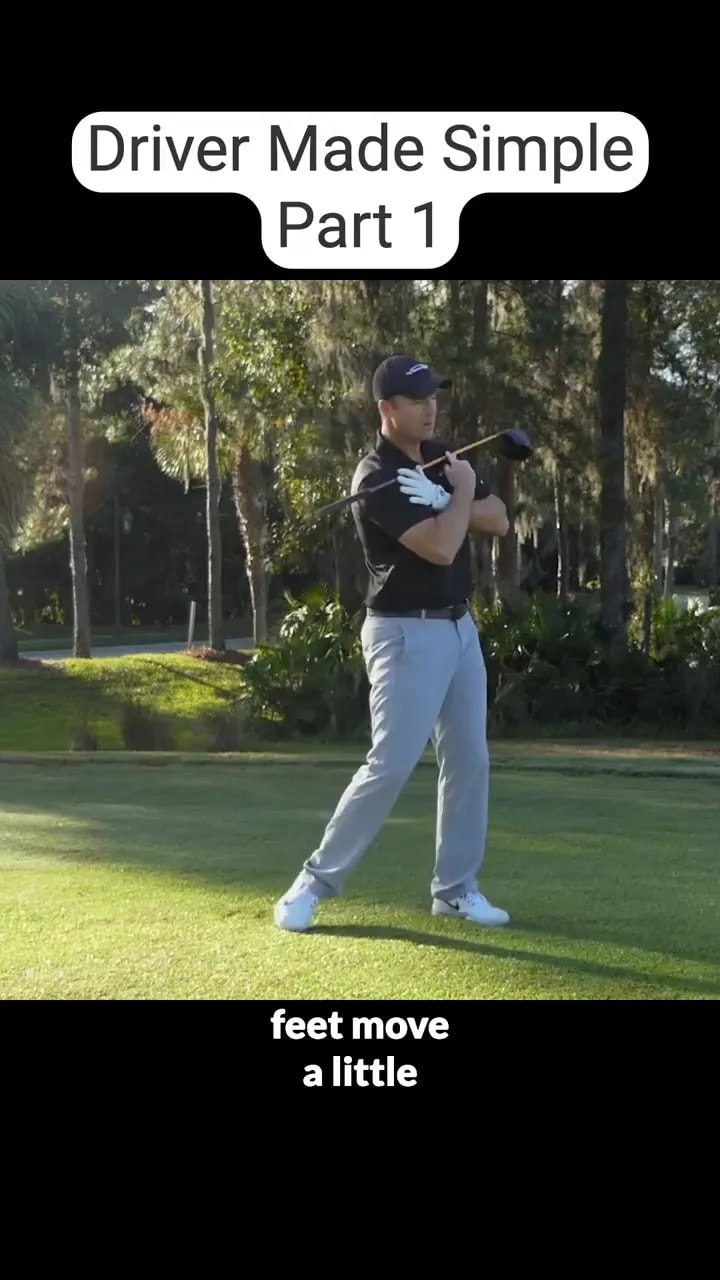
A better checkpoint is this: free feet help free hips, and free hips help free shoulders.
Step 5: Rotate past 90 degrees through impact in golf
Once you can turn 90 degrees in both directions, work toward a fuller through swing. The goal is to get your trail shoulder pointing as far down the fairway as possible.
That through swing rotation matters because many golf players stop turning after impact. They hit at the ball instead of swinging through it. When that happens, the club slows down and face control gets harder.
A strong checkpoint is:
Your hips keep swiveling through
Your chest keeps rotating toward the target
Your trail shoulder works down the fairway
If you can turn through fully, your driver swing becomes more complete and balanced.
Step 6: Add the correct golf spine tilt at address
After learning rotation from a tall stance, the next piece is tilt. This is crucial in golf, especially with the driver.
You want your spine tilted slightly away from the target at address. If your body is perfectly vertical or leaning toward the target, it becomes much harder to swing the club on a good path.
A simple checkpoint is to use the club as a reference from your chin area down toward your belt line, then add a small tilt away from the target side.

This small adjustment helps you:
Create room to swing from the inside
Set up for better driver contact
Avoid crowding the downswing
In golf, small setup changes can create major swing improvements. Tilt is one of those changes.
Step 7: Use an alignment station to organize your golf setup
Before hitting drivers, check your alignment. A simple alignment stick on the ground can help you make sure your feet are parallel to the target line.
This is useful because many golf players think their body is aimed correctly when it is not. If your stance is off, it becomes harder to judge both path and ball flight.
Your pre shot setup checklist can be very simple:
Place an alignment stick on the ground
Set your feet parallel to it
Add a slight spine tilt away from the target
Make the same free rotation you practiced in the drill

This turns your golf practice into something measurable instead of random.
Step 8: Hit 5 to 10 golf drives with one simple swing thought
Once the drill work is done, hit a small set of drives. Five to ten balls is enough. Do not overload yourself with multiple technical ideas.
Use one main swing thought:
Rotate back and through while keeping your setup tilt.
That single idea connects the whole motion:
Turn in the backswing
Let the feet and hips move naturally
Keep the upper body tilted correctly
Rotate through to a full finish
For many golf players, this produces straighter, more solid tee shots because the body is finally leading the motion.
Step 9: Avoid the most common golf rotation mistakes
If this drill feels awkward at first, that is normal. Here are the main mistakes to avoid.
Locking your feet to the ground
This is one of the biggest issues in golf. Overly quiet feet often lead to restricted hips and a stalled finish.
Turning without tilt
Good rotation alone is not enough for driver. If your spine is too centered or leaning toward the target, your path can still get compromised.
Using only your arms
The drill is meant to train body motion. If you are just moving your shoulders a little while your arms dominate the swing, you miss the point.
Stopping after impact
Many golf swings look decent going back but lose speed and freedom through the ball. Keep rotating until you reach a full finish.
Practicing too many reps without focus
Five quality reps are better than many careless ones. Stay attentive to the checkpoints.
Step 10: Build a simple golf practice routine around rotation
If you want this to transfer to the course, keep the routine short and repeatable. Here is an easy plan.
At home golf routine
Put a club across your shoulders
Make 5 reps turning to 90 degrees back and through
Allow light foot movement
Feel a full rotation through the finish
Range golf routine
Rehearse 5 shoulder turn reps
Set an alignment stick
Add slight spine tilt away from the target
Hit 5 to 10 drivers focusing on body rotation
This kind of golf practice helps build movement patterns, not just temporary fixes.
Step 11: Know what a good result looks like in golf
You do not need a perfect swing to know whether this is helping. Look for these signs:
Your swing feels less forced
You finish in better balance
Your body keeps moving through the shot
Your driver contact feels more centered
Your ball flight starts looking straighter or more controlled
A common positive pattern in golf is a solid drive that starts near your intended line and gently turns rather than over curving.
Step 12: Make golf simpler by mastering the foundation first
There are countless swing tips in golf, but body rotation is one of the few ideas that supports almost everything else. If your shoulders, hips, and feet can work together, you give your swing a much better chance.
Start simple:
Club across shoulders
90 degree turn back and through
Natural foot movement
Slight spine tilt away from target
5 to 10 drivers with one clear focus
For most golf players, that is a far better starting point than trying to manipulate the clubface with the hands.
Golf FAQ
Why is rotation so important in golf?
Rotation helps your shoulders, hips, and torso move the club efficiently. In golf, that creates a more repeatable swing and reduces the urge to control the shot with your hands alone.
How much should my feet move in the golf swing?
A small amount of foot movement is normal in golf when it supports hip rotation and balance. The key is natural movement, not excessive lifting or sliding.
What does 90 degrees of rotation mean in golf?
It refers to turning your shoulders enough that the club across them points roughly perpendicular to where it started. It is a simple checkpoint for a fuller golf turn.
Should I have spine tilt with the driver in golf?
Yes. A slight spine tilt away from the target is a helpful golf driver setup feature because it creates room to swing properly and supports a better path.
How many reps should I do for this golf drill?
A good starting point is five reps for the rehearsal drill, followed by five to ten golf drives on the range using the same movement feel.
Can I practice this golf drill at home?
Yes. You can do the shoulder rotation portion of this golf drill at home with a club placed across your shoulders. It is a practical way to build movement without hitting balls.
Takeaway: If you want a simpler golf driver swing, train rotation first. A free shoulder turn, responsive hips, natural foot motion, and proper tilt can do far more for your tee shots than trying to guide the ball with your hands.
0 Comments