


If you want a more repeatable golf swing, one of the simplest places to start is your setup. Small details in your grip and arm structure can either help your body move the club correctly or force your hands and arms to make last second corrections.
The core idea behind this golf swing tip is straightforward: give your body a better chance. When your hands are matched correctly on the club and your elbows work more together, your body has a better opportunity to turn the club to the top without extra manipulation.
That matters for golfers of every level. If your takeaway feels disconnected, your arms get too active, or your backswing position changes from shot to shot, this is a smart checkpoint.
Table of Contents
- Step 1: Understand what “give your body a better chance” means in the golf swing
- Step 2: Check whether your right hand is too weak
- Step 3: Match your left hand and right hand correctly
- Step 4: Bring your elbows together to improve your golf swing structure
- Step 5: Learn what happens when your elbows get too far apart
- Step 6: Use this simple rehearsal to give your body a better chance
- Step 7: Apply this golf swing tip during your warmup
- Step 8: Avoid the most common mistakes with this move
- Step 9: Know who benefits most from this golf swing tip
- Step 10: Build a repeatable backswing from setup, not compensation
- Step 11: Use this quick checklist before every practice session
- Frequently Asked Questions
- Final takeaway
Step 1: Understand what “give your body a better chance” means in the golf swing
In practical terms, this phrase means setting up your grip and arm structure so your swing can happen more naturally.
Many golfers try to fix backswing problems later in the motion. But if your hands are mismatched at address or your elbows separate too early, your body has to compensate. That often leads to:
An overly handsy takeaway
Arms lifting independently of the turn
Inconsistent clubface control
A top-of-backswing position that changes from swing to swing
The better approach is to improve the conditions at address. That way, your body can rotate the club to the top with less effort and fewer moving parts.
Step 2: Check whether your right hand is too weak
One key point in this golf swing tip is the role of the right hand. If your right hand sits too weak on the club, you may naturally want to place the trigger finger in a way that changes how the club is supported.
A weak right hand can make the grip feel unstable or disconnected. It can also encourage compensations in the wrists and forearms that show up later in the backswing.
For many golfers, the fix is not just changing the right hand by itself. The hands need to work together.
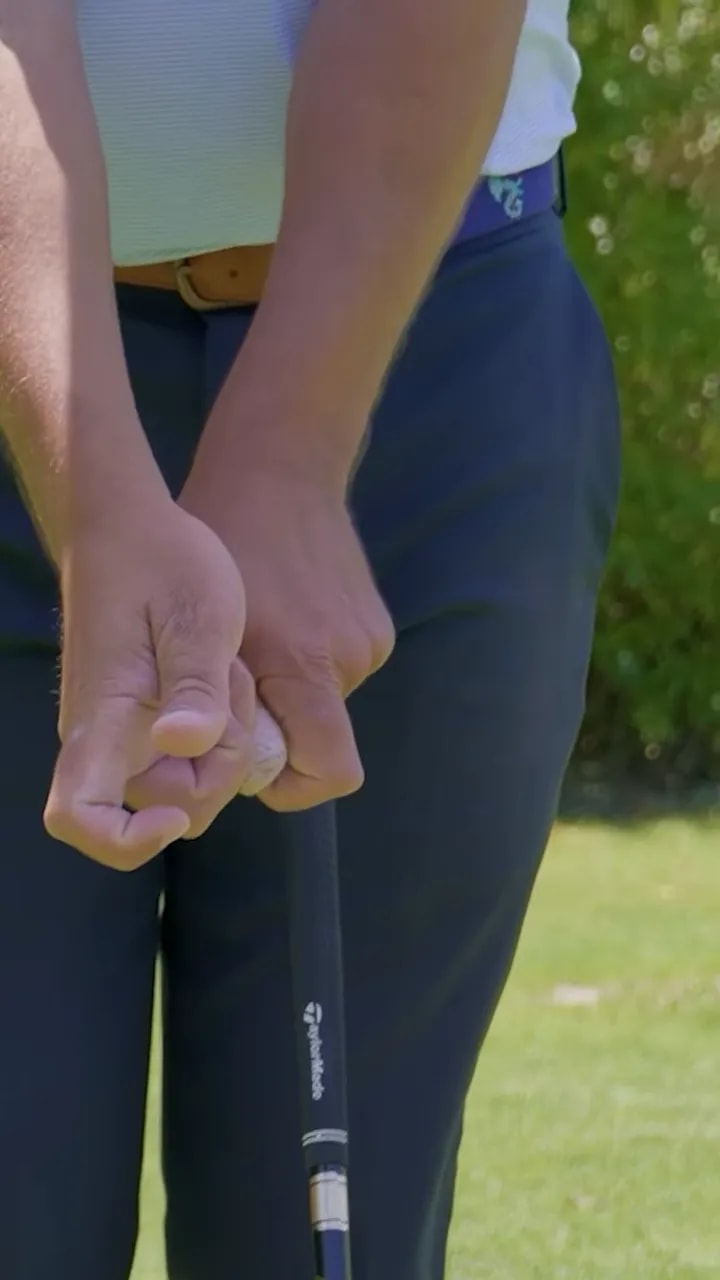
What a weak right hand usually looks like
The right palm sits too far under or too far behind the handle
The right index finger becomes overly dominant in supporting the club
The hands do not appear to match each other well
The club feels controlled more by the fingers and arms than the body turn
You do not need to rebuild your grip from scratch unless it is clearly causing problems. But if your right hand is weak, it should be balanced by a left hand position that stays more on top.
Step 3: Match your left hand and right hand correctly
The golf swing tip here is about balance, not extremes. If the right hand tends to sit weaker on the club, the left hand needs to counter that by being more on top.
This creates a grip where both hands support each other instead of fighting each other.
When your hands are matched better:
The club is easier to support during the takeaway
Your wrists can hinge without excessive manipulation
The clubface is easier to organize
Your body turn can move the structure more efficiently
For everyday golfers, this is one of the most overlooked setup improvements. A lot of swing faults are really grip match issues in disguise.
Simple grip checkpoint
At address, look for these signs:
Your hands appear unified rather than independent.
The left hand is not excessively under the handle.
The right hand is not so weak that it loses support.
The club feels secure without squeezing too hard.
If those pieces are in place, you are already starting to give your body a better chance.
Step 4: Bring your elbows together to improve your golf swing structure
This is the other major part of the lesson, and it is a useful one for golfers who struggle with disconnected arms.
When you bring your elbows together, you improve the odds that your body can turn the hands and club to the top. The point is not to pinch your arms tightly or create tension. The point is to reduce excessive separation.
When the elbows work more together, the swing tends to stay more connected. When the elbows drift apart, the arms often start moving on their own.
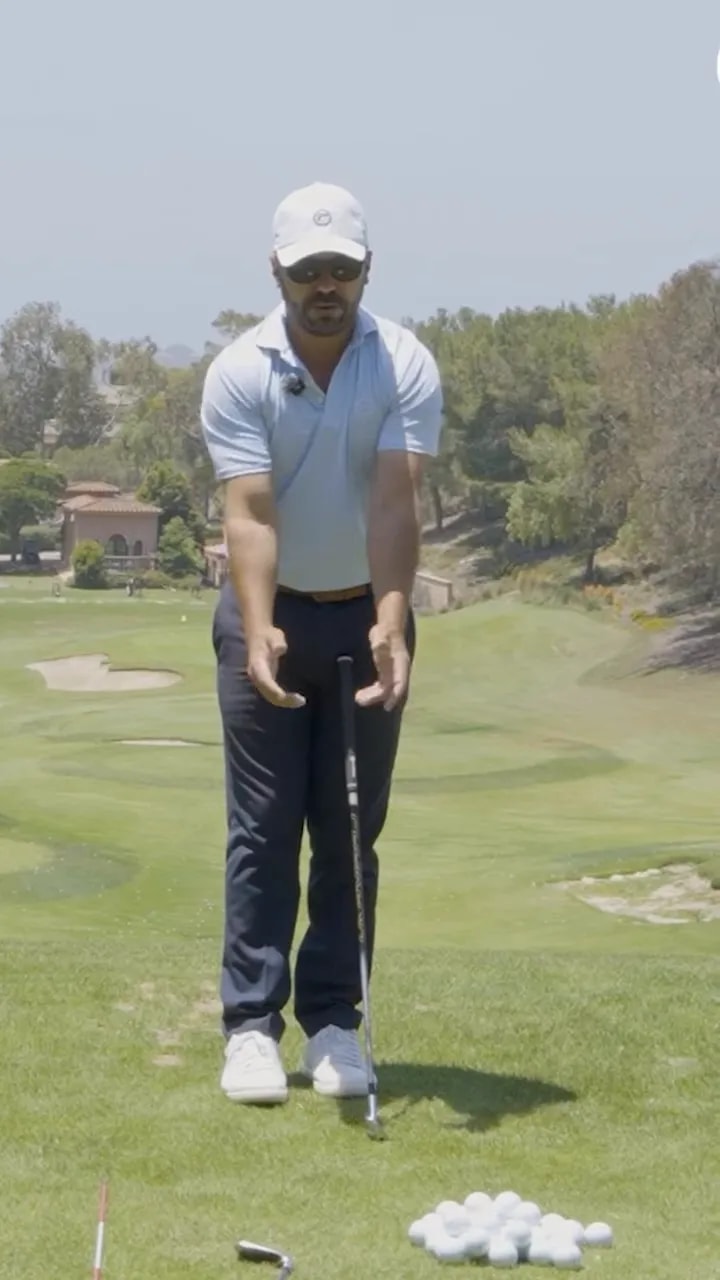
Why elbows together helps
It promotes a more connected takeaway
It reduces the urge to lift the arms independently
It helps the torso turn move the club
It can make the backswing feel simpler and more organized
This is especially helpful if you often feel that your swing gets “armsy” early.
Step 5: Learn what happens when your elbows get too far apart
Once the elbows separate, your arms tend to find their own path to the top. That may not sound like a big deal, but it creates a chain reaction.
Instead of your pivot helping move the club, your arms start taking over. That can lead to:
A takeaway that gets outside or disconnected
Inconsistent width in the backswing
Poor clubface organization
A top position that depends on timing
For golfers chasing consistency, that is a problem. Timing-based swings can produce great shots, but they are much harder to repeat under pressure.
The better model is to create a structure that makes the correct motion more likely.
Step 6: Use this simple rehearsal to give your body a better chance
You can practice this golf swing tip without hitting a ball.
Take your normal address position with a short iron.
Check that your right hand is not overly weak.
Set your left hand more on top if needed to balance the grip.
Feel your elbows working a little closer together.
Make a slow takeaway and backswing using your chest turn to move the hands.
Stop halfway back and notice whether your arms still feel connected to your body turn.
This rehearsal helps you feel the difference between a connected motion and one where the arms immediately take over.
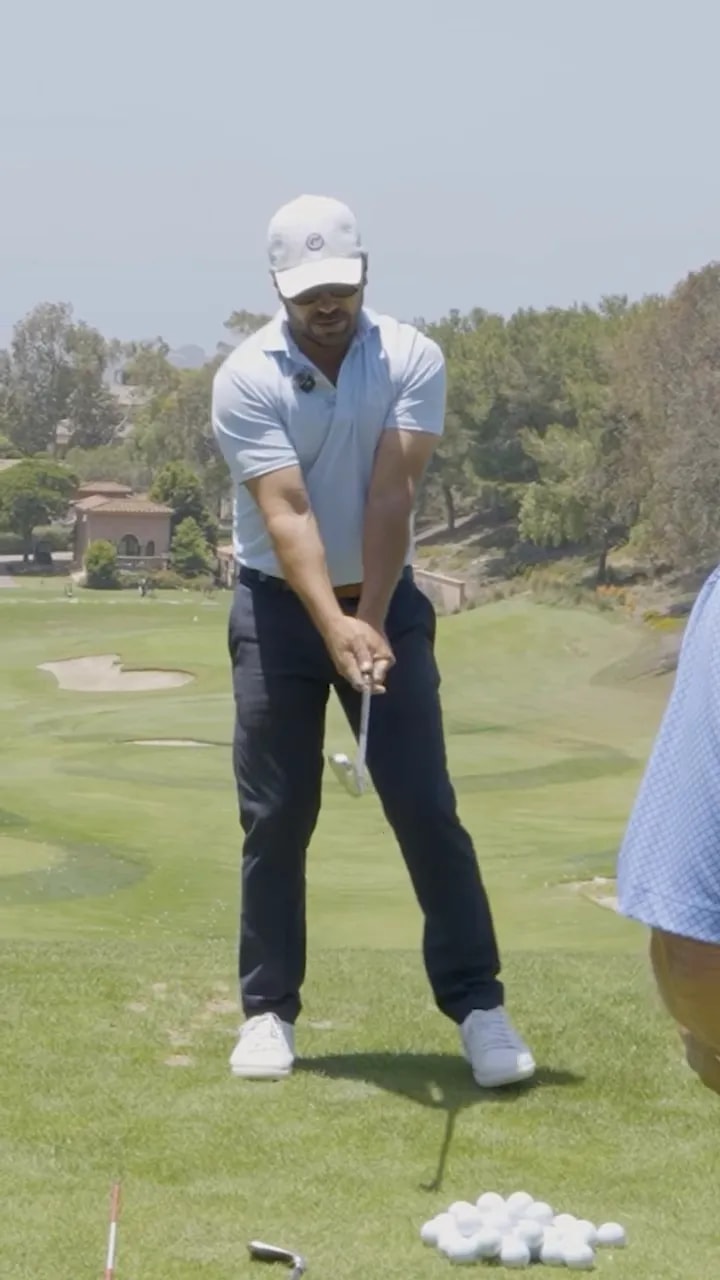
What you should feel
The club moves away as a unit
Your chest helps move the arms
Your elbows do not immediately separate
Your hands feel supported by the grip, not busy or flippy
If the move feels too tight, relax. The goal is structure, not tension.
Step 7: Apply this golf swing tip during your warmup
The easiest way to make a change stick is to attach it to your pre-round routine.
Before you hit balls, spend a few minutes on these checkpoints:
Grip match: Make sure the left hand and right hand complement each other.
Elbow connection: Feel the elbows working more together at setup.
Connected takeaway: Make three slow backswings driven by body turn.
This kind of warmup is useful because it focuses on cause instead of effect. Rather than chasing a perfect top position, you are improving the pieces that help create it.
Step 8: Avoid the most common mistakes with this move
Good golf swing advice can still go wrong if you apply it too aggressively. Here are the main mistakes to avoid.
Forcing the elbows together too much
You want connection, not stiffness. If you squeeze your elbows inward aggressively, your shoulders and arms can tense up. That usually hurts speed and rhythm.
Changing only one hand
If you weaken or strengthen one hand without checking the other, the grip can become mismatched. The hands need to work as a pair.
Trying to steer the club to the top
The goal is to help your body move the swing, not create another hand-controlled move. Once your setup is better, trust the turn.
Ignoring comfort and function
Every golfer has slightly different preferences. What matters most is whether your grip and elbow structure help you create a stable, repeatable motion.
Step 9: Know who benefits most from this golf swing tip
This advice is especially useful if you:
Struggle with a disconnected takeaway
Feel your arms dominate the backswing
Have trouble repeating your top position
Fight inconsistency with clubface control
Want a simpler setup-based fix instead of a complicated swing thought
It can also help golfers who tend to overwork the club with their hands from the start of the swing. Better structure often leads to a calmer, more athletic motion.
Step 10: Build a repeatable backswing from setup, not compensation
The best takeaway from this golf swing tip is that a solid backswing often starts before the club ever moves.
If your right hand is too weak, your left hand is not balancing it, or your elbows separate early, your body has a tougher job. If your grip is matched and your elbows work more together, your body has a better chance to turn the club to the top in a more efficient way.
That does not guarantee perfection. Golf never works that way. But it does stack the odds in your favor, and that is what good coaching and smart practice are really about.
Step 11: Use this quick checklist before every practice session
Run through this short list before you hit balls:
Is my right hand too weak on the grip?
Is my left hand on top enough to balance it?
Do my hands feel matched?
Are my elbows working more together at address?
Can my chest move the club away without my arms separating?
If you can answer yes to most of those, you are giving your body a better chance to produce a better swing.
Frequently Asked Questions
Does bringing the elbows together fix an overactive backswing?
It can help. Bringing the elbows together improves connection and makes it easier for your body turn to move the club. If your arms usually run off on their own, this can reduce that tendency.
How do I know if my right hand is too weak on the golf club?
If the club feels poorly supported, your trigger finger becomes too dominant, or your hands do not seem to match, your right hand may be too weak. Check whether the left hand is balancing it properly as well.
Should I squeeze my elbows tightly together in the setup?
No. The goal is not tension. You want your elbows to work more together, not to be forced into a rigid position. A connected feeling is useful. A tight feeling usually is not.
Why does this golf swing tip help the body turn the club to the top?
When your grip is matched and your elbows are not separating, your swing structure stays more organized. That gives your torso a better chance to move the club instead of leaving the motion mostly to the hands and arms.
Can beginners use this golf swing tip?
Yes. It is actually a very beginner-friendly concept because it focuses on setup and simple connection rather than complicated mechanics. It can also help experienced golfers who want more consistency.
Final takeaway
If you want to give your body a better chance to unlock your best swing, start with the basics that shape the motion early. Match your hands on the grip. Avoid an unsupported weak right hand. Let the left hand balance the structure. Bring your elbows together enough to promote connection. Then let your body turn do more of the work.
That is a golfer-friendly way to build a swing that is simpler, more repeatable, and easier to trust on the course.
0 Comments