
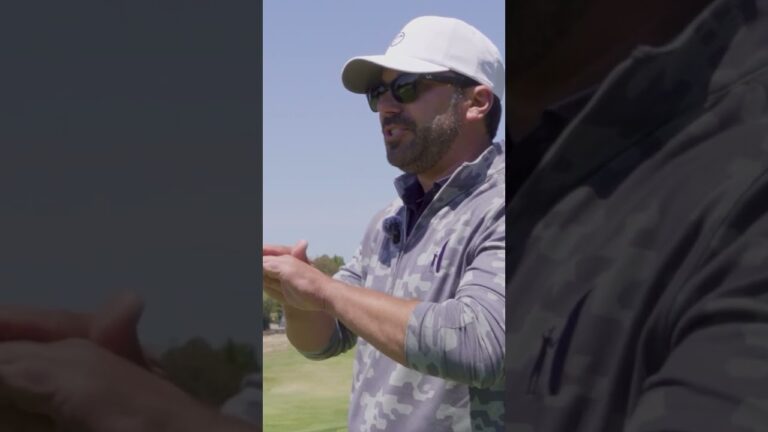

If you want to hit better golf shots in the wind, control distance more precisely, and become more reliable under changing conditions, trajectory control deserves your attention. A lower, flatter ball flight can sometimes outperform a full, higher shot, especially when the wind picks up.
Many golfers focus almost entirely on swing speed or clean contact. Those matter, but they are not the whole story. Ball flight height changes how the wind affects the shot, how the ball carries, and how predictable your distances are. In some conditions, a controlled knockdown shot can travel as far as, or even farther than, a full swing.
This guide explains why trajectory is everything in golf, when a low flight is useful, and how you can practice a more penetrating ball flight without overcomplicating your swing.
Table of Contents
- Step 1: Understand why trajectory is everything in golf
- Step 2: Learn when a low ball flight is the smart play
- Step 3: Know the difference between a full swing and a knockdown shot
- Step 4: Use trajectory control in golf to manage wind better
- Step 5: Build a simple knockdown shot you can trust
- Step 6: Understand why lower can sometimes go farther
- Step 7: Practice trajectory control in golf instead of only stock shots
- Step 8: Choose the right shot for the day, not just your favorite shot
- Step 9: Avoid the most common trajectory mistakes
- Step 10: Use a simple checklist on the course
- Step 11: Make trajectory control part of your long-term golf swing development
- Key takeaway
- Frequently Asked Questions
Step 1: Understand why trajectory is everything in golf
The focus keyphrase here is trajectory control in golf. That phrase matters because controlling height is one of the most practical skills you can develop on the course.
Trajectory is the height and shape of your golf shot through the air. It influences:
- Distance
- Wind performance
- Spin behavior
- Consistency
- Shot selection
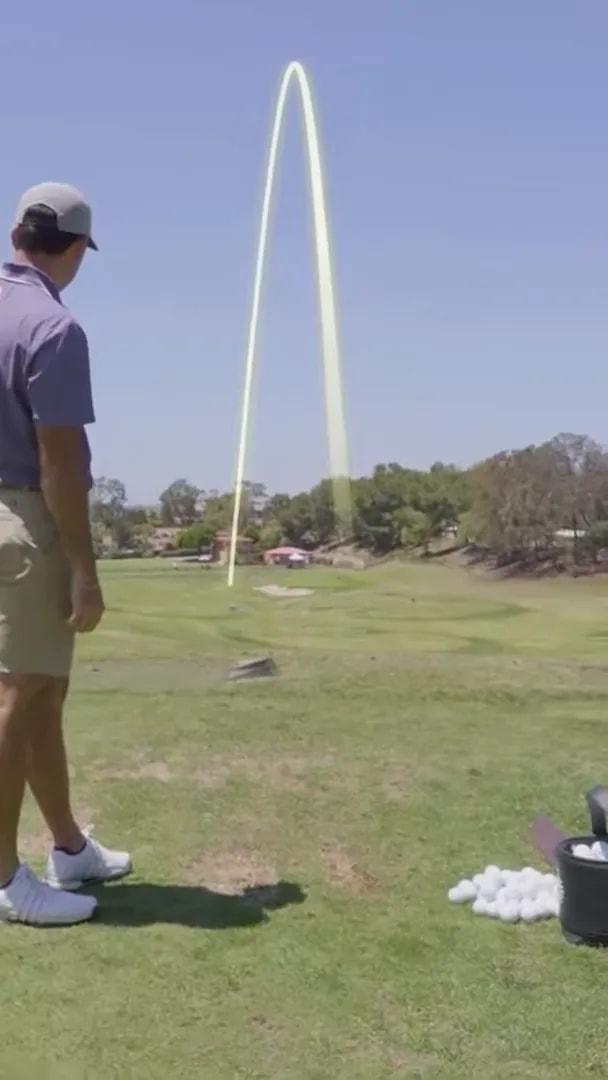
A high shot can be useful when you need carry, stopping power, or help getting over trouble. A lower shot can be useful when you want the ball to bore through the wind and stay on a more stable flight.
That is why trajectory is not just about style. It is about choosing a flight window that matches the situation.
Step 2: Learn when a low ball flight is the smart play
A low, flat trajectory is especially helpful when conditions are not calm. In dry, open places and windy environments, you quickly learn that height can make a huge difference.
A lower shot is often the better option when:
- You are hitting into the wind
- You are playing in desert or exposed conditions
- You want a more penetrating flight
- You need to reduce the effect of gusts
- You want to take some excess height out of a full swing
Into a headwind, a high full shot can climb, stall, and lose forward momentum. A lower knockdown can stay under more of the wind, maintain a stronger flight, and sometimes end up going farther than the higher full swing.
This is one of the biggest misconceptions in golf. Many players assume swinging harder always sends the ball farther. In reality, the right trajectory control in golf can produce more effective distance than extra effort.
Step 3: Know the difference between a full swing and a knockdown shot
A full swing usually produces your standard launch, spin, and carry. That is useful when conditions are neutral and you want your stock number.
A knockdown shot is different. It is a controlled swing designed to produce a lower trajectory. The goal is not simply to hit the ball weakly or chop down on it. The goal is to create a flight that is more stable and efficient for the conditions.
In calm weather, a knockdown may fly a bit shorter than a full swing. But into the wind, that relationship can change. The lower flight may cut through the air better and finish farther than the shot that balloons up.
This is why stronger players often have multiple versions of the same club:
- A stock full shot
- A lower knockdown
- A flighted shot with controlled carry
You do not need dozens of specialty shots. You just need enough command to choose the right height.
Step 4: Use trajectory control in golf to manage wind better
Wind exaggerates every mistake. If your shot launches too high, spins too much, or lacks control, the wind will expose it quickly.
For practical course management, think about wind in simple terms:
Into the wind
This is where lower trajectory control in golf matters most. A high shot can get stuck in the air. A lower, flatter shot tends to hold its line and carry more efficiently.
Downwind
You may not need the same kind of low flight. Depending on your target and landing area, a standard shot may work fine. The key is still awareness of height and spin.
Crosswind
Lower flight can also help reduce drift. The ball spends less time climbing and being moved by the wind.
You do not need to fight the wind with brute force. You need a flight that matches the environment.
Step 5: Build a simple knockdown shot you can trust
The most useful version of a knockdown shot is a repeatable one. Avoid making it overly technical. The purpose is control, not complexity.
A simple framework:
- Choose one or two clubs you trust first
- Make a shorter, more controlled motion than a full swing
- Focus on a lower finish and balanced rhythm
- Prioritize solid contact over speed
The exact mechanics can vary by player, but the principle stays the same: create a ball flight that stays flatter and more stable than your stock shot.
If you try to manufacture a low shot by swinging violently or forcing the club downward, you can create poor contact and unpredictable spin. A reliable knockdown is usually compact, balanced, and committed.
Step 6: Understand why lower can sometimes go farther
This idea surprises many golfers, but it is central to trajectory control in golf. In certain conditions, especially into a headwind, a lower shot can travel farther than a full swing.
Why?
- A high shot is exposed to the wind longer
- Extra height can increase drag
- The ball may lose forward momentum as it climbs
- A flatter flight can preserve energy better
That does not mean every low shot is longer. It means the best shot is not always the hardest one. Distance is not just about swing length. It is also about how efficiently the ball moves through the air.
For golfers who struggle with windy rounds, this single concept can change club selection and confidence.
Step 7: Practice trajectory control in golf instead of only stock shots
If all your range sessions revolve around one standard full swing, your on-course options stay limited. A better approach is to practice multiple trajectories with the same club.
Try a simple range pattern:
- Hit a normal stock shot
- Hit a lower, flatter version
- Compare carry, height, and control
- Repeat in sets with the same club
This teaches you that one club can produce more than one useful shot. It also improves awareness of how conditions affect distance.
If you practice outdoors on breezy days, even better. Wind gives you immediate feedback. You will start to notice when a shot climbs too much and when a lower flight holds up better.
Step 8: Choose the right shot for the day, not just your favorite shot
Good course management starts with accepting what the conditions require. Sometimes the best play is not your prettiest full swing. Sometimes it is the controlled shot that keeps the ball down and moves it through the air more efficiently.
Before each approach or tee shot, ask:
- Is the wind helping, hurting, or crossing?
- Do I need height or control more?
- Would a lower trajectory improve my result?
- Am I choosing a shot based on the conditions or habit?
This kind of decision-making is where trajectory control in golf becomes a scoring tool, not just a swing concept.
Step 9: Avoid the most common trajectory mistakes
Many golfers understand that they should hit it lower in the wind, but they go about it the wrong way.
Mistake 1: Swinging harder into the wind
This often adds tension and sends the ball even higher. More effort does not automatically create a stronger flight.
Mistake 2: Treating every shot like a full shot
If you only trust one speed and one height, you will struggle when conditions change.
Mistake 3: Trying to force the ball down
An overly steep or manipulated motion can hurt contact. Controlled trajectory is usually produced by a measured swing, not a violent one.
Mistake 4: Ignoring local conditions
Open courses, desert golf, and windy days demand more awareness. A shot that works in calm conditions may not be the best play elsewhere.
Mistake 5: Assuming shorter swing means weaker shot
A compact flighted shot can be stronger through the air than a full swing that climbs too much.
Step 10: Use a simple checklist on the course
When you need a practical way to apply trajectory control in golf, use this checklist before you hit:
- Wind check: Is it into, down, or across?
- Flight check: Do I need normal height or lower flight?
- Club check: Do I have enough club for a controlled swing?
- Commitment check: Am I fully committed to the shot shape and height?
This keeps your decision process simple. You do not need a complicated launch monitor mindset on the course. You just need to choose a sensible trajectory and commit to it.
Step 11: Make trajectory control part of your long-term golf swing development
If your goal is a better golf swing, do not define improvement only as making the same stock shot over and over. A more complete golfer can change ball flight on purpose.
That means your golf swing training should include:
- Stock shots
- Lower flighted shots
- Wind-aware practice
- Distance control under different conditions
Trajectory control in golf is one of the clearest signs that your swing is becoming functional, not just mechanical. It shows that you can adapt.
Key takeaway
The idea is simple: trajectory is everything because the height of your shot changes how the ball behaves in real playing conditions. A full swing is not always the best answer. In the wind, a lower knockdown can be more reliable and may even go farther.
If you want more consistent results, practice more than one flight window. Learn your stock shot, then learn a lower version you can trust. That single skill can make your golf swing more useful where it matters most, on the course.
Frequently Asked Questions
What is trajectory control in golf?
Trajectory control in golf is the ability to change the height and flight of the ball on purpose. It helps you handle wind, manage distance, and choose shots that fit the conditions instead of relying on one standard ball flight.
Why does a lower golf shot work better in the wind?
A lower shot usually spends less time climbing and is often less affected by a headwind. That can make the ball flight more stable and efficient than a higher shot that rises too much and loses forward momentum.
Can a knockdown shot go farther than a full swing?
Yes, in some windy conditions it can. Into a headwind, a lower knockdown may travel farther than a full shot if the full shot launches too high and gets slowed by the wind.
When should you hit a knockdown shot?
A knockdown shot is useful when hitting into the wind, in exposed or desert conditions, when you want a flatter ball flight, or when you need more control than a standard full swing provides.
Is trajectory more important than swing speed?
They both matter, but trajectory can have a huge effect on real-world performance. In some conditions, the right ball flight is more important than adding speed because it determines how well the shot moves through the air.
How do you practice trajectory control in golf?
Practice hitting both stock shots and lower flighted shots with the same club. Compare how each one carries and performs, especially on windy days. The goal is to build awareness and control, not just repeat one swing shape.
0 Comments