
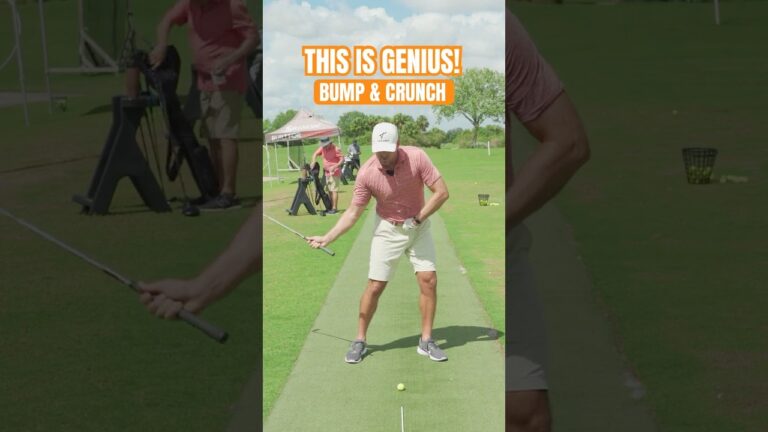

If you want to become a better ball striker, one downswing move deserves serious attention: the bump and crunch move. This simple feel helps your trail shoulder work the way elite players do during the downswing. Instead of moving only down or only out, the trail shoulder needs to move down and forward.
That combination is what helps deliver the club more efficiently into the ball. It can improve strike quality, help sequence your body better, and give you a clearer feel for how the lower body and torso should work together.
The move can be boiled down to three actions:
- Bump the pelvis forward toward the target side
- Crunch the trail side of your torso
- Turn your body through so the trail shoulder moves forward as well as down
Used together, these pieces create a downswing pattern that is much closer to what strong ball strikers do naturally.
Table of Contents
- Step 1: Understand what the trail shoulder must do in the downswing
- Step 2: Learn the “bump” in the bump and crunch move
- Step 3: Add the “crunch” to get the trail shoulder moving down
- Step 4: Blend the bump and crunch move together
- Step 5: Add the missing piece most golfers forget, the forward turn
- Step 6: Rehearse the full sequence as “bump, crunch, turn”
- Step 7: Use the bump and crunch move to improve contact, not just style
- Step 8: Keep the feel simple during practice
- Step 9: Know the common mistakes when training the bump and crunch move
- Step 10: Build the bump and crunch move into your regular golf swing practice
- FAQ
Step 1: Understand what the trail shoulder must do in the downswing
The key idea is straightforward: your trail shoulder must move both down and forward during the downswing.
Many golfers exaggerate one direction and miss the other. If your trail shoulder only works downward, you can get stuck, too tilted, or trapped behind the ball. If it only works forward, you may lose posture, throw the club out, or rotate too level through impact.
Good players blend the two.
That is why the bump and crunch move is useful. It gives you a feel for how your body should organize itself so the trail shoulder can shallow, lower, and move into the strike correctly.
Think of the motion this way:
- The down part is helped by pressure shift and side bend
- The forward part is helped by rotation through the shot
- You need both pieces at the same time for better contact
This is not just an arm action. It is a body-driven motion involving the pelvis, torso, and chest working in sequence.
Step 2: Learn the “bump” in the bump and crunch move
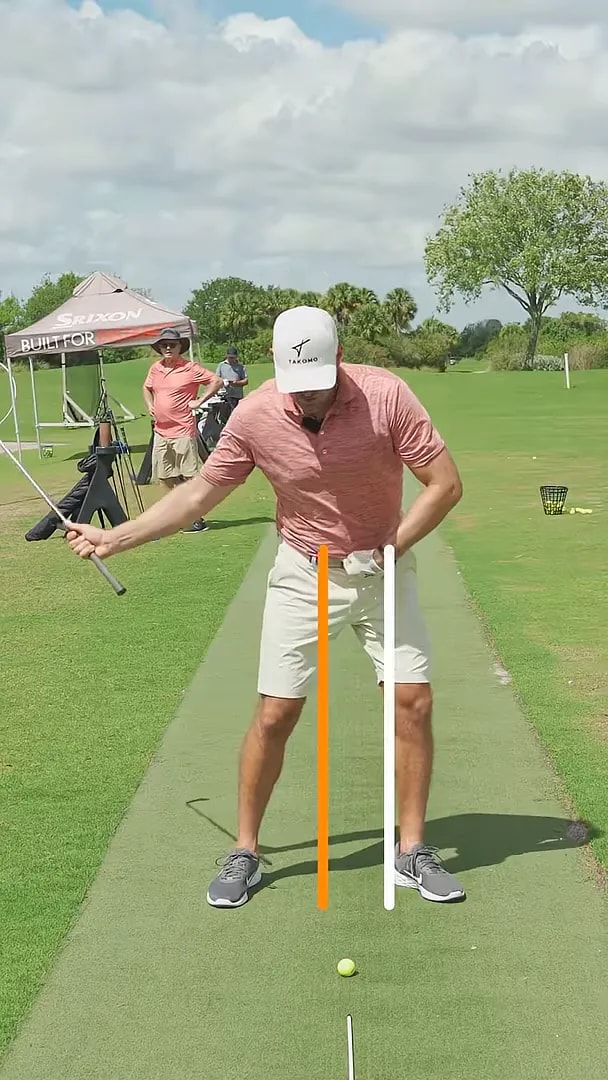
The first part of the bump and crunch move is the bump. This refers to the way your pelvis shifts during the downswing.
A useful feel is to move your belt buckle toward your lead ankle. For a right-handed golfer, that means the belt buckle works toward the left ankle. This is not a huge slide. It is a small, athletic bump that helps start the downswing from the ground up.
This movement matters because it helps set up the downward component of the trail shoulder. Without it, many golfers spin too early from the top, stay back too long, or never get pressure moving properly into the lead side.
When you rehearse the bump correctly, you should feel:
- A shift into the lead side
- The pelvis moving slightly forward
- Your body staying organized instead of lunging
- A better setup for the torso to tilt and rotate
The bump is not an independent move that keeps sliding forever. It is an initial transition feel that blends into the rest of the downswing. Its job is to help you begin pressure transfer and create room for the upper body to work properly.
If you struggle with hanging back or flipping at impact, this feel can be especially valuable. It gives you a simple trigger to start the downswing with something other than the hands.
Step 3: Add the “crunch” to get the trail shoulder moving down
Once you have the bump, the next piece is the crunch. This is a trail-side bend, almost like an oblique crunch.
For a right-handed golfer, feel your right shoulder getting closer to your right hip. That is the basic sensation. The right side shortens slightly as you transition and move down.
This crunch helps deliver the trail shoulder downward. It is a major reason the bump and crunch move can improve your downswing mechanics so quickly. Many golfers try to lower the shoulder by forcing it with the arms. That usually creates tension and poor sequencing. The crunch gives you a body-based way to do it.
This part should feel athletic, not exaggerated. You are not collapsing your side or dipping your head dramatically. You are simply creating a small amount of side bend that helps the upper body organize itself.
When the crunch is present, several good things tend to happen:
- The trail shoulder works more down than out
- The torso supports a more efficient delivery
- The club can approach impact with better geometry
- You reduce the urge to throw the hands from the top
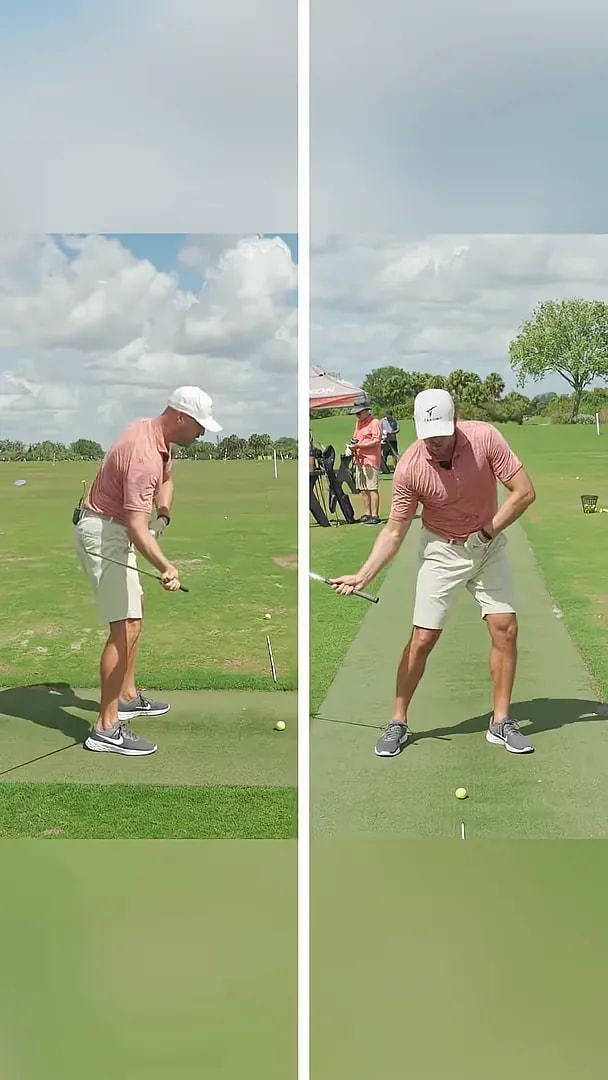
A simple rehearsal is this:
- Stand in your golf posture without a club, or hold a club across your chest.
- Gently bump your belt buckle toward your lead ankle.
- At the same time, add a trail-side crunch so your trail shoulder feels closer to your trail hip.
- Pause and notice what your torso is doing.
That pause is important. It helps you separate the feel from the speed of the full swing.
Step 4: Blend the bump and crunch move together
The real value of the bump and crunch move appears when you blend the two parts together. The shift and the side bend are partners. One sets up the other.
If you only bump, you may slide without enough tilt. If you only crunch, you may tilt without pressure shift. Together, they produce a more complete downswing move.
A good rehearsal pattern is:
- Bump
- Crunch
- Repeat slowly
As you repeat it, focus on the relationship between your pelvis and torso. Feel the lower body initiate and the upper body respond in a way that lowers the trail shoulder.
This rehearsal is useful because it simplifies the downswing into something you can actually feel. Golf instruction often becomes too technical, but this move is practical. You can stand in a mirror or in your garage and train it in a few minutes.
Use short, controlled reps. You are trying to build awareness first, not speed. Once the body understands the motion, the swing can become more natural and powerful.
Step 5: Add the missing piece most golfers forget, the forward turn
The downswing does not stop at down. The trail shoulder must also go forward.
This is where rotation enters the picture. As you are bumping and crunching, your body must also turn through. The chest, trail shoulder, and torso rotate toward the ball and through the strike.
This is the part that keeps the move from becoming a static side bend drill. You are not just trying to drop the shoulder. You are trying to move it down while rotating forward.
A helpful feel is that your whole upper body is turning through with the same crunching sensation still present. In other words:
- You bump to start pressure moving forward
- You crunch to help the trail shoulder work downward
- You turn so the trail shoulder also works forward through the ball
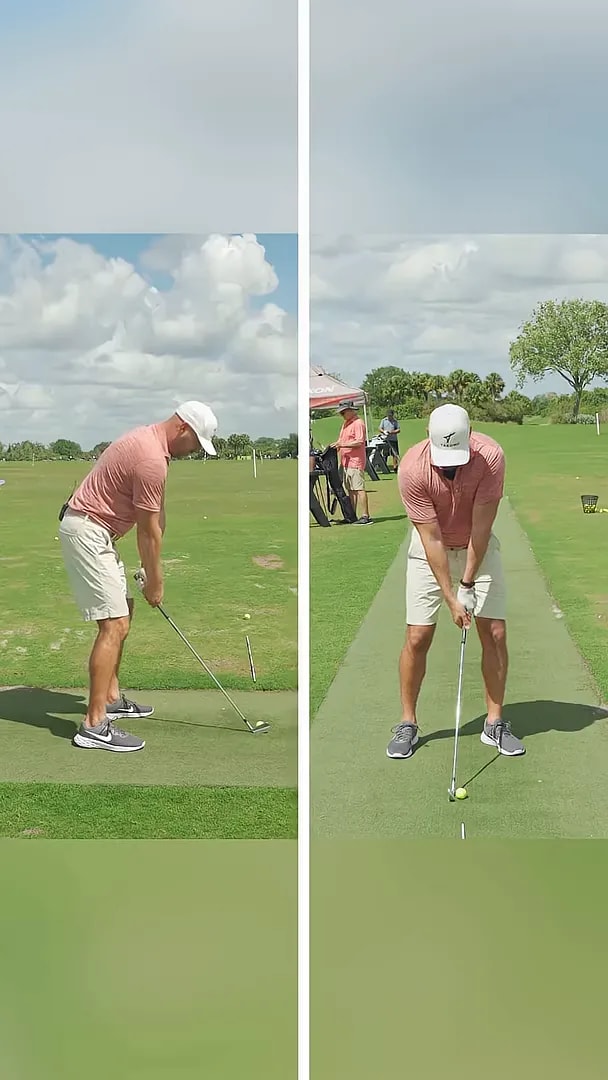
This combination is one reason the bump and crunch move can support better ball striking. It gives your downswing direction and structure. The body is not just spinning level, and it is not just hanging in side bend. It is doing both what is needed to approach and move through impact efficiently.
If you have ever felt like your downswing is either too steep or too stuck, this blend can help. It balances lowering, shifting, and rotating into one repeatable feel.
Step 6: Rehearse the full sequence as “bump, crunch, turn”
Once you understand the pieces, rehearse them as one sequence:
- Bump your belt buckle toward your lead ankle
- Crunch your trail side so the trail shoulder feels closer to the trail hip
- Turn your chest and trail shoulder forward through the shot
You can even use the rhythm phrase “bump, crunch, turn” during practice swings.
That verbal cue helps many golfers reduce clutter in their swing thoughts. Instead of trying to manage ten mechanical ideas, you can organize the downswing around three connected body motions.
Here is a simple way to practice it:
- Make two slow rehearsals without hitting a ball.
- On each rehearsal, exaggerate the feel slightly.
- Then hit one shot trying to keep only the same sequence, not the exaggeration.
- Repeat for a series of balls.
This rehearsal-to-shot method is effective because the body learns motion through contrast. The practice swing gives you awareness. The actual swing gives you function.
Start with a short iron if possible. A mid-iron like a 7-iron often makes this kind of body motion easier to sense than a driver.
Step 7: Use the bump and crunch move to improve contact, not just style
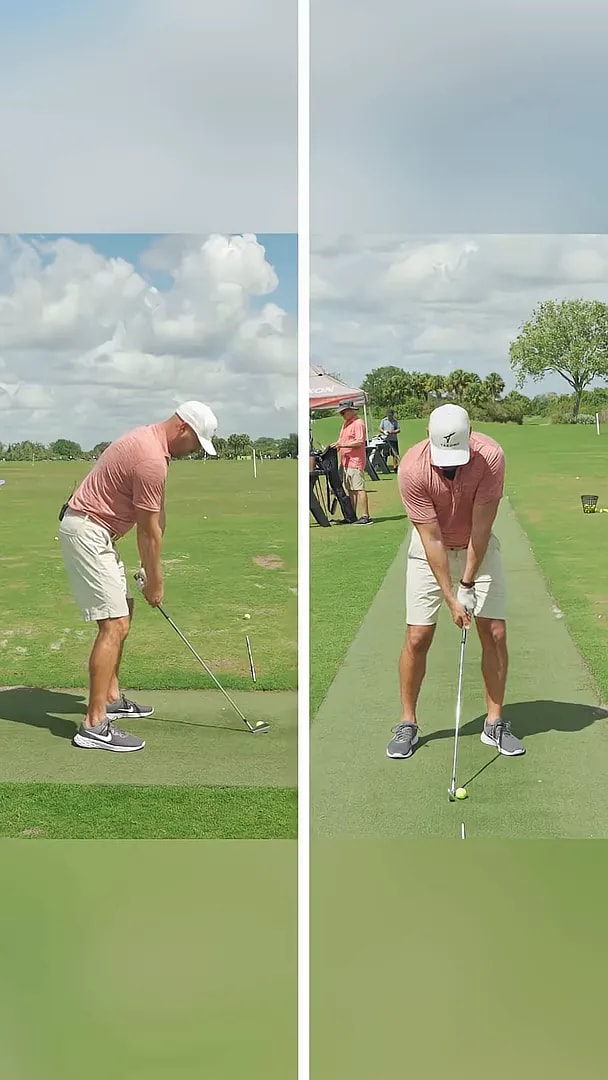
The purpose of the bump and crunch move is not to make your swing look a certain way. The real goal is better impact.
When your trail shoulder works down and forward correctly, you are more likely to:
- Sequence the downswing from the ground up
- Avoid throwing the club from the top
- Rotate through the shot with structure
- Strike the ball more solidly
That is why this feel is useful for amateur golfers. It gives you a practical motion that influences club delivery without forcing you to think about dozens of positions.
Better ball strikers usually do not rely on the hands alone to save the swing. Their body motion supports the delivery. The bump and crunch move is one way to train that support system.
If your common miss is heavy contact, thin contact, or a feeling that the club never arrives in sync, this move can serve as a useful checkpoint. It is especially helpful if you tend to start down with your shoulders spinning open or your arms firing independently.
Step 8: Keep the feel simple during practice
The bump and crunch move works best when you keep it simple.
Try these practice guidelines:
- Use slow-motion rehearsals first
- Focus on body feel, not ball flight at the start
- Train the move in pieces before blending it together
- Use short sessions with lots of repetition
- Gradually bring the feel into fuller swings
Avoid overdoing the motions. A common mistake is to turn a useful feel into an exaggerated move. The bump should not become a massive slide. The crunch should not become a collapse. The turn should not erase the side bend instantly.
Think of the move as a training tool that helps you discover the right blend. Once you hit shots well, the swing itself may look less dramatic than the rehearsal feels.
If needed, rehearse in front of a mirror. A visual check can confirm that your body is staying in posture while the pelvis shifts, the trail side bends, and the torso turns through.
Step 9: Know the common mistakes when training the bump and crunch move
Even a simple golf swing drill can go wrong if the feel is misunderstood. Here are the most common mistakes to avoid when working on the bump and crunch move.
Mistake 1: Sliding without turning
If you bump but never rotate, your swing can stall. The pelvis shifts, but the body does not continue moving through the shot. That often leads to blocks, flips, or poor contact.
Mistake 2: Turning without the crunch
If you only spin open from the top, the trail shoulder may work too level and too soon. That can send the club off line and reduce strike quality.
Mistake 3: Over-crunching the trail side
The crunch is a useful feel, but too much can create tension or a collapsed posture. You want athletic side bend, not a forced dip.
Mistake 4: Starting down with the arms
The bump and crunch move is body-led. If your first instinct is to throw the club with your hands, you may lose the entire benefit of the drill.
Mistake 5: Practicing too fast
Speed often hides poor movement. Slow rehearsals make the sequencing easier to feel and easier to retain.
If you notice one of these patterns, slow down and return to the sequence: bump, crunch, turn.
Step 10: Build the bump and crunch move into your regular golf swing practice
To make the bump and crunch move useful on the course, include it in your normal practice routine.
A simple structure looks like this:
- Make 5 to 10 slow rehearsals without a ball.
- Hit 5 soft shots focusing only on bump and crunch.
- Hit 5 more shots adding the forward turn feel.
- Alternate between rehearsal swings and real swings.
This approach helps the feel transfer more naturally. You are not trying to memorize positions. You are teaching your body a motion pattern.
Over time, the cue may become even simpler. At first, you might need to think all three words. Later, one phrase like trail shoulder down and forward may be enough to trigger the whole motion.
The important thing is consistency. Golf swing changes usually stick when the feel is repeated often and kept clear.
FAQ
What is the bump and crunch move in the golf swing?
The bump and crunch move is a downswing feel that combines a small pelvic shift toward the lead side with trail-side bend and body rotation. It helps your trail shoulder move down and forward, which can improve ball striking.
Why does the trail shoulder need to move down and forward?
Moving the trail shoulder down helps organize the delivery into impact, while moving it forward helps you rotate through the shot. You need both motions together for a more efficient downswing.
How do you feel the bump in the bump and crunch move?
A useful feel is to move your belt buckle toward your lead ankle. For a right-handed golfer, that means toward the left ankle. It is a small shift, not a large slide.
How do you feel the crunch part of the bump and crunch move?
Feel your trail shoulder getting a little closer to your trail hip, almost like an oblique crunch. This helps create trail-side bend and supports the shoulder moving downward in transition.
Can the bump and crunch move help amateur golfers hit the ball more solidly?
Yes. The bump and crunch move can help amateur golfers improve sequencing and body motion in the downswing, which can lead to cleaner contact and more reliable impact.
Should you practice the bump and crunch move at full speed right away?
No. Start with slow rehearsals and short swings. That makes it easier to feel the sequence of bump, crunch, and turn before trying to use it at normal speed.
The bump and crunch move is simple enough to rehearse in a few minutes, but powerful enough to change how your downswing works. If your trail shoulder has not been moving down and forward together, this is a clear way to train it.
Remember the sequence:
- Bump the belt buckle toward the lead ankle
- Crunch the trail side
- Turn through so the trail shoulder keeps moving forward
That blend can give you a more organized downswing and a better chance at elite-level strike patterns. For many golfers, it is one of the most useful body feels to take into practice.
0 Comments