
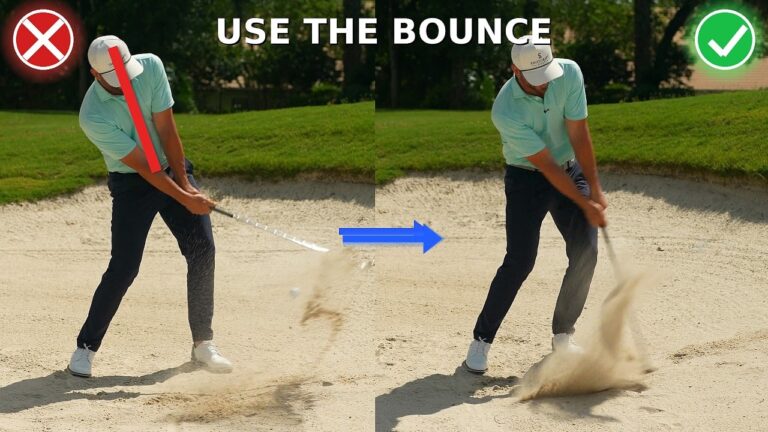

Bunker mistakes can wreck an otherwise solid golf round. If you regularly leave greenside bunker shots in the sand, hit them fat, or blade them over the green, the issue is often not effort. It is usually setup and motion.
This guide explains three common bunker mistakes in golf and how to fix them step by step. You will learn how ball position, pressure distribution, and spine tilt affect strike quality, how to use the bounce correctly, and how to create more reliable contact from the sand.
The focus here is simple: help you get the golf ball out of the bunker more consistently without overcomplicating your technique.
Table of Contents
- Step 1: Stop playing the golf ball too far back in your stance
- Step 2: Keep more pressure on your lead side in golf bunker shots
- Step 3: Do not lean your upper body away from the target
- Step 4: Learn the basic contact point for standard golf bunker shots
- Step 5: Use the bounce instead of the leading edge in golf
- Step 6: Follow a simple golf bunker setup checklist
- Step 7: Avoid the most common golf bunker mistakes
- Step 8: Understand how club design can affect golf bunker forgiveness
- Step 9: Use this practice plan to improve golf bunker contact fast
- Step 10: Know when these golf bunker tips apply
- Quick golf takeaway
- Golf bunker play FAQ
Step 1: Stop playing the golf ball too far back in your stance
One of the most common bunker errors in golf is moving the ball too far back in the stance in an attempt to hit the sand first. That feels logical, but it often makes bunker play worse.
When the golf ball sits too far back, the club tends to arrive with too much forward shaft lean. That reduces or removes the bounce and exposes the leading edge. In sand, a digging leading edge is a problem. Instead of gliding, the club buries itself, which makes fat contact more likely.
For most standard greenside bunker shots in golf, a better starting point is to play the ball forward of center. A useful range is from around the inside of your lead heel to roughly a ball farther forward, depending on your preference and posture.
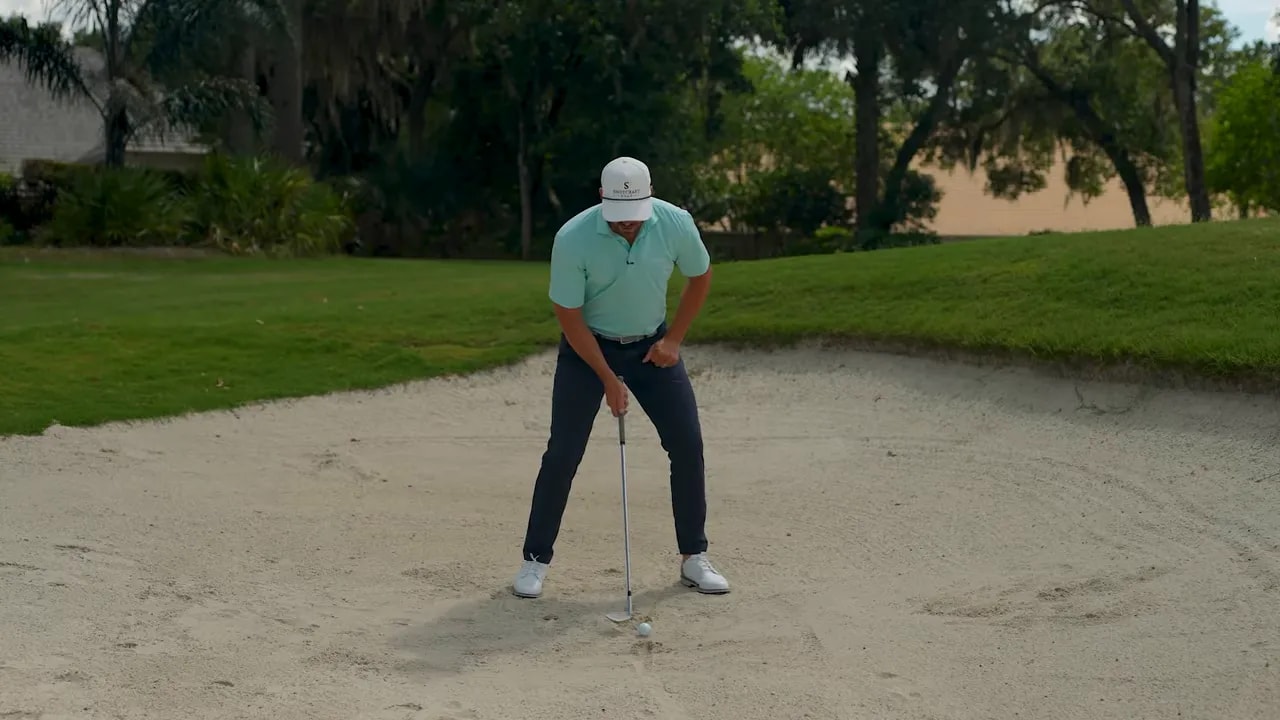
Why a forward ball position helps bunker play in golf
It helps you expose more bounce.
It encourages a shallower, gliding interaction with the sand.
It reduces the chance that the leading edge digs too deeply.
It creates more forgiveness if your entry point is slightly off.
If your bunker shots in golf are heavy and the club feels stuck in the sand, check ball position before changing anything else.
Simple checkpoint
Set up with the golf ball forward of center and the clubface slightly open. That combination helps the sole interact with the sand the way it was designed to.
Step 2: Keep more pressure on your lead side in golf bunker shots
The next issue is pressure distribution. Many golfers either start too far back on the trail foot or shift backward during the swing because they are trying to help the ball into the air.
That usually creates poor contact.
For most basic greenside bunker shots in golf, a better pattern is to start with a little more pressure on the lead side and keep it there. A practical feel is about 60 percent lead side and 40 percent trail side. It does not have to be extreme. You just want the setup slightly favoring the target side.
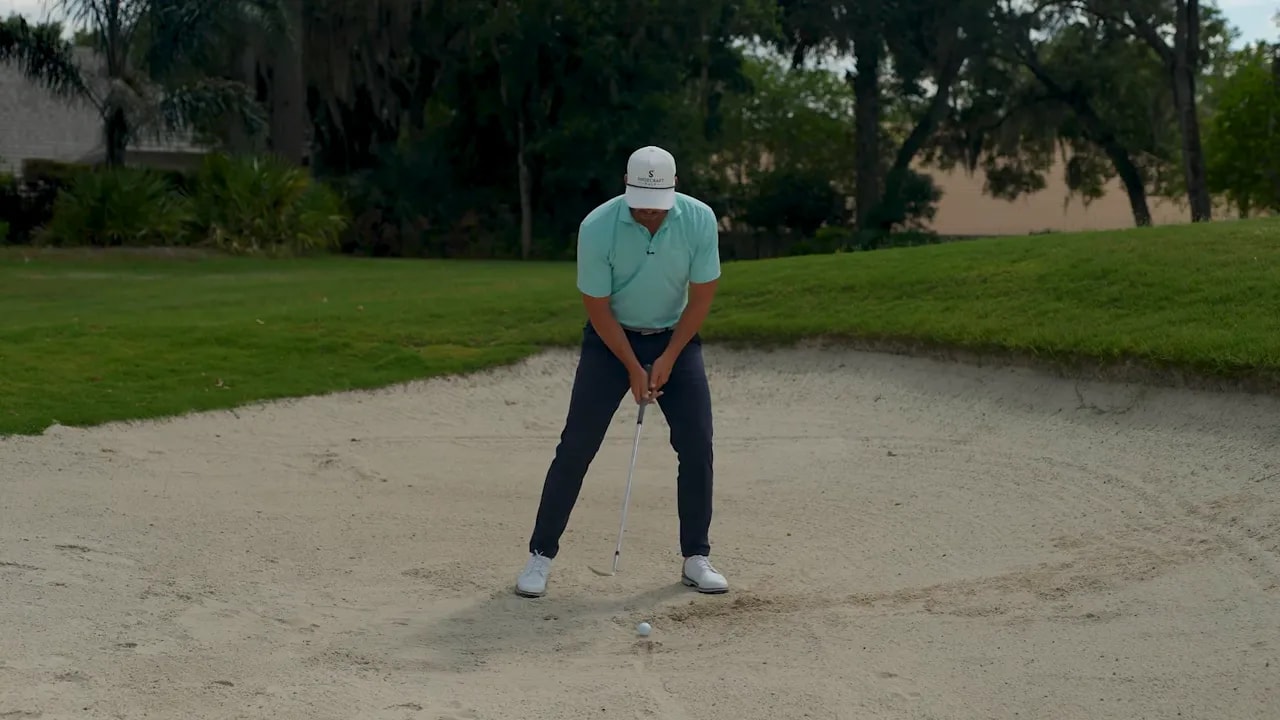
Why lead-side pressure matters in golf bunker play
With a little more pressure forward, you are more likely to deliver the club with a functional angle of attack and a predictable low point. That makes it easier to enter the sand in the right area behind the golf ball.
If your pressure hangs back or shifts too much during the swing, two bad outcomes become more likely:
Thin shots, where the club catches too much of the golf ball and sends it hard into the lip or over the green.
Chunked shots, where the club bottoms out too early and the ball stays in the bunker.
Quiet lower body, steadier strike
In bunker play, excessive motion makes precision harder. If your goal is to strike the sand a couple of inches behind the golf ball, stability matters. A quiet lower body and steady pressure on the lead side make that target easier to hit.
You do not need a dramatic sway or lift. The loft and bounce of the club help create the shot. Your job is to make a stable, committed motion through the sand.
Step 3: Do not lean your upper body away from the target
Another major bunker mistake in golf is adding backward spine tilt. This often happens when you try to scoop the golf ball up with your hands or wrists.
That backward lean moves the bottom of the swing farther behind the ball. Instead of entering the sand a useful distance behind it, you can hit far too early and leave the shot in the bunker.
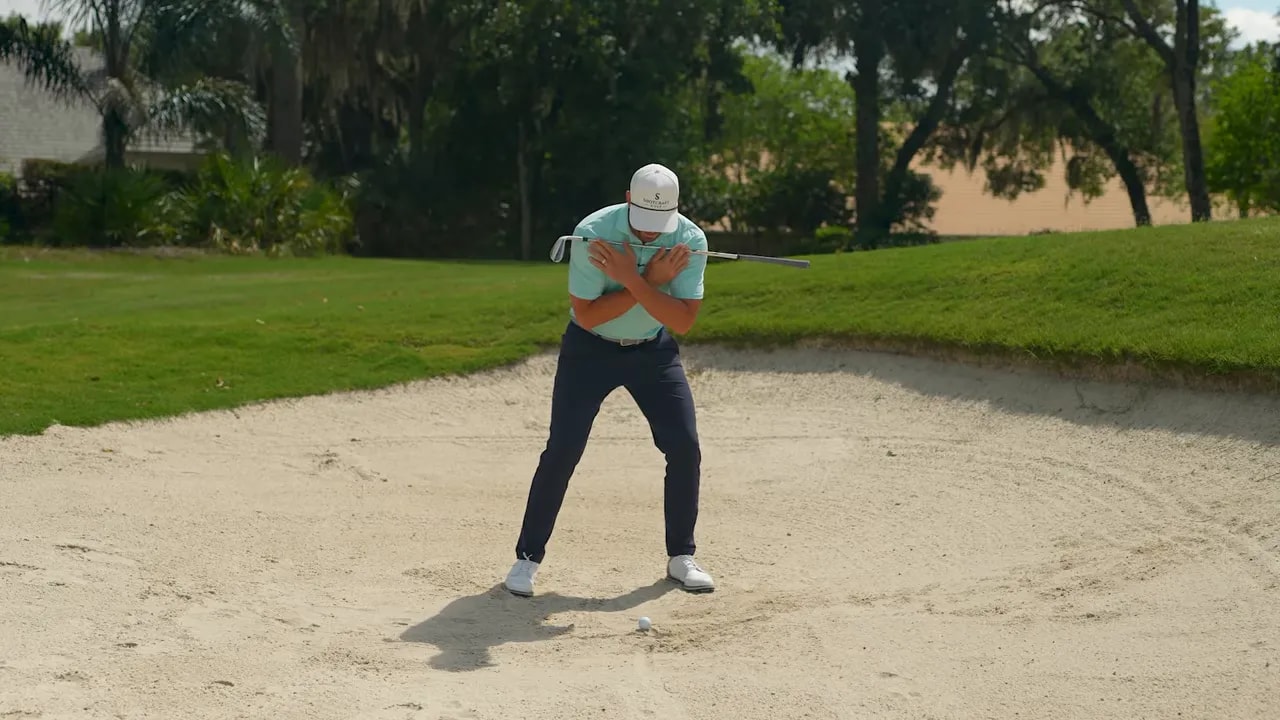
What good spine tilt looks like in golf bunker shots
A solid starting feel is a fairly neutral spine with level shoulders. If anything, a slight lean toward the target is usually safer than leaning away from it.
This helps you:
Keep the entry point under control
Avoid falling back through impact
Reduce the urge to scoop
Make cleaner use of the club’s bounce
If your golf bunker shots are hitting the sand way too far behind the ball, start by checking your shoulders and spine. Many players are trying to lift the shot instead of letting the loft do the work.
Step 4: Learn the basic contact point for standard golf bunker shots
For a normal greenside bunker shot in golf, the goal is not to strike the ball first. The goal is to enter the sand behind the golf ball and let the sand carry the ball out.
A useful general target is to enter the sand about 2 to 3 inches behind the golf ball. That is not a rule for every lie or every bunker, but it is a strong starting point for standard shots around the green.
If you enter too close to the ball, you risk a thin shot. If you enter much too far behind it, you are more likely to leave the shot in the sand.
What correct golf bunker contact feels like
The club glides rather than digs.
The strike feels heavy in the sand but not stuck.
The ball comes out on a soft, predictable trajectory.
The finish continues through, rather than stopping abruptly.
That contact pattern becomes much easier when your golf setup is built around forward ball position, slight lead-side pressure, and neutral spine tilt.
Step 5: Use the bounce instead of the leading edge in golf
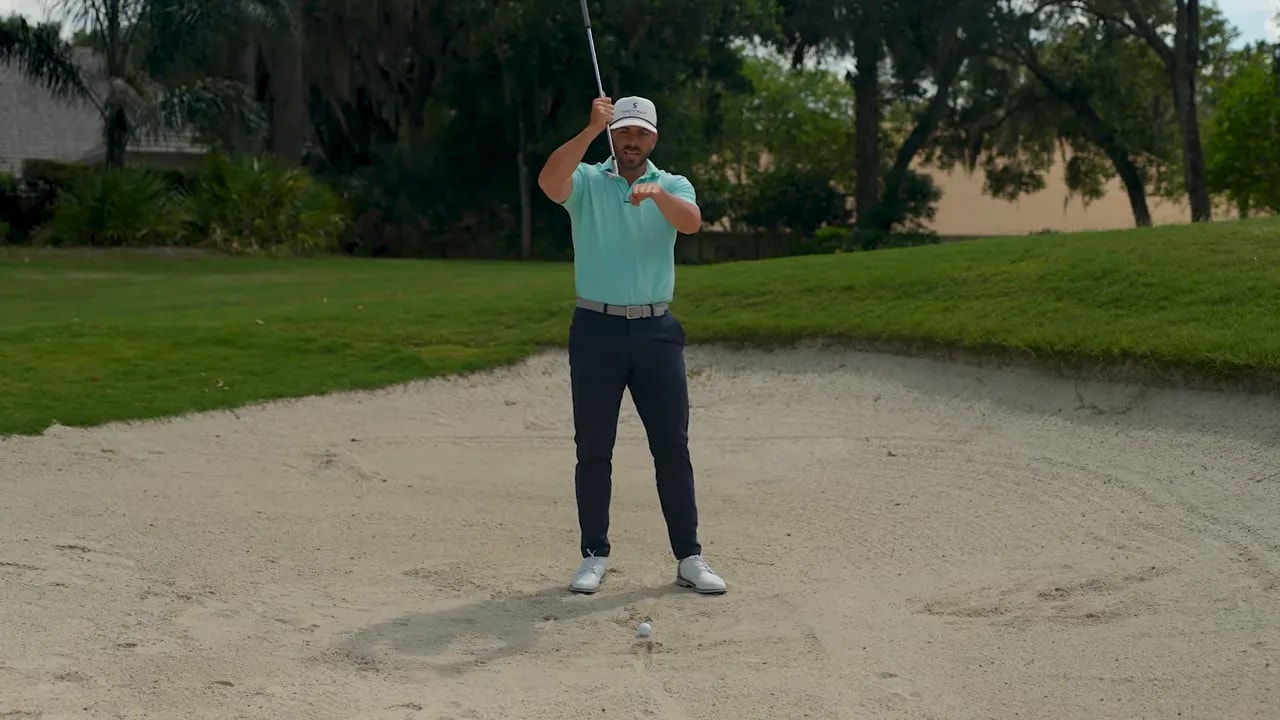
If you want more reliable bunker shots in golf, you need to understand bounce. Bounce is what helps the club move through the sand without digging too deeply.
When the face is slightly open and the shaft is not excessively leaned forward, the bounce can contact the sand and help the club skim through it. When the face is shut or the handle is pushed too far ahead, the leading edge digs more aggressively.
How golfers accidentally take bounce out of the shot
Playing the golf ball too far back
Leaning the shaft too far forward
Closing the clubface
Trying to chop steeply into the sand
How to encourage better bounce use
Play the golf ball forward of center
Open the clubface slightly
Keep pressure modestly on the lead side
Maintain a neutral upper body
Swing through the sand with commitment
This is one of the biggest differences between inconsistent bunker play and dependable bunker play in golf.
Step 6: Follow a simple golf bunker setup checklist
If you want a repeatable routine, use this checklist before each standard greenside bunker shot in golf:
Set the golf ball forward of center.
Favor your lead side slightly. About 60 to 40 is a practical feel.
Keep your spine neutral. Avoid leaning away from the target.
Open the face a little. This helps expose bounce.
Pick a spot in the sand behind the ball. For many standard shots, 2 to 3 inches is a useful starting point.
Make a stable swing. Keep the lower body quiet and swing through.
That sequence simplifies golf bunker play without making it mechanical.
Step 7: Avoid the most common golf bunker mistakes
Many golfers keep struggling from the sand because they react to bad shots with adjustments that create even more problems. Here are the most common mistakes to avoid.
Playing the ball back to stop chunking
This often increases digging and makes chunks worse.
Falling back to help the ball up
This shifts the low point away from the target and leads to fat or thin contact.
Using the hands to scoop
You do not need to lift the golf ball. The loft and sand interaction create height.
Moving around too much
Excessive body motion makes a precise entry point harder to control.
Ignoring the bounce
Many poor bunker shots in golf come from exposing the leading edge instead of using the sole correctly.
Step 8: Understand how club design can affect golf bunker forgiveness
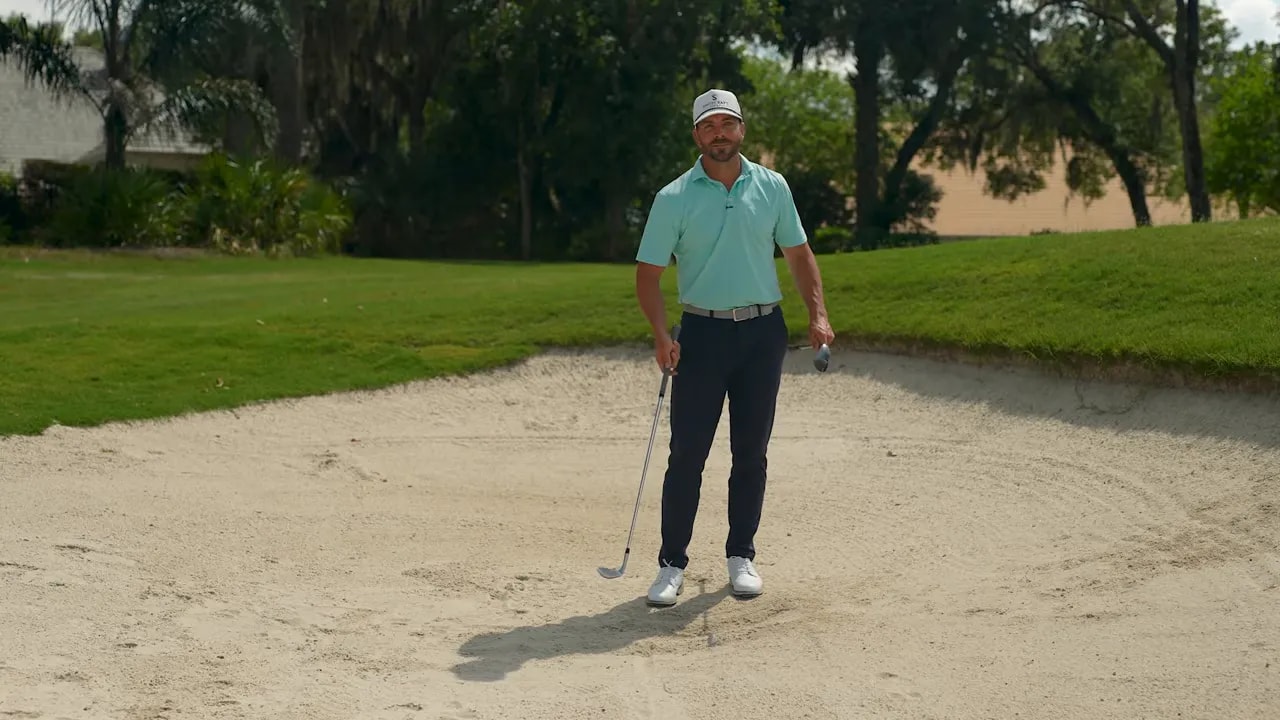
Technique matters, but equipment can also influence how forgiving bunker shots feel in golf. A wedge with more bounce can offer a larger margin for error in the sand than a low-bounce wedge, especially if you tend to hit behind the ball.
The source material also highlights a specialty bunker wedge built with very high bounce and loft. The main idea is straightforward: more bounce can help the club resist digging, which can make sand shots more forgiving.
That does not mean every golfer needs a specialty bunker club. It does mean you should be aware that club design affects performance in the sand. If your current wedge has very little bounce, bunker play in golf may feel less forgiving on slightly heavy strikes.
What to take from this for your golf game
Higher bounce can increase forgiveness in sand.
A more forgiving sole design may reduce digging on heavy strikes.
Even with a forgiving club, sound setup still helps.
If bunker play is a recurring weakness in your golf game, it can be worth checking whether your wedge setup suits the shots you face most often.
Step 9: Use this practice plan to improve golf bunker contact fast
You do not need a complicated training routine to improve bunker play in golf. A focused practice session can help you build better contact quickly.
Drill 1: Draw an entry line
Draw a line in the sand without a golf ball. Set up so the line represents where the ball would be. Rehearse entering the sand just in front of that line or on the target side of it, depending on the contact pattern you are training. This helps you see where your club is bottoming out.
Drill 2: Forward ball position rehearsal
Place the golf ball forward of center and make swings with a slightly open face. Focus on how the sole moves through the sand compared with a ball-back setup.
Drill 3: Pressure hold drill
Start with lead-side pressure and hold it through the motion. If you feel your chest or hips drifting backward, reset and try again.
Drill 4: Shoulder-level checkpoint
Before each shot, pause and confirm that your upper body is neutral rather than tilted away from the target. This is one of the fastest ways to improve poor golf bunker contact.
During practice, do not change several variables at once. Pick one checkpoint, hit a few shots, then move to the next.
Step 10: Know when these golf bunker tips apply
These fundamentals are best suited to standard greenside bunker shots where your main goal is to carry the golf ball out softly and land it on the green.
Different bunker situations may require adjustments, such as:
Buried lies
Very firm sand
Long bunker shots
High lips that require more loft
Even in those cases, the core golf ideas still matter. Ball position, pressure, and spine tilt strongly influence strike quality in almost every sand shot.
Quick golf takeaway
If your bunker play is inconsistent, start with these three corrections:
Do not play the golf ball too far back.
Do not hang back on your trail side.
Do not tilt your spine away from the target.
Those three changes help you use the bounce, control the entry point, and get the golf ball out of the sand more reliably.
Golf bunker play FAQ
Where should the golf ball be in my stance for a bunker shot?
For a standard greenside bunker shot in golf, a forward-of-center ball position is a strong starting point. Many golfers do well with the ball somewhere between the inside of the lead heel and slightly farther forward.
Should my weight be forward in golf bunker shots?
Yes. A slight lead-side pressure bias helps many golfers control the low point and enter the sand more predictably. A practical feel is about 60 percent on the lead side and 40 percent on the trail side.
Why do I keep chunking golf bunker shots?
Common reasons include playing the ball too far back, leaning the upper body away from the target, shifting pressure backward, and exposing the leading edge instead of the bounce. Any of these can cause the club to dig too deeply into the sand.
How far behind the golf ball should I hit in a bunker?
For many standard greenside bunker shots in golf, entering the sand about 2 to 3 inches behind the ball is a useful starting point. The exact amount can vary based on lie, sand texture, and the shot required.
Do I need to help the golf ball into the air from a bunker?
No. In golf bunker shots, trying to lift the ball often causes poor contact. The loft of the club and the sand interaction help the ball climb out. Your main job is to make solid sand contact with a stable setup.
Does more bounce help golf bunker play?
It can. More bounce generally helps the club resist digging in the sand, which can increase forgiveness on slightly heavy golf bunker shots. That is especially helpful for players who struggle with fat contact.
Better bunker play in golf usually comes from simpler fundamentals, not more manipulation. Set the ball forward, keep pressure slightly forward, stay neutral with your spine, and let the bounce work through the sand.
0 Comments