
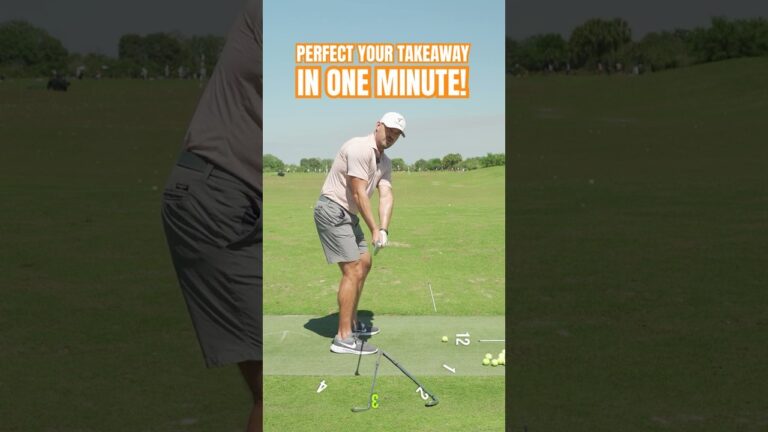

Your takeaway sets the tone for the entire golf swing. If the club moves off plane in the first foot, everything that follows gets harder. You may have to reroute the club, compensate in transition, or time the face perfectly just to make solid contact.
That is why the perfect takeaway matters so much. A clean start helps you keep the club on plane, improve wrist hinge, and reduce the chain reaction of corrections that often lead to inconsistent ball striking.
One of the most common takeaway mistakes is taking the club too far inside. For many golfers, it feels normal. In reality, it can be the beginning of a swing pattern built on excess arm rotation and too little wrist hinge. The fix is surprisingly simple: use a clock-face visual and learn to feel the club working more out toward 2 o’clock.
This step-by-step guide breaks down that move, why it works, and how to practice it correctly.
Table of Contents
- Step 1: Understand what a perfect takeaway should look like
- Step 2: Diagnose the most common perfect takeaway mistake
- Step 3: Use the 2 o’clock feel to build a perfect takeaway
- Step 4: Fix the two root causes of a poor takeaway
- Step 5: Feel the opposite to create a perfect takeaway
- Step 6: Accept that a perfect takeaway will probably feel strange at first
- Step 7: Use simple feedback to confirm your perfect takeaway
- Step 8: Practice the perfect takeaway with half swings before going full speed
- Step 9: Know why this small move can change your whole golf swing
- Step 10: Build your perfect takeaway checklist
- FAQ
Step 1: Understand what a perfect takeaway should look like
If you want a more reliable golf swing, start by building a clear picture of the first move away from the ball. The easiest way to do that is with a clock reference.
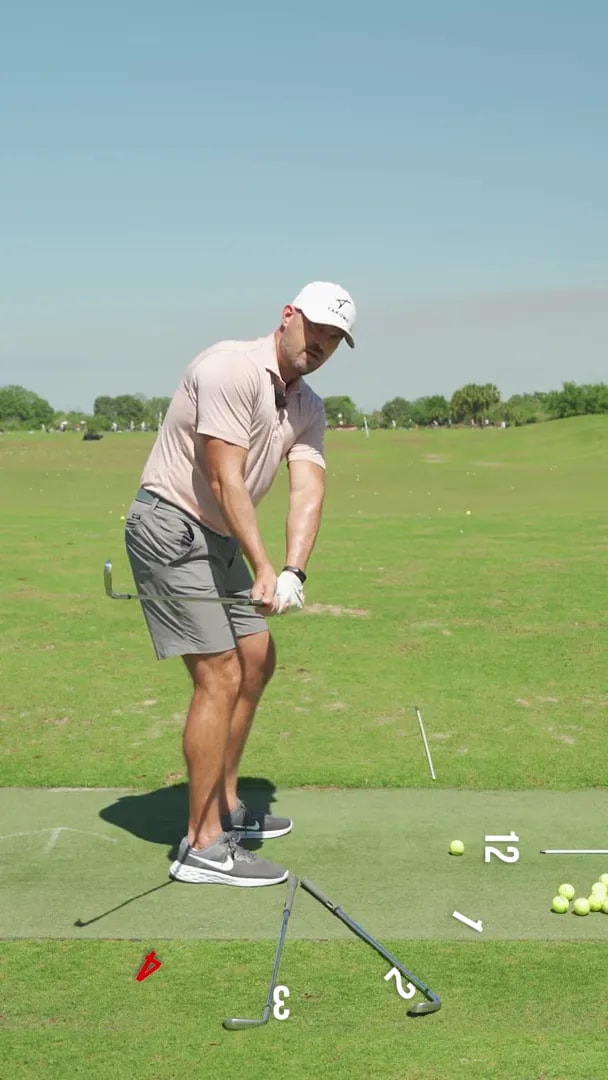
Imagine the golf ball sits at 12 o’clock. From there:
- 1 o’clock is slightly outside the target line.
- 2 o’clock is farther outside.
- 3 o’clock is more directly in line with the ideal takeaway path in this model.
- 4 o’clock is too far inside for most golfers.
The key point is this: many golfers think they are taking the club back correctly, but the clubhead actually works too far behind them early in the swing. Instead of getting the shaft and clubhead moving on a sound path, they pull it inward too quickly.
In a strong takeaway, the club does not whip behind you right away. It stays more in front of your body, with the shaft tracking more closely down the toe line rather than disappearing deep to the inside.
This matters because the takeaway is not just about where the club goes. It also influences:
- How the wrists hinge
- How the clubface behaves
- Whether the shaft stays on plane
- How easy it is to deliver the club consistently into impact
If your goal is a perfect takeaway, the first checkpoint is understanding that “inside” often feels normal but is actually the problem.
Step 2: Diagnose the most common perfect takeaway mistake
A large percentage of golfers move the club too far inside in the takeaway. In practical terms, they trace something closer to 4 o’clock than 3 o’clock.
That may sound like a small difference, but in golf, small early errors grow quickly. When the club gets too far inside during the takeaway, several issues can appear:
- The swing gets too flat too early
- The club may move behind the hands
- The golfer often has to lift or reroute the club later
- Timing becomes harder on the downswing
- Contact and direction can become inconsistent
This is why the first foot of the swing is so important. If the club starts in the wrong direction, you spend the rest of the motion managing the consequences.
Many golfers also struggle because their feel is misleading. What they think is a neutral takeaway is often too deep to the inside. So if you have fought pushes, hooks, blocks, or inconsistent contact, it is worth checking whether your club is getting pulled inward too soon.
The issue is not that the club can never be slightly inside. The issue is when it gets there too early and too much. A perfect takeaway creates structure. A poor takeaway creates compensation.
Step 3: Use the 2 o’clock feel to build a perfect takeaway
Here is the central idea: if your club normally travels to 4 o’clock, but you want it to arrive around 3 o’clock in a real swing, you will likely need to feel like it is going out toward 2 o’clock.
That is the secret.
Good golf instruction often depends on understanding the difference between real and feel. What is actually happening in the swing and what it feels like are rarely identical. If you are used to a takeaway that is too far inside, a correct move will often feel exaggerated.
So instead of trying to guide the club gently back and hoping it lands on plane, give yourself a much clearer intention:
- Feel the clubhead working out over 2 o’clock
- Feel the shaft staying more in front of you
- Feel the club travel less around your body early
This feel helps neutralize the tendency to drag the club behind you. It also gives you a more precise checkpoint than vague cues like “take it away smoothly” or “keep it low.”
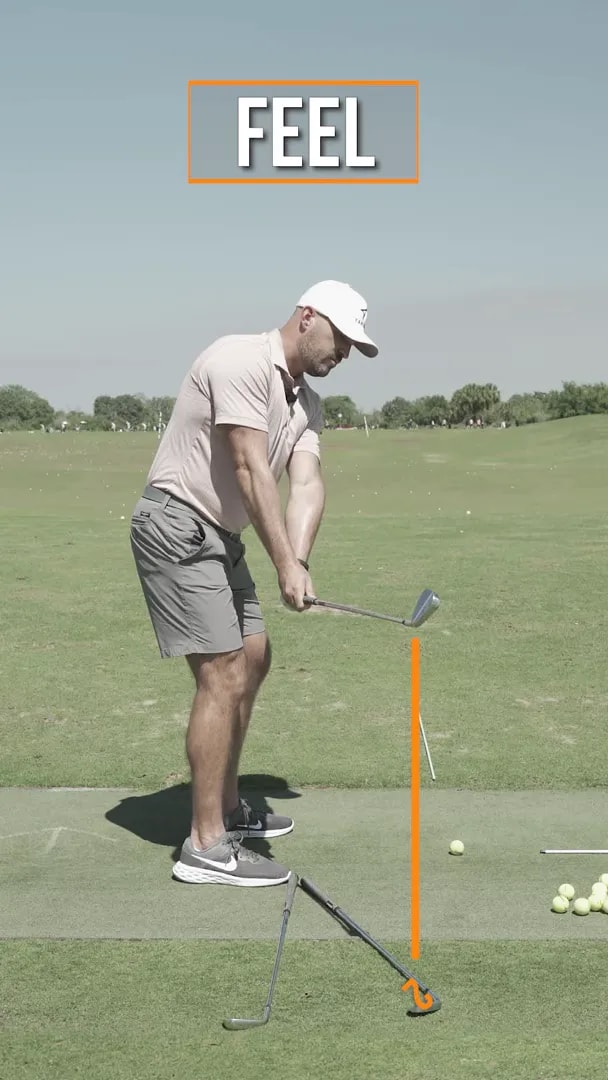
If you have ever struggled to understand takeaway drills, this visual can make things much simpler. Instead of guessing where the club should go, you can rehearse a very specific direction and compare it to the path you normally create.
Step 4: Fix the two root causes of a poor takeaway
According to this model, two issues drive the inside takeaway for most golfers:
- Too much arm rotation
- Not enough wrist hinge
These two problems often happen together.
Too much arm rotation
When the arms rotate too much early in the backswing, the club gets pulled inward. The clubhead works behind the hands too soon, and the shaft begins to flatten out. This often feels like a connected or compact move, but it can quickly send the club off plane.
For the golfer, this usually shows up as an early rolling or turning motion of the arms. Instead of the club staying more in front, it gets wrapped inside.
Not enough wrist hinge
The second issue is a lack of wrist hinge. Without enough early hinge, the club tends to travel low and around rather than up and structured. Wrist hinge helps support the shaft and keeps the club from drifting excessively to the inside.
This is an important point because many golfers have been told to avoid setting the wrists too early. They hear “one-piece takeaway” and interpret that as “do not hinge at all.” The result is often a takeaway that looks wide but actually gets trapped behind them.
A perfect takeaway does not mean zero wrist hinge. It means the club, arms, and wrists work together in a balanced way from the start.
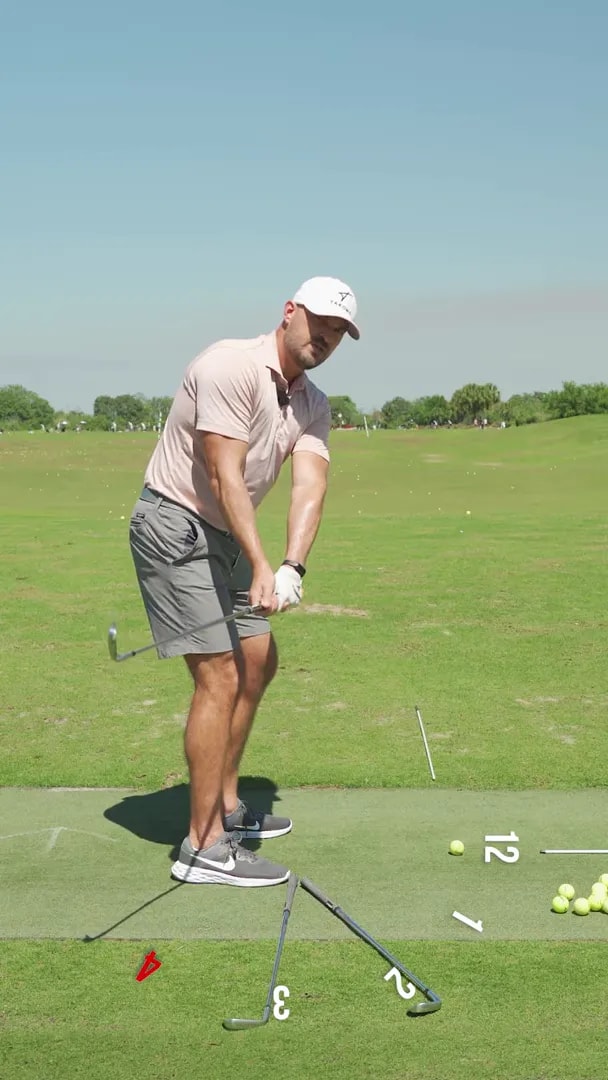
When you combine too much arm rotation with too little wrist hinge, the club almost has no choice but to move low and inside. If you want to change the pattern, you need to reverse both pieces.
Step 5: Feel the opposite to create a perfect takeaway
Once you know the two common faults, the correction becomes much clearer. You do not fix an inside takeaway by making tiny adjustments to the same bad pattern. You fix it by feeling the opposite.
That means:
- Remove the excessive arm rotation
- Increase the wrist hinge
The feeling can be dramatic, especially if you have spent years taking the club back low and inside. It may feel as though your arms are not rotating to the right at all. It may also feel as though you are hinging your wrists very early.
For someone with your pattern, that exaggerated feel is often exactly what is needed.
Try this rehearsal:
- Set up to the ball normally.
- Begin the takeaway while feeling almost no early roll of the arms.
- At the same time, allow the wrists to hinge sooner than usual.
- Feel the clubhead and shaft working out toward 2 o’clock.
- Pause and check whether the shaft appears more on plane instead of deep behind you.
This is one of the most golfer-friendly ways to improve the takeaway because it gives you a simple correction for two swing faults at once. You are not trying to micromanage ten positions. You are changing the underlying motion pattern.
Step 6: Accept that a perfect takeaway will probably feel strange at first
One reason many golfers fail to improve their takeaway is that they abandon the change too quickly. The new move feels wrong, so they assume it is wrong. In reality, that strange feeling is often a sign that you are moving away from an old habit.
If your normal motion takes the club to 4 o’clock, a better motion that lands around 3 o’clock can feel as though the club is being pushed outside. It can feel upright, abrupt, or overdone. That does not mean it is faulty. It may simply mean your old baseline was too far inside.
This is where patience matters. A proper feel can seem exaggerated long before it starts to feel natural.
As you work on the perfect takeaway, remember these practical truths:
- Your first feel is often not your real motion.
- Exaggeration is often needed to create visible change.
- Early discomfort is normal when replacing a long-term swing habit.
If the club has lived too far behind you for years, a more neutral takeaway may feel like a major overcorrection. Stick with the process long enough to let the motion settle in.
Step 7: Use simple feedback to confirm your perfect takeaway
Feel is useful, but feedback is what makes it reliable. The description associated with this lesson points toward a smart practice method: rehearse the move, then use down-the-line video or a swing analysis tool to confirm whether the shaft is actually riding the toe line.
That type of feedback loop matters because many golfers misjudge their takeaway. Without a checkpoint, it is easy to think you are doing the drill correctly when the club is still moving too far inside.
As you practice, look for these signs of a better takeaway:
- The shaft works more down the toe line early
- The clubhead stays more in front of your hands
- The club does not disappear quickly behind your body
- Your wrists begin to hinge instead of staying passive
- The takeaway appears more structured and less rolled open
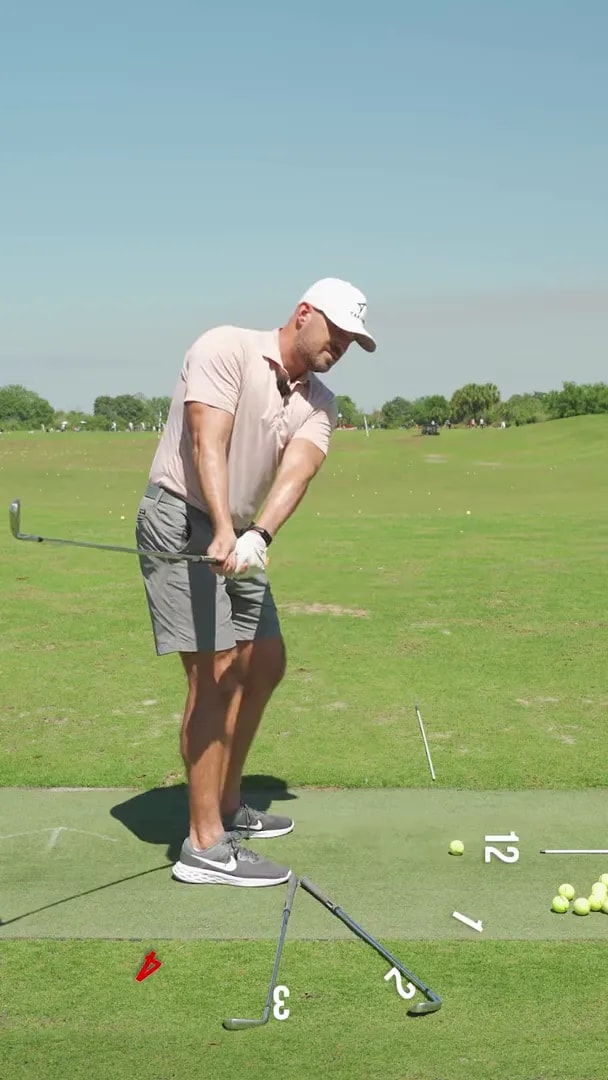
If you have access to video, record from down the line and compare your real motion to your intended feel. That one step can save weeks of guessing.
The description also references a two-rehearsal, one-hit drill and a 30-day half-swing protocol. The broader point is valuable even without overcomplicating it: use repeated rehearsals, keep the swings short enough to preserve the new pattern, and avoid rushing to full speed before the takeaway is stable.
Step 8: Practice the perfect takeaway with half swings before going full speed
One of the smartest ideas connected to this takeaway fix is to avoid jumping immediately into full swings. If you are changing the first move of the swing, you need enough repetition to make it stick.
That is much easier with half swings than with full swings.
Half swings help because they:
- Slow the motion down
- Make early positions easier to feel
- Reduce the urge to revert to old habits
- Encourage cleaner contact while building a new pattern
A useful practice structure is simple:
- Make two slow rehearsals with the 2 o’clock feel.
- On each rehearsal, minimize arm rotation and add wrist hinge early.
- Hit one half shot while trying to keep the same intention.
- Repeat for a series of reps.
This approach helps bridge the gap between drill work and real ball striking. It is also less overwhelming than trying to rebuild your entire backswing at once.
If your goal is long-term improvement, consistency beats intensity. A few high-quality sessions each week with the right feedback can do more for your takeaway than one marathon range day filled with full-speed swings and mixed feels.
Step 9: Know why this small move can change your whole golf swing
The takeaway may look minor, but it has a major influence on the entire swing. When you improve it, several other pieces often improve with it.
A better perfect takeaway can help you:
- Start the club on plane
- Create a more functional wrist hinge
- Avoid rerouting in the backswing or transition
- Deliver the club more consistently into impact
- Reduce the need for last-second compensations
That is why this concept is so powerful. You are not just fixing one checkpoint. You are improving the structure of the swing from the very beginning.
Many golfers spend time chasing downswing fixes when the real issue started in the first foot. If the takeaway sends the club off track, the downswing often becomes a rescue mission. Clean up the start, and the rest of the motion has a better chance to work.
The simple image of 2 o’clock versus 4 o’clock gives you something practical you can carry to the range, the practice tee, or your next lesson. It turns an abstract swing concept into a clear athletic task.
Step 10: Build your perfect takeaway checklist
If you want one clear summary to bring into practice, use this checklist:
- Problem: The club gets too far inside early.
- Visual: Ball at 12 o’clock, ideal feel toward 2 o’clock so the real swing lands closer to 3 o’clock.
- Cause 1: Too much arm rotation.
- Cause 2: Not enough wrist hinge.
- Fix: Feel less arm roll and more early wrist hinge.
- Practice method: Rehearse slowly, use half swings, and check your positions with video.
Keep that checklist simple. The point is not to fill your head with mechanical clutter. The point is to give yourself one strong pattern that produces a better start to the swing.
If you tend to drag the club inside, the 2 o’clock feel may be the easiest way to create a more on-plane motion. It is straightforward, measurable, and tied directly to the two most common faults in the takeaway.
FAQ
What is the secret to a perfect takeaway in golf?
The key idea is to feel the clubhead and shaft working more out toward 2 o’clock during the takeaway. For golfers who normally pull the club too far inside, that exaggerated feel helps the club arrive on a better path, closer to 3 o’clock in the actual swing.
Why do so many golfers take the club too far inside?
The two main causes are too much early arm rotation and not enough wrist hinge. When those happen together, the club tends to move low and behind the body instead of staying more on plane.
Should wrist hinge happen early in the takeaway?
For golfers who lack wrist hinge and get the club stuck inside, feeling earlier wrist hinge can be very helpful. It creates better structure in the takeaway and helps prevent the shaft from flattening too quickly.
What should a perfect takeaway feel like?
It will often feel different from your normal move. If you usually take the club too far inside, a better takeaway may feel more outside, with less arm roll and more wrist set than you expect. That exaggerated feel is often necessary to create the right change.
How should you practice a perfect takeaway?
Use slow rehearsals and half swings first. Make a couple of practice motions with the 2 o’clock feel, then hit a half shot. If possible, use down-the-line video to confirm the club is staying more on plane rather than moving too far inside.
Can a better takeaway improve the rest of the golf swing?
Yes. A better takeaway can make it easier to keep the club on plane, hinge the wrists correctly, and deliver the club more consistently at impact. Because the takeaway influences everything that follows, small improvements early can have a big effect on the whole swing.
The perfect takeaway is not about making the swing look fancy. It is about giving the club a better start so the rest of the motion becomes simpler and more repeatable. If your club tends to move too far inside, focus on the two root causes, feel the club moving out toward 2 o’clock, and rehearse it until that new pattern starts to become your normal.
Sometimes the best golf fixes are the clearest ones. This is one of them.
0 Comments