

Focus keyphrase: 3 power moves for golfers past 50
If you are over 50 and feel like your driver distance has slowly disappeared, the answer is not always to swing harder. In many cases, the better fix is to build power earlier in the swing so the downswing does not have to do all the work.
That is the core idea behind these 3 power moves for golfers past 50. Instead of chasing speed late, you create a better setup, make a fuller turn in the backswing, and put your body in a position where the club can move faster with less effort.
For many senior golfers, that shift matters. As mobility changes with age, it becomes harder to recover from mistakes made early in the swing. If the setup restricts your turn or the takeaway starts poorly, you often have to force the downswing to make up for it. That usually leads to weak contact, loss of balance, and less distance.
These three moves are designed to solve that problem at the source. They are simple, practical, and centered on one goal: effortless power.
Table of Contents
- Step 1: Use the first of the 3 power moves for golfers past 50 by turning your core early
- Step 2: Add the second of the 3 power moves for golfers past 50 by setting your trail foot back
- Step 3: Complete the 3 power moves for golfers past 50 by creating depth with your right shoulder
- Step 4: Put all 3 power moves for golfers past 50 into one simple sequence
- Step 5: Practice the 3 power moves for golfers past 50 the right way
- Common mistakes that cost senior golfers power
- Why these 3 power moves for golfers past 50 can help you regain distance
- FAQ
Step 1: Use the first of the 3 power moves for golfers past 50 by turning your core early
The most important move happens almost immediately. From address to about halfway back, you want your core to begin rotating early and freely.
This is the make-or-break section of the swing. If your body stalls here, the club often gets pulled back with the hands and arms alone. When that happens, the backswing gets shorter, the club tends to move off plane, and you are forced to add effort later just to create enough speed.
The better pattern is this:
- Your belt buckle starts turning away from the target early.
- Your chest turns with it.
- The club stays wide and in front of you as the body rotates.
That combination gives you a larger, more athletic backswing without making the downswing feel rushed or violent.

Why early core rotation matters more after 50
As you get older, it is usually harder to create speed by adding extra motion through impact. That is why trying to “hit” from the top often backfires. It may feel powerful, but it rarely produces reliable, efficient speed.
Turning your core earlier does the opposite. It helps you:
- Create width in the takeaway
- Build a bigger backswing naturally
- Reduce the need for a hard, late effort in the downswing
- Improve contact by keeping the club more organized
If you have ever said, “I’m just not flexible enough to turn more,” this is an important point. Often the issue is not pure flexibility. It is that the turn is not starting correctly.
The club-in-the-stomach drill
One of the best ways to learn this move is with a simple drill.
- Take your driver and place the butt end of the club lightly against the middle of your stomach, just above your belly button.
- Hold the shaft with your trail arm fairly straight, but not locked.
- Let your lead arm stay in front of you.
- From setup to about the point where your hands would be hip high, rotate so the club points straight behind you, away from the target.
The purpose of the drill is to train your hips and core to start the swing, rather than your hands pulling the club away independently.
As you do it, feel these points:
- The rotation comes mainly from your hips and core.
- Your belt buckle turns away from the target.
- Your chest turns with your pelvis.
- The move feels smooth, not forced.
After one or two rehearsals, put the club back in your hands and recreate that same feeling in a normal takeaway. The goal is a big core turn early, with the club wide and in front.
A useful swing thought
If you want one phrase to anchor this first move, use this:
Big core turn early, club wide and in front.
That thought is simple, but it covers two critical pieces. First, your body starts the motion. Second, the club does not get snatched behind you too soon.

Step 2: Add the second of the 3 power moves for golfers past 50 by setting your trail foot back
Once you understand the early core turn, the next question is how to make that motion easier. The answer is in your setup.
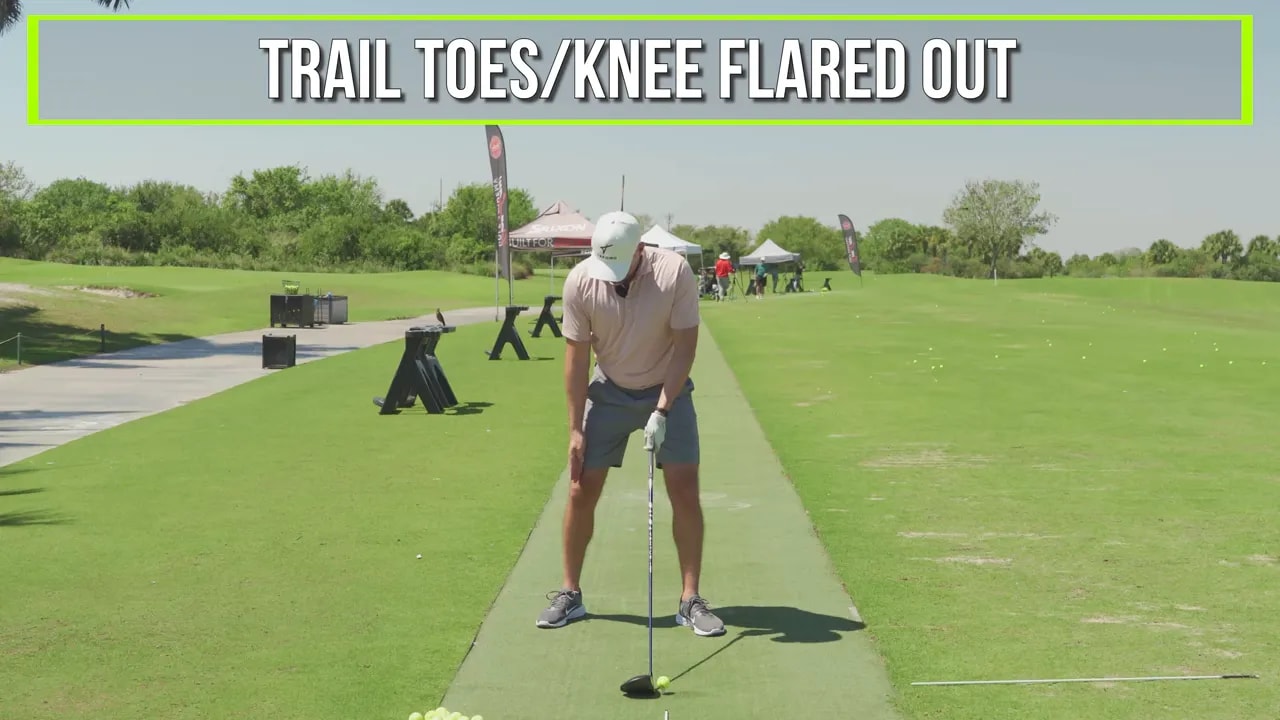
The second of these 3 power moves for golfers past 50 is to place your trail foot back at address and flare it outward. This creates freedom in your backswing and makes the early turn much easier to achieve.
It is a small adjustment, but it can have a major effect on how your body rotates.
The exact trail foot position
Here are the setup details:
- Pull your trail foot back so the toes of that foot line up roughly with the middle of your lead foot.
- Flare the trail foot outward. If straight ahead is 12 o’clock, aim for about 1 o’clock.
- Let the trail knee flare in the same direction as the foot.
This is not a dramatic open stance. It is a purposeful adjustment that helps you turn more freely going back.
Why this setup change works
When the trail foot is too square, too far forward, or the trail knee points inward, your pelvis often feels blocked. That restriction makes it harder to turn back, and the swing starts to feel tight.
Try this comparison mentally:
- Foot forward and knee inward: harder to rotate, less power, more effort required later
- Foot back and flared: easier to rotate, better backswing freedom, more power created early
This matters because distance for senior golfers is often lost before the club even reaches the top. If your setup prevents a full turn, you are giving away speed before the downswing starts.
How to blend it with the first move
Once your trail foot is back and flared, rehearse the first move again:
- Set up with the trail foot pulled back.
- Let the trail toes and knee flare out.
- Feel a small amount of pressure moving into the trail foot.
- Turn your core early.
- Keep the club wide and in front.
These pieces work together. The foot position makes the turn easier. The early turn helps the club stay organized. Together they create the kind of backswing that can add yards without adding strain.
A model worth noticing
Sam Snead is used as a reference for this type of motion, and for good reason. His setup and backswing showed excellent freedom and turn, and his action held up well long after most golfers begin losing speed.
You do not need to copy every detail of Snead’s swing. The takeaway is simply that freedom in the lower body, especially early in the backswing, is not something to fear. It can be a major source of rhythm and power.
If your lead heel lifts a bit or your knees move more naturally during the turn, that is not automatically a problem. For many golfers over 50, trying to stay too rigid can actually reduce speed and make the swing harder.
Step 3: Complete the 3 power moves for golfers past 50 by creating depth with your right shoulder
Once you have a better setup and a better initial turn, you need one final piece: a way to complete the backswing and create depth.
This is where the third move comes in. From that halfway-back position, you want to continue turning and feel your right shoulder pull back so your hands can work more behind your trail shoulder.
This is not just a shoulder turn in place. It is more of a retraction or pulling back motion with the trail shoulder.

What “creating depth” means
Depth means your hands move behind you enough in the backswing to complete the turn and create room for the downswing. Without it, the swing often gets short and upright. That can make the transition steep and rob you of power.
Good drivers of the golf ball typically do two things well:
- They get the club wide and in front early.
- They continue turning so the hands gain depth by the top.
If you only do the first part, your backswing can still end up incomplete. The third move finishes the job.
The right shoulder retraction feel
To understand the feel, stand in good posture and gently pull your shoulder blades back. That trail shoulder moving backward is the sensation you want from the takeaway to the top.
Here is a simple rehearsal:
- Make your early core turn to the halfway-back position.
- Keep your lead hand generally in front of you.
- Feel your trail hand and trail shoulder move back behind you.
- Try to get your hands working behind your trail shoulder.
You are not trying to force a giant turn. You are trying to complete the turn you already started.
For golfers who believe they lack flexibility, this move can be eye-opening. A better shoulder action often creates more backswing length immediately, even without trying to “stretch” farther.
How far should you go?
You do not need an exaggerated top position. The point is to get closer to a full backswing than you would with a restricted, arm-dominated motion.
If your hands move more behind your trail shoulder and your chest continues turning, you will usually gain more distance potential. The larger the backswing you can make in balance, the less force you need to apply later.

Step 4: Put all 3 power moves for golfers past 50 into one simple sequence
Once you have practiced each move on its own, the next step is to blend them into one repeatable backswing sequence.
Here is the full pattern:
- Start with your setup. Trail foot back, trail toes flared, trail knee flared.
- Begin the swing with an early core turn. Let the belt buckle and chest move away from the target.
- Keep the club wide and in front. Avoid snatching it behind you with the hands.
- Continue turning to the top. Pull the right shoulder around and create depth.
- Then swing down naturally. The goal is fewer downswing thoughts and better positions created earlier.
This sequence is especially useful because it simplifies where power comes from. Rather than trying to manufacture speed at the bottom, you organize the swing so speed can happen more naturally.
What this should feel like
When these moves are working together, the swing often feels:
- Freer in the backswing
- Less forced in transition
- More balanced through the strike
- Longer without extra effort
That is why this approach can help golfers reclaim some lost yardage. You are not trying to become younger. You are making the most of the motion you still have.
Step 5: Practice the 3 power moves for golfers past 50 the right way
To make these changes stick, keep your practice simple and structured.
Use slow rehearsals before full swings
Do not jump immediately into hitting drivers at full speed. Start with rehearsals that emphasize the motion.
- Rehearse the club-in-the-stomach drill once or twice.
- Set your trail foot back and flare it correctly.
- Make a slow backswing to hip high with an early core turn.
- Complete the backswing by pulling the trail shoulder around.
Then hit shots while trying to reproduce the same feel.
Keep your swing thought simple
Too many swing thoughts can make your motion stiff. A good option is to reduce everything to one phrase:
Core turn early, club wide and in front.
Then let the shoulder depth happen as a continuation of that move.
Do not chase effort
If the swing starts to feel hard or rushed, back off. These moves are meant to create effortless power, not a violent swing. More tension usually means you are trying to force the result instead of making the setup and backswing better.
Common mistakes that cost senior golfers power
If you are working on these 3 power moves for golfers past 50, watch for these common errors:
- Starting with the hands only: This reduces body turn and often pulls the club out of position.
- Keeping the trail foot too square: That can block hip rotation and shorten the backswing.
- Getting narrow early: A club that collapses inward too soon loses width and structure.
- Stopping the turn halfway back: Without shoulder depth, the backswing stays incomplete.
- Trying to make up for everything in the downswing: This is the exact pattern these moves are designed to prevent.
If one of these sounds familiar, that is actually good news. It means your distance problem may be easier to fix than you thought.
Why these 3 power moves for golfers past 50 can help you regain distance
Distance is not only about speed. It is also about sequencing, efficiency, and using your body in the right order.
For golfers over 50, that is especially important. The more efficiently you can load the backswing, the less you need to force the downswing. That tends to improve not only distance, but also contact and consistency.
These three moves support that goal by giving you:
- A setup that encourages rotation
- A takeaway driven by the core instead of the hands
- A fuller backswing without demanding extreme flexibility
That combination can help you hit the ball more solidly, recover some lost yards, and make the swing feel easier on your body.
FAQ
Do these 3 power moves for golfers past 50 require a lot of flexibility?
No. The key idea is that better setup and better movement patterns can create more turn without needing exceptional flexibility. Many golfers turn more once they set the trail foot correctly, rotate the core earlier, and pull the right shoulder around more effectively.
Which of the 3 power moves for golfers past 50 is the most important?
The early core turn is the most important. It is described as a make-or-break move because it influences everything that follows. If the body turns early, it becomes much easier to create width, depth, and efficient power.
How far back should my trail foot be?
A good reference point is to place the toes of your trail foot in line with the middle of your lead foot. From there, flare the trail foot outward to about 1 o’clock and let the trail knee flare the same way.
What does “club wide and in front” mean?
It means the club stays relatively far away from your body in the takeaway and does not get pulled behind you too early. This creates width and keeps the club more organized as your body turns.
Should I focus on the downswing while practicing these moves?
Not at first. The whole point of this approach is to build power earlier in the swing so the downswing can happen more naturally. Practice the setup, early core turn, and shoulder depth first.
Can these 3 power moves for golfers past 50 help with consistency too?
Yes. Although the focus is on effortless power and more distance, these moves can also improve consistency by creating better backswing structure and reducing the need for compensations later in the swing.
If you want more distance after 50, start by making the backswing work for you instead of against you. These 3 power moves for golfers past 50 offer a practical blueprint: free up the setup, turn the core early, keep the club wide, and complete the backswing with better shoulder depth. When those pieces improve, power often returns without feeling like hard work.
0 Comments