
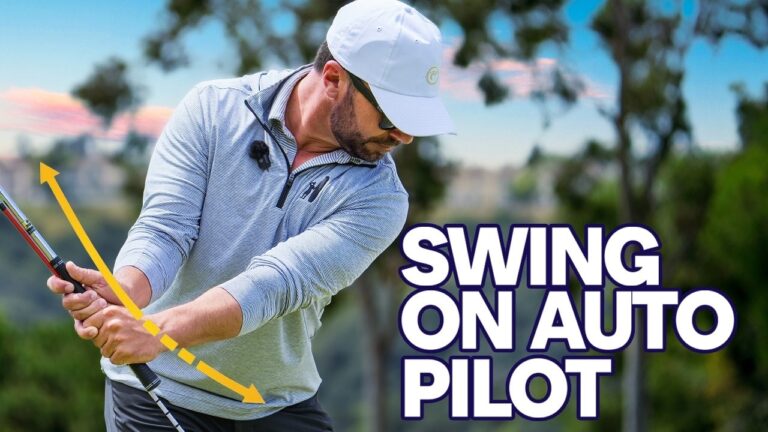

If you want a more repeatable golf swing, your perfect swing path starts with something many players overlook: the path of the hands during the backswing. Most golfers spend too much time thinking about whether the club is on plane, but the club often only reflects what the hands already did wrong.
A better approach is to build a backswing that matches your body turn, keeps the club in front of you, and reduces the need for last-second compensations. When your hand path and swing plane work together, it becomes much easier to return the club on a solid, efficient route through impact.
This guide explains how to execute your perfect path, why hand path matters so much, and how to practice it with a simple drill you can even do at home.
Table of Contents
- Step 1: Understand what “perfect swing path” really means
- Step 2: Learn why hand path is the foundation of the perfect swing path
- Step 3: Match your hand path to your shoulder plane
- Step 4: Build the takeaway for a perfect swing path
- Step 5: Use the two-line drill to train your perfect swing path
- Step 6: Use a simpler home version of the perfect swing path drill
- Step 7: Keep your hands in front of your body center
- Step 8: Avoid the most common perfect swing path mistakes
- Step 9: Use simple checkpoints to know if your perfect swing path is improving
- Step 10: Practice your perfect swing path without overthinking
- Frequently Asked Questions
- Final takeaway
Step 1: Understand what “perfect swing path” really means
For most golfers, “swing path” gets reduced to one idea: whether the club is traveling too steeply, too far from the inside, or straight enough through the ball. That matters, but it is only part of the picture.
Your perfect swing path is built from two connected pieces:
- Hand path, or how your hands travel relative to your body
- Swing plane, or how the club lines up during the backswing and downswing
The key point is simple: good hand path promotes good swing plane. If your hands move correctly, the club is far more likely to set and return on plane without extra manipulation.
If your hands move poorly, the club can look acceptable for a moment, but your body will usually have to make a compensation later to recover.
Step 2: Learn why hand path is the foundation of the perfect swing path
Your hands do not move randomly in a good golf swing. They travel in relation to your body’s turn and your shoulder plane. That is what allows the club to stay organized from takeaway to the top.
In a sound backswing, the hands stay aligned with the motion of the shoulders rather than lifting independently. This creates a swing that feels more connected and requires less timing.
Why this matters:
- It keeps the club more in front of your body
- It helps the lead arm match the shoulder plane near the top
- It makes it easier to shallow naturally in transition
- It reduces the need for rerouting on the way down
- It improves consistency without forcing positions
Many golfers try to fix a steep or stuck downswing by changing the club only. In reality, the bigger issue is often that the hands got off track much earlier.
Step 3: Match your hand path to your shoulder plane
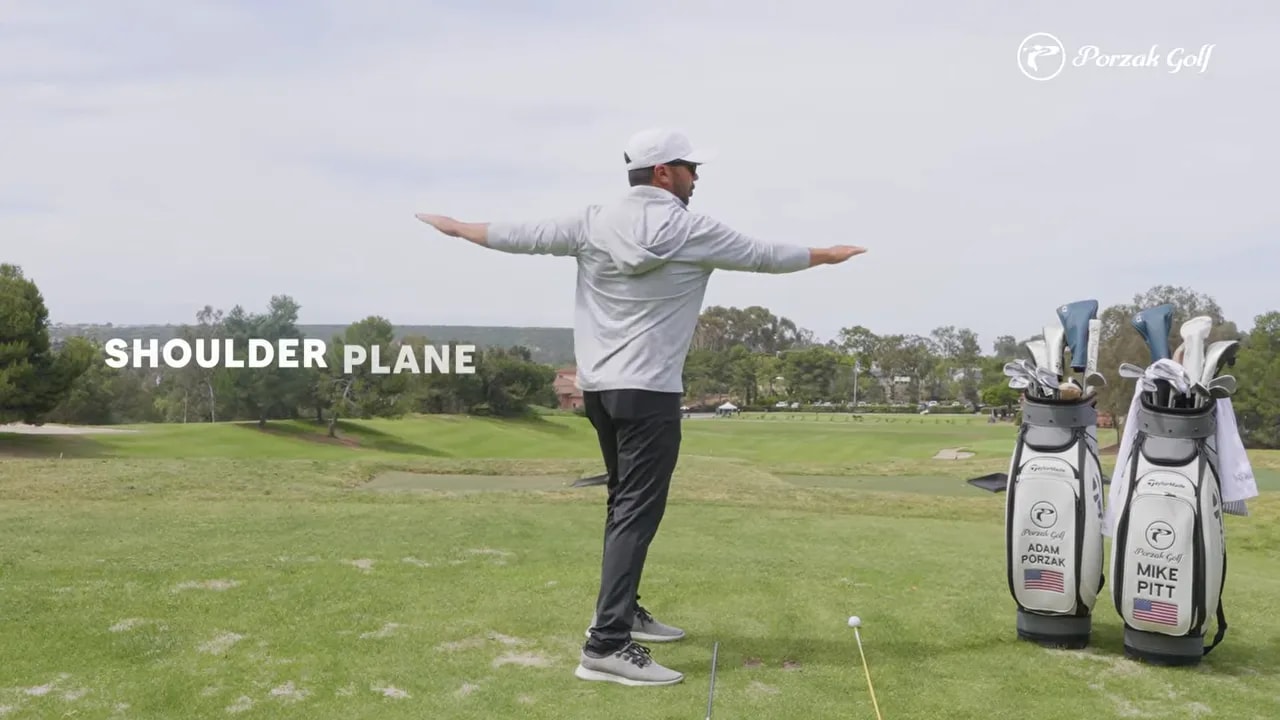
To execute your perfect swing path, your hands should move on a path that matches your shoulder motion around your spine angle. This helps the club move with your turn instead of being lifted or dragged out of position.
Think about it this way:
- Your body turns around your spine angle
- Your shoulders create a natural working plane
- Your hands should travel with that motion, not fight it
When this happens, the lead arm tends to line up with the shoulder plane at the top. That puts the club in a much better spot to return to the ball with rotation rather than with a series of rescue moves.
If your hands work too far away from that pattern, two common problems appear:
- Too steep: the hands move onto the wrong path and the club gets forced upward or across
- Too far behind you: the hands drift excessively inward and the club gets trapped too far from the ideal route
In both cases, the issue is not just the club. The hands created the problem first.
Step 4: Build the takeaway for a perfect swing path
The takeaway sets the tone for the entire swing. If the first move is poor, the backswing often becomes a chain of compensations.
A useful checkpoint is the set position at about pocket high. By that stage, your hands should have traveled in a clean direction relative to your feet line, while the club begins to set on plane.
A simple mental picture helps here:
- Hands go down the hallway
- Then they go up the escalator
This image works because it prevents a very common mistake: lifting the hands straight up. In a connected backswing, the hands do not rise on their own first. They move with the turn of the body, especially the motion of the lead shoulder.
That creates width, keeps the club in front of you, and improves the odds of returning the club on your perfect swing path.
Step 5: Use the two-line drill to train your perfect swing path
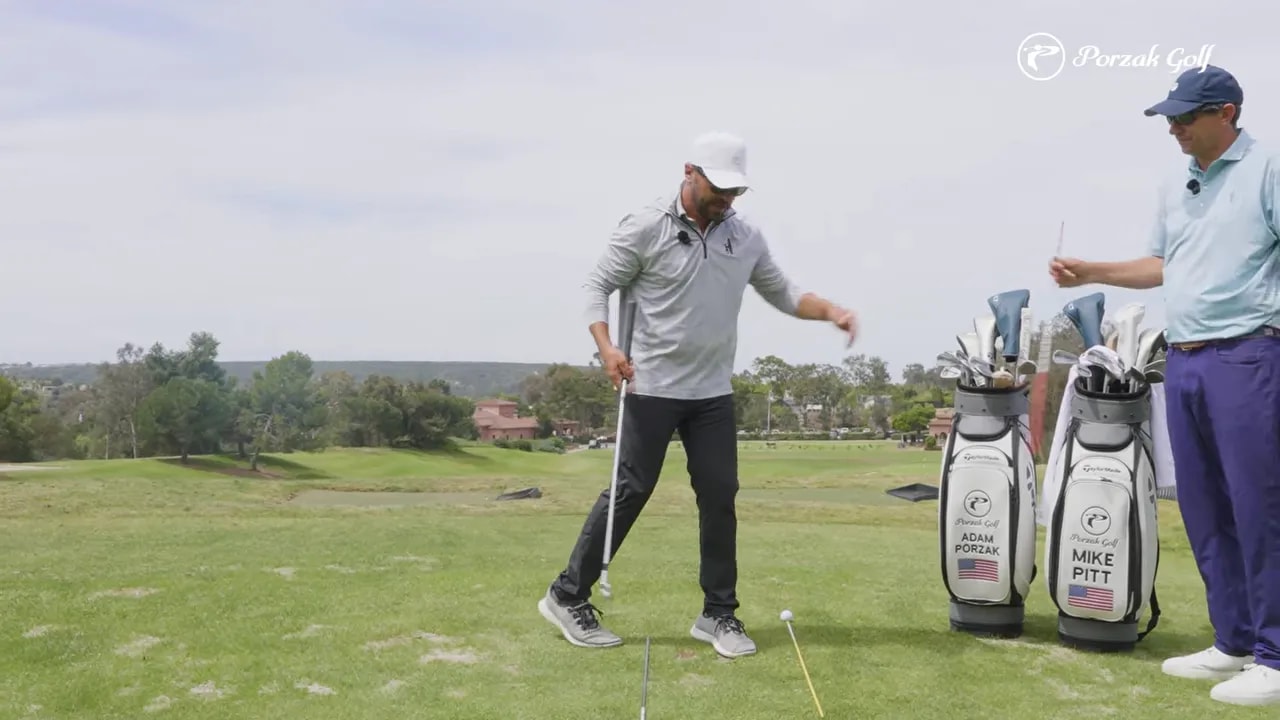
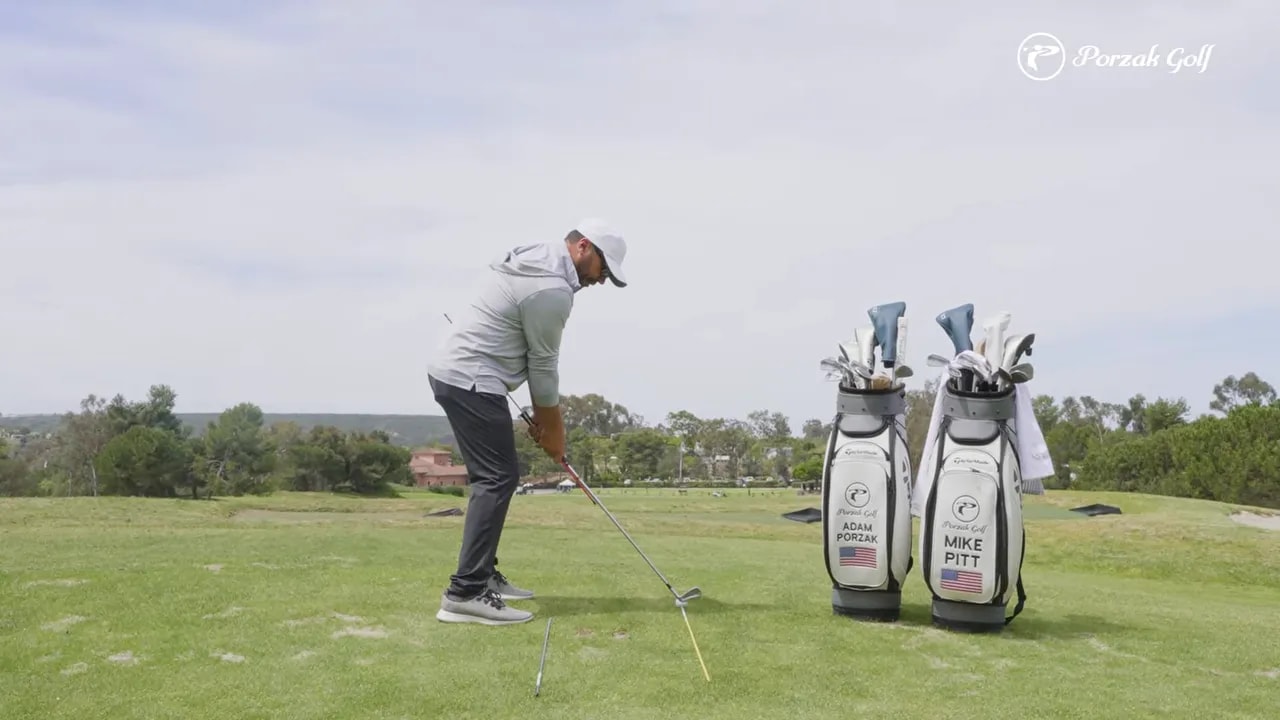
One of the most practical ways to train a perfect swing path is with two alignment rods. This drill gives you a clear visual for both the hand path and the swing plane.
You need:
- One alignment rod along your feet line
- One alignment rod along the ball line, parallel to the first
- Your club, or a club with an extension rod for extra feedback
The two rods should look like train tracks.
How to set it up
- Place one rod on the ground parallel to your target line where your feet align
- Place the second rod parallel to it on the ball line
- Address the ball normally
- If available, add an extension rod to the club grip to make the club direction easier to see
How to do the drill
- Start your takeaway with the hands moving along the feet-line rod
- Move to pocket high while keeping the hands in front of your body
- Allow the club to set so the extended reference points down toward the ball line or just inside it
- Continue turning to the top without independently lifting the hands
- Rehearse the return by tracing back down the same general route
This drill teaches two things at once:
- The hands need a disciplined path
- The club needs to set on plane relative to that path
That combination is what makes the drill so effective.
Step 6: Use a simpler home version of the perfect swing path drill
If you do not want to place two rods on the ground, there is a simpler option that still gives strong feedback.
Place a single alignment rod starting near the middle of your trail foot and extending away from you. This creates a visual “track” for your hands to travel along in the takeaway.
This version is especially useful if you tend to pull the hands too far inward early in the backswing. Instead of feeling the hands disappear behind you, you can feel them move down the line longer while staying connected to your turn.
Focus on these sensations:
- The lead shoulder helps move the handle away
- The hands stay in front of the center of your body
- You maintain width between your hands and chest
- The body turn carries the motion upward
This is a great drill for indoor practice because you do not need to hit a ball to feel whether the hand path is cleaner.
Step 7: Keep your hands in front of your body center
A major misunderstanding in the backswing is what “inside” should look like. From a down-the-line view, many golfers assume the hands should move deep behind the body. That often leads to a trapped position that is hard to recover from.
Instead, your hands should stay more in front of your body center than many players realize.
A helpful checkpoint is your sternum. As you turn, your sternum should still be oriented toward your hands rather than leaving them far behind. That keeps the swing organized and prevents the club from getting too disconnected.
Benefits of keeping the hands in front:
- Better width
- Better connection to the turn
- Cleaner transition
- Less need to reroute the club
- More neutral delivery into impact
If you struggle with getting stuck or hitting blocks and hooks, this point is worth checking first.
Step 8: Avoid the most common perfect swing path mistakes
Even good players often confuse hand path and swing plane. Here are the most common errors that disrupt a perfect swing path.
Lifting the hands without turning
This is one of the biggest faults in the backswing. The hands rise, but the body does not support the motion. The result is usually a steep top position and a difficult transition.
Dragging the hands too far behind the body
This often feels “inside,” but too much of it can put the club behind you and force a flip, stall, or reroute coming down.
Focusing only on the clubhead
The club might appear on plane at one moment, but if the hands got there incorrectly, the position is unstable. Good swings are built from the body and hands outward, not from appearance alone.
Trying to manipulate the downswing
If the backswing hand path is poor, many players try to save the shot in transition. That can work occasionally, but it is hard to repeat under pressure.
Letting the hands separate from body motion
Your hands should not work in isolation. They need to be carried by the turn, especially through the lead shoulder and upper body motion.
Step 9: Use simple checkpoints to know if your perfect swing path is improving
You do not need complicated technology to know whether this is getting better. Use a few clear checkpoints.
Checkpoint 1: Pocket-high position
- Hands are traveling along a disciplined route relative to your feet line
- Club is beginning to set on plane
- Hands are still in front of your body
Checkpoint 2: Top of backswing
- Lead arm is close to the shoulder plane
- Hands are not excessively behind you
- The backswing feels turned, not lifted
Checkpoint 3: Transition feel
- The club feels easier to drop into a playable slot
- You do not feel the need to reroute aggressively
- The downswing starts to feel more rotational and less handsy
Checkpoint 4: Ball flight tendencies
If your path is improving, contact and direction usually become more predictable. You may notice fewer wild misses caused by steepness or by getting trapped too far inside.
Step 10: Practice your perfect swing path without overthinking
The goal is not to create a robotic swing. The goal is to create a motion that requires less correction.
A good practice plan:
- Make slow rehearsals without a ball
- Stop at pocket high and check hand position
- Turn to the top while keeping the hands connected to the body
- Rehearse downswings that return along the same route
- Then hit short shots with the same feel
Keep the language simple. Many golfers improve faster when they use one or two feels instead of ten swing thoughts.
Useful feels include:
- Push the handle away with the lead shoulder
- Hands down the hallway, then up the escalator
- Keep the hands in front of the chest
If the move feels more connected and less manipulated, you are likely on the right track.
Frequently Asked Questions
What is the difference between hand path and swing plane?
Hand path describes where your hands travel relative to your body. Swing plane describes how the club is angled and moving during the swing. Hand path often controls whether swing plane can stay functional.
Can the club be on plane if my hands are in the wrong place?
Yes, briefly. A club can appear on plane, but if the hands are off path, the position usually requires compensation later. That is why hand path matters so much for a repeatable golf swing.
Should the hands move straight back in the takeaway?
They should move on a disciplined route relative to your setup and body turn, not simply straight back and not sharply inward. The hands should stay in front of the body and move with the shoulder motion.
Why do I get steep even when I try to shallow the club?
If your hands go off path in the backswing, you may be pre-setting a steep condition before the downswing even starts. In that case, trying to shallow later becomes a rescue move instead of a natural result.
Can I practice perfect swing path at home?
Yes. Alignment rods and slow rehearsals are enough to train the takeaway, pocket-high position, and top-of-backswing structure. You do not need to hit balls to improve the movement pattern.
What should I feel in a good backswing?
A good backswing usually feels connected, wide, and driven by your turn. The hands do not feel like they are lifting on their own, and they stay more in front of your body than many golfers expect.
Final takeaway
If you want to execute your perfect path, start by improving the path of your hands, not just the look of the club. A backswing with proper hand path, a matching shoulder plane, and a connected turn will usually lead to a better swing plane automatically.
Keep it simple:
- Move the hands correctly early
- Let the body turn carry them upward
- Keep the club in front of you
- Use alignment rods for visual feedback
- Train slowly until the motion feels natural
That is how you build a more efficient, repeatable golf swing without relying on constant compensation.
0 Comments