


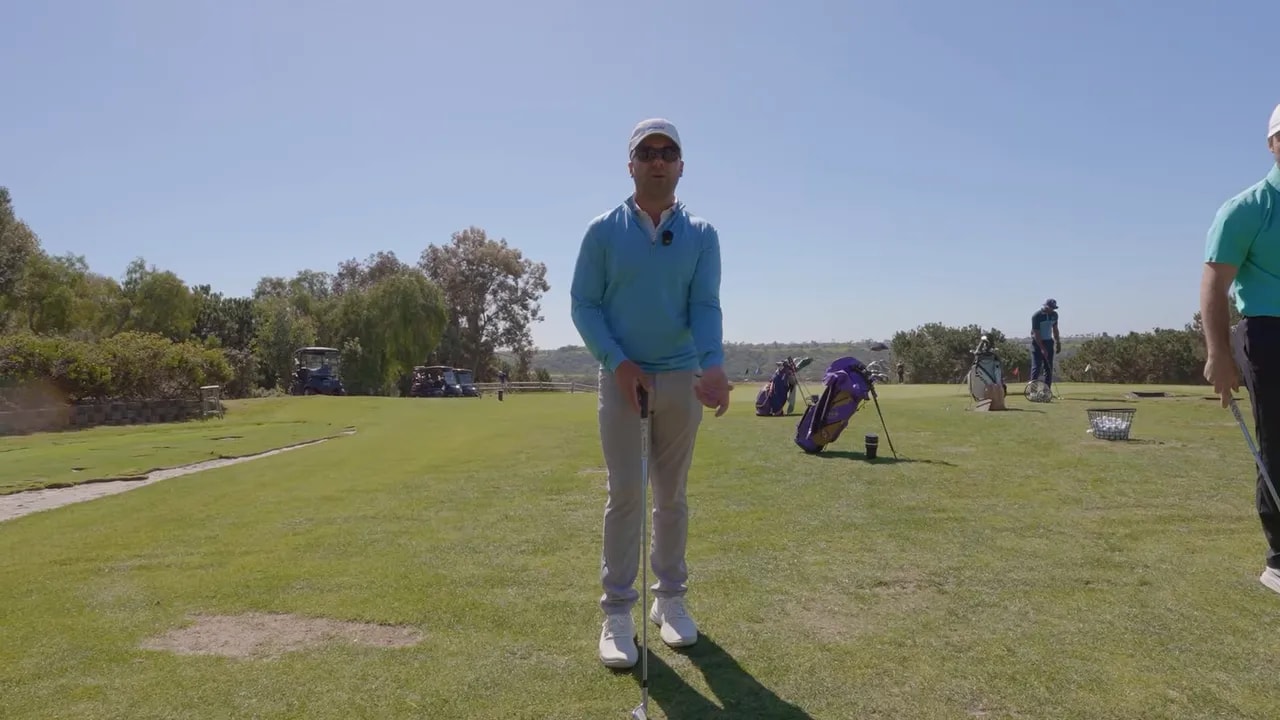
Unlock the full potential of your golf swing with the perfect grip. A correctly positioned grip influences everything from clubface control to shoulder alignment, helping you play more accurately without overhauling your swing.
If you aim to hit more solid golf shots, refining your golf grip is a crucial step. Your grip can significantly improve clubface control, shoulder alignment, takeaway shape, strike quality, and shot pattern. Small setup changes can create a cleaner path to the ball without necessitating a swing overhaul.
Table of Contents
- Step 1: Understand why your golf grip controls more than your hands
- Step 2: Build your golf grip around your natural arm position
- Step 3: Match your golf grip to your shot shape
- Step 4: Use a square setup to improve your golf grip results
- Step 5: Put the club in the fingers for better control
- Step 6: Try the trail index finger as a club-control checkpoint
- Step 7: Improve takeaway structure with your golf grip
- Step 8: Use your chest and hands together through impact
- Step 9: Learn the strike mindset that supports compression
- Step 10: Keep your rotation athletic instead of vertical
- Step 11: Avoid the most common golf grip mistakes
- Step 12: Use this simple golf grip checklist before every practice session
- Step 13: Know when a small golf grip change is enough
- FAQ
- Final takeaway
Step 1: Understand why your golf grip controls more than your hands
A golf grip is not just about finger placement. It governs your entire swing motion, providing essential benefits like squaring the clubface naturally, correcting shoulder alignment, and enhancing swing path reliability.
- Square the clubface without manipulation
- Set your shoulders correctly at address
- Create a more reliable swing path
- Start the ball on line
- Control curve more predictably
Advice about strengthening or weakening your grip can work, but ignoring natural arm rotation often introduces tension. Your grip should harmonize with your body’s natural motion for optimal performance.
Step 2: Build your golf grip around your natural arm position
The best starting point is simple: let your arms hang naturally.
Avoid forcing your lead hand into a preconceived position; instead, observe its natural resting state. Twisting your hand can misalign your shoulders and affect the clubface direction even before the swing begins.
- Let your arms hang comfortably at your sides.
- Take your lead hand grip first while the club is slightly off to the side.
- Place the club in the fingers, not deep in the palm.
- Bring the club in front of your body without changing that hand position.
- Add the trail hand so it fits on naturally rather than forcing it under or over the handle.
This matters because the grip should fit your body, not the other way around.
Step 3: Match your golf grip to your shot shape
Your grip should facilitate your desired shot shape. For a controlled fade, avoid a strong grip that closes the face, as it creates conditions for a draw—even if you’re aiming for a fade.
- Pulls left when the face shuts too much
- Pushes right when path and face timing do not match
Reliable fades start left of the target and return towards it—a poor setup can disrupt this and ruin shot consistency. For a fade:
- Avoid strengthening the lead hand too much.
- Ensure the clubface isn’t overly closed at setup.
- Align your shoulders to promote the correct path for your shot.
Step 4: Use a square setup to improve your golf grip results
Even great hand placement struggles if your alignment is off. Incorrect shoulder positioning can mislead club travel during impact.
- Arms hanging naturally
- Grip taken without twisting the lead arm
- Shoulders that look square to the target line
- A clubface that appears neutral rather than heavily shut
Your grip, arms, shoulders, and clubface should harmonize for a simplified swing.
Step 5: Put the club in the fingers for better control
Placing the club in the fingers improves wrist motion, face awareness, and overall control. Look for:
- Lead hand supports the club across the fingers
- Trail hand also fits more in the fingers than deep in the palm
- The hands feel secure without excess squeezing
A palm-heavy grip reduces mobility, while finger-gripping enhances swing fluidity.
Step 6: Try the trail index finger as a club-control checkpoint
The position of your trail index finger is a vital grip detail. Extending it slightly improves stabilization and aids in maintaining proper club positioning during the takeaway, preventing timing-based compensations.
Trail index finger drill
- Take your normal grip.
- Extend the trail index finger slightly more down the shaft than usual.
- Make slow takeaway rehearsals.
- Notice whether the club stays more in front of your chest.
- Hit short shots first before taking full swings.
Step 7: Improve takeaway structure with your golf grip
If your grip offers support and leverage, the club remains more organized during the backswing’s initial phase. A sound takeaway involves minimal rolling, keeping the club in front of the hands, and ensuring synchronized motion between arms and chest.
Step 8: Use your chest and hands together through impact
A better golf grip enhances strike potential when chest and hands synchronize through impact. Connected motion stabilizes the clubface while disconnect leads to erratic shots.
Connected motion: body and hands move together, improving face control
Disconnected motion: body stalls as hands catch up, destabilizing results
Step 9: Learn the strike mindset that supports compression
Solid iron shots are achieved with downward strikes supported by a good grip. Many golfers attempt to help the ball airborne, which can disrupt their angle of attack. Instead, ensure your club descends through the strike with continued chest motion:
- The ball gets in the way of the descending strike
- The low point should be ahead of the ball on iron shots
- Good compression comes from organized angles—swing speed isn’t the sole factor
Step 10: Keep your rotation athletic instead of vertical
A proper grip won’t resolve contact issues if your body motion is vertical or disconnected. Effective ball-strikers maintain rotational speed and turn through impact instead of standing up, preserving necessary space and angles for compression.
- Relaxed trail arm at setup
- Hands that work deeper into the backswing
- Continuous rotation around the lead side
- Chest stays over the ball through impact
Step 11: Avoid the most common golf grip mistakes
Fighting your natural arm rotation
Trying to force a textbook look can create tension and poor alignment. Start from the way your arms naturally hang.
Taking the grip in front of your body and then twisting into position
This often changes shoulder alignment and clubface orientation without you noticing.
Making the grip too strong for your shot shape
If you want a fade, too much strength can close the face and send the ball left.
Letting the trail index finger wrap too far underneath
This can remove support and encourage the club to get behind you early.
Holding the club in the palms
This may reduce control and make hinging less efficient.
Changing the grip but ignoring setup matchups
Your shoulders, clubface, and intended path still need to work together.
Step 12: Use this simple golf grip checklist before every practice session
Before practicing, review this checklist to reinforce the basics:
- Are your arms hanging naturally?
- Did you place the lead hand on first without twisting it?
- Is the club mostly in the fingers?
- Does the trail hand fit on naturally?
- Is the trail index finger giving you support?
- Do your shoulders appear square?
- Does the clubface look neutral at address?
- Does your grip match your intended shot shape?
This routine prevents small errors from developing into significant swing issues.
Step 13: Know when a small golf grip change is enough
Not every swing issue requires an overhaul. Often, slight adjustments in setup deliver swift improvements. Focus on address matchups and lead-hand placement instead of undergoing extensive changes.
Focus on the basics first:
- Let your arms hang naturally
- Take the lead hand first
- Place the club in the fingers
- Match the grip to your shot shape
- Use the trail index finger as a support tool if needed
- Keep your chest and hands moving together through impact
When addressed, it elevates your swing quality, translating into better shots and performance.
0 Comments