


If you want more solid contact, straighter starts, and a more repeatable golf swing, you need to align your pendulum correctly. In simple terms, this means matching your upper swing center with your lower strike center so the club can return to the ball without last second compensation.
For many golfers, inconsistency comes from three linked issues: poor pressure into the trail side, loss of hip structure in the backswing, and a grip-clubface combination that forces a flip through impact. Fix those pieces, and your motion gets much easier to repeat.
This guide breaks down how to align your pendulum for more consistency in a step by step, golfer-friendly way.
Table of Contents
- Step 1: Understand what it means to align your pendulum for more consistency
- Step 2: Build a stable trail-leg brace at setup
- Step 3: Turn your chest around your spine angle, not away from it
- Step 4: Keep your trail hip from drifting off the brace
- Step 5: Match the top of the pendulum with the bottom of the swing
- Step 6: Check your grip and clubface if you keep falling back and flipping
- Step 7: Learn the difference between compression and compensation
- Step 8: Use a simple drill to align your pendulum for more consistency
- Step 9: Watch for the most common mistakes
- Step 10: Use a quick checkpoint routine before every practice session
- Step 11: Know what better ball striking should feel like
- Step 12: Take the right next step
- Frequently Asked Questions
Step 1: Understand what it means to align your pendulum for more consistency
The focus keyphrase here is align your pendulum for more consistency, and it helps to define it clearly before making changes.
Think of your swing like a pendulum system. Your chest and upper body rotate around your spine angle, while the club swings down to a low point. If your body shifts away from the right structure in the backswing, the top part of that pendulum no longer matches the bottom part. When that happens, your low point control suffers.
The result often looks like this:
- Fat or thin contact
- Blocks to the right
- Flip releases
- Falling back through impact
- Inconsistent compression
When you align your pendulum for more consistency, your pivot supports the strike instead of fighting it.
Step 2: Build a stable trail-leg brace at setup
A key part of this concept is creating a stable trail side. For a right-handed golfer, that means building pressure into the inside of the right foot and keeping the trail leg organized rather than letting it sway.
This is not about locking the leg rigidly. It is about having a dependable brace so your chest can turn around your spine angle without your hips drifting excessively away from the target.
At setup, check these basics:
- Balanced posture with your weight centered in your feet
- Pressure feeling athletic, not on your heels
- Trail foot grounded, especially on the inside edge
- Trail knee stable enough to support rotation
If your trail side immediately collapses or slides, it becomes very hard to align your pendulum for more consistency later in the swing.
Step 3: Turn your chest around your spine angle, not away from it
Once your trail side is braced, the next move is a centered turn. Your chest should rotate around your spine angle into that trail-leg support. This is one of the most important pieces of the entire pattern.
A common mistake is confusing turn with sway. A good turn keeps your center organized. A sway moves your upper body and pelvis too far off the ball, which shifts your swing center and makes the return to impact unreliable.
When you align your pendulum for more consistency, your backswing should feel like:
- Your chest is turning, not sliding
- Your trail hip remains an anchor point
- Your spine angle is respected
- Your pressure stays supported on the inside of the trail foot
This is subtle. Even a small hip drift can create a big problem because the club has to chase a moving bottom point on the downswing.
Step 4: Keep your trail hip from drifting off the brace
One of the clearest ways to improve consistency is to monitor your trail hip. If it moves too far laterally in the backswing, you lose the anchor point that keeps the motion centered.
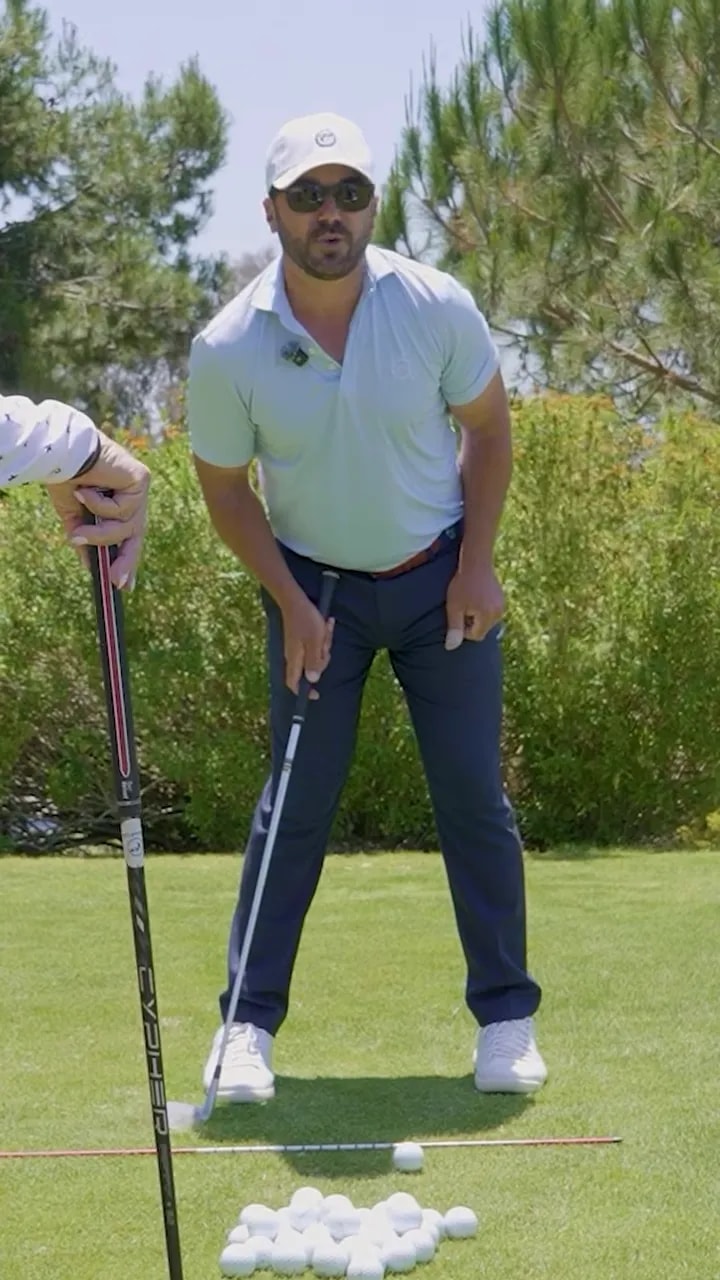
A useful practice station is placing an object just outside your trail hip. The goal is to make your backswing turn without crashing into that barrier. Your chest can rotate, but the hip should not slide outward.
This is helpful because many golfers believe they are staying centered when they are actually drifting several inches. That small move changes everything:
- Low point moves back
- Face delivery gets harder to time
- Pressure tends to stay behind the ball too long
- Impact often turns into a hang-back release

Step 5: Match the top of the pendulum with the bottom of the swing
This is the heart of the idea. To align your pendulum for more consistency, the upper pivot and lower strike pattern must work together.
If your backswing center moves too far away from the ball, the club bottoms out in the wrong place unless you make a compensation. That is why golfers who sway often either hit behind it, hit thin, or throw the clubhead at the ball with their hands.
Instead, you want:
- A centered enough backswing
- A stable trail-side brace
- A chest turn that stays organized
- A strike that can move forward without emergency timing
In other words, your body motion should place the club in position to compress the ball, not force you to save the shot at the last moment.
Step 6: Check your grip and clubface if you keep falling back and flipping
Body motion is only part of the puzzle. If your grip is too weak and the clubface is too open, your release pattern can become reactive even if your pivot improves.
That combination often produces a familiar chain reaction:
- The face stays open coming into impact.
- You sense that the ball will start right.
- You fall back to buy time.
- You flip the club with your hands to square it.
This can create decent shots once in a while, but it is not a reliable way to play golf.
If you are trying to align your pendulum for more consistency, but the face is still open, you may feel stuck. A better pivot with an unworkable face condition often leads to blocks. That is why grip and face control must support the motion.
Signs your grip-clubface pattern may be part of the problem:
- Pushes or blocks are common
- You add a lot of wrist throw at the bottom
- Your chest stalls through impact
- You finish with your weight hanging back
Step 7: Learn the difference between compression and compensation
Golfers often say they want to hit down and compress the ball, but compression only works when your structure supports it.
If your backswing drifts and your face is open, trying to aggressively move through the ball can send the shot well right. That is why some golfers instinctively avoid moving forward and instead flip the club. Their brain is trying to square the face any way it can.
Here is the practical distinction:
- Compression means your body and club are organized enough to strike the ball first with forward intent.
- Compensation means you must alter your motion late to find the face or the ball.
The more you align your pendulum for more consistency, the less compensation you need.
Step 8: Use a simple drill to align your pendulum for more consistency
You do not need a complicated practice routine. A simple station drill can help you feel the right pattern.
Trail-hip barrier drill
- Set up to the ball normally.
- Place a club or alignment stick just outside your trail hip.
- Make a backswing while turning your chest around your spine angle.
- Keep pressure on the inside of your trail foot.
- Avoid bumping your trail hip into the barrier.
- Return to impact without hanging back.
This drill teaches you to rotate into a brace rather than slide away from the ball.
Hand-pressure awareness drill
- Take a half swing setup.
- Feel the trail side support your turn.
- Pause at the top.
- Notice whether your upper center stayed organized or drifted.
- Swing through with a stable face and balanced finish.
Use short irons first. A small swing makes it easier to sense whether you are truly centered.
Step 9: Watch for the most common mistakes
When trying to align your pendulum for more consistency, avoid these errors.
Over-bracing the trail leg
A brace is support, not stiffness. If you lock the trail leg too much, your turn can become restricted and your body may tilt poorly.
Turning the shoulders but sliding the pelvis
You can look like you are making a full turn while your hips are still drifting. That drift is often the hidden cause of inconsistent contact.
Ignoring the clubface
A centered pivot helps, but if the face remains wide open, you will still rely on a flip or block pattern.
Trying to fix impact only
Many golfers only work on release drills. If the backswing center is poor, impact fixes rarely hold up under pressure.
Making changes too fast with full swings
Start with small swings and slow rehearsals. Feel the structure first, then add speed.
Step 10: Use a quick checkpoint routine before every practice session
If you want this to transfer to the course, build a repeatable check-in routine.
- Checkpoint 1: Feel pressure on the inside of the trail foot.
- Checkpoint 2: Turn the chest around the spine angle.
- Checkpoint 3: Keep the trail hip from drifting off the brace.
- Checkpoint 4: Make sure your grip and face are not forcing a flip.
- Checkpoint 5: Finish balanced instead of falling back.
That quick routine can keep your swing simple. You do not need ten thoughts. You need a few good ones that improve your strike pattern.
Step 11: Know what better ball striking should feel like
As you learn to align your pendulum for more consistency, your swing will usually start to feel different in a few ways:
- The backswing feels more centered and athletic
- The trail side feels supportive, not loose
- The transition feels less rushed
- Impact feels less handsy
- The finish feels more stacked over the lead side
You may also notice that poor shots become more predictable. That is actually progress. Predictable misses are easier to fix than random ones.

Step 12: Take the right next step
If you struggle with fat shots, blocks, or a flip release, do not only chase the symptom. Start with the structure that controls your low point.
To align your pendulum for more consistency:
- Brace the trail side correctly.
- Turn your chest around your spine angle.
- Keep the trail hip from drifting.
- Match your pivot to a manageable clubface.
- Train the motion with short, controlled reps.
Those fundamentals can make your swing more repeatable without filling your head with complicated positions.
Frequently Asked Questions
What does align your pendulum for more consistency mean in golf?
It means organizing your body pivot so the upper swing center and the club’s strike pattern match up. When they are aligned, the club can return to the ball more reliably and you need fewer compensations through impact.
Why do I keep falling back through impact?
Falling back often comes from a combination of drifting off the trail side in the backswing and delivering an open clubface. Your body hangs back while your hands try to square the face late.
Can a weak grip make my swing inconsistent?
Yes. If the grip is weak enough to leave the face too open, you may block shots or flip the club to square it. That adds timing and reduces consistency.
How do I know if my trail hip is drifting too much?
A simple way to check is to place a club or alignment stick just outside your trail hip during practice. If your hip bumps into it during the backswing, you are likely sliding instead of turning around your spine angle.
Should I keep all my weight on the inside of my right foot?
No. The goal is not to trap all your weight there. The idea is to feel supported pressure on the inside of the trail foot during the backswing so you can turn into a brace instead of swaying.
Will this help with fat and thin shots?
It can. Fat and thin contact often improve when your swing center becomes more stable and your low point control gets better. If your current pattern includes drifting and flipping, this concept is especially relevant.
0 Comments