
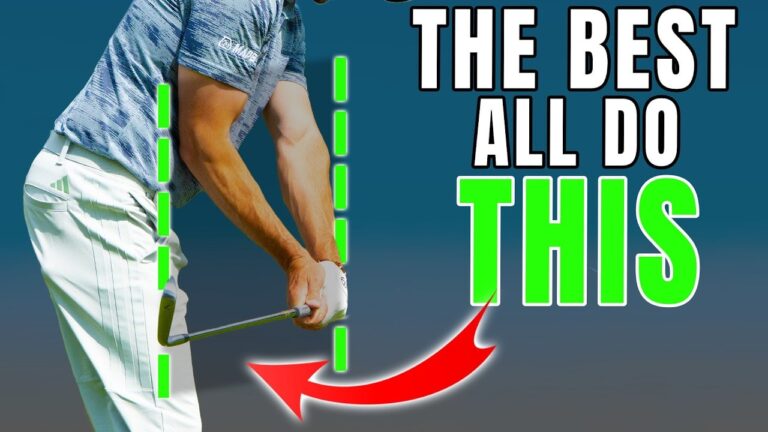

If you have spent years trying to hold lag in your golf swing, this modern golf concept can be a major breakthrough. A lot of golfers chase a sharp wrist angle in the downswing because they believe it is the secret to speed. In reality, golf gets much easier when you focus less on preserving lag and more on preserving the right arm rotation into delivery.
The key idea is simple. In golf, the club does not need you to desperately cling to wrist angles. What it needs is a better delivery position on the way down. When you keep the lead arm rotated correctly for longer, the club can shallow, the face can square more naturally, and your hand path can move in a much more efficient way through impact.
This change can help you produce more speed, better contact, and straighter golf shots without feeling as if you are forcing anything.
Table of Contents
- Step 1: Stop chasing lag as your main golf swing goal
- Step 2: Understand the two pieces that create your downswing in golf
- Step 3: Learn what better golf delivery should feel like
- Step 4: Use the drop it, catch it drill to train modern golf release
- Step 5: Compare the wrong golf move with the right one
- Step 6: Train your hand path in golf with the alignment stick drill
- Step 7: Start with small golf shots before building speed
- Step 8: Use these golf checkpoints to know if you are doing it right
- Step 9: Make this modern golf release part of your full swing
- Step 10: Remember the main golf takeaway
- Golf FAQ
Step 1: Stop chasing lag as your main golf swing goal
Lag has become one of the most misunderstood ideas in golf. Many players assume that if the angle between the lead arm and the shaft stays sharp for longer, the swing must be good. But that picture alone does not tell the full story.
You can absolutely keep lag and still deliver the club poorly. In fact, that is one of the main problems this lesson addresses. A golfer can preserve wrist angle but still bring the club down too steeply, leave the face open, and create the classic pattern of pulls, slices, and weak fades.
That means your golf improvement should not start with a single checkpoint such as wrist angle. It should start with the shape of the downswing and the quality of club delivery.
In practical terms, this means replacing one swing thought with another:
- Old golf thought: Hold lag
- Better golf thought: Hold your forearm rotation
That small shift changes everything.
Step 2: Understand the two pieces that create your downswing in golf
To improve this part of your golf swing, you first need to know what creates the delivery position. There are two main ingredients:
- Wrist hinge, sometimes called wrist cock
- Lead arm rotation, with the lead arm rotated away from the target
When those two movements combine, you get a fairly standard downswing position with the club set at an angle and the shaft approaching the ball from a playable route.
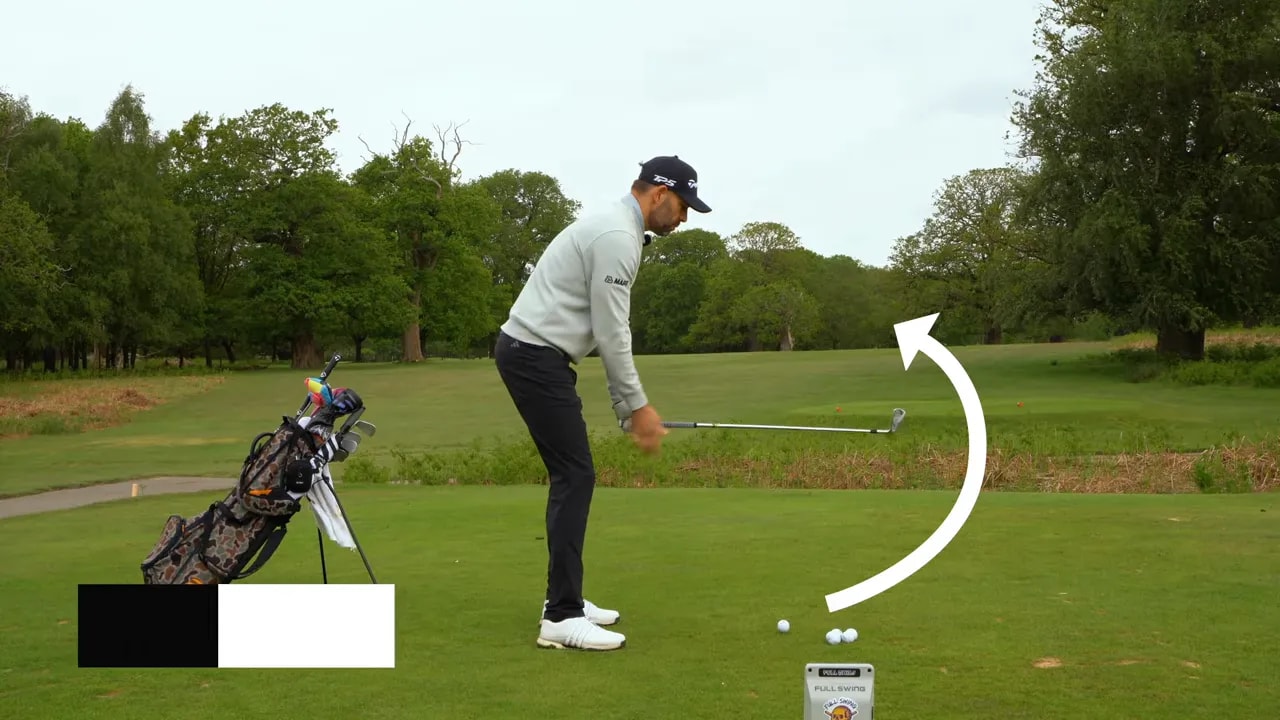
Now here is the important distinction in golf. If you release some wrist hinge on the way down, the club starts moving toward the ground. Since the ball sits on the ground, that is not always a disaster. You might lose a bit of speed, but the basic shape of the swing can still be functional.
The real issue appears when you lose the lead arm rotation too early.
When the lead arm rotates back too soon, the shaft steepens dramatically. The club gets thrown above the ideal delivery line. At that point, you may still have lag, but your golf swing is now in a recovery pattern.
From there, you often need to make compensations such as:
- Standing up out of posture
- Pushing the handle up and away from you
- Leaving the face open
- Cutting across the ball
That is why modern golf instruction often places more value on arm rotation and delivery than on the simple look of lag.
Step 3: Learn what better golf delivery should feel like
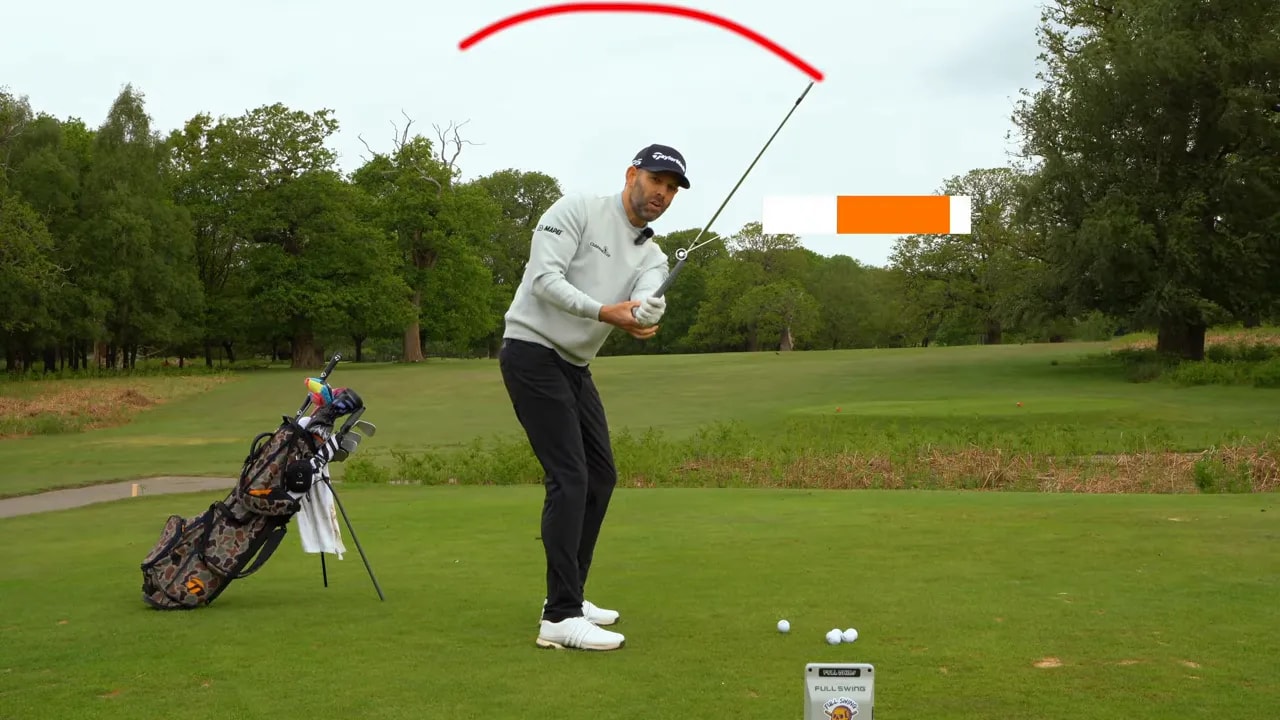
Good golf delivery feels very different from a steep, forced downswing. When the lead arm rotation is maintained, the club tends to shallow behind you. From there, your pivot can move the handle inward and upward through impact while the clubhead kicks out toward the ball.
This is a huge point for golf players who struggle with inconsistent contact. The handle does not need to be shoved high and outward to rescue the strike. Instead, the body rotates, the hands work back in, and the clubhead naturally finds the ball.
That movement tends to create:
- Less effort
- More natural speed
- Improved face control
- Better low point control
If you have been trying to force lag in your golf swing, this may feel almost too easy at first. That is usually a good sign.
Step 4: Use the drop it, catch it drill to train modern golf release
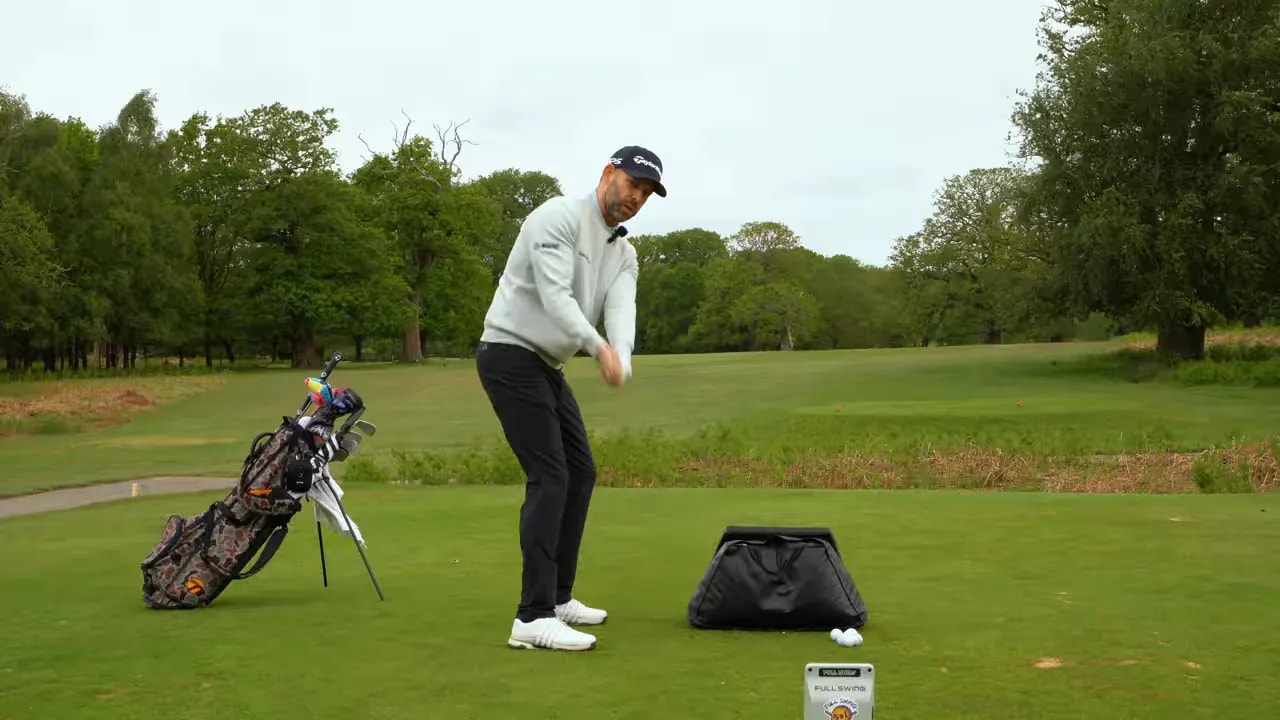
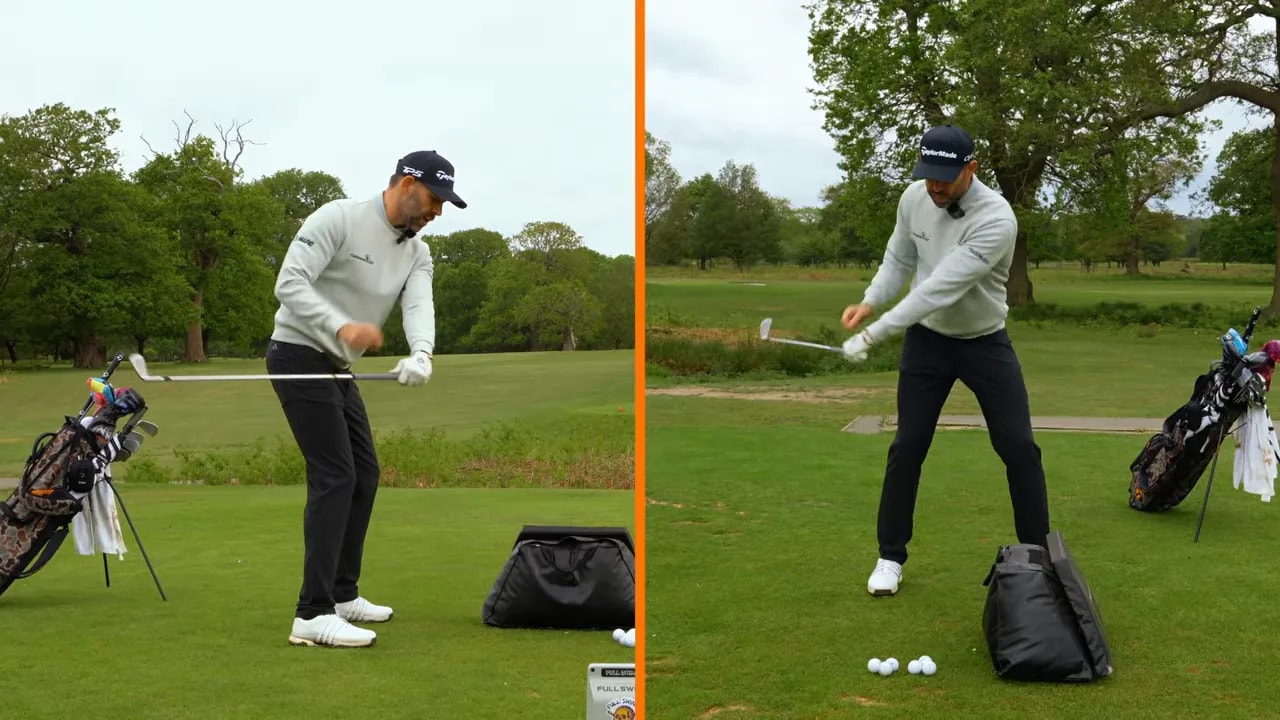
The first drill is called drop it, catch it. It is designed to give you a clear feel for the correct golf delivery without needing a full swing.
You can do this with an impact bag, a soft training bag, or even just into space if you do not have any equipment available.
How to do the drill
- Set up with a club and move to a halfway back position.
- Your lead arm should be roughly parallel to the ground.
- Keep the grip relatively in place.
- Let the clubhead drop behind you.
- Then use your body rotation to catch that falling club and move through impact.
The goal in golf is not to hold the club up with tension. The goal is to let the club organize into a better delivery slot, then rotate through.
The feel should be:
- The clubhead falls behind you briefly
- The body keeps turning
- The club gets collected and redirected through impact
- The motion feels free rather than forced
In golf terms, you are training the release to happen from a better position. You are not trying to freeze the wrist angle. You are creating a club path and shaft pitch that make impact much easier to manage.
Why this golf drill works
When the club drops into a shallower delivery, the strike can happen with rotation rather than rescue moves. You no longer need to stand up and throw the hands outward just to reach the ball.
That means your golf swing can deliver the face more efficiently, often with more speed and less strain.
Step 5: Compare the wrong golf move with the right one
This is where the lesson becomes especially useful. There are two very different patterns, and you should learn to recognise both.
The wrong golf pattern
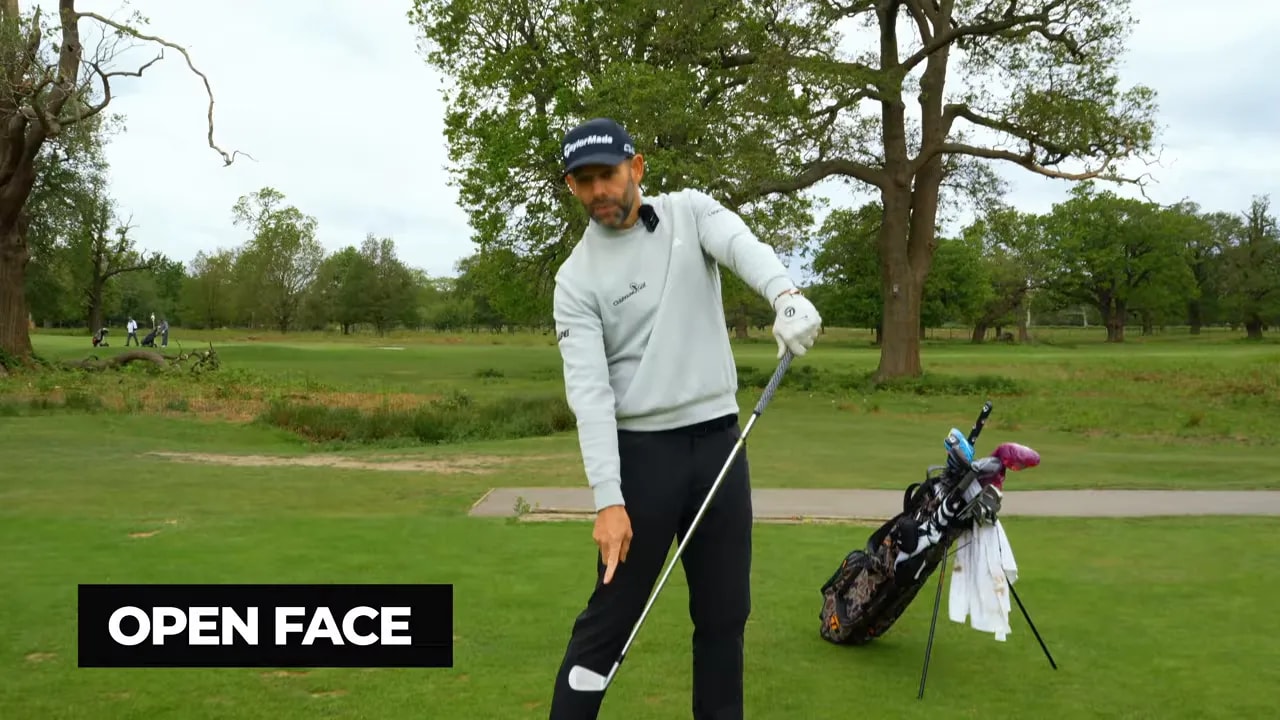
If you rotate the lead arm back too early in transition, the club gets steep. From there you usually have to:
- Lift the handle
- Stand taller through impact
- Leave the face open
- Swipe across the ball
This pattern often feels awkward and heavy. It is also difficult to repeat under pressure on the golf course.
The better golf pattern
If you keep the lead arm rotation for longer, the club shallows. Now the rotation of your body helps bring the handle inward, and that inward hand path helps the clubhead move outward into the strike.
This pattern usually feels easier and faster at the same time. In golf, that combination is a strong sign that the motion is becoming more efficient.
Step 6: Train your hand path in golf with the alignment stick drill
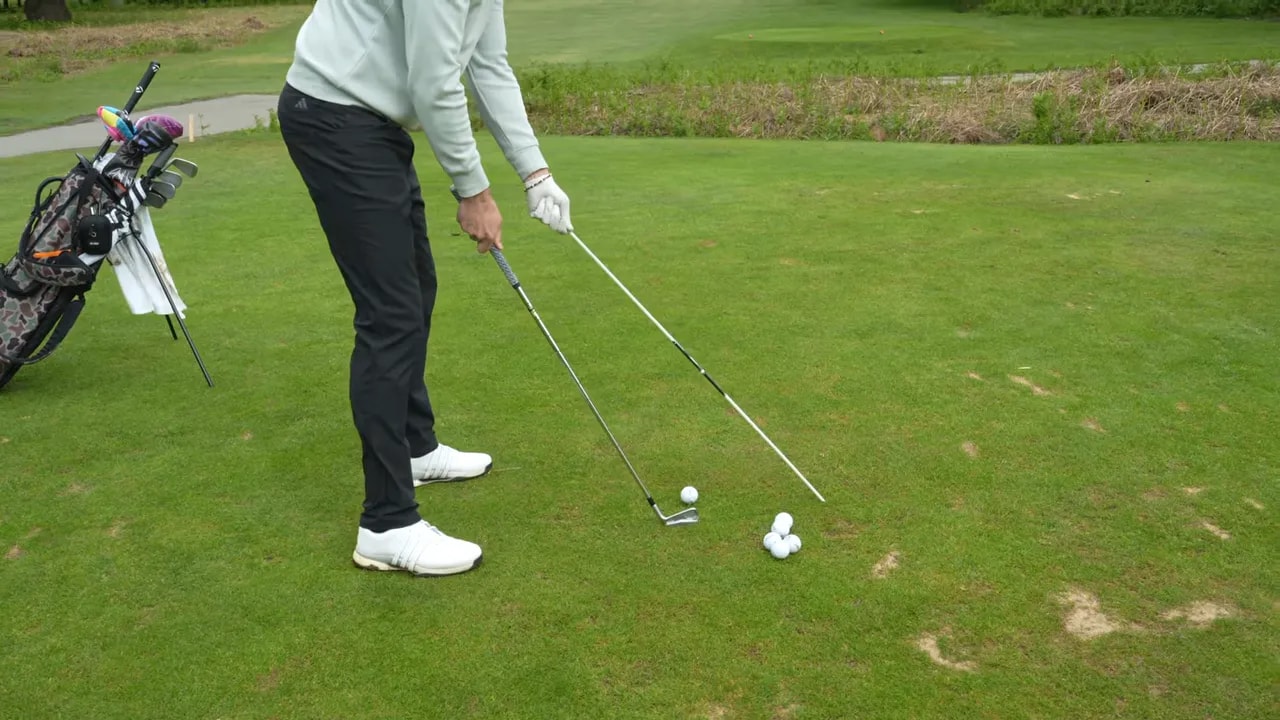
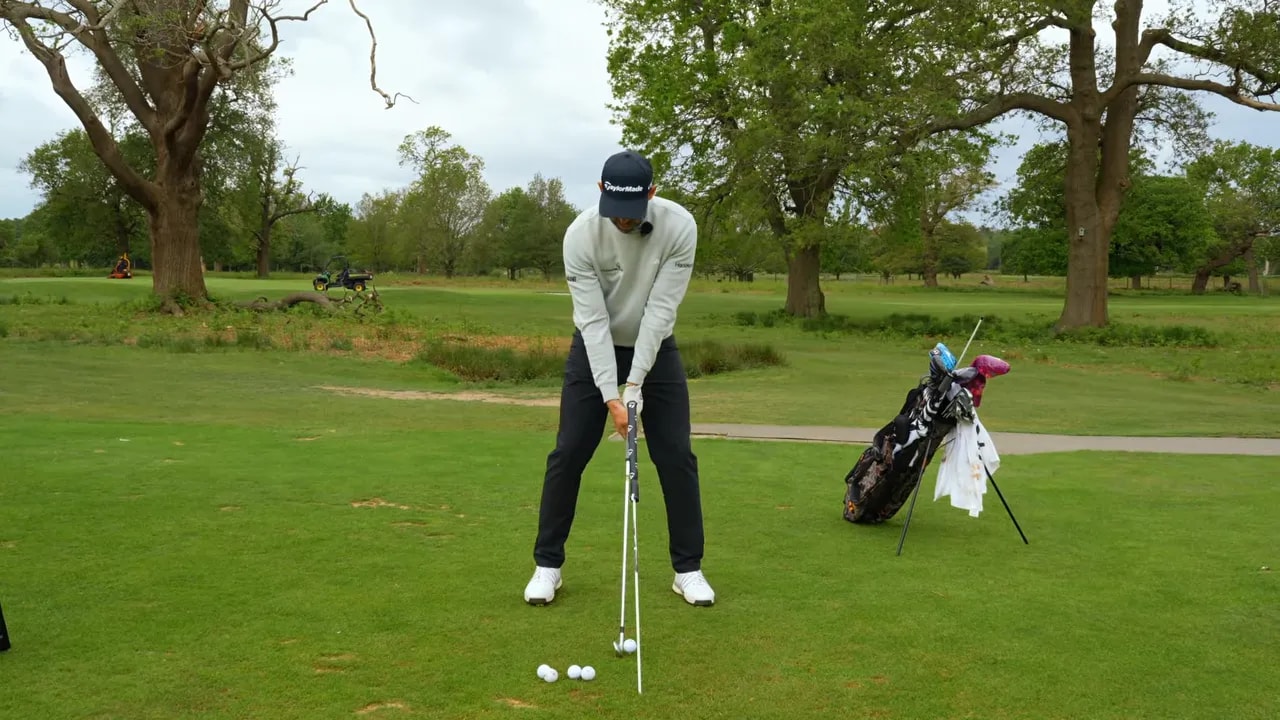
The second drill builds on the first one and adds a simple visual barrier. For this golf drill, place an alignment stick close to your hands at address, roughly a hand width away. A headcover on the top can give it a bit of protection.
The purpose is to train the correct handle movement through impact.
What this golf drill is teaching
If the club is too steep halfway down, you will be forced to push the hands high and outward, which would run into the alignment stick. That steep delivery often comes with an open face and early extension.
But if the club is in a shallower, better golf position, the handle can move up and back in toward you through impact. That motion helps the clubhead kick outward into the ball without colliding with the stick.
This is one of the most useful pieces of the lesson. A lot of golfers think the hands should always travel out toward the target line through impact. High level golf swings often do the opposite from a down the line view. The grip works inward while the clubhead works outward.
How to do the alignment stick golf drill
- Set up to a ball with a mid iron.
- Place the alignment stick near your hands.
- Rehearse a halfway down position where the grip points at the ball line or slightly outside it.
- Keep the lead arm rotation for longer.
- Feel as if the logo on your glove points up toward the sky.
- Then rotate through and let that logo turn toward the target.
- Hit short shots while missing the stick.
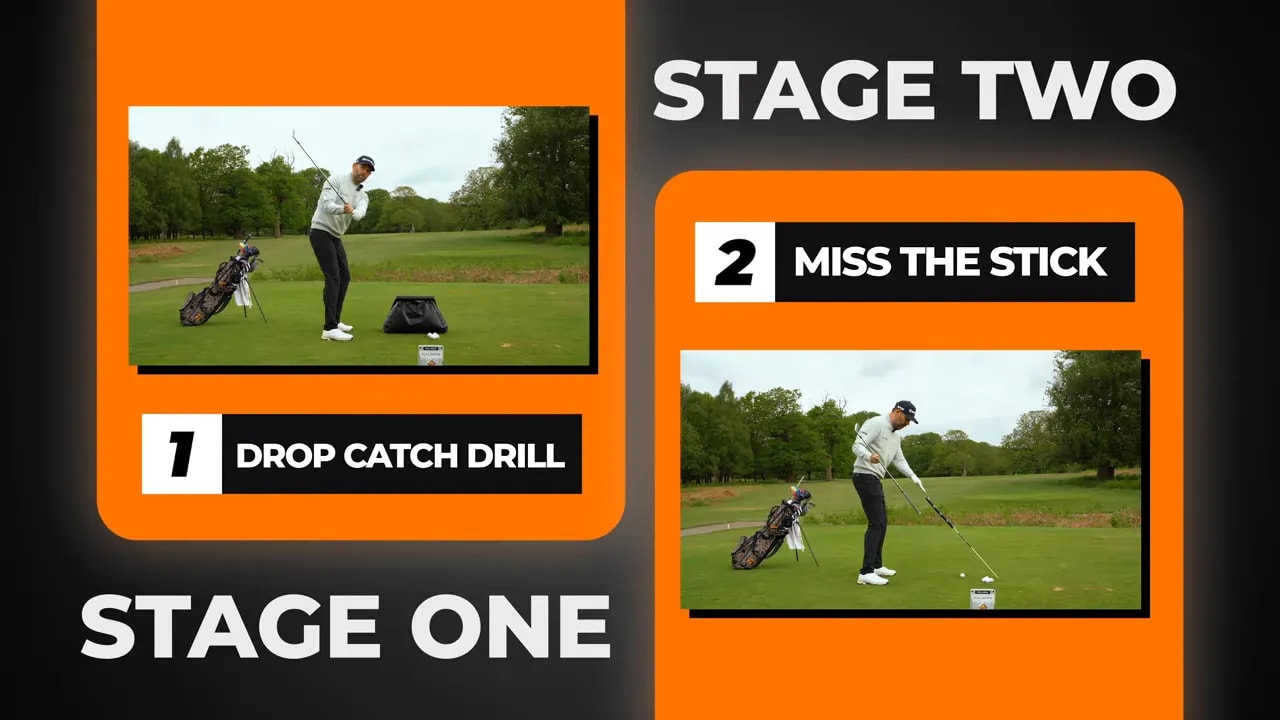
The glove logo cue is a very golfer friendly way to feel the move. Keep the logo more upward for longer, then let it rotate through later. That helps preserve the lead arm rotation you need for better golf delivery.
Step 7: Start with small golf shots before building speed
Do not rush this part. Start with little clipped golf shots and use the alignment stick as feedback. Your first priority is not distance. It is movement quality.
You want to prove that you can:
- Shallow the club in transition
- Keep the lead arm rotation longer
- Move the hands inward through impact
- Miss the alignment stick consistently
Once you can do that, gradually increase your speed.
A smart progression for golf practice looks like this:
- Rehearse the move slowly without a ball
- Hit small punch style shots
- Blend in the drop it, catch it feel
- Increase swing length
- Add more speed while keeping the same delivery
This matters because many golfers can perform a drill slowly but lose the pattern as soon as they try to hit the ball hard. Build speed only after the movement starts to feel natural.
Step 8: Use these golf checkpoints to know if you are doing it right
As you practise, use a few simple checkpoints instead of overloading yourself with technical thoughts.
Good golf signs
- The motion feels easier, not harder
- The club feels as if it falls into place in transition
- Your body rotation helps deliver the strike
- You can miss the alignment stick
- Contact starts to feel more centered
- Shots begin flying straighter
Warning signs in your golf swing
- You feel you must lift the handle to reach the ball
- You stand up out of posture
- The face stays open
- The club looks steep halfway down
- You hit the alignment stick
If you notice the warning signs, go back to rehearsal mode. In golf, better movement often comes from cleaner reps, not from grinding harder.
Step 9: Make this modern golf release part of your full swing
The long term goal is to blend the drill feel into a continuous golf swing. You do not want a swing that is all drill and no flow. Use the drills to educate your body, then let the motion become athletic.
The important idea to carry into your normal golf swing is this:
Your backswing creates wrist hinge and arm rotation, but your downswing should preserve the arm rotation more than the wrist angle.
That is the modern golf release in a nutshell. It does not mean lag disappears. It means lag becomes a byproduct of good sequencing and delivery rather than the main thing you try to force.
For many golfers, that shift leads to more reliable golf because the strike is no longer built on last second compensation.
Step 10: Remember the main golf takeaway
If you only keep one thought from this lesson, make it this one: forget chasing lag and hold your arm rotation longer in the downswing.
That one change can improve the shape of your golf swing, the way the club enters impact, and the amount of effortless speed you create.
Modern golf is not about forcing dramatic positions. It is about delivering the club in a way that lets the body rotate, the hands move efficiently, and the clubface return with less manipulation.
When you train that pattern, golf starts to feel simpler.
Golf FAQ
What is replacing lag in modern golf swings?
In this golf lesson, the replacement for chasing lag is holding the lead arm or forearm rotation longer in the downswing. That helps the club shallow and improves delivery into impact.
Is lag still important in golf?
Lag is still present in many good golf swings, but it should not be your main focus. You can have lag and still deliver the club too steeply. Better golf comes from improving delivery rather than forcing wrist angles.
Why do golfers hit slices or pulls when chasing lag?
When golfers chase lag without holding the right arm rotation, the club often gets too steep. That can open the face, alter the path, and produce slices, fades, or pulls in golf.
What is the drop it, catch it golf drill?
It is a golf drill where you move to a halfway back position, let the clubhead drop behind you, then use body rotation to catch and deliver the club. It teaches a shallower, more efficient release.
How does the alignment stick drill help my golf swing?
The alignment stick drill teaches you to keep the club in a better delivery position and move the hands inward through impact. In golf, that helps you avoid steep recovery moves and improve clubface control.
What should my golf hands do through impact?
From a down the line view, strong golf swings often have the grip moving up and back in toward the body through impact. That inward hand path helps the clubhead kick outward to the ball.
0 Comments