
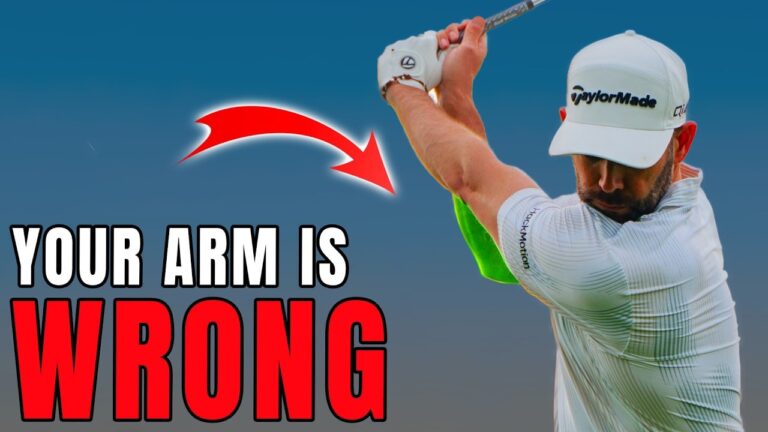

If you want better golf contact, stronger strikes, and more consistent ball flight, your trail arm deserves more attention. Many golfers focus on the clubhead, the top of the backswing, or trying to swing harder. But one of the biggest separators in good golf swings is what happens with the trail arm in transition and early downswing.
The key idea is simple. Better players tend to get the trail elbow working lower than the lead elbow halfway down. That position helps deliver the club with more control, better shaft organization, and a more compressed strike. When the trail elbow gets too high, solid golf becomes much harder.
This guide breaks the move down step by step, shows why many golfers miss it, and gives you two practical drills to improve your strike.
Table of Contents
- Step 1: Understand the trail arm move that improves golf strike
- Step 2: Recognize what good golf players do halfway down
- Step 3: Identify the common golf mistake of a high trail elbow
- Step 4: Learn why rushed golf transitions ruin compression
- Step 5: Build the right golf delivery position before release
- Step 6: Use the red foam drill to improve golf contact
- Step 7: Compare a good golf swing to a casting motion
- Step 8: Add feedback tools if you want more precise golf practice
- Step 9: Train the trail arm with the throwing drill for golf sequence
- Step 10: Bring the trail arm move into your full golf swing
- Step 11: Focus on the golf feel that matches reality
- Frequently Asked Questions
- Final takeaway for better golf
Step 1: Understand the trail arm move that improves golf strike
In strong golf swings, the trail arm loads during the backswing, then moves into a better delivery position before it releases through the ball.
That means:
- The trail arm bends in the backswing.
- The trail wrist stores angle.
- That stored structure stays in place long enough to be useful.
- The trail elbow works down and more in front of your body during transition.
- The strike happens only after that structure has been moved into delivery.
This is what creates the feeling of compressed golf shots. You are not simply throwing the club from the top. You are carrying stored energy into the hitting area, then releasing it at the right time.
If you have been struggling with thin shots, heavy shots, weak contact, or a rushed motion, this trail arm pattern is worth checking first.
Step 2: Recognize what good golf players do halfway down
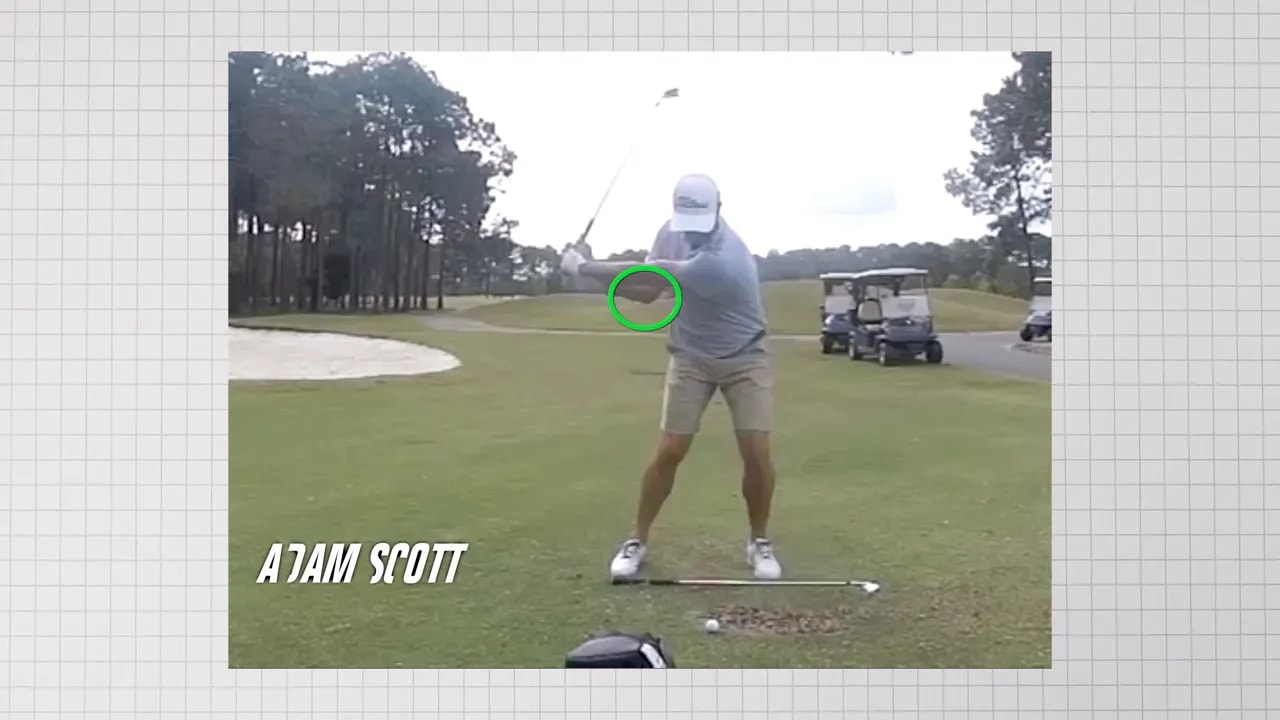
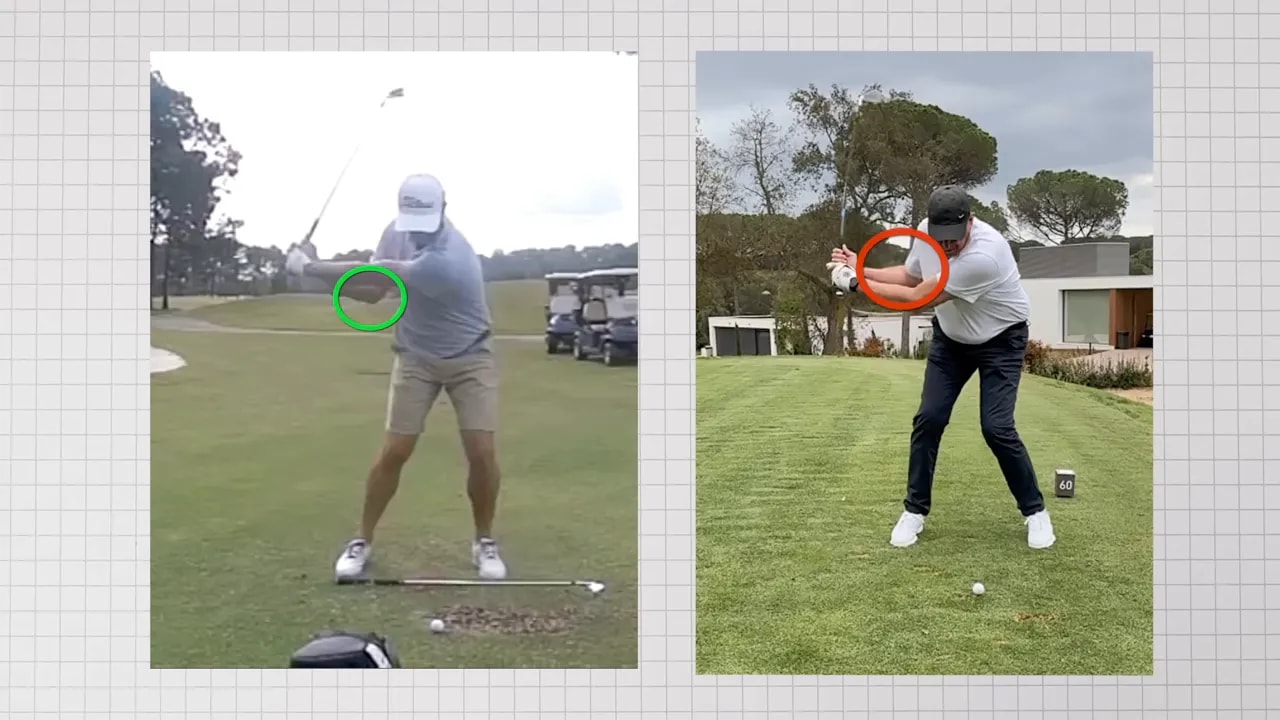
A useful checkpoint in golf is the halfway down position. At this stage, elite players often show the trail elbow sitting lower than the lead elbow. The elbow is not flying outward or lifting high behind them. Instead, it is working into a delivery slot that makes it easier to approach the ball from a stable, efficient path.
This matters because the arm structure influences:
- Low point control
- Clubface control
- How the shaft shallows or steepens
- Your ability to compress the ball
- How rushed or smooth the downswing feels
When your trail elbow is better organized, the club can approach the ball with less need for last second compensation. That usually means more reliable golf contact and a ball flight that looks stronger and more controlled.
Step 3: Identify the common golf mistake of a high trail elbow
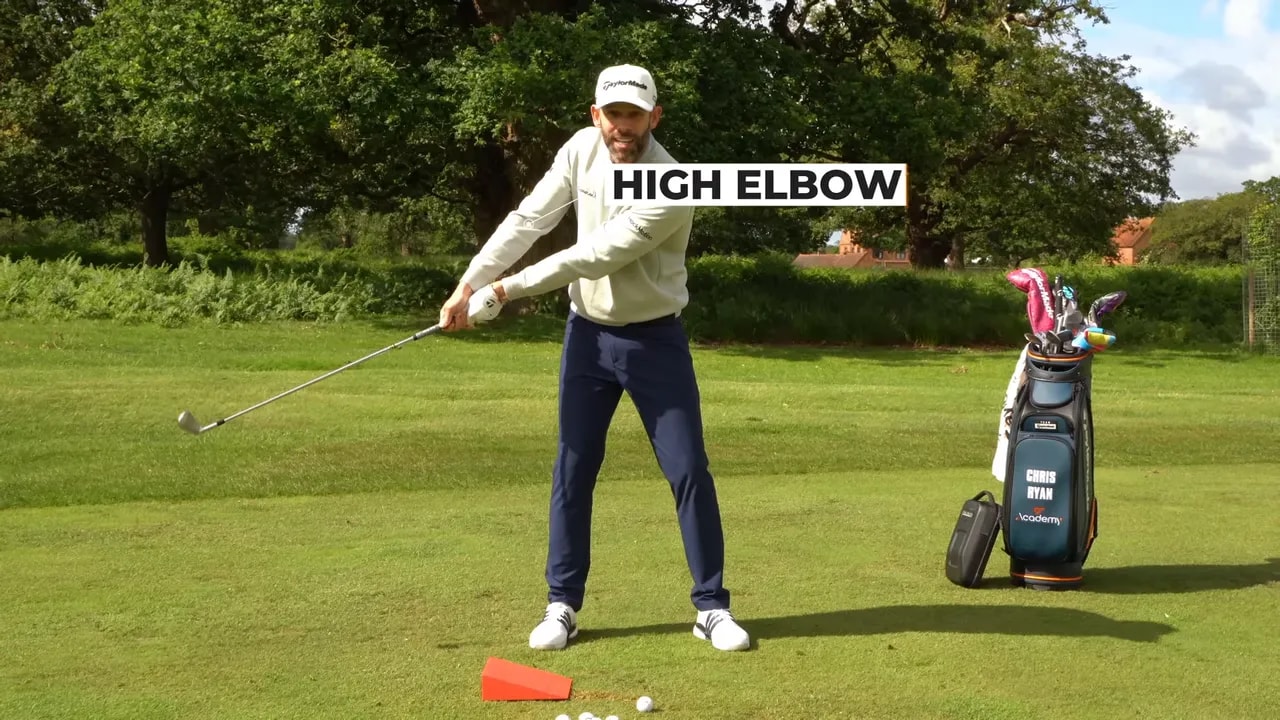
Many struggling golfers do the opposite. Their trail elbow gets higher on the way down, often because the club is being thrown too early from the top.
When that happens, a chain reaction follows:
- The stored wrist angle is lost too soon.
- The trail arm starts straightening early.
- The body often rises up or backs away.
- The clubhead moves toward the ball too quickly.
- The golfer has to rescue the strike late.
This is why a rushed downswing often feels out of control. It is not just a tempo issue. It is a sequence issue.
A lot of golfers think their downswing should feel aggressive immediately from the top. In reality, better golf swings store first, position second, release third. If you skip the middle part and fire the clubhead right away, the trail elbow usually loses its place.
Step 4: Learn why rushed golf transitions ruin compression
The phrase “rushed downswing” is often misunderstood in golf. It does not necessarily mean the club is moving faster at impact. It means the motion from the top to the ball happens too soon, with the release occurring early instead of late.
You can have a powerful golf swing that still feels patient in transition.
That is an important distinction. A better downswing may actually take slightly longer from the top to impact, even if the clubhead is moving faster when it reaches the ball. The reason is that the stored angles and trail arm structure are being transported into position before they are released.
A simple way to think of it is this:
- Poor sequence: load it, throw it
- Better sequence: load it, move it, release it
This small change can transform your golf strike.
Step 5: Build the right golf delivery position before release
To train this properly, you need a clear picture of the delivery position.
As you move down from the top:
- Your trail arm remains bent.
- Your trail elbow works closer to the center line of your body.
- The shaft gets closer to parallel with the ground.
- The grip lines up roughly with where the ball is.
- Your release has not happened yet.
From there, you can use the trail arm through the ball. That is very different from firing the clubhead immediately from the top.
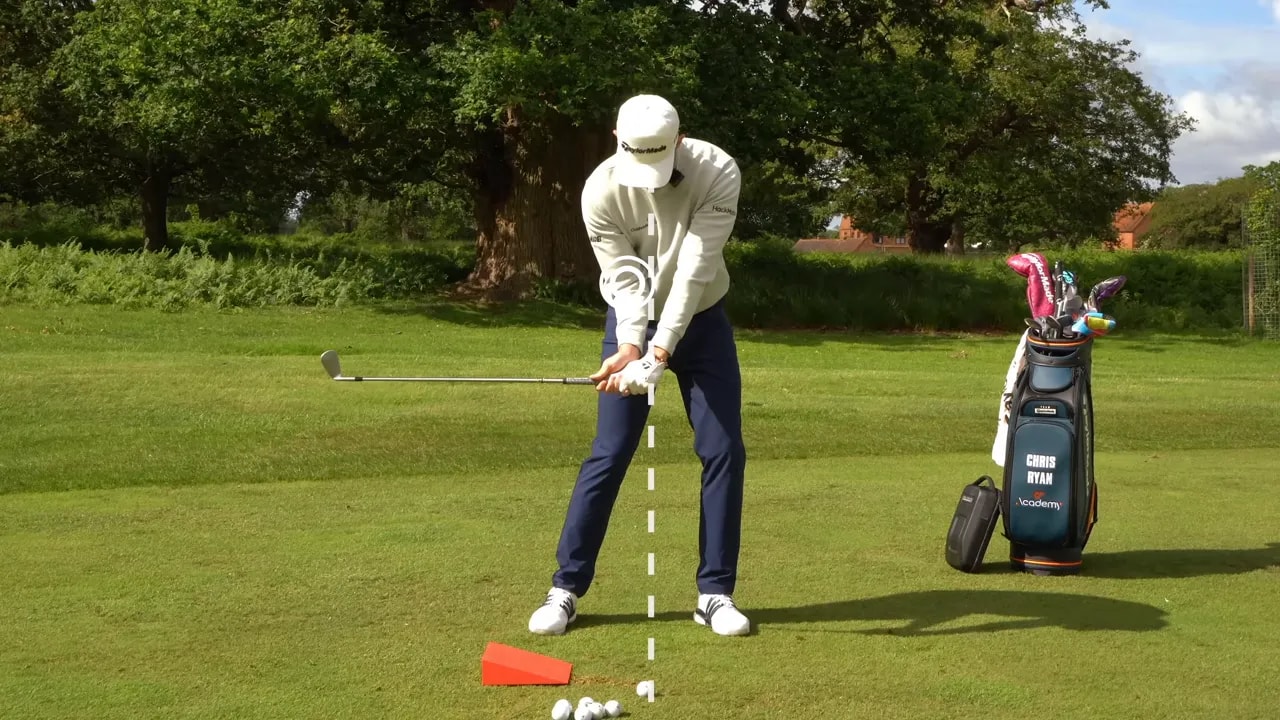
If you struggle to picture this, remember the sequence in three words:
- Built it
- Stored it
- Released it
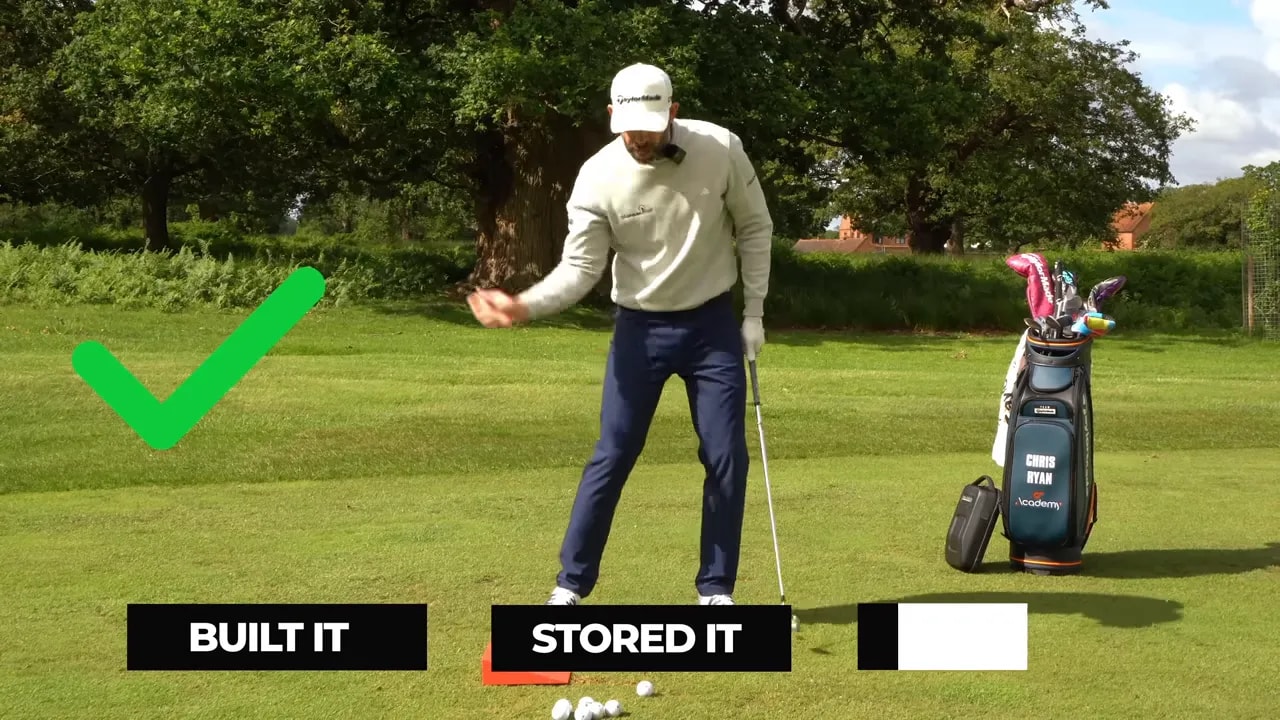
That sequence is one of the best ways to organize your golf swing without becoming too mechanical.
Step 6: Use the red foam drill to improve golf contact
One of the most effective drills here uses a simple foam block or any small object placed behind the ball. It does not need to be a special golf training aid.
Set it up like this:
- Place the foam block behind the ball.
- Leave about two clubhead widths of space between the ball and the block.
- Make your normal backswing and feel the trail arm load.
- From the top, move the trail arm into delivery before releasing.
- Swing through while avoiding the block.
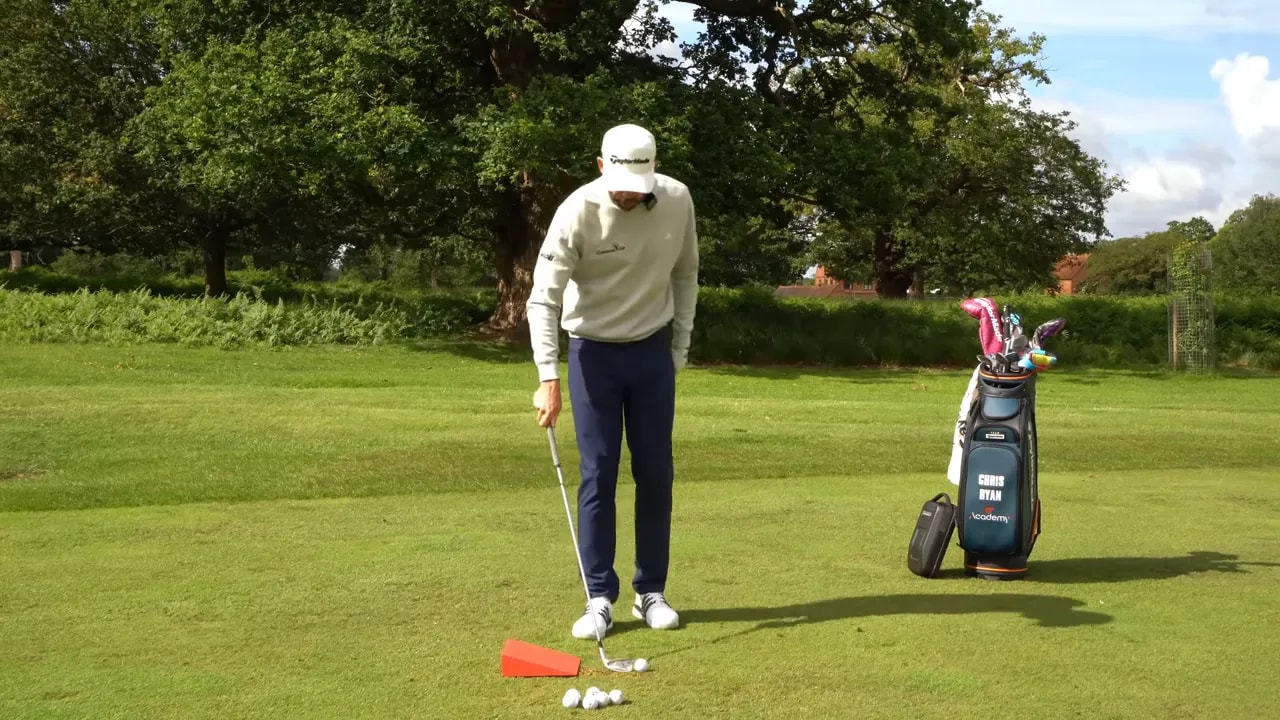
If your trail arm and wrist angles are organized correctly, the club should approach the ball without striking the object behind it. If you cast from the top and the trail elbow gets high, you are much more likely to hit the block.
This makes the drill valuable because it gives immediate feedback. You do not need to guess whether your sequence improved. The result tells you.
When you do it well, expect a lower, stronger golf ball flight and a strike that feels more compressed.
What to feel during the drill
- Load the trail arm in the backswing.
- Pause mentally at the top.
- Move the arm and body into position first.
- Release through the ball only after the club is delivered.
If you instead think only about throwing the clubhead to the ball, you will likely feel yourself stand up, lose posture, and straighten the trail arm too early.
Step 7: Compare a good golf swing to a casting motion
A side by side comparison makes this easier to understand. In a good golf swing, the downswing has patience. The trail arm stays loaded longer, the elbow works down, and the release happens later.
In a casting swing:
- The club is thrown early.
- The trail elbow gets high.
- The wrists lose angle too soon.
- The strike often becomes weak or inconsistent.
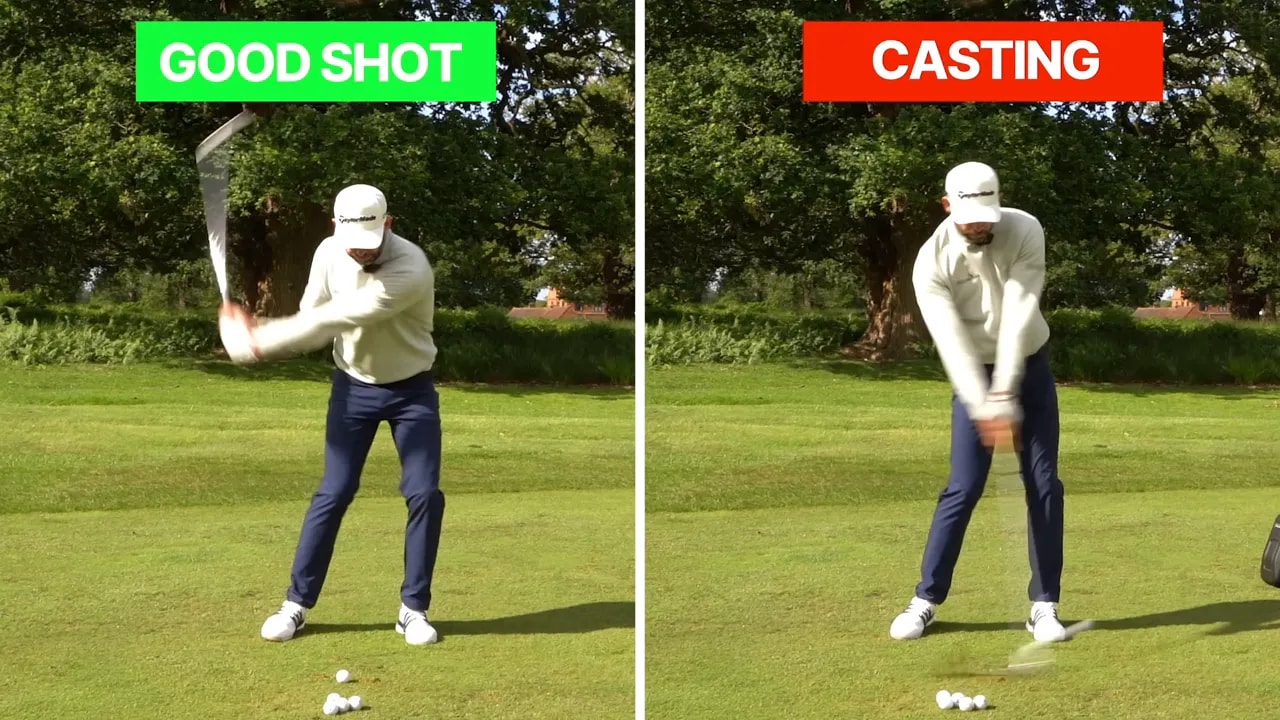
This is why simply trying to hit down harder or rotate faster rarely fixes poor contact in golf. If the trail arm is mistimed, more effort usually makes the problem worse.
Step 8: Add feedback tools if you want more precise golf practice
If you use motion feedback technology in your golf practice, this move becomes even easier to train. A wrist motion sensor can confirm whether you are preserving your angles long enough in transition instead of casting them away.
The useful part of that feedback is not the gadget itself. It is what the feedback teaches you to feel. You can make a practice swing, move into delivery, and check whether your motion stayed in the intended range.
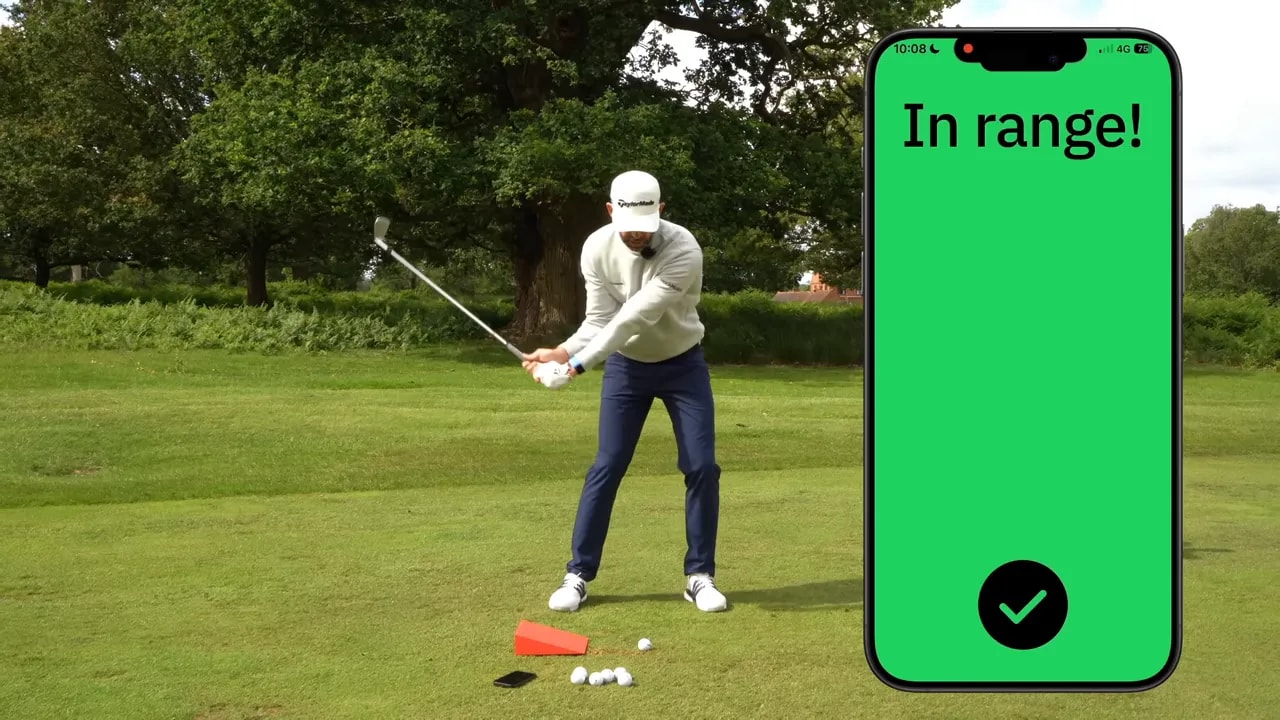
That can speed up learning because your body often needs proof that a new move is actually correct. What first feels slow or delayed may turn out to be exactly what stronger golf sequencing requires.
Step 9: Train the trail arm with the throwing drill for golf sequence
The second drill is simple and can be done almost anywhere.
Hold the club only in your trail hand, around the middle of the grip. Stand upright rather than in full golf posture. Then rehearse the motion you would use if you were going to throw the club far down the fairway. Do not actually let go of the club. Just copy the movement pattern.
Here is what you should notice:
- You naturally fold the trail arm in the backswing.
- You retain wrist bend.
- You rotate your body before the throw.
- You delay the release until the club is in front of you.
This drill teaches sequence in a very athletic way. Most golfers would never throw an object with maximum power by unhinging immediately from the start. Instinctively, you would wind up, shift, rotate, and only then release.
That same pattern helps your golf swing.
A simple feel for this golf drill
Use this rhythm:
- Wind up
- Wait
- Swing
That middle word matters. The best golf swings do not rush from the top. They create the feeling of waiting just long enough for the trail arm and body to organize the club before release.
Step 10: Bring the trail arm move into your full golf swing
Once the drills start to make sense, blend them into your normal golf motion gradually.
Use this progression:
- Make slow rehearsal swings with no ball.
- Stop at delivery and check trail elbow position.
- Hit short half shots while avoiding the object behind the ball.
- Move to fuller swings only when the strike stays solid.
- Keep the feel of a patient transition, not a violent hit from the top.
A few practical checkpoints can help:
- Your trail elbow should feel like it works down and in, not out and up.
- Your body should feel like it is helping move the arm into place.
- Your strike should feel later and heavier through the ball.
- Your ball flight may come out lower and stronger.
If you start hitting poor shots again, go back to the earlier question: Did you rush the downswing? In many cases, that is the real source of the problem.
Step 11: Focus on the golf feel that matches reality
One of the hardest parts of improving in golf is trusting feels that seem unfamiliar. If you are used to throwing the club from the top, the correct motion may feel slow, delayed, or even passive at first.
That does not mean it is wrong.
Often the best feel is that the hit happens later than expected. The body and trail arm carry the stored energy into place, and only then does the club release. That is where many golfers finally discover what a compressed golf strike really feels like.
When you get it right, the difference is obvious:
- The strike sounds better.
- The ball flight is stronger.
- The contact feels centered.
- The swing feels less panicked.
Frequently Asked Questions
How should the trail arm move in the golf downswing?
Your trail arm should stay loaded as you begin down, with the trail elbow working lower and more in front of your body before the club releases. In golf, this helps organize the shaft and improves strike quality.
Why does a high trail elbow hurt golf contact?
A high trail elbow usually appears when you cast the club from the top. That early release can make you lose wrist angles, stand up through impact, and deliver the club inconsistently. In golf, that often leads to weak or unreliable contact.
What does a rushed downswing mean in golf?
It means the release happens too early from the top rather than after the club has been moved into delivery. A rushed downswing in golf is more about poor sequence than raw speed.
Can I practice this golf move without special training aids?
Yes. You can use a simple foam block or another small object behind the ball for feedback, and you can also rehearse the one handed throwing drill. Both are effective golf drills without requiring special equipment.
What ball flight should improve when I do this correctly in golf?
Many golfers notice a lower, more penetrating flight with a stronger strike feel. The biggest improvement in golf is usually cleaner contact and better compression.
Final takeaway for better golf
If your golf strike has been inconsistent, do not just chase more speed or a prettier backswing. Start with the trail arm.
The important pattern is this:
- Load the trail arm in the backswing.
- Move it into delivery with patience.
- Keep the trail elbow lower rather than higher halfway down.
- Release only when the club is in position.
That change can help you stop rushing the downswing, improve compression, and produce the kind of golf contact that feels solid shot after shot.
0 Comments